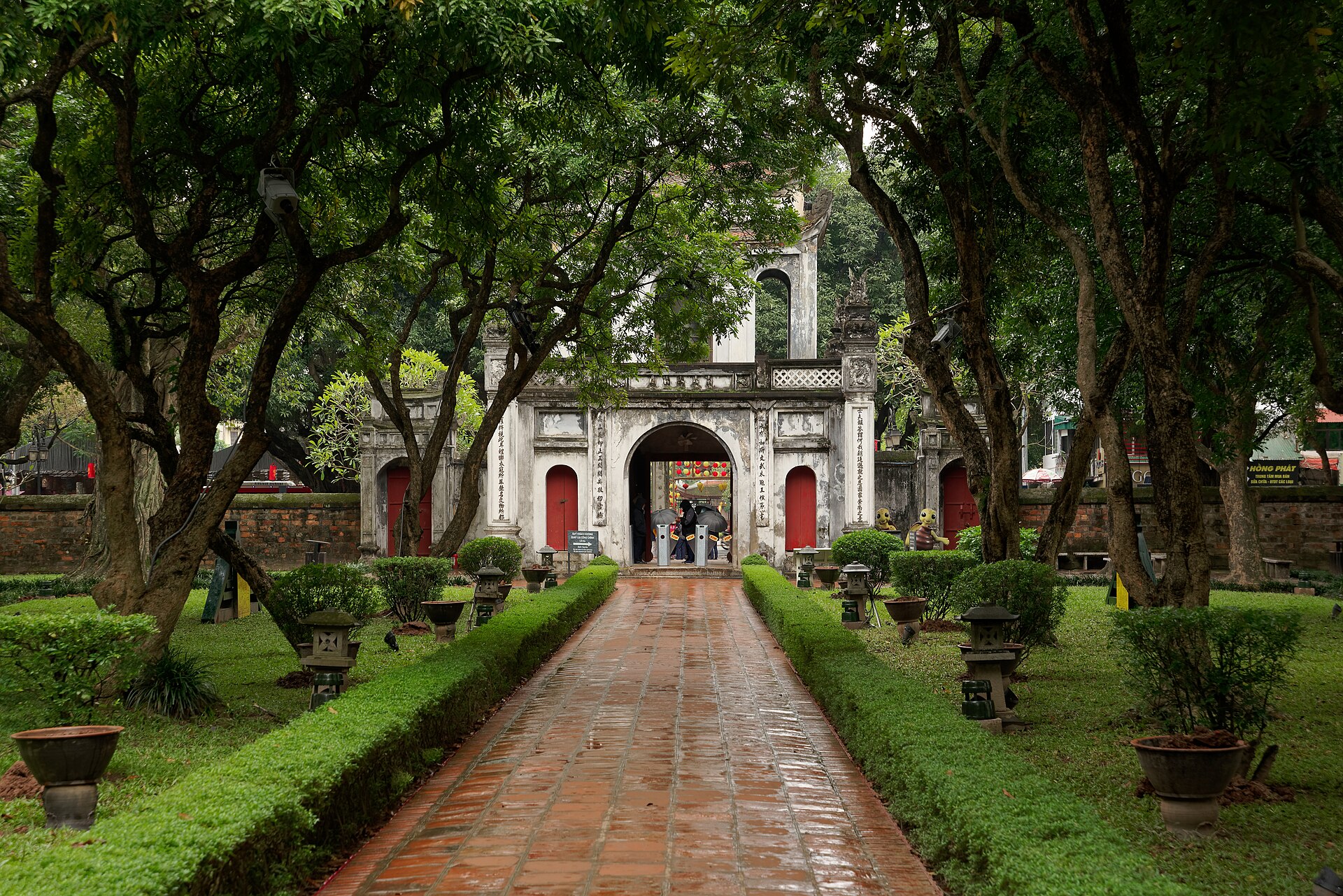
The Temple of Literature is Vietnam's most important historical monument — a Confucian temple and the site of the country's first national university, founded in 1070 by Emperor Lý Thánh Tông and operating continuously for over 700 years until the French colonial administration closed it in the 19th century. The temple complex is the finest example of traditional Vietnamese architecture in Hanoi, and the stelae (stone tablets) recording the names of doctoral graduates from 1442 to 1779 are a UNESCO-listed documentary heritage.
The complex is arranged as five courtyards connected by gates, each progressively more sacred. The first courtyard is a formal garden. The second contains the Khue Văn Pavilion, a graceful two-storey structure that has become the symbol of Hanoi (it appears on the city's official emblem). The third courtyard houses the stelae — 82 stone tablets mounted on stone turtles, each recording the names, birthplaces, and examination results of successful candidates from the triennial doctoral examinations. The fourth and fifth courtyards contain the main temple buildings and the shrine to Confucius.
The stelae are the Temple's most significant feature historically — they represent a continuous record of Vietnamese intellectual life spanning 337 years and demonstrate the central role that Confucian education played in Vietnamese governance. Students touch the stone turtle heads for luck before exams (the heads are polished smooth by generations of anxious hands), and the temple grounds are the traditional site for Hanoi's graduation photographs, filling the courtyards with students in áo dài (traditional dress) every spring.
Verified Facts
The Temple of Literature was founded in 1070 by Emperor Lý Thánh Tông
It housed Vietnam's first national university
82 stone stelae record doctoral graduates from 1442 to 1779
The Khue Văn Pavilion is the symbol of Hanoi
Get walking directions
Quoc Tu Giam, Van Mieu, Hanoi, Vietnam