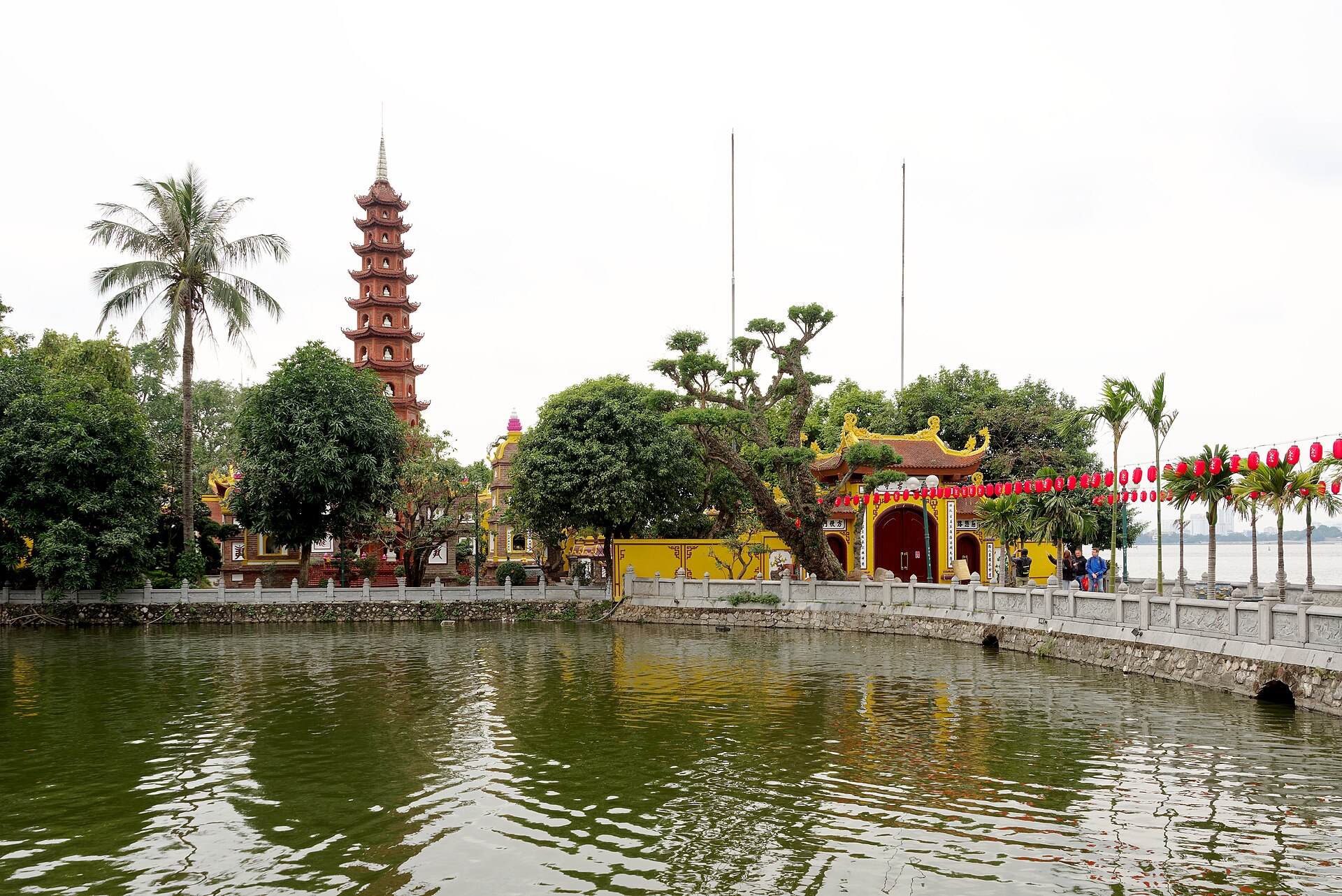
Trấn Quốc Pagoda is the oldest Buddhist temple in Hanoi — founded in the 6th century during the reign of Emperor Lý Nam Đế and relocated to its current position on a small island in West Lake in the 17th century. The pagoda's multi-tiered tower, rising 15 metres above the lake on its tiny island and reflected in the water below, is one of Hanoi's most photographed landmarks and one of the most beautiful Buddhist structures in Vietnam.
The tower has 11 storeys, each containing a niche with a white Buddha statue, and the red-brick and timber structure is surrounded by bodhi trees (said to be descended from cuttings of the original Bodhi tree under which the Buddha achieved enlightenment). The pagoda sits on a causeway extending from Thanh Niên road, which divides West Lake from Trúc Bạch Lake, and the setting — water on both sides, the pagoda's tower reflected in the lake, the city skyline visible across the water — creates a scene that photographers chase at every hour of the day.
The pagoda is an active place of worship, and visitors on the 1st and 15th of each lunar month (the traditional prayer days) will find the temple crowded with devotees burning incense and making offerings. The sunset view from the causeway — the pagoda silhouetted against an orange sky with the lake reflecting the colours — is one of Hanoi's most romantic images.
Verified Facts
Trấn Quốc Pagoda was founded in the 6th century
It was relocated to its current West Lake island in the 17th century
The tower has 11 storeys, each containing a Buddha statue
The bodhi trees are said to descend from the original Bodhi tree
Get walking directions
Tay Ho, Quang An, Hanoi, Vietnam