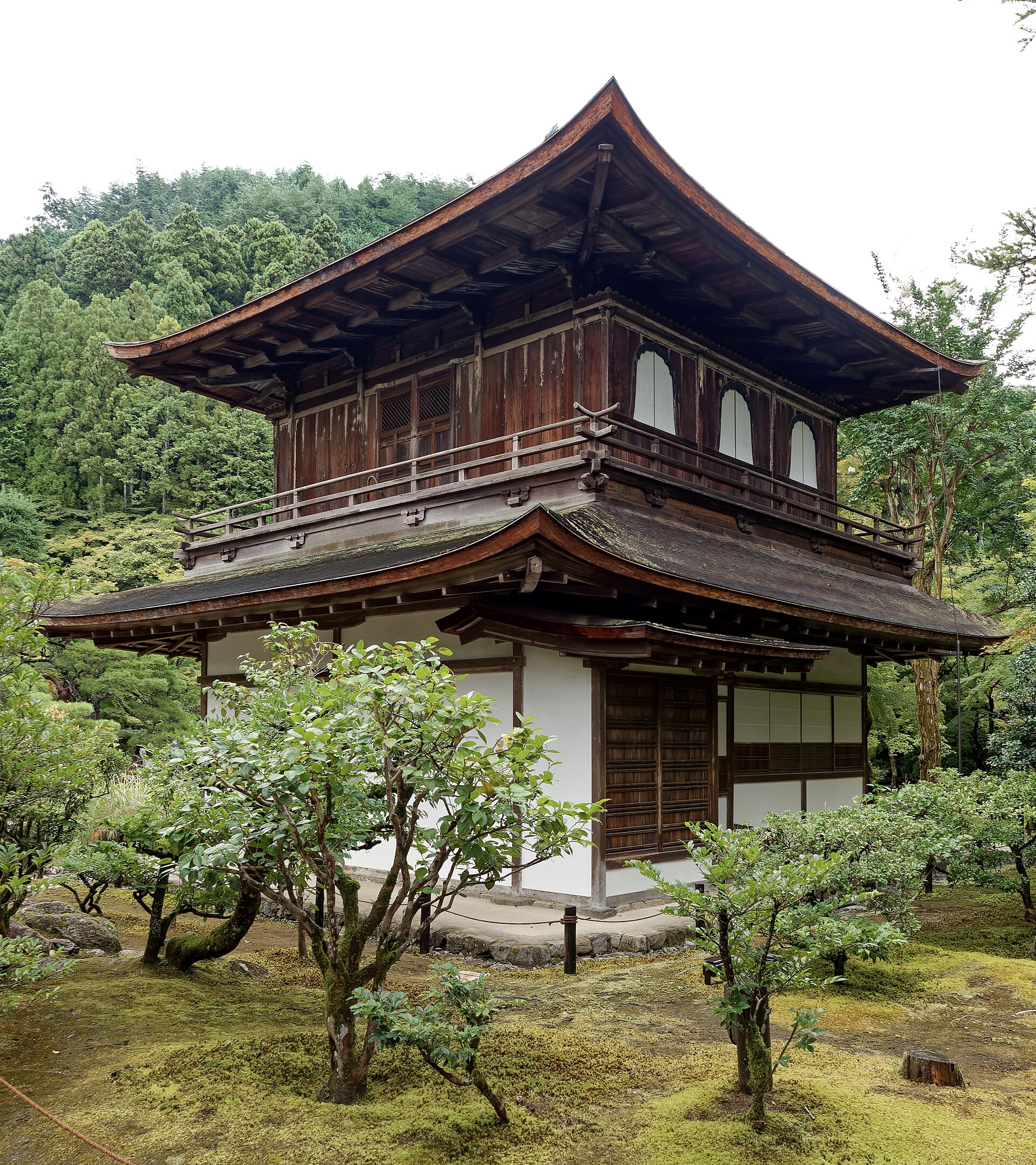
Despite its name, the Silver Pavilion was never actually covered in silver. Shogun Ashikaga Yoshimasa built it in 1482 intending to coat it in silver leaf to rival his grandfather's Golden Pavilion — but civil war, financial ruin, and his own death intervened, and the silver was never applied. The result, accidentally, is far more beautiful than Kinkaku-ji's bling: a weathered wooden pavilion in dark brown and grey that embodies wabi-sabi, the Japanese aesthetic of beauty in imperfection.
Yoshimasa was a terrible leader — his indecisiveness triggered the Ōnin War that destroyed most of Kyoto — but a brilliant patron of the arts. He retreated to this villa and essentially invented the culture we now think of as quintessentially Japanese: the tea ceremony, flower arranging (ikebana), ink wash painting, and the Noh theatre all flourished under his sponsorship. The Silver Pavilion was his aesthetic laboratory.
The garden is the real masterpiece. The Kogetsudai — a cone of raked silver sand that's supposed to reflect moonlight — sits beside the Ginshadan, a platform of raked gravel meant to represent a sea of silver. Both are meticulously maintained daily by monks. The moss garden on the hillside behind the pavilion is one of the finest in Kyoto, and a short climb up the wooded path brings you to a viewpoint overlooking the pavilion, the gardens, and the city beyond. It's best in the late afternoon when the light is soft and the sand catches the last of the sun.
Verified Facts
Ginkaku-ji was built in 1482 by Shogun Ashikaga Yoshimasa
The pavilion was never actually covered in silver despite its name
Yoshimasa's indecisiveness helped trigger the Ōnin War (1467-1477)
The tea ceremony, ikebana, and Noh theatre flourished under Yoshimasa's patronage
Get walking directions
2 Ginkakujicho, Sakyo, Kyoto, 606-8402, Japan