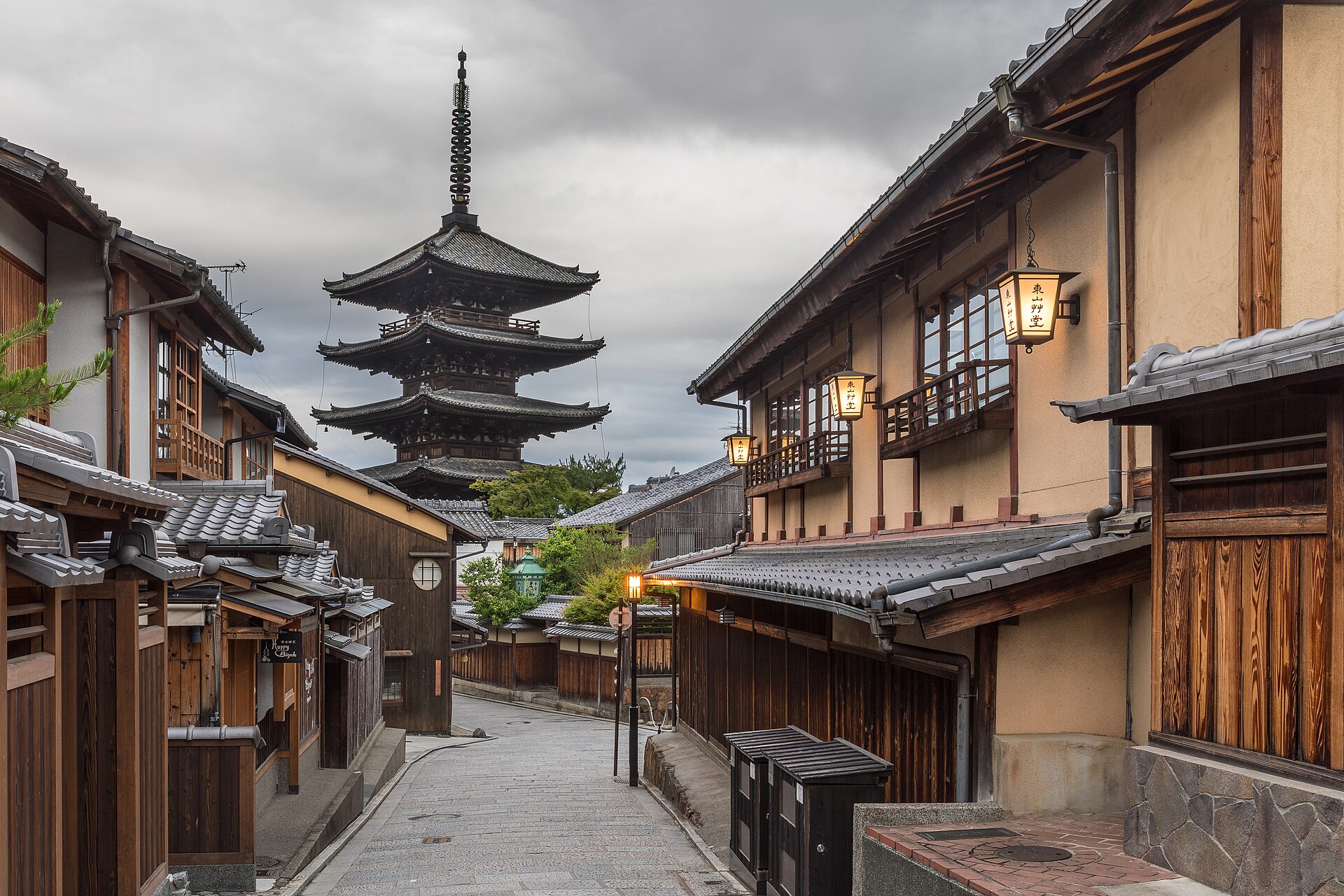
Higashiyama is the Kyoto you came to see — narrow stone-paved lanes climbing through a preserved Edo-period neighbourhood of wooden machiya townhouses, ceramic shops, tea houses, and temples. The streets of Ninenzaka and Sannenzaka (two-year and three-year slopes) connect Kiyomizu-dera to the Yasaka Pagoda in a winding descent that's been walked by pilgrims, monks, and now tourists for centuries.
Local superstition says that if you fall on Ninenzaka you'll die within two years, and if you fall on Sannenzaka you'll die within three — a brilliant piece of marketing that ensures everyone walks carefully on the uneven stone steps, which is the actual point. The lanes are lined with shops selling Kiyomizu-yaki ceramics (the pottery style named after the nearby temple), yatsuhashi (cinnamon rice crackers that are Kyoto's most popular souvenir), and matcha everything — soft serve, kit-kats, tiramisu, and combinations that probably shouldn't work but somehow do.
The Yasaka Pagoda — officially part of Hōkan-ji temple — punctuates the skyline and is the most photographed structure in the district. The five-storey pagoda dates from 1440 and is one of the few that you can actually enter, climbing the steep internal staircase to see the central pillar and ceiling paintings. Come early morning or at dusk to see Higashiyama at its best — the stones are wet from the shop owners' morning sweeping, the lanterns are just coming on, and the few people out are locals rather than tour groups.
Verified Facts
Ninenzaka and Sannenzaka are named 'two-year slope' and 'three-year slope'
The Yasaka Pagoda dates from 1440
Kiyomizu-yaki ceramics are named after the nearby Kiyomizu-dera temple
Yatsuhashi cinnamon rice crackers are Kyoto's most popular souvenir
Get walking directions
Keihokuhosonocho Higashiyama, Ukyo, Kyoto, Japan