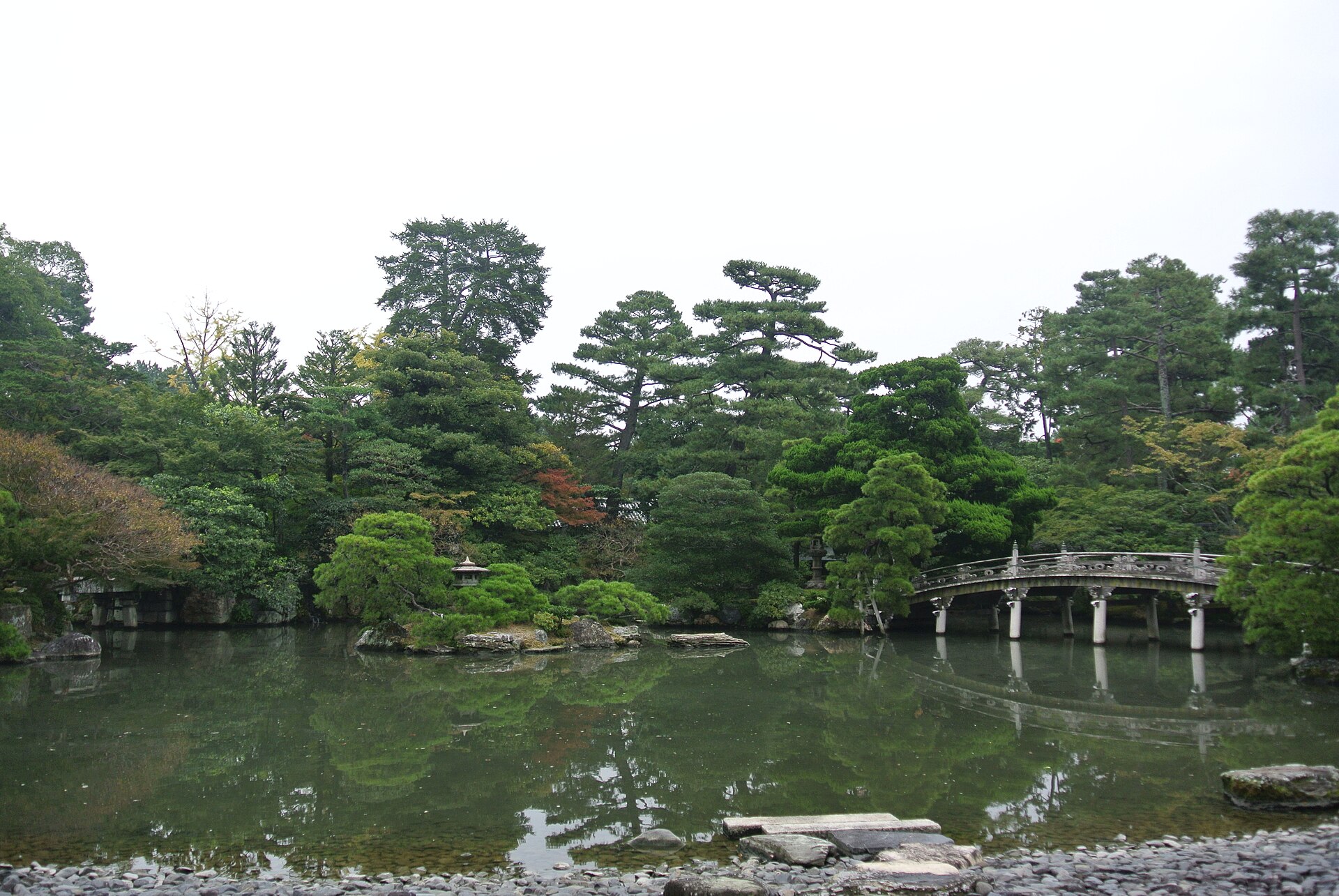
The Kyoto Imperial Palace was the Emperor's residence for over a thousand years — from 794 until the capital moved to Tokyo in 1869 — and it sits in the centre of the city like a quiet eye in a storm. The palace grounds, called Kyoto Gyoen, are a vast public park of gravel paths, ancient pine trees, and cherry groves that locals use for jogging, picnicking, and pretending the rest of the city doesn't exist.
The palace itself is surprisingly understated for an imperial residence. Japanese imperial architecture favours restraint over grandeur — unpainted cypress wood, clean lines, white gravel courtyards — and the effect is elegant rather than imposing. The Shishinden (ceremonial hall) with its sweeping cypress-bark roof was where emperors were enthroned for centuries, and even without furniture the space has a gravity that gold and marble couldn't match.
The palace was free to visit without reservation since 2016 — before that, you needed to apply to the Imperial Household Agency, which kept crowds manageable but also kept most tourists away. The guided tours are informative, but the real pleasure is the park itself. At 65 hectares, it's one of the largest green spaces in central Kyoto, and the mix of formal gardens, wild sections, and the palace buildings rising above the treeline creates a landscape that feels completely removed from the modern city surrounding it.
Verified Facts
The palace served as the Emperor's residence from 794 to 1869
Kyoto Gyoen park covers approximately 65 hectares
The palace became free to visit without reservation in 2016
The Shishinden hall was used for imperial enthronement ceremonies
Get walking directions
3 Kyotogyoen, Kamigyo, Kyoto, 602-0881, Japan