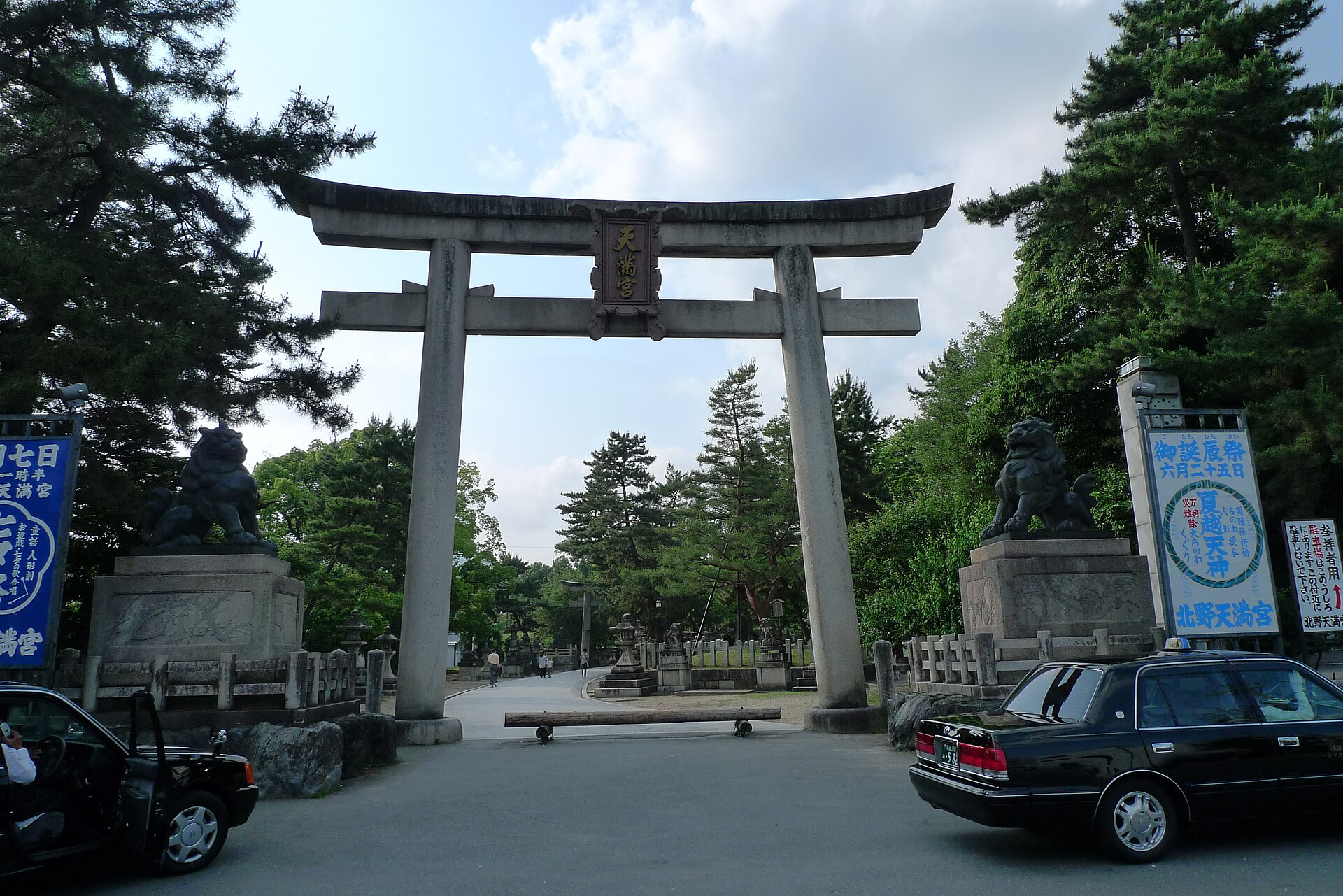
Kitano Tenmangū is the shrine that every Japanese student visits before exams, because it's dedicated to Sugawara no Michizane — a 9th-century scholar-politician who was so brilliant that after his death he was deified as the god of learning. Rub the head of one of the bronze oxen scattered around the shrine grounds and the knowledge supposedly transfers to you. The oxen's heads are polished to a mirror shine from centuries of desperate students.
The shrine is one of Kyoto's most important, but it draws far fewer tourists than the famous temples, which makes it one of the best places to experience a working Shinto shrine without the crowds. Locals come throughout the day to pray, leave offerings, and hang ema (wooden prayer tablets) inscribed with exam wishes. During plum blossom season in February and March, the shrine's 2,000 plum trees bloom in white and pink — a preview of the cherry blossoms that come a month later, and considerably less crowded.
The 25th of every month hosts the Tenjin-san flea market, which is second only to Tō-ji's Kōbō-san market in scale and quality. Over 1,000 stalls sell antiques, vintage kimono, ceramics, old woodblock prints, and the kind of bric-a-brac that tells you more about daily Japanese life than any museum. The market runs rain or shine, and the shrine's covered corridors provide shelter — just follow the scent of grilled mochi from the food stalls near the entrance.
Verified Facts
The shrine is dedicated to Sugawara no Michizane, deified as the god of learning
The Tenjin-san flea market is held on the 25th of every month
The shrine grounds contain approximately 2,000 plum trees
The bronze ox statues are rubbed by visitors for academic luck
Get walking directions
Kamigyo, Kamigyo, Kyoto, Japan