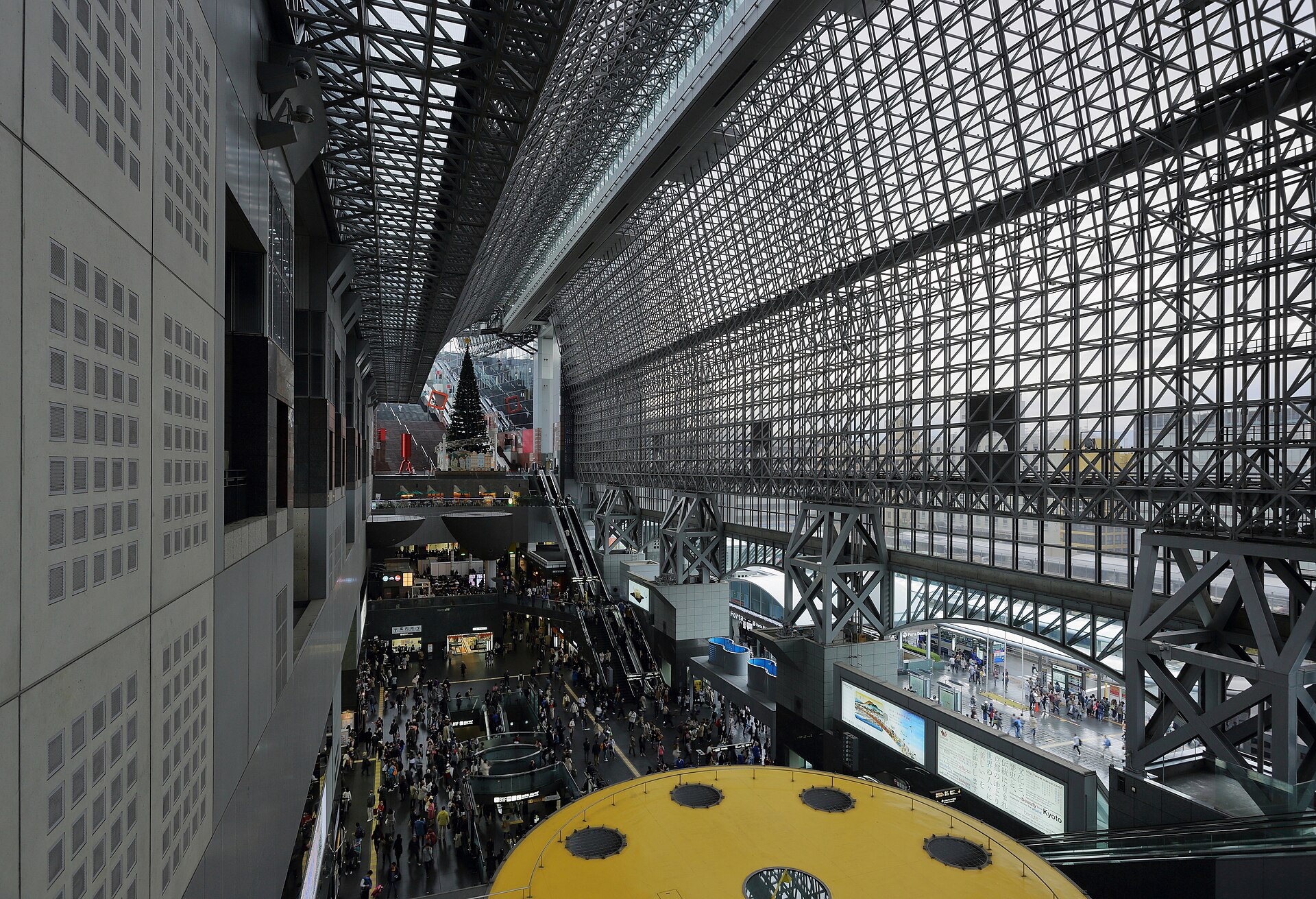
Kyoto Station is the most controversial building in a city that takes tradition seriously. Designed by Hiroshi Hara and completed in 1997, it's a massive glass-and-steel structure that looks like a spaceship landed next to the ancient temples — and the debate about whether it belongs in Kyoto hasn't stopped since the day it opened. The building is 470 metres long, 60 metres tall, and contains a hotel, a shopping mall, a theatre, a museum, a department store, and a concert hall. It's essentially a city in a box.
The architecture is deliberately provocative. A vast glass atrium rises the full height of the building, reflecting the sky in a canyon of steel and glass that feels nothing like the wooden temples a few kilometres away. The Skyway — a glass-enclosed walkway connecting the east and west sides at the 10th floor — offers views across the atrium that make you feel like you're walking through the air. The rooftop terrace has a free observation deck with panoramic views of Kyoto and, on clear days, the surrounding mountains.
Love it or hate it, the station is the first thing most visitors see when they arrive in Kyoto, and it sets up a tension between old and new that defines the city. The massive staircase on the north side — 171 steps lit with LED displays during seasonal events — has become a gathering spot in itself. And the basement food hall, called The Cube, has an overwhelming selection of bento, ramen, and Kyoto sweets that makes it worth arriving hungry.
Verified Facts
Kyoto Station was designed by Hiroshi Hara and completed in 1997
The building is approximately 470 metres long and 60 metres tall
The rooftop observation deck is free to visit
The grand staircase has 171 steps with LED illumination
Get walking directions
Shimogyo, Shimogyo, Kyoto, Japan