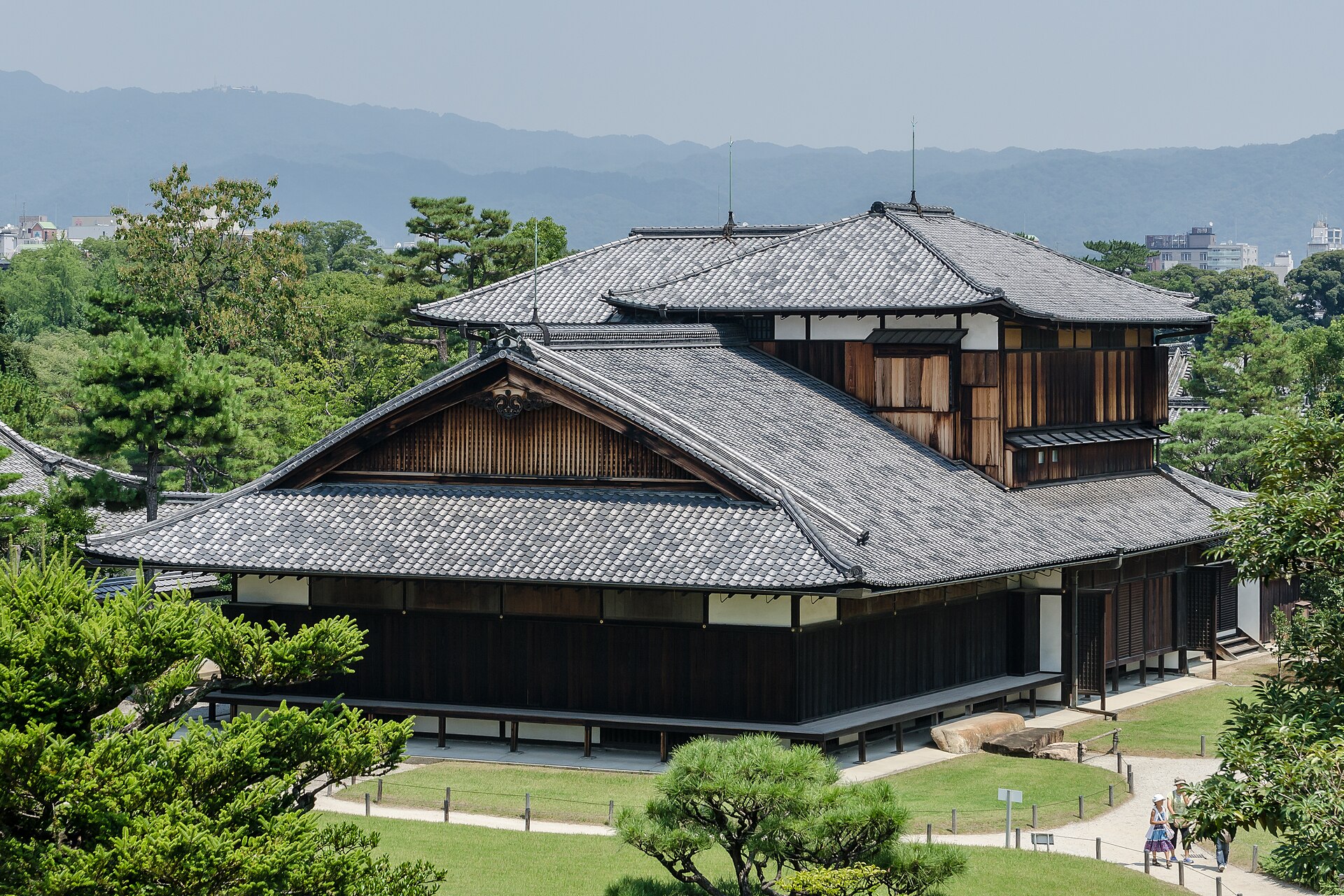
Nijo Castle was built to intimidate, and 400 years later it's still working. Tokugawa Ieyasu — the shogun who unified Japan after a century of civil war — constructed it in 1603 as his Kyoto residence, and every surface screams power. The Ninomaru Palace inside is a sequence of increasingly grand rooms designed so that by the time you reached the audience chamber, you were psychologically crushed before the shogun even opened his mouth.
The most famous feature is the nightingale floors — wooden corridors that chirp and squeak when you walk on them, designed as an intruder alarm system. The sound is produced by metal clamps beneath the floorboards rubbing against nails, and it's impossible to walk quietly no matter how carefully you tread. Every visitor tries. Every visitor fails. The sound fills the otherwise silent palace with a constant birdsong that's simultaneously beautiful and paranoid.
The wall paintings in the Ninomaru Palace are extraordinary — over 3,000 paintings by artists of the Kanō school cover the sliding doors and walls. Tigers prowl through bamboo forests in the waiting rooms (to intimidate visitors). Pine trees symbolise endurance in the audience halls. And in the shogun's private chambers, the paintings shift to peaceful scenes of birds and flowers — because he'd already made his point. The castle is where the last shogun formally returned power to the Emperor in 1867, ending 700 years of military rule. You can stand in the exact room where it happened.
Verified Facts
Nijo Castle was built in 1603 by Tokugawa Ieyasu
The nightingale floors were designed as a security measure against intruders
The Ninomaru Palace contains over 3,000 paintings by the Kanō school
The last shogun formally returned power to the Emperor at Nijo Castle in 1867
Get walking directions
541 Nijojocho, Nakagyo, Kyoto, 604-8301, Japan