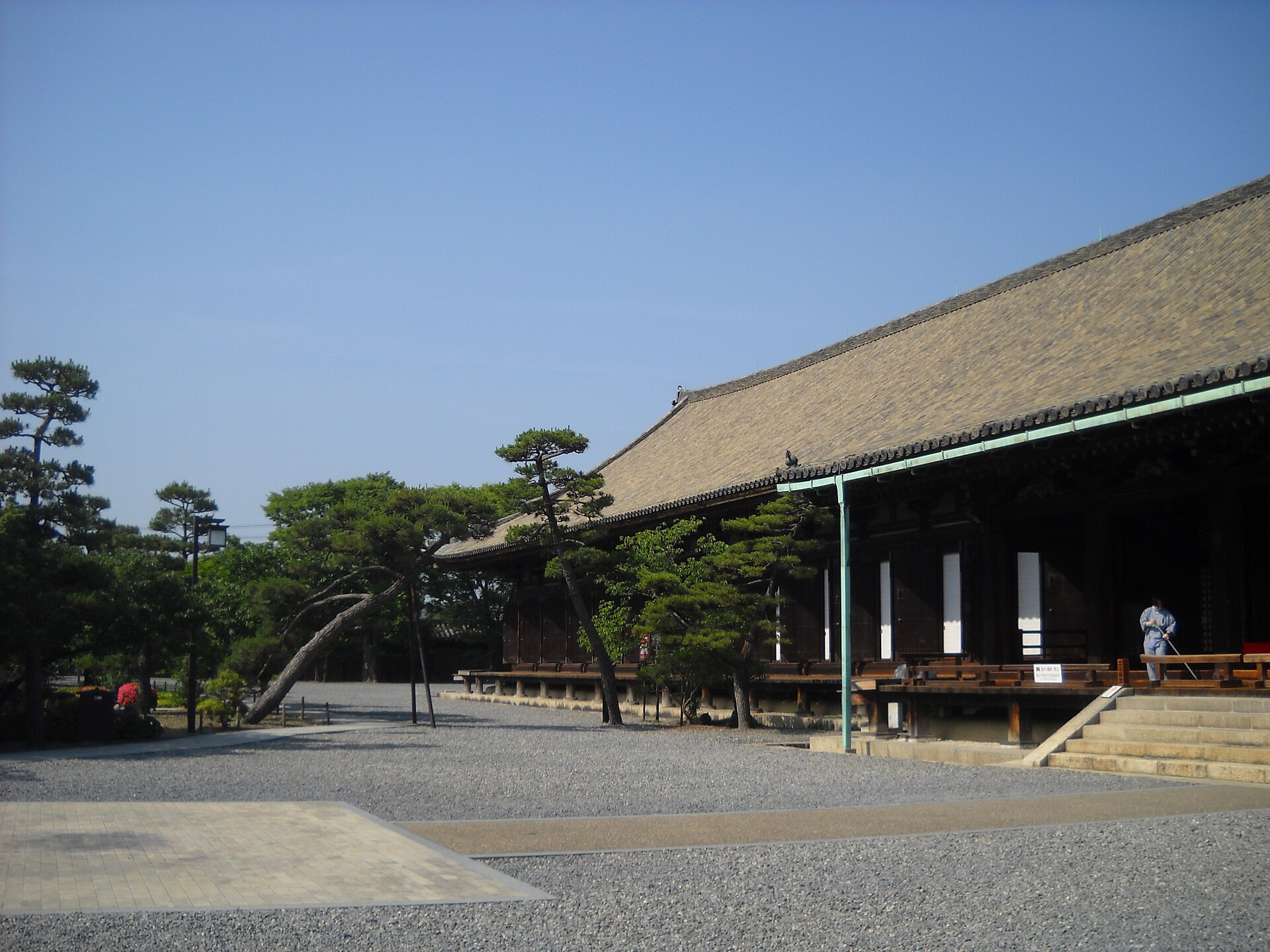
Walking into Sanjūsangen-dō is one of the most overwhelming visual experiences in Japan. One thousand and one life-sized wooden statues of Kannon, the goddess of mercy, stand in ranks that stretch the entire 120-metre length of the hall — the longest wooden structure in Japan. Each statue is slightly different. Each was carved by hand in the 13th century. And when you stand at one end and look down the row, the effect is like staring into infinity with a thousand golden faces staring back.
The central statue — a seated Kannon with eleven faces and a thousand arms — was carved by the legendary sculptor Tankei when he was 82 years old. It's considered one of the masterpieces of Japanese Buddhist art. The flanking statues each have 40 arms, and through Buddhist multiplication (each arm saves 25 worlds), each figure effectively has a thousand arms. The math is more theology than arithmetic, but the visual impact is undeniable.
The hall was originally built in 1164 and rebuilt after a fire in 1266 — the current structure is the 1266 version, which makes it 750 years old. The name means 'hall of thirty-three bays,' referring to the spaces between the pillars. For centuries, the long corridor was used for archery contests — samurai would try to shoot arrows the full 120-metre length of the building. The record, set in 1686, was 8,133 successful shots in 24 hours. Photography isn't allowed inside, which means the only way to experience it is to be there, which in an age of Instagram might be the temple's greatest gift.
Verified Facts
Sanjūsangen-dō contains 1,001 statues of Kannon
The hall is 120 metres long, the longest wooden structure in Japan
The central Kannon was carved by sculptor Tankei at age 82
The current building dates from 1266
The archery record of 8,133 shots in 24 hours was set in 1686
Get walking directions
657 Sanjusangendomawari, Higashiyama, Kyoto, 605-0941, Japan