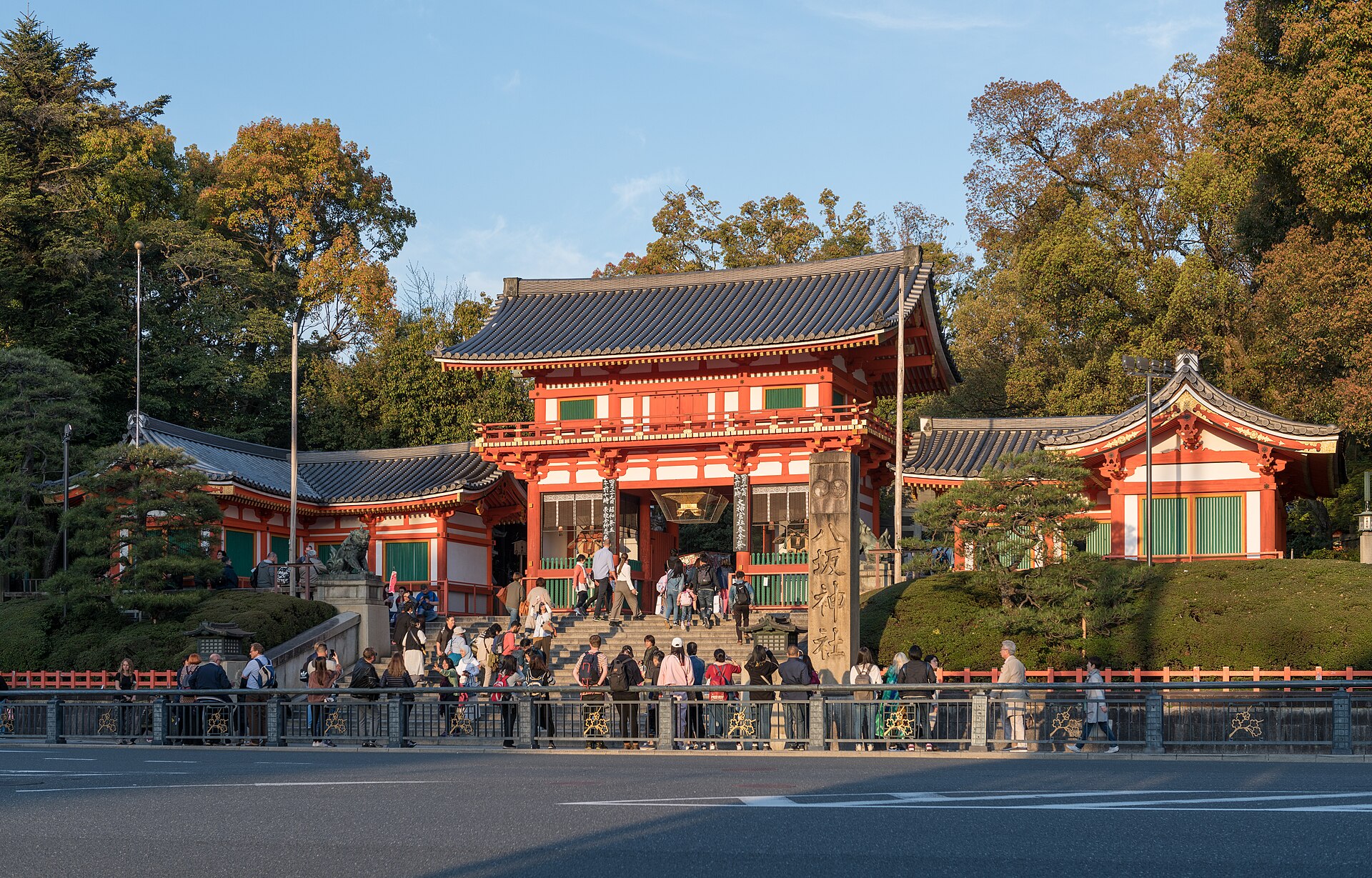
Yasaka Shrine guards the entrance to Gion like a spiritual bouncer, and it's been doing so since at least 656 AD. The bright vermillion gate at the intersection of Shijō and Higashiyama is one of Kyoto's most recognisable landmarks, and at any time of day you'll find locals stopping to pray on their way somewhere else — a quick clap, a bow, a tossed coin, and back into the crowd.
The shrine is dedicated to Susanoo, the storm god and brother of the sun goddess Amaterasu, and its most important role is hosting the Gion Matsuri — Japan's biggest festival, held every July. The festival originated in 869 as a prayer to stop a plague, and a thousand years later it's a month-long procession of massive wooden floats (some weighing 12 tonnes) pulled through the streets by teams of men in traditional clothing. If you're in Kyoto in mid-July, it's unmissable. If you're not, the shrine still hums with the residual energy of a place that's been the spiritual centre of Gion for 1,300 years.
The shrine grounds behind the main hall include Maruyama Park, Kyoto's most popular cherry blossom spot, where a single weeping cherry tree — lit from below at night — draws thousands during hanami season. The park fills with picnickers, food stalls, and the particular brand of dignified chaos that defines Japanese cherry blossom viewing. The shrine is free, open 24 hours, and beautifully lit at night — the lanterns along the approach create a warm orange glow that's best experienced after dinner in Gion.
Verified Facts
Some Gion Matsuri floats weigh up to 12 tonnes
Yasaka Shrine dates to at least 656 AD
The Gion Matsuri originated in 869 as a prayer to stop a plague
Maruyama Park behind the shrine is Kyoto's most popular cherry blossom viewing spot
Get walking directions
625 Gionmachi Kitagawa, Higashiyama Ward, Kyoto