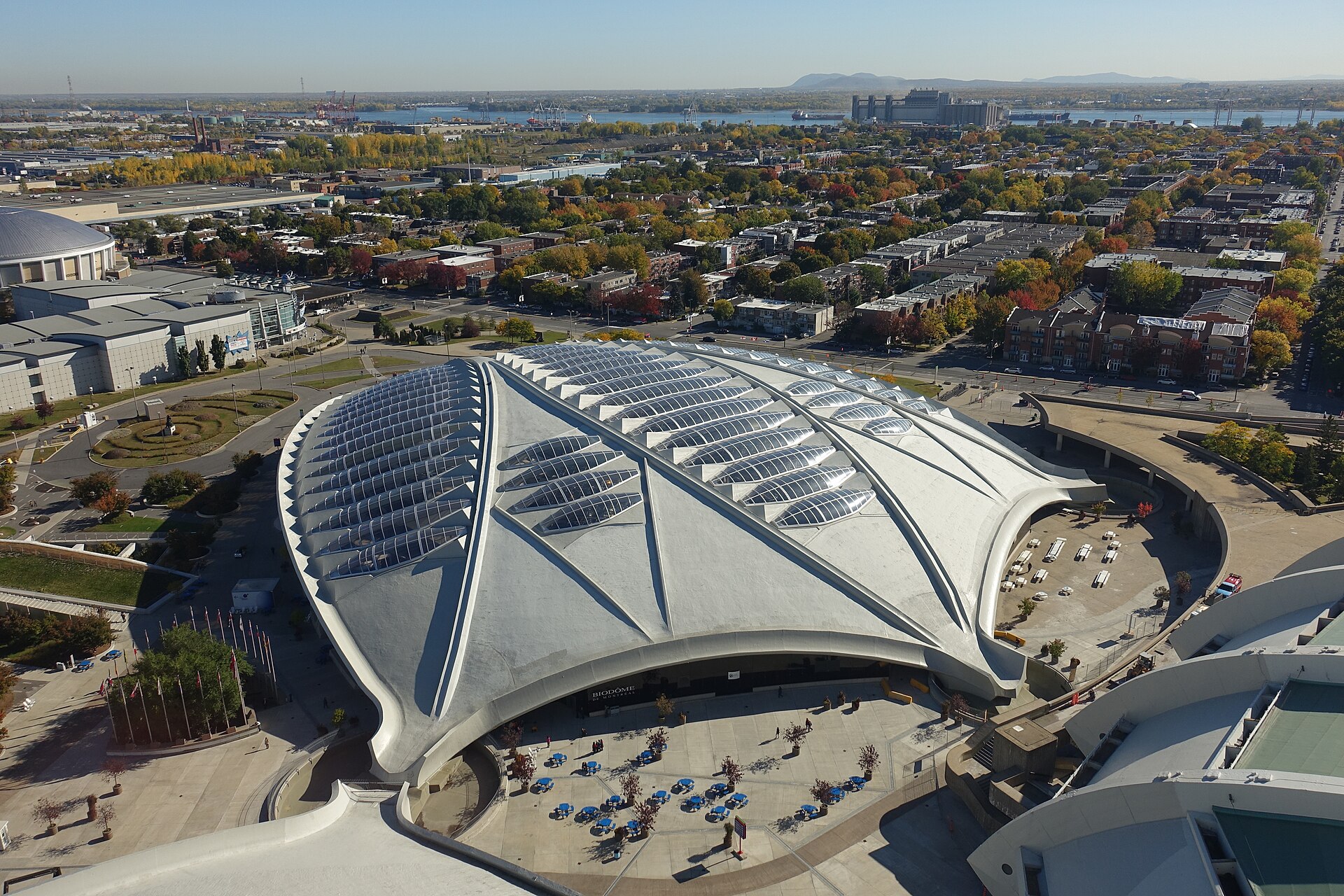
The Biodôme is one of the most unusual natural history museums in the world — a former Olympic cycling velodrome converted into four recreated ecosystems under one roof, where you walk from a tropical rainforest through a Laurentian maple forest to the St. Lawrence marine ecosystem and finally to the sub-Antarctic islands, all within 250 metres of each other.
The building was designed by Roger Taillibert as the cycling and judo venue for the 1976 Olympics, and its soaring concrete shell — which looks like a nautilus from outside — provided the volume needed to contain entire biomes when it was converted to the Biodôme in 1992. The Tropical Rainforest section, with its 20-metre canopy, free-flying birds, piranhas, caimans, and the humidity of an actual equatorial forest, is the most immersive — you emerge damp and slightly disoriented, which is the correct response to a tropical forest even when it's located in a Canadian winter.
The Biodôme underwent a major renovation completed in 2020 that updated the exhibits, improved animal habitats, and added climate-change messaging to the ecological presentations. The Laurentian Forest section changes with the seasons (the trees actually lose their leaves in autumn, and the beavers and otters behave according to the time of year), and the Sub-Antarctic section houses four species of penguin who seem entirely unbothered by their relocation from the southern hemisphere to a repurposed Olympic velodrome.
Verified Facts
The Biodôme was originally the cycling velodrome for the 1976 Olympics
It was converted to an environmental museum in 1992
Four ecosystems are recreated under one roof
The building was designed by Roger Taillibert
Get walking directions
4777 Avenue Pierre-de-Coubertin, Montreal