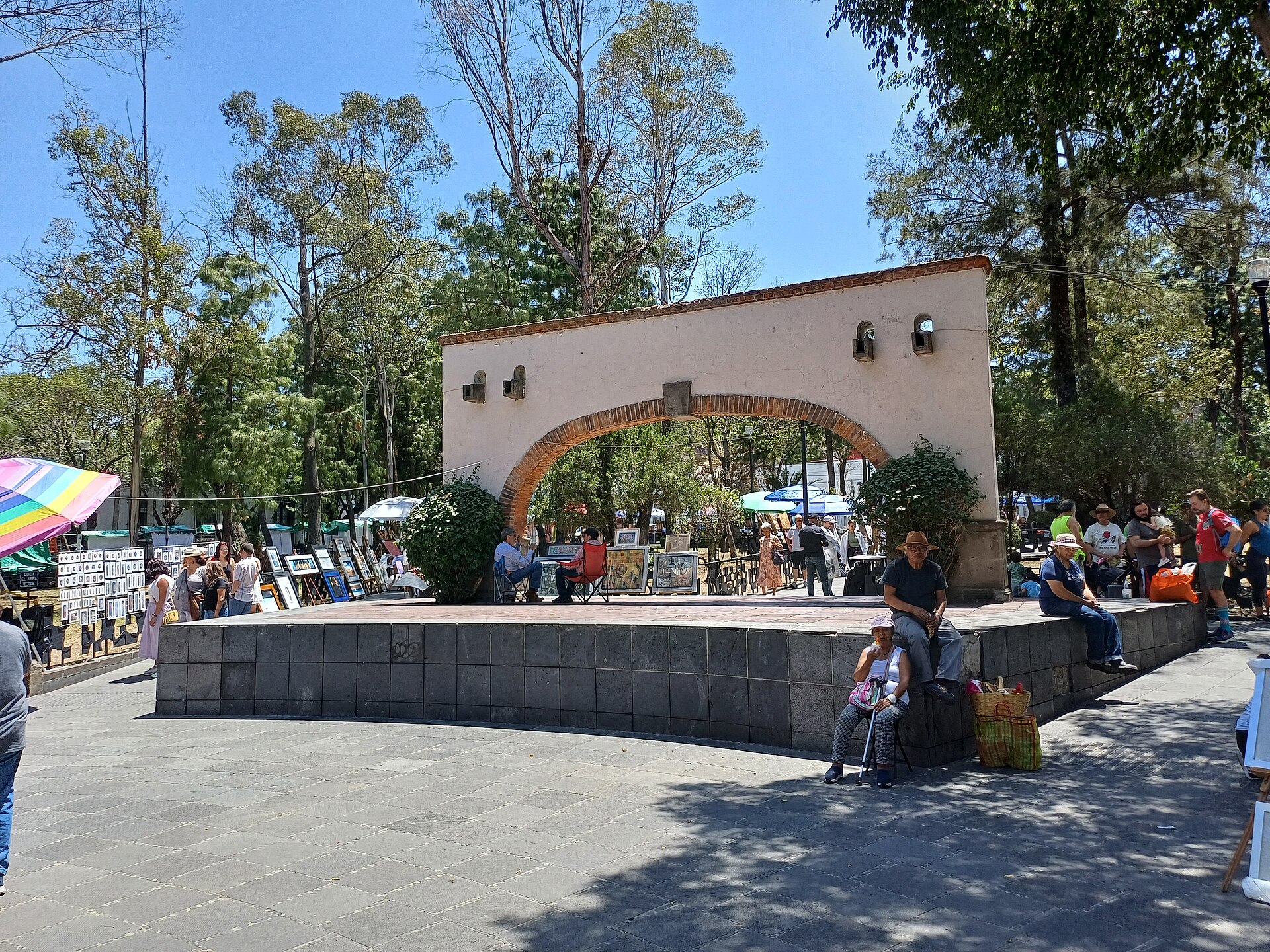
San Ángel is Mexico City's most picturesque colonial neighbourhood — a hillside district of cobblestone streets, stone walls, and flowering gardens that was a separate village until the city swallowed it in the 20th century. The neighbourhood centres on Plaza San Jacinto, a small square surrounded by colonial-era houses that hosts the Saturday Bazaar — one of Mexico City's best art markets, where painters, sculptors, jewellery makers, and craftspeople display work that ranges from tourist kitsch to genuinely excellent fine art.
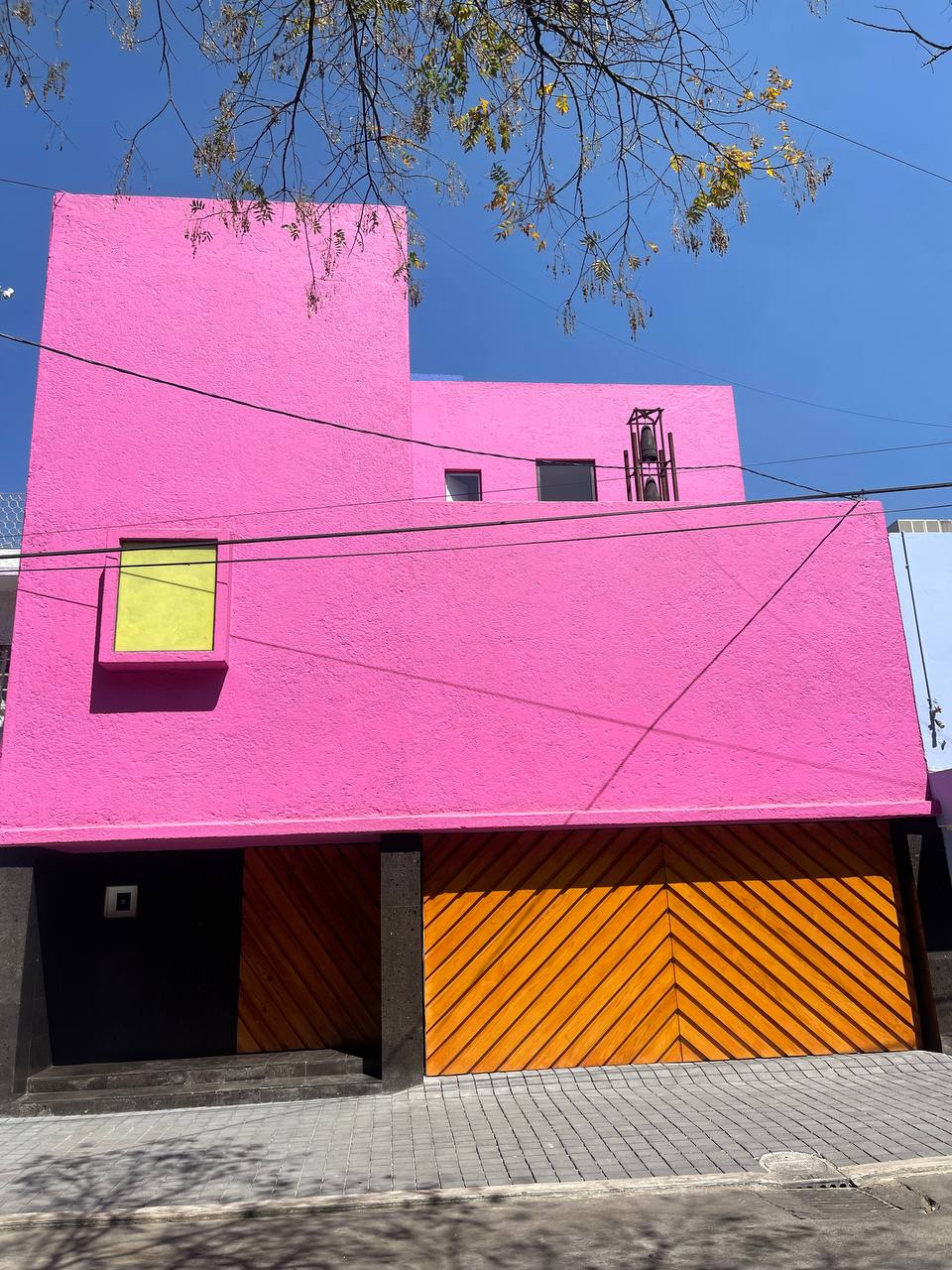
The architecture in San Ángel is colonial Mexico at its most romantic — thick stone walls painted in earth tones, carved wooden doors, interior courtyards with fountains, and the bougainvillea that climbs every available surface. The Museo Casa Estudio Diego Rivera y Frida Kahlo, designed by Juan O'Gorman in 1932, is a pair of modernist houses connected by a bridge where Rivera and Kahlo lived and worked — one of the earliest functionalist buildings in Latin America and a striking contrast to the colonial architecture surrounding it.
The San Ángel Inn, housed in a 17th-century Carmelite convent, is one of Mexico City's most elegant restaurants — old money, white tablecloths, and the kind of traditional Mexican cuisine that has been served to presidents and visiting dignitaries since the restaurant opened in 1963. The neighbourhood is best visited on Saturday for the bazaar, but a weekday visit offers quieter streets and the chance to walk the colonial lanes without the market crowds.
Verified Facts
San Ángel was historically a separate village from Mexico City
The Saturday Bazaar on Plaza San Jacinto is a major art market
The Rivera-Kahlo studio house was designed by Juan O'Gorman in 1932
The San Ángel Inn occupies a 17th-century Carmelite convent
Get walking directions
Plaza San Jacinto, San Ángel, Mexico City