Walking Tours in Mexico City
30 Landmarks in Mexico City
Alameda Central
Plaza Juárez, Atlampa, Cuauhtémoc, 06450, Mexico
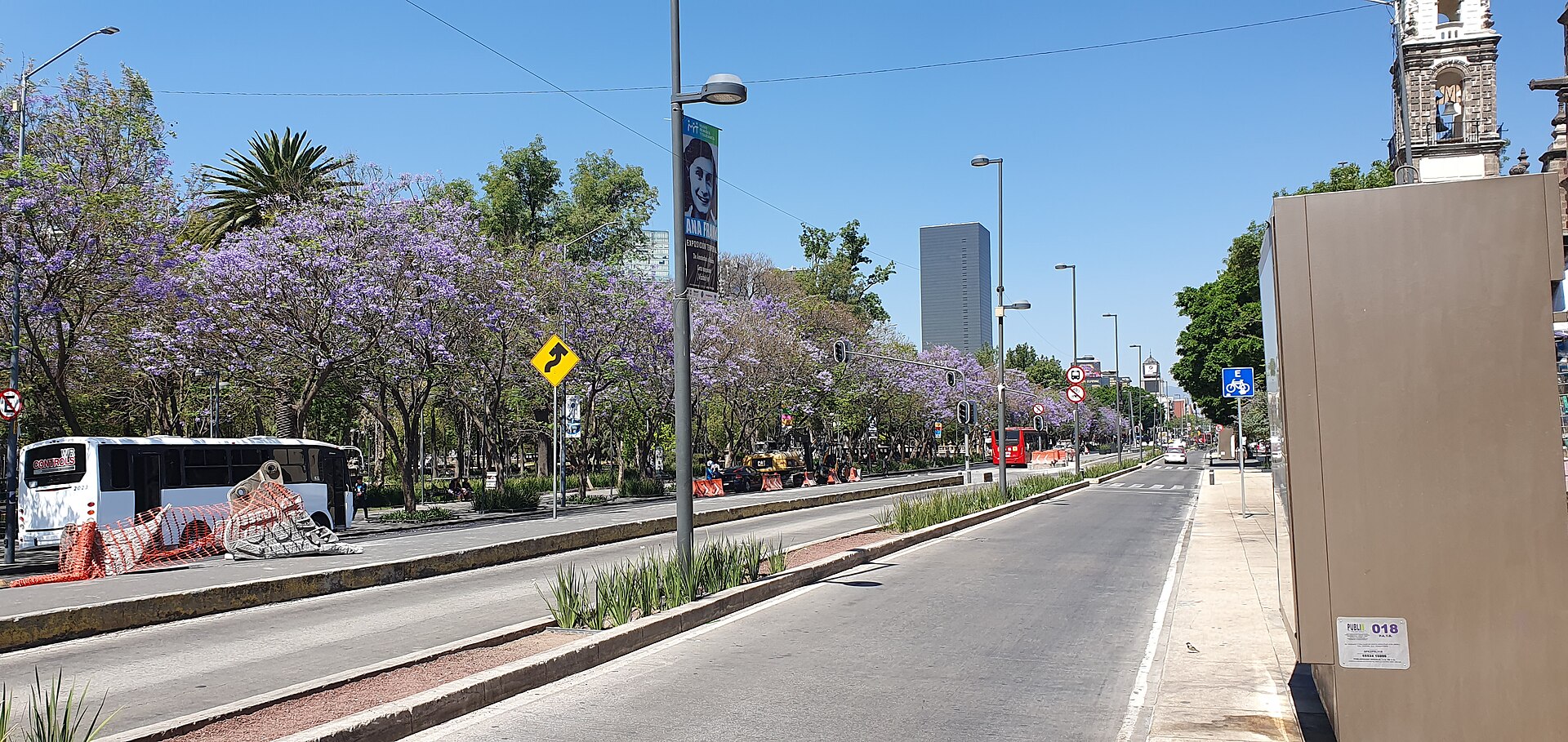
Alameda Central is the oldest public park in the Americas — established in 1592 on the site where the Spanish Inquisition burned heretics (a fact the tourist brochures tend to understate), and now a shaded rectangle of fountains, paths, and the afternoon crowd of office workers, street vendors, and families that fills every Mexican public space. The park sits between Bellas Artes and the Torre Latinoamericana, making it the green centre of the Centro Histórico. The park was modelled on the alamedas (poplar-lined promenades) of Spain and was originally reserved for the elite — indigenous people and mestizos were excluded until the 19th century. The fountains, iron railings, and the Hemiciclo a Juárez (a semicircular monument to President Benito Juárez, Mexico's most revered leader) give the park a formal, European character that contrasts with the informal energy of Mexican street life happening around and within it. The Museo Mural Diego Rivera, on the park's western edge, houses Rivera's famous mural 'Dream of a Sunday Afternoon in the Alameda' — a 15-metre panorama depicting Mexican history as a promenade through this very park, with historical figures from Cortés to Frida Kahlo strolling together. The mural was originally painted in the Hotel del Prado across the street but was moved to its purpose-built museum after the hotel was damaged in the 1985 earthquake. The park is best visited on a Sunday afternoon, when it fills with balloon sellers, cotton candy vendors, and the general atmosphere of a city that uses its public spaces as communal living rooms.
Basilica of Our Lady of Guadalupe
1 Avenida de Las Américas, Moderna, Benito Juárez, 03510, Mexico
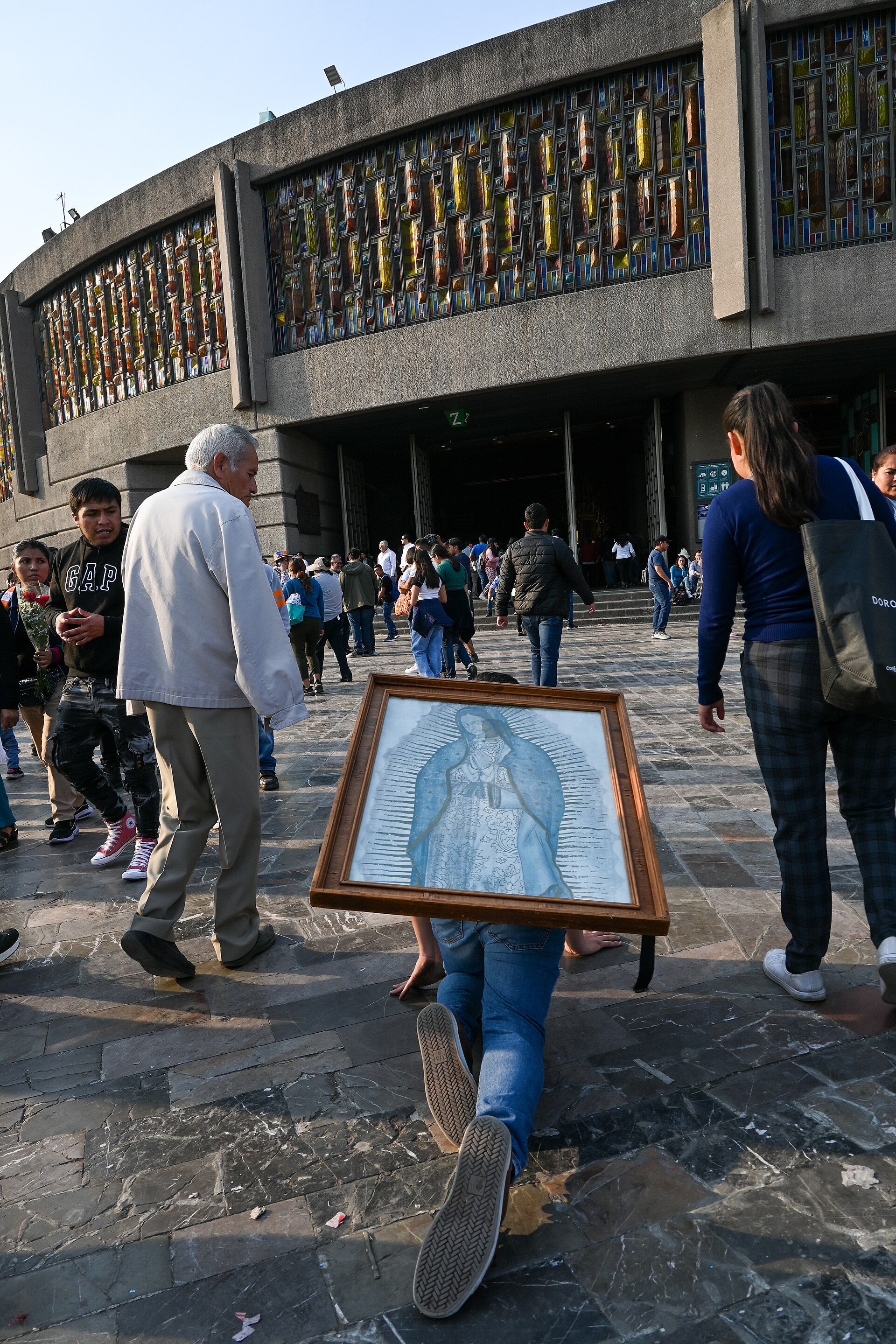
The Basilica of Guadalupe is the most visited Catholic pilgrimage site in the world — over 10 million people come here annually to venerate the image of the Virgin of Guadalupe, which according to tradition appeared miraculously on the cloak (tilma) of an indigenous man named Juan Diego in 1531 and has been on continuous display for nearly 500 years. The tilma, made of cactus fibre that should have disintegrated centuries ago, is displayed behind glass in the modern basilica, and a moving walkway carries visitors past it in a continuous flow. The modern basilica, completed in 1976, is a circular structure designed by Pedro Ramírez Vázquez (who also designed the Anthropology Museum) to accommodate 40,000 worshippers. The old basilica next door — a beautiful Baroque structure from 1709 — is visibly sinking into the soft ground and leans at an angle that makes the Leaning Tower of Pisa look vertical. The complex also includes the Tepeyac Hill where the apparition allegedly occurred, a chapel marking the spot, and several other churches and monuments. The Virgin of Guadalupe is not just a religious figure — she is a national symbol that transcends faith. Her image is on taxi dashboards, restaurant walls, protest banners, and tattoos across Mexico. The pilgrimage to the basilica on December 12 (her feast day) brings millions of people to the site, many walking for days from across Mexico, some crawling the final kilometres on their knees. Understanding the Basilica is essential to understanding Mexico, whether you're religious or not.
Casa Luis Barragán
12 Calle General Francisco Ramírez, Daniel Garza, Miguel Hidalgo, 11840, Mexico
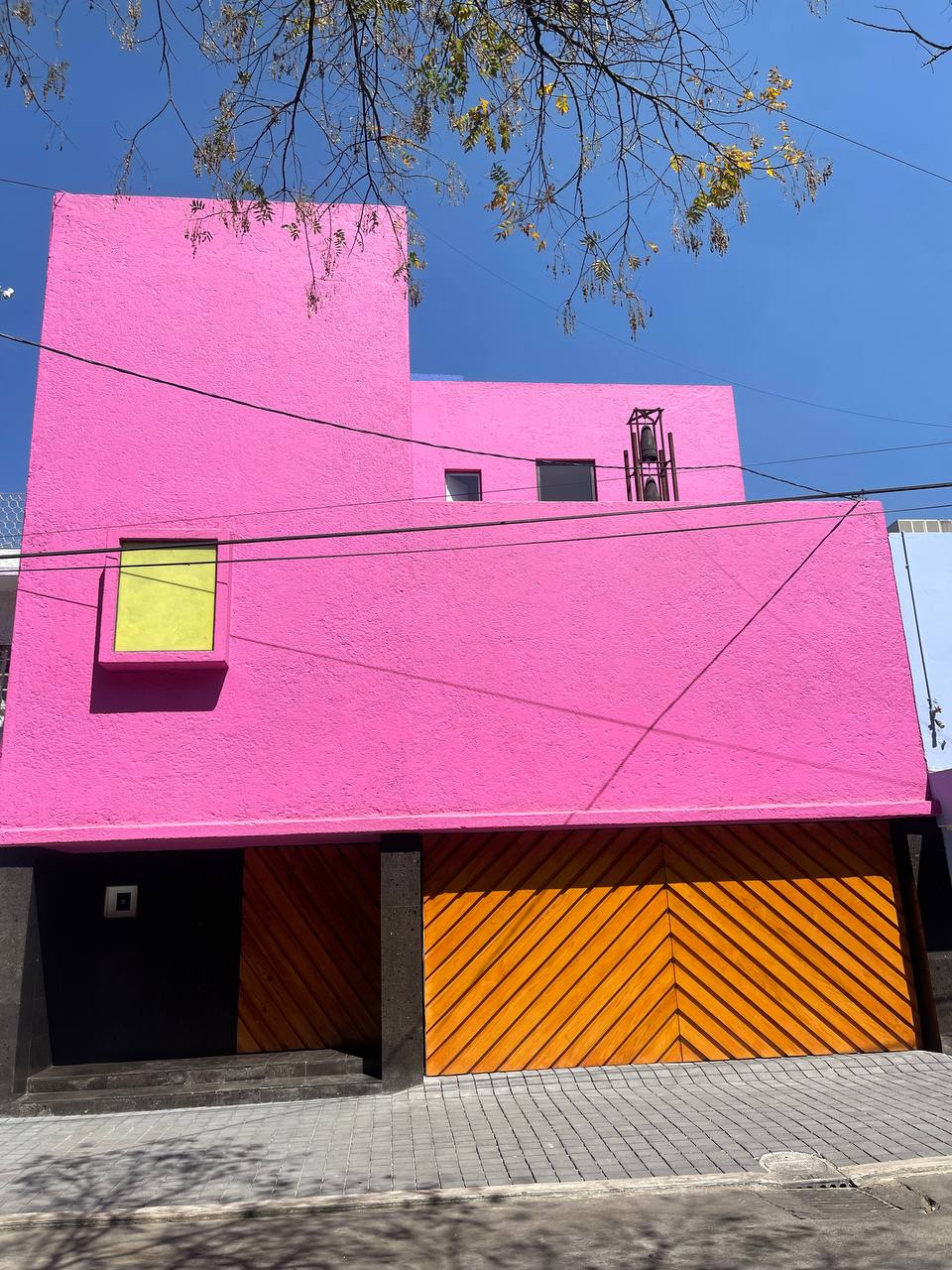
Casa Luis Barragán is a UNESCO World Heritage Site and the private residence of Mexico's most important architect — a masterpiece of emotional architecture where light, colour, water, and silence are used as building materials alongside concrete and wood. Barragán designed and lived in the house from 1948 until his death in 1988, and it's preserved exactly as he left it: the furniture, the art collection, the crucifixes, the books, and the garden that was as much a part of the architecture as the walls. The house is famous for its use of colour — entire walls painted in the vivid pinks, yellows, and purples of Mexican folk tradition, used not decoratively but structurally, to modify the quality of light and the emotional atmosphere of each room. The living room, with its double-height ceiling, massive wooden cross, and a wall of windows looking onto the garden, achieves a quality of contemplative stillness that makes you lower your voice involuntarily. The rooftop terrace, with its pink walls framing the sky, is one of the most photographed architectural spaces in Mexico. Visits are by guided tour only (book weeks in advance — capacity is limited to 6 people per tour), and the experience is intimate rather than monumental. The guide explains Barragán's design philosophy, his Catholic mysticism, his debts to Le Corbusier and Moroccan architecture, and the emotional logic behind every colour, surface, and view. The house is in the Tacubaya neighbourhood, which is not where tourists typically go, and arriving at an anonymous concrete facade on a busy street only to step inside and find one of the most beautiful domestic spaces in the world is a transition that Barragán designed deliberately.
Chapultepec Castle (Museo Nacional de Historia)
s/n Av. Reforma, Bosque de Chapultepec I Sección, Ciudad de México, 11860, México
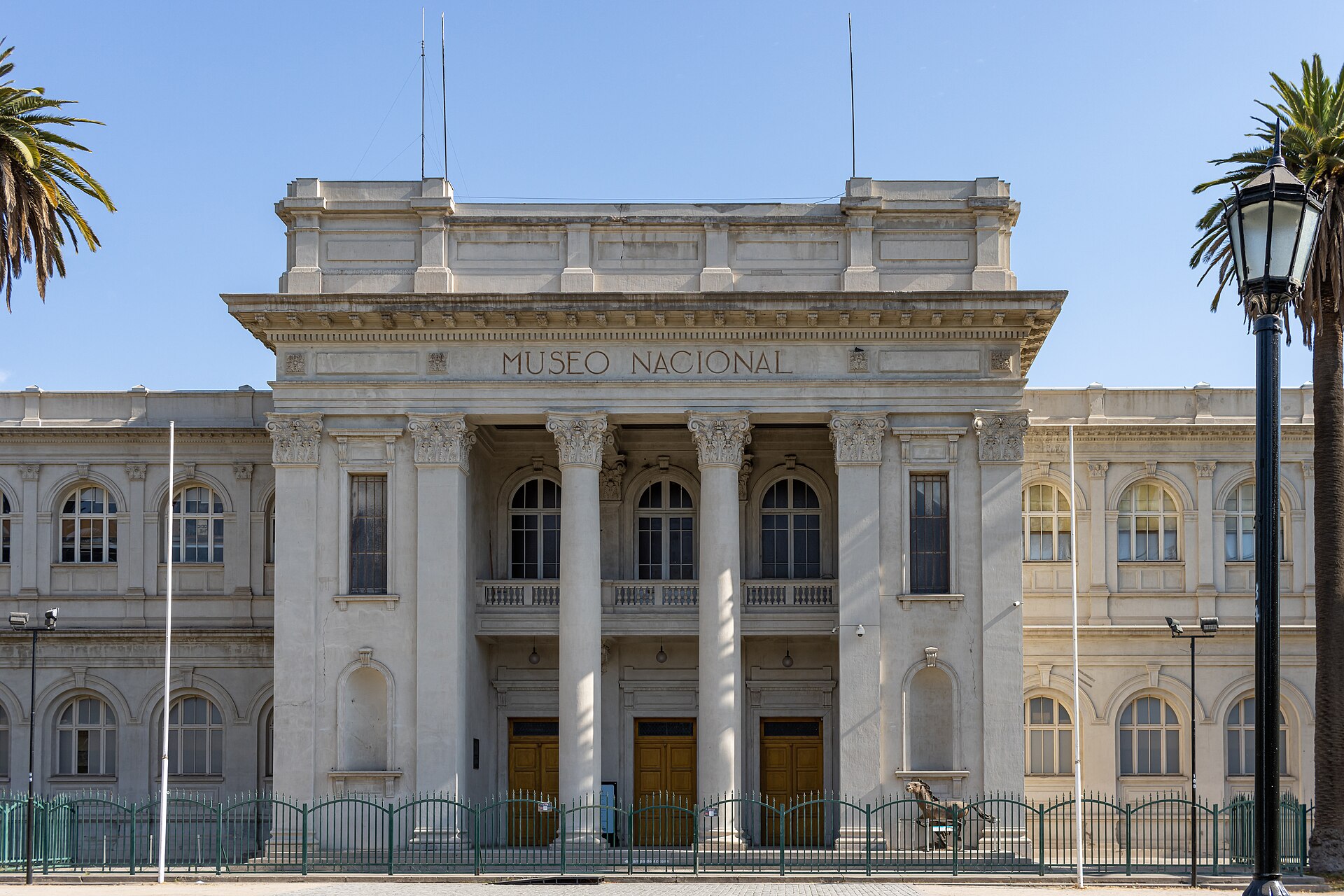
Chapultepec Castle is the only royal castle in the Americas — built in 1785 as a viceregal summer house on a hilltop that Aztec emperors had used as a retreat, later serving as a military academy, a presidential residence (Emperor Maximilian and his wife Carlota furnished it in European style during their brief, tragic reign), and since 1944 the National Museum of History. The museum covers Mexican history from the Spanish conquest to the Revolution, displayed in the castle's ornate rooms — including Maximilian and Carlota's personal chambers, furnished with their original European furniture and hung with portraits that radiate the oblivious elegance of an imposed monarchy that didn't last four years. The mural by Siqueiros in the main hall — 'From the Dictatorship of Porfirio Díaz to the Revolution' — covers an entire wall in the explosive, aggressive style that makes Siqueiros the most physically intense of the Mexican muralists. The castle's terrace provides the best view in Mexico City — a panoramic sweep from the Paseo de la Reforma stretching east to the Centro Histórico, with Chapultepec Park's 800-year-old ahuehuete trees directly below and the ring of volcanic mountains on the horizon. The walk up to the castle from the park entrance takes about 15 minutes through the shaded forest, and the combination of the climb, the view, and the history — from Aztec emperors to Carlota's madness to the Niños Héroes — makes Chapultepec Castle one of the most emotionally layered sites in the city.
Chapultepec Park (Bosque de Chapultepec)
s/n Av. Reforma, Bosque de Chapultepec I Sección, Ciudad de México, 11860, México
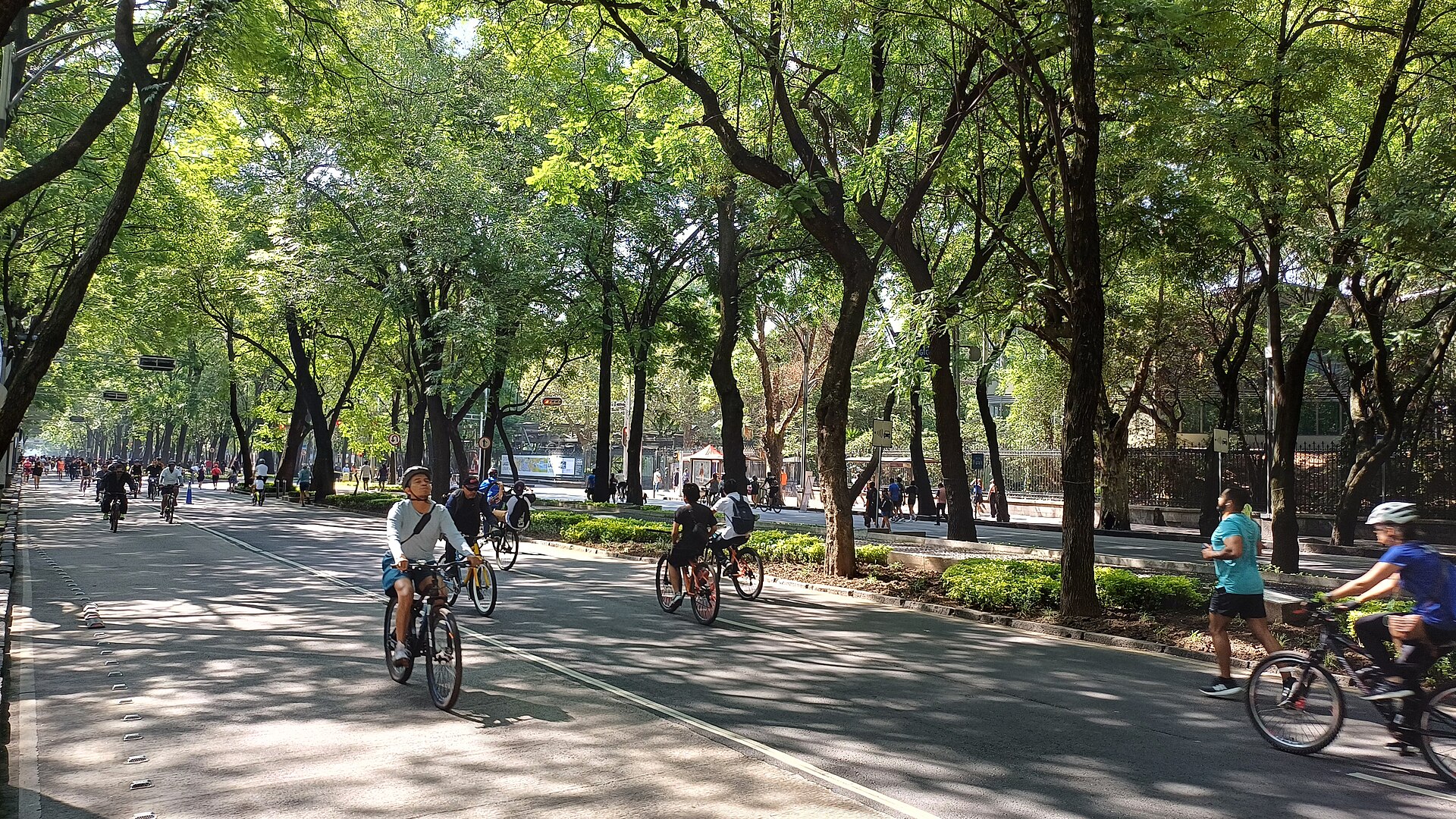
Chapultepec is the Central Park of Mexico City — except it's twice the size, contains seven museums, a castle, a zoo, a lake, and 800-year-old ahuehuete trees that were already ancient when the Aztecs used this hillside as a retreat for their emperors. At 686 hectares, it's one of the largest urban parks in the Western Hemisphere, and on a Sunday morning it fills with families, joggers, vendors selling cotton candy and balloons, and the general atmosphere of a city that takes its public spaces seriously. Chapultepec Castle, perched on the hill at the park's centre, is the only royal castle in the Americas — built as a viceregal retreat in the 18th century, used as a military academy (the famous Niños Héroes, boy soldiers who died defending it against American invasion in 1847, are national heroes), and served as the presidential residence until 1939. It now houses the National History Museum, and the views from the terrace — across the park canopy to the Paseo de la Reforma and the city skyline — are the best in Mexico City. The park's cultural density is staggering. The National Museum of Anthropology anchors the northern edge. The Museum of Modern Art and the Rufino Tamayo Museum sit among the trees. The Chapultepec Zoo (free admission) has been operating since Aztec times — Moctezuma maintained a menagerie on this site. The ahuehuete trees (Montezuma cypresses) that line the main paths are some of the oldest living things in the city, and their massive trunks and drooping branches create a canopy that makes even the hottest day feel liveable.
Coyoacán
Coyoacán, Mexico
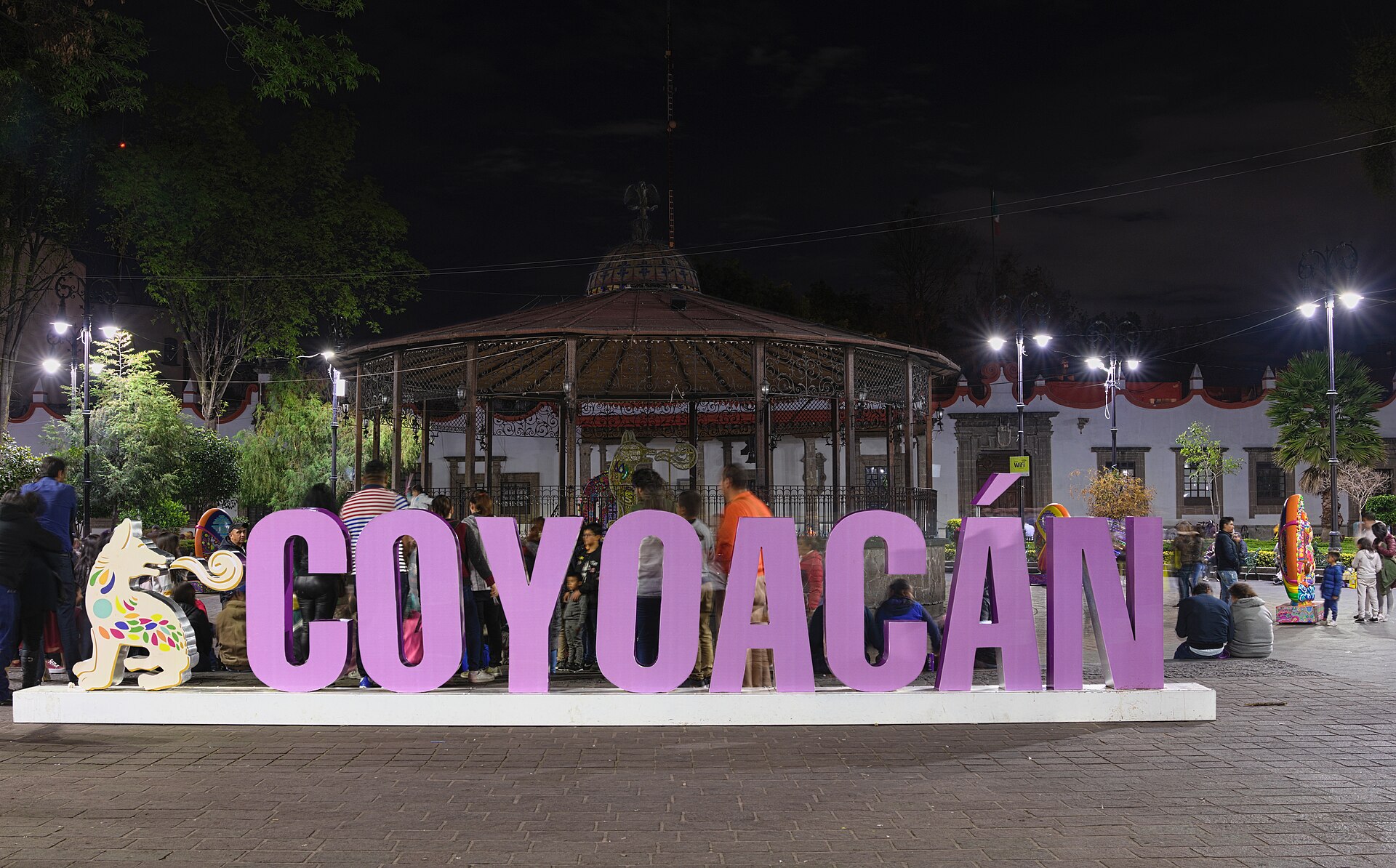
Coyoacán is Mexico City's most charming neighbourhood — a colonial-era village that was once separate from the capital and still feels like a small town despite being surrounded by 22 million people. The cobblestone streets, the tree-shaded plazas, the colourful houses with bougainvillea cascading over garden walls — Coyoacán has the atmosphere of a provincial Mexican town that happens to contain the Frida Kahlo Museum, the Leon Trotsky Museum, and some of the best food in the city. The central plaza, Jardín Centenario, is the neighbourhood's living room — a square shaded by enormous trees, anchored by the 16th-century San Juan Bautista Church, and surrounded by cafés and restaurants with outdoor seating where the Saturday and Sunday afternoon crowd can extend a lunch well into the evening. The Coyoacán Market (Mercado de Coyoacán) is a few blocks south and serves tostadas, tlacoyos, quesadillas, and the fresh fruit waters (aguas frescas) that are Mexico's answer to everything. Hernán Cortés established his headquarters in Coyoacán after the conquest of Tenochtitlan in 1521, and the neighbourhood's colonial architecture dates to that period. The Casa de Cortés (now the local government offices), the Jardín Hidalgo, and the narrow streets connecting the plazas preserve a colonial scale and rhythm that the rest of Mexico City's relentless development has erased. The neighbourhood is also where Leon Trotsky lived in exile until his assassination in 1940 — his house, preserved as a museum with the study where he was killed, is one of the most chilling historical sites in the city.
Mercado de San Juan
Mexico
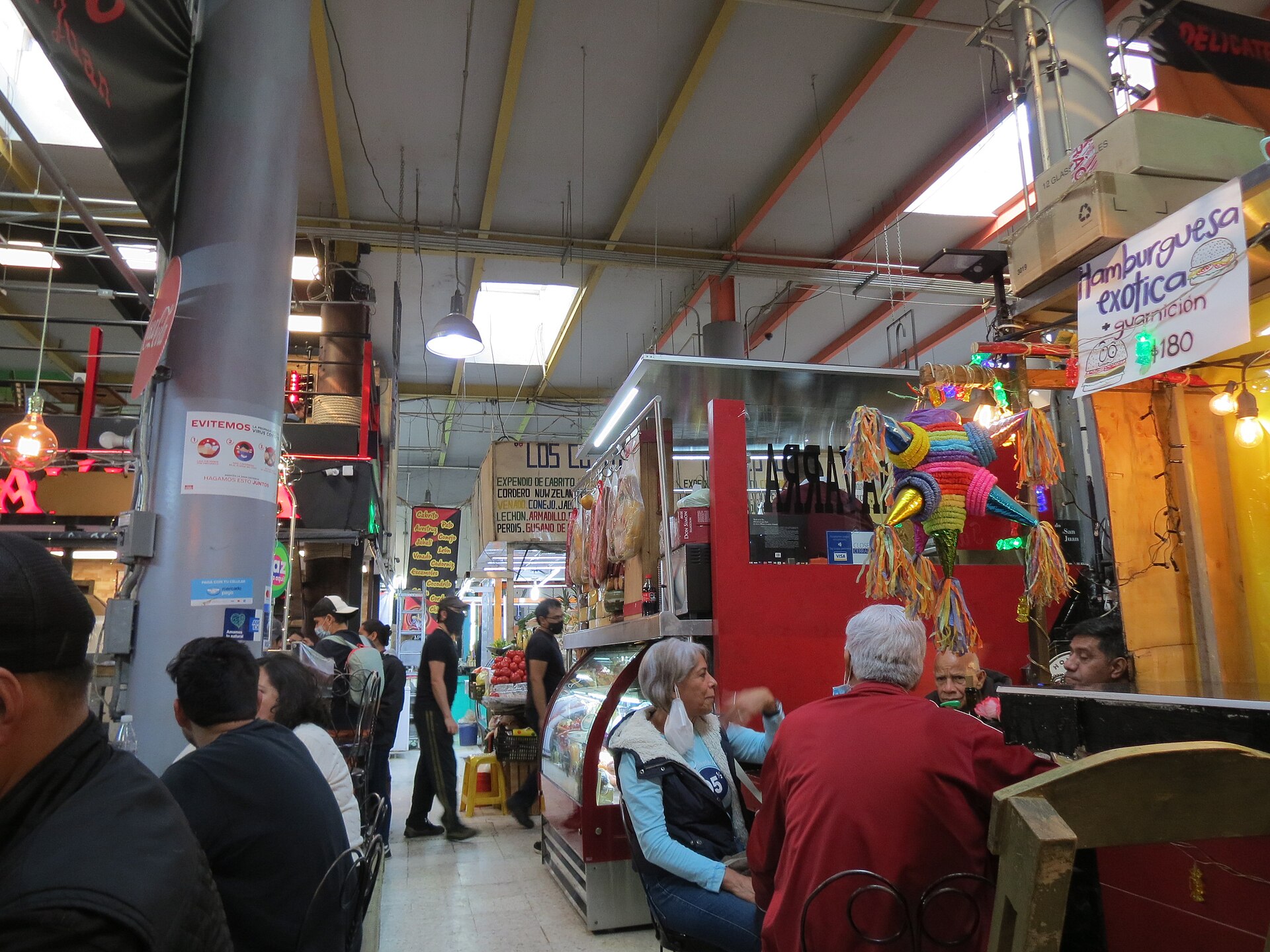
Mercado de San Juan is Mexico City's gourmet market — a covered market in the Centro Histórico that specialises in imported and exotic ingredients alongside some of the finest traditional Mexican cooking in the city. This is where chefs from the city's top restaurants come to buy their ingredients, and where adventurous eaters come to try things that don't appear on tourist menus: escamoles (ant larvae), chapulines (grasshoppers), huitlacoche (corn fungus), and crocodile, ostrich, or wild boar prepared to order. The exotic proteins get the attention, but the market's everyday offerings are equally impressive. The seafood stalls serve ceviche, aguachile, and raw oysters at communal counters. The cheese vendors stock varieties from every region of Mexico alongside French and Italian imports. The charcuterie, the fresh pasta, the tropical fruit — the quality throughout is noticeably higher than the average Mexican market, which is why the prices are too. The market's location, a few blocks south of Bellas Artes, makes it a natural lunch stop on a Centro Histórico walk. The best strategy is to walk the entire market first, decide what you want, then return to order — the stalls operate as combination deli counters and restaurants, and most will prepare your purchase on the spot with tortillas, salsa, and a cold beer. Arrive before noon on a weekday for the most relaxed experience; weekends bring crowds and some stalls close early when they sell out.
Mercado Roma
225 Calle de Querétaro, Roma Norte, Cuauhtémoc, 06700, Mexico
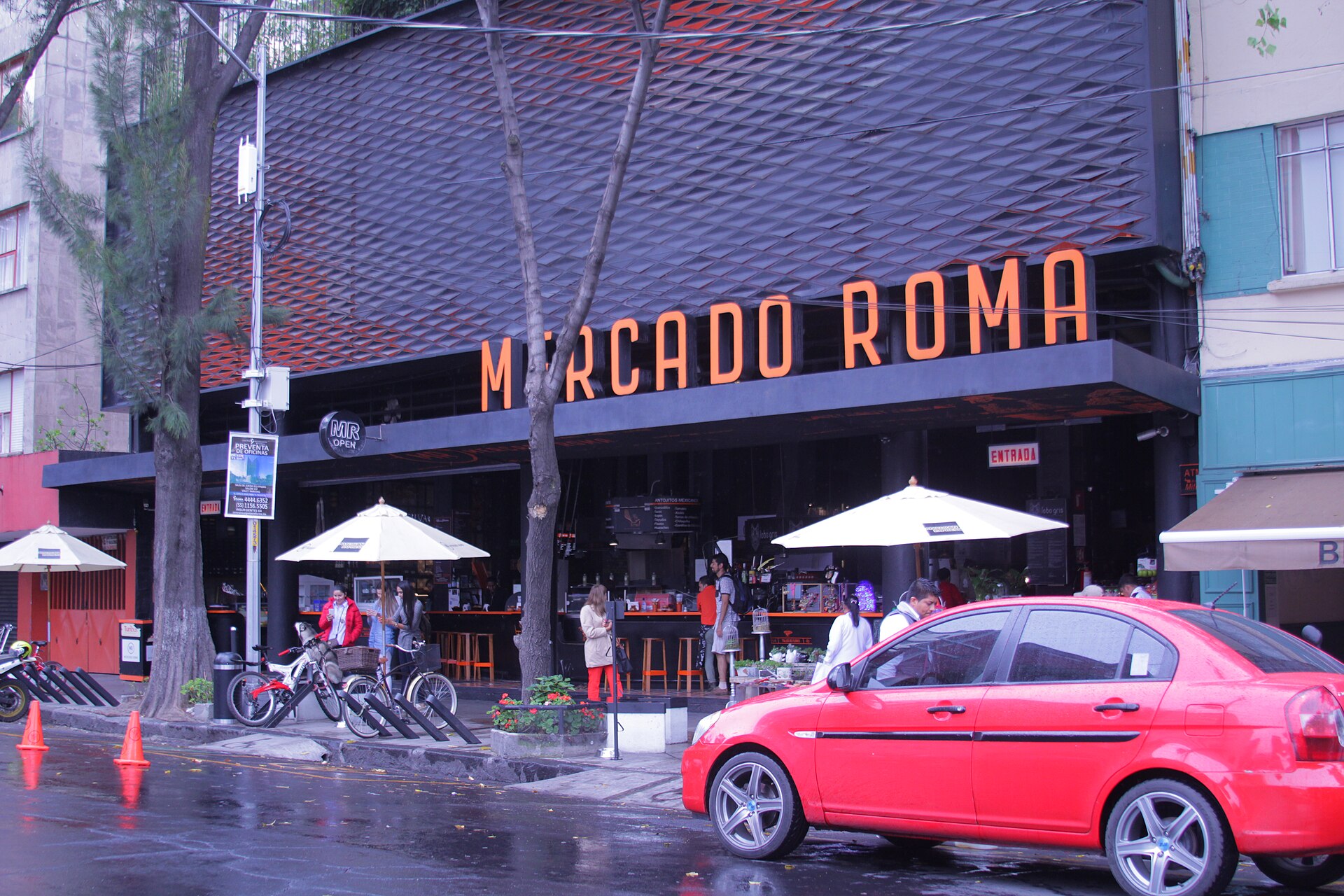
Mercado Roma is Mexico City's modern food hall — a converted warehouse in Colonia Roma that houses over 60 vendors selling everything from craft beer and mezcal to gourmet tacos, artisanal ice cream, and the kind of elevated Mexican street food that has made the city a global gastronomic destination. Unlike the traditional mercados, which are chaotic and glorious and require some confidence to navigate, Mercado Roma is designed for comfortable grazing — clean, well-lit, and organised around a central bar. The vendors represent the full range of contemporary Mexican food culture: traditional taquerías serving al pastor and suadero alongside sushi burritos, craft coffee roasters, a natural wine bar, and stalls specialising in regional cuisines (Oaxacan mole, Yucatecan cochinita pibil) that you'd normally need to travel across the country to taste. The rooftop terrace has a bar and additional food stalls, and on a warm evening the crowd — young, professional, and food-obsessed — creates an atmosphere that's equal parts neighbourhood hangout and culinary showcase. Mercado Roma catches criticism from purists who see it as gentrification of the traditional mercado concept, and the prices are higher than a street-side taquería. But for visitors who want an introduction to the breadth of Mexican cuisine in a single, navigable space — or who want to compare a craft mezcal flight with artisanal tacos without walking across the city — it's an excellent starting point that leads naturally to exploring the more traditional markets and street food stalls in the surrounding neighbourhood.
Metropolitan Cathedral
Plaza de La Constitución, Tlalpan Centro, Tlalpan, 14000, Mexico
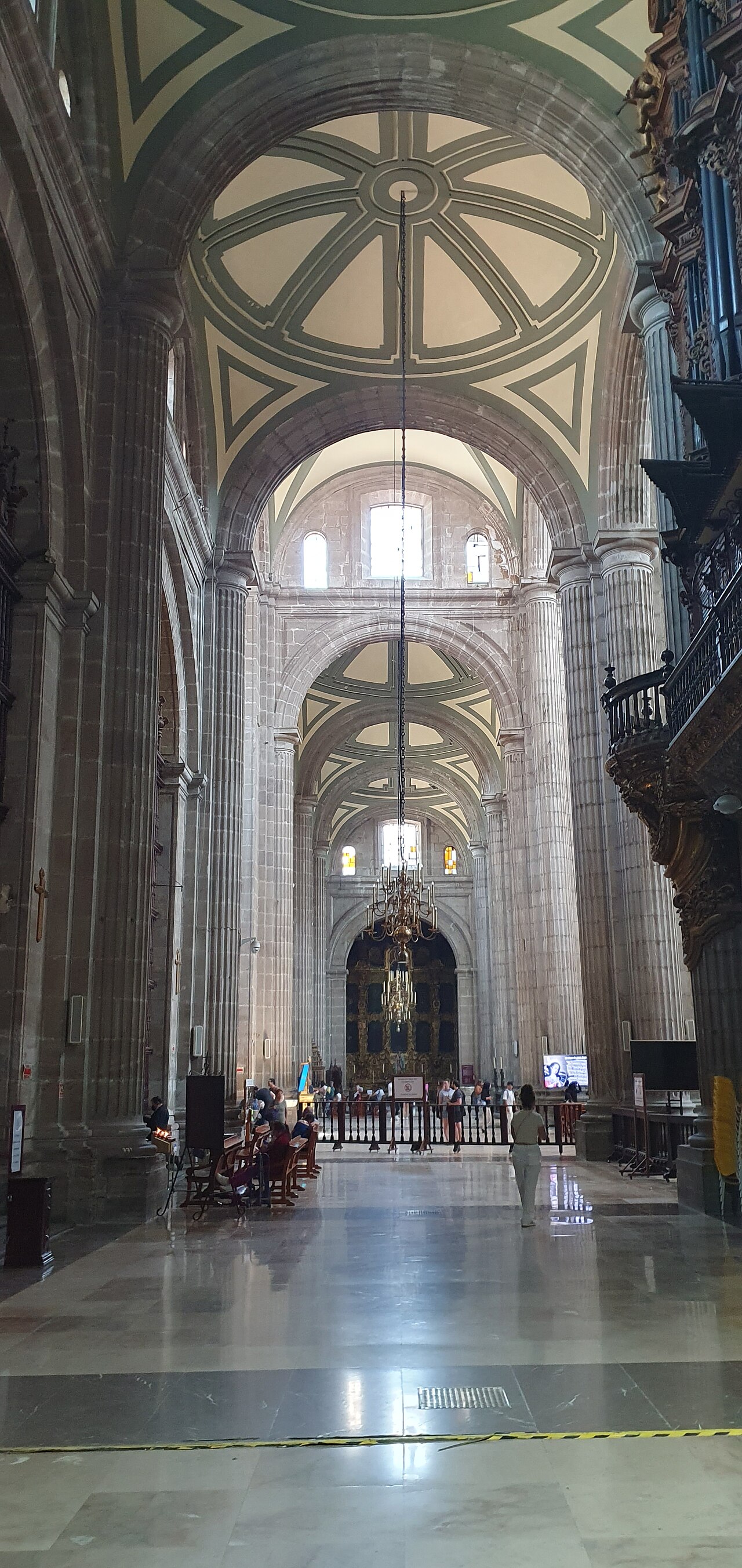
The Metropolitan Cathedral is the largest and oldest cathedral in Latin America — a massive structure built on the ruins of an Aztec temple over a period of 250 years (1573-1813), which means it contains every architectural style that swept through Mexico during those centuries: Renaissance, Baroque, Neoclassical, and Churrigueresque all live under one roof, and the result is less a coherent building than a timeline of Mexican religious architecture. The cathedral's most immediately visible feature is that it's sinking — visibly and unevenly. Mexico City is built on the bed of a drained lake, and the soft clay beneath the cathedral has been compressing under the building's weight since the 16th century. The interior floor tilts noticeably, columns lean at angles that would alarm a structural engineer, and a pendulum installed in the nave shows the building's ongoing movement in real time. A major stabilisation project in the 1990s and 2000s partially corrected the tilt, but the cathedral remains a building in slow-motion negotiation with gravity. The interior is vast and dark — 14 chapels line the nave, each with its own retable (altar screen), and the Altar de los Reyes at the far end is a Churrigueresque explosion of gilded woodcarving that rises from floor to ceiling in a display of decorative excess that makes Baroque look restrained. The cathedral organ, one of the largest in the Americas, is played during services, and the sound in the cavernous stone interior is extraordinary. Below the cathedral, the crypt contains the remains of archbishops and colonial officials, adding another historical layer to a site that is already three civilisations deep.
Museo de Arte Moderno
Paseo de La Reforma, Lomas de Chapultepec, Miguel Hidalgo, 11000, Mexico
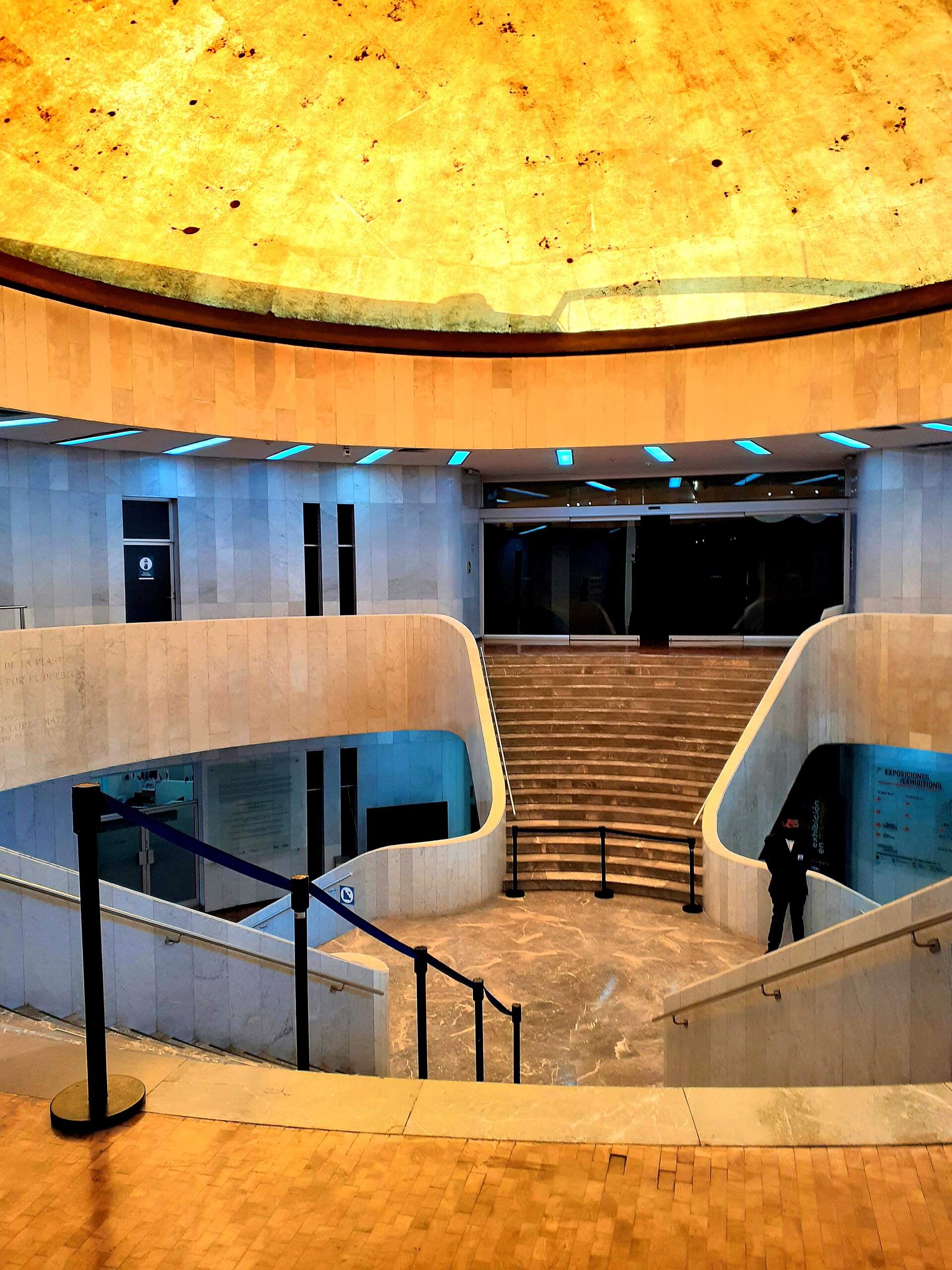
The Museum of Modern Art sits in Chapultepec Park and houses the most important collection of 20th-century Mexican art — including Frida Kahlo's 'The Two Fridas,' one of the most recognisable paintings in Latin American art, and significant works by Rivera, Orozco, Siqueiros, Tamayo, and the generation of artists who made Mexico one of the most important centres of 20th-century art. The museum building, designed by Pedro Ramírez Vázquez and Rafael Mijares in 1964, is a circular structure with floor-to-ceiling windows that let the park's trees into the gallery spaces — a design decision that makes the museum feel more like an art-filled greenhouse than a white cube. The permanent collection traces Mexican modernism from the post-revolutionary muralists through the Ruptura movement (artists who broke with the political nationalism of muralism in the 1950s and 60s) to contemporary practice. 'The Two Fridas' — showing two versions of Kahlo holding hands, one in European dress with an exposed and broken heart, the other in traditional Tehuana dress with an intact heart — is the painting most visitors come to see, and encountering it in person after seeing it reproduced thousands of times is a reminder of how much art loses in reproduction. The painting is larger and more intensely coloured than photographs suggest, and the vulnerability of Kahlo's self-presentation is more powerful at actual scale. The sculpture garden outside, set among the park's ancient trees, includes works by major Mexican and international sculptors.
Museo Frida Kahlo (Casa Azul)
Londres 247, Del Carmen, Coyoacán, Mexico City
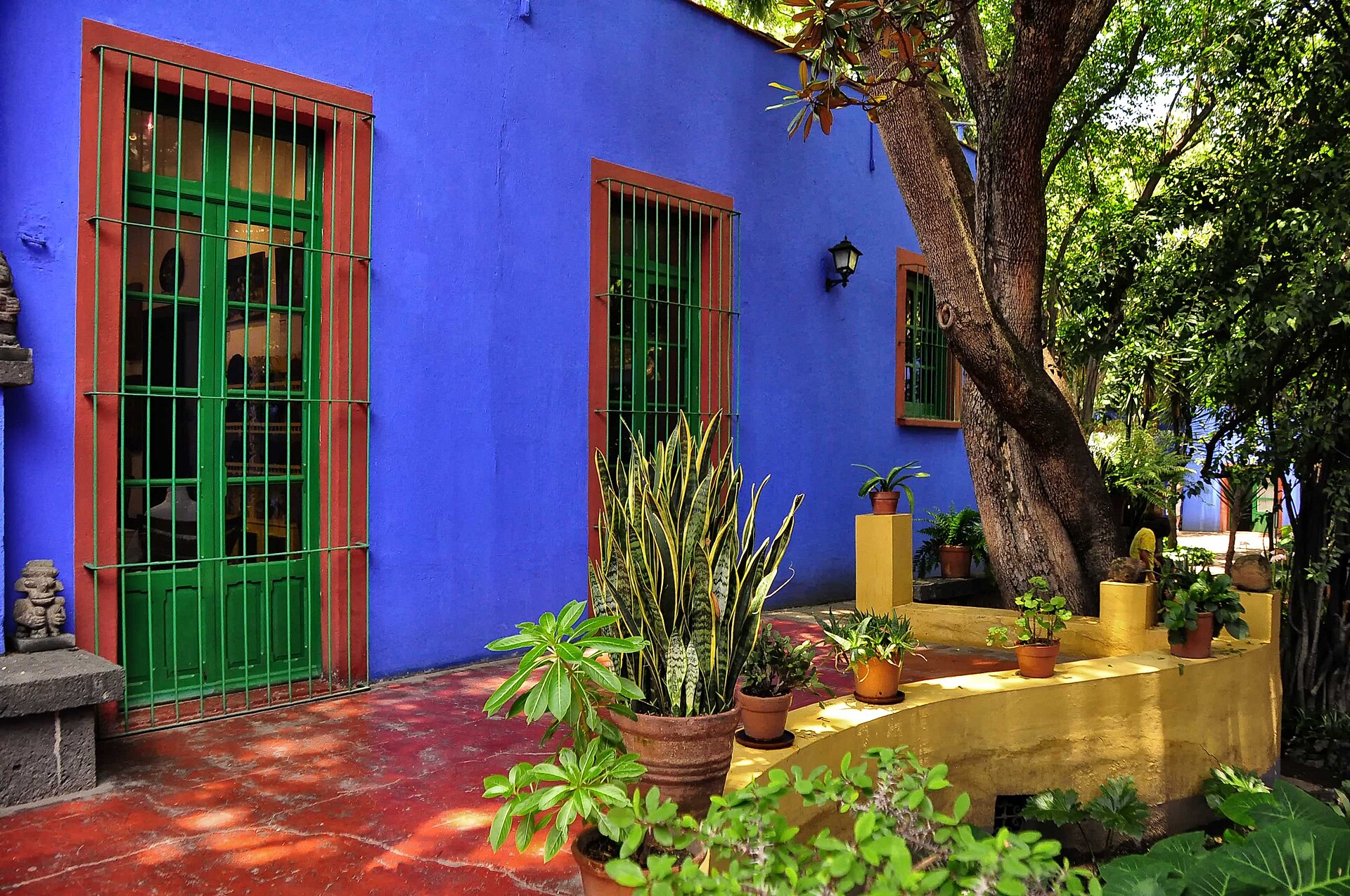
The Casa Azul (Blue House) is where Frida Kahlo was born, lived, painted, suffered, and died — a cobalt-blue colonial house in Coyoacán that has been preserved as a museum since 1958 and has become the most visited museum in Mexico City. The house is small by museum standards but dense with Kahlo's presence: her wheelchair sits in front of her easel, her medicines and corsets are displayed in her bedroom, and the gardens she tended are still planted with the cacti and tropical flowers that appear in her paintings. Kahlo shared the house with Diego Rivera, and their turbulent relationship — they married, divorced, and remarried — is documented throughout. Rivera's collection of pre-Hispanic sculptures fills the garden and studio, and the kitchen is preserved with the couple's pottery, utensils, and the names 'Diego' and 'Frida' spelled out in miniature ceramic cups on the wall. The domestic intimacy of the museum — this is where they ate, argued, painted, and received visitors from Trotsky to André Breton — makes it a more personal experience than any formal gallery could provide. The museum is perpetually crowded, and advance online booking is essential — walk-up visitors are regularly turned away, especially on weekends. The Coyoacán neighbourhood itself is worth the trip: a colonial-era village that has been absorbed by the city but retains its cobblestone streets, plazas, and the atmosphere of a small town. The Coyoacán market, a few blocks from the museum, serves some of the best tostadas in the city.
Museo Jumex
Blvd. Miguel de Cervantes Saavedra 303, Polanco, Mexico City
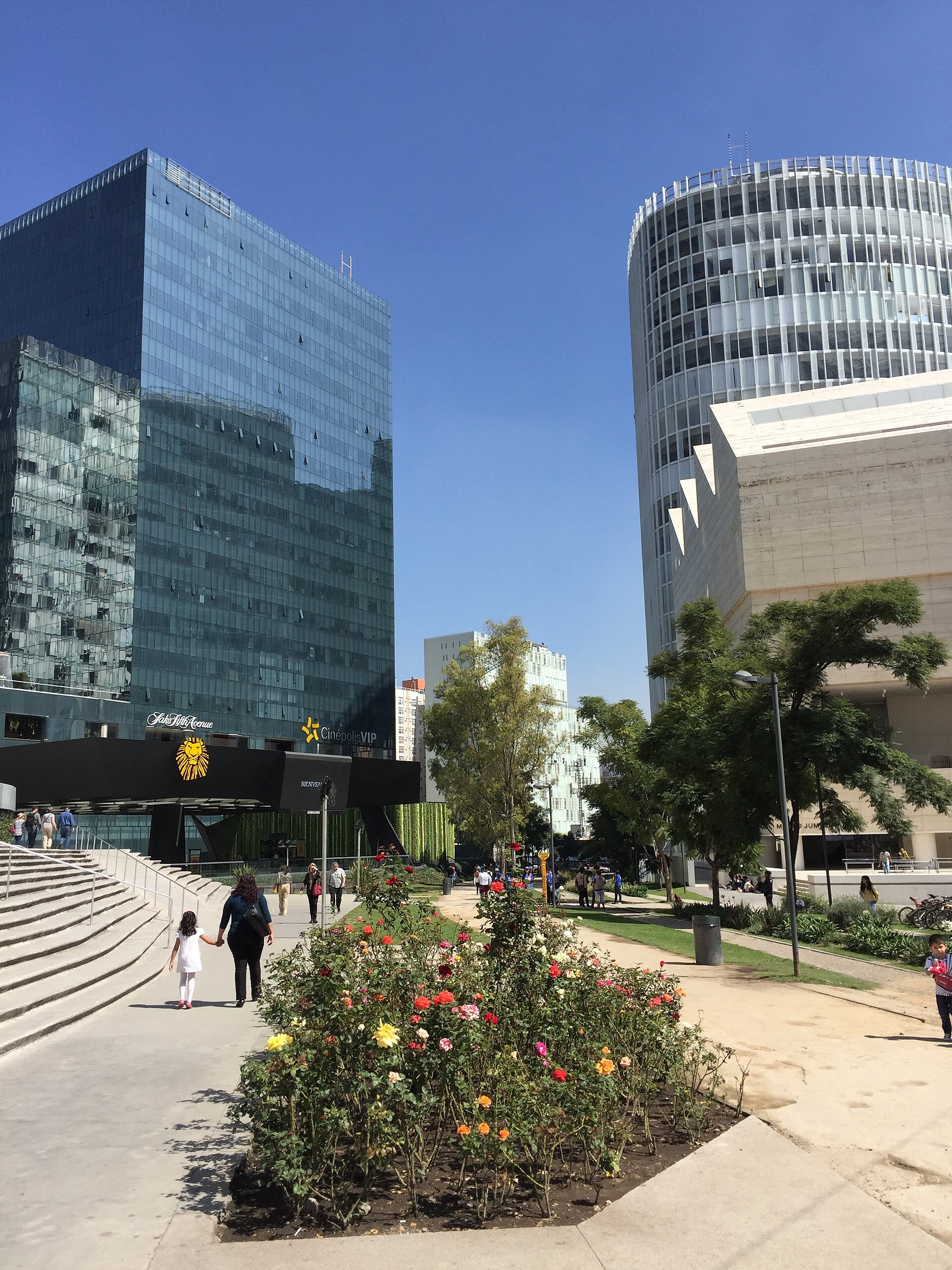
Museo Jumex is Mexico's most important contemporary art museum — a sawtooth-roofed building designed by British architect David Chipperfield that sits next to the Museo Soumaya in Polanco and houses the collection of Eugenio López Alonso, heir to the Jumex juice fortune and Latin America's most significant contemporary art collector. The building is the anti-Soumaya — where Soumaya is curved, shimmering, and attention-seeking, Jumex is rectangular, travertine-clad, and quietly confident. Chipperfield's design uses a series of triangular skylights (the sawtooth roof) to flood the upper galleries with diffused natural light, creating exhibition conditions that rival any museum in the world. The building is small by museum standards (4,000 square metres of gallery space), but the restraint of the architecture allows the art to command full attention. The collection includes over 3,000 works by artists including Jeff Koons, Damien Hirst, Cy Twombly, Gabriel Orozco, and Andy Warhol, and the temporary exhibition programme — curated with a sophistication that has earned Jumex comparisons to the Guggenheim and the New Museum — brings major international shows to Mexico City. The ground-floor café, with its terrace overlooking the plaza shared with Soumaya, is an excellent place to sit and contemplate the architectural conversation between Chipperfield's restrained modernism and Romero's exuberant futurism — two buildings that couldn't look more different but that together have made this corner of Polanco one of the most interesting museum districts in the Americas.
Museo Leon Trotsky
410 Circuito interior Río Churubusco, Del Carmen, Coyoacán, 04100, Mexico
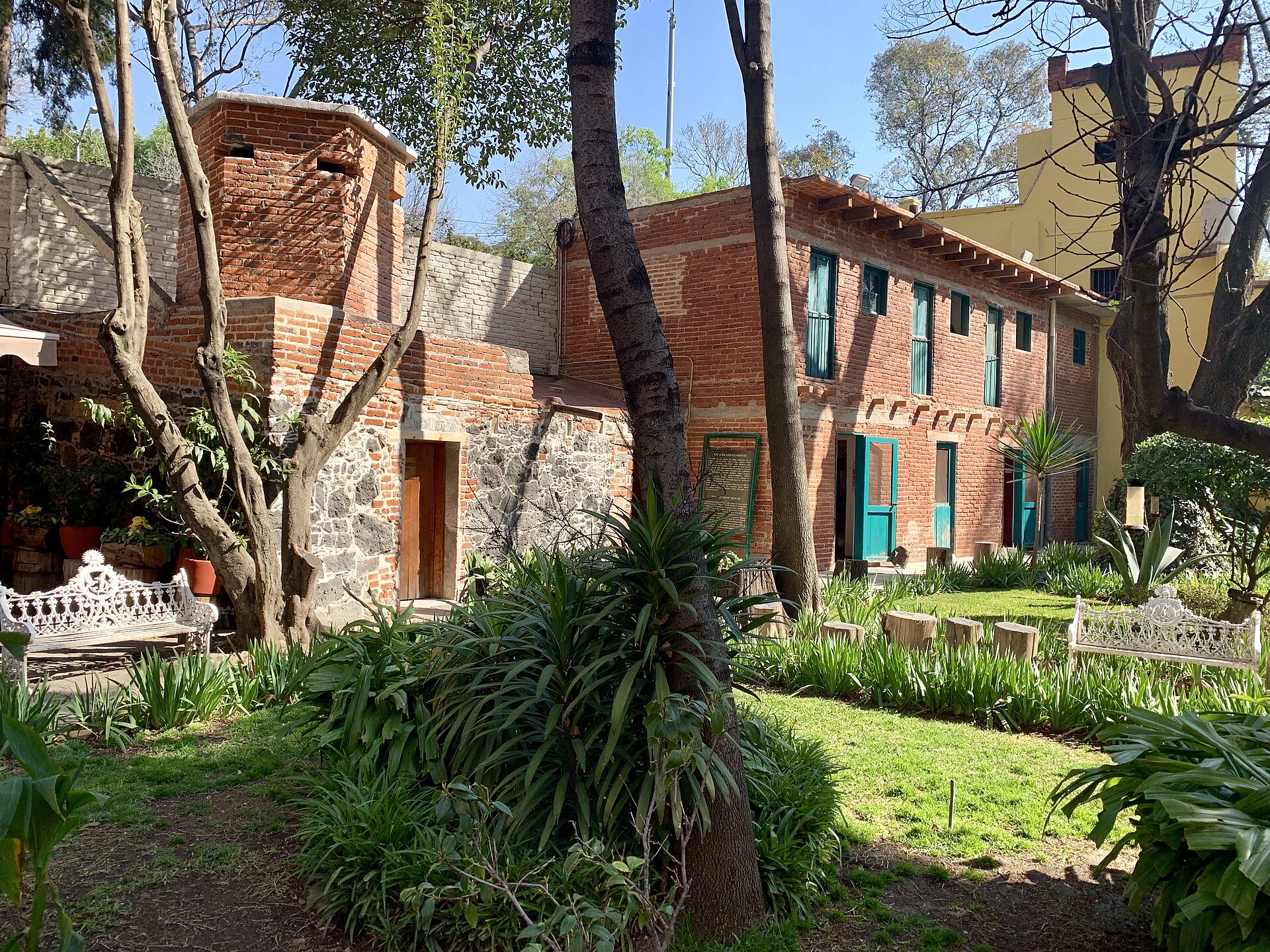
The Leon Trotsky Museum is the house where the exiled Russian revolutionary lived his final years and was assassinated on August 20, 1940 — killed by Ramón Mercader, a Spanish NKVD agent who embedded an ice axe in Trotsky's skull while he was reading at his desk. The house is preserved almost exactly as it was on the day of the murder, and visiting it is one of the most unsettling historical experiences in Mexico City. Trotsky arrived in Mexico in 1937, granted asylum by President Lázaro Cárdenas, and initially lived with Diego Rivera and Frida Kahlo at the Casa Azul (where he had an affair with Kahlo that ended his friendship with Rivera). After the falling out, he moved to this house on Río Churubusco, where he fortified the compound with high walls, guard towers, and steel doors — security measures that proved insufficient when Mercader, posing as a sympathiser, was admitted to the study. The study where the assassination took place is preserved with Trotsky's books, papers, and personal effects. The gardens contain his grave — a modest stone marker bearing the hammer and sickle — and the cactus garden he tended during his exile. The museum's small exhibition rooms display photographs, letters, and documents that trace Trotsky's trajectory from Bolshevik leader to Stalinist target to Mexican exile. The house is in Coyoacán, a 10-minute walk from the Frida Kahlo Museum, and visiting both on the same day provides a connected narrative of two households that briefly, explosively intersected.
Museo Nacional de Antropología
Avenida Explanada, Lomas de Chapultepec, Miguel Hidalgo, 11000, Mexico
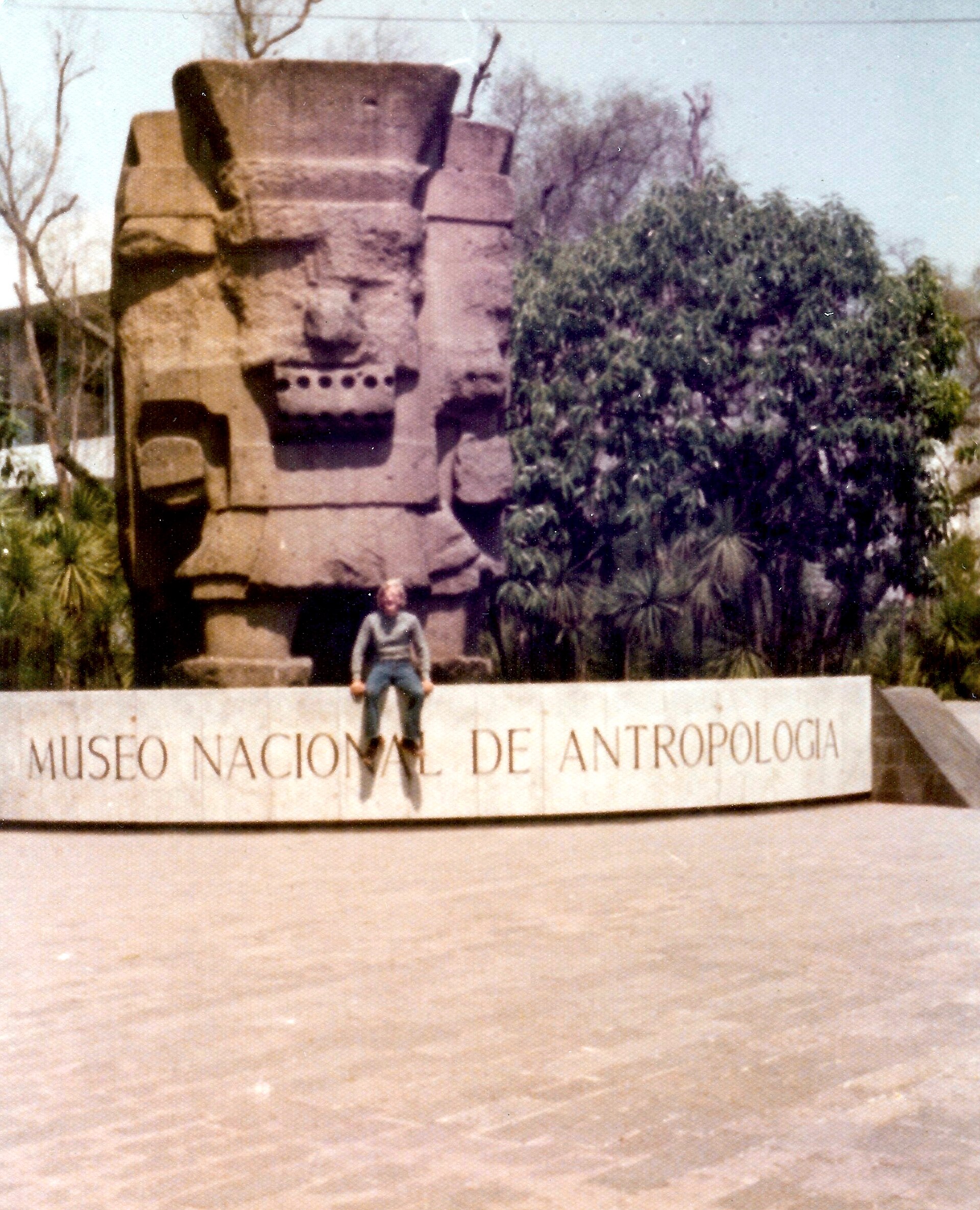
The National Museum of Anthropology is the most important museum in Latin America and one of the finest archaeological museums in the world — a modernist masterpiece designed by Pedro Ramírez Vázquez in 1964 that houses the material culture of Mexico's pre-Hispanic civilisations in a building that is itself a work of art. The central courtyard, sheltered by a single concrete column supporting an enormous aluminium umbrella that cascades water on all sides, is one of the most dramatic architectural spaces in any museum anywhere. The Aztec Hall is the museum's centrepiece — home to the Sun Stone (often miscalled the Aztec Calendar), a 24-ton basalt disc carved in the 15th century that has become the single most recognisable symbol of pre-Hispanic Mexico. The stone is displayed at the back of the hall, and the approach — through galleries of Aztec sculpture, ceramics, and architectural models — builds to the reveal with cinematic pacing. The Maya Hall, the Oaxaca Hall (Zapotec and Mixtec), and the Teotihuacán Hall each contain collections that would anchor a major museum in any other country. The museum is large enough to overwhelm — 23 exhibition halls covering every major pre-Hispanic culture from the Olmec to the Aztec, plus ethnographic galleries on the upper floor showing indigenous cultures that survive today. The practical advice is to choose two or three halls rather than attempting everything. The Aztec and Maya halls are essential. The Teotihuacán hall is extraordinary. Everything else is a bonus. Budget three hours minimum, and arrive when the museum opens to beat the school groups.
Museo Nacional de Arte (MUNAL)
Tacuba 8, Centro Histórico, Mexico City
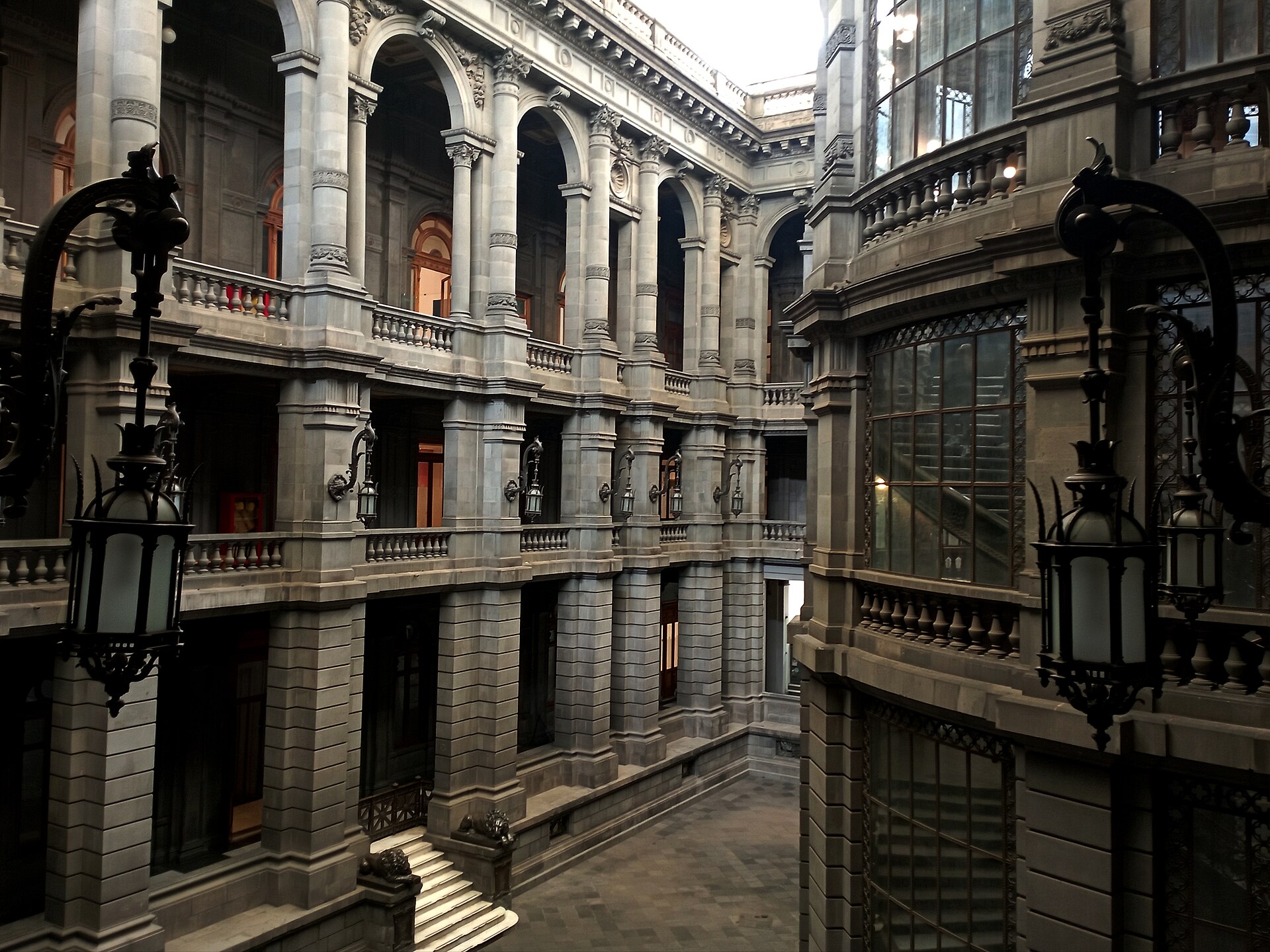
MUNAL (Museo Nacional de Arte) is Mexico's national art museum — housed in a sumptuous neoclassical building designed by Italian architect Silvio Contri and completed in 1911, with a collection spanning 500 years of Mexican art from the colonial period to the mid-20th century. The building itself, with its grand marble staircase, cast-iron elevator, and elaborately decorated halls, is as much an exhibit as the art it contains. The collection traces the development of Mexican visual culture from 16th-century colonial religious paintings through the 19th-century Academy (when Mexican painters emulated European styles) to the early 20th-century modernists who broke with European conventions to create something distinctly Mexican. The landscape paintings of José María Velasco — panoramic views of the Valley of Mexico that captured the volcanic landscape with scientific precision and romantic grandeur — are a highlight, and the transition from colonial art to Mexican modernism in the galleries mirrors the country's transition from colony to nation. The museum sits on Plaza Manuel Tolsá, named after the sculptor whose equestrian statue of Charles IV of Spain — known as 'El Caballito' — stands outside. The plaza, with MUNAL on one side and the Palacio de Minería (a neoclassical masterpiece by Tolsá himself) on the other, is one of the most architecturally harmonious spaces in the Centro Histórico. The museum is significantly less crowded than the Anthropology Museum or the Frida Kahlo Museum, which means you can often have entire galleries to yourself — a luxury in a city of 22 million.
Museo Rufino Tamayo
51 Paseo de La Reforma, Bosque de Chapultepec I, Miguel Hidalgo, 11580, Mexico
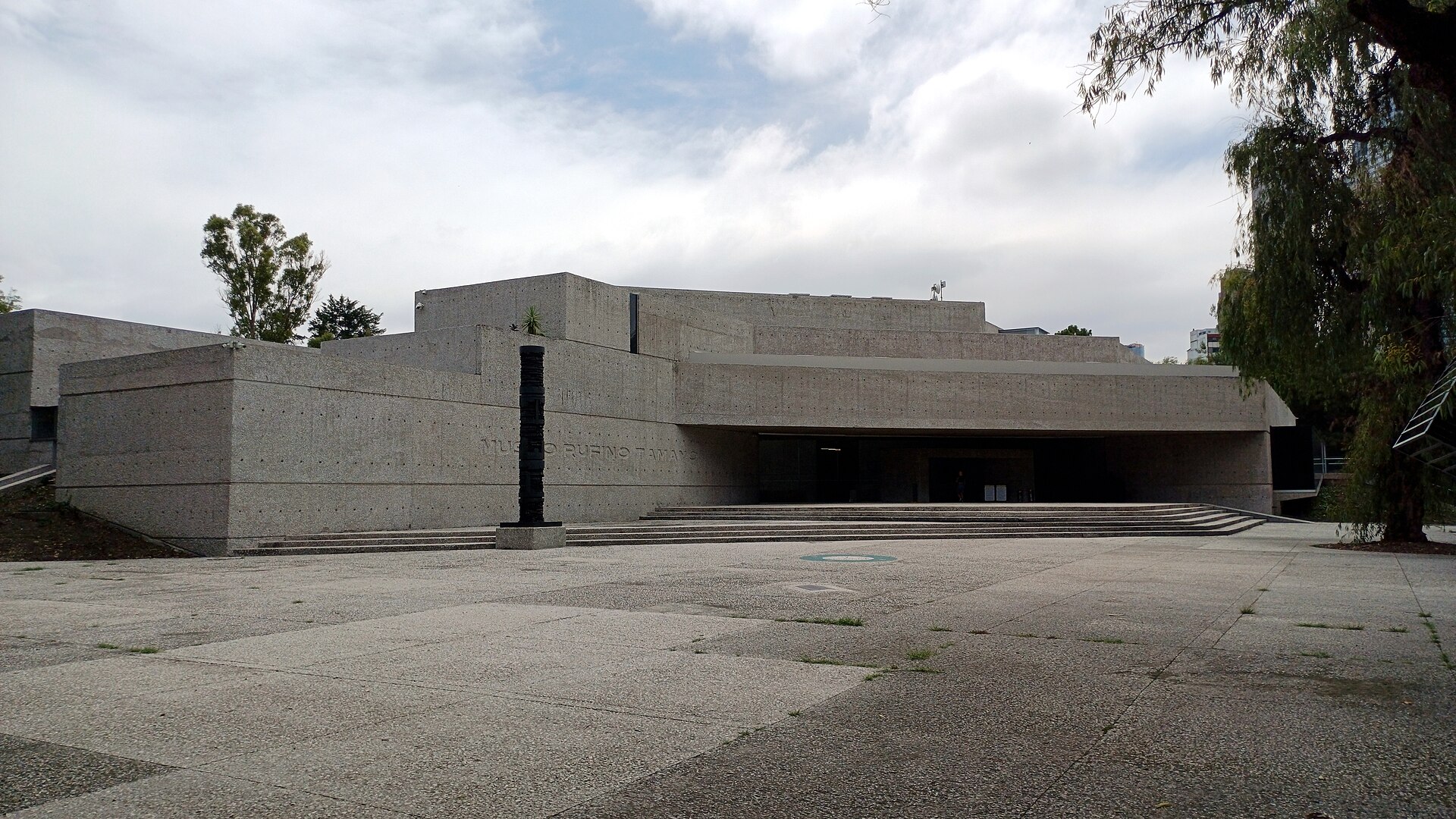
The Rufino Tamayo Museum is one of the finest contemporary art museums in Latin America — a brutalist concrete building set among the trees of Chapultepec Park that houses the personal collection of Oaxacan painter Rufino Tamayo alongside rotating exhibitions of international contemporary art. Tamayo, who lived from 1899 to 1991, was the bridge between the Mexican muralists and the contemporary art world, and his museum — designed by Abraham Zabludovsky and Teodoro González de León in 1981 — reflects his conviction that Mexican art should engage with the global conversation rather than remaining isolated in nationalism. The building is a masterwork of Mexican brutalism — raw concrete walls that slope inward, skylights that filter natural light through the tree canopy above, and gallery spaces that transition from intimate rooms to soaring double-height halls. The architecture avoids the white-cube anonymity of most contemporary art spaces in favour of a material presence that gives the building its own character. The concrete interior, marked by the imprints of wooden formwork, has a warmth that contradicts the usual coldness of the brutalist palette. Tamayo's personal collection — works by Picasso, Miró, de Kooning, Warhol, and Francis Bacon, among others — is supplemented by a rotating programme of temporary exhibitions that brings major international contemporary art to Mexico City. The museum's location in Chapultepec, a short walk from the Anthropology Museum and the Museum of Modern Art, makes it part of a museum circuit that could fill an entire day without leaving the park.
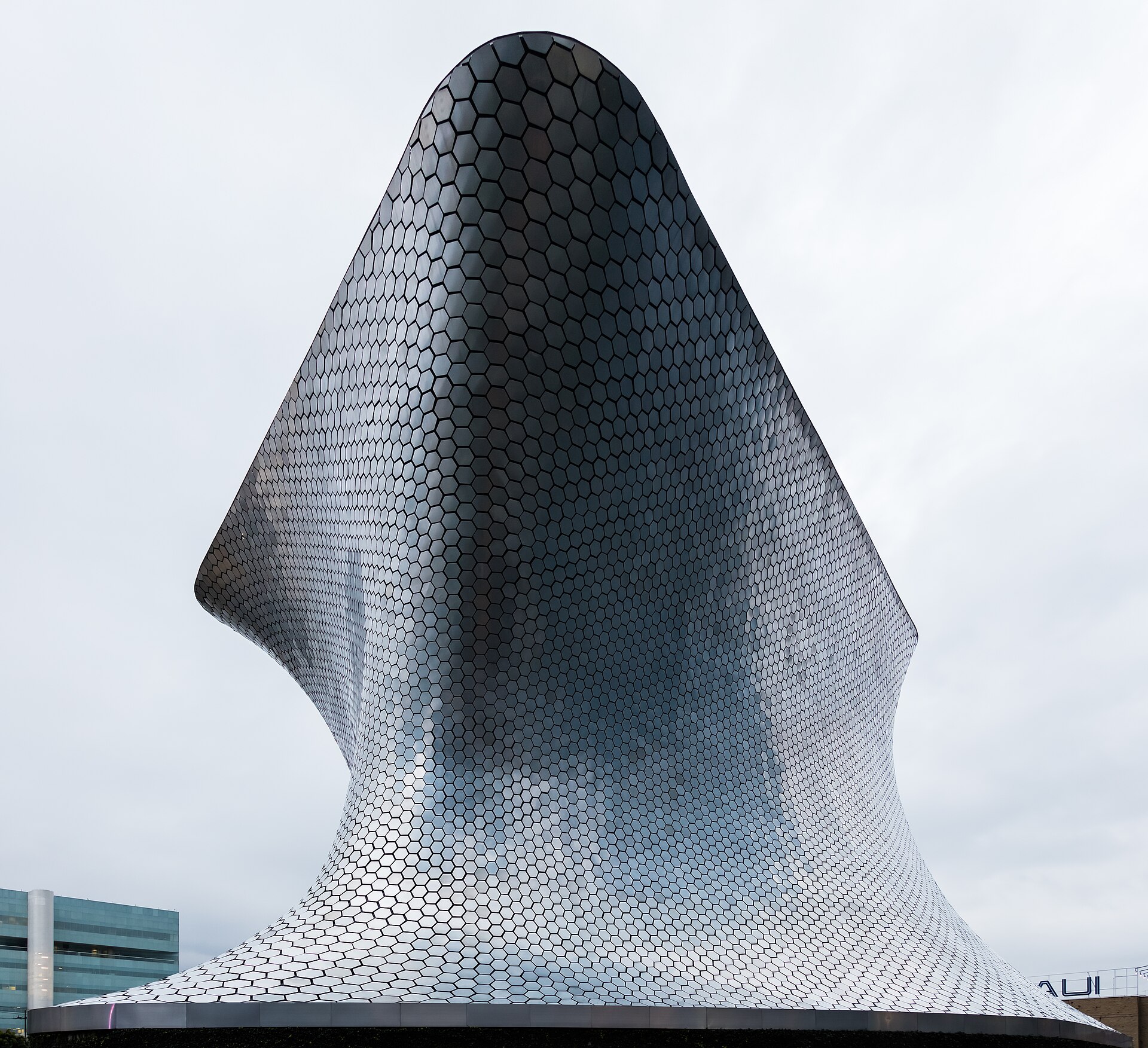
Museo Soumaya
303 Boulevard Miguel Cervantes Saavedra, Granada, Miguel Hidalgo, 11520, Mexico
The Museo Soumaya is Carlos Slim's gift to Mexico City — a 46-metre-tall museum shaped like a warped silver anvil, covered in 16,000 hexagonal aluminium tiles, and housing the billionaire's private art collection of over 66,000 works. Admission is free (Slim is the richest person in Mexico and one of the richest in the world, and he pays for everything), and the collection spans six floors of European and Mexican art from the 15th century to the present. The building, designed by Slim's son-in-law Fernando Romero, is love-it-or-hate-it architecture — the asymmetric form, clad in its shimmering hexagonal skin, has been compared to everything from a cloud to an hourglass to a metallic mushroom. The interior is equally unconventional: a spiralling ramp connects the floors, and the top-floor gallery, with its curved walls and diffused natural light, is one of the most unusual exhibition spaces in any museum. The collection's strength is its breadth rather than its depth. The largest collection of Rodin sculptures outside France (380 pieces) is the headline act, but the galleries also contain works by Dalí, Monet, Renoir, Van Gogh, and Tintoretto, alongside Mexican colonial religious art and an extensive numismatic collection. The museum sits in the Plaza Carso development in Polanco, Mexico City's wealthiest neighbourhood, and the surrounding area — upscale restaurants, designer boutiques, and the city's best bookshops — provides context for the kind of wealth that builds a free museum as a personal project.
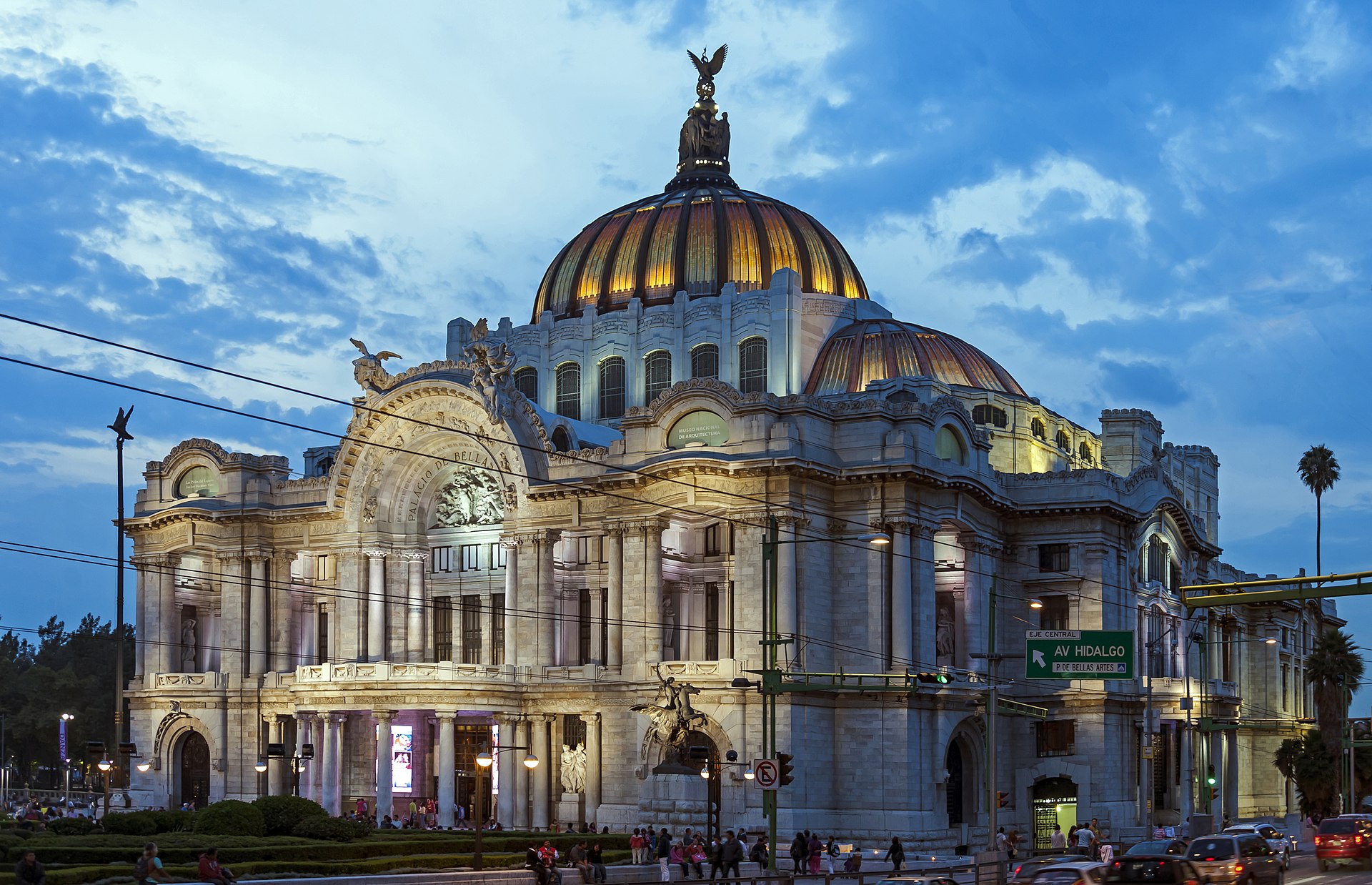
Palacio de Bellas Artes
Plaza Juárez, Atlampa, Cuauhtémoc, 06450, Mexico
The Palacio de Bellas Artes is the most important cultural building in Mexico — an Art Nouveau and Art Deco masterpiece of white Carrara marble that took 30 years to build (1904-1934), sank over a metre into the soft lake bed during construction, and houses some of the most significant murals in the Western Hemisphere. The exterior, designed by Italian architect Adamo Boari, is a confection of European Art Nouveau — sinuous ironwork, sculptural groups, stained glass domes. The interior, completed after the Mexican Revolution by Federico Mariscal, is pure Art Deco — geometric lines, coloured marble, and the famous Tiffany glass curtain depicting the Valley of Mexico's volcanoes. The murals are the building's greatest treasures. Diego Rivera's 'Man at the Crossroads' — the mural that was commissioned and then destroyed by the Rockefellers at 30 Rockefeller Center because it included Lenin's portrait — was recreated here by Rivera, slightly larger and with more Lenin. David Alfaro Siqueiros and Rufino Tamayo also have major works on the upper floors, and the collection represents the peak of the Mexican muralist movement that made art a vehicle for political education. The theatre inside Bellas Artes hosts the Ballet Folklórico de México, a spectacular folk dance company that performs traditional dances from Mexico's diverse regions in costumes so elaborate they belong in a museum. The performance, held on Sundays and Wednesdays, is one of the essential Mexico City experiences — the dancers, the music, the costumes, and the Art Deco theatre together create an evening that is pure Mexico.
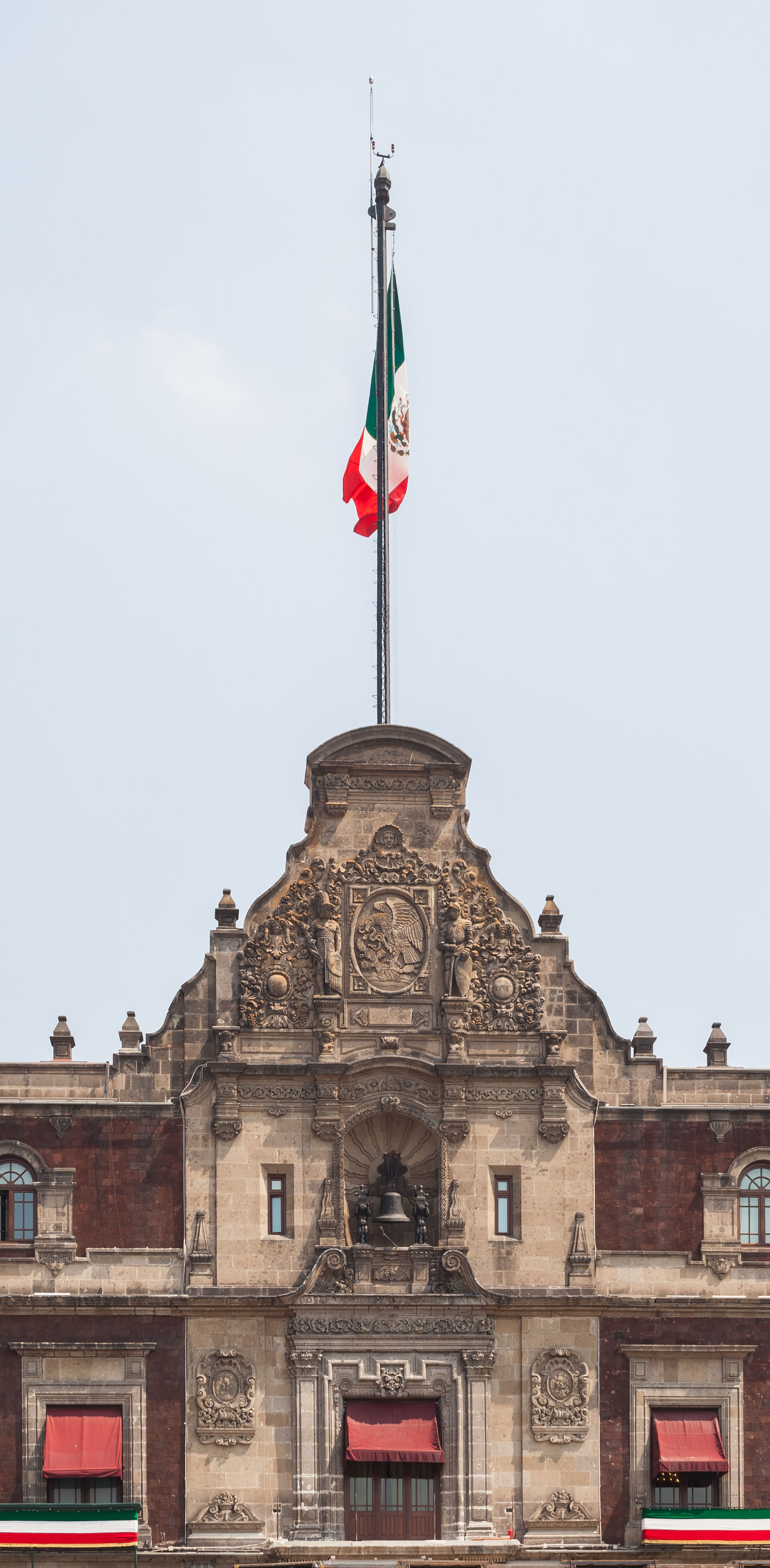
Palacio Nacional
Plaza de La Constitución, Tlalpan Centro, Tlalpan, 14000, Mexico
The Palacio Nacional occupies the entire east side of the Zócalo — a 200-metre-long colonial building that sits on the site of Moctezuma's palace, was the seat of the Spanish viceroys for 300 years, and now houses the offices of the President of Mexico. The building is open to the public, free of charge, and the reason to visit is on the main staircase: Diego Rivera's mural cycle 'The Epic of the Mexican People,' one of the most ambitious and politically charged works of art in the 20th century. Rivera's murals cover the staircase walls and the surrounding corridors, depicting the entire history of Mexico — from the idealised pre-Hispanic paradise of Tenochtitlan through the brutality of the Spanish conquest, the colonial period, independence, revolution, and an imagined socialist future. The murals took Rivera over 20 years (1929-1951), and they're painted with such density of detail and narrative that you could spend an hour on a single wall. The central panel, showing the Aztec market of Tlatelolco, is a masterwork of visual storytelling — hundreds of figures engaged in trade, warfare, ritual, and daily life, all rendered with Rivera's characteristic combination of folk art warmth and political anger. The palace also contains murals by Rivera in the upper corridors showing pre-Hispanic civilisations, and the botanical garden in the central courtyard is a peaceful retreat from the Zócalo crowds. Free admission and the absence of a timed-entry system mean you can revisit individual murals as many times as you want, which is useful because the detail in Rivera's work rewards repeated looking.
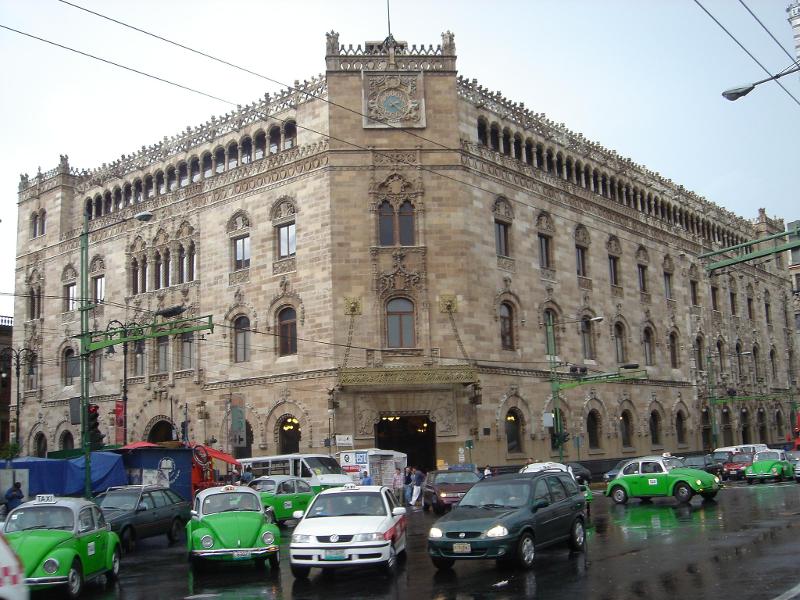
Palacio Postal (Correo Mayor)
Tacuba 1, Centro Histórico, Mexico City
The Palacio Postal is the most beautiful post office in the world — a Venetian Gothic and Spanish Renaissance palace completed in 1907 that was designed to make the act of buying stamps feel like visiting a cathedral. The interior is a symphony of golden brass, wrought iron, Italian marble, carved wood, and a double staircase that rises through the building like something from a European opera house. It is still a functioning post office, which means you can buy stamps and mail a postcard from a building that belongs in a museum. The building was designed by Italian architect Adamo Boari (who also designed Bellas Artes across the street) and completed during the Porfiriato — the 35-year dictatorship of Porfirio Díaz, who modernised Mexico City's infrastructure while suppressing political freedom, and whose taste for European grandeur produced many of the city's most spectacular buildings. The Palacio Postal is the finest example of Porfirian architecture in the city — every surface is worked, every railing is ornate, and the light fixtures, elevator doors, and even the postal counters are designed with a level of craft that makes modern architecture look lazy. The building sits on Eje Central, directly across from Bellas Artes, and most visitors walk past without entering. Inside, the main hall — two storeys of brass railings, marble floors, and the original postal sorting infrastructure preserved as decorative elements — is free to enter and usually empty of tourists. It's the best free architectural experience in the Centro Histórico, and mailing a postcard from the ornate counters is one of the few times that a practical errand doubles as a cultural experience.
Paseo de la Reforma
Paseo de la Reforma, Mexico City
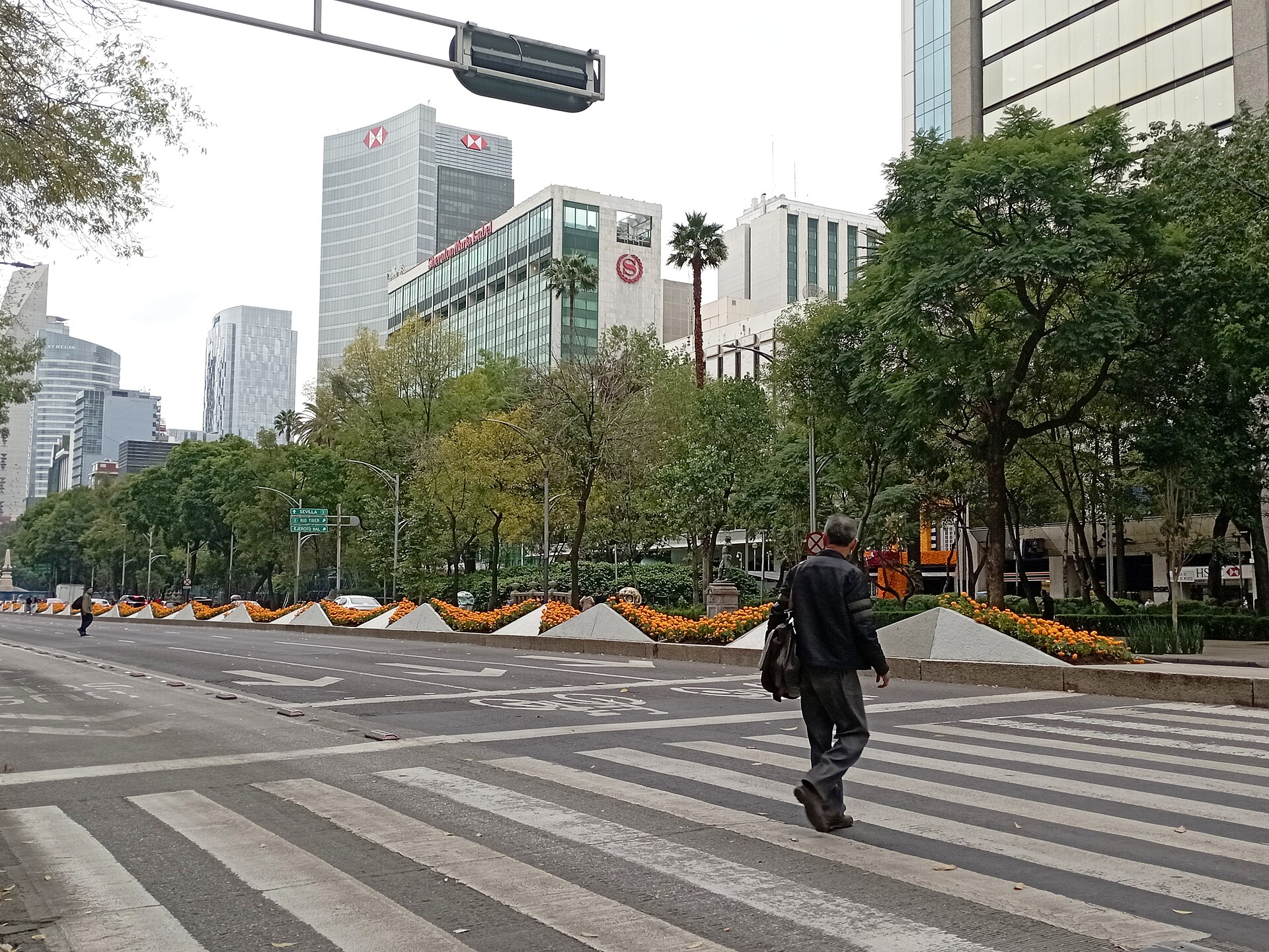
Paseo de la Reforma is Mexico City's grand boulevard — a 15-kilometre avenue modelled on the Champs-Élysées that runs from Chapultepec Park through the financial district to the Zócalo area, passing monuments, skyscrapers, and roundabouts anchored by some of the most important public sculptures in Mexico. The avenue was commissioned by Emperor Maximilian I in the 1860s (the Austrian archduke imposed on Mexico by Napoleon III, who was later executed by firing squad), and its European proportions reflect his brief, doomed attempt to make Mexico City rival the capitals of Europe. The Ángel de la Independencia — a golden winged Victory standing atop a 36-metre column — is the boulevard's most famous landmark and Mexico City's unofficial symbol. The monument was erected in 1910 to mark the centenary of independence, and the column's base contains the remains of national heroes including Miguel Hidalgo and José María Morelos. The angel has also become the default gathering point for celebrations (Mexico's football victories trigger spontaneous pilgrimages to the roundabout) and protests. The boulevard's modern section, between the Ángel and the Torre Mayor, is lined with the glass towers of Mexico's corporate establishment — HSBC, Pemex, BBVA — and the Sunday Ciclovía that closes the avenue to cars and opens it to cyclists, runners, and pedestrians transforms the corporate corridor into a public park that stretches for kilometres. Walking Reforma from Chapultepec to the Centro Histórico (about 5km) passes through the full spectrum of Mexico City's identity, from pre-Hispanic references to colonial monuments to 21st-century glass towers.
Polanco
Av. Presidente Masaryk, Polanco, Mexico City
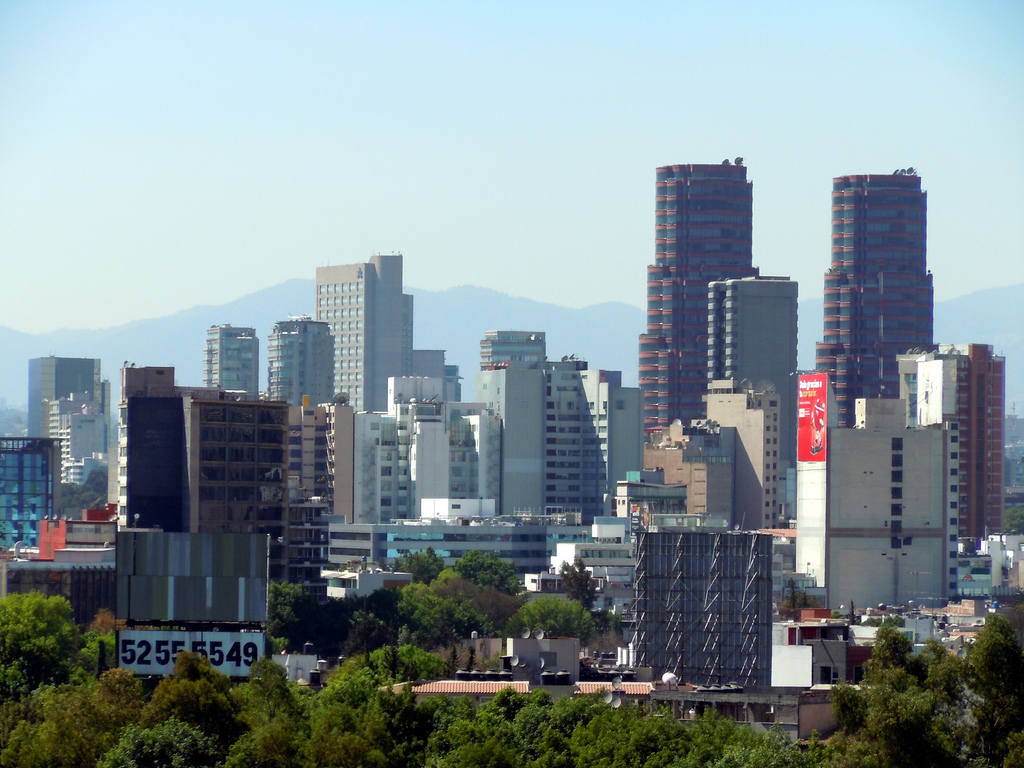
Polanco is Mexico City's wealthiest neighbourhood — a grid of tree-lined streets between Chapultepec Park and the Museo Soumaya that contains the city's highest concentration of high-end restaurants, designer boutiques, and the kind of quiet, manicured urbanism that feels like a different country from the chaos of the Centro Histórico a few kilometres east. Avenida Presidente Masaryk is Polanco's spine — a boulevard of luxury brands, international restaurants, and the diplomatic residences that give the neighbourhood its cosmopolitan character. But the real Polanco is on the side streets, where neighbourhood restaurants serve some of the best food in the city at prices that would be considered reasonable in New York but are splurge-level by Mexican standards. Quintonil, Pujol (since relocated but born here), and dozens of excellent taquerías and fondas share the same streets. The neighbourhood was developed in the 1930s and 1940s and was originally home to the city's Jewish community (the Polanco Synagogue and several Jewish cultural institutions remain). The architecture is mid-century residential — two and three-storey houses with gardens that have been gradually replaced by apartment buildings and commercial developments, though enough of the original fabric survives to give Polanco a residential feel that the high-end commercial strips might suggest otherwise. Lincoln Park, a small green square at the neighbourhood's centre, is a good place to sit with a coffee and watch the intersection of Mexico City's wealthiest residents with the international diplomats and tourists who share the neighbourhood.
Roma & Condesa
131 Calle de Mérida, Roma Norte, Cuauhtémoc, 06700, Mexico
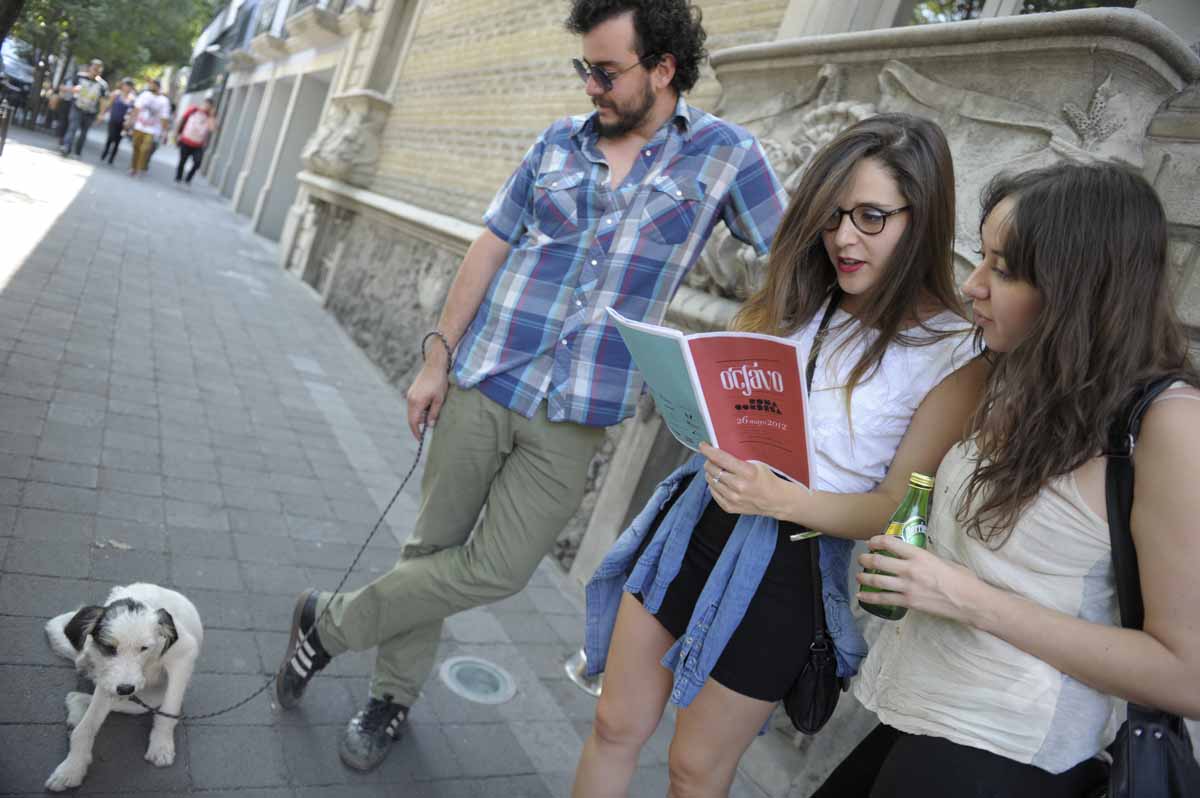
Roma and Condesa are Mexico City's twin neighbourhood stars — adjacent colonias (districts) that together form the city's centre of gravity for dining, nightlife, and the kind of tree-lined, walkable urbanism that makes Mexico City one of the most liveable megacities in the world. Roma has the art galleries, the mezcalerías, and the crumbling Art Nouveau mansions. Condesa has the parks, the cafés, and the Art Deco apartment buildings. Together, they contain more excellent restaurants per block than almost anywhere in the Americas. Colonia Roma was developed in the early 20th century for Mexico City's upper class, and the architecture reflects the Porfirian-era taste for European styles — Art Nouveau townhouses with ornate ironwork, Beaux-Arts mansions, and a few buildings by European architects that could pass for Parisian apartments. The 1985 earthquake devastated much of Roma, and the rebuilding attracted a younger, creative class that turned the damaged neighbourhood into the cultural district it is today. The Casa Lamm cultural centre, the galleries on Colima and Orizaba streets, and the mezcal bars that occupy former mansions are all products of this reinvention. Condesa, centred on the oval Parque México and the circular Parque España, is Mexico City's most architecturally consistent neighbourhood — blocks of 1920s-30s Art Deco apartments with curved facades, porthole windows, and geometric detailing that give the streets a visual coherence rare in a city this chaotic. The restaurant scene in both neighbourhoods is world-class: Contramar (seafood), Rosetta (Italian-Mexican), Pujol (tasting menu by Enrique Olvera), and dozens of excellent taquerías, cafés, and cocktail bars within walking distance of each other.
San Ángel
Plaza San Jacinto, San Ángel, Mexico City
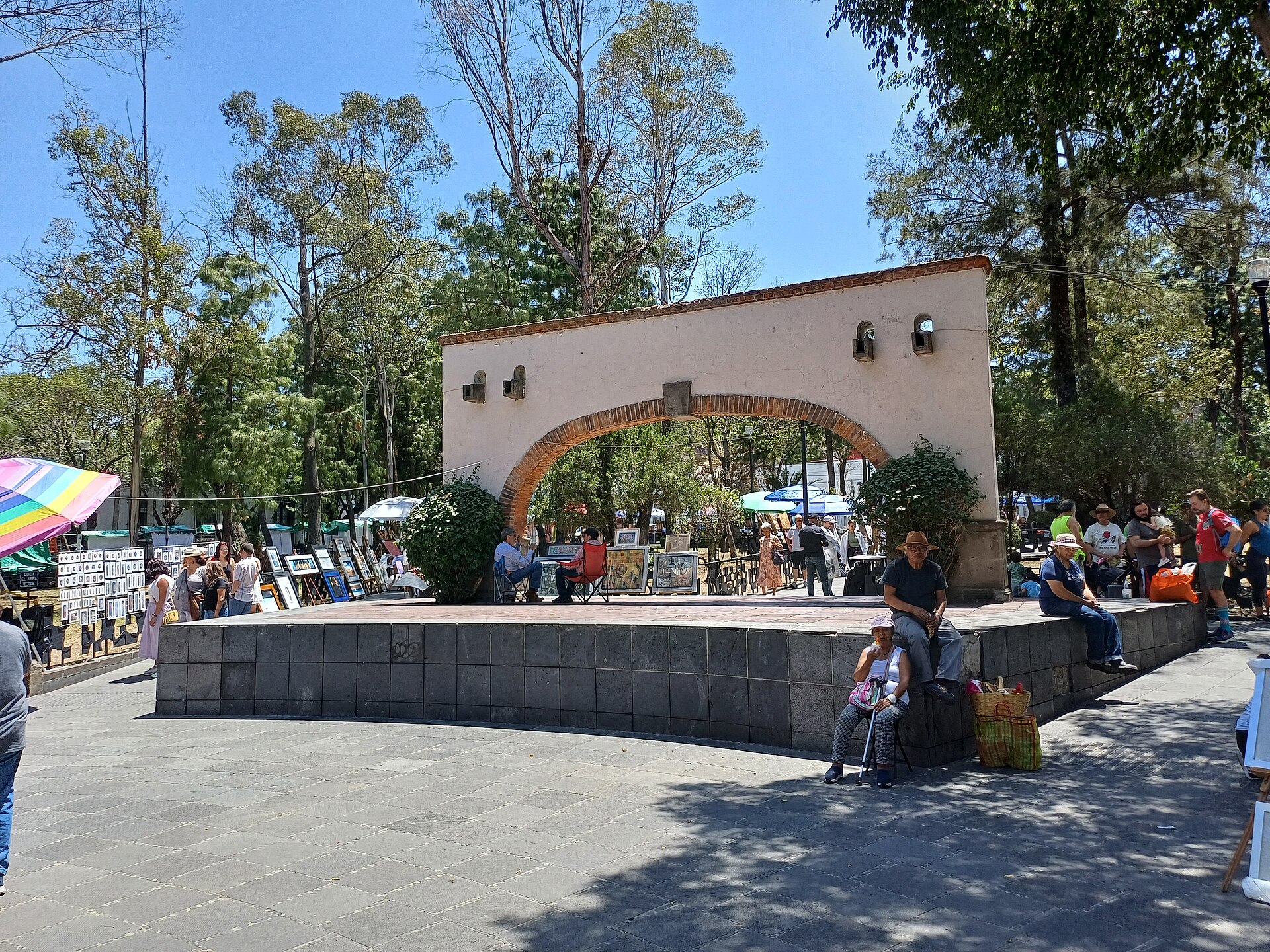
San Ángel is Mexico City's most picturesque colonial neighbourhood — a hillside district of cobblestone streets, stone walls, and flowering gardens that was a separate village until the city swallowed it in the 20th century. The neighbourhood centres on Plaza San Jacinto, a small square surrounded by colonial-era houses that hosts the Saturday Bazaar — one of Mexico City's best art markets, where painters, sculptors, jewellery makers, and craftspeople display work that ranges from tourist kitsch to genuinely excellent fine art. The architecture in San Ángel is colonial Mexico at its most romantic — thick stone walls painted in earth tones, carved wooden doors, interior courtyards with fountains, and the bougainvillea that climbs every available surface. The Museo Casa Estudio Diego Rivera y Frida Kahlo, designed by Juan O'Gorman in 1932, is a pair of modernist houses connected by a bridge where Rivera and Kahlo lived and worked — one of the earliest functionalist buildings in Latin America and a striking contrast to the colonial architecture surrounding it. The San Ángel Inn, housed in a 17th-century Carmelite convent, is one of Mexico City's most elegant restaurants — old money, white tablecloths, and the kind of traditional Mexican cuisine that has been served to presidents and visiting dignitaries since the restaurant opened in 1963. The neighbourhood is best visited on Saturday for the bazaar, but a weekday visit offers quieter streets and the chance to walk the colonial lanes without the market crowds.
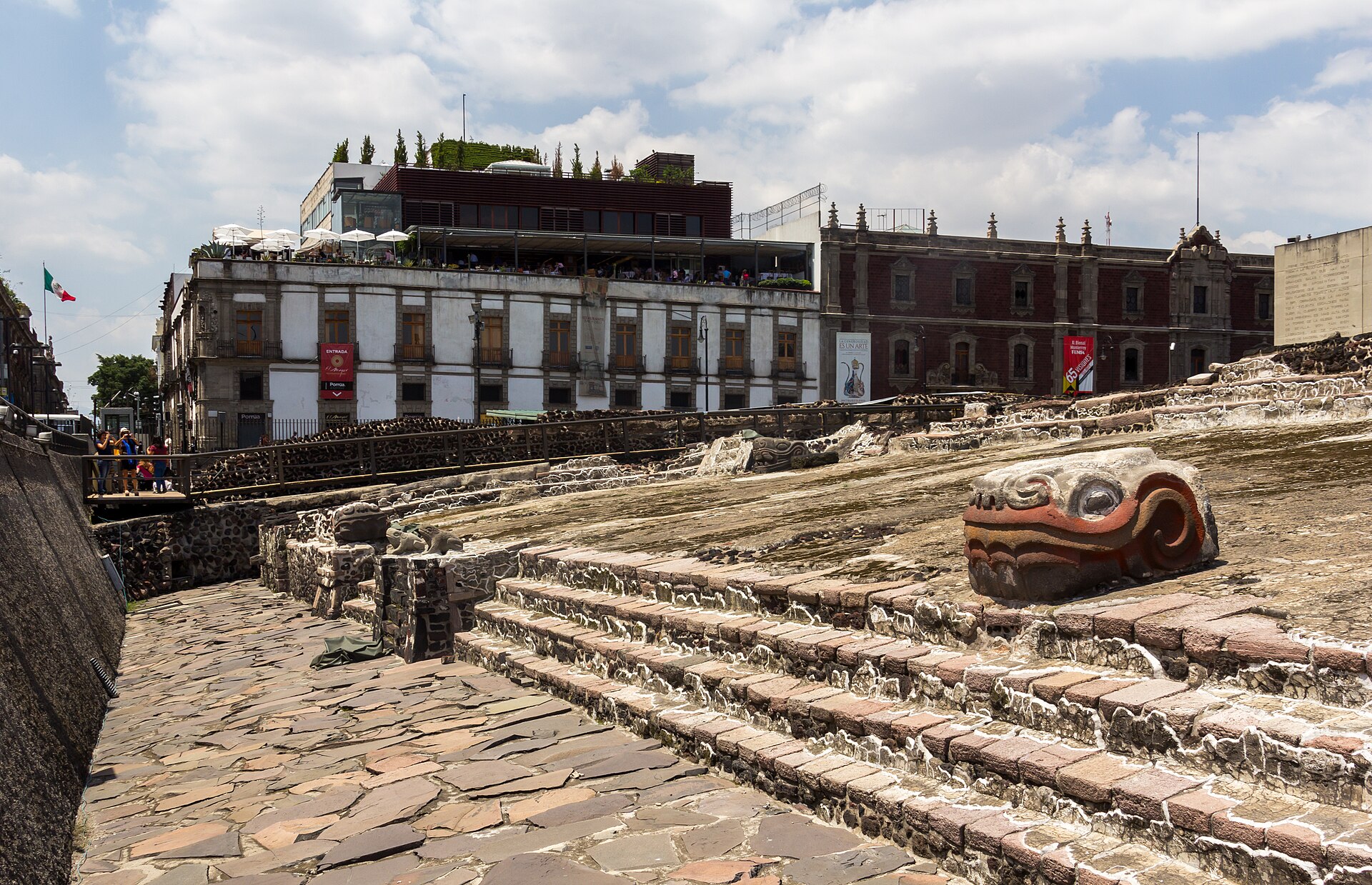
Templo Mayor
Seminario 8, Centro Histórico, Mexico City
Templo Mayor is the excavated remains of the main temple of the Aztec capital Tenochtitlan — the pyramid that stood at the centre of the empire and was the site of human sacrifices, astronomical observations, and the political ceremonies that held the Aztec world together. The temple was destroyed by the Spanish in 1521 and buried under the colonial city, and it wasn't rediscovered until 1978 when electrical workers stumbled upon a massive stone disc depicting the dismembered goddess Coyolxauhqui. The excavation that followed revealed seven layers of construction — each Aztec ruler built a new temple over the previous one, like Russian nesting dolls in stone — and the ruins now sit in an open pit adjacent to the Metropolitan Cathedral, creating a visual collision between the Aztec and Spanish worlds that is the defining image of Mexico City's layered identity. You look down from street level into the foundations of a civilisation that the street was built to erase. The adjacent museum is excellent — one of the best archaeological museums in Mexico, displaying over 7,000 objects recovered from the excavation, including the Coyolxauhqui Stone, sacrificial knives, offerings of jade and gold, and the remains of the tzompantli (skull rack) that once displayed the heads of sacrificial victims. The museum's presentation is matter-of-fact about the violence of Aztec religion while contextualising it within a sophisticated civilisation that built aqueducts, schools, and botanical gardens alongside its sacrificial altars.
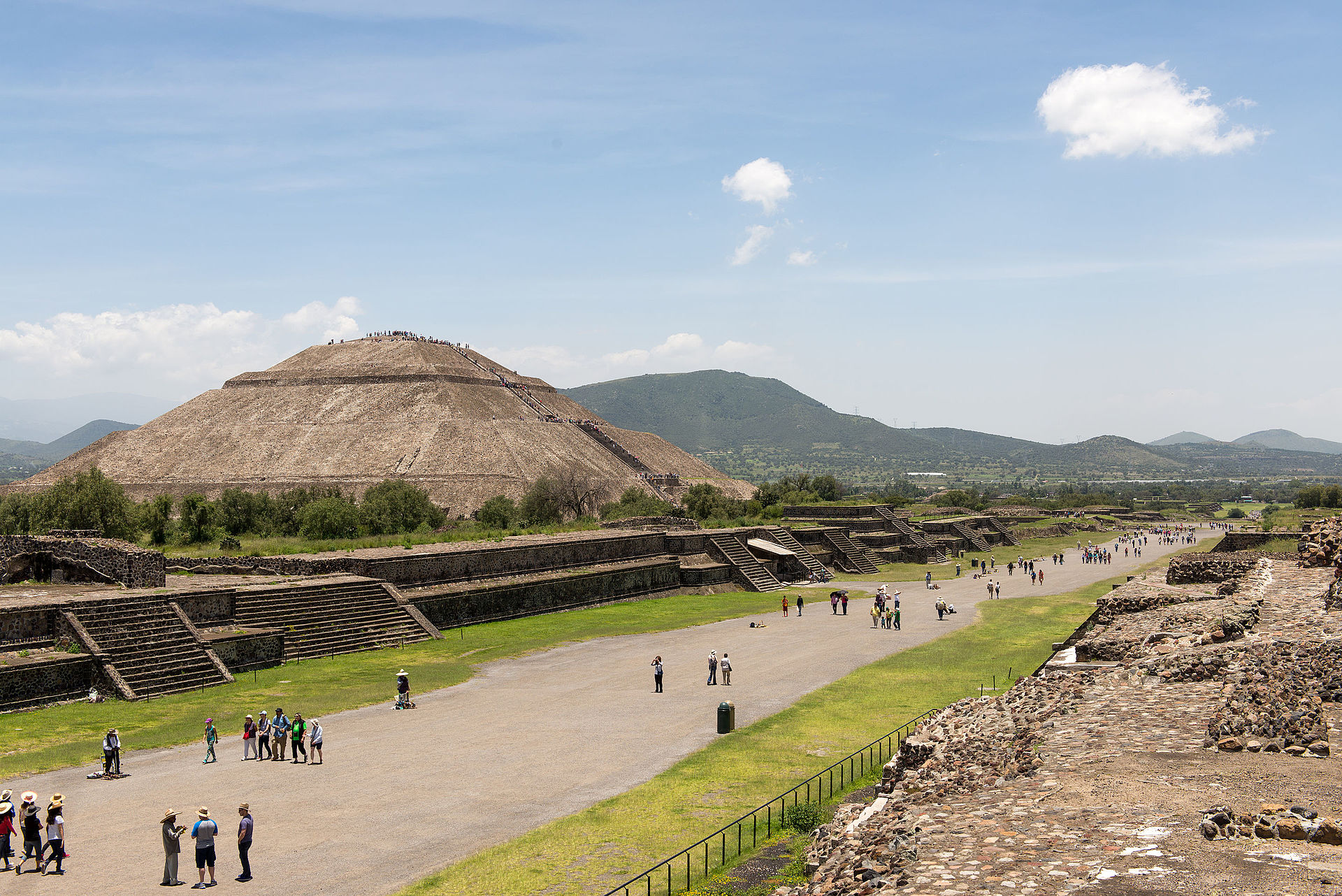
Teotihuacán
Calle Teotihuacán, Hipódromo, Cuauhtémoc, 06100, Mexico
Teotihuacán is the largest and most impressive pre-Hispanic archaeological site in the Americas — a ruined city of pyramids, temples, and avenues that was home to over 100,000 people at its peak around 450 AD, making it one of the largest cities in the world at the time. The Pyramid of the Sun (the third-largest pyramid in the world by volume) and the Pyramid of the Moon dominate a 2-kilometre processional avenue called the Street of the Dead, and the scale of the ruins — visible from the top of either pyramid — is genuinely overwhelming. The most remarkable thing about Teotihuacán is that nobody knows who built it. The Aztecs, who arrived in the Valley of Mexico centuries after Teotihuacán's collapse around 550 AD, found the ruins already abandoned and believed they had been built by giants or gods (the name 'Teotihuacán' is Nahuatl for 'the place where the gods were created'). Modern archaeology has revealed an extraordinarily sophisticated urban civilisation — multi-storey apartment compounds, a sophisticated water management system, and evidence of trade networks spanning Mesoamerica — but the builders' name for themselves and their language remain unknown. The site is about 50 kilometres northeast of Mexico City (about an hour by car or bus from the Terminal Norte bus station). Climbing the Pyramid of the Sun — 248 steps to the summit — is physically demanding but the view from the top, looking down the Street of the Dead toward the Pyramid of the Moon with the Valley of Mexico stretching to the horizon, is one of the most extraordinary perspectives in the Americas. Go early to beat the heat and the tour buses.
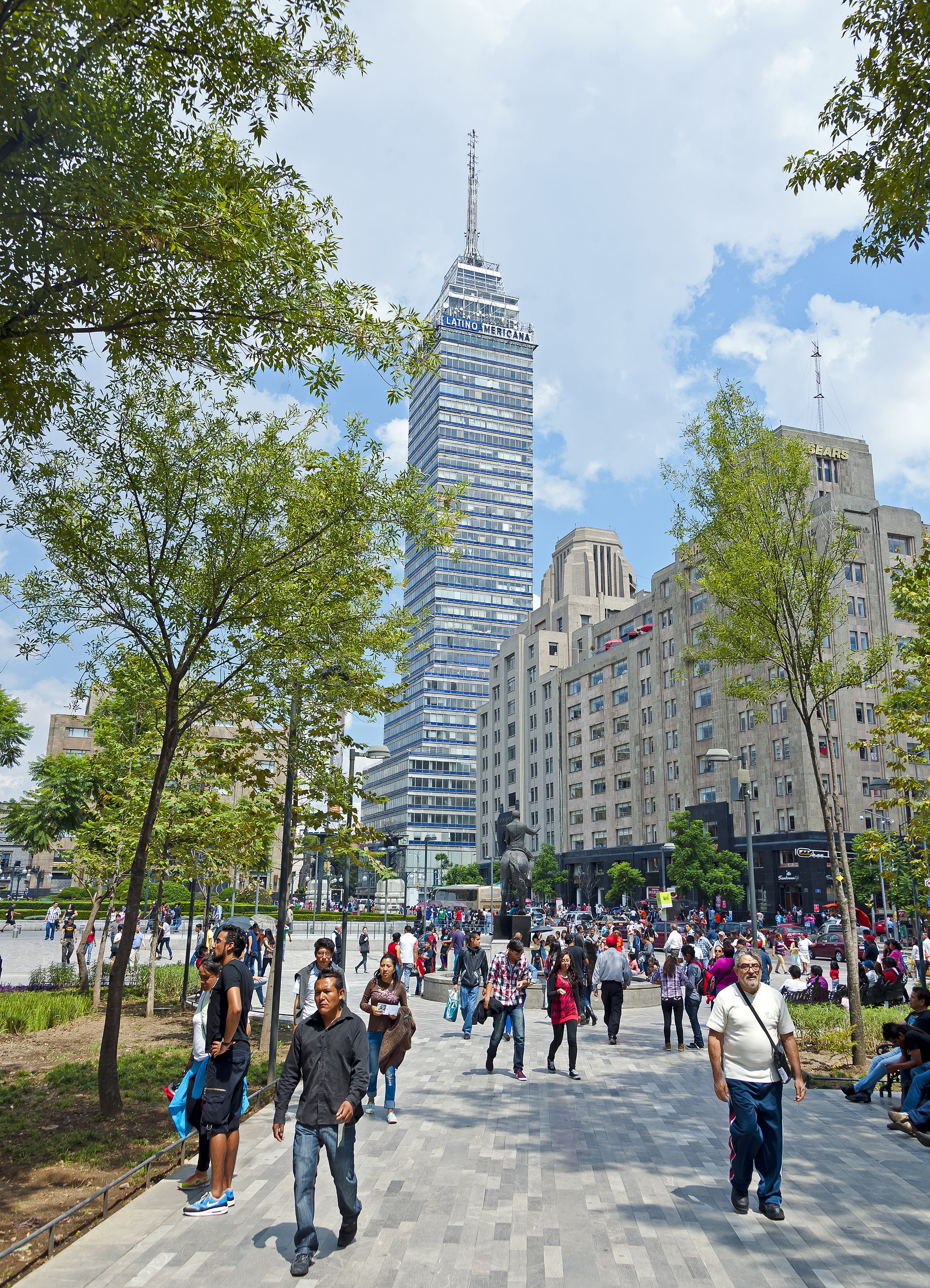
Torre Latinoamericana
Calle Torre Latinoamericana, Palmitas, Iztapalapa, 09700, Mexico
The Torre Latinoamericana was the tallest building in Latin America when it was completed in 1956, and while it's long since been surpassed in height, its observation deck on the 44th floor remains the best place to understand Mexico City's geography — the volcanic valley, the ring of mountains, the endless urban sprawl, and the historic centre laid out directly below like a map of the last 500 years. The tower's most impressive achievement isn't its height but its survival. Mexico City sits on one of the most seismically active zones in the world, and the soft lake bed beneath the city amplifies earthquake vibrations like a bowl of jelly. The Torre Latinoamericana was engineered with a deep piling system and flexible steel frame that allowed it to survive the catastrophic earthquakes of 1957, 1985, and 2017 without structural damage — a record that earned it an award from the American Society of Civil Engineers and made it a symbol of resilience in a city where every building lives on borrowed geological time. The observation deck offers a 360-degree view that on a clear day (becoming more common as air quality improves) extends to the snow-capped volcanoes Popocatépetl and Iztaccíhuatl to the southeast. Looking straight down, you see the Centro Histórico's colonial grid, the green lung of the Alameda Central park, and Bellas Artes' white marble roof — the entire colonial and modern core of the city in a single view. Visit in the late afternoon for the best light and the possibility of watching the sun set behind the western mountains.
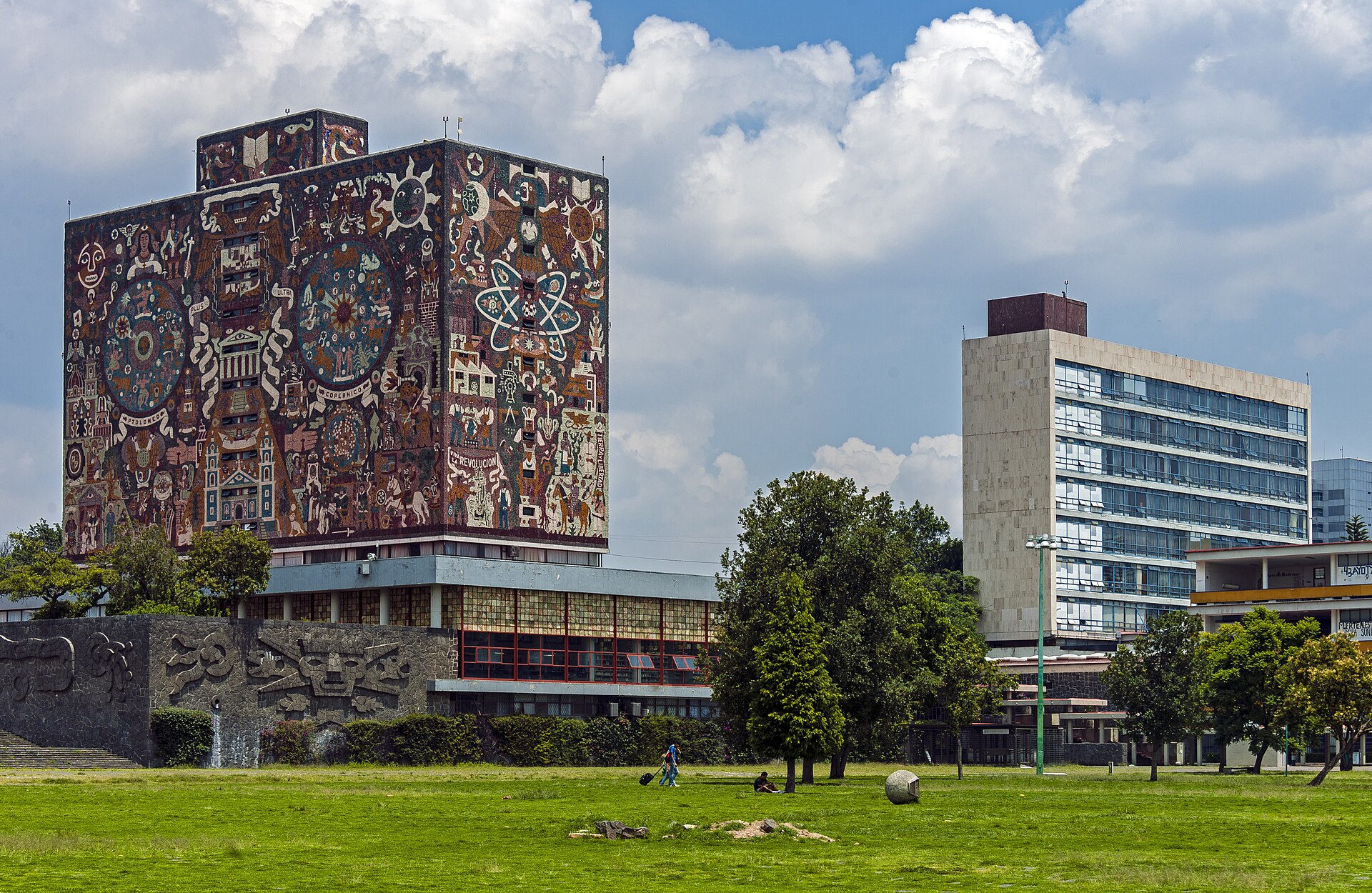
UNAM Campus (Ciudad Universitaria)
Ciudad Universitaria, Coyoacán, Mexico
The UNAM campus (Ciudad Universitaria) is a UNESCO World Heritage Site and one of the most important examples of 20th-century architecture in the Americas — a planned university city built in the early 1950s that integrated modernist architecture with Mexican muralism in a way that no other campus has matched. Over 60 architects, engineers, and artists collaborated on the project, and the result is a campus where every major building features murals, mosaics, or sculptural reliefs that tell the story of Mexico. The Biblioteca Central (Central Library) is the icon — a ten-storey rectangular box whose four facades are entirely covered in stone mosaics by Juan O'Gorman depicting pre-Hispanic, colonial, and modern Mexican history. The mosaics, made from naturally coloured stones collected from across Mexico, are visible from kilometres away and are one of the most ambitious works of public art in the 20th century. The Rectoría (administration building) features a three-dimensional mural by Siqueiros, and the Olympic Stadium (built for the 1968 Games) has a Rivera mosaic on its exterior. UNAM is the largest university in Latin America (350,000 students), and the campus buzzes with the energy of a small city — bookshops, cafés, museums, cinemas, and the Espacio Escultórico (a massive outdoor sculpture installation of geometric concrete forms on a lava field). The campus is free to enter and walk through, and the architecture tour — from the Central Library through the Sciences Faculty to the cultural zone — takes about two hours and provides a compressed education in Mexican modernism.
Xochimilco
Xochimilco, Mexico
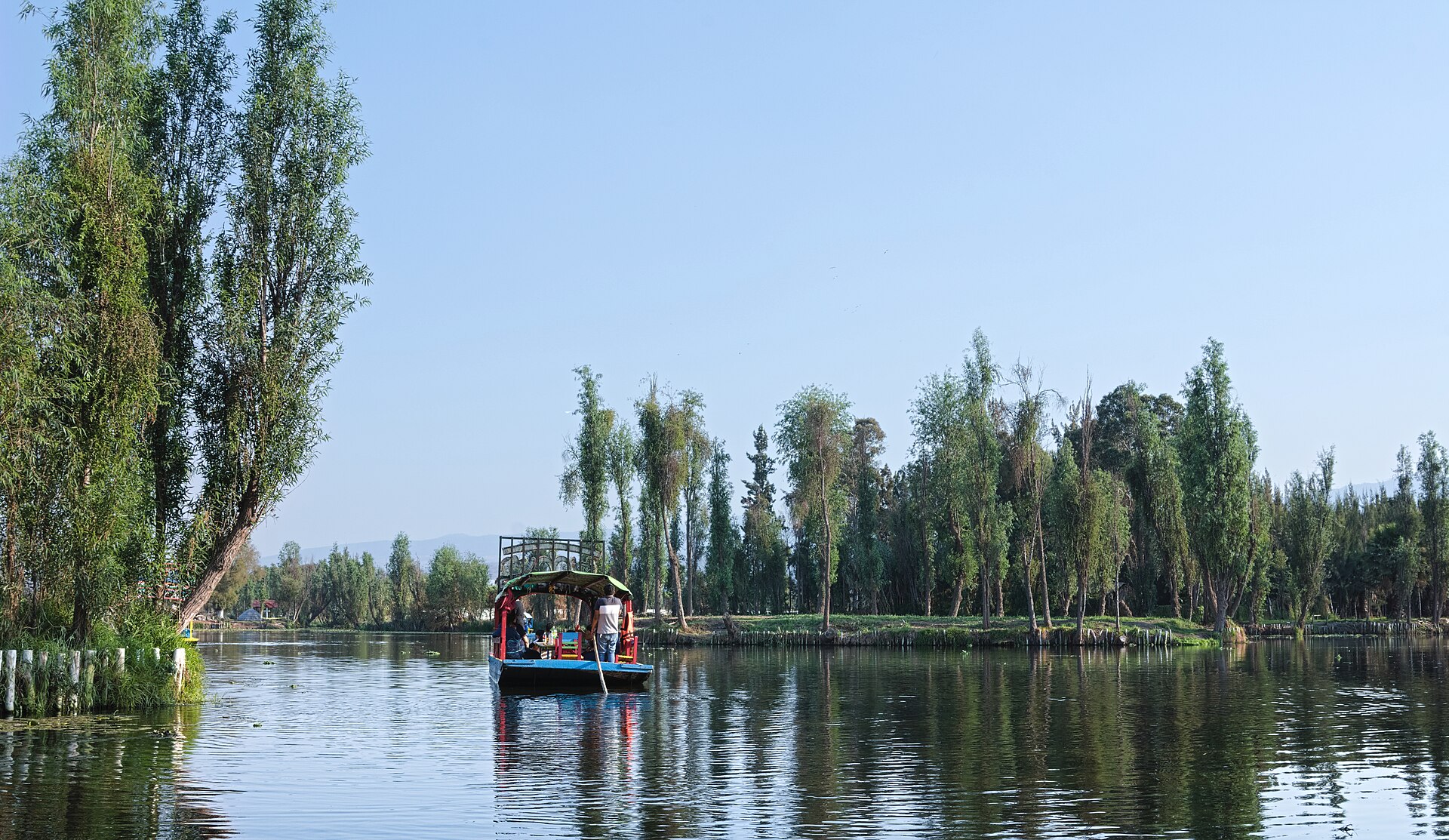
Xochimilco is the last surviving fragment of the lake system that once covered the Valley of Mexico — a network of canals and artificial islands (chinampas) that the Aztecs created for agriculture and that still function as floating gardens 500 years later. Riding a trajinera (a flat-bottomed, brightly painted boat) through the canals, passing flower vendors, mariachi bands on their own boats, and corn-on-the-cob sellers paddling alongside, is the most distinctly Mexican experience in the city. The chinampas are one of the most ingenious agricultural systems ever devised — the Aztecs created them by weaving reeds and branches into floating mats, anchoring them with willow trees, and piling lake mud on top to create fertile fields. The system was so productive that it supported the population of Tenochtitlan (estimated at 200,000-300,000, one of the largest cities in the world at the time), and the remaining chinampas in Xochimilco still grow flowers, vegetables, and herbs for Mexico City's markets. The tourist experience centres on the embarcaderos (boat docks) where you hire a trajinera and a pilot for a few hours. On weekends, the canals fill with Mexican families celebrating birthdays, quinceañeras, and the general concept of being alive on a Saturday afternoon. Food and drink boats — selling elotes, tlacoyos, micheladas, and pulque — pull alongside your trajinera on demand. The atmosphere is festive, chaotic, and completely unlike anything else in Mexico City. Xochimilco was designated a UNESCO World Heritage Site in 1987, and the canals — despite pollution challenges — remain one of the most remarkable living landscapes in the Americas.
Zócalo (Plaza de la Constitución)
Mexico
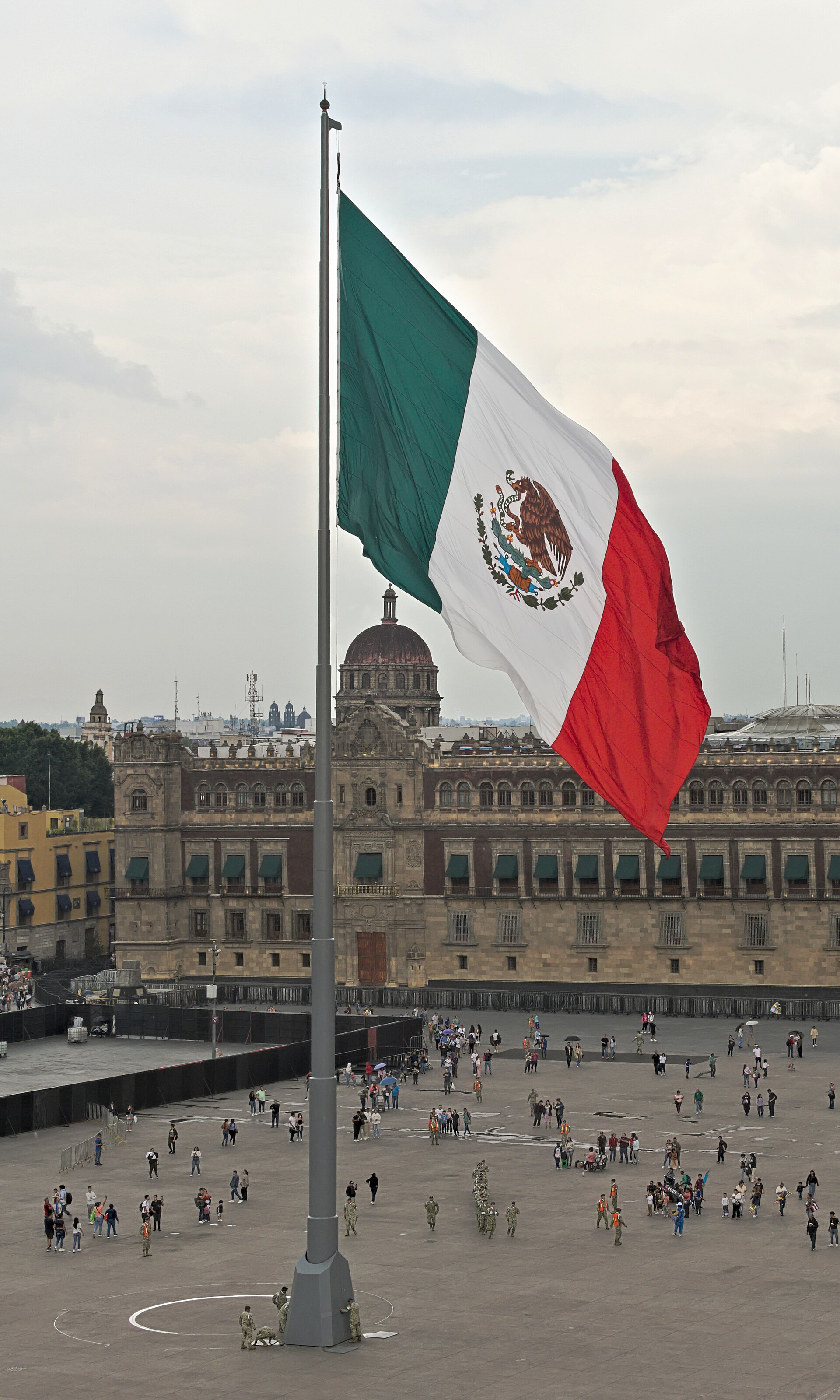
The Zócalo is the beating heart of Mexico City and one of the largest public squares in the world — a vast expanse of grey stone flanked by the Metropolitan Cathedral, the Palacio Nacional, and the remains of the Aztec Templo Mayor, layering three civilisations in a single view. The square has been the centre of power in the Valley of Mexico for over 700 years, from the Aztec empire through Spanish colonialism to the modern Mexican republic. The name 'Zócalo' technically means 'plinth' or 'base' — it refers to a pedestal that was installed in the 19th century for a monument that was never built. The pedestal was eventually removed, but the name stuck, and now every main square in Mexico is called a zócalo in homage to this one. The enormous Mexican flag at the centre is raised and lowered in a daily ceremony by soldiers in dress uniform, and the scale of the flag against the colonial architecture and the mountain-ringed sky is one of those images that makes Mexico City feel like a capital in a way that few other cities achieve. The square is the site of virtually every major Mexican celebration — Independence Day (September 15-16), Day of the Dead (November 1-2), political rallies, concerts, and the annual construction of an ice skating rink that fills the entire plaza in winter. On a normal day, the Zócalo is a gathering place for street performers, Aztec dancers in feathered headdresses, vendors selling elotes and esquites, and the steady stream of pedestrians crossing between the cathedral, the government buildings, and the metro station beneath the square.