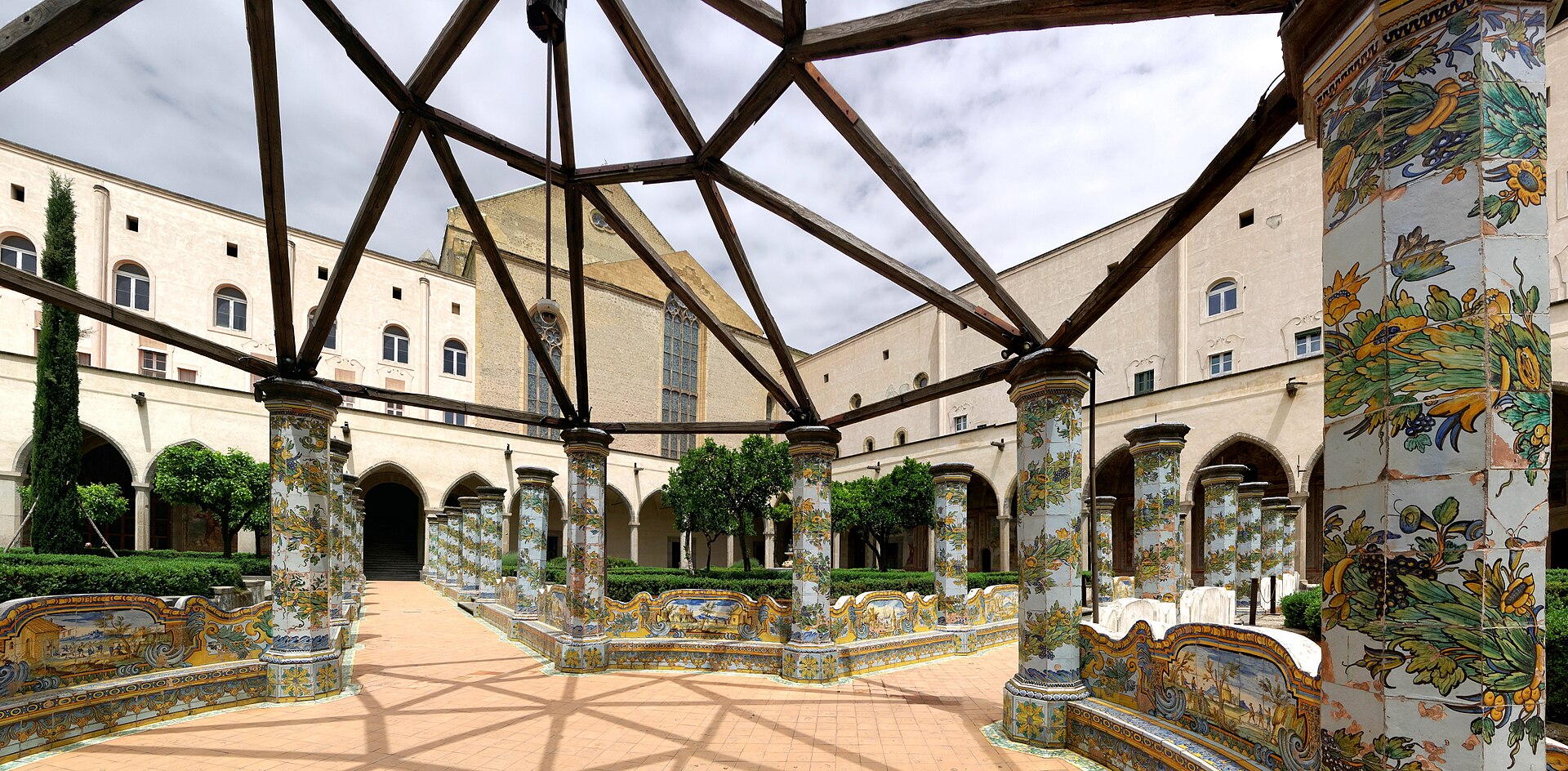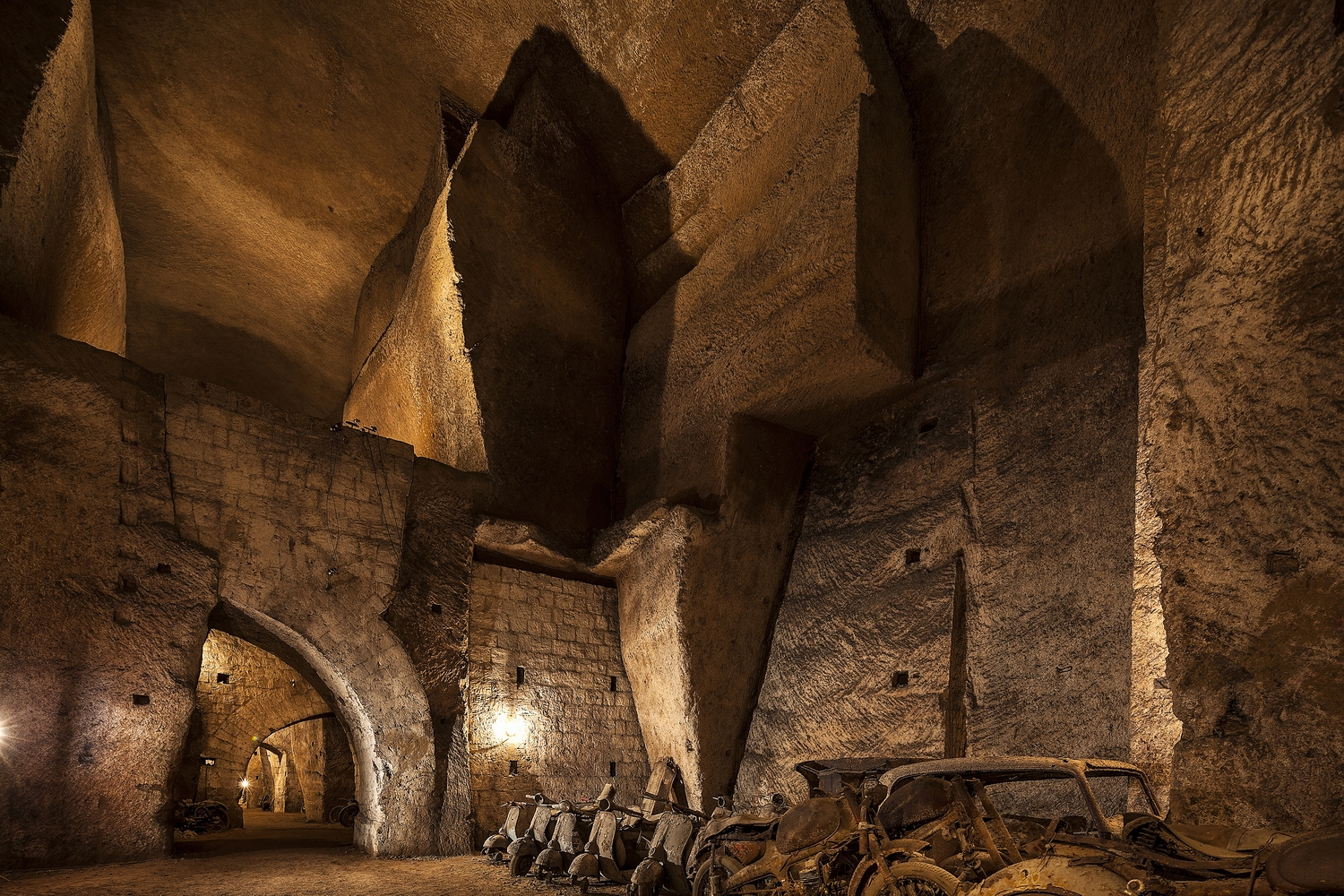
From the air, this fortress looks like a six-pointed star carved out of the volcanic hilltop. That shape — a double-tenaille design — was revolutionary when the Spanish viceroy Pedro de Toledo rebuilt it in 1537, turning a crumbling 14th-century Angevin watchtower into one of the most formidable military installations in the Mediterranean. The entire castle is hewn from the living tuff rock of Vomero hill, which means the building and the hill are essentially the same thing. Attacking it would mean attacking the mountain itself.
For centuries, Castel Sant'Elmo was the key to controlling Naples. Whoever held this hilltop controlled the city below, and every invading army — Aragonese, Spanish, French — made it their first target. It was also a prison: philosophers, revolutionaries, and political dissidents were locked up here from the 16th century onward. The 1799 Neapolitan Revolution ended here, with republican leaders making their last stand in the castle before Bourbon forces retook the city and executed many of them. It remained a military prison until 1952.
The star-shaped ramparts provide a 360-degree panorama that's arguably the single best viewpoint in Naples. On a clear day you can see from the Phlegraean Fields in the west to the Sorrentine Peninsula in the south, with Vesuvius dead center and the islands of Capri, Ischia, and Procida scattered across the bay. Photographers come up here at golden hour and stay until dark.
Since 2010, part of the castle has housed the Museo del Novecento Napoli, a contemporary art museum. The juxtaposition of modern installations inside a 500-year-old military fortress built into volcanic rock is peak Naples — a city that refuses to let anything serve just one purpose.
Verified Facts
The castle was rebuilt in its distinctive six-pointed star shape by Spanish viceroy Pedro de Toledo in 1537
The entire fortress is carved from the volcanic tuff rock of Vomero hill
It served as a military prison until 1952, when the prison was transferred to Gaeta
The Museo del Novecento Napoli, a contemporary art museum, has been housed in part of the castle since 2010
Get walking directions
22 Via Tito Angelini, Municipalità 5, Naples, 80129, Italy