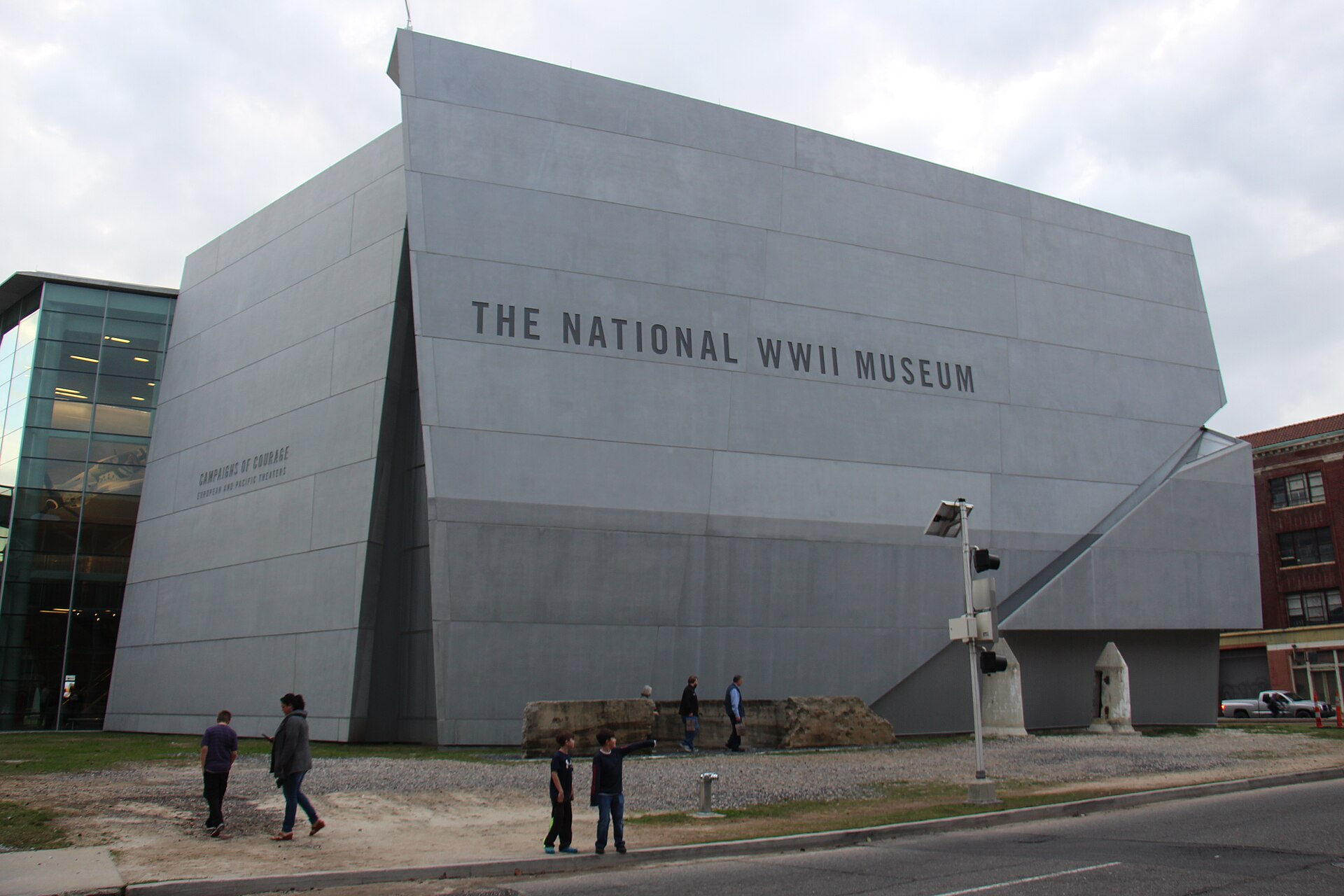
The National WWII Museum is consistently ranked among the top museums in the world — and it's in New Orleans because this is where Andrew Higgins built the landing craft that carried Allied troops onto the beaches of Normandy, North Africa, and the Pacific islands. Eisenhower called Higgins 'the man who won the war for us,' and the museum exists because historian Stephen Ambrose believed that New Orleans' contribution to the war effort deserved a permanent memorial.
The museum has expanded dramatically since it opened in 2000 — it now occupies an entire city block with multiple pavilions covering the European and Pacific theatres, the home front, and the personal stories of the 16 million Americans who served. The immersive exhibits are extraordinary: you can walk through a restored Higgins boat, sit in a bomber turret, hear the recorded testimonies of veterans describing D-Day, and trace the progress of the war through maps, artifacts, and interactive displays that bring clarity to a conflict of staggering complexity.
The Beyond All Boundaries experience — a 4D film narrated by Tom Hanks, shown in the Solomon Victory Theater — uses floor vibrations, fog, falling snow, and overhead projections to create a visceral 40-minute journey through the war. It's manipulative and it works. The museum's tone throughout is serious without being solemn — it honours the sacrifice without glorifying the violence, and the oral histories from veterans give individual faces to statistics that are otherwise incomprehensibly large.
Verified Facts
Andrew Higgins built the landing craft (LCVP) in New Orleans
Eisenhower called Higgins 'the man who won the war for us'
The museum was founded by historian Stephen Ambrose
The museum opened in 2000 and has expanded to a multi-pavilion campus
Get walking directions
945 Magazine St, New Orleans, LA 70130