Walking Tours in New Orleans
New Orleans: Garden District & Magazine Street
Walk the grandest antebellum neighbourhood in America — past the colonnaded mansions of the Garden District, the above-ground tombs of Lafayette Cemetery, and along the eclectic shops and restaurants of Magazine Street.
New Orleans: Jazz, Voodoo & the French Quarter
Begin on Jackson Square as a brass band rattles the morning air, walk the oldest street in the Mississippi Valley past voodoo shops and absinthe bars, tour the house where pirates fenced their treasure, wander the above-ground cemeteries, and let Bourbon Street do its worst.
30 Landmarks in New Orleans
Algiers Point & the Canal Street Ferry
Canal St Ferry Terminal, New Orleans, LA 70130
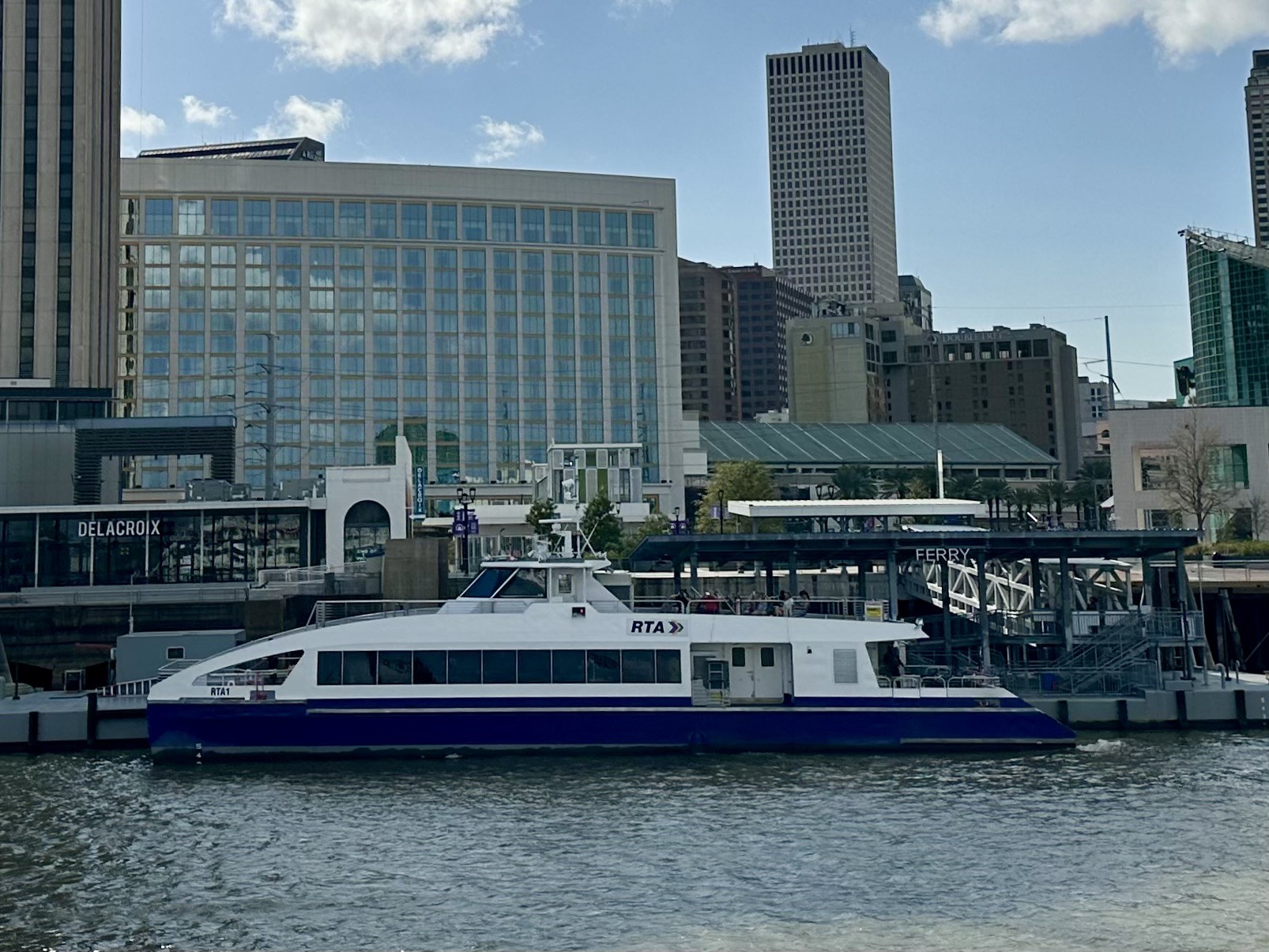
The Canal Street Ferry is the best free experience in New Orleans — a 15-minute ride across the Mississippi River to Algiers Point that provides the only view of the French Quarter skyline from the water, and it costs absolutely nothing. The ferry runs every 30 minutes from the foot of Canal Street, and the crossing — watching the Quarter recede, the cathedral spires silhouetted against the sky, and the river traffic moving around you — is a perspective that most visitors miss entirely. Algiers Point, the neighbourhood on the opposite bank, is one of New Orleans' oldest communities — settled before the French Quarter and connected to it by ferry since the 18th century. The neighbourhood has a quiet, village-like character that's the opposite of the Quarter's intensity: pastel Creole cottages, a main street with a café and a jazz bar, and a levee-top walking path that provides unobstructed views back across the river to the city skyline. The ferry itself is a working transit system, not a tourist attraction, which means you're riding with commuters, cyclists, and locals going about their business rather than a boatload of tourists with cameras. On the return trip, as the ferry approaches the east bank and the French Quarter skyline grows in the windshield, you get the view that early steamboat passengers would have seen arriving in the city — the cathedral, the Pontalba Buildings, the riverside warehouses — and it's a view that reminds you New Orleans was a river city long before it was a tourist city.
Audubon Park
6500 Magazine St, Audubon, New Orleans, 70118, United States
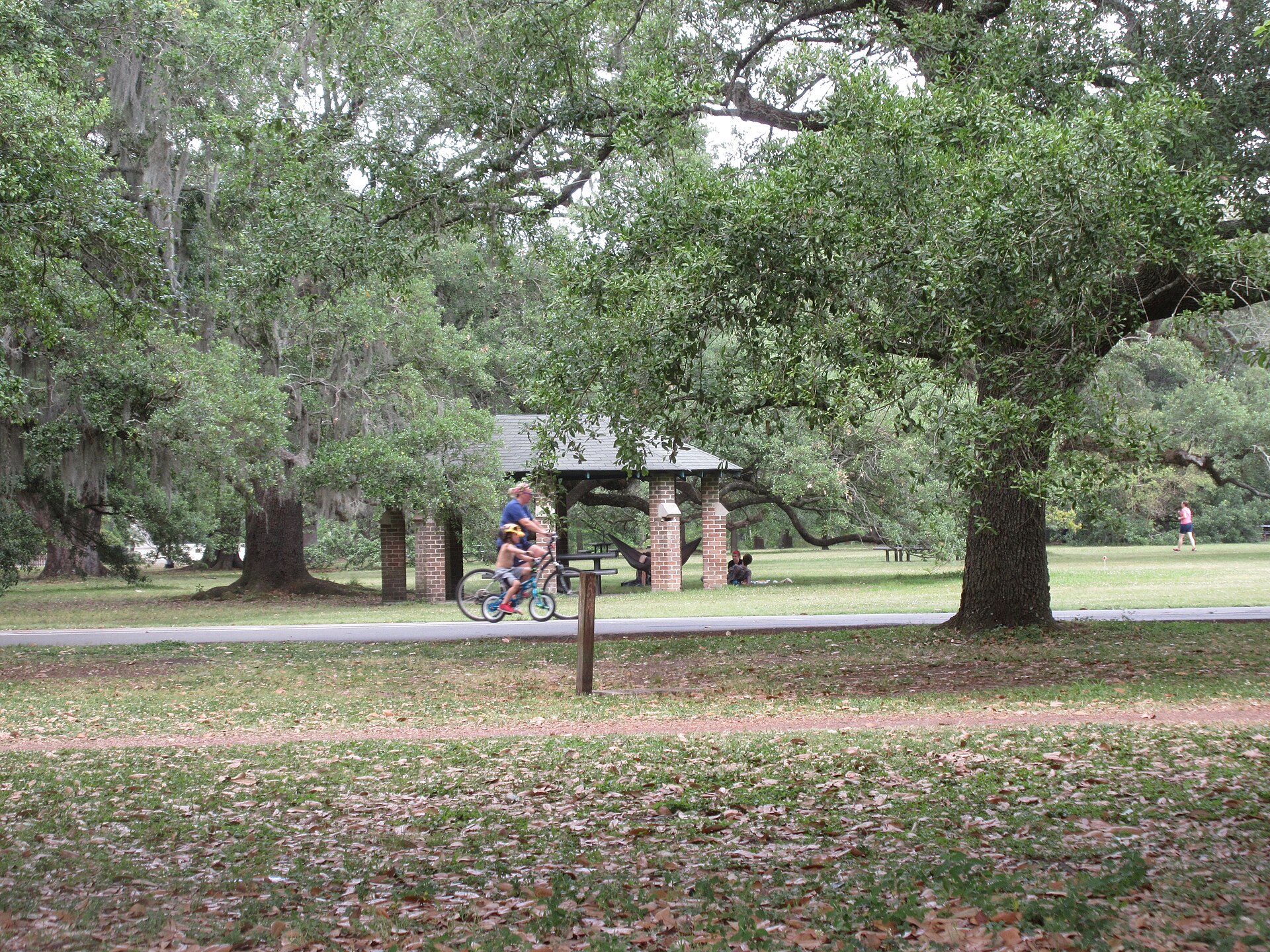
Audubon Park is Uptown's green jewel — 350 acres of live oaks, lagoons, and open space designed by the Olmsted Brothers firm (sons of Frederick Law Olmsted, who designed Central Park) on land that was once the Foucher and Boré sugar plantations. The park's live oaks are among the most magnificent in the city, with canopies that stretch 100 feet across and trunks so thick that two people can't link hands around them. The park's 1.8-mile jogging path loops through the oak grove and around the lagoon, and on any given morning it's packed with runners, walkers, and the occasional person doing tai chi under a tree. The Audubon Zoo, occupying the park's river side, is one of the better small zoos in America, with a Louisiana swamp exhibit that recreates the bayou ecosystem — alligators, nutria, egrets — a few feet from the paved paths. The park's golf course, the only public course in uptown New Orleans, winds through the oaks in a setting that makes losing a ball to the rough feel like a privilege. The park was the site of the 1884 World's Industrial and Cotton Centennial Exposition — a world's fair that brought the Olmsted firm to New Orleans and established the park's basic layout. The Exposition Building is long gone, but the oak trees that were planted for the fair are now 140 years old and are the park's greatest architectural achievement. Named for John James Audubon, who painted many of his Birds of America watercolours in Louisiana, the park is the Uptown equivalent of City Park — less destination, more neighbourhood living room.
Backstreet Cultural Museum
1116 Henriette Delille St, Treme, New Orleans, 70116, United States
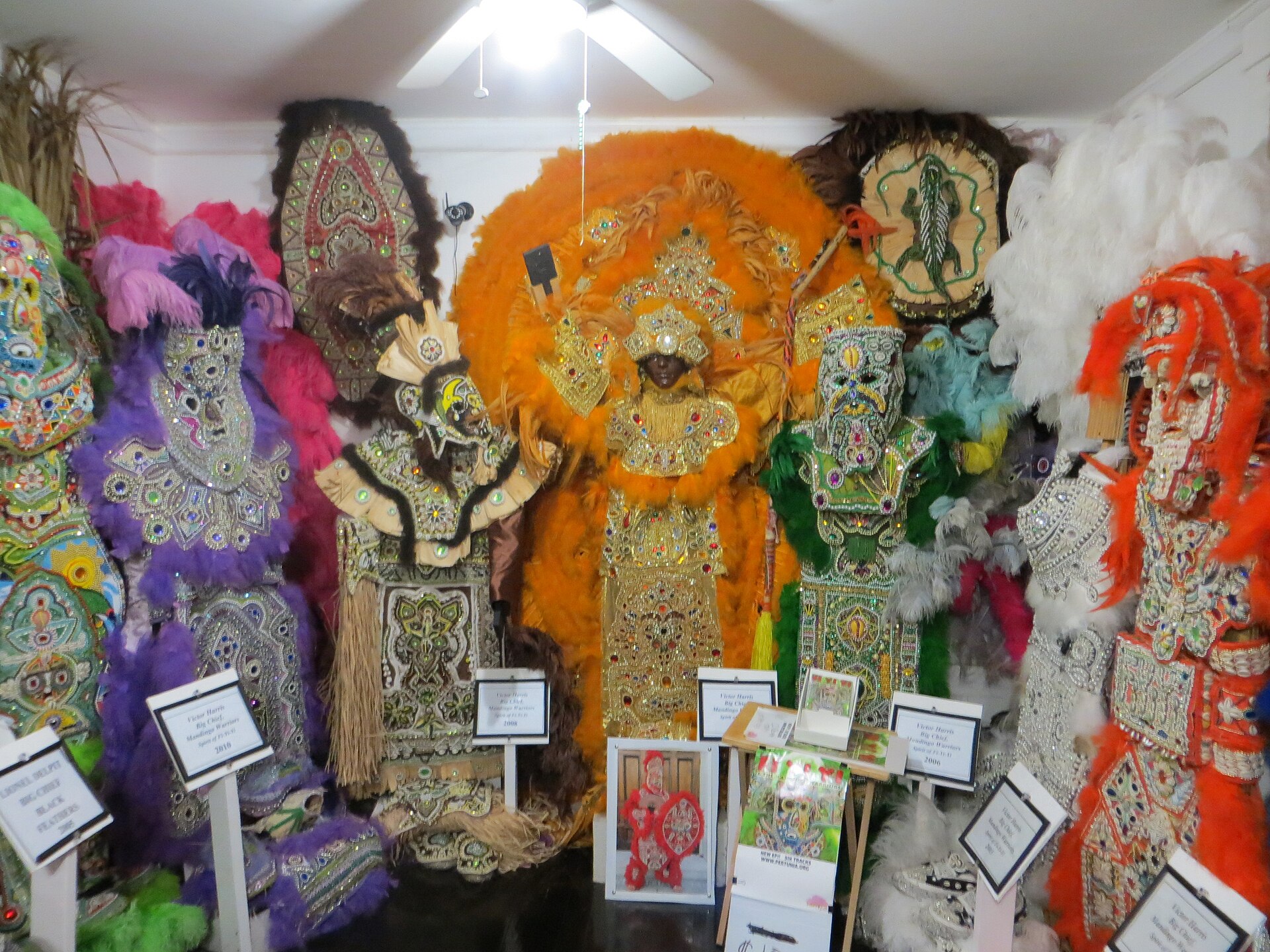
The Backstreet Cultural Museum is a small, essential museum in Tremé that preserves the traditions that make New Orleans' Black culture unlike anywhere else in America — Mardi Gras Indian suits, second-line parades, jazz funerals, and the Social Aid and Pleasure Clubs that have been the organisational backbone of the Black community since the 19th century. The Mardi Gras Indian suits are the museum's centrepiece — full-body costumes made of hand-sewn beads, feathers, sequins, and rhinestones that take an entire year to create, are worn once on Mardi Gras day, and are then retired. The craftsmanship is staggering — a single suit can contain 100,000 beads arranged in intricate patterns that tell stories from African and Native American traditions. The tradition dates to the 19th century, when Black New Orleanians were excluded from the mainstream Mardi Gras celebrations and created their own parallel Carnival centred on neighbourhood masking and competition between 'tribes.' The museum was founded by Sylvester Francis, a Tremé native who spent decades collecting costumes, photographs, and oral histories from the community. The collection is displayed in a converted funeral home, and the intimacy of the space — you're standing within touching distance of suits that contain years of someone's life — creates an emotional connection that larger museums can't replicate. Jazz funeral videos play on screens, second-line photographs line the walls, and Francis (or his colleagues) will explain the traditions with a personal knowledge that comes from growing up inside them. This is the museum that shows you the New Orleans that tourists don't see but that New Orleanians live.
Bourbon Street
Bourbon St, New Orleans, LA 70116
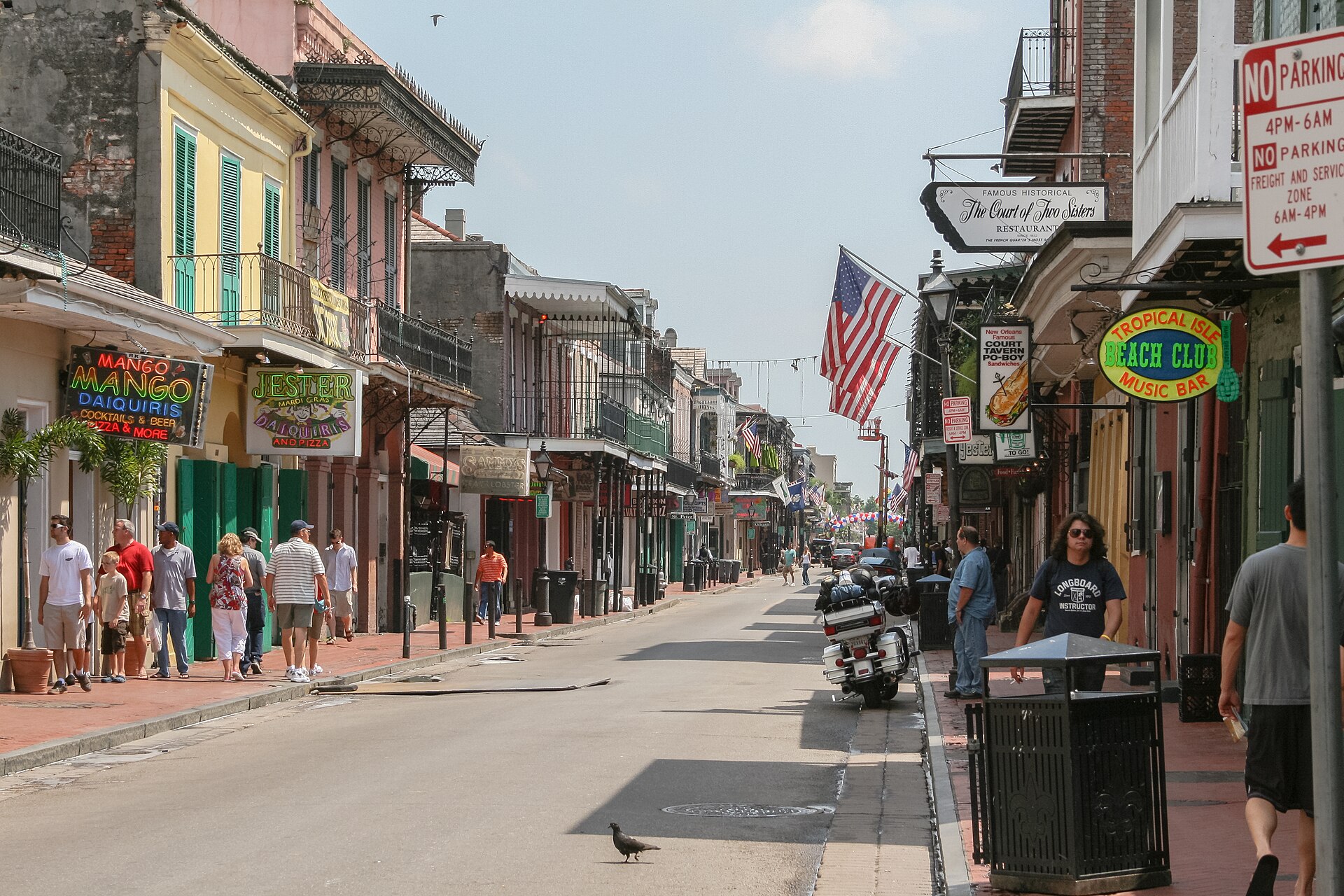
Bourbon Street is the most famous party street in America — a 13-block strip of neon signs, open doors, live music, and the kind of uninhibited public drinking that is illegal in almost every other American city but is not only legal here but expected. The open-container law that allows you to walk the streets of New Orleans with a drink in hand is most enthusiastically exercised on Bourbon, where the go-cups and giant frozen daiquiris are as much a part of the landscape as the cast-iron balconies above. The street is named for the French royal House of Bourbon, not the whiskey — though the whiskey flows freely enough that the confusion is understandable. The architecture is genuine French Quarter: two and three-story buildings with wrought-iron galleries, many dating to the early 19th century, now housing bars, clubs, restaurants, and souvenir shops that sell everything from hot sauce to alligator heads. The music ranges from excellent (brass bands, jazz trios) to terrible (cover bands playing 'Sweet Home Alabama' for the tourist crowd), and the trick is knowing which doors to walk through. Bourbon Street during Mardi Gras is an entirely different animal — the density of people, the volume of the music, the quantity of beads thrown from balconies, and the general atmosphere of cheerful chaos make it one of the most intense public celebrations on Earth. Outside of Mardi Gras, the street is busy but navigable, and the blocks above St. Ann Street transition into the quieter, more residential stretch of the Quarter where the real neighbourhood begins.
Café Du Monde
800 Decatur St, New Orleans, LA 70116
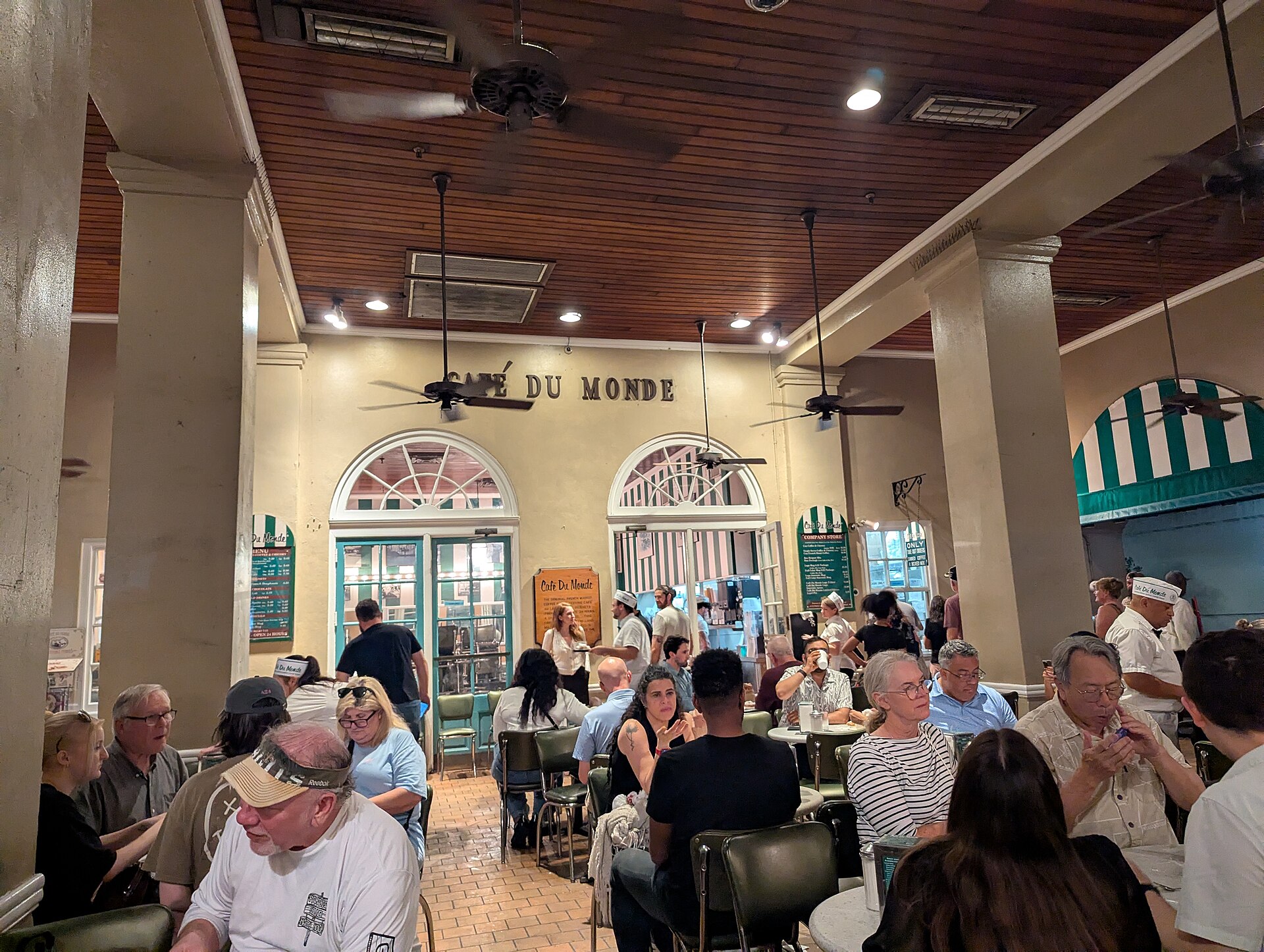
Café Du Monde has been serving beignets and café au lait from the same French Market location since 1862, and it has never closed — not for holidays, not for hurricanes (it reopened after Katrina within weeks), and not for the small matter of the menu having exactly three items: beignets, café au lait, and orange juice. The simplicity is the point. The beignets arrive three to a plate, buried under an avalanche of powdered sugar that immediately transfers to your clothes, your face, and the table, and the chicory coffee is strong enough to justify a 24-hour operation. The experience is inseparable from the location — an open-air pavilion at the edge of Jackson Square where the Mississippi River is visible through the levee, street musicians play within earshot, and the queue (there is always a queue) moves faster than it looks. The café has no walls, which means the summer heat and the occasional rain are part of the package, but the absence of air conditioning is what keeps the atmosphere authentic rather than sanitised. The beignets themselves are simple — fried dough, powdered sugar, nothing else — but the execution matters. They arrive hot, the exterior crisp, the interior airy, and the sugar sticks to the residual oil in a coating that's halfway between doughnut and funnel cake. The café au lait, made with chicory (a New Orleans tradition dating to the Civil War, when coffee shortages led to cutting it with roasted chicory root), has a slightly bitter, earthy flavour that cuts through the sweetness of the beignets. It's the best $5 breakfast in America.
Central Grocery & Deli
923 Decatur St, New Orleans, LA 70116
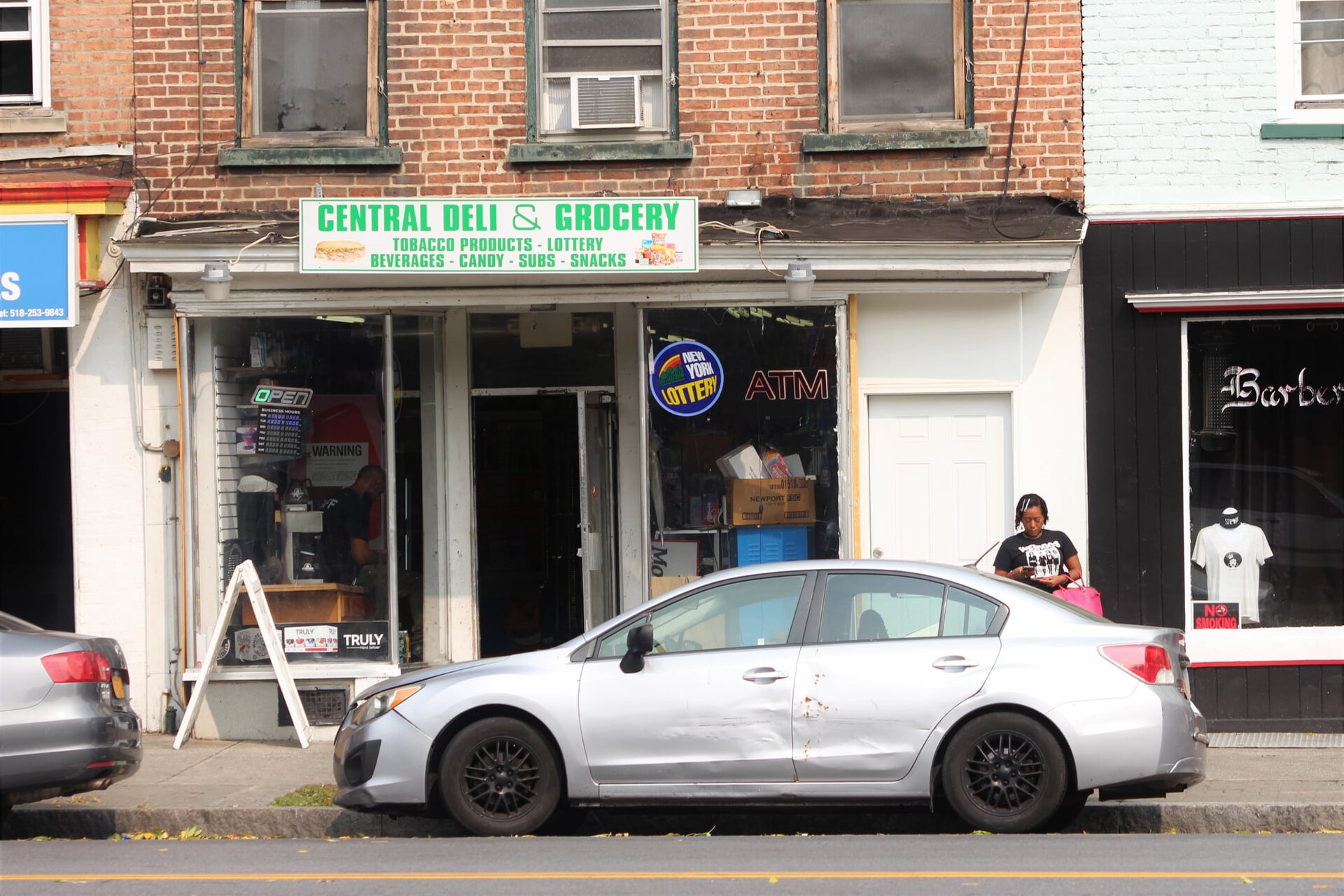
Central Grocery is a single-counter Italian deli on Decatur Street that has been making the same sandwich since 1906 — and that sandwich, the muffuletta, is one of the foundational foods of New Orleans. Salvatore Lupo, a Sicilian immigrant, invented it as a meal for the Italian dockworkers and farmers who gathered at the French Market, and the recipe hasn't changed because it doesn't need to. The muffuletta is built on a round sesame-seed bread about 10 inches across, layered with Genoa salami, ham, mortadella, Swiss cheese, provolone, and — the ingredient that makes it a muffuletta rather than just a big Italian sandwich — olive salad. The olive salad is a chopped relish of green olives, black olives, celery, cauliflower, carrots, and capers marinated in olive oil with garlic and herbs, and it soaks into the bread overnight in a way that transforms the entire sandwich. A whole muffuletta feeds two people easily, and Central Grocery will sell you a half. The deli itself is tiny — a narrow room lined with shelves of imported Italian goods, with a single counter where the sandwiches are assembled and wrapped. There's nowhere to sit inside, so most people take their muffuletta to Jackson Square or the levee along the river. The line can stretch down the block, particularly on weekends, but it moves quickly because the sandwich is pre-made — you're waiting for a space at the counter, not for cooking. Central Grocery was damaged during Hurricane Katrina and took years to reopen, and the outpouring of support from New Orleanians during the closure confirmed what everyone already knew: the muffuletta is not just a sandwich but a civic institution.
City Park
1 Palm Dr, City Park, New Orleans, 70124, United States
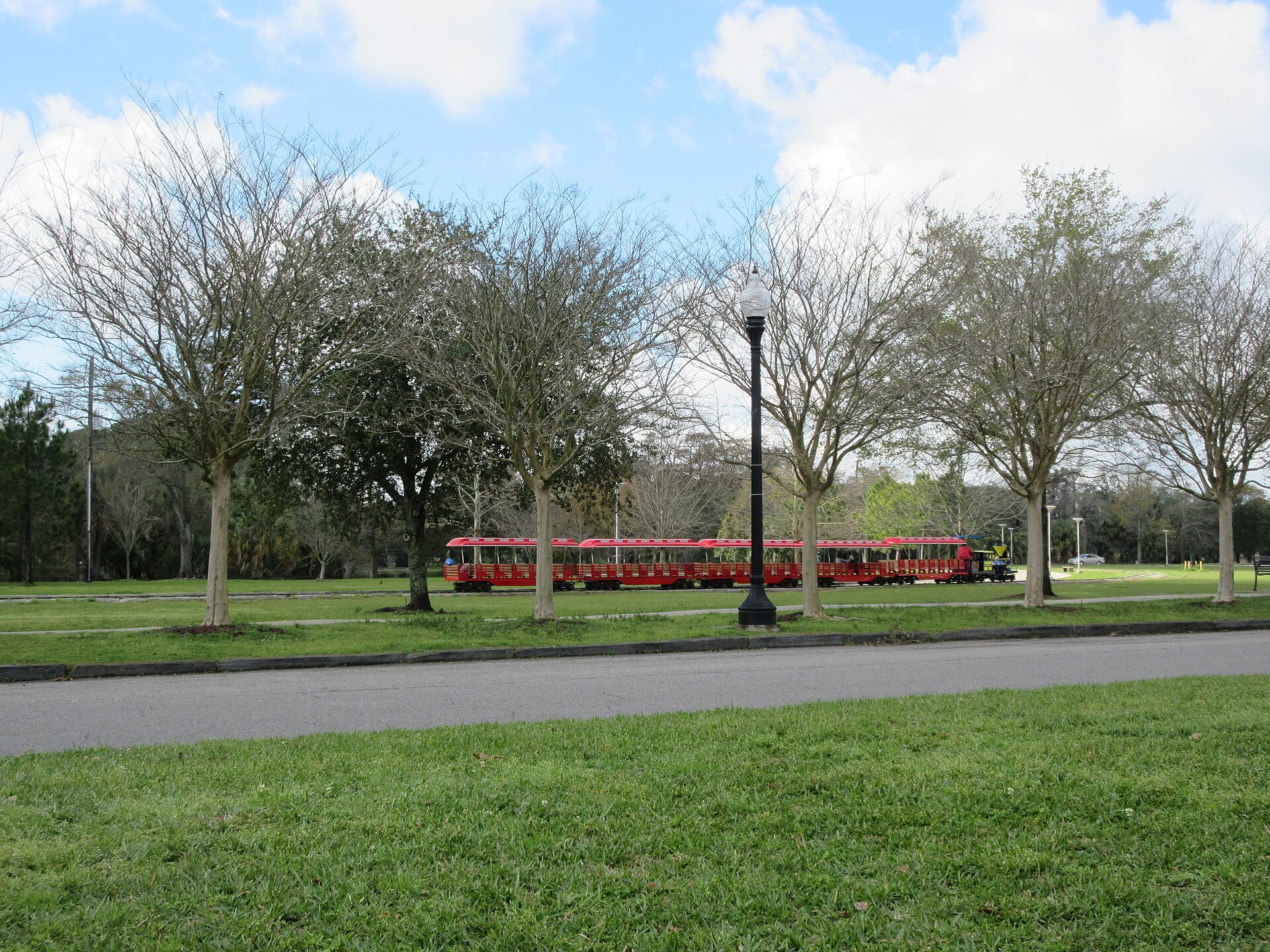
City Park is 1,300 acres of live oak trees, lagoons, gardens, and museums that makes it 50% larger than Central Park — a fact that surprises everyone who associates New Orleans exclusively with the French Quarter. The park's collection of mature live oaks is the largest in the world, with some trees estimated to be over 800 years old, and walking beneath their canopy — branches reaching 80 feet in every direction, draped in Spanish moss that moves in the breeze — is one of the most atmospheric experiences in the city. The New Orleans Museum of Art (NOMA) sits at the park's heart, and the adjacent Sydney and Walda Besthoff Sculpture Garden — 11 acres of outdoor sculpture by artists including Henry Moore, Louise Bourgeois, and Claes Oldenburg, set among lagoons and live oaks — is free to enter and is one of the finest sculpture gardens in America. The garden's design integrates the art with the landscape so completely that the sculptures appear to have grown out of the ground alongside the trees. Storyland, a children's playground featuring sculptured scenes from fairy tales and nursery rhymes, has been a New Orleans childhood tradition since the 1950s. The Botanical Garden, the Carousel Gardens amusement park (with a vintage wooden carousel from 1906), and the park's extensive network of walking and cycling paths make this a destination that could fill an entire day. The park was devastated by Hurricane Katrina — floodwaters stood six feet deep for weeks — and the restoration, funded partly by the Besthoff family, has been one of the city's most successful recovery stories.
Commander's Palace
1403 Washington Ave, Garden District, New Orleans, 70130, United States
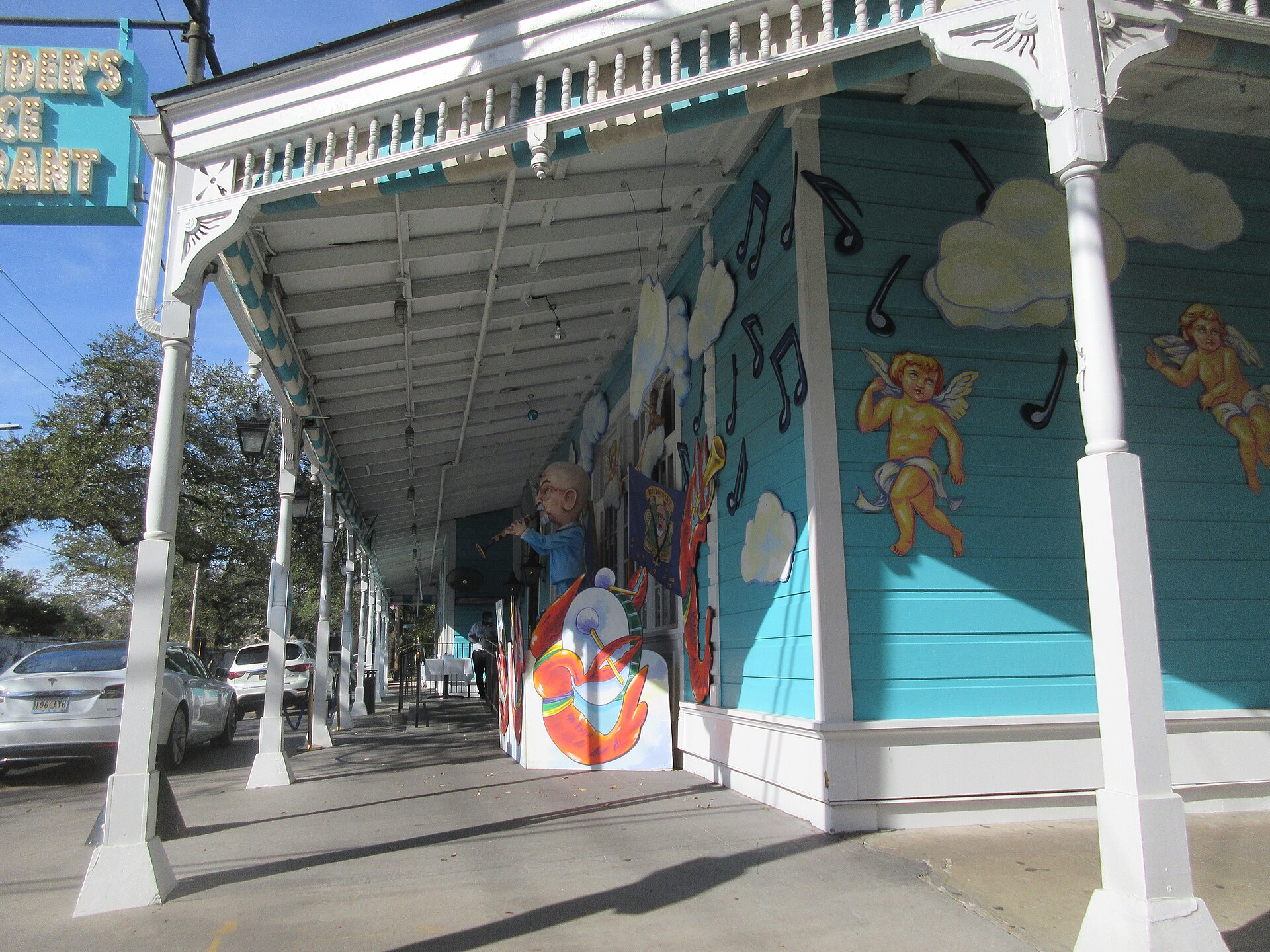
Commander's Palace is the most important restaurant in New Orleans — a Garden District institution that has been defining Creole fine dining since 1880 and has launched more famous chefs than any culinary school in America. Emeril Lagasse, Paul Prudhomme, and Jamie Shannon all ran Commander's kitchen before becoming household names, and the Brennan family, who have owned the restaurant since 1974, treat the chef's position as a residency that eventually produces a star. The building — a turquoise Victorian mansion on the corner of Washington Avenue and Coliseum Street, directly across from Lafayette Cemetery No. 1 — is as much a part of the experience as the food. The dining rooms spread across multiple levels and a garden courtyard, with white tablecloths, ceiling fans, and live jazz during the weekday lunch service. The dress code (jackets preferred for men at dinner) is enforced with the kind of polite Southern insistence that makes refusal feel like a personal insult to your grandmother. The menu is a greatest hits of Creole cuisine: turtle soup, shrimp and tasso Henican, pecan-crusted Gulf fish, and the bread pudding soufflé that has been on the menu for decades and will never come off. The 25-cent martini lunch (one per person, weekdays only) is one of the great deals in American dining — an extremely dry martini in a proper glass, served alongside some of the finest cooking in the South, for a quarter. The restaurant sustained major damage during Hurricane Katrina and reopened within a year, because New Orleans without Commander's Palace would be New Orleans without itself.
Congo Square
835 N Rampart St, New Orleans, LA 70116
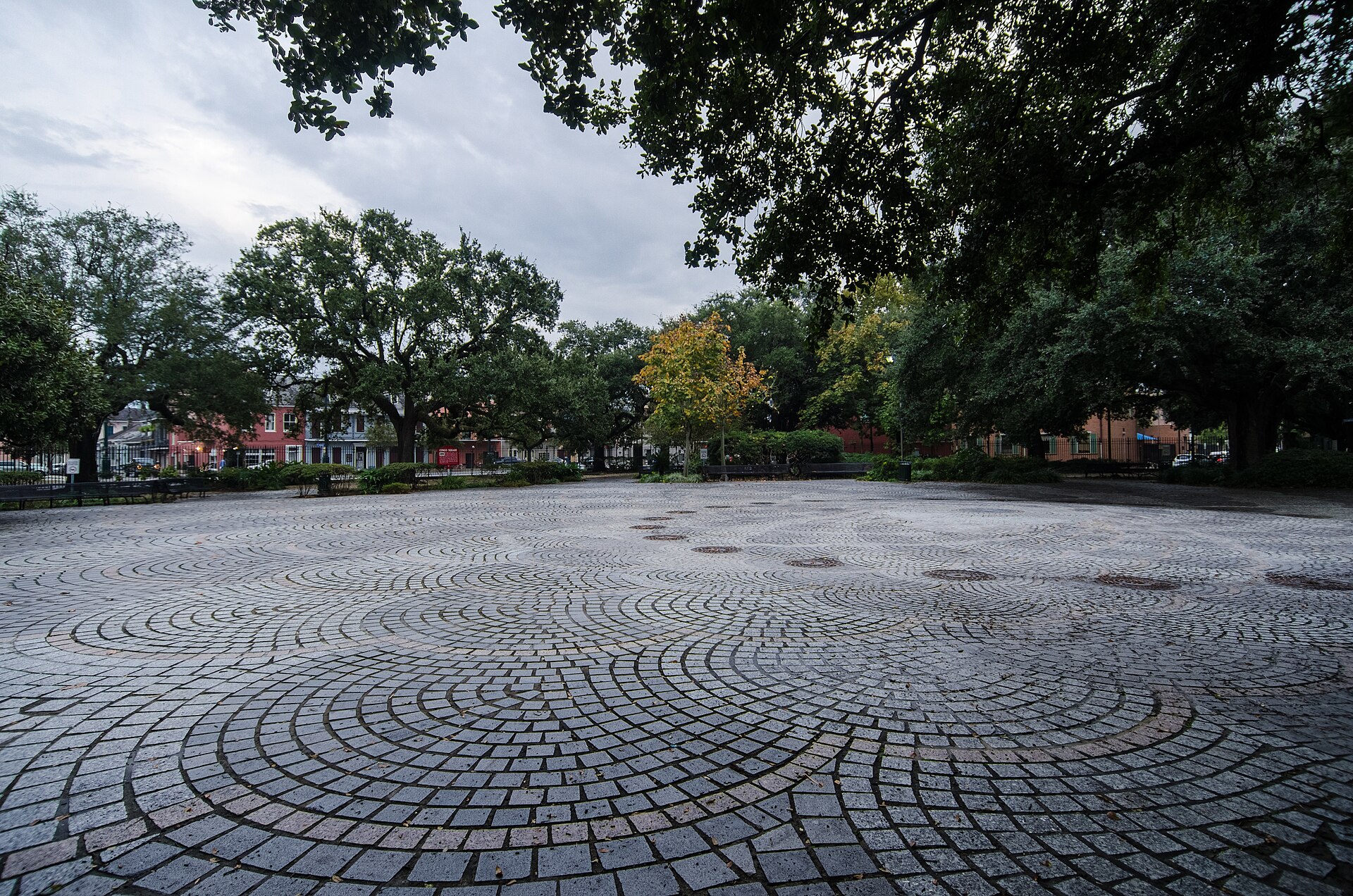
Congo Square is the most important piece of ground in the history of American music — the open space in what is now Louis Armstrong Park where enslaved Africans were permitted to gather on Sunday afternoons to drum, dance, sing, and trade, preserving the West African musical traditions that would eventually become jazz, blues, funk, and virtually every form of popular music that America has produced. The gatherings at Congo Square were unique in the slave-holding South. French colonial law (the Code Noir) gave enslaved people Sundays off, and the authorities permitted the gatherings partly because they served as a social pressure valve and partly because the New Orleans economy depended on the skills and commerce that free and enslaved Black people conducted in the square. The music — polyrhythmic drumming, call-and-response singing, ring dances — was directly descended from Senegambian, Congolese, and Yoruba traditions, and the fact that it was performed continuously for over a century in this specific location created the musical DNA that New Orleans jazz inherited. The square sits inside Louis Armstrong Park, a landscaped park at the edge of the French Quarter that also contains the Mahalia Jackson Theater and a statue of Armstrong himself. The park is free to enter but has a complicated relationship with the Tremé neighbourhood it borders — the construction of Armstrong Park in the 1970s demolished a section of Tremé, the oldest African-American neighbourhood in the country. The history layered into this small piece of land — African, French, Creole, American, musical, tragic — is dense enough to require a guided tour to fully appreciate.
Crescent Park
New Orleans, United States
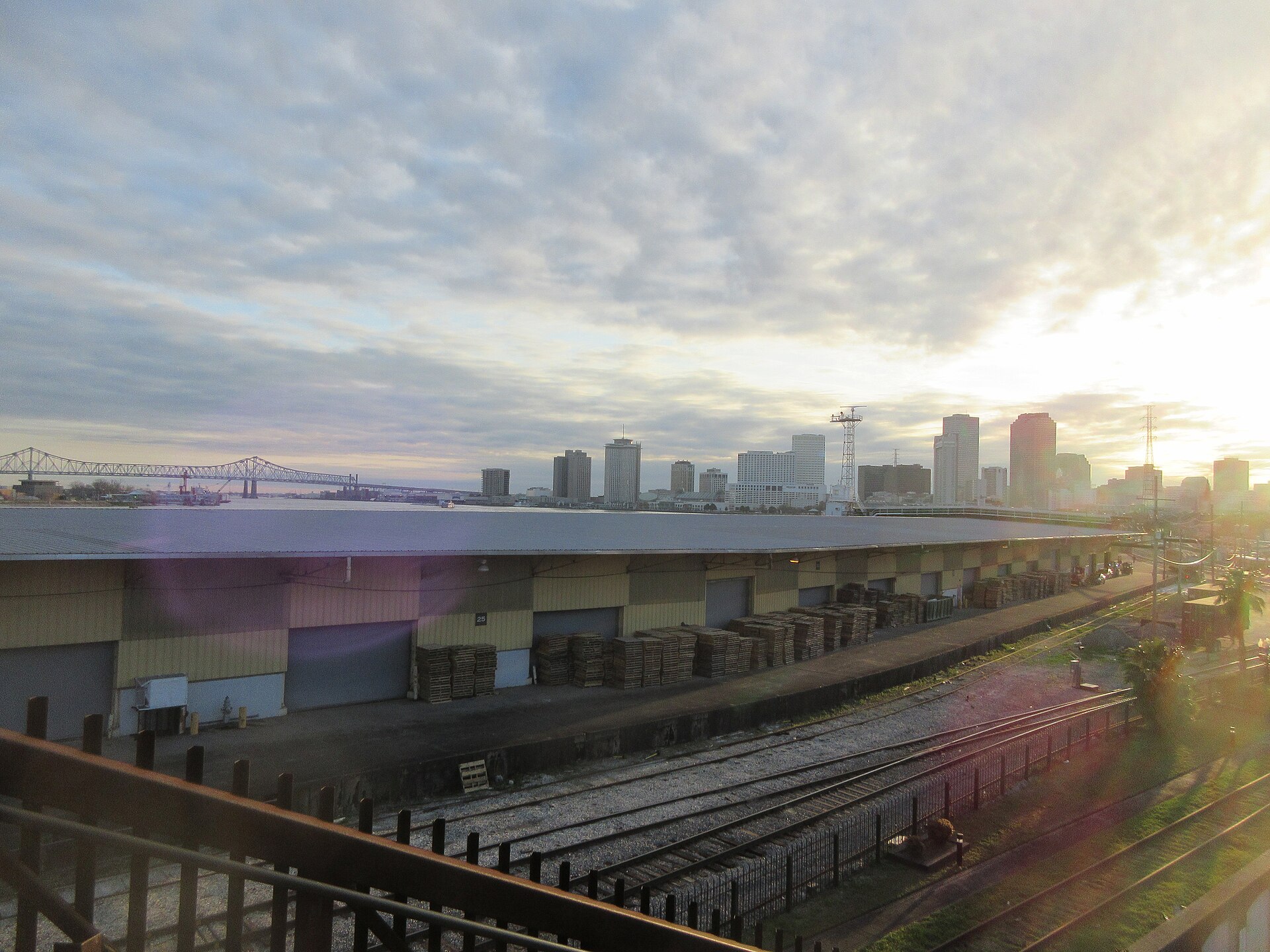
Crescent Park is a 1.4-mile linear park along the Mississippi River in the Bywater and Marigny neighbourhoods — one of the newest parks in New Orleans and, in terms of views, one of the best. The park runs atop the old wharf infrastructure, elevated above the surrounding streets, and the perspective it gives — looking across the river to Algiers Point, upriver to the French Quarter skyline, and down at the working river traffic below — is unlike anything else in the city. The Piety Street entrance is the dramatic one — a soaring steel bridge designed by Eskew+Dumez+Ripple that arcs over the railroad tracks and the flood wall, depositing you on the elevated promenade with the river suddenly visible in a way it rarely is in a city where levees and flood walls usually block the view. The bridge itself has become an architectural landmark and a popular photography spot, particularly at sunset when the steel structure frames the western sky. The park's location in the Bywater — New Orleans' most artistically active neighbourhood, where musicians, artists, and the creative class that's been priced out of other cities have established a community — means a visit naturally pairs with exploring the surrounding streets. The Bywater has some of the best street art in the city, excellent restaurants and bars, and the kind of neighbourhood character that the French Quarter had before tourism became its primary industry. Crescent Park is free, open daily, and is best visited at sunset or early morning when the light on the river is at its most dramatic.
French Market
1235 N Peters St, French Quarter, New Orleans, 70116, United States
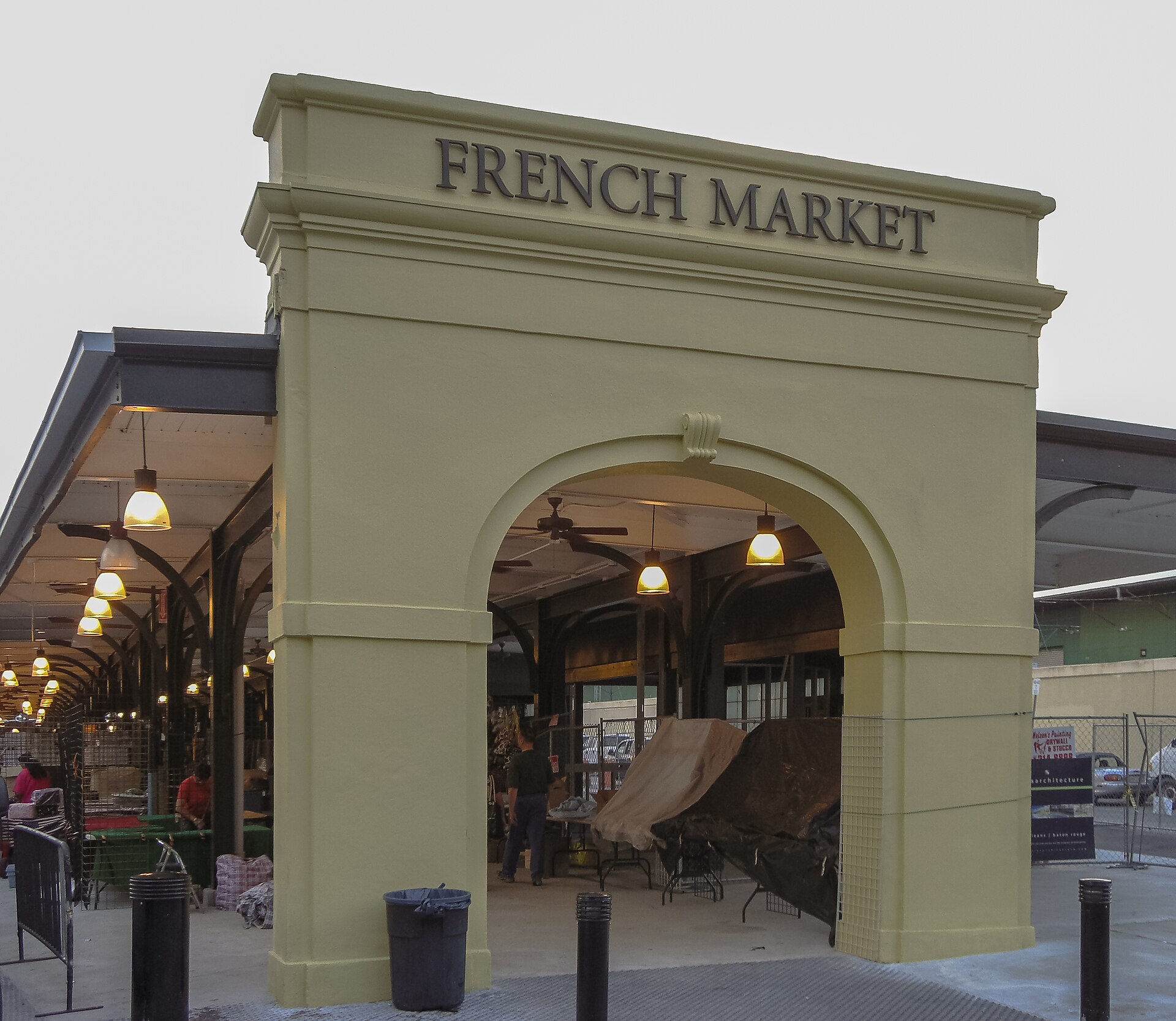
The French Market is the oldest continuously operating public market in the United States — a six-block stretch of covered stalls along the Mississippi riverfront that has been selling food, goods, and whatever else New Orleans needs since 1791. The market runs from Café Du Monde at one end to the flea market at the other, and walking its length is a compressed tour of the city's commercial culture. The produce and food section is the heart of the market — vendors selling Creole tomatoes, fresh Gulf shrimp, hot sauce collections that could fill a museum, pralines made on-site, and prepared food that ranges from gumbo to Vietnamese pho (New Orleans has a significant Vietnamese community, and the food reflects it). The quality is uneven — some vendors sell tourist trinkets, others sell genuinely excellent food — but the atmosphere is consistent: open-air, slightly chaotic, and animated by the kind of casual commerce that has defined New Orleans markets for over two centuries. The flea market at the far end is where the bargains and curiosities live — vintage clothing, handmade jewellery, local art, voodoo dolls (mostly decorative rather than functional), and the kind of secondhand goods that require browsing rather than searching. The market's location along the riverfront means the walk between stalls includes glimpses of the Mississippi through the levee, and the breeze off the river is a welcome relief from the Quarter's summer heat.
Frenchmen Street
Frenchmen St, New Orleans, LA 70116
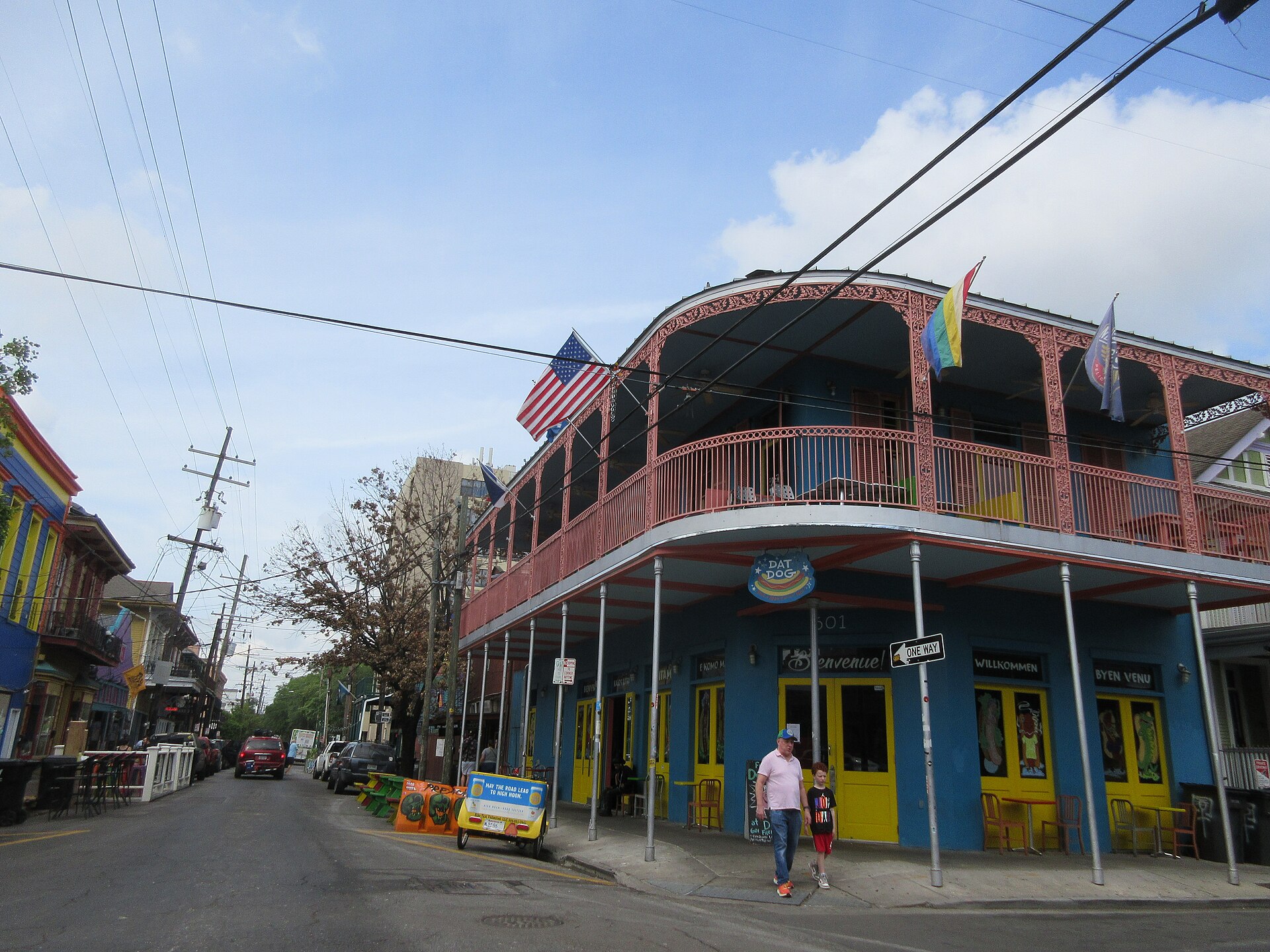
Frenchmen Street is where New Orleanians go to hear live music — a three-block strip in the Faubourg Marigny neighbourhood that has replaced Bourbon Street as the city's real music scene. On any night of the week, brass bands, jazz quartets, blues guitarists, and funk ensembles are playing in bars that range from standing-room-only to sit-down-with-a-cocktail, and the sound spills out of open doors and windows to create a street-level symphony that you can walk through. The difference between Frenchmen and Bourbon is the difference between a concert and a theme park. Bourbon Street sells the idea of New Orleans nightlife — giant drinks, cover bands, strip clubs, and a tourist crowd that's there for the spectacle. Frenchmen Street sells the reality — original music played by musicians who live in the city, in venues where the audience is split between visitors who've done their research and locals who've been coming for years. The Spotted Cat, d.b.a., the Maison, and Blue Nile are the anchor venues, and most charge no cover or a nominal fee. The Frenchmen Art Market, an open-air night market operating on weekends, adds visual art, crafts, and food to the mix. The street's location — just outside the French Quarter, across Esplanade Avenue — means it's easily walkable from the Quarter but feels like a different city. The crowd is younger, the prices are lower, and the unspoken rule is that you tip the musicians generously because the cover charges aren't paying their rent.
Garden District
St Charles Ave at Washington Ave, New Orleans, LA 70130
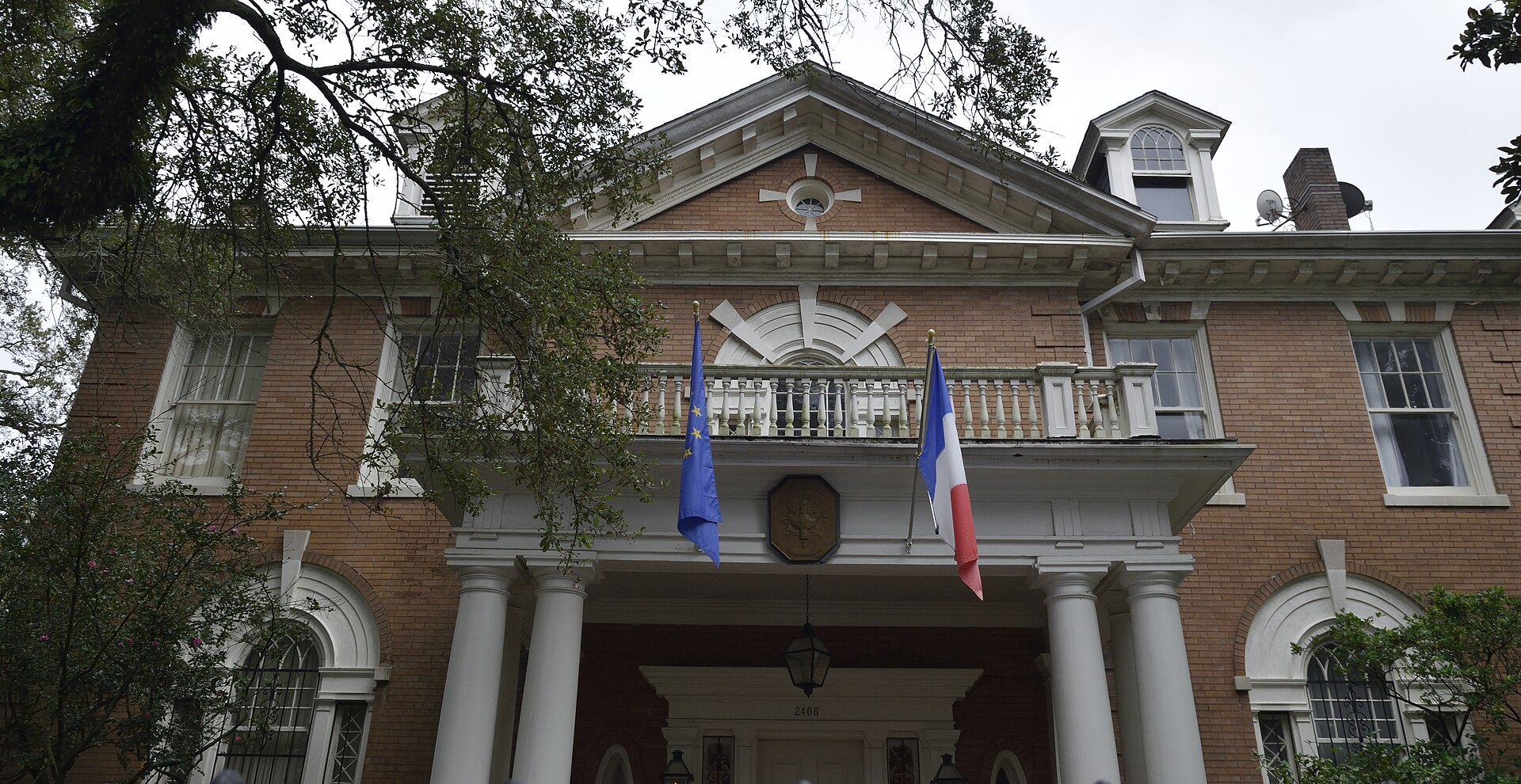
The Garden District is where the Americans built their mansions after the Louisiana Purchase — a deliberate statement of wealth and taste aimed at the Creole establishment in the French Quarter who considered the English-speaking newcomers to be uncultured barbarians. The result is one of the most extravagant residential neighbourhoods in America: Greek Revival, Italianate, and Victorian mansions set behind wrought-iron fences on streets canopied by live oak trees whose branches form tunnels of green. The neighbourhood was developed in the 1830s and 1840s on former plantation land, and the mansions reflect the fortunes made in cotton, sugar, and banking during the antebellum era. First Street, Third Street, and Prytania Street contain the densest concentration of historic homes, and walking these blocks feels like leafing through an architecture textbook — each house competing with its neighbours in scale, ornamentation, and the number of columns deemed necessary to impress visitors. The best way to experience the Garden District is on foot from the St. Charles Streetcar — get off at Washington Avenue and walk south through the residential streets, ending at Magazine Street for lunch or shopping. Commander's Palace, the Brennan family's celebrated restaurant on the corner of Washington and Coliseum, is the neighbourhood's most famous dining institution and a reasonable excuse to dress up. The live oaks that line St. Charles Avenue are some of the oldest in the city, and their roots have been slowly destroying the sidewalks for over a century with a patient determination that no amount of concrete can defeat.
Jackson Square
700 Decatur St, New Orleans, LA 70116
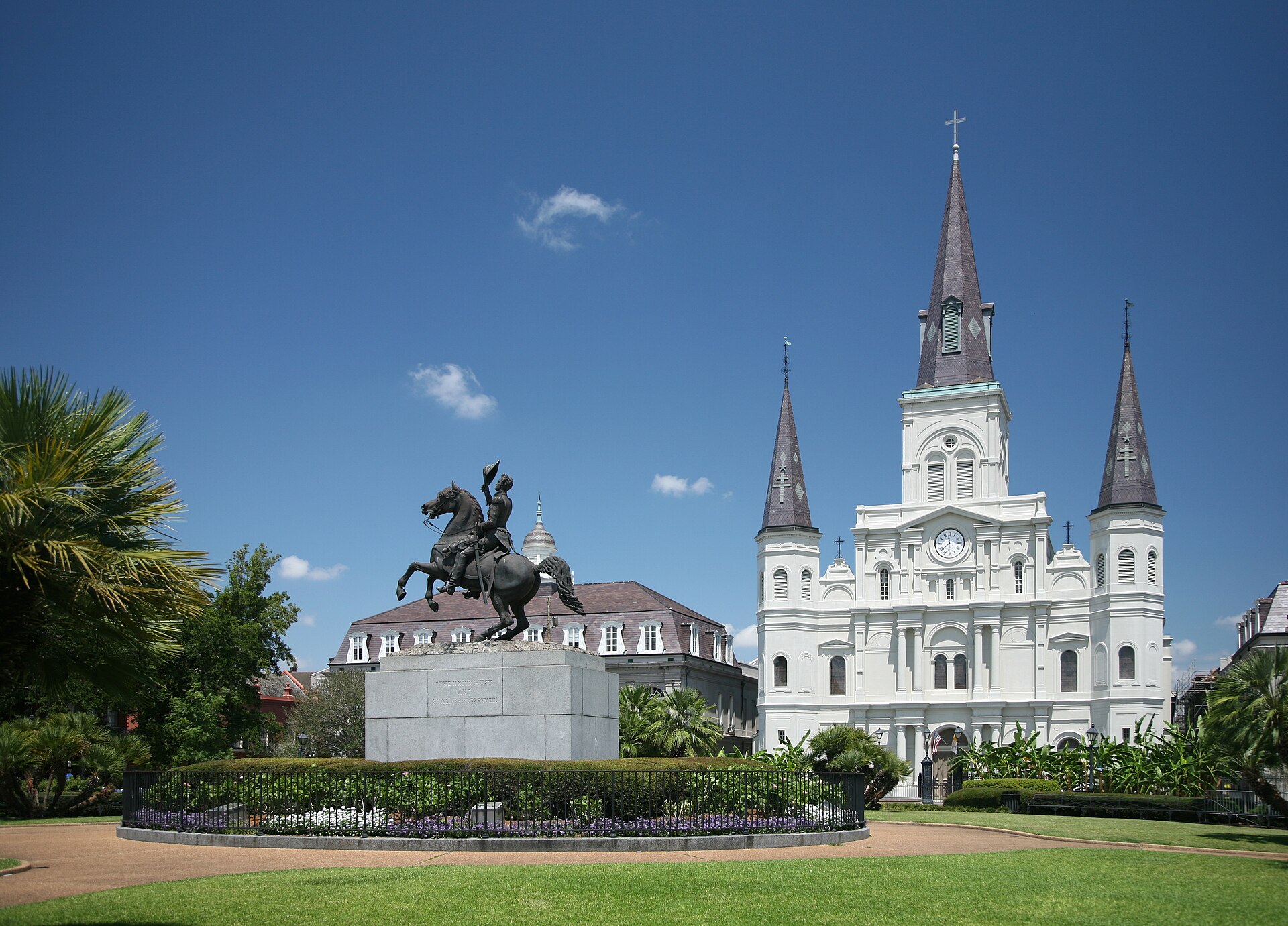
Jackson Square is the beating heart of the French Quarter — a formal garden square framed by the triple spires of St. Louis Cathedral, the Cabildo, and the Presbytère, with the Mississippi River flowing just beyond the levee at its back. The square has been the centre of New Orleans life since the city was founded by the French in 1718, serving variously as a military parade ground (the Place d'Armes), a public execution site, a gathering place for the enslaved and the free, and the daily stage for one of America's most colourful street scenes. The iron fence surrounding the square is lined with artists displaying their work — portraits, landscapes, jazz scenes — while tarot readers, palm readers, and buskers compete for attention on the flagstones. The quality ranges from tourist kitsch to genuinely talented street artists who've been working the square for decades. On any given afternoon, you might hear a brass band, a solo saxophonist, and a spoken-word poet performing within earshot of each other, and the layered sound is pure New Orleans. The equestrian statue of Andrew Jackson at the centre — the one that gives the square its current name — has been there since 1856, tipping its hat with the kind of permanent confidence that only bronze can manage. The Pontalba Buildings flanking the square's north and south sides, built in the 1840s by Baroness Micaela Almonester de Pontalba, are the oldest apartment buildings in America and set the architectural template — cast-iron galleries over ground-floor shops — that defines the French Quarter.
Lafayette Cemetery No. 1
1416 Washington Ave, Garden District, New Orleans, 70130, United States
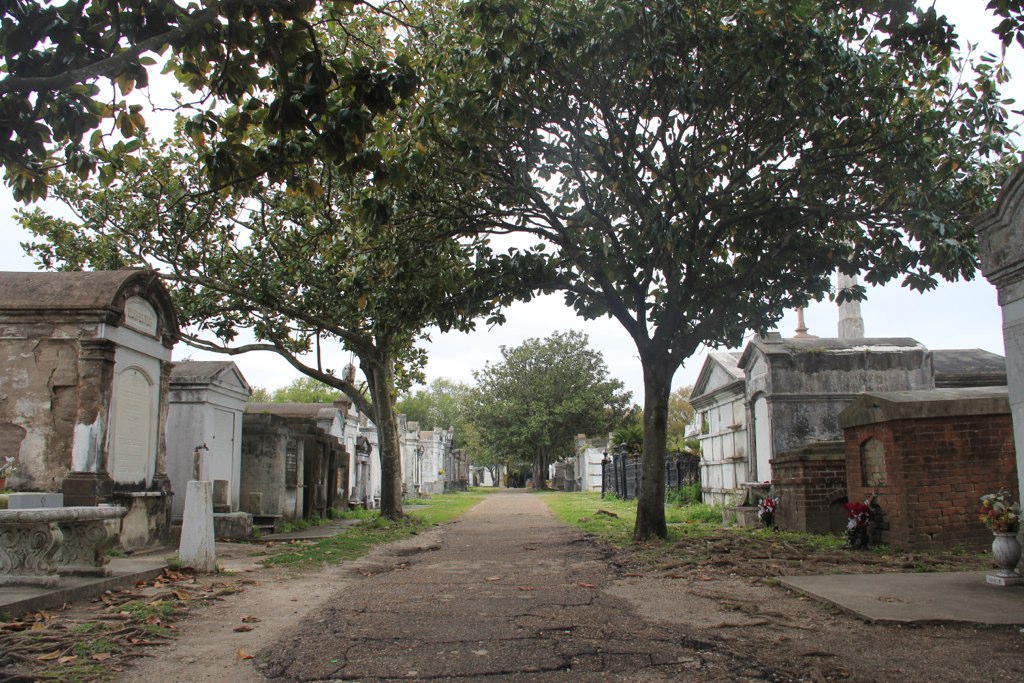
Lafayette Cemetery No. 1 is the Garden District's 'City of the Dead' — a block-sized grid of above-ground tombs established in 1833 that has become one of the most visited cemeteries in America, thanks partly to Anne Rice, who set key scenes from 'Interview with the Vampire' here, and partly to the cemetery's genuinely atmospheric combination of crumbling tombs, live oak shade, and the silence that descends when you step through the gates from busy Washington Avenue. The cemetery was the burial ground for the American sector of New Orleans — as opposed to the French Creole cemeteries closer to the Quarter — and the tomb inscriptions reflect the immigration waves that shaped the city: Irish families who arrived during the Famine, German merchants, and the wealthy American planters who built the Garden District mansions across the street. The yellow fever epidemics of the 1850s filled the cemetery rapidly — at the epidemic's peak, families were burying multiple members in a single week. The tombs are built in the New Orleans style — raised brick vaults sealed with plaster, usually whitewashed, with the family name carved above the door. The largest are elaborate structures with multiple chambers designed to hold generations of a family, while the wall vaults around the perimeter (called 'oven vaults' for their resemblance to bread ovens) were used for less wealthy burials. The cemetery is free to enter during daylight hours, and its location directly across from Commander's Palace makes it an easy stop on any Garden District walk.
Lafitte's Blacksmith Shop Bar
941 Bourbon St, French Quarter, New Orleans, 70116, United States
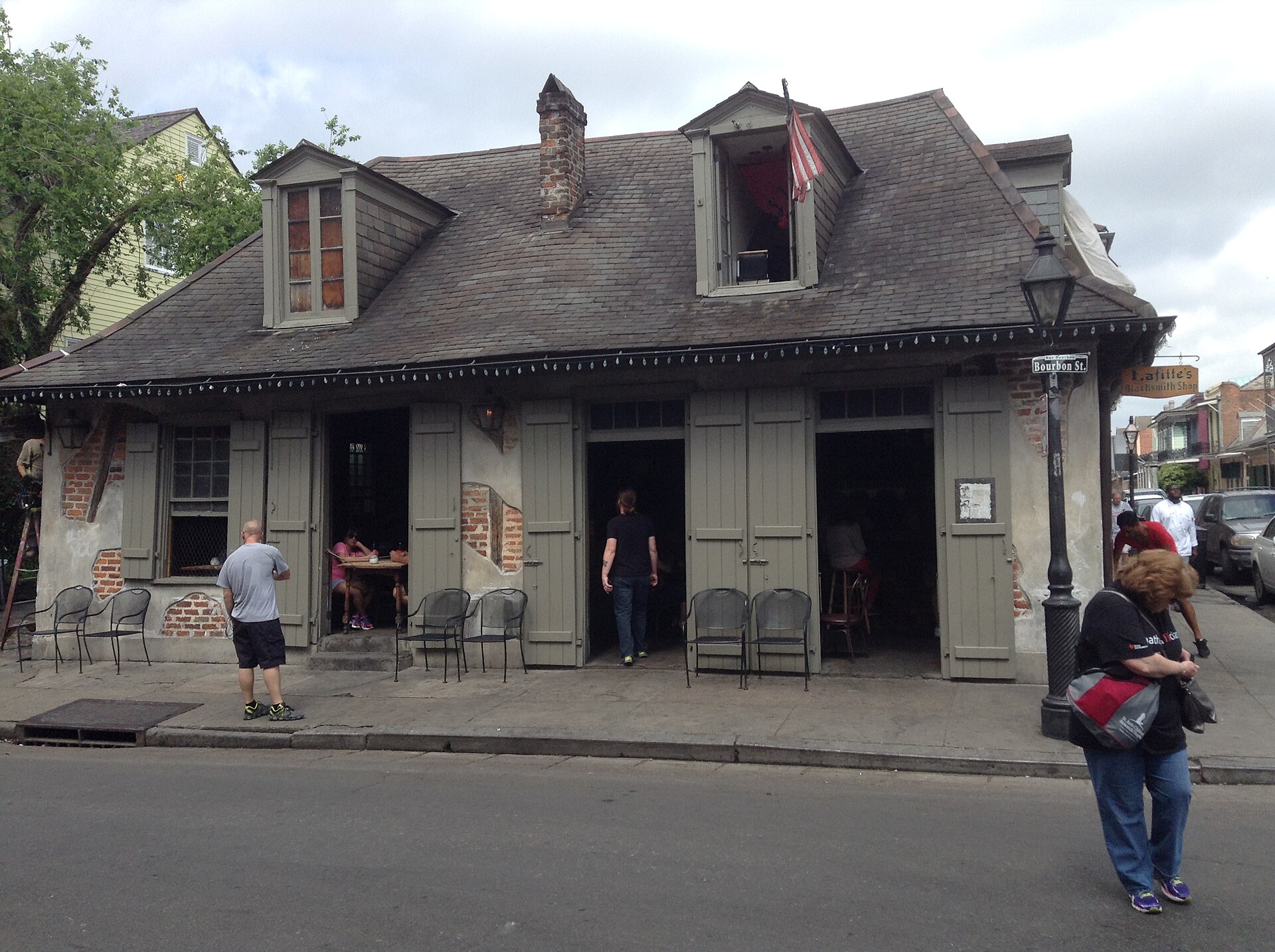
Lafitte's Blacksmith Shop is one of the oldest structures in the French Quarter — a crumbling brick-between-posts building from around 1772 that legend says was used as a front for the pirate Jean Lafitte's smuggling operation. Whether the pirate connection is true is debatable (historians argue about it endlessly), but the building is genuine French Colonial construction, and the bar inside is one of the most atmospheric drinking establishments in America. The interior is lit almost entirely by candles, and the effect on a dark evening — shadows flickering across exposed brick walls, the glow of votives on the bar and tables, the general sense of drinking in a building that was old when the Louisiana Purchase happened — is more Gothic romance than sports bar. A pianist plays in the back room most evenings, and the music drifts through the building with the kind of lazy intensity that only candlelight and old walls can produce. The bar sits on the quieter upper end of Bourbon Street, past the strip-club-and-karaoke zone that dominates the lower blocks, and it draws a mix of tourists who've read about it and locals who appreciate a drink in a building that hasn't been renovated into sterility. The purple voodoo daiquiris are the signature drink — not because they're good (they're extremely sweet), but because they're what you drink at Lafitte's, in the same way that beignets are what you eat at Café Du Monde. Some New Orleans traditions exist because of quality; others exist because of momentum. Both types are valid.
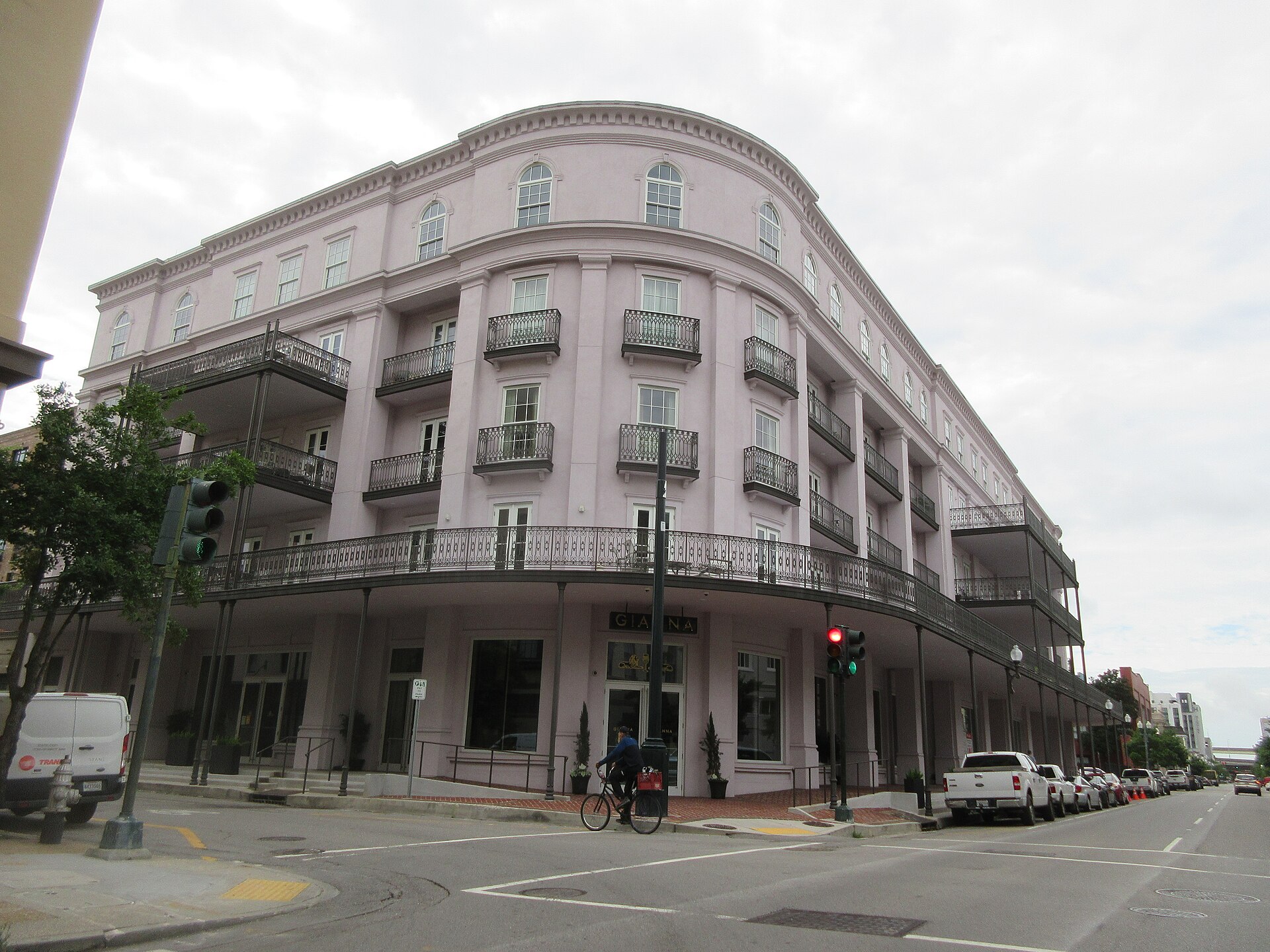
Magazine Street
Magazine St, New Orleans, LA 70130
Magazine Street is a six-mile commercial corridor running through the Garden District and Uptown that functions as New Orleans' independent shopping spine — a street where locally owned boutiques, galleries, restaurants, and vintage shops outnumber chains by a ratio that most American cities have given up trying to achieve. Walking its full length is a half-day project that passes through five distinct neighbourhoods, each with its own character. The Lower Garden District section (around Jackson Avenue) has edgier art galleries and the kind of vintage clothing stores that attract costumers and set designers. The Garden District section (Washington to Napoleon) is more refined — antiques, home décor, and upscale restaurants. The Uptown section beyond Napoleon becomes increasingly residential and relaxed, with neighbourhood restaurants, coffee shops, and the Creole Creamery (locally beloved ice cream shop) drawing a crowd that is entirely local. The street's name has nothing to do with publishing — it derives from the French 'magasin' (warehouse), reflecting the street's original function as a commercial route from the river warehouses to the inland plantations. The Magazine Street bus runs the full length and costs $1.25, making it possible to ride to one end and walk back, stopping at whatever catches your eye. The restaurants along the route represent the full spectrum of New Orleans cooking — po'boys, Vietnamese, Creole, barbecue, farm-to-table — and eating your way down Magazine Street is one of the best food experiences in a city that has no shortage of them.
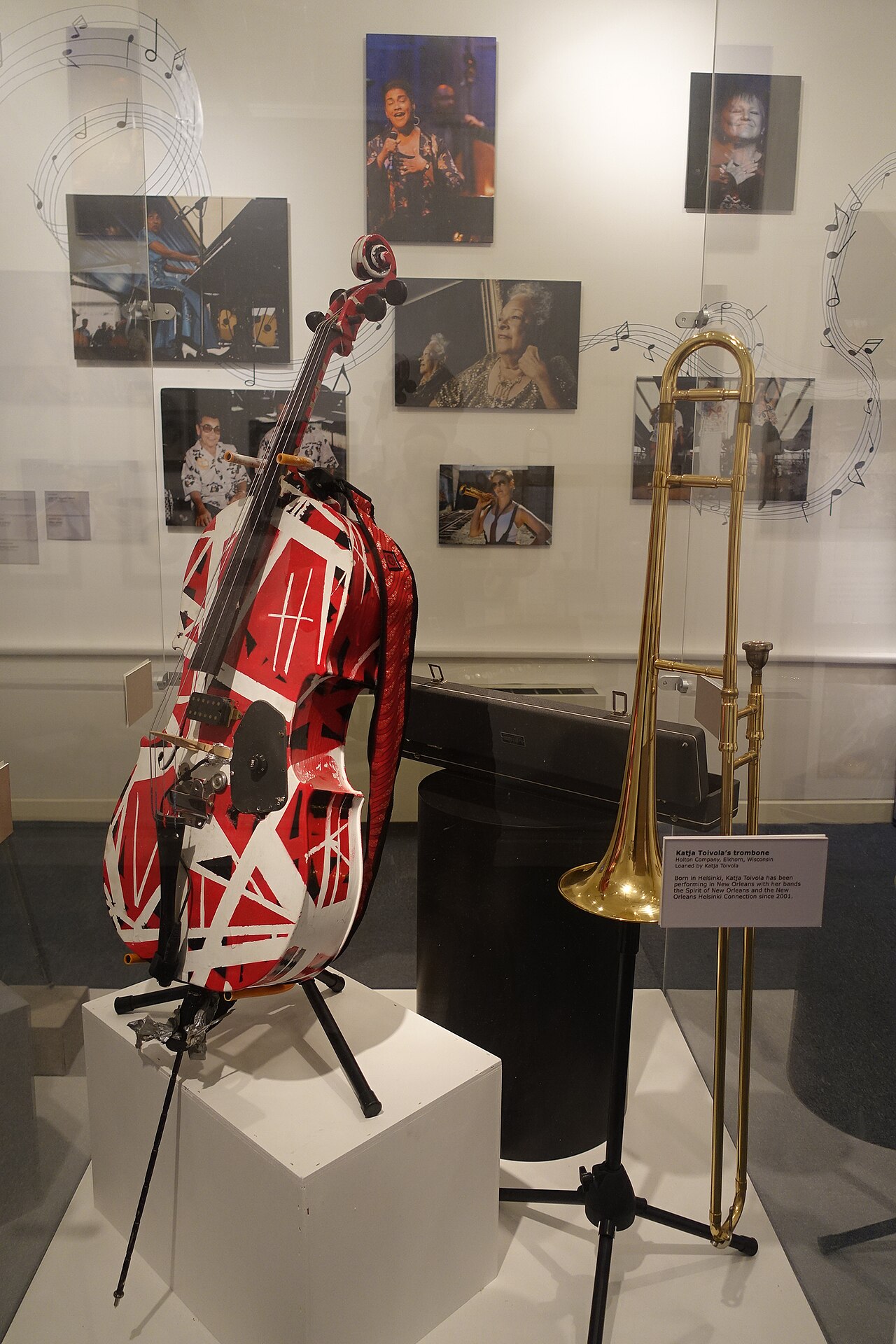
New Orleans Jazz Museum
400 Esplanade Ave, New Orleans, LA 70116
The New Orleans Jazz Museum is housed in the Old US Mint — the only building in America to have served as both a US and a Confederate mint — and it tells the story of jazz from its origins in Congo Square and Storyville to its global spread, through instruments, recordings, photographs, and the kind of personal artifacts that make a music genre feel like a community. The collection includes Louis Armstrong's first cornet, the piano from Lulu White's Mahogany Hall (a Storyville bordello where Jelly Roll Morton played), and recording equipment used to capture the earliest jazz performances. The instruments are displayed not as relics but as working objects — the museum regularly hosts live performances in its third-floor concert space, where musicians play the same music in a building that stored the same city's gold. The Old Mint building itself, constructed in 1835, is a Greek Revival structure that processed $300 million in gold and silver coins during its operating years. During the Civil War, the Confederate government briefly used it to mint its own currency before Union forces recaptured New Orleans in 1862. The combination of monetary history and musical history under one roof is uniquely New Orleans — a city where culture and commerce have always been inseparable, and where the most important American art form was invented by people who had almost nothing but their talent and their instruments.
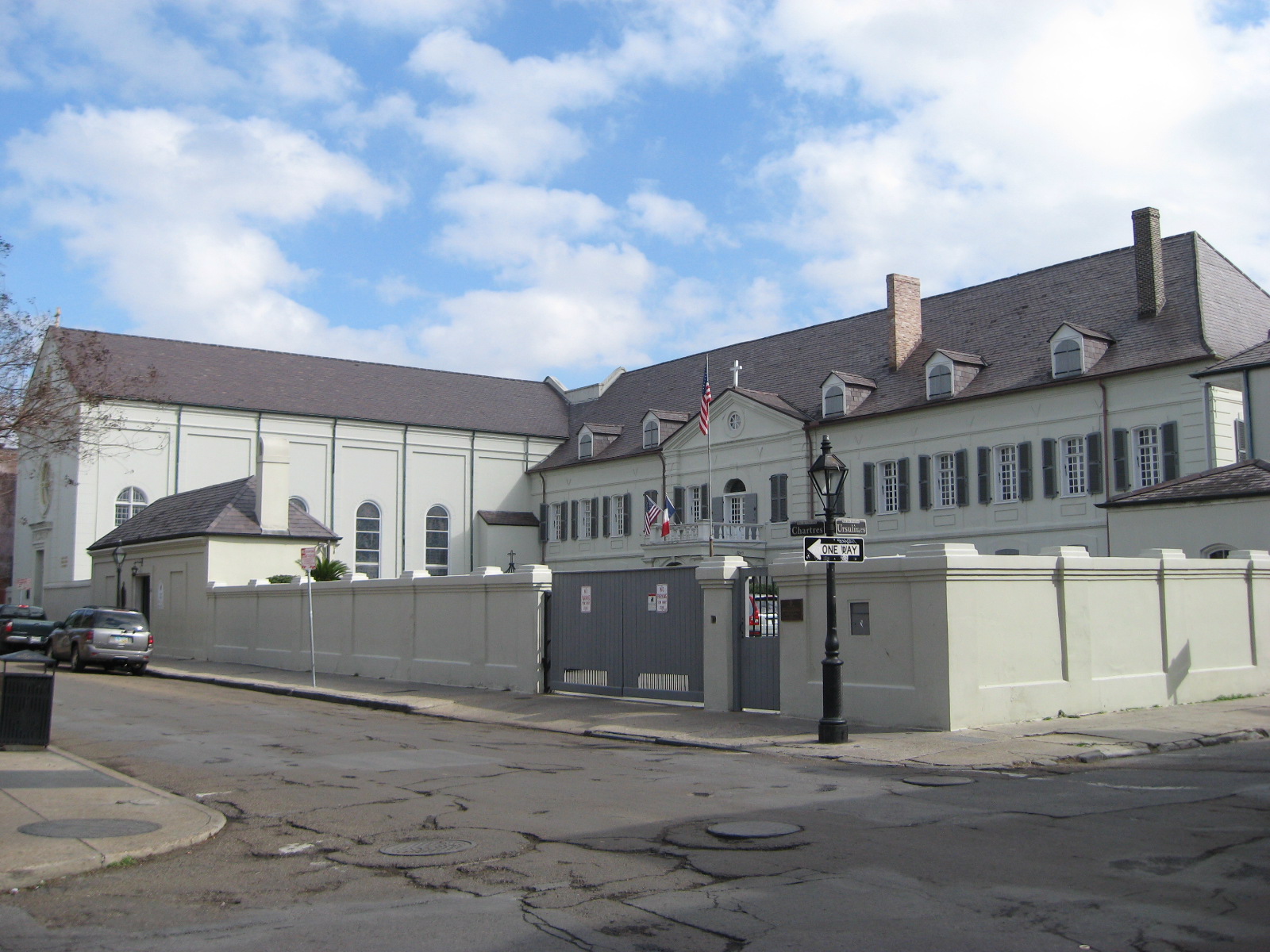
Old Ursuline Convent
1100 Chartres St, French Quarter, New Orleans, 70116, United States
The Old Ursuline Convent is the oldest building in the Mississippi Valley and the only surviving example of French Colonial architecture in the French Quarter — which makes it the only building in the 'French' Quarter that is actually French. Everything else was rebuilt in Spanish Colonial style after the great fires of 1788 and 1794. The convent, completed in 1745, survived both fires and stands as the physical link between New Orleans and its original French identity. The Ursuline nuns who occupied this building from 1745 to 1824 ran the first school for girls in what would become the United States, the first school for African-American girls, and the first orphanage in the Louisiana colony. They also served as nurses during epidemics and were, by most accounts, the most competent administrators in colonial New Orleans — a city whose male leadership was consistently chaotic. The convent's formal garden, visible through the gates on Chartres Street, is a peaceful courtyard that provides a rare glimpse of 18th-century convent life. The building's interior, now part of the Archdiocese of New Orleans, is open for guided tours that explain both the architecture and the nuns' extraordinary role in the city's history. The cypress-beam construction, the hand-forged hardware, and the thick walls designed to withstand Gulf hurricanes are all original, and standing inside a building that was old when the American Revolution started gives you a sense of New Orleans' deep history that no reconstruction can provide.
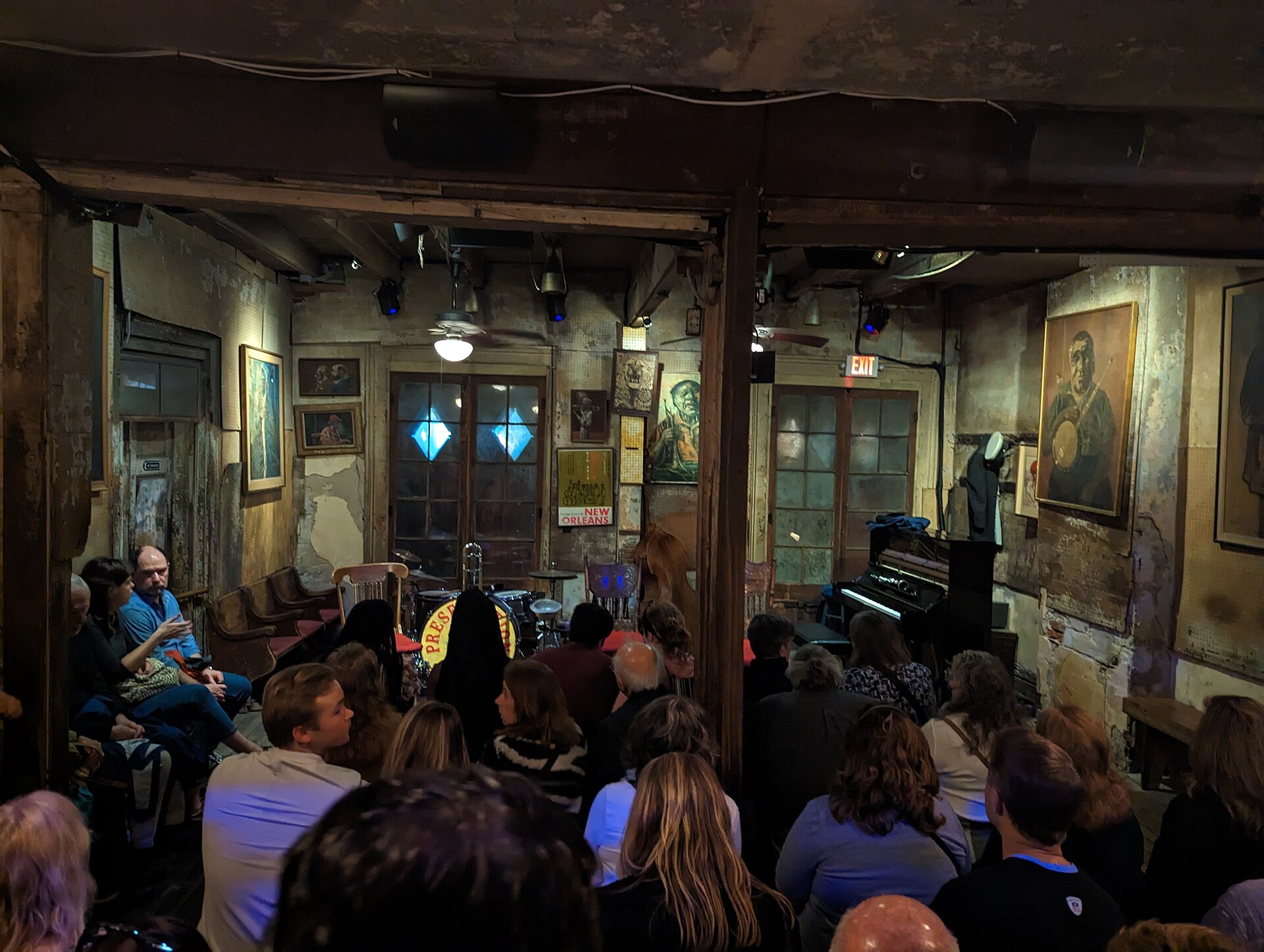
Preservation Hall
726 St Peter St, New Orleans, LA 70116
Preservation Hall is a crumbling, un-air-conditioned room on St. Peter Street where traditional New Orleans jazz has been performed nightly since 1961 — and it is, without exaggeration, one of the most important music venues in the world. The hall was founded by Allan and Sandra Jaffe specifically to preserve traditional jazz at a time when the art form was being displaced by rock and roll, and for over six decades it has provided a stage for the musicians who carry the original New Orleans sound. The experience is deliberately spare. There are no drinks, no food, and limited seating — most of the audience stands or sits on the floor in a room that holds about 100 people. The musicians play within arm's reach, and the sound — unmiked, acoustic, and direct — is nothing like the amplified jazz you hear in larger venues. When a trumpet solo hits a note that resonates in your sternum, you understand why this music was born in small rooms and street parades rather than concert halls. Shows run three times nightly, and the queue forms early. The admission is cash only and affordable, which is part of the Jaffes' original mission — making traditional jazz accessible rather than exclusive. The Preservation Hall Jazz Band, the venue's house ensemble, has toured the world and recorded with everyone from the Grateful Dead to My Morning Jacket, but the real magic happens in this room, where the acoustics are imperfect, the walls are peeling, and the music is as close to the source as you can get in the 21st century.
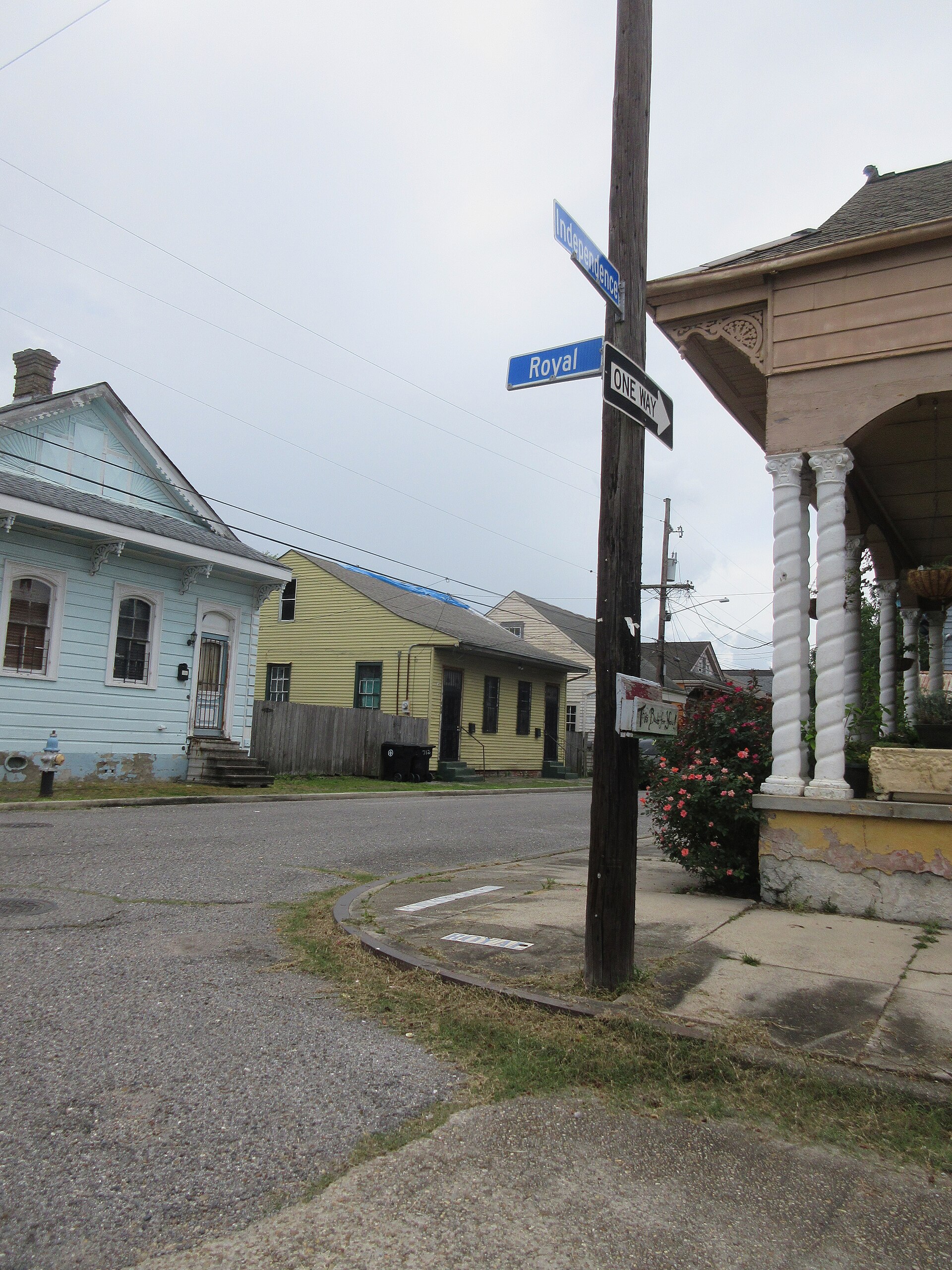
Royal Street
Royal St, New Orleans, LA 70116
Royal Street is the elegant side of the French Quarter — a corridor of antique shops, art galleries, and street musicians that runs parallel to Bourbon Street, one block over, and operates in an entirely different register. Where Bourbon is loud, sticky, and unapologetically hedonistic, Royal is refined, beautiful, and just expensive enough to keep the go-cup crowd on the other side of the block. The architecture on Royal Street is some of the finest in the Quarter. The buildings date to the early 19th century — rebuilt after the fires of 1788 and 1794 that destroyed most of the original French Colonial structures — and the Spanish Colonial replacement architecture, with its thick stucco walls, interior courtyards, and cast-iron galleries, is what gives the French Quarter its character today. The irony that the 'French Quarter' is actually Spanish architecture is one of New Orleans' better historical jokes. The antique shops and galleries are genuine — M.S. Rau has been dealing in museum-quality antiques since 1912, and the galleries between Toulouse and St. Ann represent some of the best fine art dealing in the South. The street musicians are among the city's finest — Royal Street is where the serious jazz musicians play, and on a quiet afternoon the sound of a solo trumpet echoing off the stucco walls creates an atmosphere that Bourbon Street's amplified chaos can't touch. Between Iberville and Dumaine, the street is closed to vehicular traffic on weekend afternoons, turning it into a pedestrian promenade that is the most civilised stroll in the city.
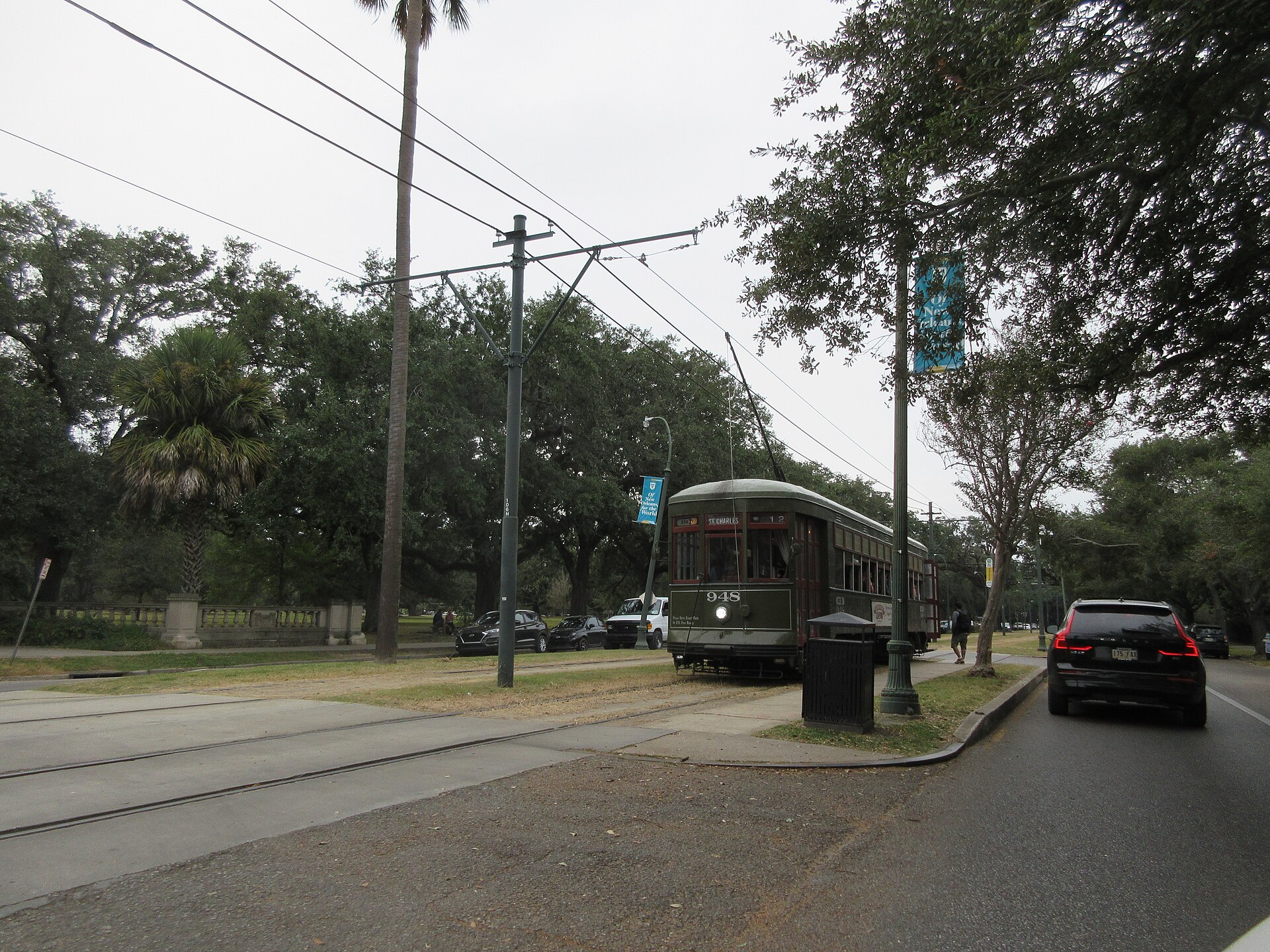
St. Charles Streetcar
Canal St & Carondelet St, New Orleans, LA 70130
The St. Charles Streetcar is the oldest continuously operating streetcar line in the world — running since 1835, which means it was carrying passengers before the Civil War, before the telephone, and before New Orleans was connected to the rest of America by railroad. The olive-green Perley Thomas cars, built in the 1920s, clatter down the neutral ground (New Orleans for 'median') of St. Charles Avenue on tracks that haven't moved since the line was electrified in 1893. The 13-mile route from Canal Street through the Garden District, past Audubon Park, and out to the Riverbend neighbourhood is the best moving tour in New Orleans. From a wooden bench inside the streetcar — the windows open, the ceiling fans turning, the brass fittings polished — you see the full spectrum of Uptown architecture: the grand mansions of the Garden District, the Columns Hotel (used as a location in 'Pretty Baby'), Loyola and Tulane universities facing each other across the avenue, and the ancient live oaks whose branches form a tunnel over the tracks. The streetcar costs $1.25 and runs 24 hours, making it both a transit system and an attraction. Locals use it for their commute, tourists use it as a sightseeing vehicle, and both groups share the same cars in a democracy of transportation that is very New Orleans. The ride from Canal to Carrollton takes about 45 minutes and passes through neighbourhoods that would take half a day to walk, making it the most efficient way to understand the city's geography beyond the French Quarter.
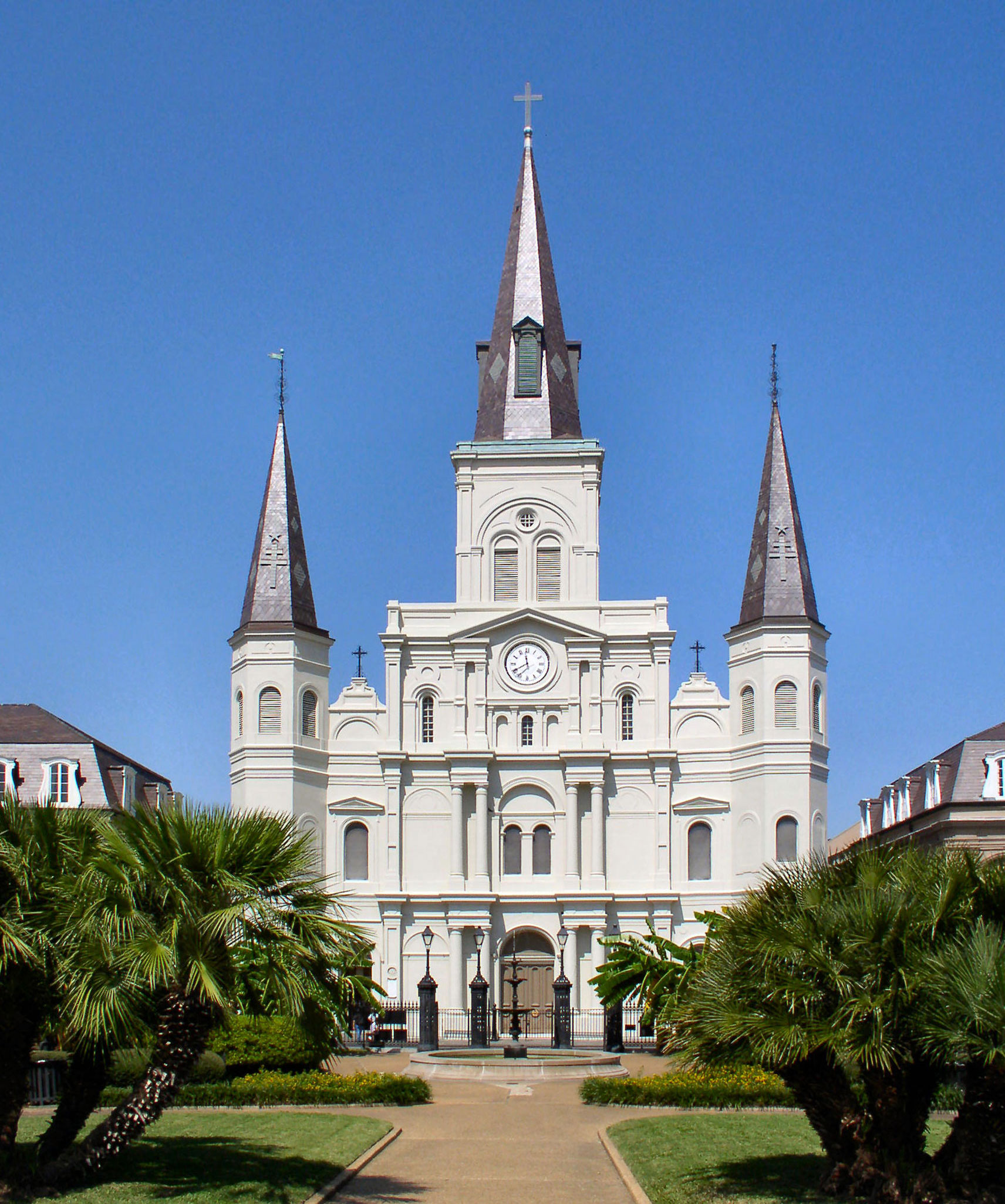
St. Louis Cathedral
615 Pere Antoine Alley, New Orleans, LA 70116
St. Louis Cathedral is the oldest continuously active Roman Catholic cathedral in the United States — the current building is the third church on this site, rebuilt in 1794 after a fire destroyed the previous structure, and its triple steeples rising above Jackson Square have been the defining image of New Orleans since before the Louisiana Purchase made the city American. The cathedral's history mirrors the city's tangled identity. Founded by French colonists, rebuilt under Spanish rule, expanded under American governance, and serving a congregation that has always included French, Spanish, African, Creole, and American worshippers — St. Louis Cathedral is the spiritual centre of a city that has never belonged to just one culture. The interior is painted in soft pastels with a ceiling mural depicting St. Louis (King Louis IX of France) announcing the Seventh Crusade, which is the kind of subject matter that only makes sense in a city where Catholicism, colonialism, and Caribbean culture have been braided together for three centuries. Pere Antoine Alley, the narrow pedestrian lane running alongside the cathedral, is named for Father Antonio de Sedella, a Capuchin monk who served as the parish priest for 40 years and was so beloved that his funeral in 1829 drew the largest crowd New Orleans had ever seen. The alley connects Jackson Square to Royal Street and is one of the quietest shortcuts in the Quarter. At night, when the cathedral is floodlit and the square is empty, the building has a presence that three centuries of tourism haven't diminished.
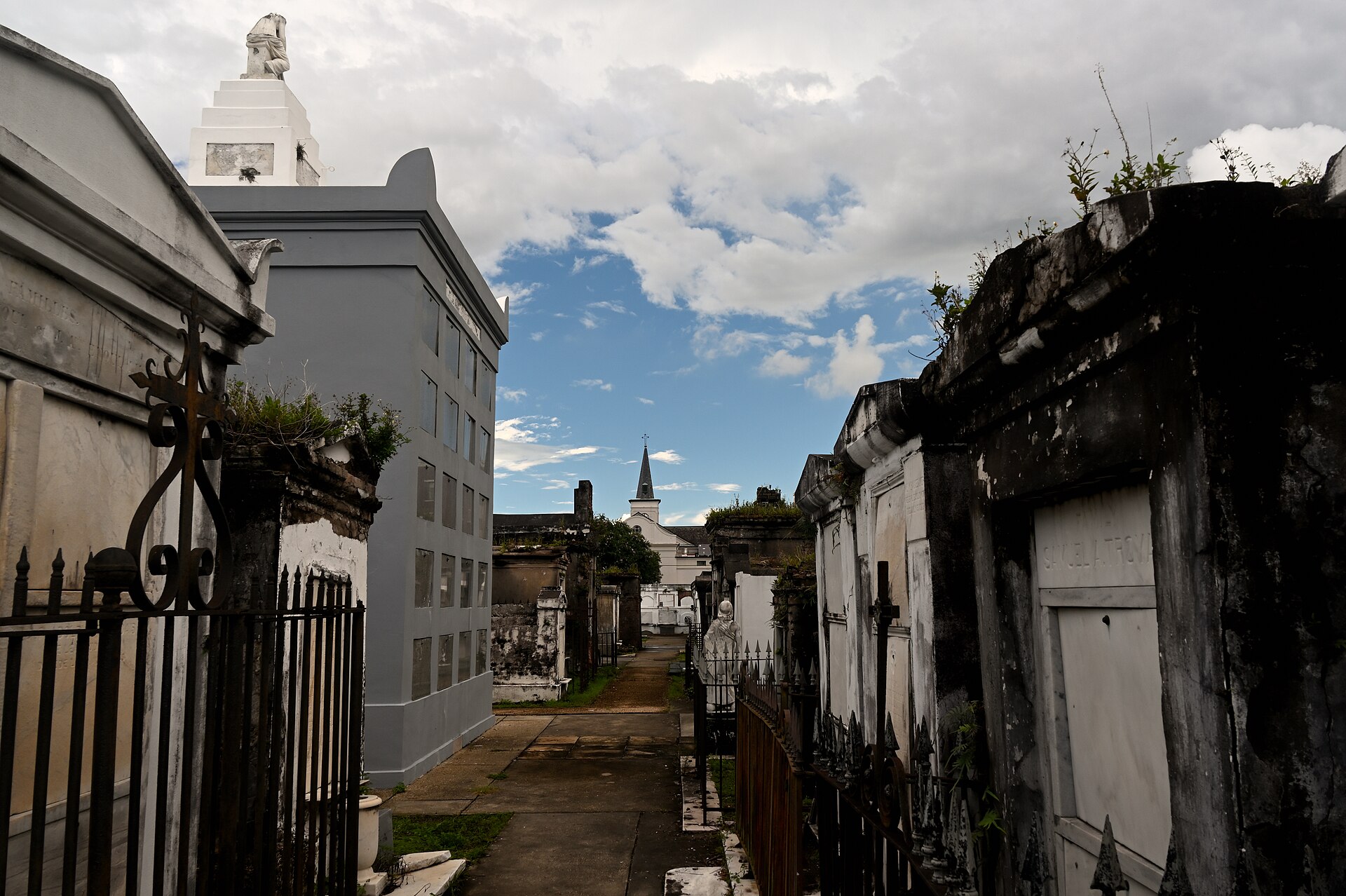
St. Louis Cemetery No. 1
425 Basin St, Iberville Project, New Orleans, 70112, United States
St. Louis Cemetery No. 1 is the oldest cemetery in New Orleans — established in 1789, packed with above-ground tombs that earned these burial grounds the nickname 'Cities of the Dead,' and home to the alleged tomb of Marie Laveau, the voodoo queen whose name is inseparable from the city's supernatural reputation. Access is restricted to guided tours only (since 2015, to prevent vandalism), and the tours are some of the best in the city. The above-ground tombs exist because of engineering, not aesthetics. New Orleans sits below sea level on a swamp, and early settlers discovered that buried coffins had a tendency to float back to the surface during floods — a problem that above-ground interment neatly solved. The result is a dense grid of whitewashed tombs, some elaborate and well-maintained, others crumbling and overgrown, that together create a landscape unlike any other cemetery in America. Marie Laveau's tomb — a Greek Revival family vault with a flat slab roof — draws more visitors than any other. The practice of marking three X's on the tomb and leaving offerings (coins, beads, cigars, rum) in exchange for a wish granted was so widespread that the tomb was being physically damaged, which prompted the access restrictions. Laveau herself was a real historical figure — a free woman of colour who practiced Voodoo in 19th-century New Orleans and wielded extraordinary influence in a city where the boundaries between African, Catholic, and folk spiritual traditions were never as firm as the authorities pretended.
The Cabildo
701 Chartres St, New Orleans, LA 70116
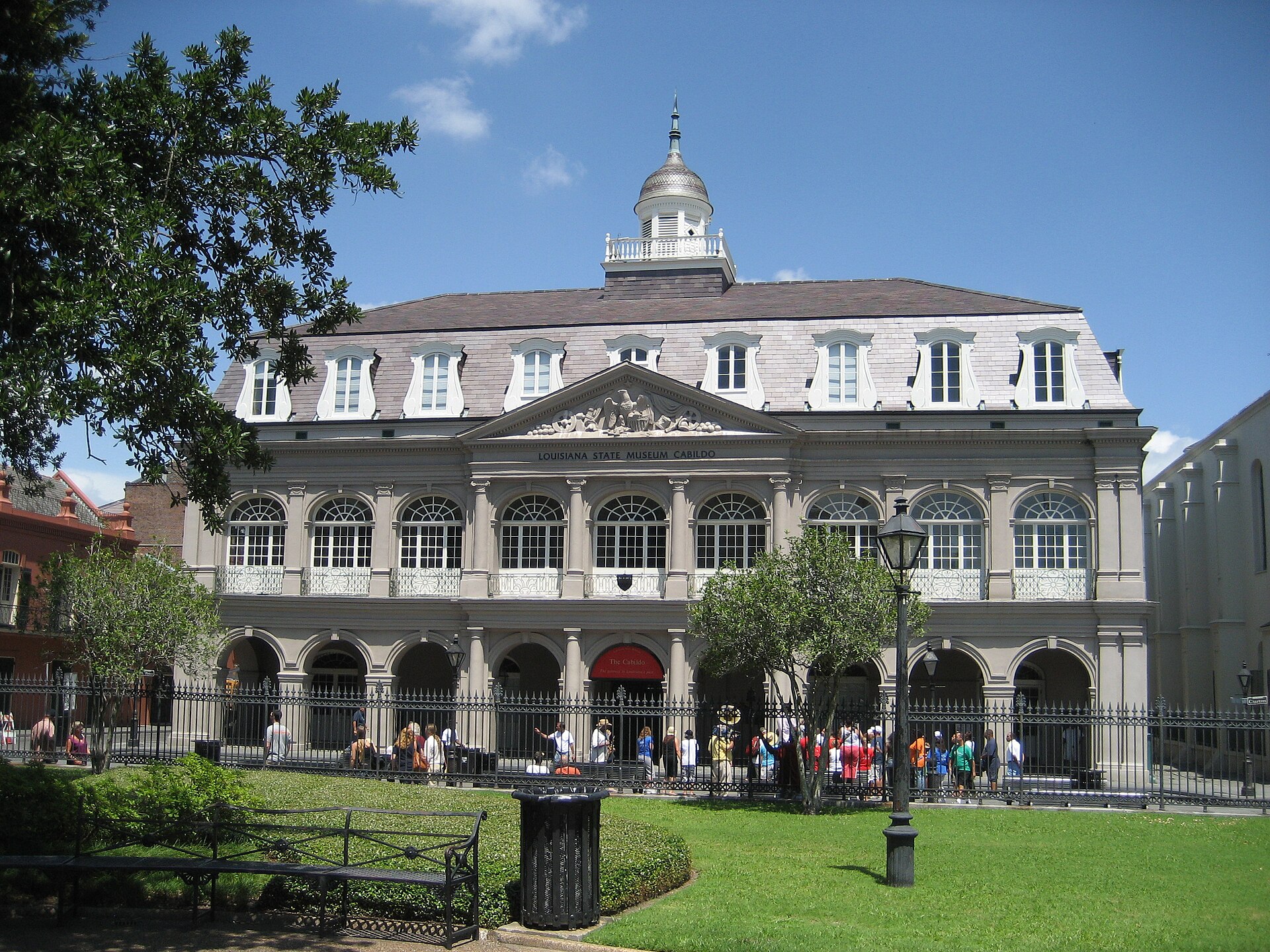
The Cabildo is the building where the Louisiana Purchase was signed on December 20, 1803 — the real estate deal that doubled the size of the United States, transferred 828,000 square miles from France to America for $15 million (roughly four cents an acre), and made New Orleans an American city almost by accident. The building flanks St. Louis Cathedral on Jackson Square and now houses a Louisiana State Museum that traces the state's history from Native American settlement through colonisation, slavery, the Civil War, and Reconstruction. The building itself was constructed between 1795 and 1799 as the seat of the Spanish colonial government (cabildo is Spanish for 'town council'), which means it was built by the Spanish, used by the French to hand over the territory, and immediately occupied by Americans — a sequence that perfectly captures the serial colonialism that defines New Orleans history. The architecture is Spanish Colonial with later French modifications, and the wrought-iron balcony overlooking Jackson Square is one of the most photographed perspectives in the city. The museum inside does an unusually honest job of presenting Louisiana's difficult history. The exhibits on slavery, the plantation system, and the complex racial hierarchy of colonial New Orleans — where free people of colour occupied a social position that existed nowhere else in the South — are frank about the brutality of the system while illuminating the cultural richness that emerged from it. The Napoleon death mask in the collection, one of only four in existence, is a reminder that this was a French city long before it was an American one.
The National WWII Museum
945 Magazine St, New Orleans, LA 70130
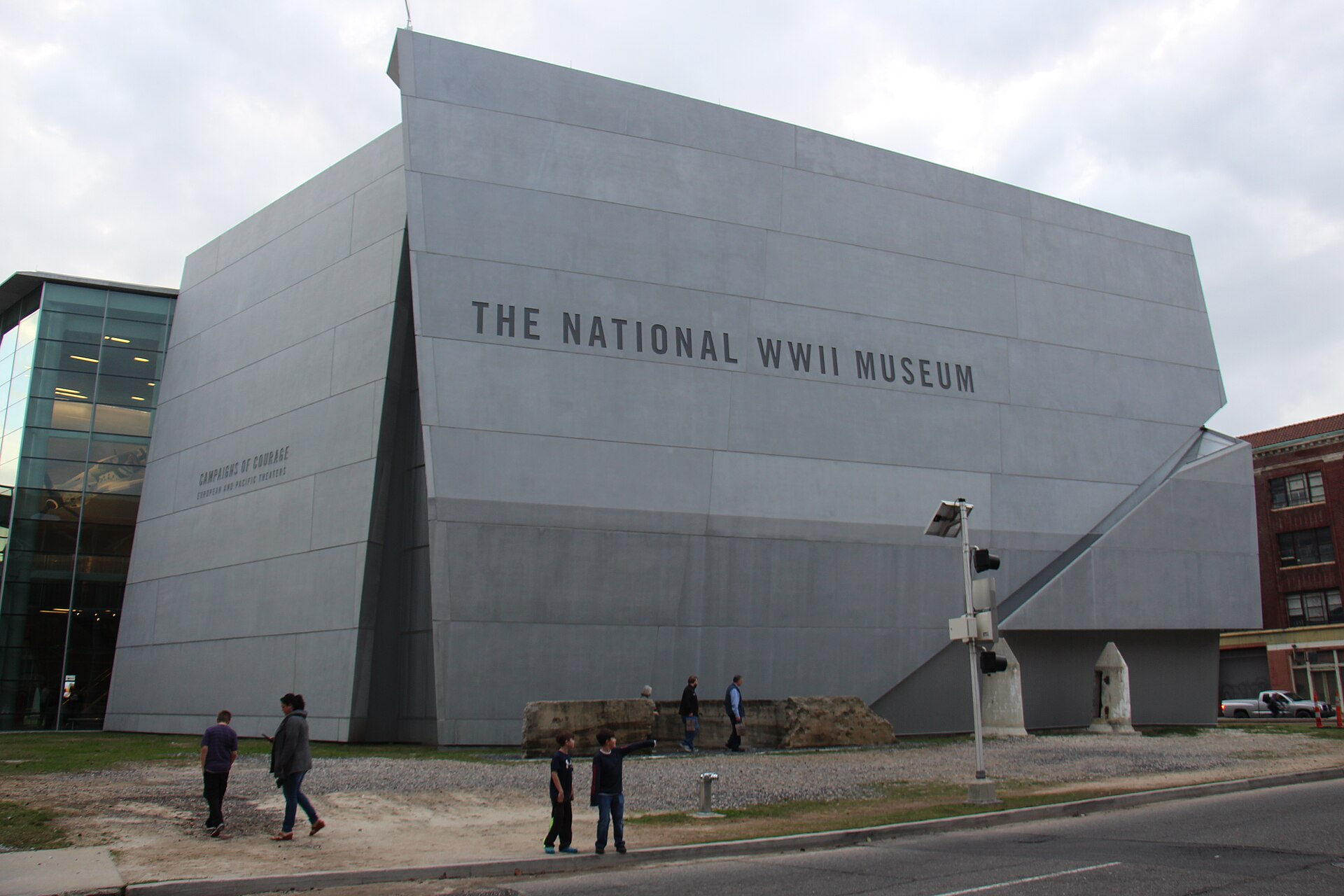
The National WWII Museum is consistently ranked among the top museums in the world — and it's in New Orleans because this is where Andrew Higgins built the landing craft that carried Allied troops onto the beaches of Normandy, North Africa, and the Pacific islands. Eisenhower called Higgins 'the man who won the war for us,' and the museum exists because historian Stephen Ambrose believed that New Orleans' contribution to the war effort deserved a permanent memorial. The museum has expanded dramatically since it opened in 2000 — it now occupies an entire city block with multiple pavilions covering the European and Pacific theatres, the home front, and the personal stories of the 16 million Americans who served. The immersive exhibits are extraordinary: you can walk through a restored Higgins boat, sit in a bomber turret, hear the recorded testimonies of veterans describing D-Day, and trace the progress of the war through maps, artifacts, and interactive displays that bring clarity to a conflict of staggering complexity. The Beyond All Boundaries experience — a 4D film narrated by Tom Hanks, shown in the Solomon Victory Theater — uses floor vibrations, fog, falling snow, and overhead projections to create a visceral 40-minute journey through the war. It's manipulative and it works. The museum's tone throughout is serious without being solemn — it honours the sacrifice without glorifying the violence, and the oral histories from veterans give individual faces to statistics that are otherwise incomprehensibly large.
The Presbytère
751 Chartres St, New Orleans, LA 70116
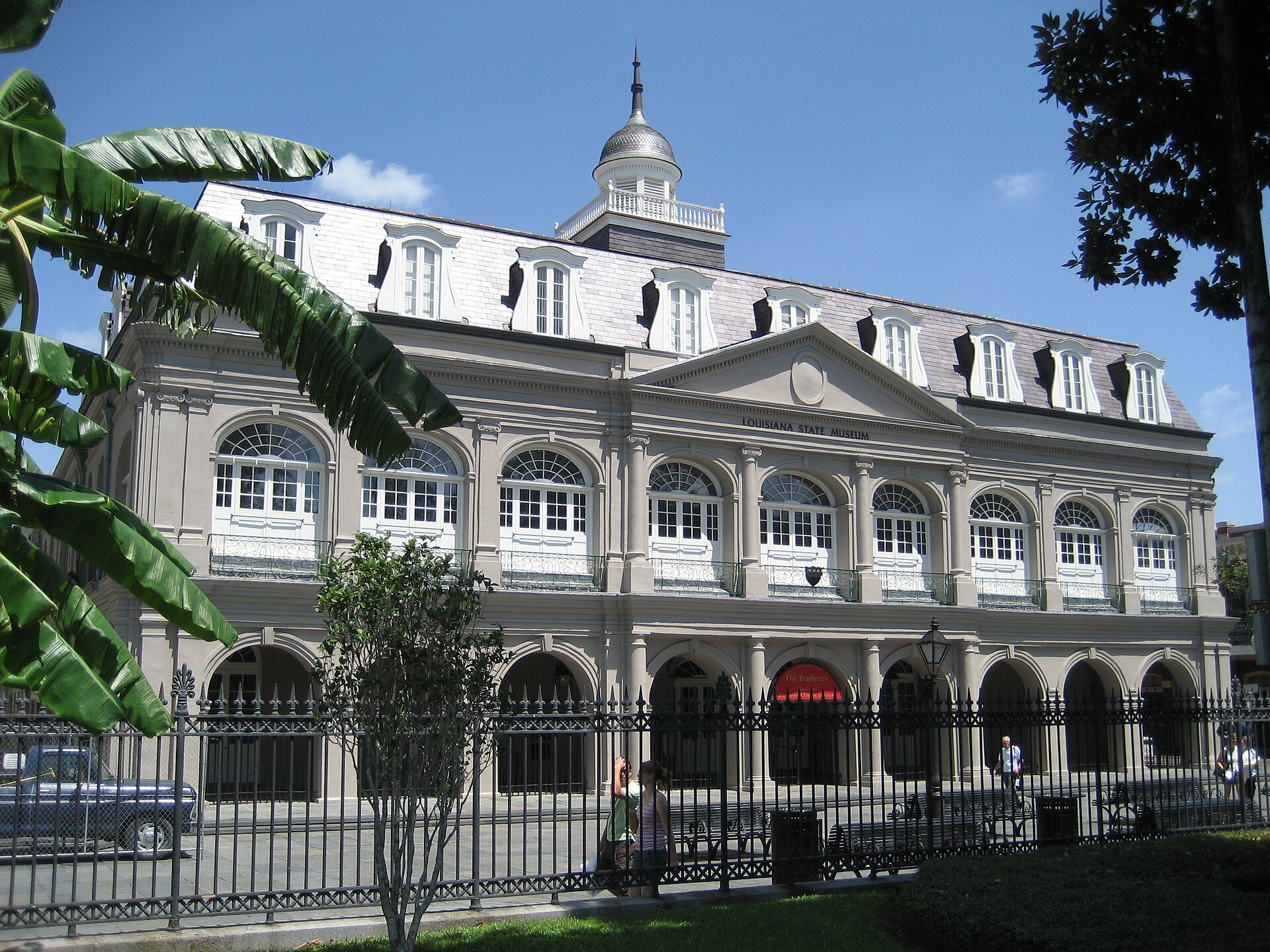
The Presbytère is the mirror twin of the Cabildo on the other side of St. Louis Cathedral — a Spanish Colonial building completed in 1813 that now houses two of the best museum exhibitions in Louisiana. The ground floor is dedicated to Mardi Gras, and the upper floor tells the story of Hurricane Katrina with a directness and emotional power that no news footage can match. The Mardi Gras exhibition is a revelation even for people who think they understand Carnival. The display includes elaborate costumes from the Rex, Zulu, and Mardi Gras Indian tribes, interactive exhibits explaining the social structure of krewes (the organisations that stage the parades), and video of the spectacle itself that conveys the scale and intensity better than any photograph. The Mardi Gras Indian suits — beaded, feathered, handmade costumes that take a full year to create and cost thousands of hours of labour — are works of art that rival anything in a fine art museum. The Katrina exhibition upstairs is devastating and essential. It includes personal artifacts — a child's toy recovered from a flooded house, a handwritten sign saying 'We Are Not Leaving' — alongside video testimony, photographs, and a timeline of the disaster that makes clear how the failure was institutional, not natural. The storm hit on August 29, 2005, and the exhibition doesn't let you forget that the levee failures that flooded 80% of the city were the result of engineering decisions made decades earlier. The Presbytère makes you understand both celebrations and catastrophes, which are the two poles of New Orleans life.
The Spotted Cat Music Club
623 Frenchmen St, Marigny, New Orleans, 70116, United States
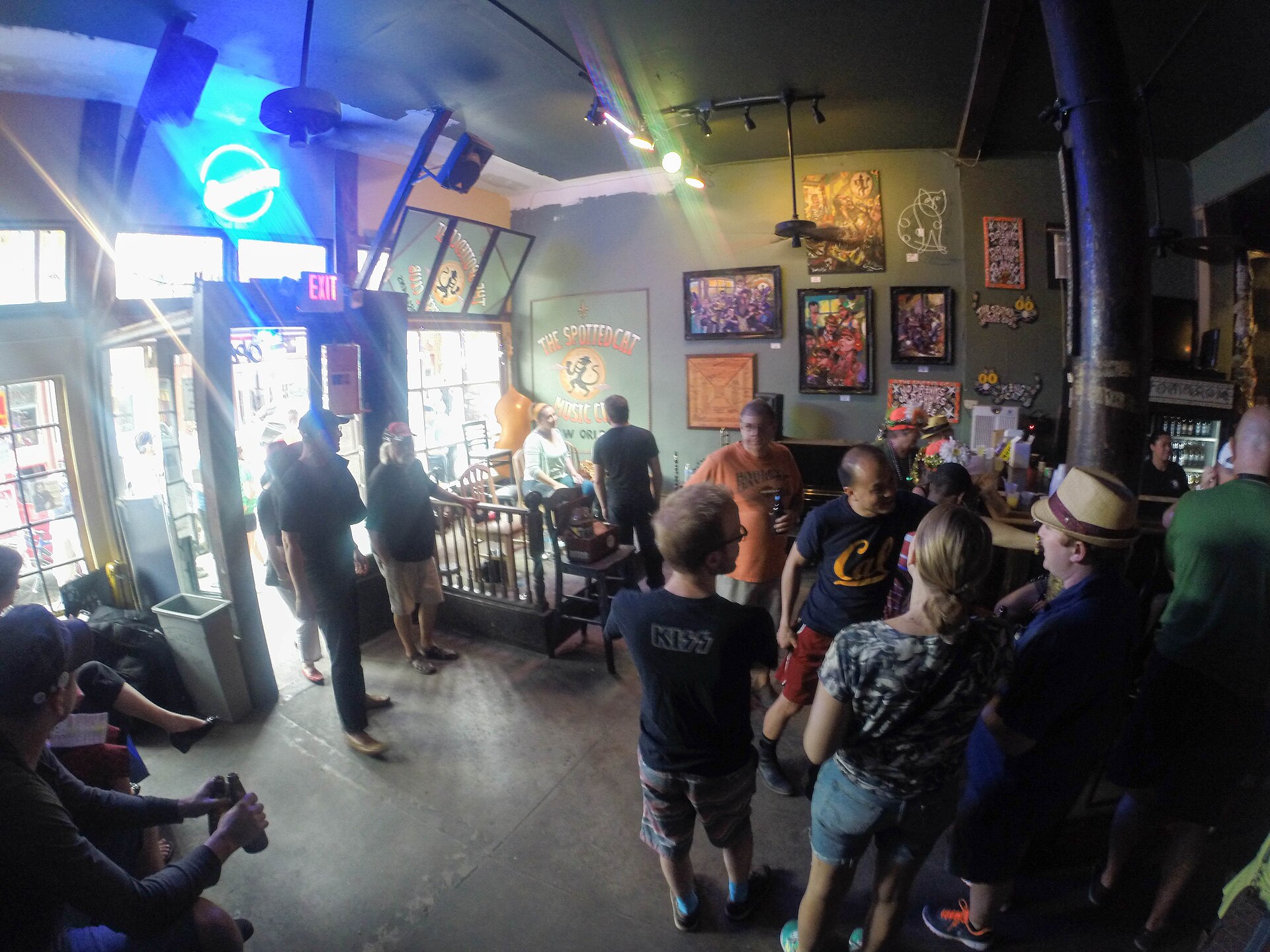
The Spotted Cat is a tiny Frenchmen Street music club that embodies everything New Orleans jazz is supposed to be — intimate, sweaty, acoustic, and played by musicians who are so good that their refusal to pursue fame in a bigger city feels like an act of civic loyalty. The club holds maybe 100 people, there's no stage (the band plays on the floor at the front of the room), and on a busy night the crowd spills onto the sidewalk where you can hear the music through the open doors without paying cover. The programming leans toward traditional jazz, swing, and gypsy jazz, and the club's unofficial house bands — including the New Orleans Jazz Vipers and the Panorama Jazz Band — play with a joy and precision that makes you realise why this music survived for a century while countless other genres came and went. The swing dancing that breaks out on the tiny dance floor during the faster numbers is uncoordinated, enthusiastic, and entirely in keeping with a venue where pretension goes to die. The drinks are simple (beer and well drinks — this is not a cocktail bar), the décor is nothing (mismatched chairs, walls covered in flyers and stickers), and the cover charge is usually zero or a few dollars. The Spotted Cat's philosophy is that the music is the product, everything else is packaging, and the packaging doesn't matter. On a hot night with the doors open, a trombone solo cutting through the Frenchmen Street noise, and a crowd of locals and visitors sharing a space the size of a living room, the Spotted Cat is the best bar in New Orleans.
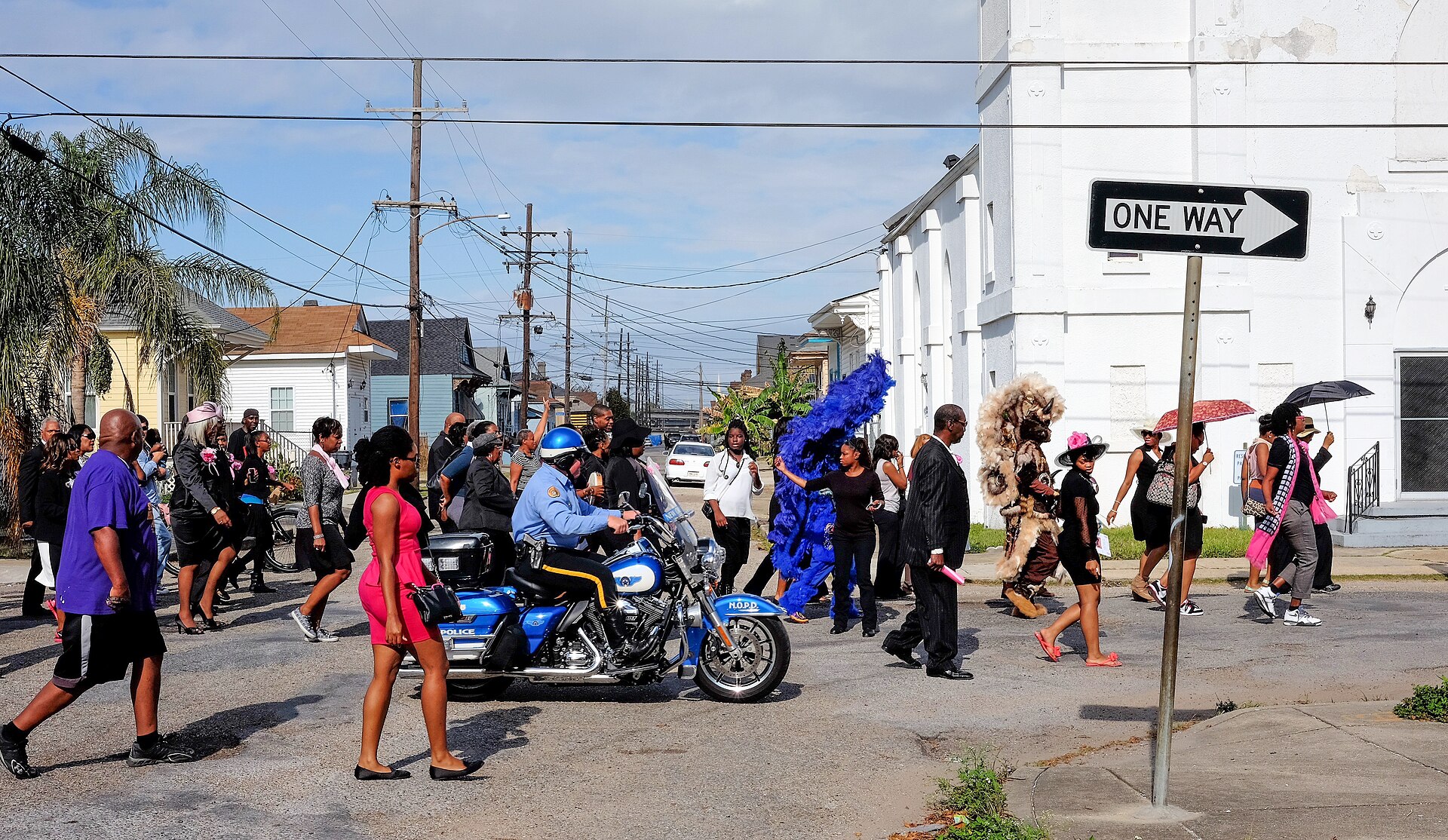
Tremé Neighbourhood
N Claiborne Ave at St Philip St, New Orleans, LA 70116
Tremé is the oldest African-American neighbourhood in the United States — a community that has existed since the late 18th century, when free people of colour in colonial New Orleans established homes, businesses, and cultural institutions in the area just north of the French Quarter. The neighbourhood is the birthplace of jazz, the home of brass band culture, and the origin point of the second-line parades that are New Orleans' most distinctive communal celebration. The second line is Tremé's greatest cultural export — a tradition where a brass band (the 'main line') leads a parade through the neighbourhood streets, and everyone who joins the procession behind them (the 'second line') dances, twirls parasols, and waves handkerchiefs in a celebration that blurs the line between funeral, festival, and spontaneous street party. Second-line parades happen most Sundays from September through June, organised by the Social Aid and Pleasure Clubs that have been the backbone of Black community life in New Orleans since the 19th century. The neighbourhood suffered enormously from urban renewal in the 1960s and 70s — the construction of Interstate 10 destroyed the live oak trees along North Claiborne Avenue that had been Tremé's main gathering space, and the construction of Louis Armstrong Park displaced families who had lived in the area for generations. The HBO series 'Treme' brought national attention to the neighbourhood's post-Katrina recovery, and the real Tremé today is a mix of historic Creole cottages, newer construction, and the ongoing tension between preservation and gentrification that defines every historically Black neighbourhood in urban America.
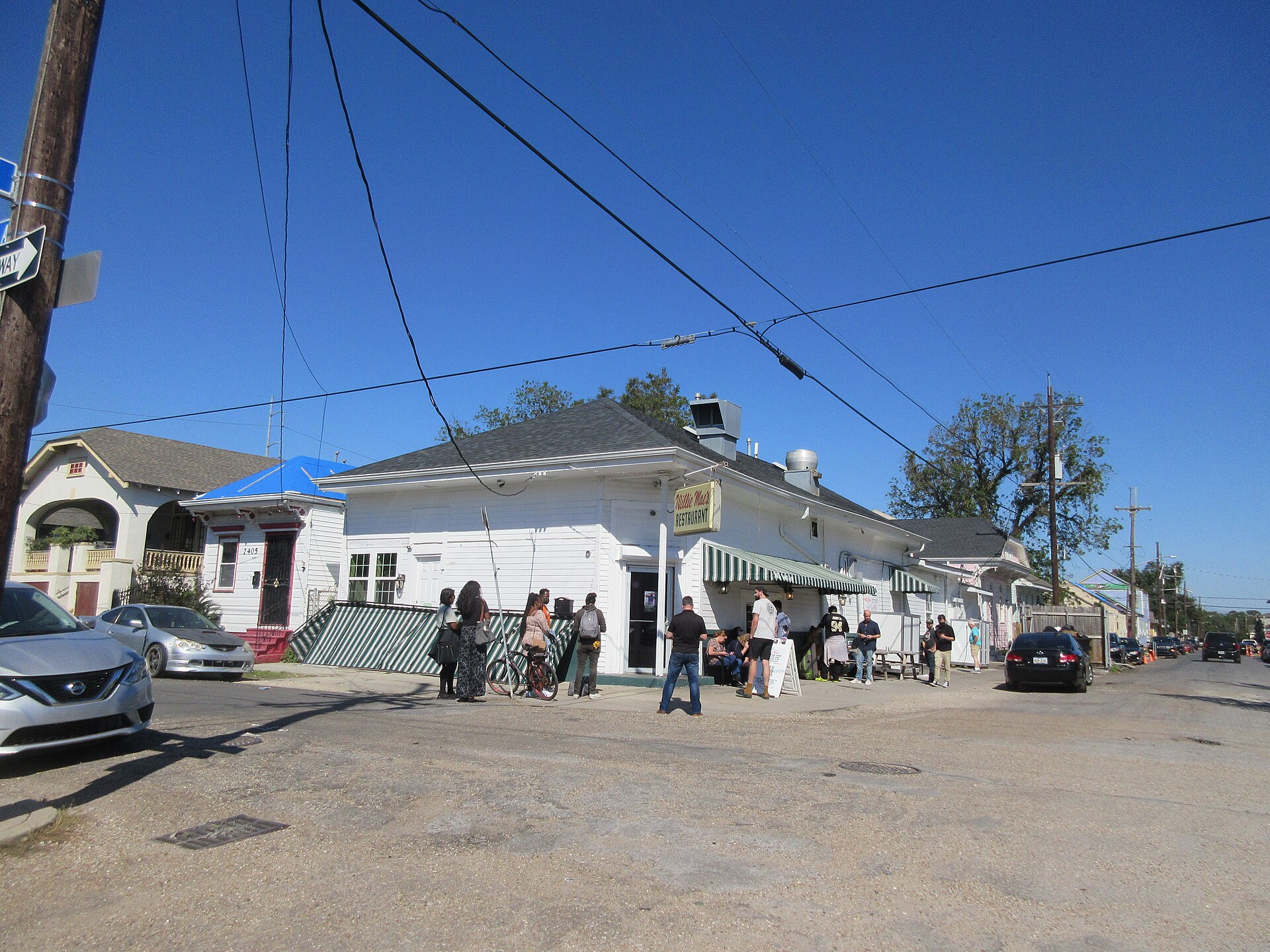
Willie Mae's Scotch House
2401 Saint Ann St, Treme, New Orleans, 70119, United States
Willie Mae's Scotch House serves what the James Beard Foundation has called 'America's best fried chicken' — a distinction earned by Willie Mae Seaton, who opened the restaurant in 1957 in a small house in Tremé and spent the next five decades perfecting a recipe that involves a wet batter, a hot skillet, and a level of patience that fast-food chains can't replicate. The chicken arrives at your table so crisp that the first bite sounds like cracking a crème brûlée, followed by meat so juicy and well-seasoned that you understand why people fly to New Orleans specifically for this meal. The sides — butter beans, cornbread, pickled coleslaw — are Southern comfort food at its most fundamental. The menu is short because everything on it is perfect, and the kitchen operates at its own pace rather than yours. Willie Mae Seaton died in 2015 at the age of 99, and her great-granddaughter Kerry Seaton-Stewart now runs the restaurant. The building was destroyed by flooding during Hurricane Katrina, and the restoration was funded partly by Southern Foodways Alliance volunteers and chefs from across the country who believed that losing Willie Mae's would be a cultural catastrophe on par with losing the music venues. The line begins forming before the restaurant opens for lunch, and the wait can be an hour or more — but the Tremé neighbourhood around the restaurant is worth exploring while you wait, and the chicken, when it arrives, justifies every minute.