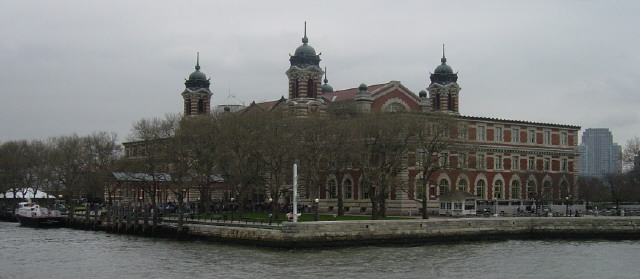
Between eighteen ninety-two and nineteen fifty-four, approximately twelve million immigrants entered the United States through this building. They arrived by ship, were processed in the Great Hall on the second floor, and either walked into New York or were turned back. About two percent were denied entry — roughly two hundred and fifty thousand people told to go home after crossing an ocean.
The processing was brutal in its efficiency. Doctors would watch immigrants climb the stairs to the Great Hall. If someone was breathing heavily or limping, they were pulled aside and marked with chalk — H for heart, L for limp, X for suspected mental illness. The average inspection lasted three to five hours. The longest could last days or weeks.
The main building was restored in nineteen ninety and reopened as the Immigration Museum, which is free with the ferry ticket. But the south side of the island — a complex of hospital buildings where sick immigrants were quarantined — sat abandoned and decaying for decades. These ruins, now accessible on guided tours, are among the most powerful spaces in New York: peeling paint, collapsed ceilings, rusting medical equipment, and trees growing through the floors of what were once hospital wards.
Verified Facts
Approximately 12 million immigrants were processed at Ellis Island between 1892 and 1954
About 2% (roughly 250,000 people) were denied entry
Doctors marked immigrants with chalk during inspection: H for heart, L for limp, X for suspected mental illness
The main building was restored and reopened as the Immigration Museum in 1990
Get walking directions
New York, United States