The site where the Dancing House stands was empty for fifty years before anyone built on it. The original building was destroyed by a US air raid in 1945 — one of the last acts of the war in Prague. The vacant lot sat next door to the childhood home of Vaclav Havel, who grew up dreaming of building a cultural center there. When Havel became president after the Velvet Revolution, he hired Croatian-Czech architect Vlado Milunic to make it happen. Milunic brought in Frank Gehry, and what emerged in 1996 was the most controversial building in Prague.
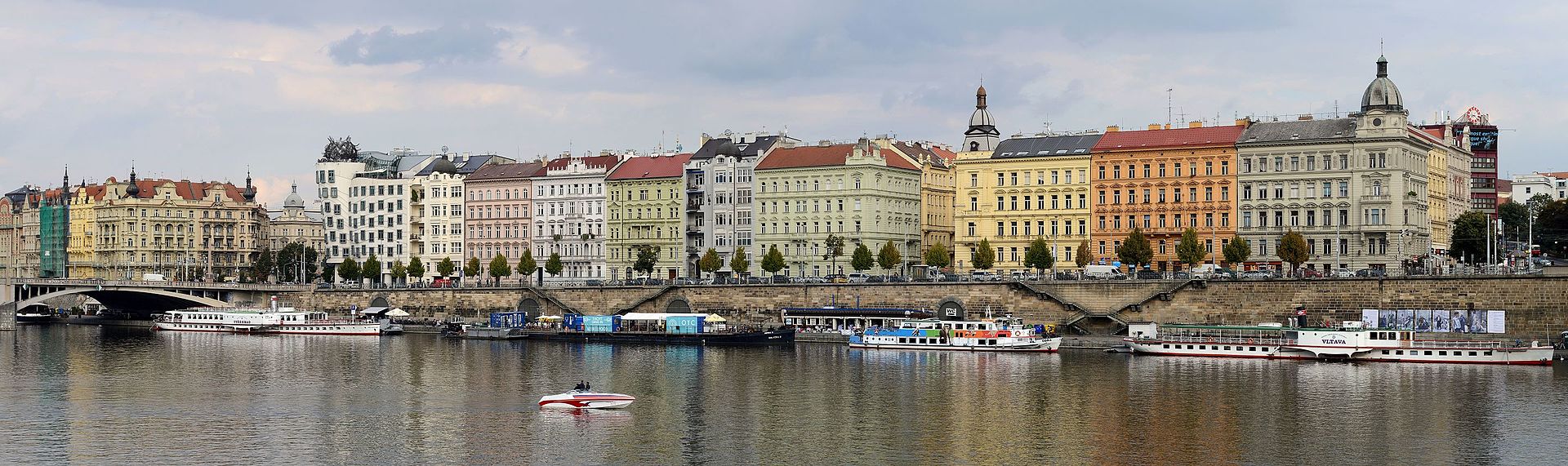
The two towers are nicknamed Fred and Ginger, after Fred Astaire and Ginger Rogers. The taller glass tower, with its twisted, swaying silhouette, represents Ginger in mid-dance; the solid stone tower is Fred, leaning into her. The whole thing looks like a couple caught in a tango — playful, a little drunk, and completely out of step with the sober Baroque and Art Nouveau buildings lining the rest of the Vltava embankment.
Prague's architectural establishment hated it. Critics called it an insult to the city's historic character. But Time magazine named it Design of the Year in 1997, and two decades on, it's become as much a part of Prague's identity as any Gothic spire. Gehry himself said he'd do anything for the country that gave the world hockey player Jaromir Jagr — which tells you something about how seriously he took the project.
The rooftop bar, Ginger & Fred, offers one of the best views in Prague: the Vltava, the castle, and a panorama of the spires that the Dancing House was designed to disrupt.
Verified Facts
The original building on the site was destroyed by a US air raid in 1945
Designed by Vlado Milunic and Frank Gehry, construction was completed in 1996
The building received Time magazine's Design of the Year award in 1997
The two towers are nicknamed Fred and Ginger after Fred Astaire and Ginger Rogers
Get walking directions
Jiráskovo nám. 1981/6, 120 00 Prague 2