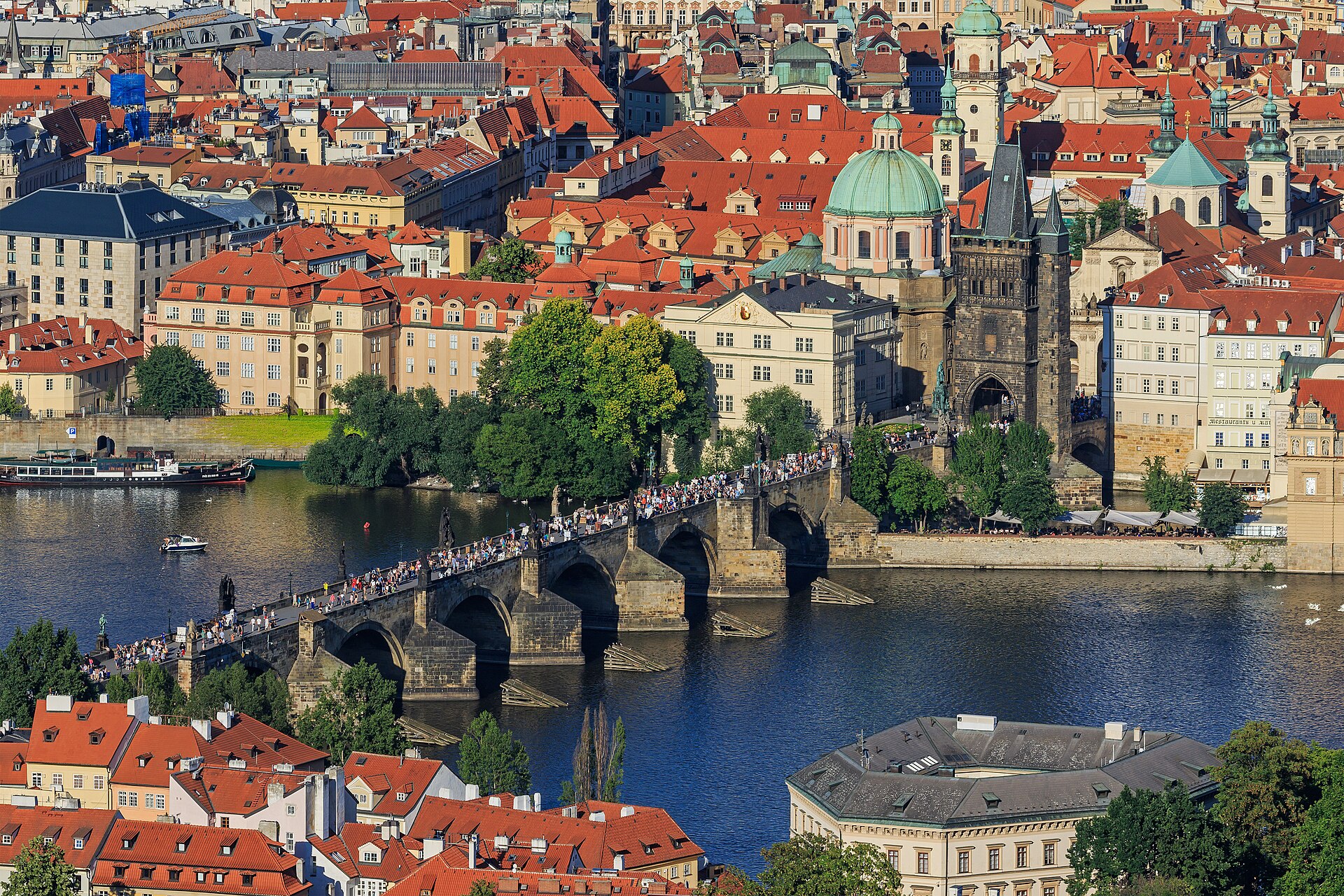
Construction began at 5:31 AM on July 9, 1357 — and that exact time wasn't an accident. Emperor Charles IV was obsessed with numerology, and the moment was chosen because it forms a palindrome: 1-3-5-7-9-7-5-3-1. He believed this numerical symmetry would make the bridge indestructible. Six and a half centuries later, it's still standing, so maybe the old mystic was onto something.
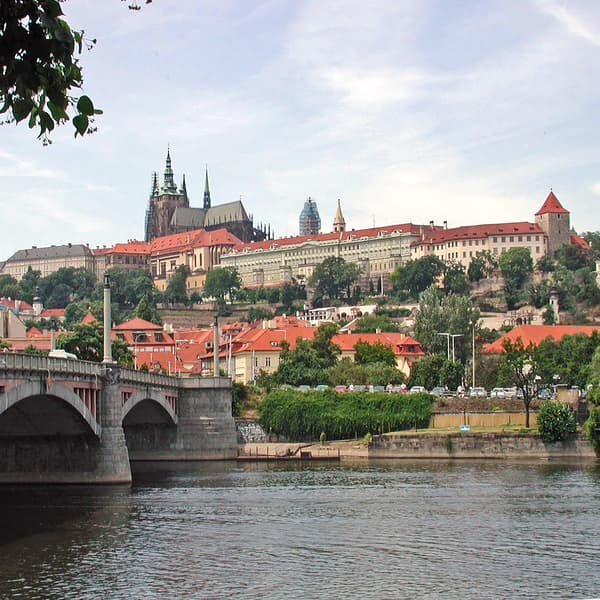
The bridge replaced the earlier Judith Bridge, which had been swept away by a catastrophic flood in 1342. Charles IV hired the brilliant young architect Petr Parlér — the same man building St. Vitus Cathedral — and the result was a 516-meter stone crossing with 16 arches that became the only bridge over the Vltava for nearly 500 years, until 1841.
The thirty Baroque statues lining both sides weren't part of the original plan. They started appearing in the mid-17th century, turning what was essentially a medieval highway into an open-air gallery. The most famous is St. John of Nepomuk, who was allegedly thrown from this very bridge in 1393 on the orders of King Wenceslas IV. Touch the bronze plaque at the base of his statue and legend says you'll return to Prague — which explains why it's been rubbed to a golden shine by millions of hands.
The bridge survived wars, floods, and even a tank crossing during the 1968 Soviet invasion. Vehicular traffic was finally banned in 1965, and today it belongs entirely to pedestrians, portrait artists, jazz musicians, and the inevitable crowds. Come at dawn if you want it to yourself.
Verified Facts
Construction began at 5:31 AM on July 9, 1357, a time chosen by Charles IV for its palindromic numerological significance (1-3-5-7-9-7-5-3-1)
The bridge was designed by architect Petr Parlér and replaced the Judith Bridge, which was destroyed by flooding in 1342
It was the only bridge over the Vltava in Prague until 1841
Vehicular traffic was banned from the bridge in 1965
Get walking directions
Karluv most, 110 00 Prague 1