Palácio da Bolsa
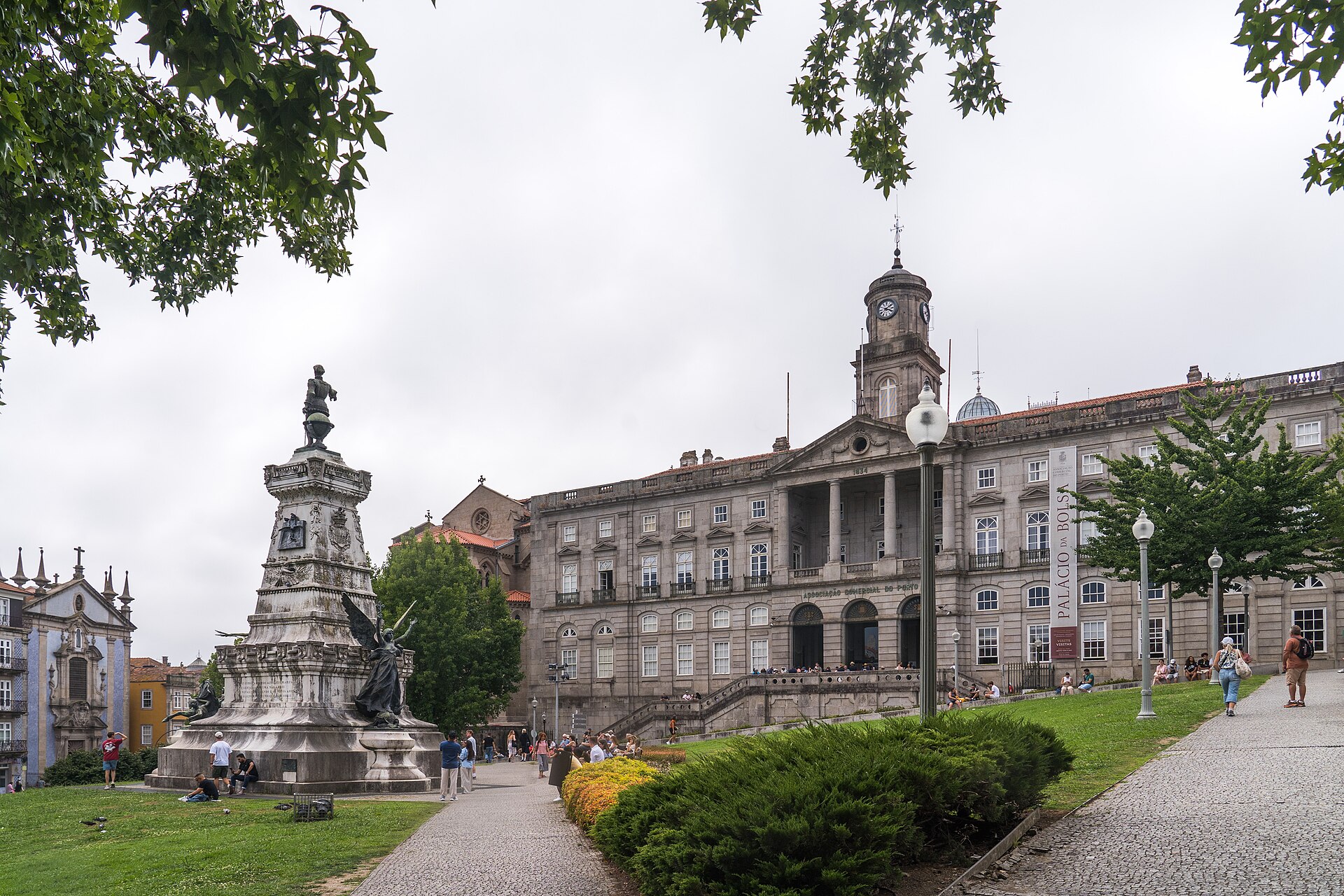
The Palácio da Bolsa — Porto's Stock Exchange Palace — was built to impress foreign traders, and 150 years later it's still working. Constructed between 1842 and 1910 by the city's Commercial Association, every room was designed to demonstrate that Porto was a serious, sophisticated, enormously wealthy place to do business. The centrepiece is the Arab Room, and nothing prepares you for it.
The Arab Room took 18 years to decorate. Inspired by the Alhambra in Granada, every surface is covered in interlocking geometric patterns painted in gold, blue, and crimson, with Moorish-style plasterwork and Arabic inscriptions that read 'Glory to Allah' — an odd choice for a 19th-century Portuguese trading house, but aesthetic consistency apparently trumped theological accuracy. The result is a room so elaborate that even the light fixtures were custom-designed to match.
The rest of the palace is a tour through 19th-century European architectural ambition — a glass-roofed courtyard called the Pátio das Nações (Court of Nations) with the coat of arms of every country that traded with Porto, a ballroom with crystal chandeliers, and a tribunal room with walls painted to look like marble because real marble wasn't considered impressive enough. Guided tours run every 30 minutes and are the only way to see the interior. The building sits next to the São Francisco Church, and doing both in sequence is the most concentrated hit of Porto's golden age you can get.
Verified Facts
The Arab Room took 18 years to decorate
The Arab Room was inspired by the Alhambra in Granada
The building is a UNESCO World Heritage Site
The Palácio da Bolsa was constructed between 1842 and 1910
Get walking directions
Rua de Ferreira Borges, União das freguesias de Cedofeita, Santo Ildefonso, Sé, Miragaia, São Nicolau e Vitória, Porto, 4050-252, Portugal