Walking Tours in Porto
Porto: Ribeira & the Wine Cellars
Walk Porto's soul — from the azulejo-covered walls of São Bento Station down to the medieval Ribeira waterfront, across the iron bridge to the port wine cellars, and up through the Bohemian streets of Rua de Miguel Bombarda.
Porto: The Descending Walk — São Bento to the Douro
Porto is built on a hill, so any walk through it is a descent. This one starts at a train station wallpapered in twenty thousand blue-and-white tiles, climbs a tower designed by an Italian, ducks into a bookshop that swears it didn't inspire Harry Potter, passes a cathedral built like a fortress, and finishes on a bridge designed by Eiffel's business partner, ending on the far bank where the port wine is aged in lodges older than the United States. You'll learn why the locals call themselves "tripe-eaters," why the bridge has two decks, and why "port" wine can never be made in the city of Porto itself.
30 Landmarks in Porto
Capela das Almas
428 Rua de Santa Catarina, União das freguesias de Cedofeita, Santo Ildefonso, Sé, Miragaia, São Nicolau e Vitória, Porto, 4000-444, Portugal
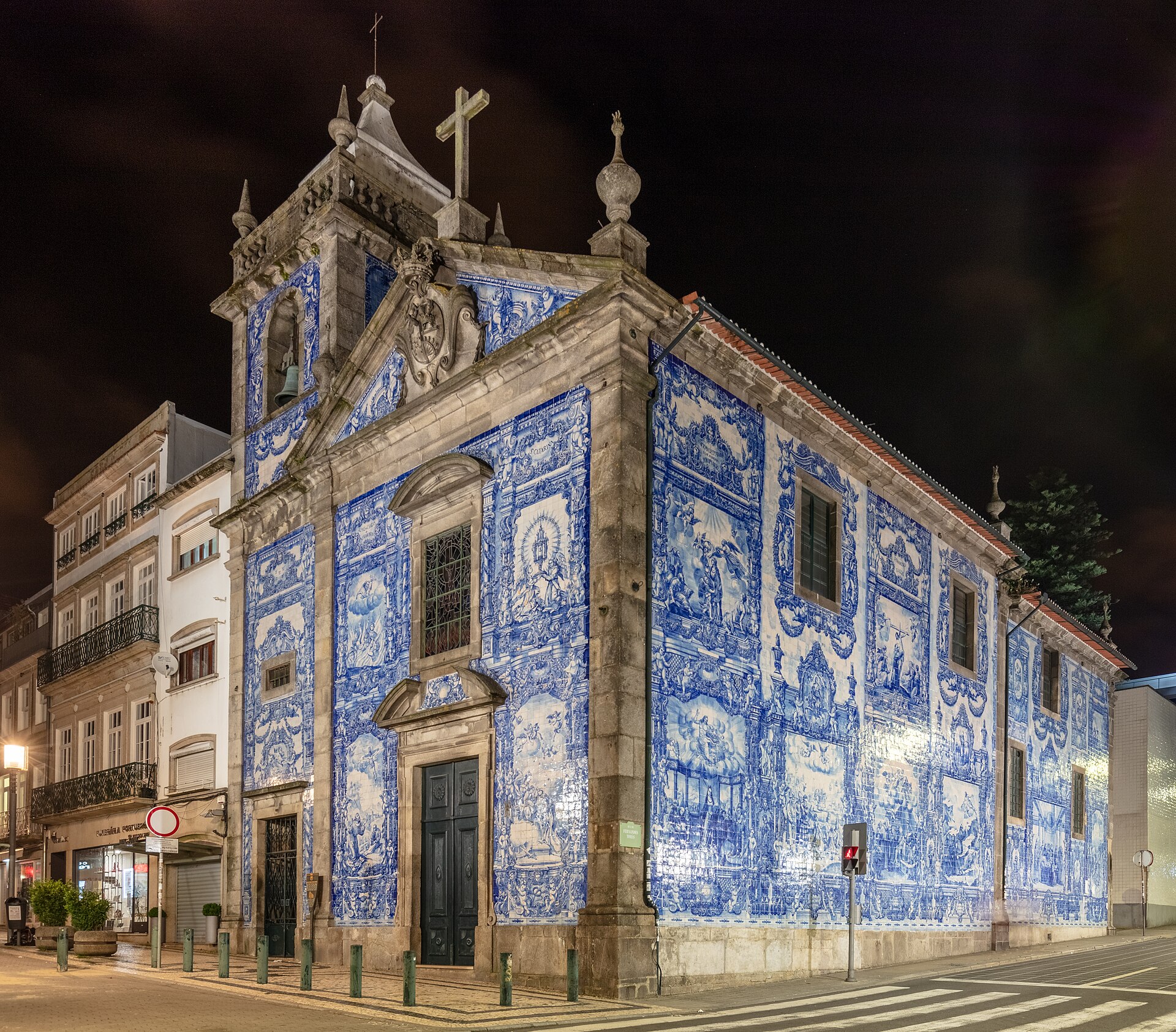
The Chapel of Souls is a small church on Porto's busiest shopping street that's entirely covered in blue and white azulejo tiles — all four exterior walls, from ground to roofline, wrapped in approximately 15,947 tiles depicting the lives and deaths of various saints with the graphic enthusiasm that 18th-century Portuguese Catholics brought to martyrdom. The tiles were actually installed in 1929, much later than most of Porto's azulejo facades, by Eduardo Leite in a deliberate attempt to replicate the 18th-century style. He succeeded so well that most visitors assume they're centuries older. The scenes include St. Francis of Assisi receiving the stigmata, St. Catherine's wheel, and the death of St. Francis, all rendered in the blue-on-white palette that makes Portuguese tile work instantly recognisable. The chapel sits on the corner of Rua de Santa Catarina and Rua de Fernandes Tomás — two of Porto's main commercial streets — which means you encounter it unexpectedly while walking between shops. The contrast between the commercial buzz of Santa Catarina and the serene blue facade is one of Porto's characteristic surprises. The interior is modest compared to São Francisco's golden excess, but the tile work outside is the real attraction. Come in the morning when the eastern light hits the facade and the blue tiles seem to glow.
Casa da Música
Avenida da Boavista 604-610, Porto
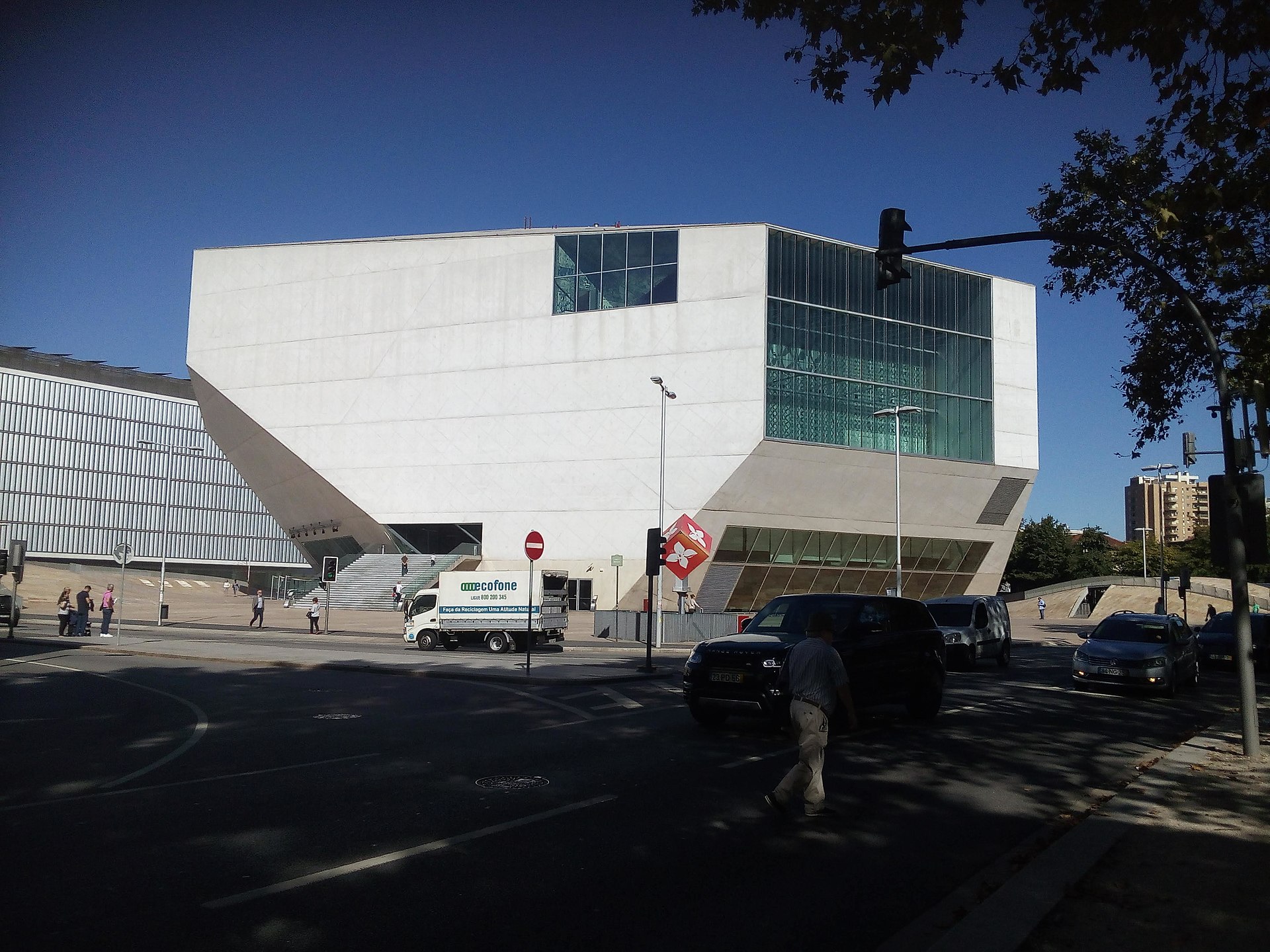
Casa da Música looks like a meteorite landed in a Porto roundabout — a faceted white concrete polyhedron designed by Dutch architect Rem Koolhaas that's been dividing opinion since it opened in 2005. Some call it a masterpiece. Some call it a spaceship. The people who work inside call it genius, because the acoustics are extraordinary. The building was Porto's contribution to its year as European Capital of Culture in 2001 (it opened four years late, which is standard for ambitious architecture). The main concert hall seats 1,300 and has corrugated glass walls at both ends that let daylight flood the space — making it one of the few concert halls where you can see the sky while listening to Beethoven. The smaller rooms include a rehearsal hall with 10-tonne sliding panels that can reconfigure the space, and a VIP room entirely covered in hand-painted Portuguese tiles — Koolhaas's nod to local tradition inside his defiantly un-traditional building. Guided architecture tours run daily and are worth taking even if you're not attending a concert — the building's structural gymnastics are impressive, and the guides explain how Koolhaas solved problems that conventional architecture wouldn't attempt. The concert programme spans classical, jazz, fado, electronic, and experimental music, and the €3 'open port' rehearsals on some afternoons let you watch world-class musicians prepare for the fraction of a ticket price.
Clérigos Church
Rua de São Filipe de Nery, Porto
The Clérigos Church is the body attached to the famous tower, and it deserves more than a passing glance on the way to the stairs. Designed by Nicolau Nasoni in the 1730s and 40s, it was Porto's first Baroque church built on an oval plan — an unusual choice that gives the nave a theatrical quality, as if the architecture itself is performing. Nasoni was a painter before he was an architect, and the church ceiling is his masterpiece — a trompe-l'oeil painting that creates the illusion of a dome where none exists. The flat ceiling appears to curve upward into a heavenly scene of saints and angels, and the effect is so convincing that visitors regularly look up and stumble. The altar is equally theatrical — a carved and gilded retable that climbs the full height of the apse, dripping with gold in the Portuguese style that treats restraint as a character flaw. The church was built for the Brotherhood of the Clérigos — a fraternity of poor clergymen — and the tension between their vow of humility and the building's extravagant decoration is one of those contradictions that makes Baroque Catholicism simultaneously infuriating and magnificent. The church is free to enter (the tower costs a few euros), and attending a concert here — the acoustics are superb — is one of Porto's great evening experiences.
Dom Luís I Bridge
Ponte Luís I, Porto
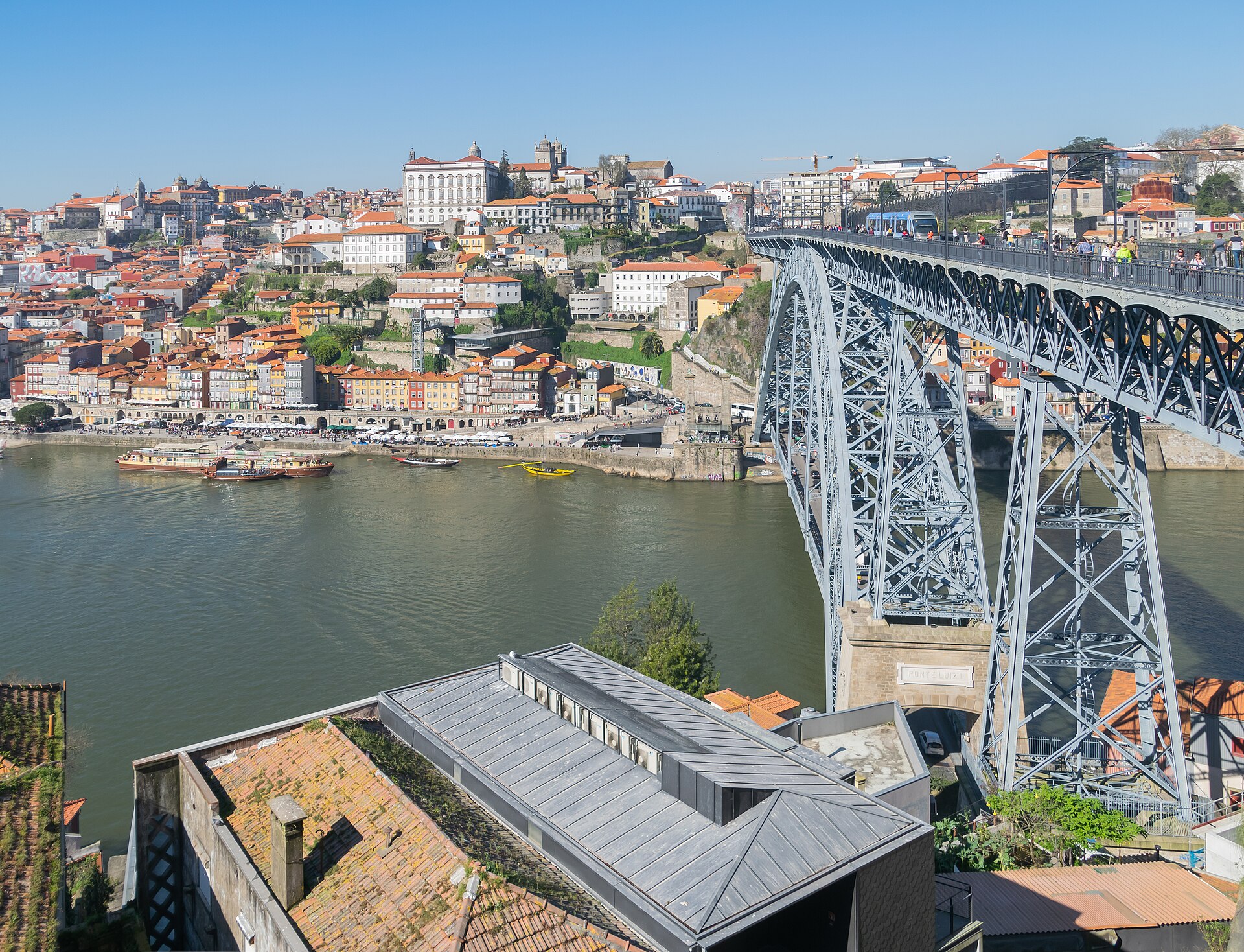
Dom Luís I Bridge is a double-decker iron arch that looks like it was designed by someone who really admired the Eiffel Tower — and that's because it was. Built in 1886 by Théophile Seyrig, a former business partner of Gustave Eiffel, the bridge spans the Douro River in a single 172-metre arch that was the longest of its kind when completed. The genius is the two levels. The upper deck, 60 metres above the river, carries the metro and pedestrians — and the view from up there, looking down at the Ribeira waterfront on one side and the port wine lodges of Vila Nova de Gaia on the other, is the defining panorama of Porto. The lower deck handles road traffic and gives you a completely different perspective, eye-level with the rabelo boats and the riverside terraces. Walk both levels for the full experience. The bridge connects two UNESCO World Heritage zones — Porto's historic centre on the north bank and the wine lodges on the south — and it's become the symbol of the city in the way that the Golden Gate defines San Francisco. At sunset, the iron structure turns from grey to gold to silhouette against an orange sky, and both banks fill with people holding glasses of port wine and watching the light show that nature puts on for free every evening.
Foz do Douro
Foz do Douro, Porto
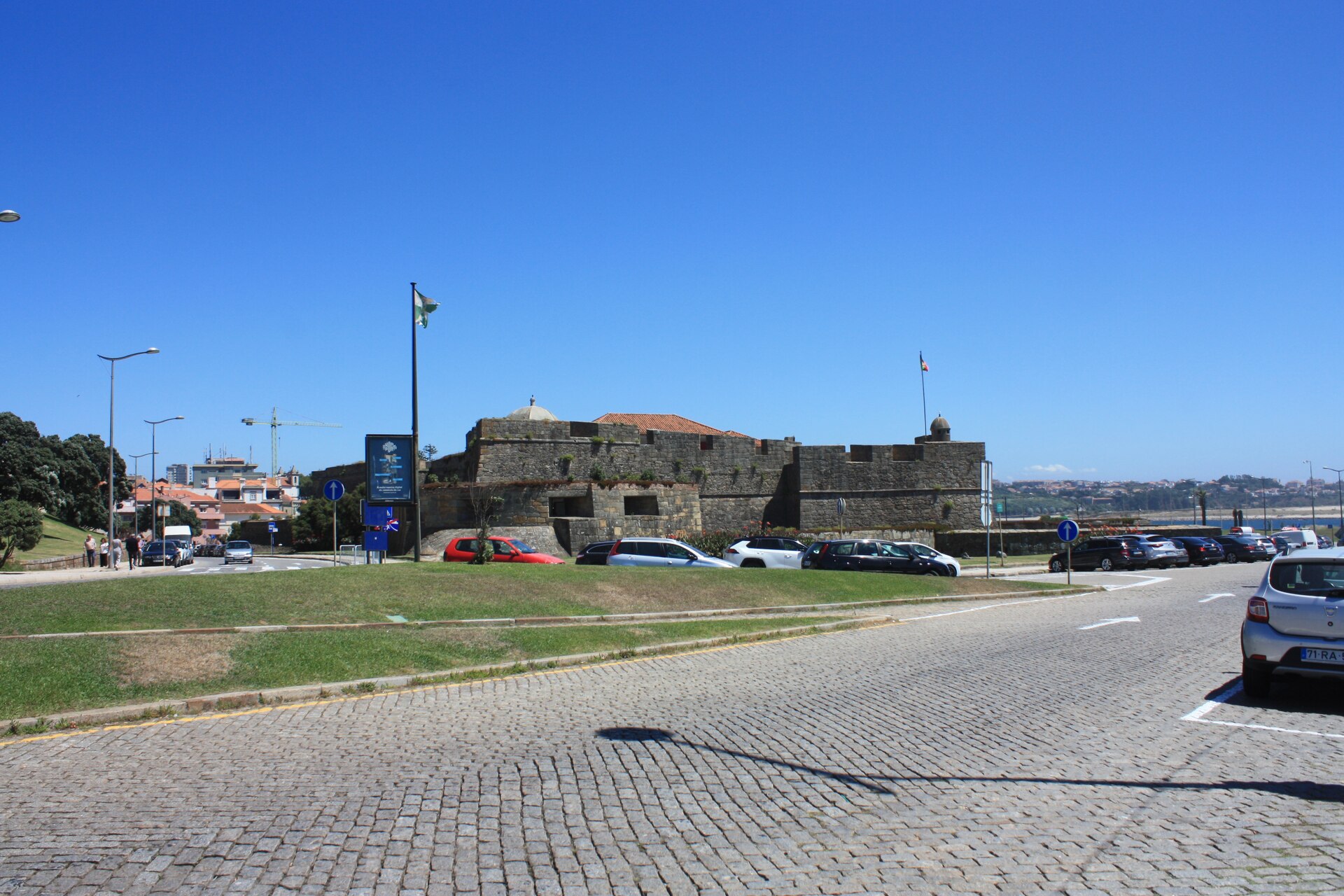
Foz is where the Douro River meets the Atlantic Ocean, and where Porto remembers that it's a coastal city, not just a river town. The neighbourhood at the mouth of the river is a world away from the medieval intensity of the Ribeira — tree-lined avenues, Art Deco houses, a seafront promenade, and a lighthouse that marks the point where brown river water and blue ocean collide. The walk along the coast from Foz to Matosinhos follows a granite-paved promenade past rocky beaches, tidal pools, and the Pérgola da Foz — an elegant 1930s concrete pergola on the waterfront that's become an Instagram landmark. The beaches here aren't the Algarve — the Atlantic is cold and the waves are serious — but surfers and bodyboarders brave the conditions year-round, and on hot summer days the beaches fill with families, sunbathers, and teenagers performing the ancient ritual of pretending the water isn't freezing. The Farol de Felgueiras — a lighthouse on a rocky spur at the river mouth — is the classic Foz photograph, especially during winter storms when Atlantic waves crash over the breakwater and spray reaches the promenade. The seafood restaurants along the Foz waterfront are some of the best and least touristy in Porto. Locals come here on weekend afternoons for grilled fish, vinho verde, and the particular pleasure of watching the sun set into the ocean from a city that's usually too busy looking at its river to notice it has a coastline.
Igreja de Santo Ildefonso
11 Praça da Batalha, União das freguesias de Cedofeita, Santo Ildefonso, Sé, Miragaia, São Nicolau e Vitória, Porto, 4000-468, Portugal
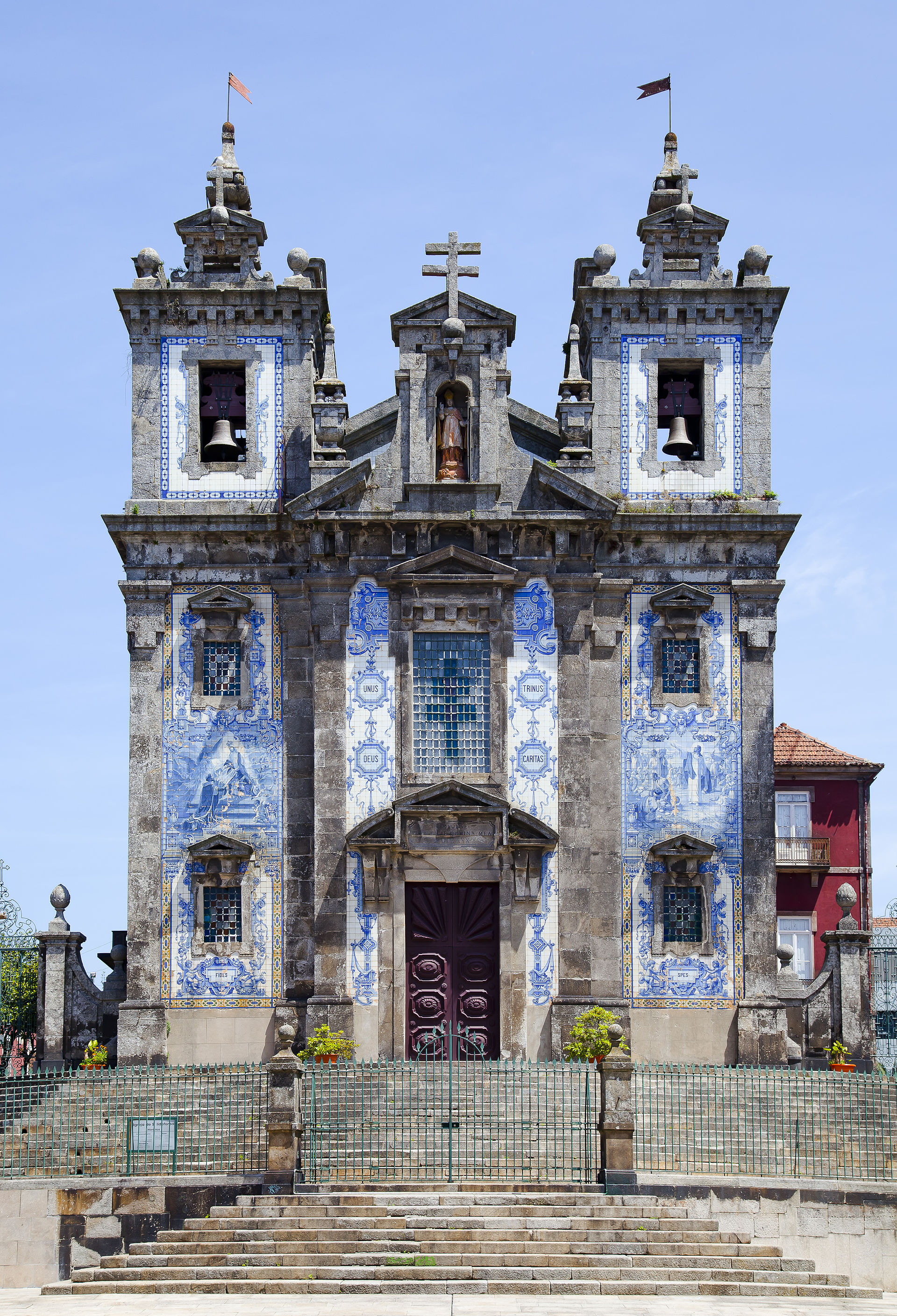
Santo Ildefonso is the church that stops traffic on Rua de 31 de Janeiro — its entire facade is covered in approximately 11,000 azulejo tiles depicting scenes from the life of Saint Ildefonsus and allegories of the Eucharist, installed in 1932 by Jorge Colaço, the same artist who painted São Bento Station. The blue and white tiles climb from ground to bell towers, turning the church into a work of art visible from three streets away. The church was built in the early 18th century in Baroque style, and the azulejo facade was a 20th-century addition — a common practice in Porto, where buildings that had been rendered in plain plaster were 'upgraded' with tile panels that simultaneously weatherproofed and decorated. The result is that Porto has more azulejo-covered buildings than almost any other city, and Santo Ildefonso is one of the largest and most photogenic examples. The interior is Baroque and gilded — talha dourada covering the altarpiece in the familiar Portuguese style — but the real show is outside. The church faces the Praça da Batalha, a lively square that connects the Santa Catarina shopping street to the São Bento area, making it impossible to avoid. Stand across the street at café table height and the full impact of 11,000 tiles arranged in narrative panels hits you like a wave of blue.
Igreja de São Francisco
Rua do Inf D Henrique, União das freguesias de Cedofeita, Santo Ildefonso, Sé, Miragaia, São Nicolau e Vitória, Porto, 4050-296, Portugal
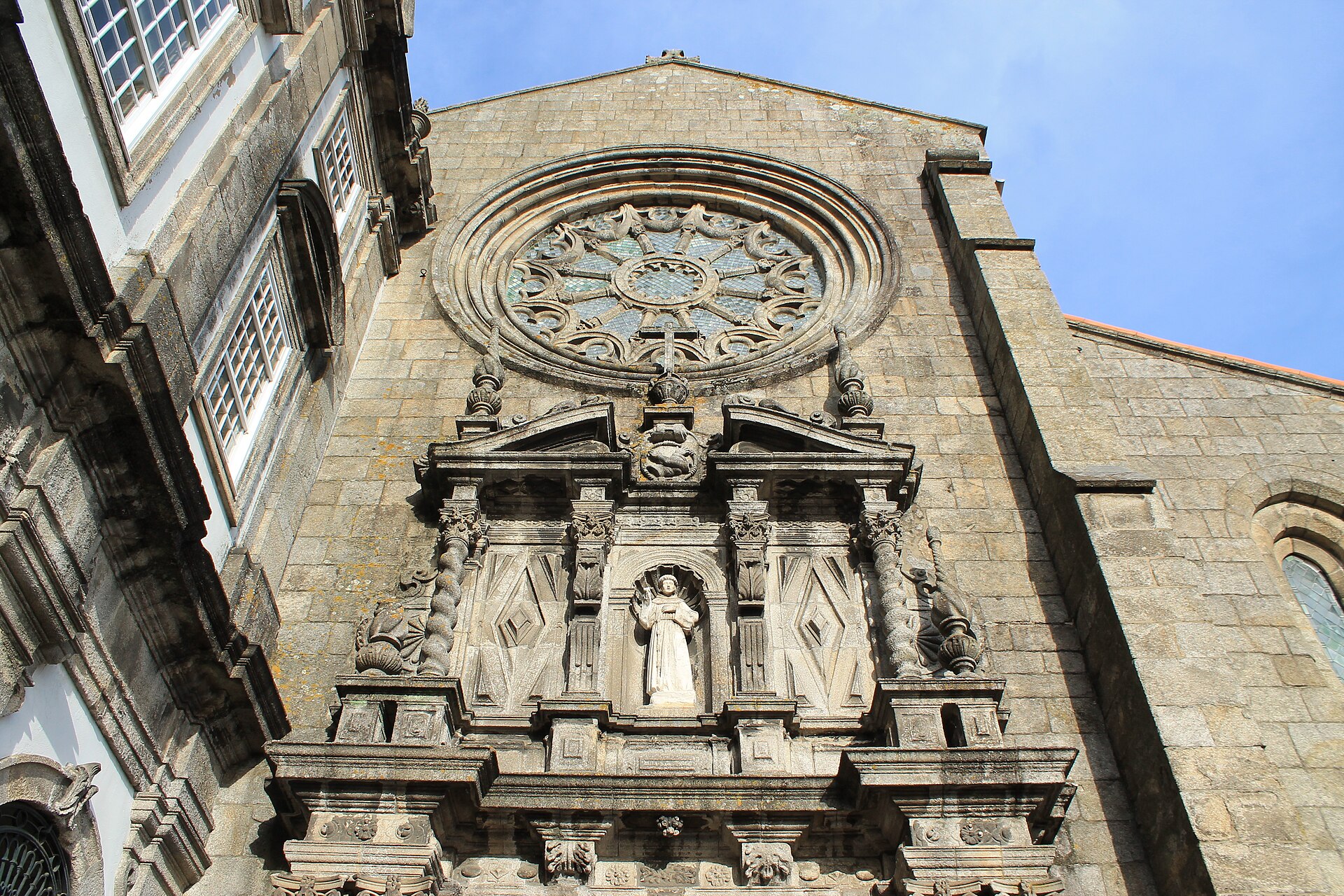
The Church of São Francisco is Gothic on the outside and absolute madness on the inside. Behind a relatively austere 14th-century stone façade lies an interior so completely covered in gilded woodcarving that it's estimated to contain over 300 kilograms of gold dust. Every surface — walls, columns, ceiling, altarpieces — is layered in intricate Baroque talha dourada (gilded woodwork) that makes the entire interior shimmer like the inside of a jewellery box. The centrepiece is the Tree of Jesse — a carved and gilded family tree of Christ that climbs an entire wall in a tangle of branches, figures, and faces that took unknown craftsmen years to complete. It's considered one of the finest examples of Baroque woodcarving in Europe, and standing in front of it you can understand how the sheer accumulation of gold drove the church authorities to eventually ban further gilding, fearing it had become more about wealth than worship. Beneath the church are the catacombs — an ossuary where the bones of former parishioners are visible through glass panels in the floor. The contrast between the golden excess upstairs and the skeletal minimalism below is Porto at its most dramatic. The church is no longer used for regular worship — it functions as a museum — which means you can take your time absorbing the details without the guilt of gawking during a service.
Igreja do Carmo & Igreja dos Carmelitas
Rua do Carmo, Porto
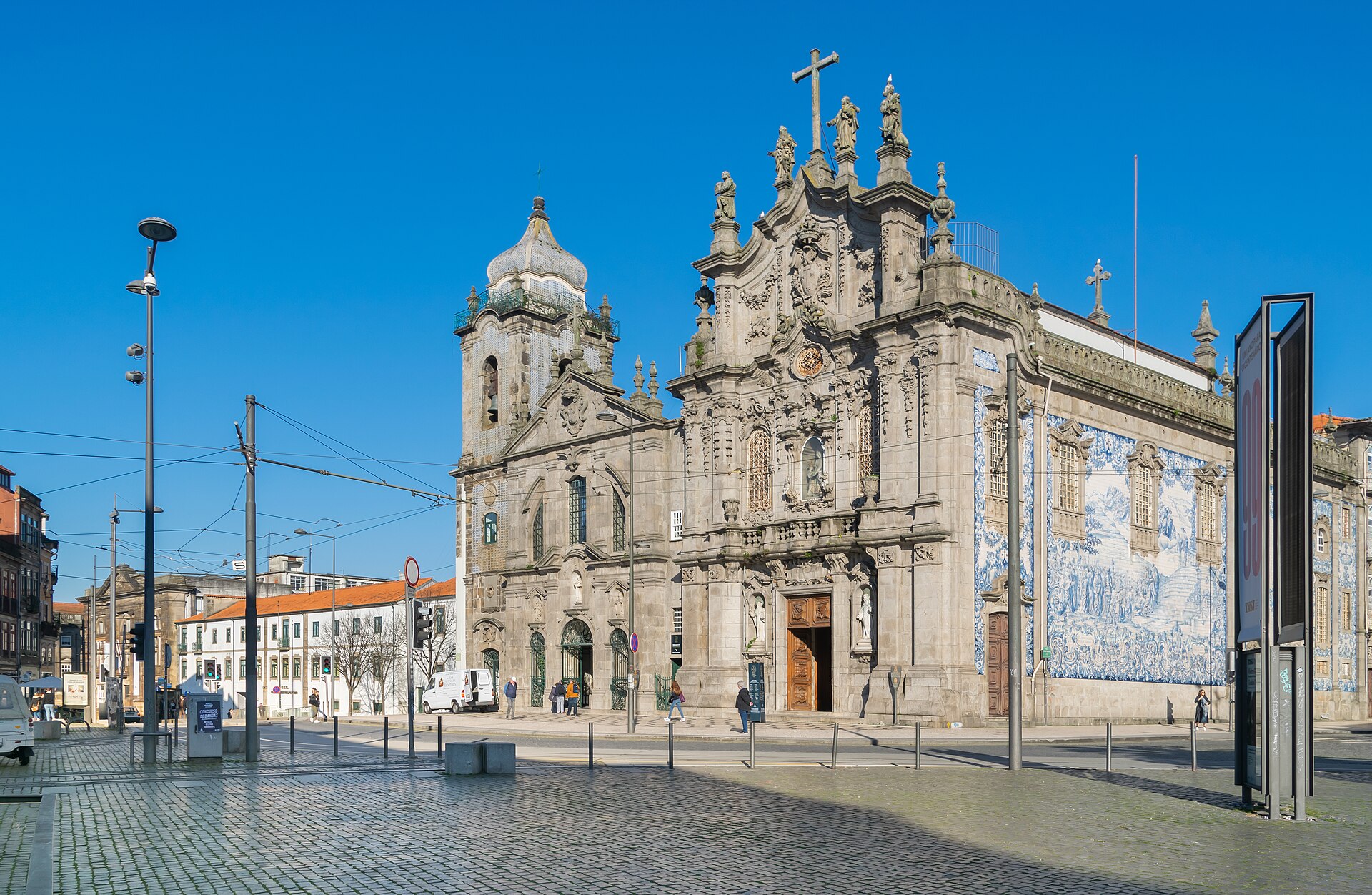
Two churches pressed so close together they share a wall — and the reason is one of the most absurd pieces of Portuguese bureaucracy in history. Canon law prohibited two churches from sharing a wall, so when the Carmo Church was built beside the Carmelite Church in the 18th century, a house exactly one metre wide was constructed between them to satisfy the rule. The narrowest house in Porto stands between two of its grandest churches, and it was occupied until the 1980s. The Carmo Church's side wall is the real attraction — a vast azulejo panel installed in 1912 depicting the founding of the Carmelite Order on Mount Carmel. It's one of the largest tile panels in Porto, covering the entire lateral façade in blue and white, and the scale is staggering when you round the corner and see it for the first time. The tiles were painted by Silvestro Silvestri and are in remarkable condition for being exposed to Atlantic weather for over a century. The interior of the Carmo is Baroque and gilded — Porto's default setting for church decoration — while the adjacent Carmelite Church (Igreja dos Carmelitas) is slightly earlier and slightly more restrained. The one-metre house between them is not open to the public, but you can see its tiny door from the side street, and imagining a family living in a space narrower than a hallway while flanked by two enormous churches is one of Porto's more entertaining mental exercises.
Jardim da Cordoaria
2 Campo Bos Martires da Patria, União das freguesias de Cedofeita, Santo Ildefonso, Sé, Miragaia, São Nicolau e Vitória, Porto, 4050-368, Portugal
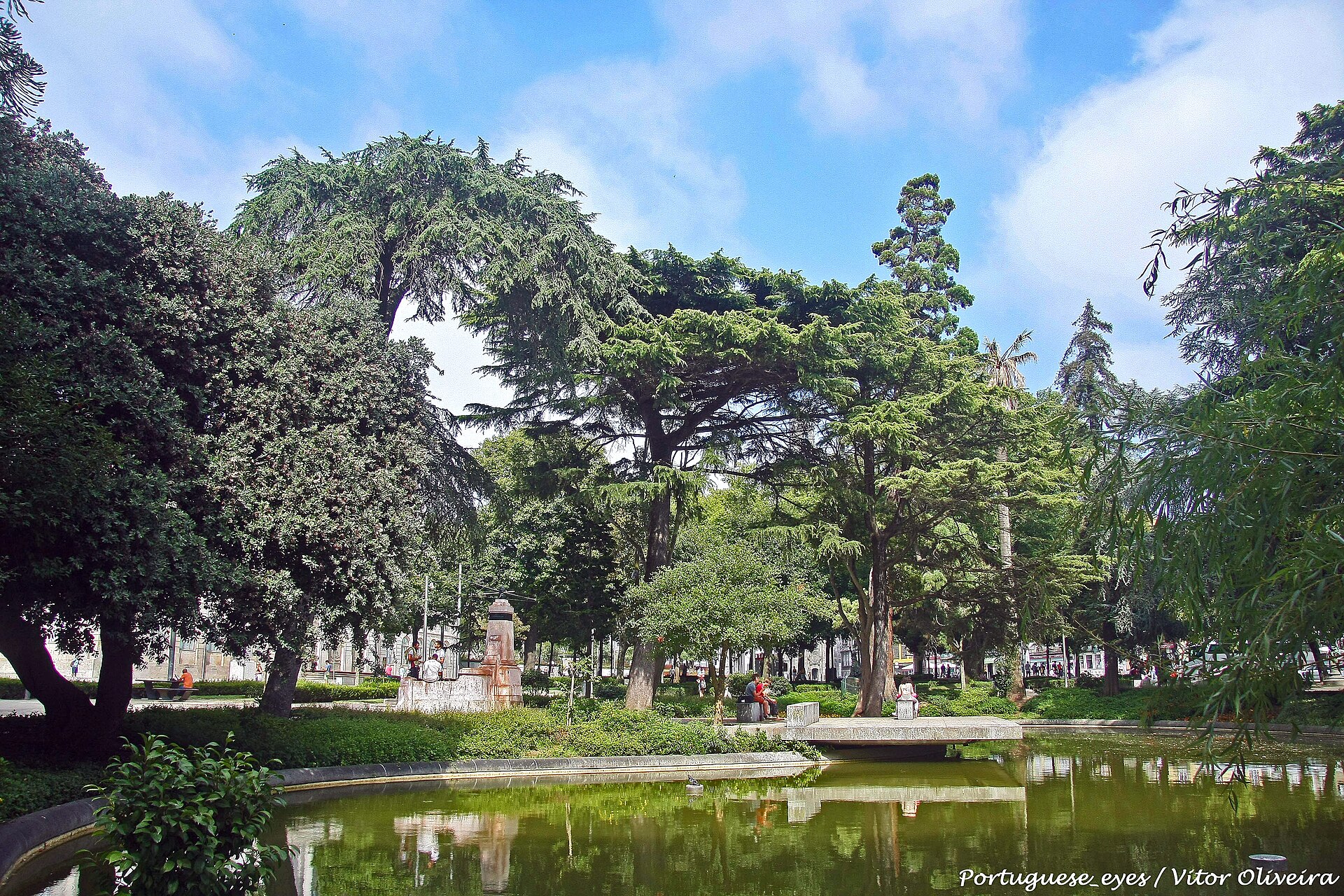
Cordoaria is Porto's most atmospheric small park — a shaded rectangle of towering plane trees, park benches, and permanent art installations that serves as the unofficial town square for the university neighbourhood. Students, pensioners, tourists, and the occasional street musician share the space with an easy informality that makes it one of the best people-watching spots in the city. The park's official name — Campo dos Mártires da Pátria (Field of the Martyrs of the Fatherland) — reflects its history as a site of liberal resistance during the 19th century, but nobody calls it that. Everyone says Cordoaria, after the ropemakers who once worked here making rigging for the ships that sailed from Porto down the Douro to the sea. The trees are the park's best feature — ancient planes whose canopy creates a green ceiling that filters the summer sun into dappled patterns on the gravel paths. Juan Muñoz's bronze sculptures of figures on a bench — eerily lifelike from a distance — sit among the trees as permanent installations that occasionally startle inattentive visitors. The Natural History Museum borders one side, and the Portuguese Centre for Photography (in a former prison) borders another. The park connects the Clérigos area to the river via a steep descent that takes you past the Livraria Lello, making it a natural pause point in any Old Town walk.
Jardins do Palácio de Cristal
Rua de D Manuel II, Cidade da Maia, Maia, 4470-335, Portugal
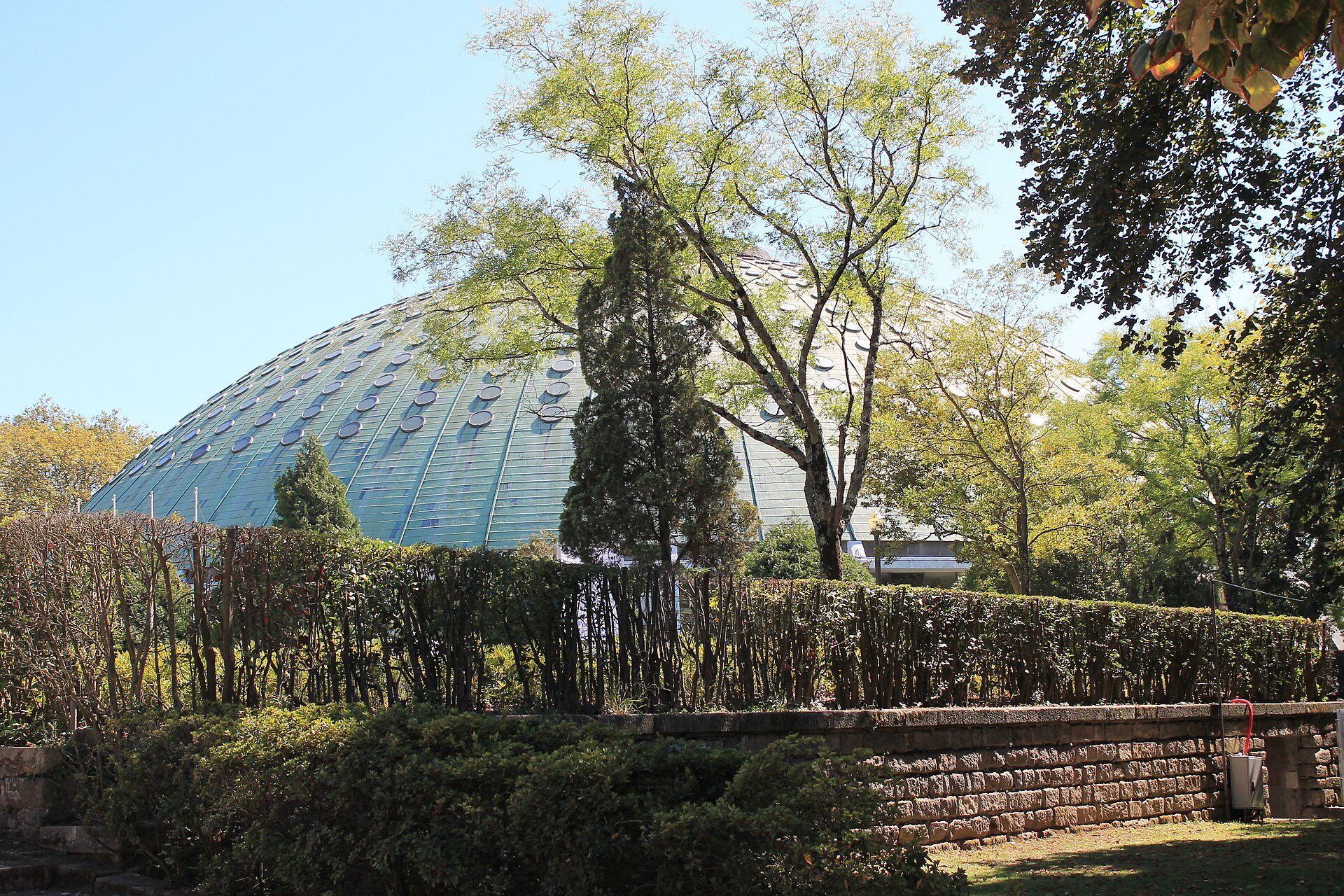
The Crystal Palace Gardens are Porto's finest public park and home to the best viewpoint in a city full of good viewpoints. The original Crystal Palace — inspired by London's — was demolished in 1951 and replaced with a domed sports pavilion that nobody loves, but the gardens surrounding it are superb: formal avenues of linden trees, rose gardens, fountains, and a series of terraces that cascade down toward the river with views that make you want to sit down and stay forever. The western terrace has an unobstructed panorama of the Douro winding toward the Atlantic, with the Arrábida Bridge framing the view and container ships passing below like toys. On clear days you can see the ocean. It's the kind of view that property developers would charge millions for, and it's completely free. The park is also home to a population of peacocks who strut around the lawns with an arrogance that suggests they know exactly how good the view is. The gardens are a favourite of local joggers, dog walkers, and parents with children, which gives them a neighbourhood feel that the more touristy viewpoints lack. The Romantic Museum and the Paper Money Museum (yes, that exists) are both inside the park, and there's a small outdoor café near the rose garden that serves coffee with the kind of view that most cities would build a rooftop bar around. Come at sunset — bring wine if you want — and watch the river turn gold.
Livraria Lello
Rua das Carmelitas 144, Porto
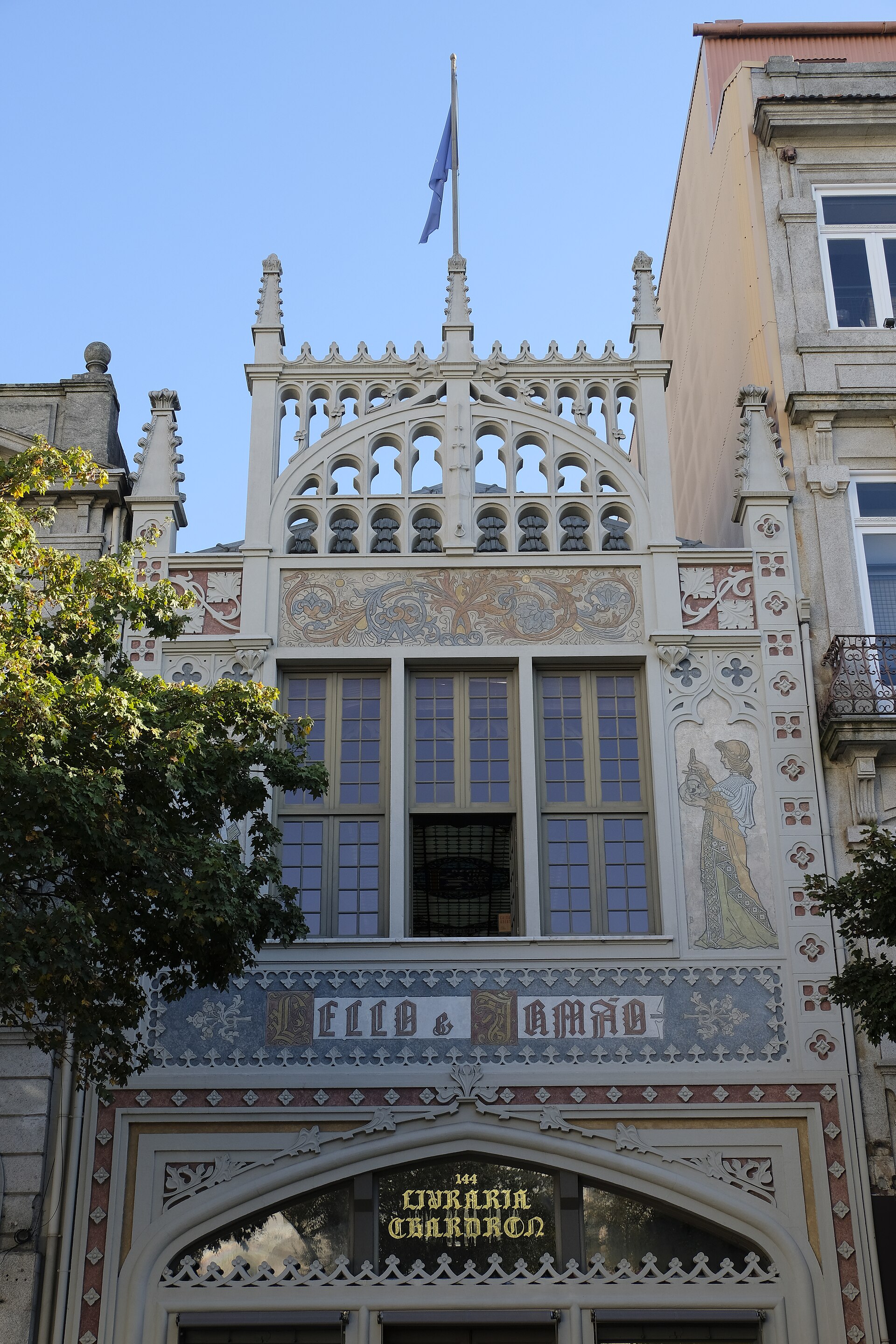
Livraria Lello is regularly called the most beautiful bookshop in the world, and for once the superlative is earned. The interior is a fantasy of carved wood, stained glass, and a crimson staircase that spirals up through the centre of the building like a double helix made by someone who couldn't decide between Art Nouveau and Gothic Revival, so chose both. The bookshop opened in 1906, and the staircase — the thing everyone comes to see — was designed by Xavier Esteves in a sinuous curve that's been photographed approximately one billion times. The ceiling is a stained-glass skylight that floods the upper gallery with coloured light. The carved wooden bookshelves reach to the ceiling on every wall. It looks like the kind of place where you'd expect to find a spell book, which is why the persistent (but unconfirmed) rumour that J.K. Rowling was inspired by Lello when she lived in Porto in the early 1990s has become inseparable from the shop's identity. The bookshop charges a small entrance fee — currently around €8 — which is redeemable against book purchases and was introduced to manage the crowds. It's still packed, especially midday, so come when the doors open or in the late afternoon. Buy a book — the Portuguese literature section has beautiful editions — and consider that you're supporting one of the last independent bookshops of its era, in a building that treats the act of selling books as an art form.
Majestic Café
112 Rua de Santa Catarina, União das freguesias de Cedofeita, Santo Ildefonso, Sé, Miragaia, São Nicolau e Vitória, Porto, 4000-442, Portugal
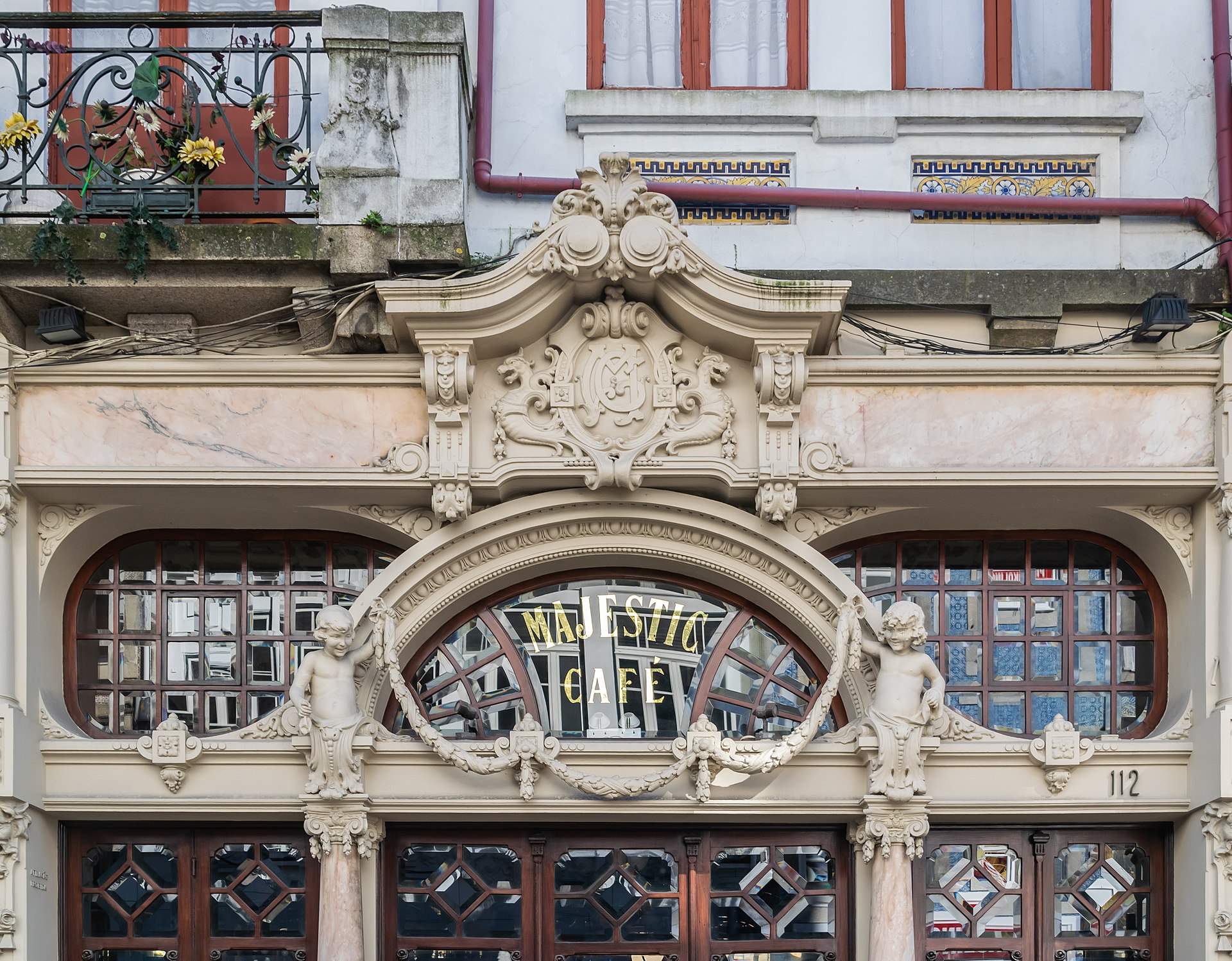
The Café Majestic is Porto's most famous coffee shop and one of the most beautiful cafés in Europe — a Belle Époque interior of carved wood panels, cherub-studded mirrors, marble tables, and leather banquettes that hasn't fundamentally changed since it opened in 1921. The name was controversial at the time — critics called it pretentious for a café in a working city — but a century later it feels exactly right. The persistent legend is that J.K. Rowling wrote early chapters of Harry Potter here while living in Porto in the early 1990s, teaching English and working on her manuscript. Rowling has been somewhat evasive about confirming this specific café, but the association is now inseparable from the Majestic's identity, and the tourist queue outside is partly powered by Potter pilgrims hoping for literary osmosis. The coffee is good, the pastéis de nata are excellent, and the prices reflect the fact that you're paying for a seat in a museum that happens to serve food. Come at opening time to get a table without queuing, and order a galão (Portuguese latte) with a tosta mista (toasted ham and cheese) like a local would, rather than the tourist menu. The Art Nouveau interior — designed by João Queiroz — rewards slow observation: the ceiling paintings, the carved wood details, the original light fixtures. It's the kind of place where lingering is the entire point.
Matosinhos
Matosinhos, Portugal
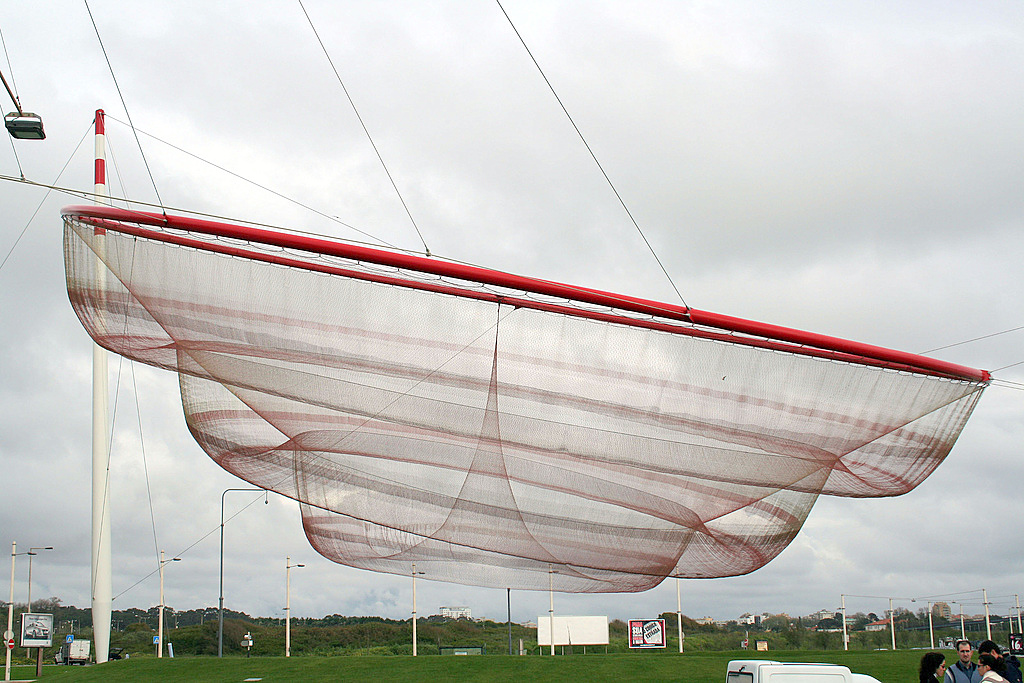
Matosinhos is where Porto goes to eat fish — and the fish here is some of the best in Europe, grilled over charcoal on the street outside restaurants that have been doing exactly this since long before it became fashionable. The seafront suburb, 15 minutes from the city centre by metro, has a working fishing harbour, a long sandy beach, and a concentration of seafood restaurants along Rua Heróis de França that turns lunch into an event. The ritual is specific: you sit at an outdoor table, the waiter brings bread, olives, and tinned sardines (which in Portugal are not sad desk food but a legitimate delicacy), and then you order grilled fish — sea bass, sea bream, turbot, or whatever came off the boats that morning. The fish arrives whole, cooked over charcoal on a pavement grill, and is served with boiled potatoes and a salad of tomato and onion dressed in olive oil. That's it. No foam, no reduction, no deconstruction. Just fish, fire, and the Atlantic. The beach at Matosinhos is the best near Porto — wide, sandy, and with proper surf waves that attract boarders year-round. The harbour is home to a fleet of small fishing boats that land their catch every morning, and watching the auction at the Lota (fish market) is a glimpse of the industry that built Porto before port wine or tourism existed. The Leça da Palmeira tidal pools designed by Álvaro Siza Vieira — his first significant building — are a short walk north along the coast and worth the detour for architecture fans.
Mercado Bom Sucesso
Praça do Bom Sucesso, União das freguesias de Lordelo do Ouro e Massarelos, Porto, 4150-145, Portugal
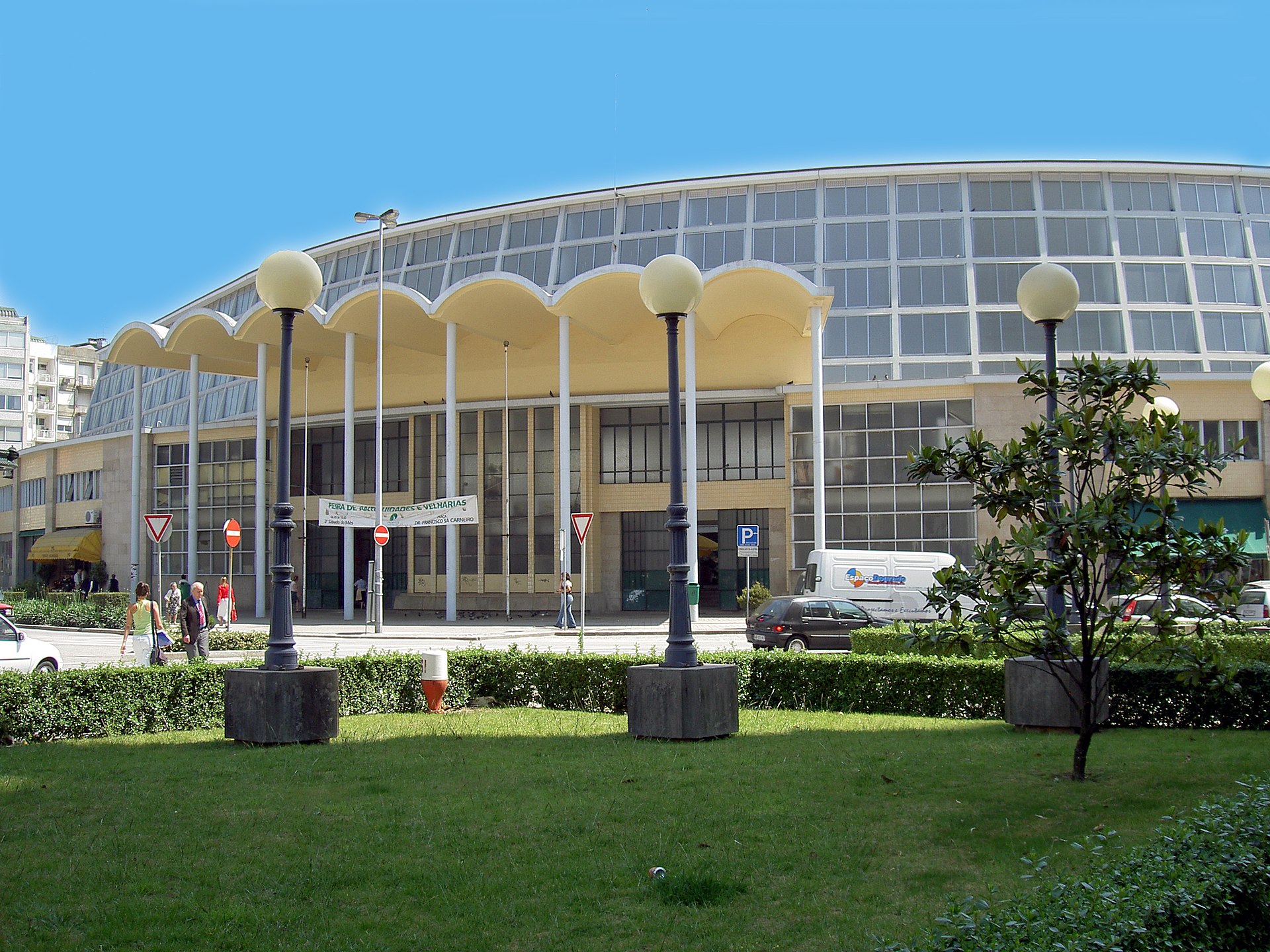
Mercado Bom Sucesso is Porto's best example of a traditional market reinvented for the 21st century — a 1950s modernist building with a dramatic arched concrete roof that was renovated in 2013 into a food hall where traditional Portuguese market culture meets contemporary dining. The original market — designed by architect Fortunato Leal in a style that's pure mid-century confidence — had been declining for years before the renovation transformed the interior into an open-plan space of food stalls, a boutique hotel built into the upper level, and a small stage for live music. The concrete arches of the roof, each spanning the full width of the building, are the architectural star — structural engineering as public spectacle, visible from every food stall below. The food vendors cover the full range of Portuguese cuisine — fresh seafood at one counter, francesinha at another, Alentejo charcuterie, Azorean cheese, and a wine bar serving Portuguese wines by the glass with the kind of selection that a restaurant would envy. It's less tourist-oriented than the Ribeira restaurants and less chaotic than Bolhão, making it the sweet spot for visitors who want good food in a beautiful space without the performance of a formal meal.
Mercado do Bolhão
Rua Formosa 322, Porto
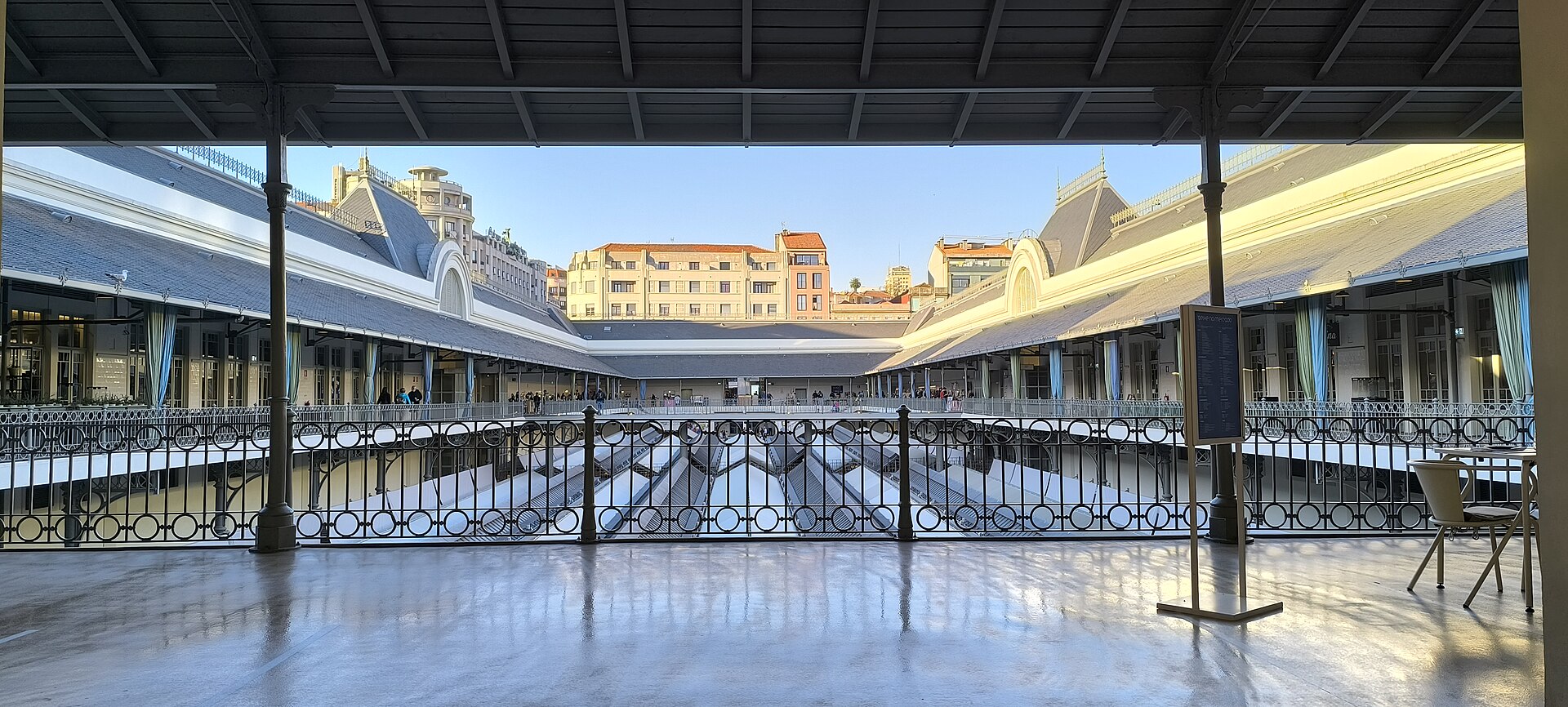
Bolhão is Porto's grand old market — a two-storey Neoclassical building that's been the city's primary fresh food market since 1914, and the place where Porto's grandmothers still come to buy tripe, bacalhau, and the flowers for Sunday lunch. The building spent years in a sad state of disrepair before a major renovation brought it back to life in 2022, restoring the ironwork galleries, the central courtyard, and the atmosphere of a market that takes its produce personally. The ground floor is traditional market — butchers, fishmongers, vegetable sellers, and cheese vendors who will let you taste before buying and look offended if you don't buy after tasting. The upper gallery has newer additions including restaurants and specialty shops, but the energy is still on the ground floor where women in aprons sell dried herbs, cured sausages, and bacalhau (salt cod) in sizes ranging from modest to surfboard. Porto has a special relationship with tripe — the city's residents are nicknamed 'tripeiros' (tripe eaters) — and Bolhão is where the best tripe vendors operate. The story goes that when Henry the Navigator was preparing his fleet for the conquest of Ceuta in 1415, the people of Porto donated all their good meat to the expedition and kept only the offal for themselves. Whether true or not, tripas à moda do Porto remains the city's signature dish, and Bolhão is where you go to eat it or buy the ingredients to make it.

Miragaia Neighbourhood
Porto, Portugal
Miragaia is the Porto neighbourhood that guidebooks haven't quite discovered yet — a riverside district west of the Ribeira where narrow streets climb steeply from the Douro into a tangle of stone houses, tiny squares, and churches that feels like a village accidentally attached to a city. The neighbourhood was once Porto's main fishing quarter, and the steep streets that zigzag up from the river were designed for donkeys, not cars. The Church of São Pedro de Miragaia, dating to the 12th century, is one of the oldest in the city, and the small houses clustered around it — some with grape vines climbing their facades, others with cats occupying every available windowsill — have a domestic charm that the restored tourist zones can't replicate. Miragaia is where Portuenses eat when they want a quiet meal by the river without the Ribeira prices. A handful of small restaurants serve fresh grilled fish and rice dishes at plastic tables overlooking the water, and the sunset views toward the Arrábida Bridge are the equal of anything from the Ribeira — minus the crowds and the markup. The neighbourhood is also where Porto's small but growing street art scene has taken hold, with murals appearing on walls with increasing frequency and ambition.
Palácio da Bolsa
Rua de Ferreira Borges, União das freguesias de Cedofeita, Santo Ildefonso, Sé, Miragaia, São Nicolau e Vitória, Porto, 4050-252, Portugal
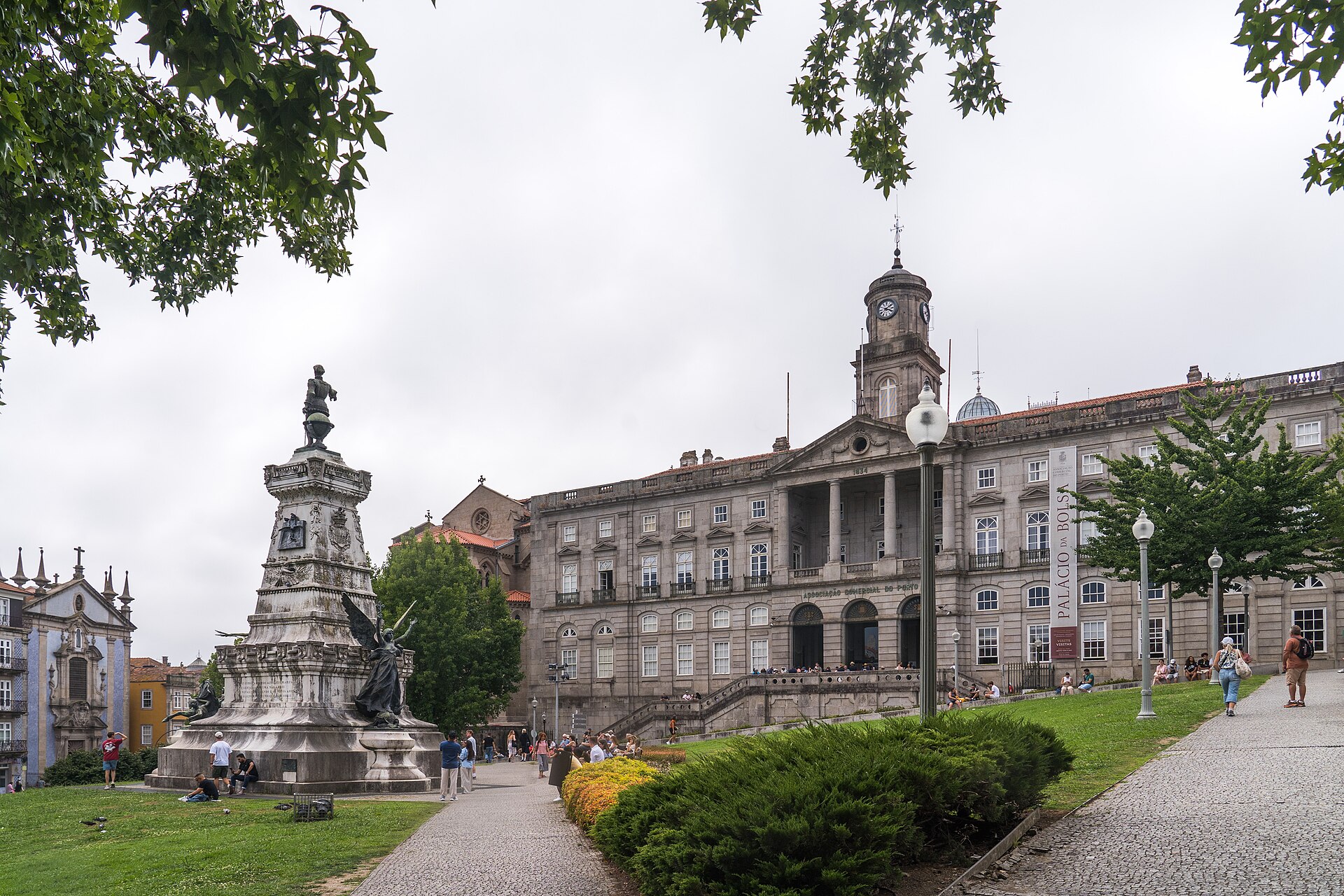
The Palácio da Bolsa — Porto's Stock Exchange Palace — was built to impress foreign traders, and 150 years later it's still working. Constructed between 1842 and 1910 by the city's Commercial Association, every room was designed to demonstrate that Porto was a serious, sophisticated, enormously wealthy place to do business. The centrepiece is the Arab Room, and nothing prepares you for it. The Arab Room took 18 years to decorate. Inspired by the Alhambra in Granada, every surface is covered in interlocking geometric patterns painted in gold, blue, and crimson, with Moorish-style plasterwork and Arabic inscriptions that read 'Glory to Allah' — an odd choice for a 19th-century Portuguese trading house, but aesthetic consistency apparently trumped theological accuracy. The result is a room so elaborate that even the light fixtures were custom-designed to match. The rest of the palace is a tour through 19th-century European architectural ambition — a glass-roofed courtyard called the Pátio das Nações (Court of Nations) with the coat of arms of every country that traded with Porto, a ballroom with crystal chandeliers, and a tribunal room with walls painted to look like marble because real marble wasn't considered impressive enough. Guided tours run every 30 minutes and are the only way to see the interior. The building sits next to the São Francisco Church, and doing both in sequence is the most concentrated hit of Porto's golden age you can get.
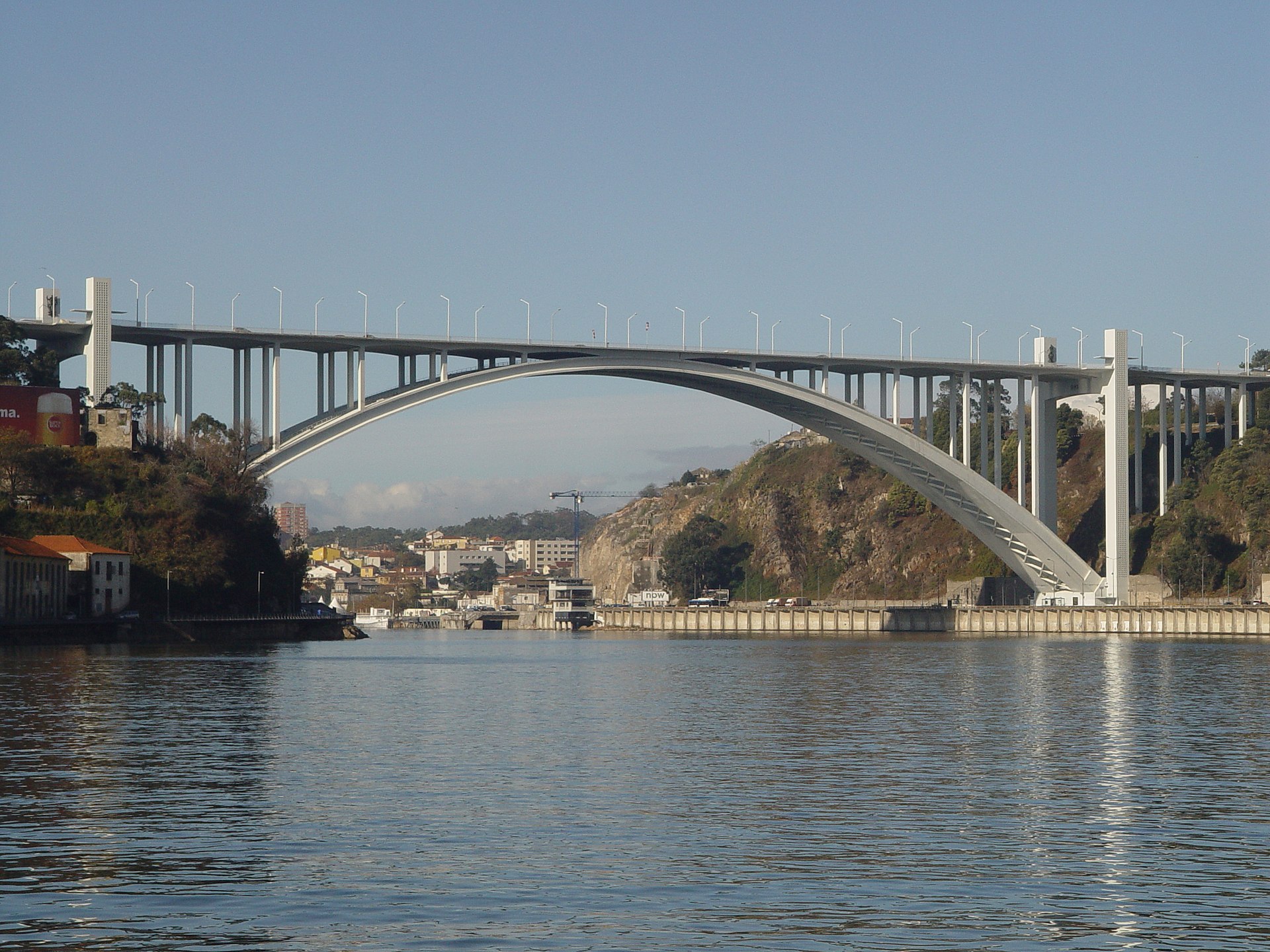
Ponte da Arrábida
Ponte da Arrábida, União das freguesias de Lordelo do Ouro e Massarelos, Porto, 4150-553, Portugal
The Arrábida Bridge is a single concrete arch spanning 270 metres across the Douro, and when it was completed in 1963 it was the longest concrete arch bridge in the world. Designed by Edgar Cardoso — Portugal's greatest bridge engineer — it's a masterpiece of mid-century structural design that makes the Dom Luís I Bridge look fussy by comparison. The bridge carries six lanes of traffic and was built to connect Porto to the beaches south of the river, but its recent fame comes from the Porto Bridge Climb — a guided walk over the top of the arch, 65 metres above the water, that's become one of the city's most popular experiences. You clip into a safety harness and walk the curved surface of the arch from one bank to the other, with views upriver toward the city centre and downriver toward the Atlantic. It's vertigo-inducing and exhilarating in equal measure. Even from below, the bridge is worth seeing. The curve of the arch is mathematically elegant — a parabola that distributes the load with an efficiency that still impresses structural engineers. The best view is from the Foz promenade looking upriver, where the bridge frames the Douro valley like a gateway between the city and the ocean.
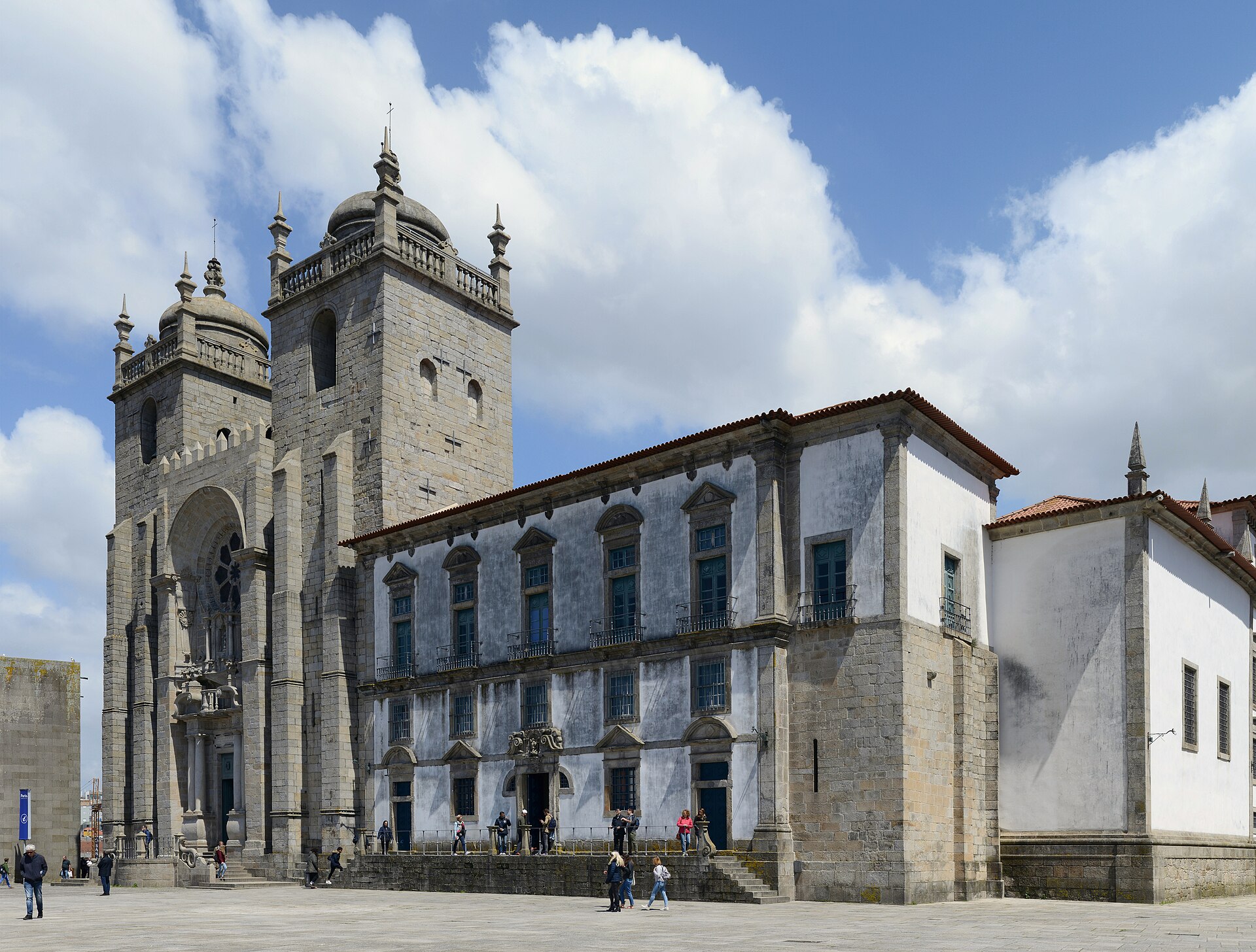
Porto Cathedral (Sé do Porto)
Terreiro da Sé, Porto
Porto's cathedral looks like a fortress because it basically is one. Built in the 12th century on the highest point of the old city, the Sé was designed as much for defence as devotion — its twin towers are crenellated like castle walls, its windows are narrow as arrow slits, and the overall impression is of a building that's daring you to try something. This was the frontier of Christian Portugal during the Reconquista, and the architecture remembers. The exterior is Romanesque, heavy and blunt, but the interior has been layered with additions over 800 years. The Gothic cloister is covered in 18th-century azulejo tiles depicting the life of the Virgin Mary and Ovid's Metamorphoses — a combination that tells you everything about Portuguese Catholicism's relaxed relationship with pagan mythology. A Baroque silver altarpiece in the chapel of the Holy Sacrament was supposedly plastered over during the Napoleonic invasion to hide it from French soldiers. It worked. The terrace in front of the cathedral — Terreiro da Sé — offers one of the best free views in Porto, looking down over the Ribeira to the river and across to Gaia. The Pillory of Porto stands in the square, a granite column that once served as a place of public punishment and now serves as a selfie backdrop, which is arguably its own form of punishment. The cathedral is free to enter; the cloister charges a small fee that's worth paying for the tiles alone.
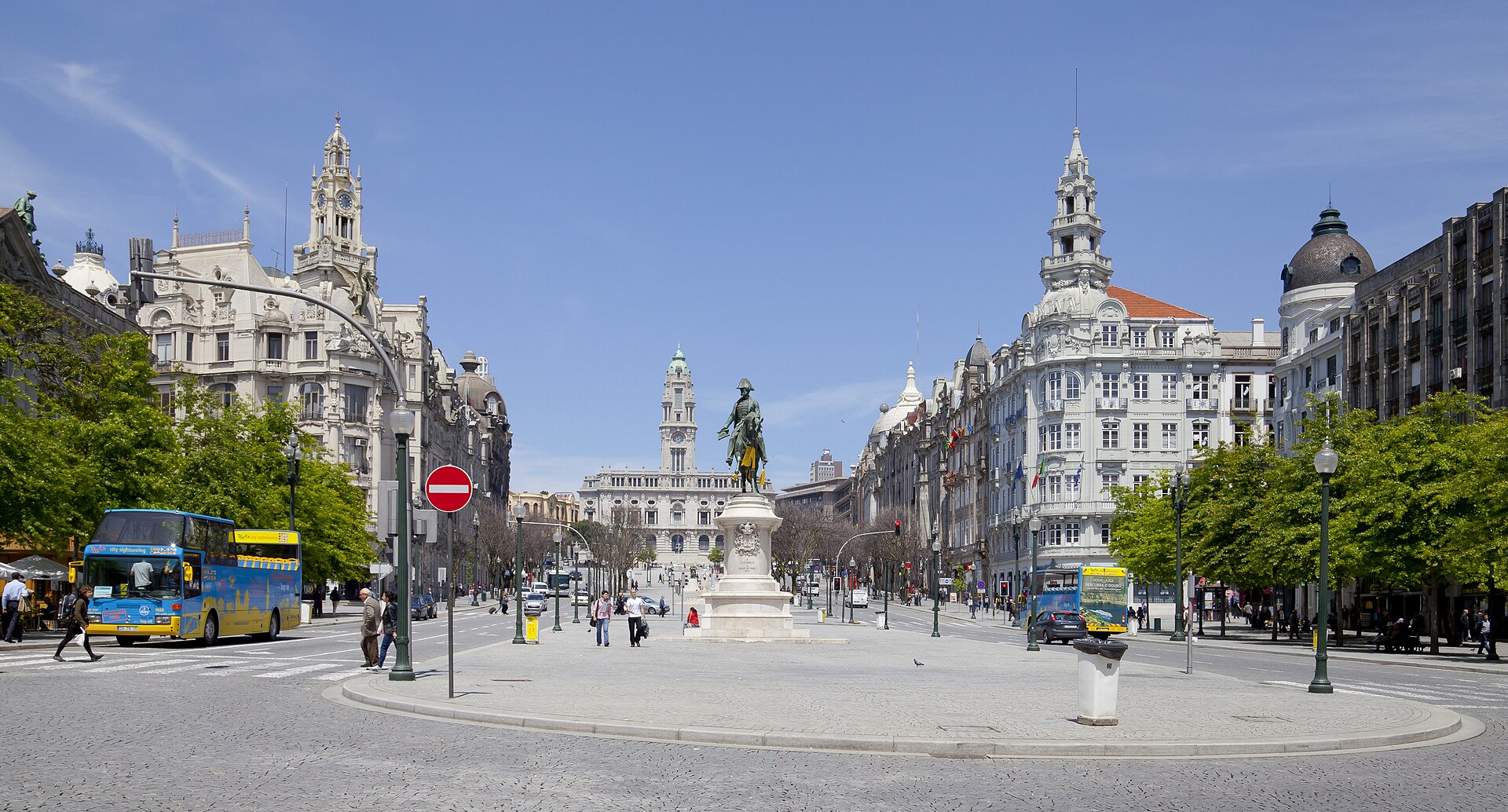
Praça da Liberdade & Avenida dos Aliados
Praça da Liberdade, União das freguesias de Cedofeita, Santo Ildefonso, Sé, Miragaia, São Nicolau e Vitória, Porto, 4000-322, Portugal
Avenida dos Aliados is Porto's grandest street — a broad, sloping boulevard lined with early 20th-century buildings that was designed to give the city a Parisian-style civic centre. The City Hall anchors the top of the avenue with a clock tower that's become a Porto landmark, and the buildings flanking both sides compete for attention with ornate facades, domes, and statuary that reflect the confident wealth of Porto's commercial golden age. The architecture is eclectic — Art Nouveau, Beaux-Arts, Art Deco, and a few buildings that seem to be all three simultaneously. The most striking is the former Banco de Portugal building, now a bank museum, whose granite exterior hides an interior of stained glass and polished wood that rivals any church. The McDonald's on the avenue — yes, McDonald's — occupies a space so ornate, with stained glass windows and crystal chandeliers, that it's become a tourist attraction in its own right. Only in Porto would a fast food restaurant feel like a cathedral. Praça da Liberdade at the bottom of the avenue features an equestrian statue of King Pedro IV and connects to São Bento Station and the old town. The square and avenue together function as Porto's Times Square — this is where crowds gather for New Year's Eve, football celebrations, and the occasional political protest. On regular days, it's simply a grand urban space where Porto puts on its best suit.
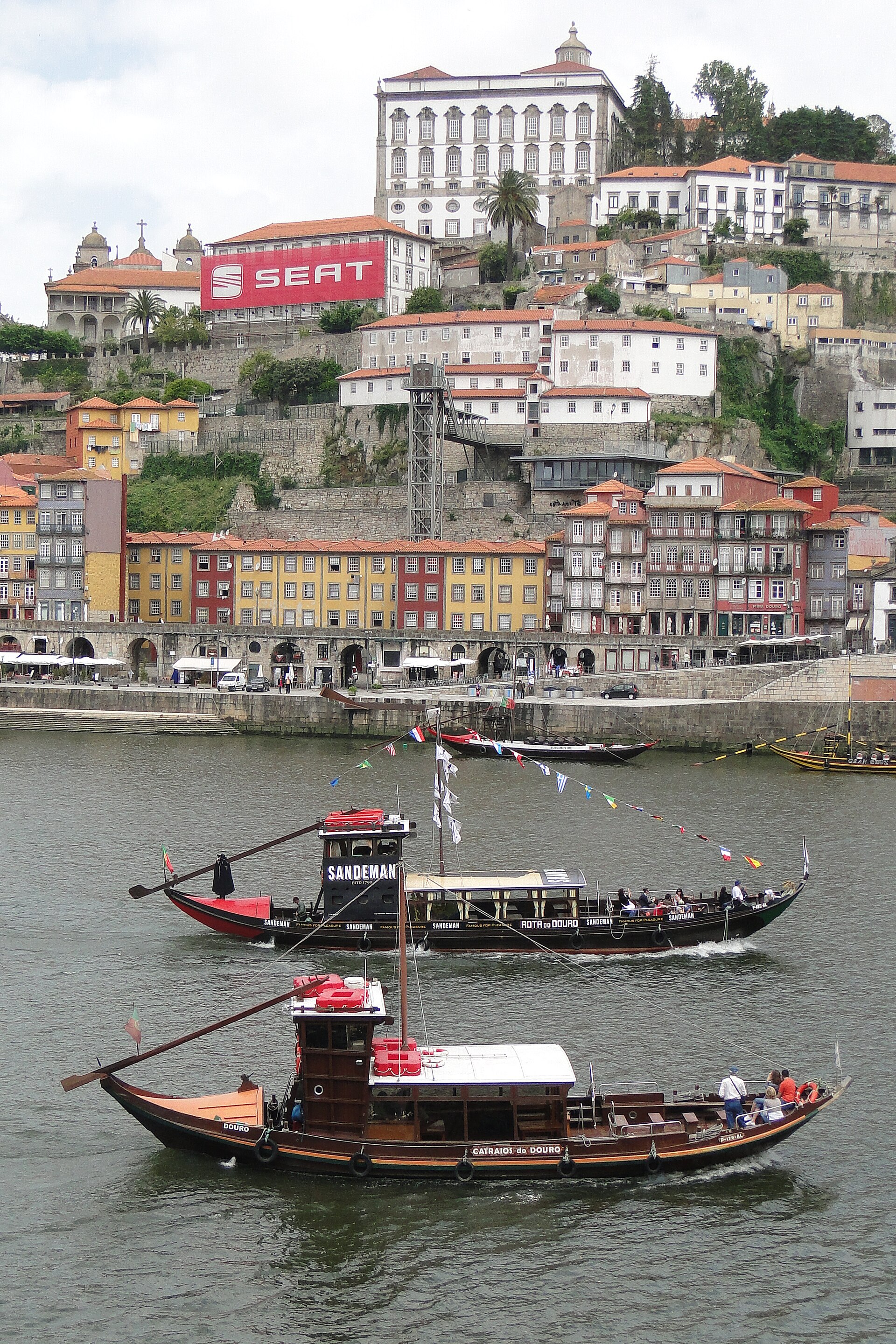
Ribeira District
Cais da Ribeira, União das freguesias de Cedofeita, Santo Ildefonso, Sé, Miragaia, São Nicolau e Vitória, Porto, 4050-199, Portugal
The Ribeira is Porto's soul — a UNESCO World Heritage waterfront of medieval buildings stacked up the hillside in a tumble of terracotta roofs, peeling facades, and laundry hung from wrought-iron balconies. It looks like someone took a Mediterranean fishing village and tilted it 30 degrees against a cliff, which is more or less what happened over the past 800 years. The quayside Praça da Ribeira has been the commercial heart of the city since the Middle Ages, when merchants traded salt cod, wine, and textiles from the warehouses that still line the square. Today the ground floors are restaurants and bars, and on a summer evening the entire waterfront becomes an open-air dining room with the Douro and the bridge as a backdrop. The francesinha — Porto's outrageous contribution to world cuisine, a sandwich buried in melted cheese and beer sauce — is best attempted here with a river view to distract from the calorie count. The streets climbing up from the river are where Ribeira gets interesting. Narrow alleys with steps carved into the hillside connect the waterfront to the cathedral above, passing through pockets of neighbourhood that haven't changed much since the 18th century. Some buildings are gorgeously restored in blue and white azulejos. Others are crumbling beautifully. Porto has always been a working city, not a museum, and the Ribeira wears its age with pride rather than polish.
Rua das Flores
Rua das Flores, Porto
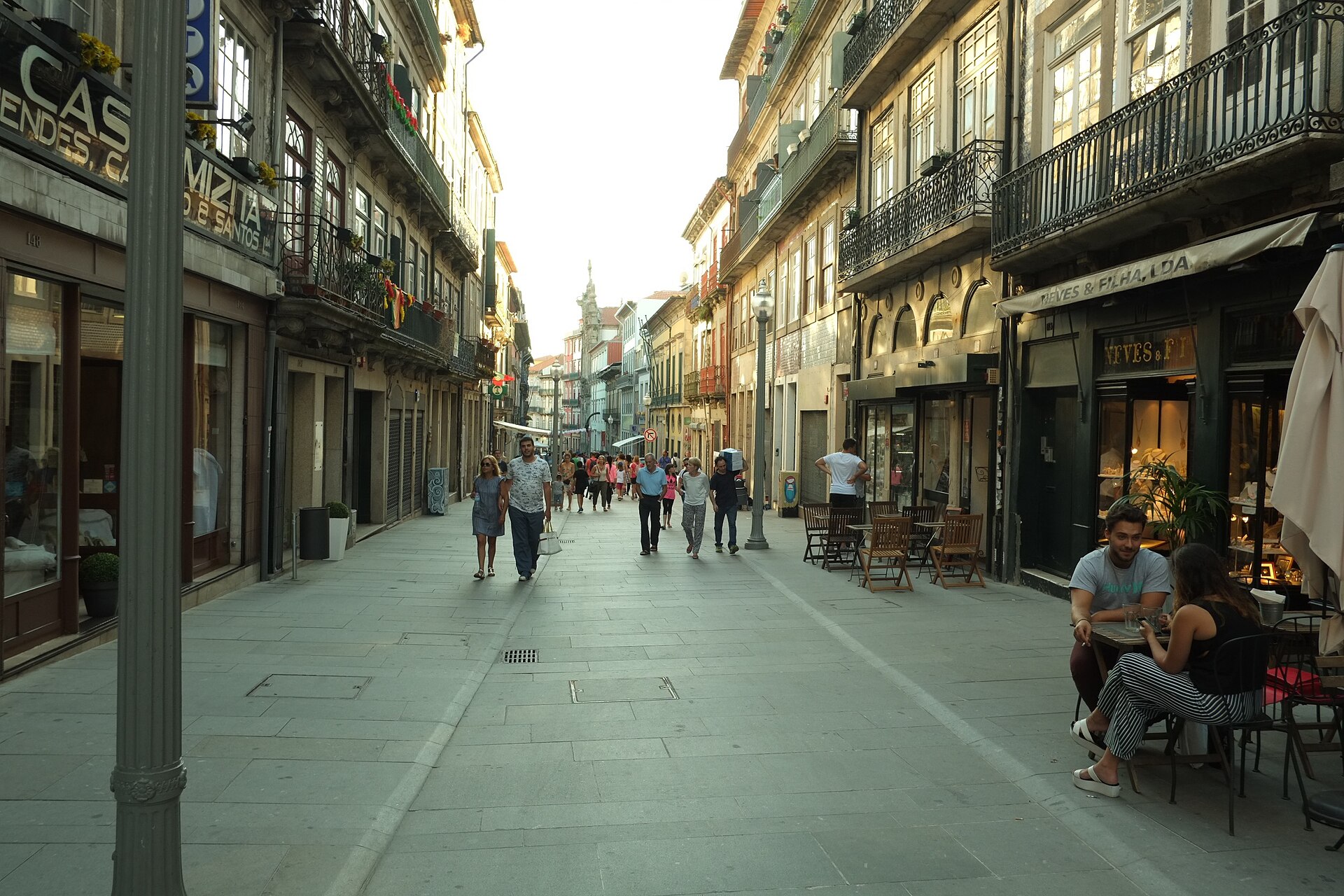
Rua das Flores — Street of Flowers — is Porto's prettiest pedestrian street and the one that best captures the city's current moment: historic buildings being lovingly restored, excellent restaurants moving into ground floors that were shuttered for decades, and a quality of street life that feels authentically Portuguese rather than manufactured for tourists. The street was once Porto's jewellers' quarter — the Ourivesaria Aliança goldsmith at number 235 has been in business since 1901 — and many of the 18th-century buildings retain their ornate granite doorways and wrought-iron balconies. The Misericórdia Church halfway down the street has a recently restored interior that's one of the hidden gems of Porto's religious art, with a 16th-century painting called 'Fons Vitae' that's considered a masterpiece of Portuguese Renaissance art. The food scene on Flores has exploded — specialty coffee shops, natural wine bars, and restaurants serving updated Portuguese cuisine share the street with traditional shops and the occasional barbershop that's been cutting hair since before the revolution. Come for a late morning coffee and a pastel de nata, stroll the length, and end at São Bento Station at the bottom of the hill.
Rua de Miguel Bombarda
Rua de Miguel Bombarda, Porto
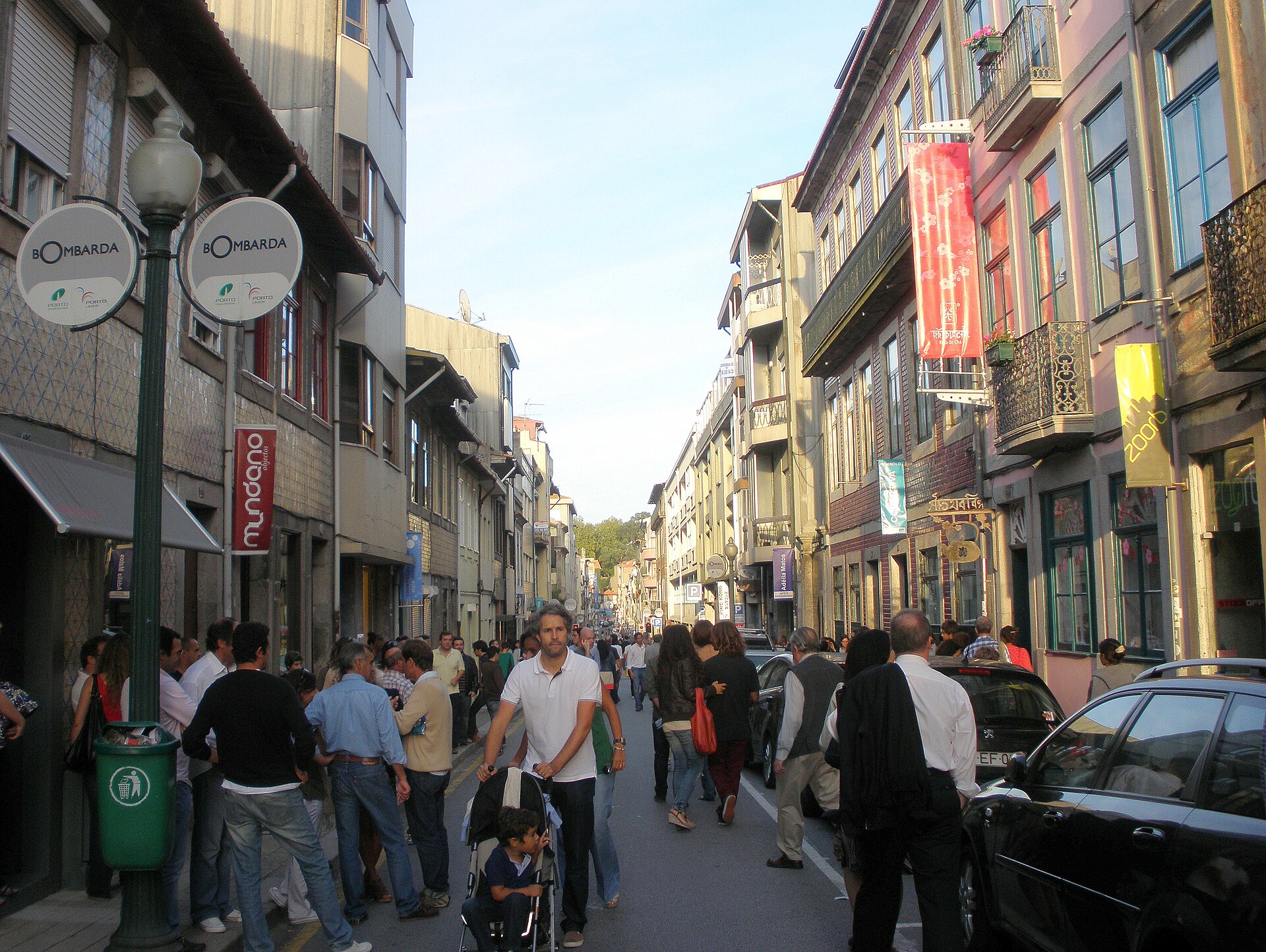
Rua de Miguel Bombarda is Porto's gallery district — a single street in the Cedofeita neighbourhood that's packed with contemporary art galleries, design studios, vintage shops, and creative spaces that make it the cultural counterpoint to the city's medieval heritage. On the first Saturday of every month, the galleries synchronise their openings for a street-wide vernissage that turns the road into an open-air art party. The street emerged as Porto's creative hub in the early 2000s when artists and gallerists moved into affordable spaces in what was then a quiet residential area. Now over a dozen galleries line the street, showing everything from established Portuguese artists to emerging international talent. The spaces range from white-cube galleries to converted warehouses, and the quality is genuine — several galleries represent artists who show at international fairs. Beyond the galleries, the street has developed the ecosystem that creative districts need — independent bookshops, a vinyl record store, design-forward homewares, and cafés where the coffee is taken as seriously as the art. The side streets around Bombarda are worth exploring too — street art appears on walls with the kind of quality that suggests commissioned work rather than graffiti, and the neighbourhood's mix of crumbling 19th-century buildings and creative renovation is Porto's gentrification story in miniature.
Rua de Santa Catarina
Rua de Santa Catarina, Porto
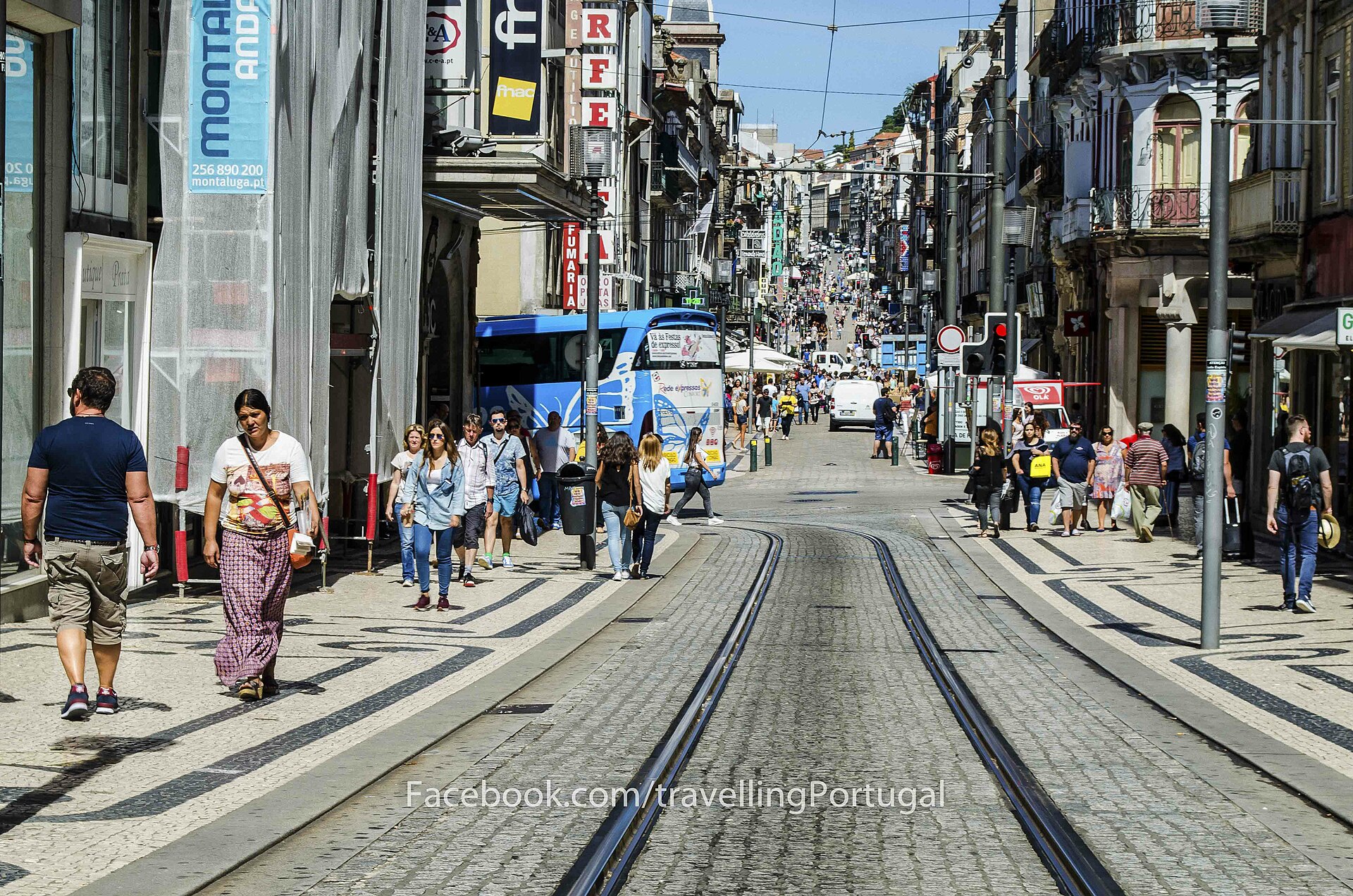
Santa Catarina is Porto's main shopping street — a long pedestrianised avenue running from Praça da Batalha to Marquês de Pombal that serves as the city's commercial spine and people-watching capital. It's where Porto comes to shop, stroll, meet friends, and demonstrate the Portuguese talent for making standing around with a coffee look like an art form. The architectural highlight is the Café Majestic at number 112 — a Belle Époque jewel from 1921 with carved wood panelling, ornate mirrors, and marble tables where J.K. Rowling reportedly wrote early chapters of Harry Potter while teaching English in Porto. The coffee is expensive by Porto standards and the tourists queue for photos, but the interior genuinely deserves the fuss. The rest of the street is a mix of international chains, traditional Portuguese shops, and the occasional azulejo-covered facade that reminds you this isn't just any high street. The Majestic is the anchor, but the real character is in the side streets. Duck into Rua de Passos Manuel for vintage shops and independent boutiques. Cross to Rua de Fernandes Tomás for the best pastéis de nata outside Lisbon. And keep an eye on the street performers — Santa Catarina attracts musicians, living statues, and the occasional spontaneous fado performance that stops traffic in the most Portuguese way possible.
São Bento Railway Station
Praça de Almeida Garrett, Porto
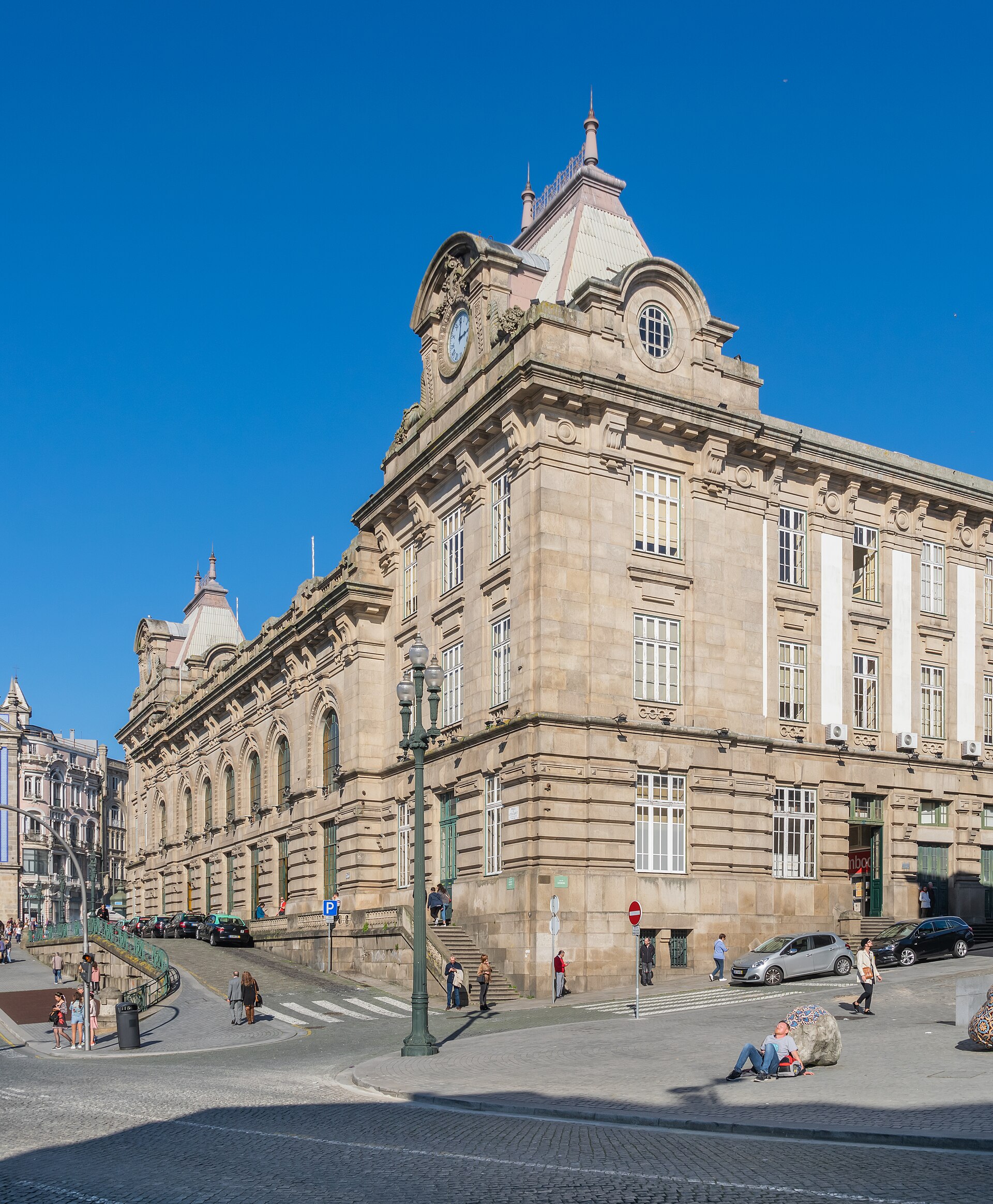
São Bento is a working railway station that doubles as one of the finest azulejo galleries in Portugal. The entrance hall is covered in approximately 20,000 hand-painted blue and white tiles, installed between 1905 and 1916 by artist Jorge Colaço, depicting scenes from Portuguese history — battles, royal processions, rural life, and the evolution of transport from horse to train. The station was built on the site of a Benedictine monastery (São Bento means Saint Benedict), and it opened in 1916 after 20 years of construction. The exterior is Beaux-Arts — grand, French-influenced, slightly pompous — but the interior is pure Portugal. The tiles tell stories with a cinematic sweep: the Battle of Valdevez in 1140, the arrival of King João I in Porto for his wedding, the conquest of Ceuta in 1415. Each panel is a masterclass in azulejo art, where a limited palette of blue on white creates depth, drama, and detail that rivals oil painting. The station is still very much in use — commuter trains depart from the platforms behind the tile hall — which means you can admire 20,000 tiles of national history while people rush past you to catch the 9:47 to Aveiro. It's free to enter, centrally located, and best photographed in the morning when the light from the upper windows hits the tiles at an angle that makes the blue glow.
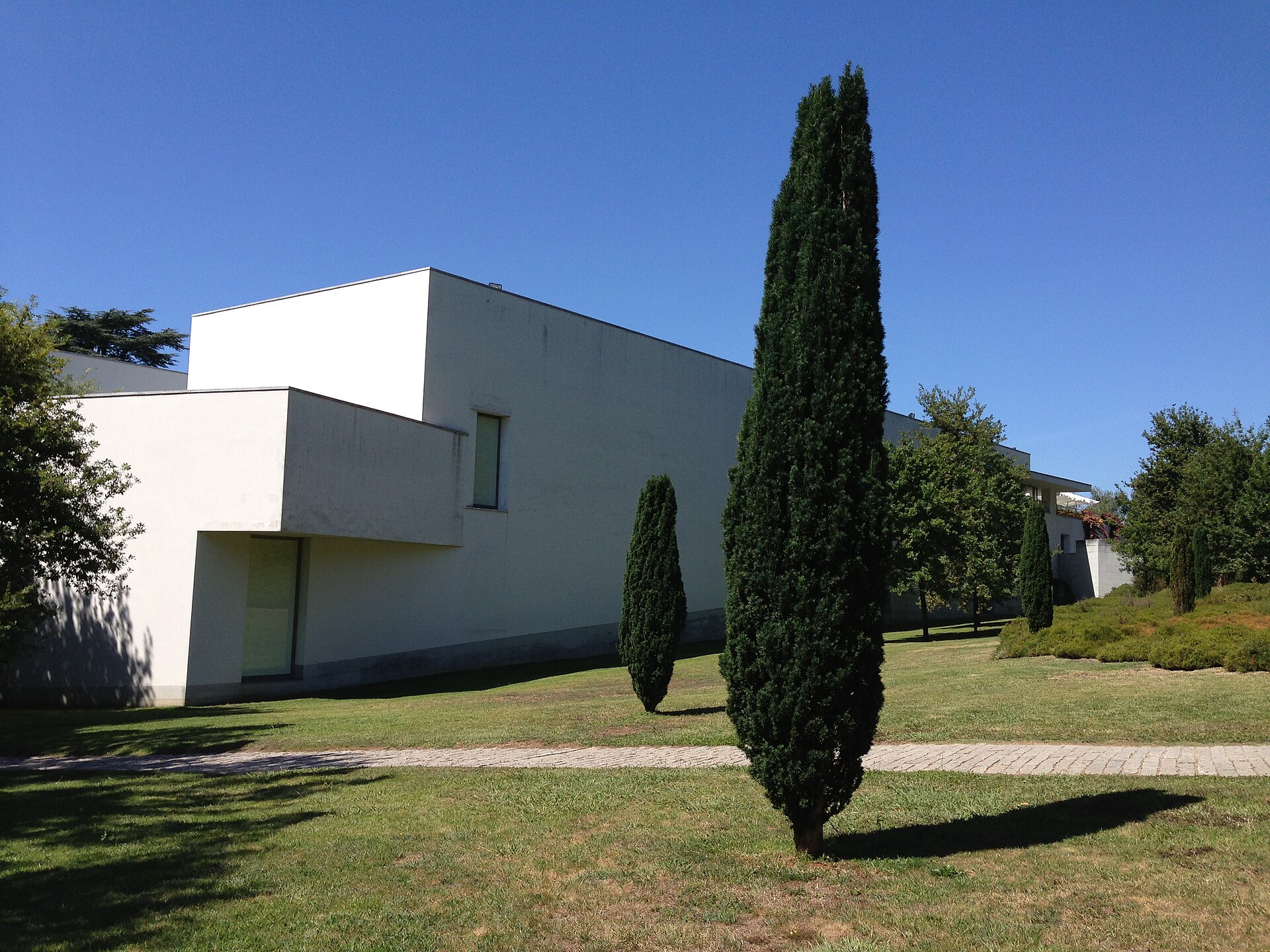
Serralves Museum & Park
Rua Dom João de Castro 210, Porto
Serralves is Porto's answer to having both world-class contemporary art and a park beautiful enough to make you forget you're in a city. The complex includes Álvaro Siza Vieira's white minimalist museum — one of Portugal's most important buildings — an Art Deco villa from the 1930s, and 18 hectares of gardens that range from formal terraces to wild forest paths along the Douro. Siza Vieira, Porto's greatest living architect and a Pritzker Prize winner, designed the museum as a series of clean white volumes that fold around courtyards and open onto garden views. The interior spaces are generous and flexible, hosting rotating exhibitions of international contemporary art that are consistently ambitious. The permanent collection includes works by major Portuguese and international artists, and the temporary programme brings shows from institutions like the Tate and Centre Pompidou. But the park is the real treasure. The Art Deco Casa de Serralves — a pink-and-cream villa built for a textile magnate in the 1930s — sits in gardens designed by French landscape architect Jacques Gréber, with geometric hedges, fountains, and a farm. Beyond the formal gardens, the estate dissolves into woodland paths that feel completely rural. Come for the art, stay for the walk, and end at the café on the terrace overlooking the gardens.
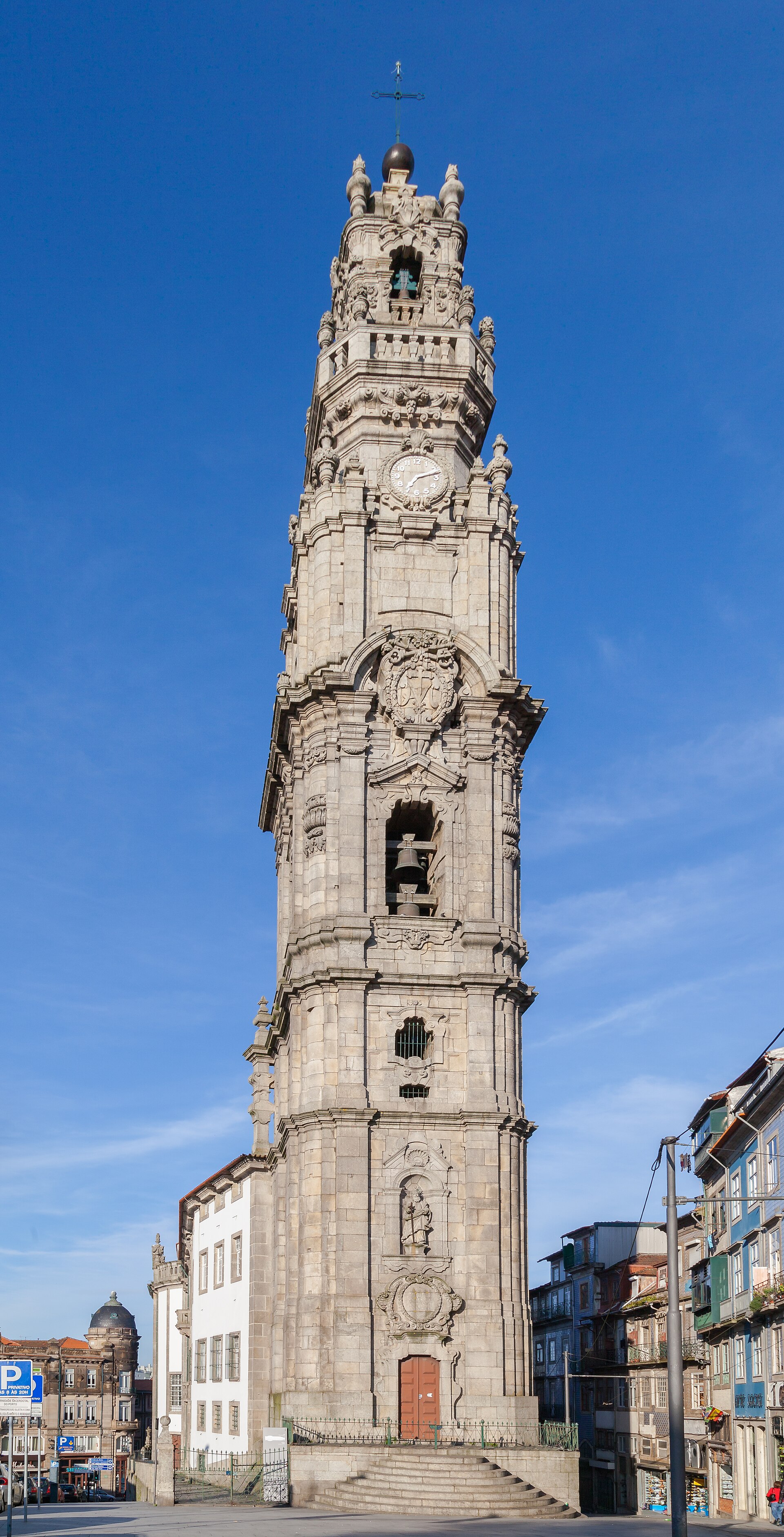
Torre dos Clérigos
Rua de São Filipe de Nery, Porto
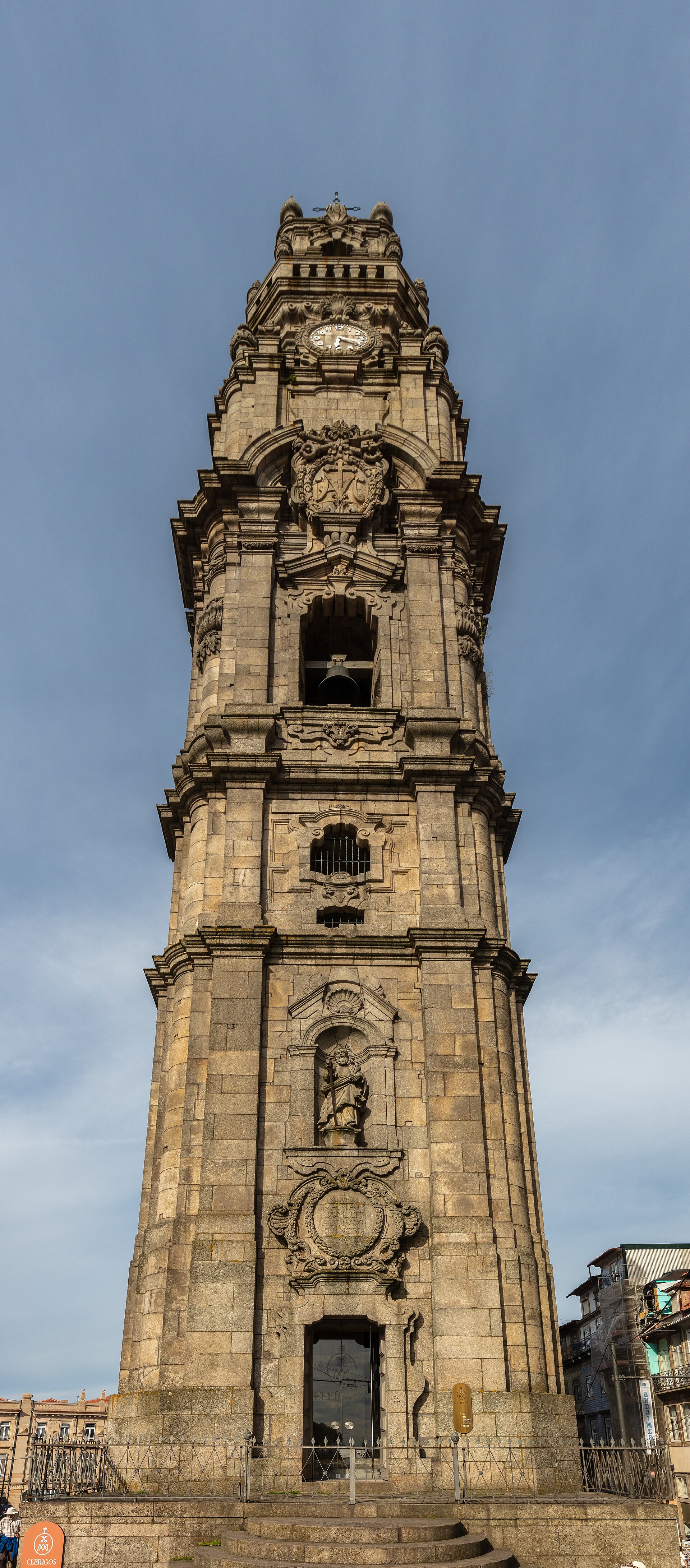
The Clérigos Tower is Porto's exclamation mark — a 76-metre Baroque bell tower that dominates the skyline and has been the city's most recognisable landmark since it was completed in 1763. Climb the 240 steps of the narrow spiral staircase and you'll be rewarded with a 360-degree view that explains Porto's geography better than any map: the river curving west to the ocean, the terracotta rooftops cascading down to the Ribeira, the port wine lodges across the water in Gaia. The tower was designed by Nicolau Nasoni, an Italian architect who essentially invented Porto's Baroque style. Nasoni was a painter who turned architect, and you can see the painter's eye in every detail — the tower narrows as it rises in a perspective trick that makes it appear taller than it is, and the ornamental stonework is as detailed as brushwork. He's buried in the church at the tower's base, which seems fitting for a man who defined the city's silhouette. The climb is not for the claustrophobic — the staircase tightens near the top and the final section is essentially a vertical tunnel with worn stone steps — but the view from the gallery is worth the cardiovascular investment. Come just before sunset when the city turns gold, or at night when the tower is illuminated and the lights of Porto spread below like a circuit board. The church interior, with its Baroque altarpiece and Nasoni's painted ceiling, is free and often overlooked by visitors focused on the climb.
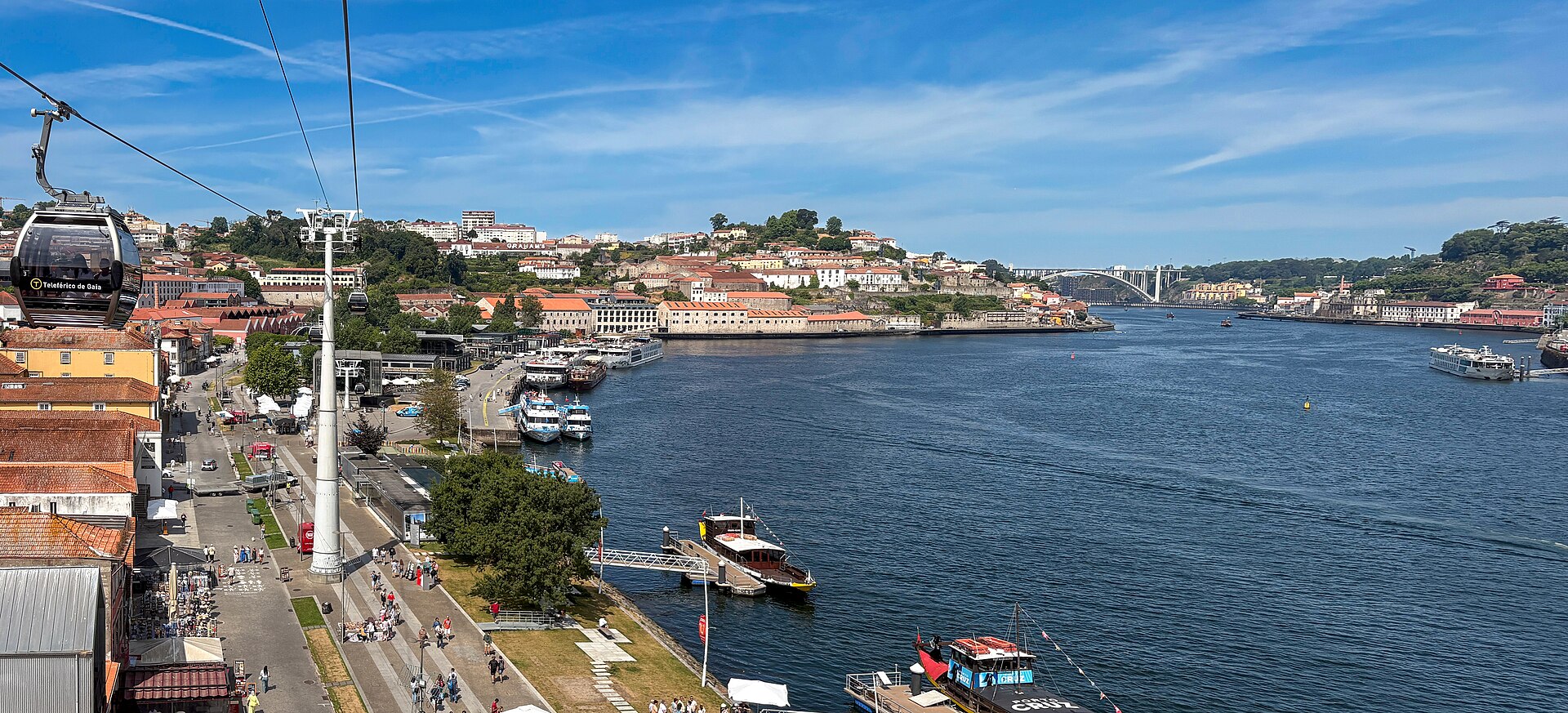
Vila Nova de Gaia Port Wine Lodges
Vila Nova de Gaia, Porto
Across the river from Porto, the south bank is lined with the lodges where port wine has been aged and stored since the 17th century. The names on the warehouses read like a roll call of British merchant families who came to Porto and never left — Taylor's, Graham's, Sandeman, Cockburn's — because port wine was essentially invented by the English, who added brandy to Portuguese wine to survive the sea voyage home and accidentally created something extraordinary. Most lodges offer tours and tastings, and the experiences range from casual (Sandeman's quick tour with a glass of tawny) to extravagant (Taylor's multi-vintage tasting in a terrace overlooking the city). The cellars are fascinating regardless of which you choose — vast, dark, cool warehouses stacked with barrels that have been sleeping for decades. Some of the oldest vintages have been ageing since the 19th century, and the angel's share — the wine that evaporates through the barrel — has stained the cellar walls and ceilings black with a fungus that feeds on alcohol vapour. The waterfront along the Gaia side has been transformed from working docks into a promenade of restaurants, bars, and tasting rooms. Walk uphill behind the lodges to the Jardim do Morro for a view back across the river to Porto's skyline that's especially good at sunset. The easiest way to get here is to walk across the upper deck of the Dom Luís I bridge and take the cable car down to the waterfront — a short ride that gives you an aerial view of the lodge rooftops and the river below.

Virtudes Garden & Viewpoint
Passeio das Virtudes, União das freguesias de Cedofeita, Santo Ildefonso, Sé, Miragaia, São Nicolau e Vitória, Porto, 4050-629, Portugal
Passeio das Virtudes is Porto's best-kept sunset secret — a terraced garden clinging to the hillside west of the old town with views across the Douro that rival any paid miradouro in the city. The difference is that instead of tourists with selfie sticks, you'll find university students with wine bottles, local couples on blankets, and the kind of relaxed atmosphere that paid viewpoints can never replicate. The garden descends the steep hillside in a series of stone terraces shaded by an enormous London plane tree — reputedly one of the oldest and largest in Portugal — whose canopy creates a natural amphitheatre overlooking the river. At sunset, the view west toward Foz and the Atlantic turns the river into molten copper, and the entire terrace fills with people doing what Portuenses do best: sitting outside with a drink and watching the light change. Virtudes is also the unofficial headquarters of Porto's young creative scene — the bars and studios in the surrounding streets cater to artists, musicians, and the kind of night owls who believe that the best things in a city happen after the tourist attractions close. The viewpoint is free, open all hours, and completely devoid of safety railings, which either adds to the thrill or is a civic liability depending on how much wine you've had.
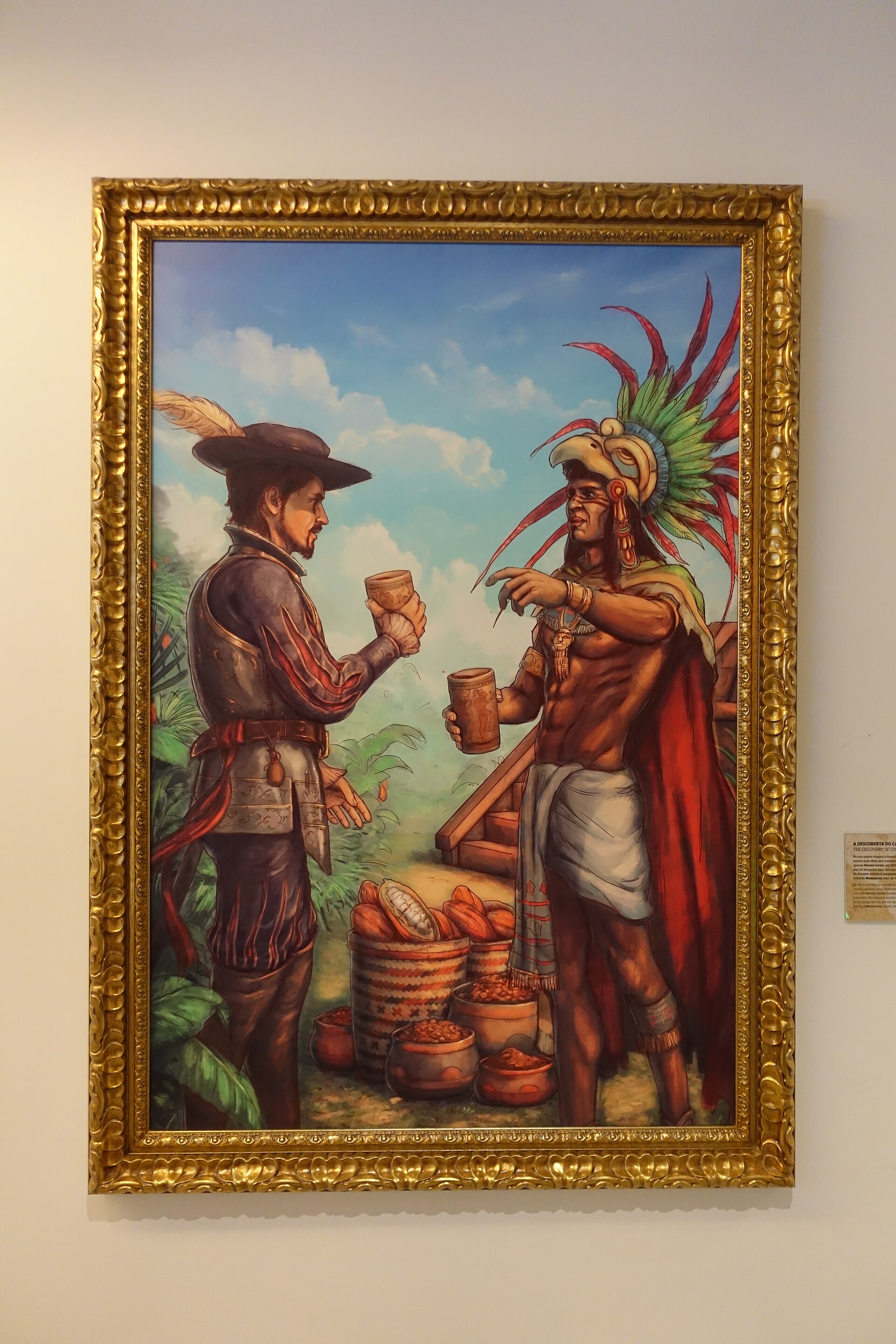
World of Discoveries (Museu Interativo)
106 Rua de Miragaia, União das freguesias de Cedofeita, Santo Ildefonso, Sé, Miragaia, São Nicolau e Vitória, Porto, 4050-387, Portugal
Porto was the city that launched the Age of Discovery — Henry the Navigator was born here, the caravels that reached India and Brazil were funded by Porto merchants, and the city's residents donated their best meat to provision the fleets (keeping only tripe for themselves, which is why they're still called tripeiros). This interactive museum tells that story with the kind of enthusiasm that makes you understand why a small country at the edge of Europe decided to sail to the other side of the world. The museum is structured as a journey — you literally board a small boat that drifts through recreated scenes of the Portuguese maritime expansion, from the African coast to India to Japan to Brazil. It's family-friendly and slightly theme-park-ish, but the historical content is solid, and the section on the spice trade — explaining how the desire for pepper, cinnamon, and cloves drove an entire civilization to cross oceans — puts everything in a context that dry history books often miss. The museum sits in the Miragaia neighbourhood, one of Porto's oldest quarters, on the riverfront between the Ribeira and Foz. The building itself — a former customs warehouse — has the kind of thick stone walls and vaulted ceilings that remind you this waterfront has been moving cargo since the Middle Ages.