The official name is Praça Dom Pedro IV, but nobody in Lisbon has called it that in centuries. This is the Rossio — the city's living room, its stage, and historically, its execution ground. For over 500 years, this square has been where Lisbon comes to argue, celebrate, protest, drink coffee, and occasionally watch people die. The Inquisition held public executions and autos-da-fé here. Bullfights were staged in the square until the 18th century. Today the most dangerous thing you'll encounter is the wavy black-and-white cobblestone pattern that has been making tourists dizzy since the 1840s.
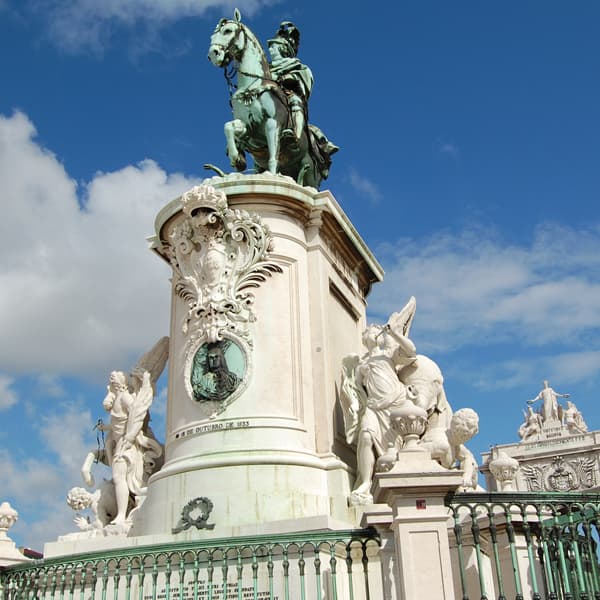
The distinctive calçada portuguesa — hand-laid limestone mosaic — was pioneered right here in Rossio and went on to become a Portuguese trademark exported to Brazil, Macau, and across the former empire. Each stone is cut and placed by hand, and the wave pattern is designed to evoke the sea. The column in the center holds a bronze statue of Pedro IV, though there's a persistent Lisbon legend that the statue is actually of Emperor Maximilian of Mexico and was purchased at a discount after his execution in 1867. Historians have debunked this, but Lisboetas enjoy the story too much to let facts get in the way.
The Rossio train station on the north side deserves a moment of appreciation. Its horseshoe-arched Neo-Manueline façade from 1890 looks like it belongs on a palace, not a commuter rail terminus. Inside, escalators descend to platforms that serve the Sintra line — one of the most beautiful commuter routes in Europe. The square's two baroque fountains were imported from France in 1890 and are popular gathering spots on warm evenings. The surrounding cafés, particularly the century-old Café Nicola, have been fueling Lisbon's literary and political conversations since well before the revolution.
Verified Facts
The distinctive wave-pattern calçada portuguesa cobblestones were pioneered in Rossio Square in the 1840s.
The Portuguese Inquisition held public executions and autos-da-fé in this square.
The Rossio train station features a striking Neo-Manueline façade from 1890 with horseshoe arches.
There is a persistent but debunked legend that the statue atop the column is of Emperor Maximilian of Mexico rather than Pedro IV.
Get walking directions
Praça D Pedro IV, Santa Maria Maior, Lisboa, 1150-320, Portugal