Walking Tours in Lisbon
Lisbon City Walk
A 3 km GPS-guided walk through the heart of Portugal. Visit Lisbon City Walk, Rua Augusta and the Baixa , From Rua Augusta to Praça da Figueira , and Praça da Figueira — with narrated stories at every stop.
Lisbon: Alfama — Fado, Tiles & the Castle
The ancient Moorish quarter that survived the earthquake — fado music born in these alleys, azulejo tiles on every wall, and the best viewpoints in the city.
Lisbon: Baixa to Chiado — Earthquake City
The city rebuilt from rubble — the 1755 earthquake that killed 50,000, a fire-scarred church kept as memorial, cherry liqueur since 1840, and the roofless convent.
Lisbon: Belém & the Age of Discovery
Walk the cradle of the Age of Discovery — from the Manueline splendour of Jerónimos Monastery and the Belém Tower on the Tagus to the Monument of the Discoveries and the custard tart that changed the world.
Lisbon: Fado, Tiles & the Seven Hills
Begin at the waterfront square where explorers set sail for the ends of the earth, climb through Alfama's labyrinthine lanes to the Moorish castle, hear fado drifting from a basement bar, ride a vintage tram, and understand how a tiny nation at the edge of the world built the largest empire of its time.
Lisbon: Mouraria & the Soul of Fado
Walk Lisbon's most layered neighbourhood — through the ancient Moorish quarter where fado was born, past the multicoloured tiles of Intendente, up through the hidden viewpoints of the Colina de Santana, and into the electric food scene of the Mouraria market.
30 Landmarks in Lisbon
Alfama District
Alfama, Lisboa
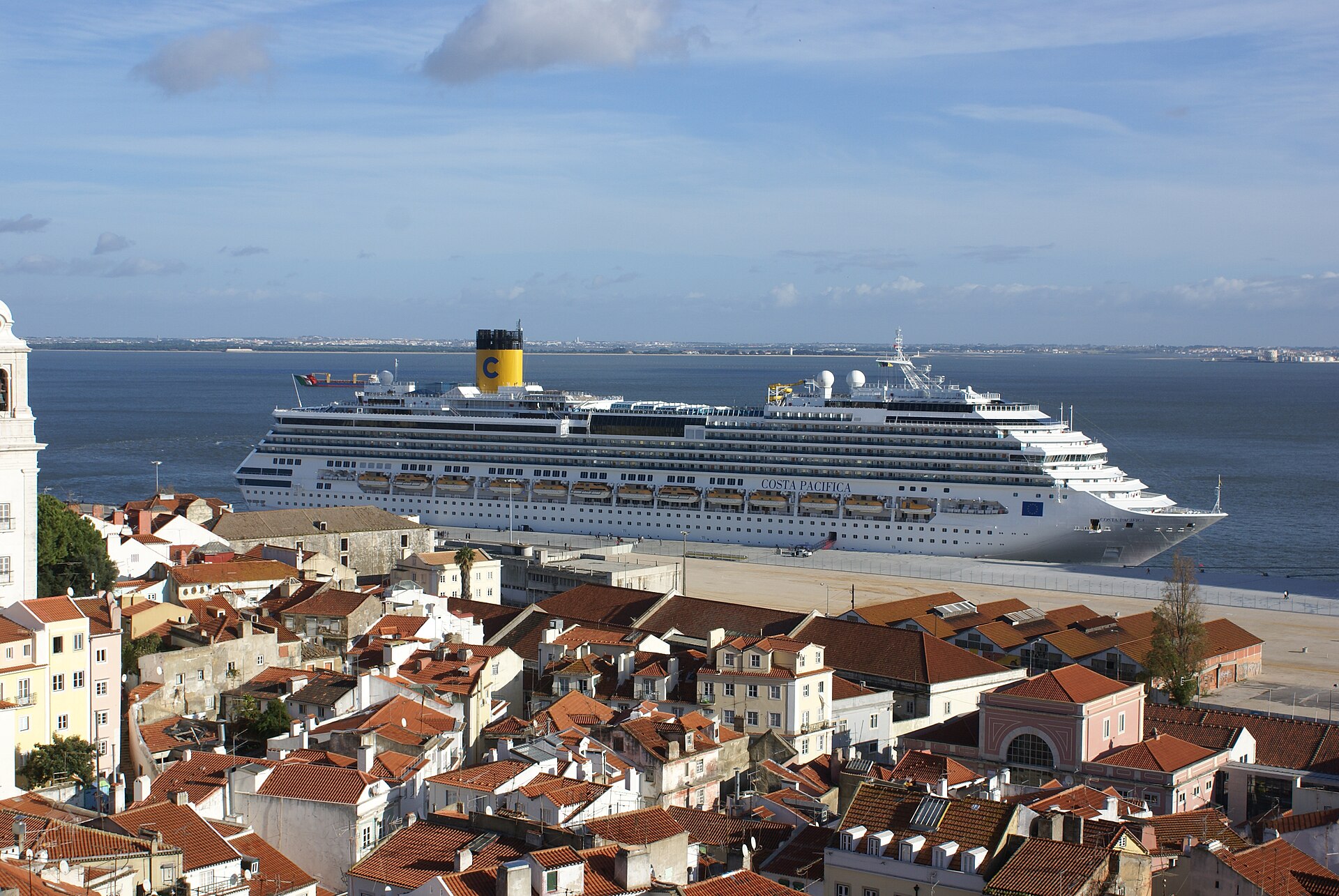
Alfama is the neighborhood that refused to die. When the 1755 earthquake flattened most of Lisbon, this tangled labyrinth of alleys clinging to the hillside below the castle barely flinched — its foundations were anchored directly into bedrock, and the narrow streets acted as natural firebreaks. So while the rest of the city was rebuilt on an Enlightenment grid, Alfama kept its medieval Moorish street plan. The name itself comes from the Arabic "al-hamma," meaning hot springs or baths, a reminder that this was once the heart of Moorish Lisbon, home to the city's wealthiest residents. After the Christian reconquest, the rich moved out and fishermen moved in. Alfama became a working-class village within a city. Walking through Alfama today is an exercise in productive disorientation. Streets dead-end into staircases, staircases lead to hidden courtyards, and every other doorway seems to leak the sound of fado — that mournful, Portuguese genre of music that was literally born in these streets. The neighborhood was once so notorious for crime and poverty that respectable Lisboetas wouldn't set foot here. Amália Rodrigues, the queen of fado, grew up in Alfama selling fruit on the street before becoming one of the most celebrated singers in Portuguese history. Her voice echoed through these alleys before it echoed through concert halls. Every June, Alfama transforms into the epicenter of the Santos Populares festivals, particularly the Festa de Santo António on the night of June 12th. Residents string sardine-scented bunting between buildings, set up grills on every corner, and the entire neighborhood becomes an open-air party fueled by cheap wine and charcoal-grilled sardines. It's one of the last genuine neighborhood festivals in a European capital — though gentrification and Airbnb are testing that claim year by year. The Feira da Ladra flea market has operated nearby since the 13th century, making it one of the oldest continuously running markets in Europe.
Arco da Rua Augusta
2 Rua Augusta, Santa Maria Maior, Lisboa, 1100-053, Portugal
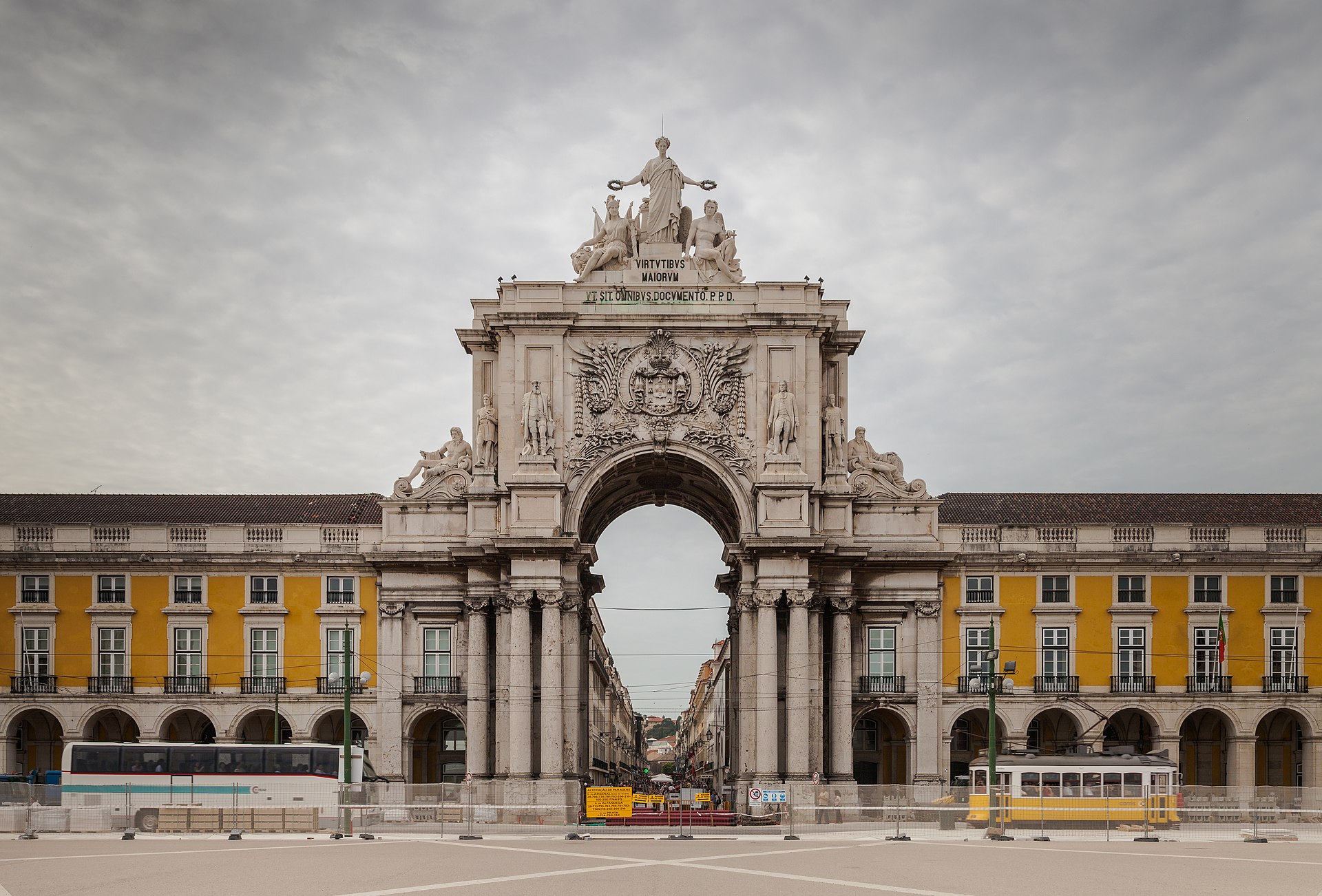
The Arco da Rua Augusta is the triumphal arch that took so long to build it forgot what it was triumphing over. Conceived in the immediate aftermath of the 1755 earthquake as a gateway to the rebuilt city, the arch was supposed to be a quick statement of resilience. Instead, the design was changed, abandoned, revived, and redesigned so many times that it wasn't completed until 1873 — over a century after the earthquake. By then, the trauma it was meant to commemorate had faded into history, and the arch became a monument to Portuguese stubbornness as much as Portuguese resilience. The final design, by architect Santos de Carvalho, is a grand neoclassical confection topped by a female figure representing Glory, crowning two smaller figures of Genius and Valor. Below them, statues of Vasco da Gama, the Marquis de Pombal, and other national heroes stand in niches. The whole composition faces south toward the river and the Praça do Comércio, framing the equestrian statue of King José I in its central opening. It's the kind of deliberate architectural staging that looks effortless but actually required over a hundred years of committee meetings. Since 2013, you can take an elevator inside the arch to a viewing platform at the top, and this might be the single best-kept secret in central Lisbon. The platform is tiny — maybe room for 20 people — and offers a bird's-eye view straight down the Rua Augusta pedestrian street, across the Praça do Comércio to the river, and up toward the castle. You're essentially standing on top of the letters of the inscription, close enough to touch the clock and the statues. The elevator entrance is through an unassuming door on the side of the arch that most people walk past without noticing. It costs a couple of euros and rarely has a queue, which in tourist-saturated Lisbon qualifies as a minor miracle.
Bairro Alto
Bairro Alto, Lisboa
By day, Bairro Alto is a sleepy grid of narrow streets where elderly residents hang laundry from wrought-iron balconies and cats doze in doorways. By night, it transforms into Lisbon's wildest party district, a transformation so complete it feels like the neighborhood has a split personality. The grid layout dates to the 16th century, when the Jesuits developed this hilltop area as a residential quarter — making it one of the first planned neighborhoods in Europe. The streets are just wide enough for a single car, which at night becomes just wide enough for a thousand people spilling out of bars with drinks in hand. The nightlife tradition here goes back decades, rooted in the alternative culture that flourished after the 1974 revolution. Bars like Portas Largas became gathering places for Lisbon's LGBTQ community, artists, and musicians during a period when the city was still shaking off decades of social repression under the Salazar and Caetano dictatorships. By the 1980s, Bairro Alto had become the undisputed heart of Lisbon nightlife — not because of any one venue, but because of the street itself. The tradition of drinking outside, hopping between tiny bars, and treating the entire neighborhood as one big open-air club is uniquely Bairro Alto. The area also has deep roots in printing and journalism. Portugal's first printing press was established nearby, and several of the city's most important newspapers operated from offices in these streets. The mix of fado houses, indie record shops, vintage boutiques, and traditional tascas (taverns) gives Bairro Alto a layered character that pure party districts lack. At 3 AM on a Saturday, you might step over someone's laundry that fell from a balcony into a puddle of beer, dodge a group of fado singers performing on a corner, and narrowly avoid a delivery scooter. It is chaotic and real and very, very Lisbon.
Castelo de São Jorge
Rua de Santa Cruz do Castelo, Santa Maria Maior, Lisboa, 1100-480, Portugal
Every civilization that conquered Lisbon started by taking this hill. The Phoenicians fortified it. The Romans expanded it. The Visigoths inherited it. The Moors turned it into a proper alcáçova — a fortified royal residence — and held it for over 400 years until 1147, when Afonso Henriques, Portugal's first king, besieged the place with the help of a ragtag army of English, Flemish, and German Crusaders who were technically just passing through on their way to the Holy Land. The siege lasted seventeen weeks. The Crusaders were promised loot. Lisbon got a king, and the castle got a new flag. What you see today is mostly a romantic reconstruction from the 1940s. The dictator Salazar had the castle rebuilt as a symbol of Portuguese national identity, tearing down the medieval neighborhood that had grown inside its walls and evicting hundreds of families to create a sanitized version of the past. The irony is thick: a dictator demolishing a living community to celebrate the birth of a nation. But the views are genuine and spectacular — from the ramparts you can see the entire city spilling down its seven hills to the Tagus, the red rooftops of Alfama below, and on clear days, the Serra da Arrábida across the river. Archaeological digs in the 1990s unearthed layers of occupation going back to the 7th century BC, including Iron Age remains, a Moorish-era residential quarter, and the ruins of the old royal palace where Portuguese kings lived until Manuel I moved to the waterfront in the early 1500s. There's a camera obscura in one of the towers that projects a live 360-degree image of the city onto a white dish — a low-tech parlor trick that somehow feels more magical than any smartphone. The resident peacocks roaming the gardens are descendants of birds introduced by the royal court, which means they've been strutting around this hilltop longer than most European dynasties.
Chiado
Chiado, Lisboa
Chiado is where Lisbon goes to feel sophisticated. Wedged between the Baixa grid and the Bairro Alto party zone, this elegant neighborhood has been the intellectual and cultural heart of the city since the 18th century. The poet Fernando Pessoa — Portugal's literary giant, a man who wrote under 72 different pen names and spent most of his life in Lisbon cafés — haunts this district literally and figuratively. A bronze statue of him sits outside his favorite haunt, the Café A Brasileira, at a table permanently reserved for a dead genius. Tourists line up to sit beside him, which Pessoa, a lifelong introvert, would have absolutely hated. The neighborhood's defining trauma was the great fire of 1988, which destroyed 18 buildings in the Rua do Carmo and Rua Garrett area, including the legendary Grandella department store. The reconstruction was entrusted to Álvaro Siza Vieira, Portugal's most celebrated architect and Pritzker Prize winner, who rebuilt the damaged blocks in a way that preserved the 18th-century facades while inserting modernist interiors. The result is a masterclass in sensitive urban repair — you can barely tell which buildings are original and which are Siza's reconstructions, which is exactly the point. Chiado is also home to the Livraria Bertrand, which Guinness World Records recognizes as the oldest operating bookshop in the world, founded in 1732. It survived the earthquake (barely) and the fire (also barely) and continues selling books in a warren of small rooms connected by archways. The Teatro Nacional de São Carlos, Lisbon's opera house, was built in 1793 as a direct copy of the San Carlo in Naples and offers opera tickets at prices that would make Milan weep. Between the bookshops, the cafés, the opera, and the ghosts of poets, Chiado is Lisbon's most concentrated dose of old-world culture in a remarkably walkable package.
Convento do Carmo
Santa Maria Maior, Lisboa, Portugal
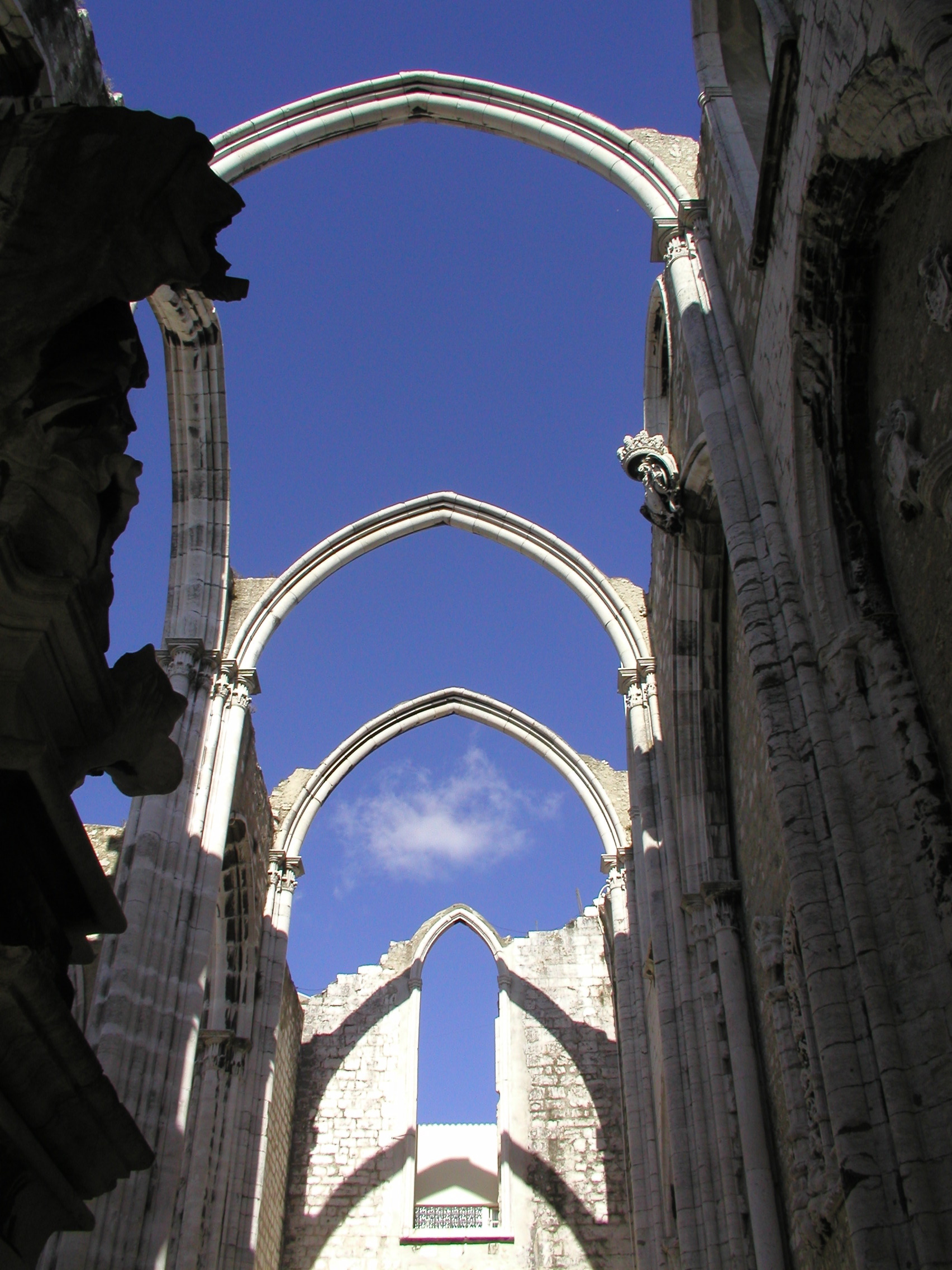
Most ruins get rebuilt. These were kept broken on purpose. The Convento do Carmo was once the largest Gothic church in Lisbon, built starting in 1389 by Nuno Álvares Pereira, the military commander who secured Portuguese independence at the Battle of Aljubarrota. He spent his final years here as a monk, and the church became one of the most important religious houses in the city. Then came All Saints' Day, 1755. The congregation was packed inside for morning mass when the earthquake struck. The roof collapsed, killing nearly everyone beneath it. After the disaster, there was talk of rebuilding. Pombal's new city plan could have restored the church to its former glory. Instead, Lisbon made the unusual decision to leave the nave roofless — a permanent scar in the cityscape, open to the sky. The Gothic arches still stand, framing clouds and blue sky where vaulted ceilings once were. It's one of the most haunting spaces in any European city: a church that became its own memorial without anyone having to add a plaque or a monument. Rain falls on the nave floor. Pigeons nest in the capitals. The silence inside has a quality you don't find in intact buildings. The convent also played a starring role in the most dramatic moment of modern Portuguese history. On April 25, 1974, the headquarters of the GNR (National Republican Guard) was located here, and it was where Marcelo Caetano, the dictator who succeeded Salazar, made his last stand during the Carnation Revolution. Captain Salgueiro Maia surrounded the building with tanks and negotiated Caetano's surrender. The dictator agreed to hand power to General Spínola rather than to "the rabble in the street." Today a small archaeological museum occupies the surviving chapels, housing pre-Columbian mummies, medieval tombs, and Roman artifacts — a grab bag of history in a building that is itself the most eloquent artifact of all.
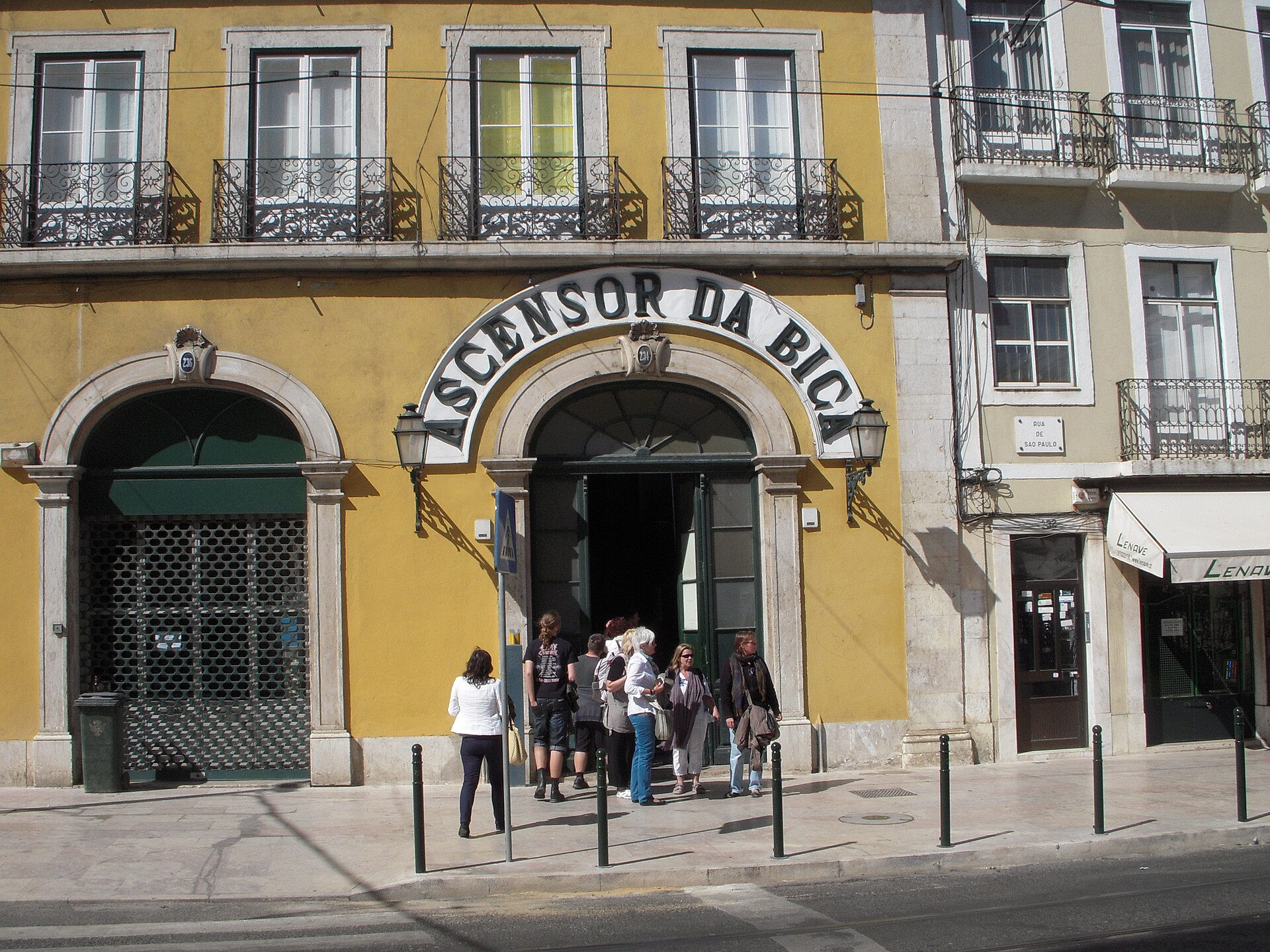
Elevador da Bica
234 Rua de São Paulo, Misericórdia, Lisboa, 1200-430, Portugal
The Elevador da Bica is arguably the most photographed street in Lisbon, and it isn't even really an elevator — it's a funicular, a cable-pulled tram that hauls itself up one of the steepest streets in the city. The Bica funicular has been climbing the Rua da Bica de Duarte Belo since 1892, connecting the riverside Cais do Sodré neighborhood with the São Paulo area above. The gradient is punishing — roughly 1:4 in places — and watching the tiny yellow car grind its way up the narrow street, framed by pastel-colored buildings and draped laundry, is one of those Lisbon moments that makes you reach for your camera even if you swore you wouldn't be that tourist. Originally powered by a water counterbalance system (a tank under the descending car was filled with water to help pull the ascending car up), the Bica switched to steam in 1896 and finally to electric power in 1914. The funicular was classified as a National Monument in 2002, which means the city is obligated to maintain it even though it would be far cheaper to just build steps. The cars hold about 25 passengers each, and the ride takes approximately three minutes — possibly the most scenic three minutes in Lisbon public transit, which is saying something for a city where the bus routes cross medieval bridges and the metro stations are art galleries. The street itself has become a destination independent of the funicular. During warm evenings, locals and tourists perch on the steep steps alongside the tracks, drinking beer from the corner shops and watching the sunset paint the river pink through the gap between buildings at the bottom of the street. It's a spontaneous gathering that nobody organized but everybody knows about. The area around the lower station, Cais do Sodré, has transformed from Lisbon's red-light district into its trendiest nightlife zone — a transition that took roughly two decades and is still visibly incomplete, which is part of the charm.
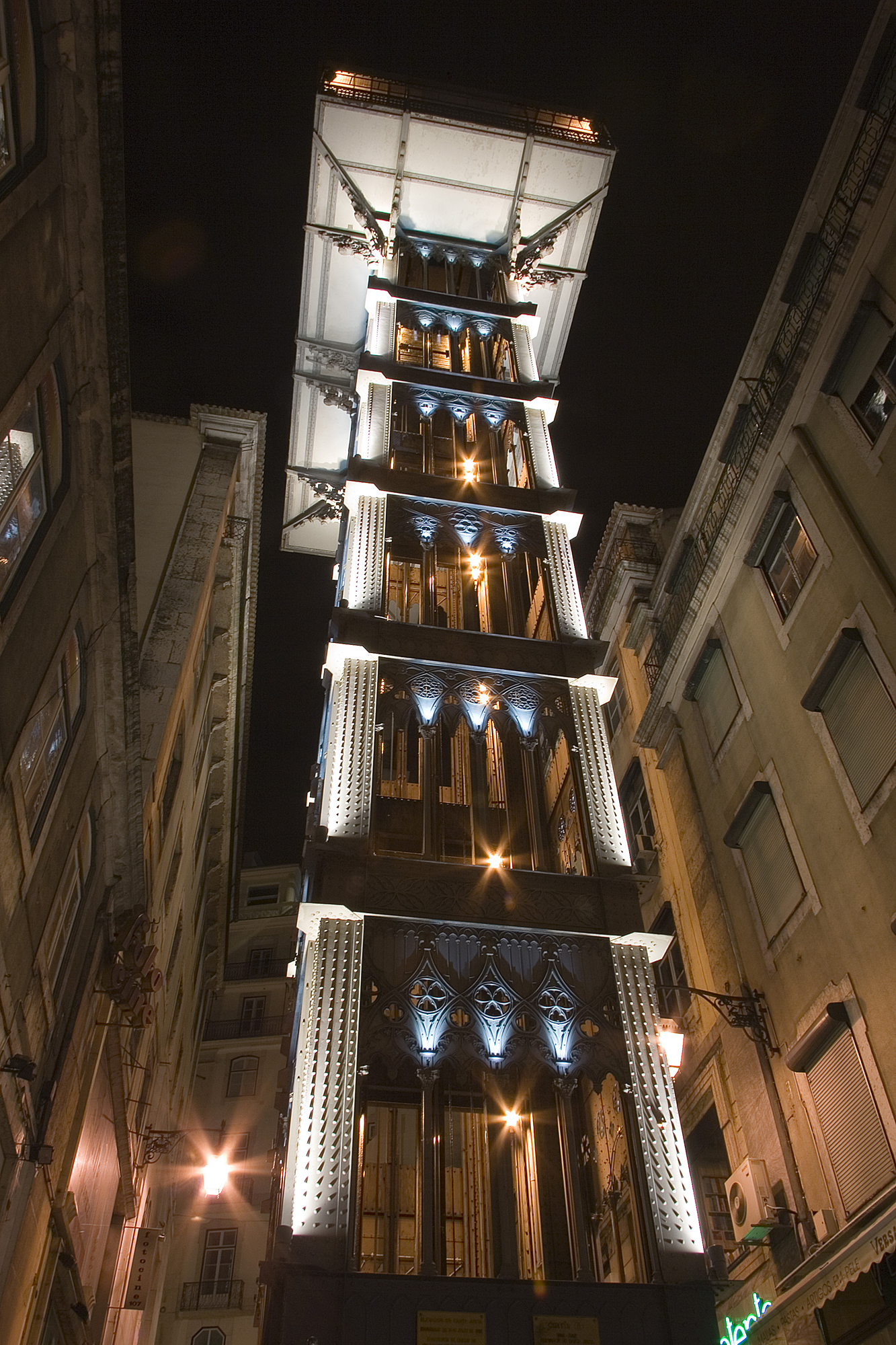
Elevador de Santa Justa
Arroios, Lisboa, 1150-060, Portugal
In a city obsessed with navigating its hills, someone in 1902 decided the solution was a 45-meter iron tower with a steam-powered elevator inside it, planted right in the middle of downtown. The Elevador de Santa Justa is the most gloriously over-engineered piece of urban transport in Europe. Designed by Raoul Mesnier du Ponsard, a Portuguese engineer of French descent who studied under a student of Gustave Eiffel, the lift connects the low-lying streets of the Baixa with the elevated Largo do Carmo — a height difference that would otherwise require a punishing climb through winding backstreets. The neo-Gothic iron lacework is exquisite and entirely unnecessary for a practical lift. Du Ponsard clearly wanted to build something beautiful rather than merely functional, and the result looks like a miniature Eiffel Tower that got lost and ended up in Lisbon. Originally powered by steam, the elevator was converted to electric operation in 1907. Two wooden cabins, each holding about 24 passengers, shuttle up and down inside the tower, depositing riders onto a walkway that connects to the ruins of the Carmo Convent. There's a spiral staircase to a viewing platform at the very top, which costs extra and is absolutely worth it — the views over the Baixa grid and up to the castle are exceptional. Here's the local secret: you don't actually need to pay for the elevator. A discreet entrance at the top, through a doorway near the Carmo Convent, lets you access the upper walkway and viewing platform using a regular Viva Viagem transit card — the same one you'd use on the metro. The elevator sees about 3,000 riders per day and queues can stretch for an hour, but the back entrance is rarely crowded. The tower was declared a National Monument in 2002, exactly one century after it first started lifting Lisboetas above their own geography.
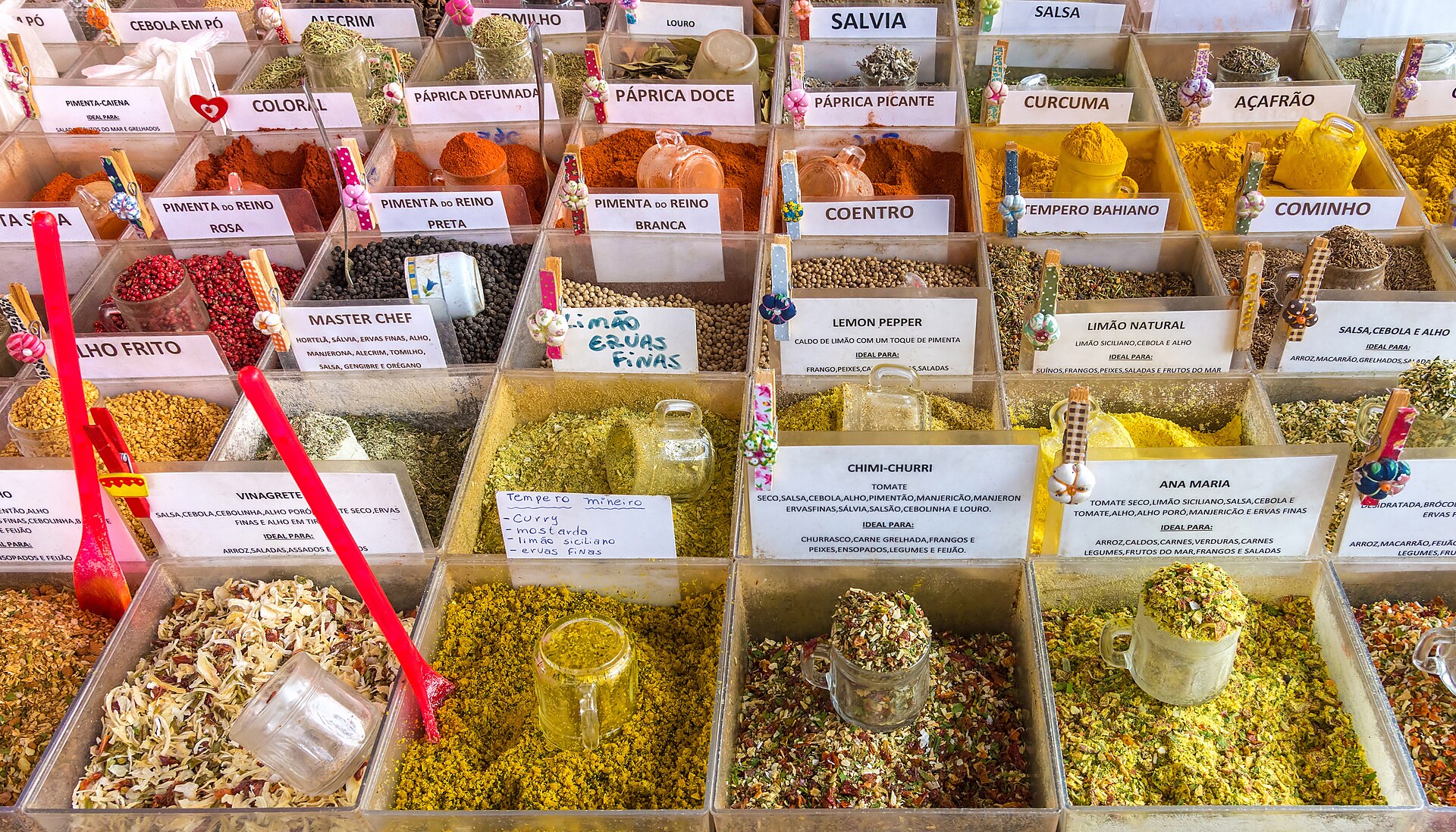
Feira da Ladra
Campo de Santa Clara, São Vicente, Lisboa, 1100-472, Portugal
The name translates roughly as "Thief's Market," which either refers to the fact that you might find your stolen goods on sale here, or that the vendors will steal from you with their prices — interpretations vary by century. The Feira da Ladra is Lisbon's flea market, held every Tuesday and Saturday in the Campo de Santa Clara, and it has been operating in various locations around the city since at least the 13th century. That makes it one of the oldest continuously running markets in Europe, predating most of the countries that currently exist on the continent. The market sprawls across the sloping square in front of the Panteão Nacional, and the inventory reads like an archaeological dig through Portuguese domestic life. You'll find colonial-era ceramics from Macau, azulejo fragments salvaged from demolished buildings, vintage fado records, military medals from wars nobody remembers, antique doorknobs, used dentures (genuinely), stacks of yellowing postcards from the Estado Novo era, and enough secondhand clothing to dress a small army. The serious antique dealers set up at the top of the hill with proper tables and reasonable prices. The chaos increases as you descend, until the bottom resembles a jumble sale organized by a tornado. Bargaining is expected but not aggressive — this isn't a souk. A gentle counter-offer and a shrug will get you further than theatrics. The best strategy is to arrive early on Saturday, when the selection is deepest and the professionals are cherry-picking before the tourists wake up. The surrounding neighborhood, São Vicente, is one of Lisbon's least touristy quarters, and the cafés around the market serve strong coffee and pastéis de nata at prices that downtown forgot years ago. After the market, walk five minutes to the Miradouro da Graça for a view that costs nothing and is worth considerably more.
Igreja de São Roque
Rua da Misericórdia, Misericórdia, Lisboa, 1200-273, Portugal
From the outside, the Igreja de São Roque looks like nothing — a plain, beige facade that most visitors walk past without a second glance. This is one of the greatest architectural bait-and-switches in Europe. Step inside and your jaw drops: the ceiling is a trompe l'oeil masterpiece that appears to be a three-dimensional barrel vault but is actually a flat painted surface. It was created by Francisco Venegas in the late 16th century and is one of the earliest examples of this technique on the Iberian Peninsula. The church was the first Jesuit church in the Portuguese world, established in 1553, and the Jesuits clearly believed in surprise as a conversion tool. But the real showstopper is the Chapel of St. John the Baptist, the fourth chapel on the left. King João V commissioned it from Italian architects Luigi Vanvitelli and Nicola Salvi (yes, the man who designed the Trevi Fountain) in the 1740s. The chapel was built entirely in Rome, blessed by the Pope, then dismantled, shipped to Lisbon in three ships, and reassembled here. It is encrusted with lapis lazuli, amethyst, alabaster, Carrara marble, gold, silver, and ivory. At the time of its construction, it was reportedly the most expensive chapel in the world — a title it may still hold. The mosaic panels, which look like oil paintings, are actually made of tiny stones assembled in Rome with a precision that borders on obsessive. The adjacent museum houses one of the finest collections of Italian Baroque sacred art outside Italy, along with vestments embroidered with gold thread so fine they look like paintings on fabric. The whole experience — the deceptive exterior, the theatrical interior, the insane opulence of one chapel — encapsulates something essential about Portugal: a small country that punched far above its weight and spent the proceeds with spectacular excess.
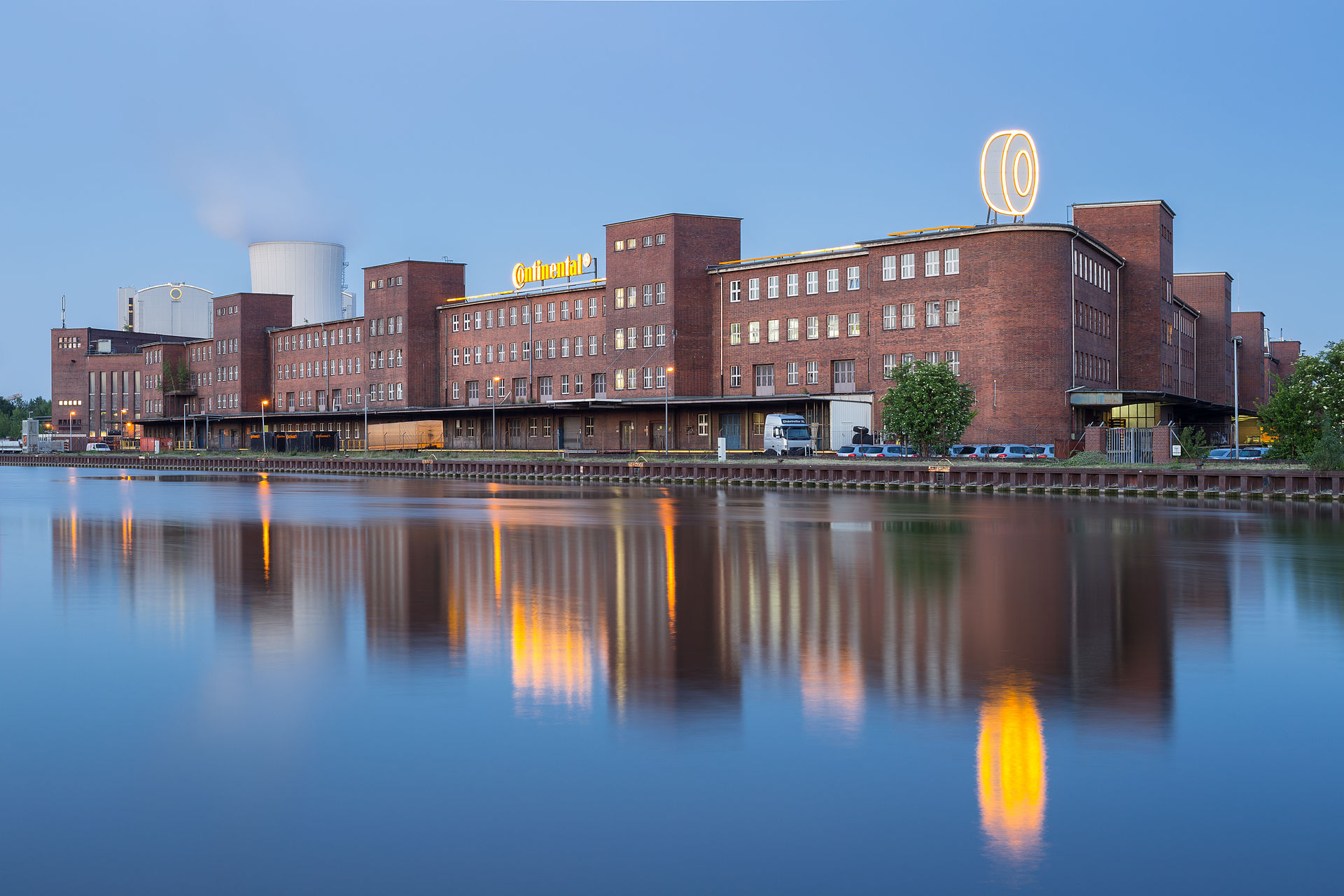
LX Factory
103 Rua Rodrigues Faria, Alcântara, Lisboa, 1300-501, Portugal
Underneath the Ponte 25 de Abril, in the shadow of a bridge that looks like it was stolen from San Francisco, sits a former industrial compound that has become Lisbon's answer to the creative reuse movement. LX Factory occupies the bones of a 19th-century textile factory and printing complex — Companhia de Fiação e Tecidos Lisbonense, founded in 1846, once employed over a thousand workers here. Later it became the printing facility for the newspaper Diário de Notícias. When the presses stopped in the early 2000s, the buildings sat empty until a development company decided that the best thing to do with an abandoned factory under a motorway bridge was absolutely nothing structural — just let creative people move in. Since 2008, the complex has filled with independent bookshops, design studios, vintage clothing stores, tattoo parlors, coworking spaces, and restaurants that seem to multiply every year. The standout is Ler Devagar, a bookshop housed in a former printing warehouse where a full-size bicycle hangs from the ceiling and books are stacked on shelves that climb three stories high. It's been named one of the world's most beautiful bookshops, which is impressive for a place that still has ink stains on the concrete floor. What saves LX Factory from being just another gentrified industrial space is its rough edges. The walls are covered in street art that nobody curates or preserves — it just gets painted over with new work. The Sunday market brings out vintage dealers, food trucks, and DJs spinning vinyl on turntables set up between loading docks. The complex sits directly below the bridge, so every few minutes the shadows shift and the rumble of traffic overhead becomes part of the ambient soundtrack. It feels temporary, which is part of the appeal — this is Lisbon's creative class making the most of a space before the inevitable luxury condos arrive.

MAAT
Avenida de Brasília, Alcântara, Lisboa, 1300-598, Portugal
MAAT looks like a stingray made of ceramic tiles that decided to beach itself on the banks of the Tagus. Opened in 2016, the Museum of Art, Architecture and Technology was designed by London-based architect Amanda Levete, and its undulating, gleaming white form is the most dramatically contemporary building in a city that mostly looks like it stopped building things in the 19th century. The roof is walkable — a gentle slope that rises from the riverside promenade to a crest offering panoramic views of the river and the bridge, which is exactly the kind of architectural trick that Instagram was invented for. The building's skin is made of 15,000 three-dimensional ceramic tiles, a deliberate nod to Portugal's azulejo tradition translated into 21st-century form. Each tile is slightly angled to catch the light differently throughout the day, creating a surface that shimmers and shifts like water. The museum is part of the EDP Foundation campus, which also includes the beautifully converted Tejo Power Station next door — a massive brick industrial building from 1908 that now hosts large-scale art installations in its former turbine halls. Walking between the two buildings feels like crossing a century in fifty steps. Inside MAAT, the exhibitions rotate frequently and tend toward the experimental — expect video art, interactive installations, and shows that blur the line between art, science, and technology. The building's interior is as fluid as its exterior, with curved galleries that flow into each other without conventional walls or rooms. The permanent collection is thin, but the temporary shows are often excellent and occasionally bewildering, which is probably the correct ratio for a contemporary art museum. The riverside terrace café is a lovely spot for coffee, and admission to the roof is free, which means you can experience the best part of the building — its relationship with the river and the sky — without paying a euro.

Miradouro da Graça
São Vicente, Lisboa, Portugal
The Miradouro da Graça sits in front of the Igreja da Graça, a church that the Augustinian monks built in 1271 and that has been rebuilt so many times after earthquakes, fires, and general Portuguese drama that almost nothing original remains. But nobody comes here for the church. They come for the pine-shaded terrace, the kiosk bar selling cold Super Bock, and a view that rivals any in Lisbon without the crowds of more famous viewpoints. The castle sits at eye level to the east, the Ponte 25 de Abril streaks across the western horizon, and the Tagus fills the space between like a silver highway. This is Lisbon's neighborhood viewpoint — the one where locals actually go. On weekend afternoons, the benches fill with families, couples, students with guitars, and elderly men arguing about football. There's a kiosk café with outdoor seating where you can get a coffee or a glass of wine for a fraction of what you'd pay at a tourist-facing miradouro. The Graça neighborhood itself is one of Lisbon's most authentic — traditionally working-class, slowly gentrifying, but still a place where you'll see more laundry lines than boutique hotels. The best time to be here is late afternoon, when the light softens and the city below starts to glow amber. On June evenings during the Santos Populares festivals, the terrace fills with people eating grilled sardines and drinking cheap wine while watching fireworks pop over the Tagus. The Tram 28 terminates nearby at the Graça loop, and watching the driver reverse the tram's seat backs for the return journey is one of those small Lisbon rituals that reminds you how analog this city still is in an increasingly digital world. The miradouro is also the starting point for one of the best downhill walks in the city — through Graça, past the castle walls, and down into the warrens of Alfama.
Miradouro da Senhora do Monte
Largo do Monte, São Vicente, Lisboa, 1170-253, Portugal
Lisbon is a city of viewpoints — miradouros, they call them — and every guidebook has its favorite. Most tourists end up at Santa Luzia or Portas do Sol, which are beautiful but increasingly feel like Instagram staging areas. The Miradouro da Senhora do Monte, the highest viewpoint in the city, requires a steep climb through the Graça neighborhood that thins out the crowds considerably. By the time you reach the small chapel and pine-shaded terrace at the top, you're mostly alone with a handful of locals and their dogs. From here, the panorama is genuinely complete: the castle sits below you (one of the only viewpoints where you look down on São Jorge), the Tagus estuary stretches to the horizon, the Ponte 25 de Abril glows red in the distance, and the entire cityscape of domes, bell towers, and terracotta roofs unfolds like a pop-up book. At sunset, the light turns the white limestone buildings pink and gold, and you suddenly understand why Lisbon has been inspiring poets and painters for centuries. The small 16th-century Chapel of Nossa Senhora do Monte sits at one end of the terrace and is said to help pregnant women with difficult births — a belief that has made the chapel's stone chair one of the most-rubbed pieces of furniture in Portugal. This is also one of the few viewpoints that stays magical after dark. The castle lights up, the bridge becomes a string of headlights over black water, and the city hums below in a way that feels both enormous and intimate. Unlike the more famous miradouros, there's no café here, no souvenir stalls, no tuk-tuk drivers idling at the entrance — just the view, the pines, and the faint sound of fado drifting up from Alfama. Lisboetas consider this their secret, which is increasingly less secret, but still worth the climb.
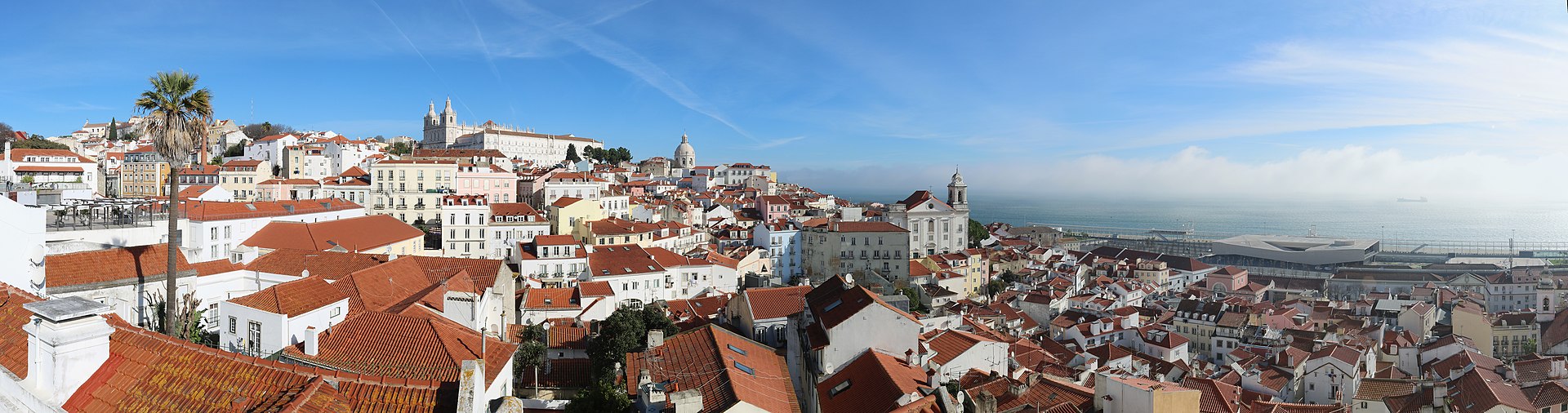
Miradouro de Santa Luzia
Largo de Santa Lúzia, Santa Maria Maior, Lisboa, 1100-487, Portugal
Of all Lisbon's miradouros, Santa Luzia is the prettiest one you'll actually find without getting lost. Perched on the edge of Alfama with views over the terracotta rooftops to the Tagus, this bougainvillea-draped terrace feels like it was staged for a film set — and in fact, it has been used in several movies and countless wedding photo shoots. Two azulejo panels on the wall of the adjacent church tell stories worth pausing for: one depicts the Praça do Comércio before the 1755 earthquake, and the other shows Christian knights attacking the Castelo de São Jorge during the 1147 siege. The terrace sits beside the tiny Church of Santa Luzia and São Brás, whose exterior walls are covered in decorative tiles that are slowly crumbling in the most photogenic way possible. Below the viewpoint, the rooftops of Alfama cascade downhill in a jumble of red tiles, satellite dishes, and laundry lines that hasn't changed much in concept since medieval times, even if the details have. Container ships slide past on the river, looking improbably large against the old city. On quiet mornings, before the tour groups arrive, you might hear a rooster crowing somewhere in Alfama — one of the last European capital neighborhoods where that's still a plausible sound. The terrace has become so popular that the city installed a pergola with climbing vines to provide shade, and local artists sometimes set up easels here. There's no café on the terrace itself, but several small bars on the adjacent Largo das Portas do Sol serve ginjinha — sour cherry liqueur — in chocolate cups, which is exactly the kind of unnecessary flourish that makes Lisbon irresistible. The viewpoint is a regular stop on the Tram 28 route, which means every few minutes a yellow tram squeals around the corner and temporarily photobombs the panorama.
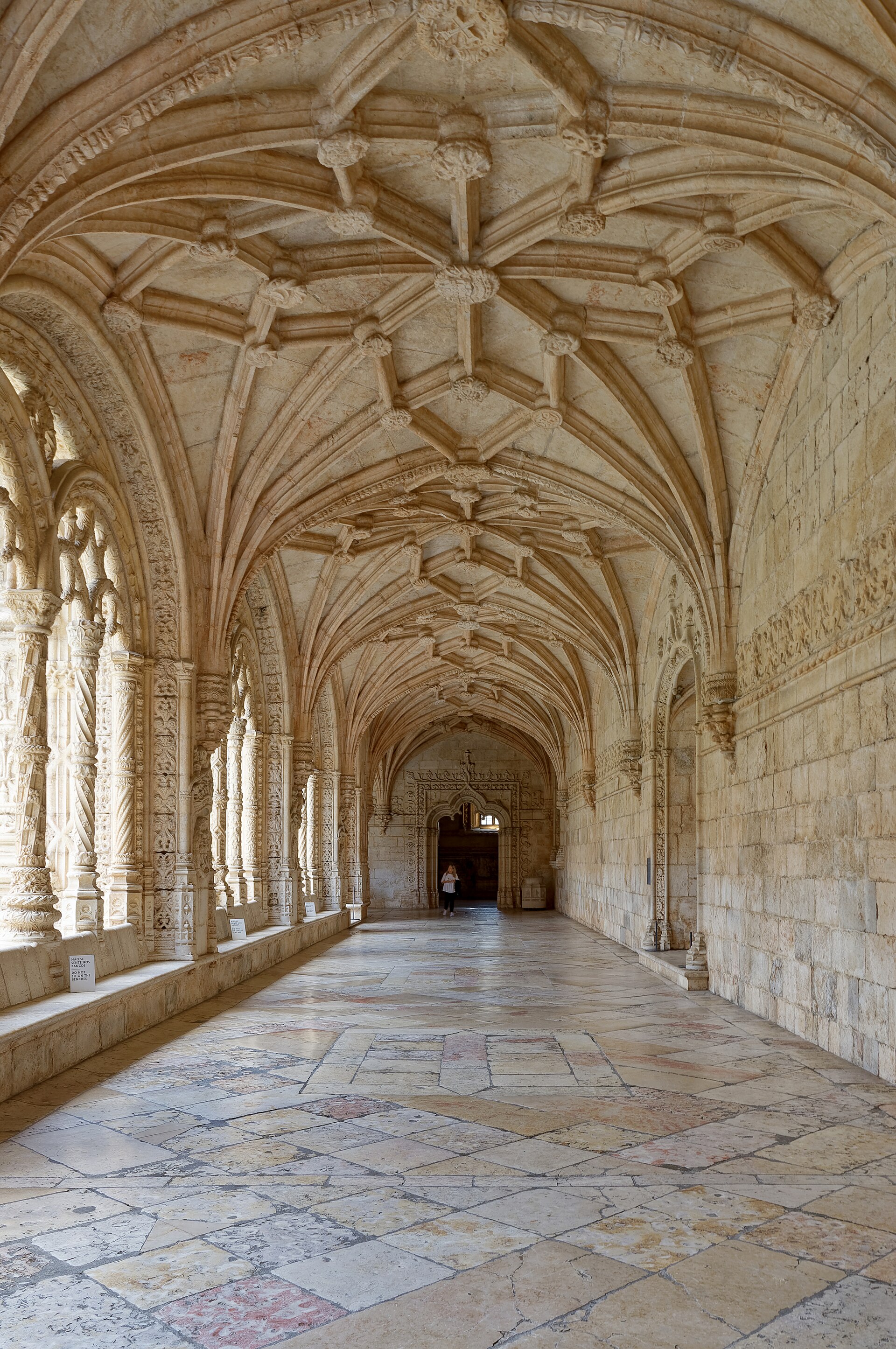
Mosteiro dos Jerónimos
Praça do Império, Belém, Lisboa, 1400-206, Portugal
If Portugal had a trophy case, this monastery would be the centerpiece. Commissioned by King Manuel I in 1501 to celebrate Vasco da Gama's successful voyage to India, the Jerónimos Monastery took nearly a hundred years to complete — and it shows, in the best possible way. The building is a masterclass in Manueline architecture, that uniquely Portuguese style where Gothic ambition collides with nautical obsession. Every surface is carved with ropes, anchors, coral, and exotic plants that the explorers brought back from distant shores. It's as if the entire Age of Discovery was compressed into limestone. The money came from spices. Specifically, a 5% tax on all the pepper, cinnamon, and cloves pouring into Lisbon from the East. At the height of the spice trade, this represented such absurd wealth that Manuel could afford to employ master builder Diogo de Boitaca and later the brilliant João de Castilho, who turned the south portal into what many consider the finest piece of stone carving in all of Europe. Inside, the church shelters the tombs of Vasco da Gama and Luís de Camões, Portugal's national poet — placed on opposite sides of the nave in a symbolic embrace of action and art that the Portuguese find deeply meaningful. The monastery survived the 1755 earthquake almost completely intact, which locals took as a divine sign. While most of Lisbon crumbled, the monks here barely felt a tremor. The cloisters are staggering — two levels of impossible lacework carved in warm golden stone, where no two columns are exactly alike. After the dissolution of the monasteries in 1833, the building served as an orphanage and a school before Portugal finally recognized it as its most important monument. Today it shares its UNESCO status with the Torre de Belém, forming the twin anchors of Lisbon's golden age on the waterfront.
Museu Calouste Gulbenkian
45A Avenida de Berna, Avenidas Novas, Lisboa, 1600-001, Portugal
The story of how Lisbon ended up with one of the finest private art collections in the world involves oil, revolution, war, and a very stubborn Armenian-British billionaire. Calouste Gulbenkian made his fortune brokering deals between Western oil companies and Middle Eastern governments in the early 20th century — his 5% stake in the Iraq Petroleum Company earned him the nickname "Mr. Five Percent." He spent decades amassing art with the same precision he applied to oil contracts: Egyptian antiquities, Greek coins, Persian carpets, Rembrandt paintings, Lalique jewelry — roughly 6,000 pieces of extraordinary quality, each one personally selected. During World War II, Gulbenkian moved to neutral Portugal to escape the chaos, settling at the Aviz Hotel in Lisbon. He fell in love with the city and never left. When he died in 1955, his will decreed that the entire collection stay in Portugal, along with his fortune, which funded the Calouste Gulbenkian Foundation — now one of the largest private foundations in the world, spending roughly 100 million euros annually on arts, education, and science. The museum opened in 1969 in a purpose-built modernist complex surrounded by landscaped gardens that feel like an oasis in the middle of the city. The collection is modest in size — about 1,000 pieces on display — but absurdly high in quality. There are paintings by Rubens, Monet, Renoir, and Turner. There's a room of René Lalique Art Nouveau jewelry that is worth the visit alone — Gulbenkian bought directly from Lalique and assembled the world's finest collection of his work. The Egyptian room includes a stunning silver gilt mask from the reign of a pharaoh most people have never heard of. Across the garden, a separate Modern Collection building houses 20th-century Portuguese and international art. The whole complex is surrounded by gardens with ducks, peacocks, and Lisboetas reading on benches, utterly oblivious to the billions of dollars in art behind the walls.
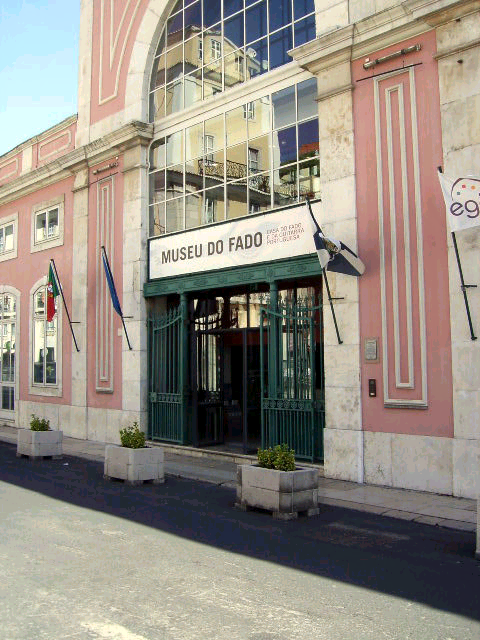
Museu do Fado
Largo do Chafariz de Dentro, Santa Maria Maior, Lisboa, 1100-288, Portugal
Fado is Portugal's answer to the blues — a music of longing, loss, and that untranslatable Portuguese word "saudade," which roughly means the bittersweet ache of missing something you once had, or might never have had at all. The Museu do Fado, tucked into a renovated pumping station at the edge of Alfama, tells the story of this art form from its murky origins in the early 19th century to its UNESCO recognition as Intangible Cultural Heritage in 2011. The museum insists on one crucial point: fado was not born in the salons of the wealthy. It was born in the taverns, brothels, and sailor dives of Alfama and Mouraria, sung by the poor, the marginalized, and the lovesick. The earliest fado was associated with Maria Severa, a legendary 19th-century singer and prostitute who had a passionate affair with the Count of Vimioso — a liaison that scandalized Lisbon society and became the origin myth of the genre. Whether Severa was actually the first fadista or simply the first one famous enough to be remembered is debatable, but her story established the template: fado as the music of doomed love and social transgression. The museum traces this arc through recordings, instruments, costumes, and interactive stations where you can listen to rare performances by Amália Rodrigues, Carlos do Carmo, and newer artists like Mariza and Ana Moura. The building itself — a 19th-century Moorish-revival water cistern — is an atmospheric venue, all arched brick ceilings and soft lighting. The museum regularly hosts live performances in its small auditorium, and hearing fado in this context, rather than in a tourist-oriented fado house, is a different experience entirely. The gift shop sells hard-to-find fado recordings, and the staff are genuine enthusiasts who can recommend which fado houses are authentic and which are tourist traps — a distinction that matters enormously in Alfama, where the line between art and performance has been blurring since Maria Severa's day.
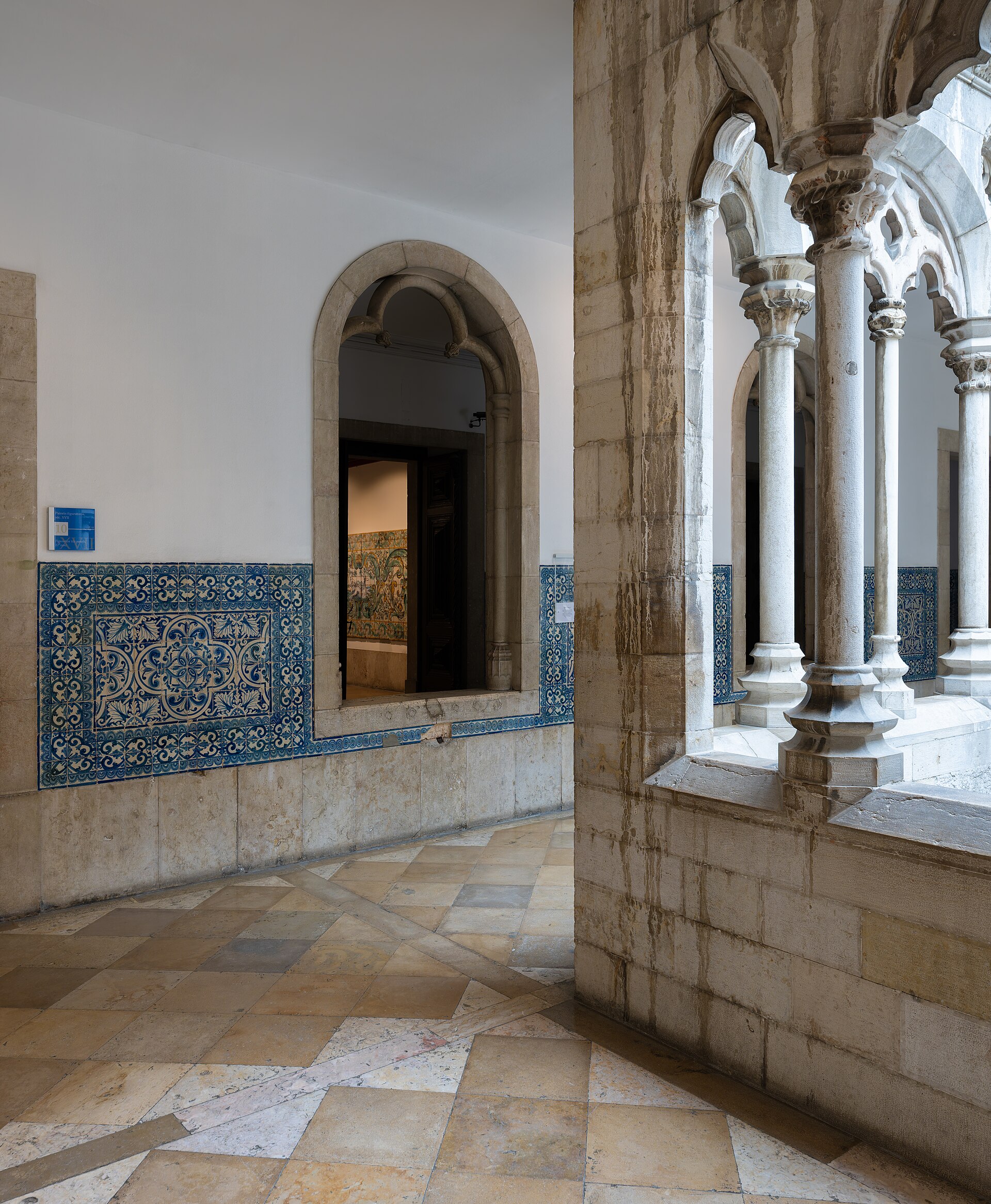
Museu Nacional do Azulejo
4 Rua da Madre de Deus, Penha de França, Lisboa, 1900-312, Portugal
Portugal's love affair with tiles is so deep that an entire museum barely scratches the surface. The Museu Nacional do Azulejo occupies the beautifully preserved Madre de Deus Convent, founded in 1509, and houses the world's largest collection of azulejos — the painted ceramic tiles that cover seemingly every surface in Portugal, from train stations to butcher shops to the bottom of swimming pools. The word "azulejo" doesn't come from "azul" (blue), as most people assume, but from the Arabic "az-zulayj," meaning polished stone. The Moors brought tile-making to Iberia, but the Portuguese took it to levels of obsession that nobody else attempted. The museum's showpiece is a 23-meter-long panoramic tile panel depicting Lisbon's waterfront before the 1755 earthquake. Created around 1700, it's one of the only detailed visual records of what the city looked like before the disaster erased it. You can see the old Ribeira Palace, the customs house, the ships in the harbor — an entire lost city preserved in blue and white ceramic. The panel survived because it was safely inside the convent, far from the earthquake's worst destruction. In a room nearby, you'll find the oldest azulejos in the collection, 15th-century Moorish geometric pieces from Seville that predate any Portuguese production. The convent itself is half the reason to visit. The church is covered floor-to-ceiling in gold leaf and blue-and-white tiles, and the Manueline cloister is a quiet gem that most visitors to Lisbon never see because the museum sits in the unfashionable eastern part of the city, a 15-minute taxi ride from the center. This remoteness is its superpower — while the Jerónimos Monastery drowns in tour groups, the Azulejo Museum offers the same quality of Portuguese craftsmanship in near solitude. The café serves decent coffee in, naturally, tiled surroundings.
Oceanário de Lisboa
Esplanada D Carlos I, Parque das Nações, Lisboa, 1990-011, Portugal
The Oceanário de Lisboa is consistently rated the best aquarium in the world, and the fact that it sits in a building designed to look like an aircraft carrier floating on a lagoon only adds to the experience. Built for Expo '98 — the world's fair that transformed Lisbon's derelict eastern waterfront into the modern Parque das Nações district — the Oceanarium was designed by American architect Peter Chermayeff, who had already built aquariums in Osaka and Baltimore. His concept was radical: instead of separating marine environments into discrete tanks, he created a single massive central tank holding five million liters of seawater, surrounded by four smaller habitats representing the Atlantic, Pacific, Indian, and Antarctic oceans. The central tank is mesmerizing. Sharks, rays, tuna, and an enormous ocean sunfish (mola mola) glide past in an endless loop while you circle the tank across two levels. The sunfish alone is worth the visit — it looks like God started designing a fish and gave up halfway through, leaving a creature that is essentially a giant head with fins. The four surrounding habitats include above-water environments, so you can see penguins, sea otters, and seabirds in recreated coastal landscapes before descending to see the underwater side of the same habitats. It's one of the few aquariums that genuinely changes how you think about oceans. In 2011, a second building was added to house temporary exhibitions, and the first major show was a collaboration with Japanese artist Takashi Amano, who created the world's largest nature aquarium — a stunning freshwater landscape in a 40-meter tank filled with 40 species of tropical fish and 46 species of aquatic plants. The Oceanário also runs extensive conservation programs, including breeding programs for endangered species and research partnerships with marine biology institutions. It handles roughly one million visitors per year, and the gift shop is strategically placed at the exit, which means a lot of Portuguese children go home with plush sharks.
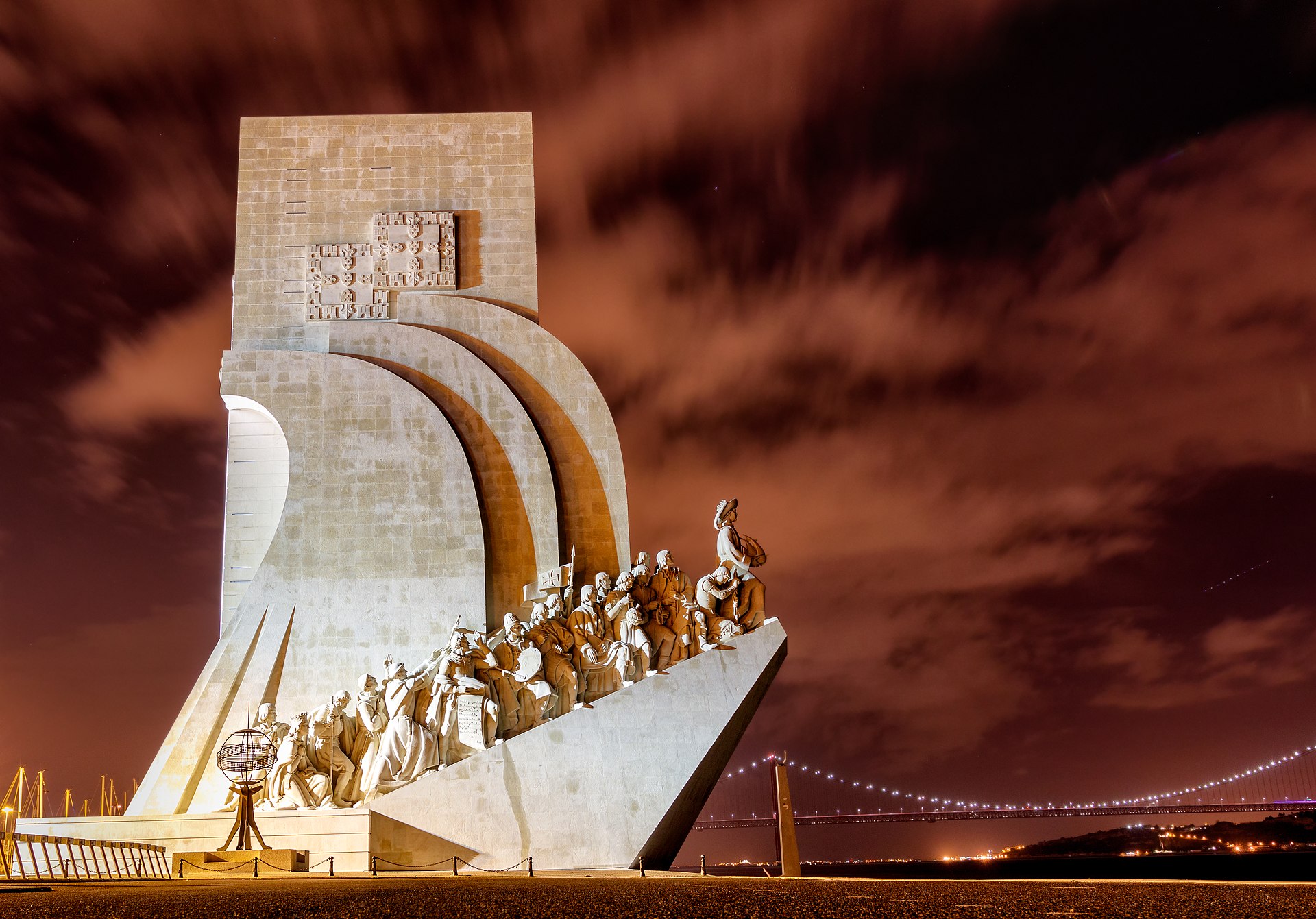
Padrão dos Descobrimentos
Avenida de Brasília, Belém, Lisboa, 1400-298, Portugal
This 52-meter concrete prow, jutting out over the Tagus like the bow of a ship frozen mid-launch, is either a triumphant celebration of human exploration or a monument to colonialism, depending on who you ask. The Monument to the Discoveries was originally built in 1940 for the Portuguese World Exhibition under the Salazar dictatorship — a temporary structure made of perishable materials, designed to glorify Portugal's maritime empire. It was rebuilt in permanent concrete and stone in 1960 to mark the 500th anniversary of the death of Henry the Navigator, who stands at the prow with a small caravel in his hands. Behind Henry, 32 figures line both sides of the monument like passengers on the world's most ambitious boat: Vasco da Gama, Magellan, Pedro Álvares Cabral (who stumbled upon Brazil), and various cartographers, missionaries, and poets. Notably, it also includes Philippa of Lancaster, an English princess who married into Portuguese royalty and is credited with encouraging her sons' seafaring ambitions — making her arguably the godmother of the Age of Discovery. She's the only woman on the monument, which tells its own story about how history gets remembered. On the ground in front of the monument, a massive compass rose mosaic made of colored stone was a gift from South Africa in 1960 — a detail that adds another uncomfortable layer to the colonial narrative. An elevator takes you to the top for sweeping views of the Tagus and the Belém waterfront. The monument has become a flashpoint for contemporary debate about Portugal's relationship with its imperial past, with periodic calls to add context or counternarratives. For now, it stands as it was built: confident, unapologetic, and increasingly complicated. The best time to visit is late afternoon, when the setting sun silhouettes the figures against the river.

Panteão Nacional
Campo de Santa Clara, São Vicente, Lisboa, 1100-472, Portugal
The Portuguese have a phrase — "obras de Santa Engrácia" — that means a project that never gets finished. It comes from this building. The Church of Santa Engrácia, now the National Pantheon, took 284 years to complete. Construction started in 1681 after the previous church was destroyed in a storm. Work proceeded in fits and starts, hampered by funding problems, political upheaval, and what appears to have been a genuine curse: the original church was desecrated in 1630 when a young man named Simão Solis was falsely accused of stealing the sacrament. He was executed, and supposedly cursed the church as he died. After that, nothing went right with the building for nearly three centuries. The dome wasn't finished until 1966, when the Salazar regime finally closed the ceiling — making this one of the longest construction projects in European history. The result is a magnificent Baroque interior with walls of pink, gray, and white marble, a soaring dome with an oculus that floods the space with light, and a terrace on the roof that offers one of the best panoramic views in Lisbon. The terrace is uncrowded because most tourists don't know this building exists, let alone that you can climb to the top. The Pantheon function came in 1916, when the republic designated it as the final resting place for Portugal's greatest citizens. Inside you'll find cenotaphs (empty symbolic tombs) for Vasco da Gama, Henry the Navigator, and Pedro Álvares Cabral, as well as actual tombs of fado legend Amália Rodrigues, novelist Aquilino Ribeiro, and footballer Eusébio. Yes, the greatest Portuguese footballer of the 20th century rests in the same building as the explorers who built the empire. The pantheon sits at the edge of the Feira da Ladra flea market, surrounded by vendors selling used books and antique tiles, creating one of the most atmospheric spots in the city.
Pastéis de Belém
84 Rua de Belém, Belém, Lisboa, 1300-085, Portugal
The recipe has not changed since 1837, and only three people alive know the full thing. Pastéis de Belém is the bakery that invented — or rather, inherited — Portugal's most famous pastry: the pastel de nata. When liberal reforms dissolved the monasteries in 1834, the monks at the nearby Jerónimos Monastery needed money. They started selling their egg custard tarts to a nearby sugar refinery, and when the monastery finally closed, the refinery's owner bought the recipe outright. The shop opened in 1837, and the original recipe has been prepared in a sealed-off "secret room" ever since. The distinction matters to the Portuguese: every bakery in the country sells pastéis de nata, but only this shop can legally call them Pastéis de Belém. It's like champagne versus sparkling wine, except the stakes feel higher because custard is involved. The shop produces roughly 22,000 tarts per day, and on busy days that number climbs to 40,000. The key difference, according to the initiated, is the caramelization — the original recipe produces a darker, more blistered top with a flakier shell than the standard nata you'll find elsewhere. Cinnamon and powdered sugar are available at the table, and the correct order of application is a matter of almost religious debate. The bakery itself is a sprawling warren of blue-and-white tiled rooms that keep expanding into adjacent buildings to handle the crowds. There's always a line, but it moves fast. The waiters have been doing this for decades with mechanical efficiency. What makes the place genuinely special, beyond the pastry, is the continuity — in a city that was leveled by an earthquake and rebuilt, that survived a dictatorship and a revolution, this little shop has been doing exactly one thing, exactly one way, for nearly two centuries. Portugal runs on coffee and custard, and this is where the custard started.
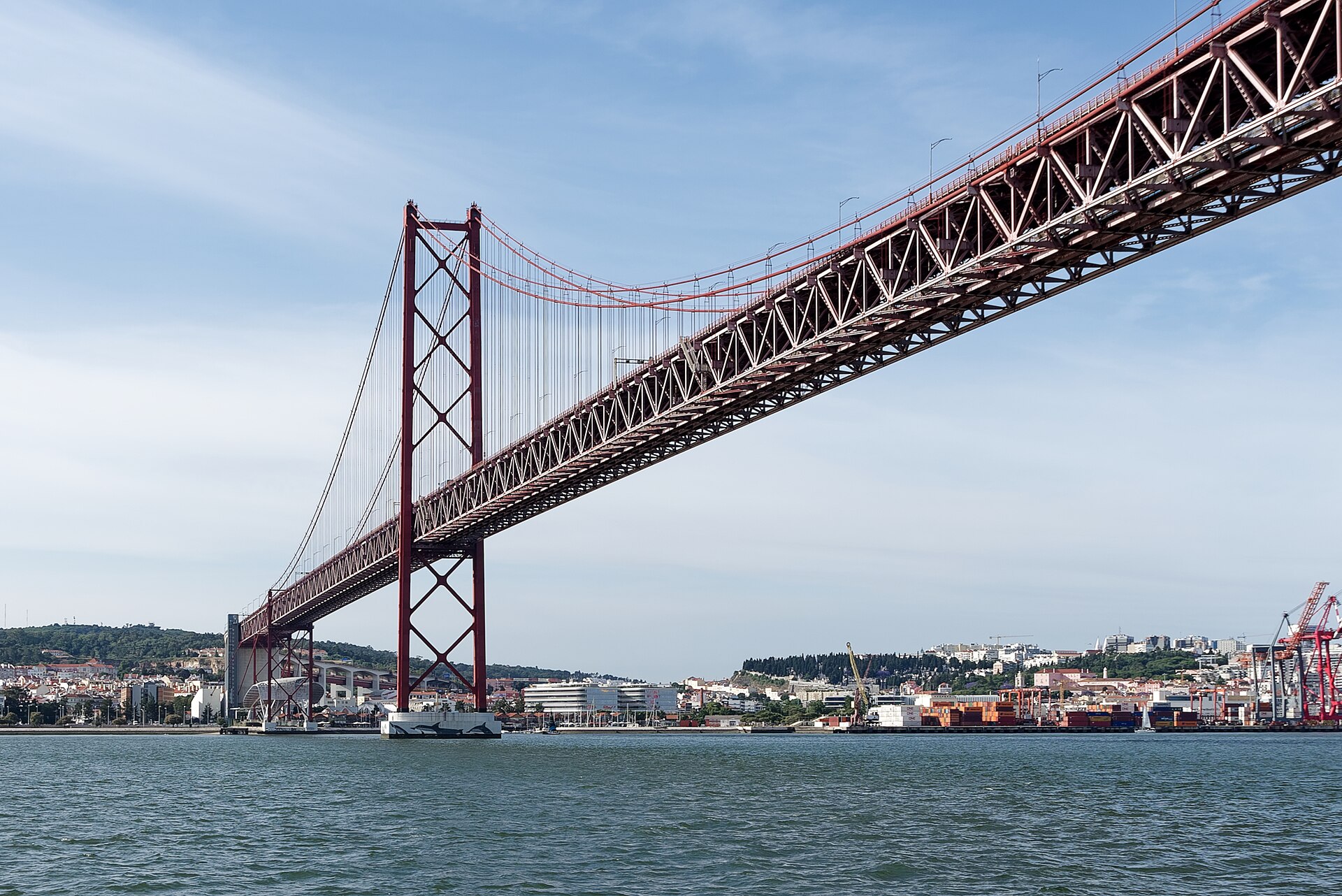
Ponte 25 de Abril
2 Travessa de Alcântara, Alcântara, Lisboa, 1300-029, Portugal
Yes, it looks exactly like the Golden Gate Bridge, and no, that's not a coincidence. The Ponte 25 de Abril was built by the American Bridge Company, the same firm that constructed the San Francisco–Oakland Bay Bridge, using steel from United States Steel. When it opened in 1966, it was called the Ponte Salazar, after the dictator who commissioned it. Eight years later, the Carnation Revolution toppled the regime, and the bridge was renamed for the date of the revolution — April 25, 1974. It's one of the most satisfying acts of political rebranding in history: a dictator's vanity project turned into a monument to his overthrow, and all they had to change was the sign. The bridge spans 2,277 meters across the Tagus at its widest point, making it one of the longest suspension bridges in Europe. At the time of construction, it carried only road traffic, but a rail deck was added underneath in 1999 — an engineering feat that required reinforcing the entire structure while keeping it open to traffic. The bridge carries roughly 150,000 vehicles per day, making it one of the busiest in Europe, and the morning commute across it is a legendary exercise in patience and Portuguese profanity. At the southern end, a massive Cristo Rei statue — inspired by Christ the Redeemer in Rio de Janeiro — faces the bridge with open arms. It was erected in 1959 as thanks for Portugal being spared the devastation of World War II, though Portugal's actual wartime position as a neutral country that sold tungsten to both sides makes "spared" a diplomatically flexible word. From the Lisbon side, the bridge is best appreciated at sunset, when the red steel glows against the river and you can briefly forget about the traffic and just see it for what it is: the most American thing in Portugal, renamed for the most Portuguese moment in modern history.
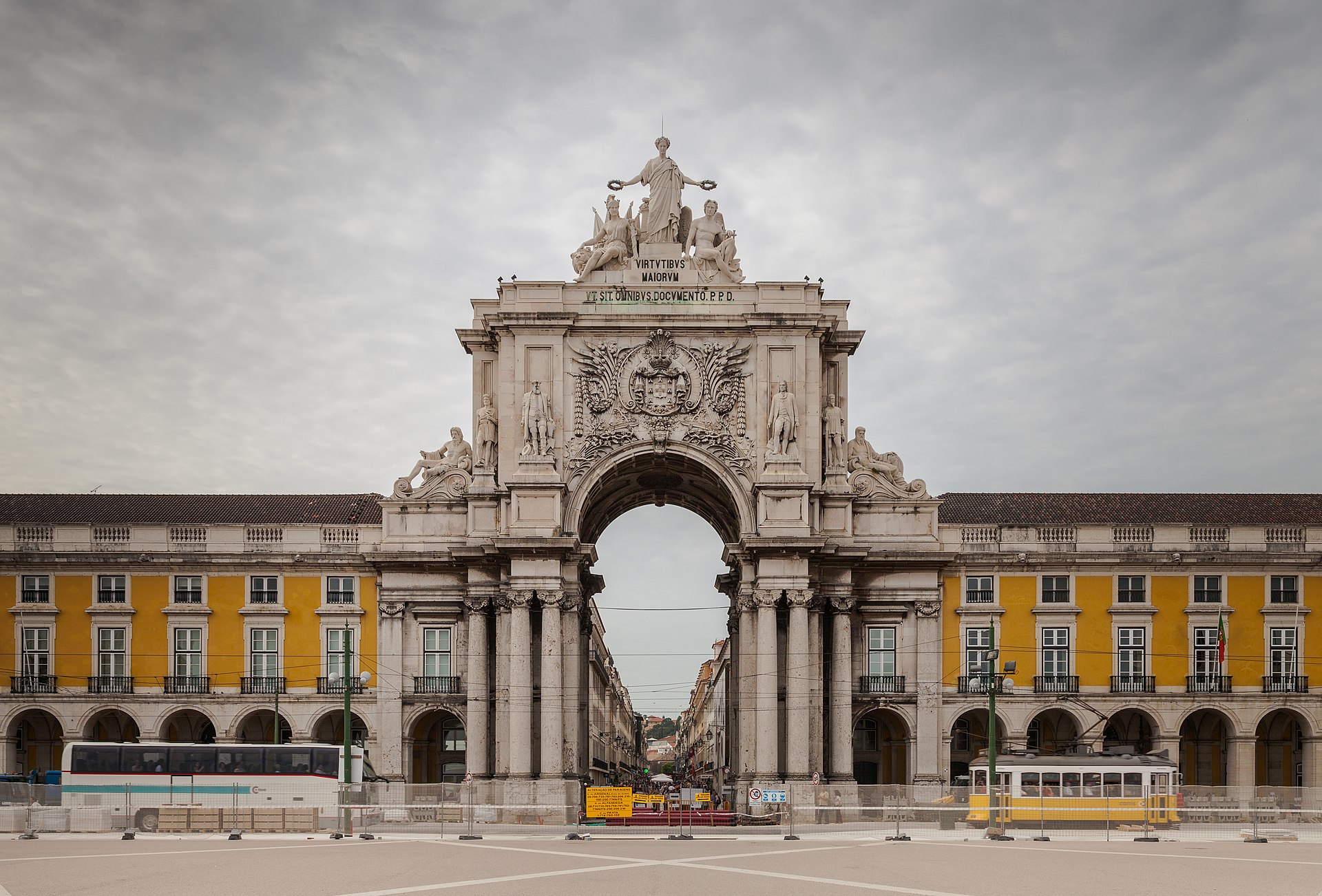
Praça do Comércio
Praça do Comércio, Santa Maria Maior, Lisboa, 1100-148, Portugal
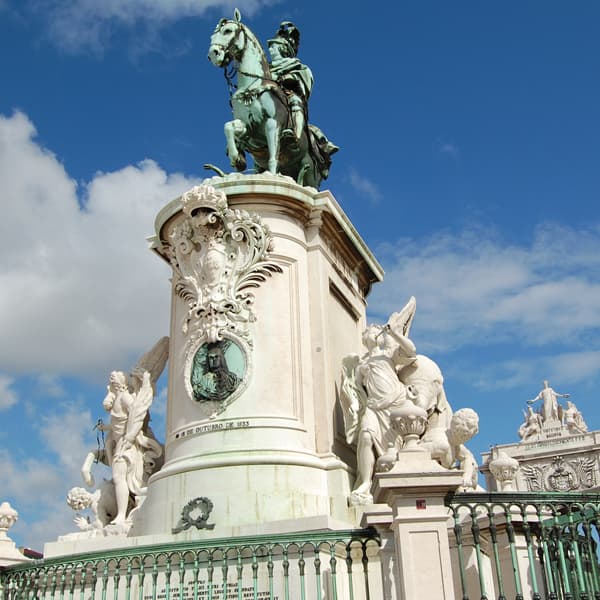
Before it became one of Europe's grandest plazas, this was a crime scene. The old Ribeira Palace stood here for over 200 years — the seat of Portuguese royalty, home to a 70,000-volume library, and the place where the king kept his collection of exotic animals. Then on the morning of November 1st, 1755, the earth shook for six minutes, fires erupted across the city, and a tsunami swept up the Tagus and erased it all. When the Marquis de Pombal rebuilt Lisbon with ruthless Enlightenment efficiency, he turned the royal rubble into this enormous waterfront square — a deliberate statement that commerce, not monarchy, would define the new city. The square is framed on three sides by uniform lemon-yellow arcaded buildings that now house government ministries, and on the fourth side by the river. In the center, an equestrian statue of King José I sits atop a pedestal that conceals a surprisingly dark detail: the marble base was designed as a holding cell, and political prisoners were reportedly confined inside it. The triumphal arch on the north side, the Arco da Rua Augusta, took over a century to complete — started after the earthquake and not finished until 1873. You can climb to the top for one of the best views in Lisbon, and almost nobody does. This is also where modern Portuguese history turned violent. In 1908, King Carlos I and his heir were assassinated right here in an open carriage, ending the monarchy within two years. During the 1974 Carnation Revolution, tanks rolled through the square as Portugal overthrew its dictatorship. Today it's considerably more peaceful — tourists sipping overpriced beer, locals cutting through on their commute, and the occasional cruise ship passenger looking confused by the sheer scale of the thing. The Lisboetas still call it Terreiro do Paço, the Palace Yard, as if the old royal residence never left.
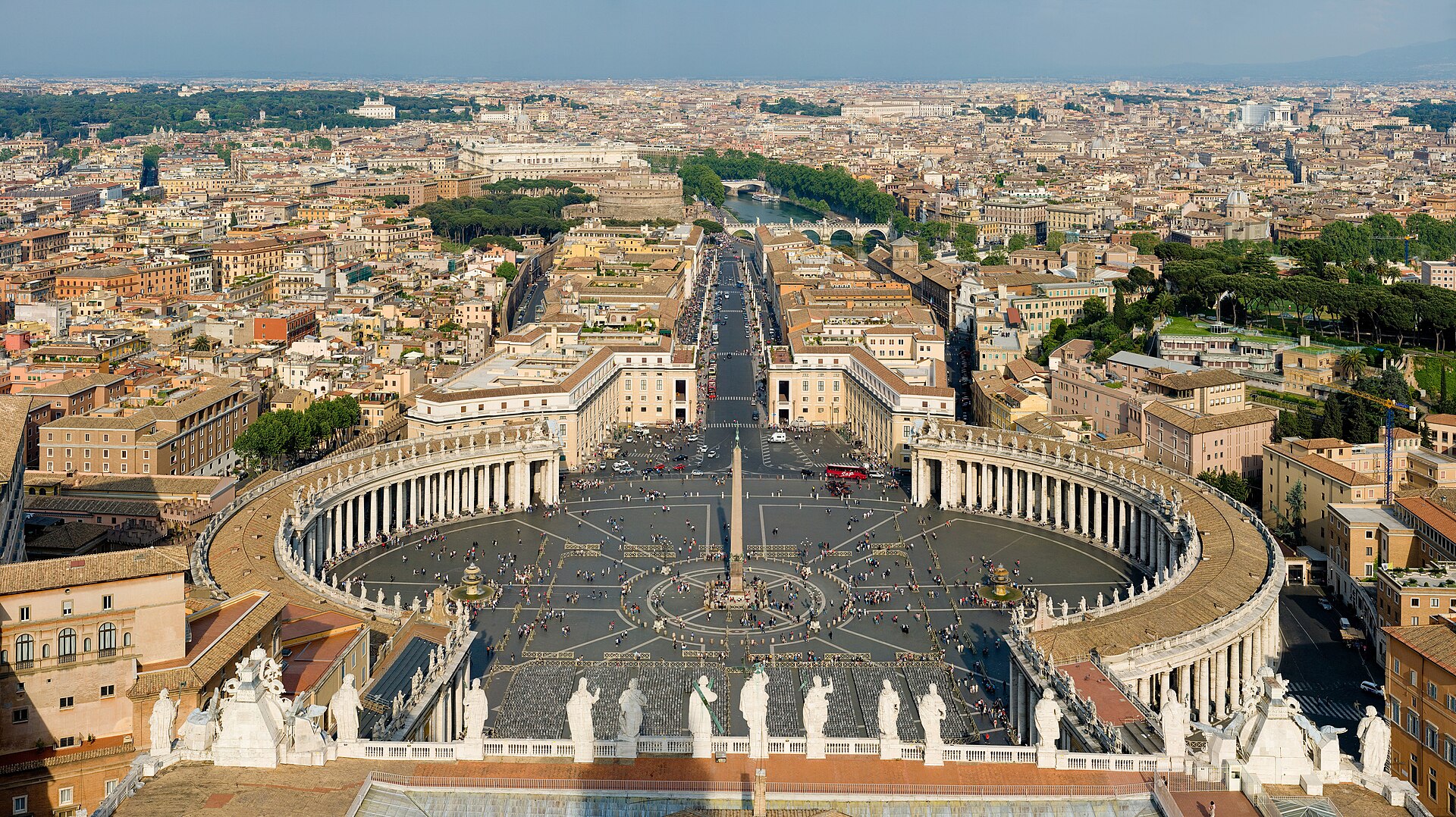
Rossio Square
Praça D Pedro IV, Santa Maria Maior, Lisboa, 1150-320, Portugal
The official name is Praça Dom Pedro IV, but nobody in Lisbon has called it that in centuries. This is the Rossio — the city's living room, its stage, and historically, its execution ground. For over 500 years, this square has been where Lisbon comes to argue, celebrate, protest, drink coffee, and occasionally watch people die. The Inquisition held public executions and autos-da-fé here. Bullfights were staged in the square until the 18th century. Today the most dangerous thing you'll encounter is the wavy black-and-white cobblestone pattern that has been making tourists dizzy since the 1840s. The distinctive calçada portuguesa — hand-laid limestone mosaic — was pioneered right here in Rossio and went on to become a Portuguese trademark exported to Brazil, Macau, and across the former empire. Each stone is cut and placed by hand, and the wave pattern is designed to evoke the sea. The column in the center holds a bronze statue of Pedro IV, though there's a persistent Lisbon legend that the statue is actually of Emperor Maximilian of Mexico and was purchased at a discount after his execution in 1867. Historians have debunked this, but Lisboetas enjoy the story too much to let facts get in the way. The Rossio train station on the north side deserves a moment of appreciation. Its horseshoe-arched Neo-Manueline façade from 1890 looks like it belongs on a palace, not a commuter rail terminus. Inside, escalators descend to platforms that serve the Sintra line — one of the most beautiful commuter routes in Europe. The square's two baroque fountains were imported from France in 1890 and are popular gathering spots on warm evenings. The surrounding cafés, particularly the century-old Café Nicola, have been fueling Lisbon's literary and political conversations since well before the revolution.
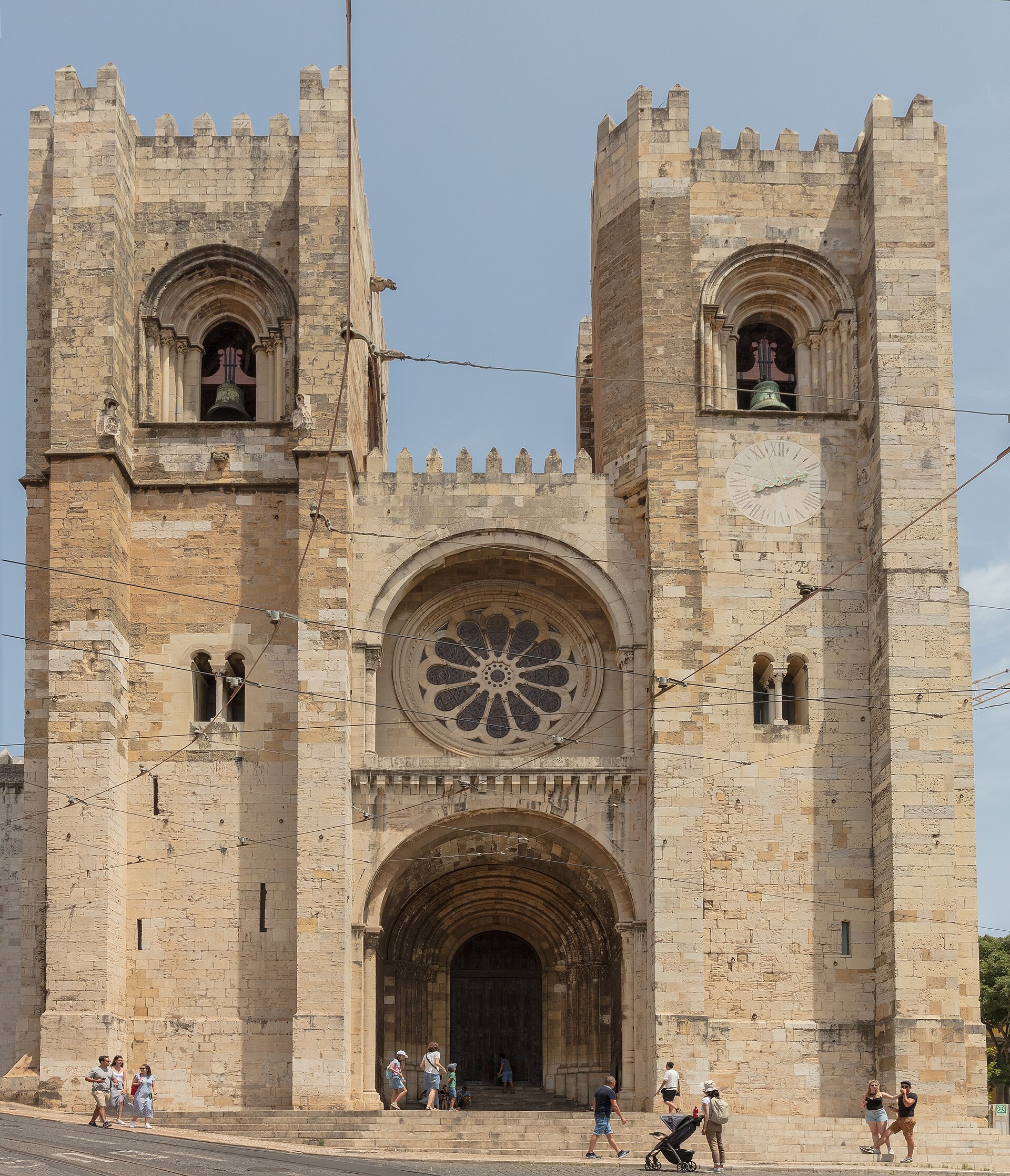
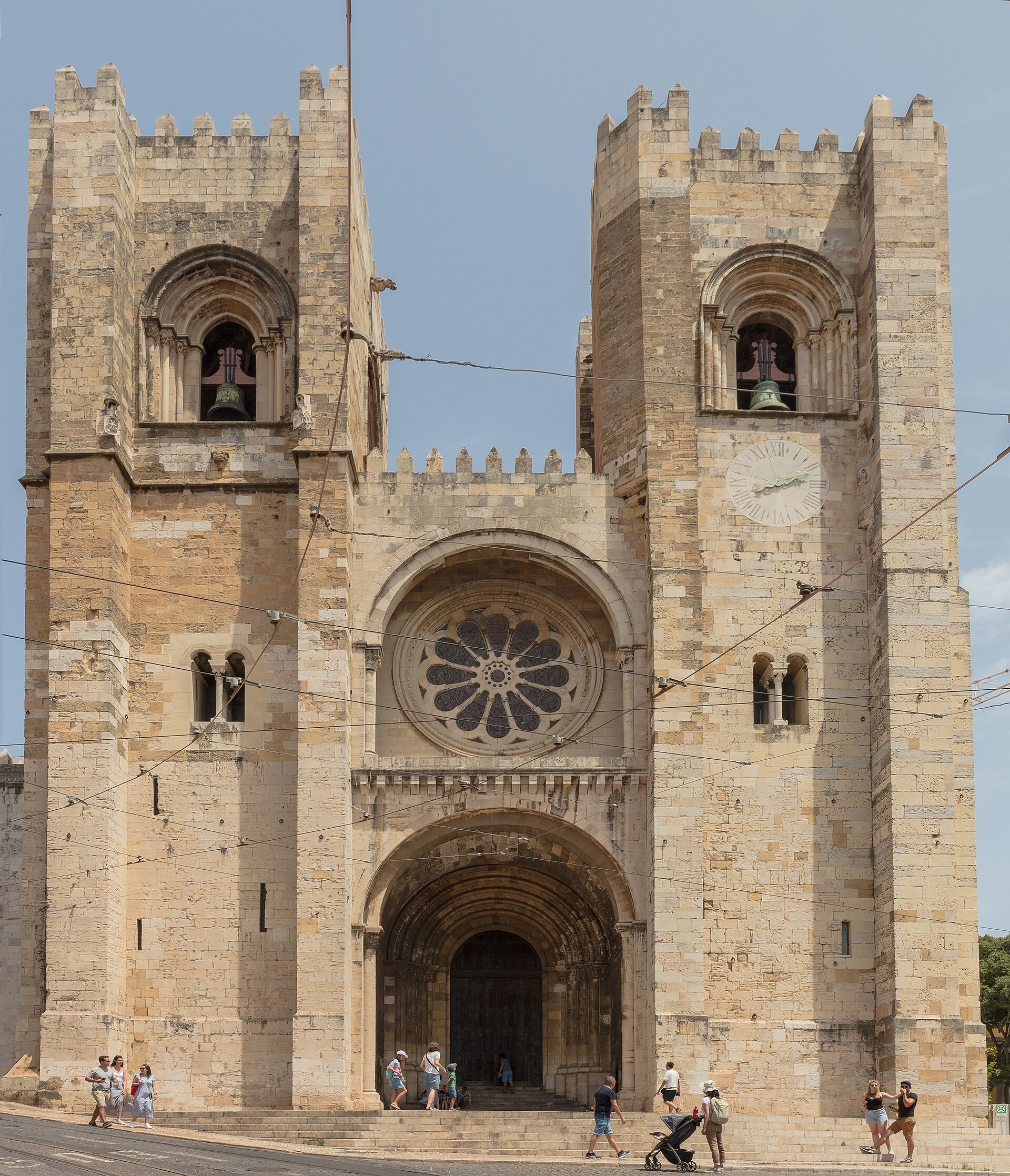
Sé de Lisboa
Largo da Sé, 1100-585 Lisboa
Lisbon's cathedral looks like it can't decide whether it's a church or a fortress, and that's because it was designed to be both. Built starting in 1147 — the same year Afonso Henriques took the city from the Moors — the Sé was constructed on the site of a mosque, which was itself built on the site of a Visigothic church. This layering of conquest is literally embedded in the walls: Romanesque bones, Gothic additions, Baroque chapels, and archaeological excavations that keep revealing older and older foundations. It's less a building than a geological core sample of religious power in Lisbon. The twin bell towers give the western façade a military bearing that was entirely intentional. In the 12th century, this hilltop cathedral was part of the city's defensive perimeter, and the crenellated roofline could serve as a fighting platform. Inside, the Romanesque nave is austerely beautiful — thick columns, round arches, and a gloom that feels deliberately medieval. The Gothic cloister, added in the 13th century, was severely damaged in the 1755 earthquake but has been partially restored. Archaeological digs in the cloister have uncovered Roman, Visigothic, Moorish, and medieval Christian remains in layers, turning the area into an open-air excavation site that visitors can walk through. The cathedral's most peculiar claim to fame involves Saint Anthony of Padua — yes, Padua, not Lisbon. António was actually born in Lisbon around 1195, possibly in a house on this very spot, and was baptized in the Sé's font. Portugal considers him a native son, and every June 13th the cathedral becomes the focal point of Santo António celebrations. The treasury houses a collection of silver, vestments, and relics, including what is claimed to be a piece of the True Cross. Tram 28 rattles past the front door every few minutes, and the juxtaposition of an 800-year-old cathedral with a 1930s streetcar is one of those Lisbon moments that makes the city feel like a time machine stuck between gears.
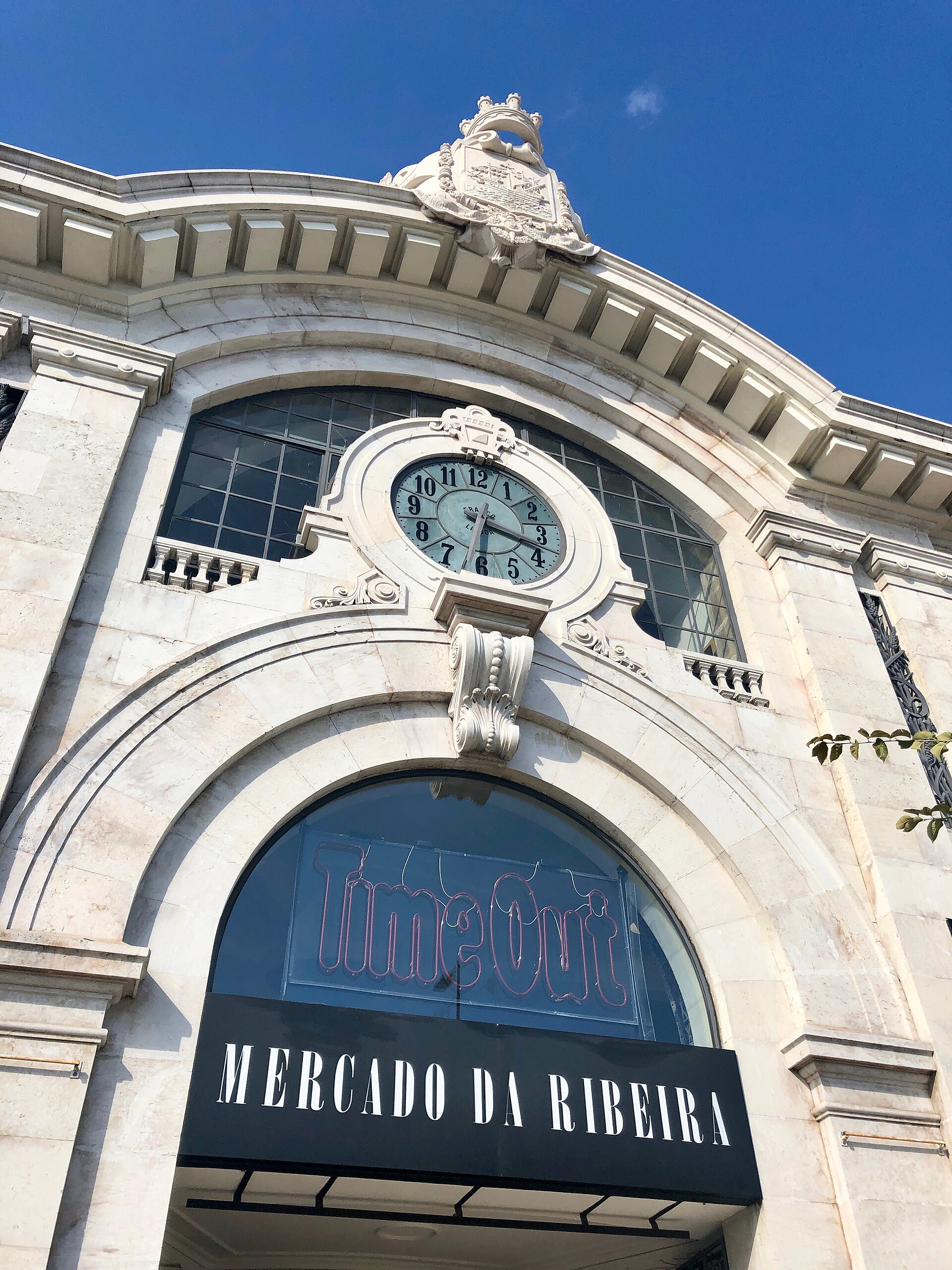
Time Out Market
Av. 24 de Julho 49, 1200-479 Lisboa
The idea was simple and slightly insane: take a beloved but struggling food market, hand editorial control to a magazine, and let the critics decide who gets to cook. Time Out Market Lisbon opened in 2014 inside the historic Mercado da Ribeira, a cast-iron market hall that had been feeding the city since 1892. The magazine's editors curated the vendors, inviting only restaurants and chefs who had received rave reviews in Time Out Lisbon. The result was the first food hall in the world where quality control came from actual food critics rather than whoever could afford the rent. The market occupies the western half of the Ribeira building — the eastern half still functions as a traditional fresh produce market, which most visitors never discover. On the curated side, you'll find some of Lisbon's most celebrated chefs operating casual counters: Henrique Sá Pessoa (Michelin-starred), Alexandre Silva, and Marlene Vieira among them. The communal seating area in the center holds about 500 people sharing long tables, which creates a chaotic, convivial atmosphere that feels more like a university dining hall than a gourmet experience. The numbers are staggering. Time Out Market sees roughly 4 million visitors per year, making it the most visited attraction in Lisbon — ahead of the Jerónimos Monastery and the Torre de Belém. This has been both its triumph and its curse. At peak hours, the scramble for tables resembles a contact sport, and some locals grumble that the market has been lost to tourism. But the food is genuinely good, the prices are reasonable by European standards, and where else can you eat Michelin-level ceviche at a plastic table next to someone eating pastéis de bacalhau? The original Mercado da Ribeira, incidentally, was designed by engineer Ressano Garcia, whose cast-iron structure was revolutionary for 1882.
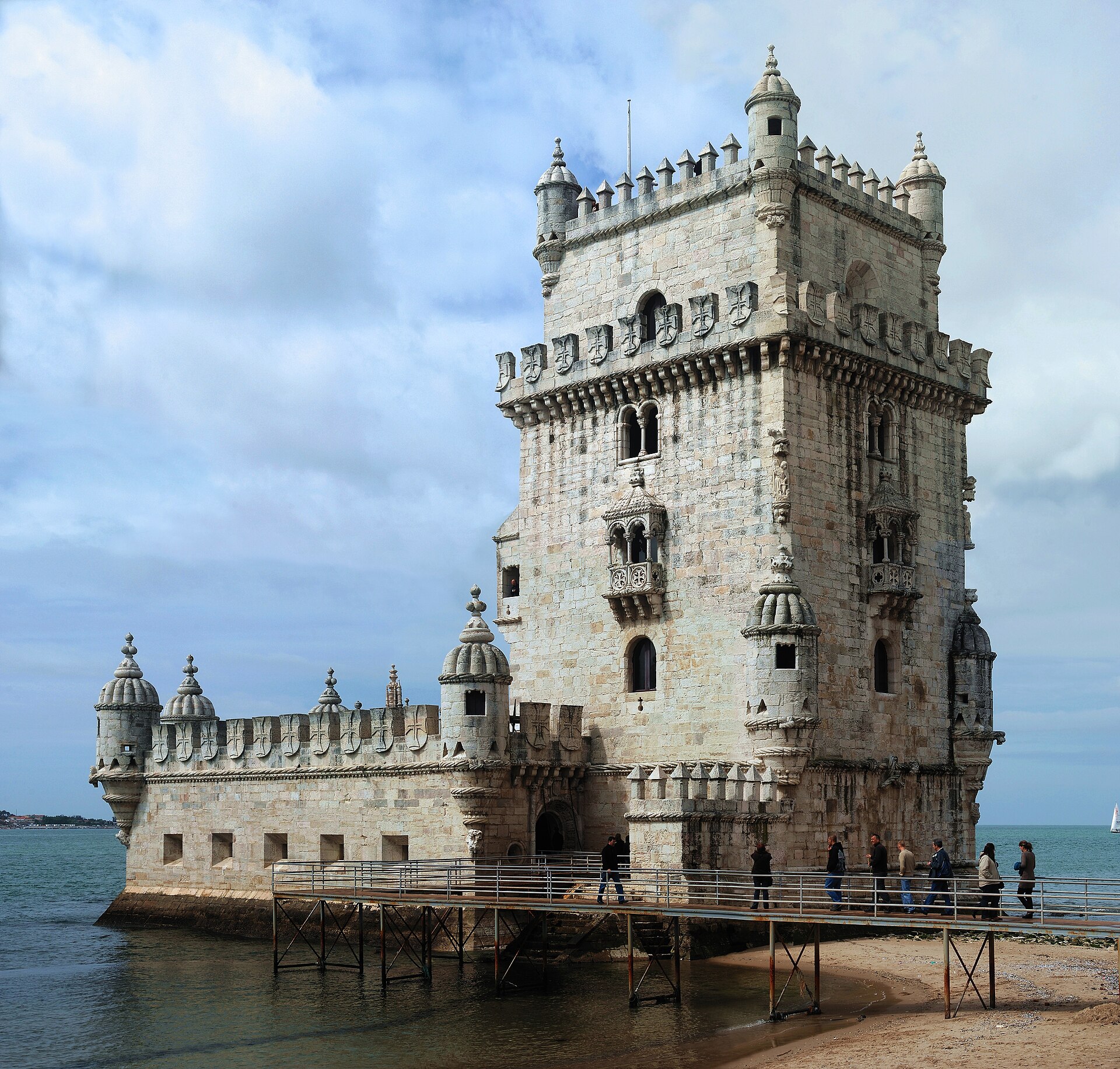
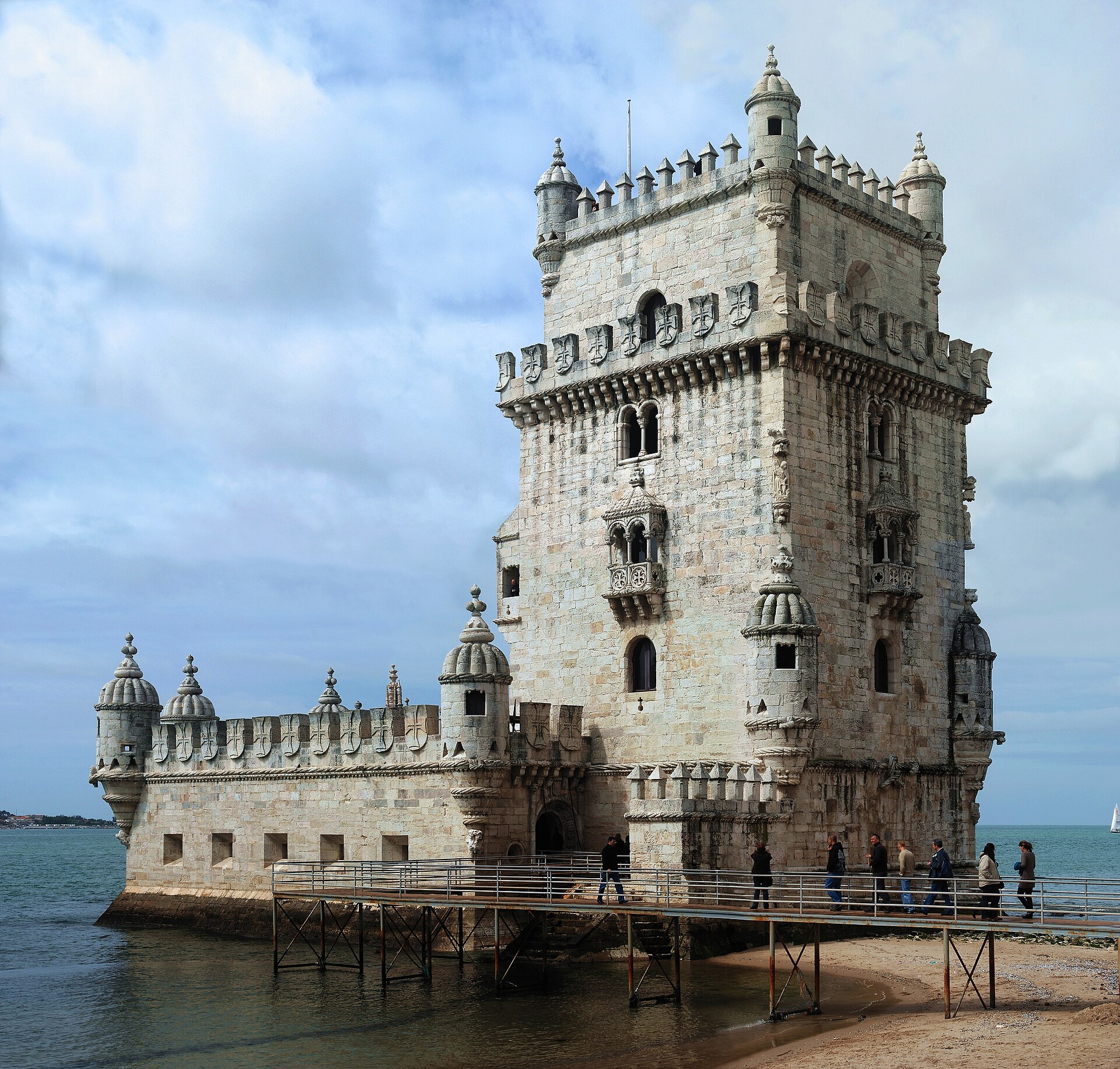
Torre de Belém
Avenida de Brasília, Belém, Lisboa, 1400-072, Portugal
This stubby little fortress sitting in the Tagus looks like it was designed by someone who couldn't decide between a castle and a wedding cake. Built between 1514 and 1520, the Torre de Belém was originally positioned in the middle of the river — not on the shoreline where you see it today. The devastating 1755 earthquake shifted the riverbed so dramatically that what was once a mid-channel guardpost ended up practically on dry land. It's one of the great visual tricks of Lisbon: a building that looks like it hasn't moved in five centuries, but the entire world rearranged itself around it. The tower was the last thing Portuguese sailors saw when they departed for the unknown, and King Manuel I wanted it to be suitably dramatic. The architect, Francisco de Arruda, had worked on fortresses in Morocco, and you can see North African influence everywhere — from the Moorish-style watchtowers to the carved stone "rope" that wraps around the building like nautical rigging frozen in limestone. Look closely at the western façade and you'll spot one of the earliest European stone carvings of a rhinoceros, inspired by a real rhino that arrived in Lisbon in 1515 as a diplomatic gift from India. The poor animal later drowned in a shipwreck en route to the Pope. Below the pretty Manueline balconies lies a very different story. The lower floors served as a political prison for centuries, with dungeons that would flood at high tide — prisoners literally watched the water rise around them. The casemated gun battery was state-of-the-art for its era, designed so cannon smoke would vent through openings rather than suffocating the gunners. Today UNESCO calls it a masterpiece, but for a long time locals just called it the old customs house. It took the Romantic movement of the 1800s to remind Portugal that this crumbling river fort might actually be worth saving.

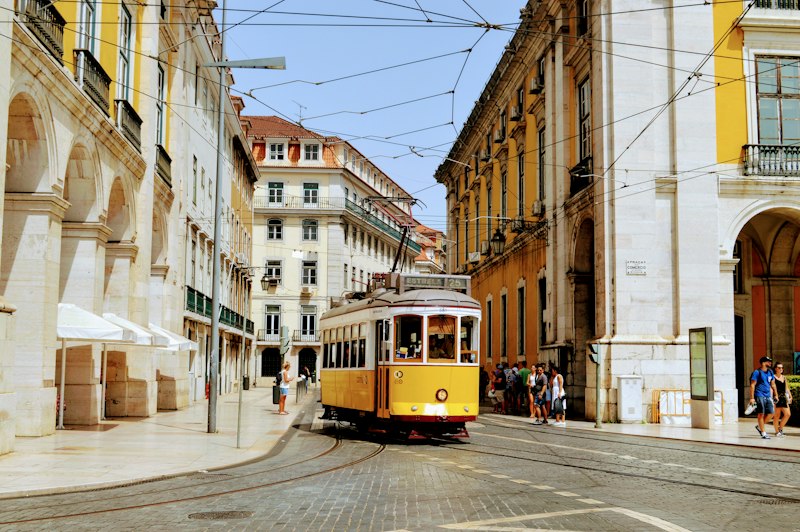
Tram 28
Various stops across Lisbon
Tram 28 is simultaneously the best and worst way to see Lisbon. This rattling, canary-yellow relic from the 1930s navigates streets so narrow that passengers can reach out the window and touch the buildings on either side. The route runs from Martim Moniz to Campo Ourique, threading through Graça, Alfama, Baixa, and Estrela — essentially connecting the greatest hits of the old city in a single grinding, lurching, hill-climbing journey. On paper it sounds romantic. In practice, during tourist season, it's a sardine can on rails with a pickpocket problem. The trams themselves are Remodelado models, a fleet of cars originally built in the late 1930s that have been refurbished but never replaced. Lisbon tried modern trams on this route and they simply couldn't make the turns — some corners are so tight that the driver has to stop, get out, and manually switch the points. The electric tram network once covered all of Lisbon, with over 100 kilometers of track at its peak. Today only five routes survive, and 28 is by far the most famous. The overhead power lines that feed these trams are part of a system installed in 1901, when Lisbon electrified its horse-drawn streetcar network — making it one of the earliest electric tram systems in Europe. The trick to enjoying Tram 28 is knowing when to ride it. Early morning or late evening, the crowds thin out and the tram becomes what it was always meant to be: a genuine public transit line used by elderly Lisboetas heading to church or the market. At the Graça terminus, the tram pauses next to the Miradouro da Graça, one of the best viewpoints in the city. Locals know that the 12E tram covers much of the same territory with a fraction of the tourists, but nobody puts that on a postcard.