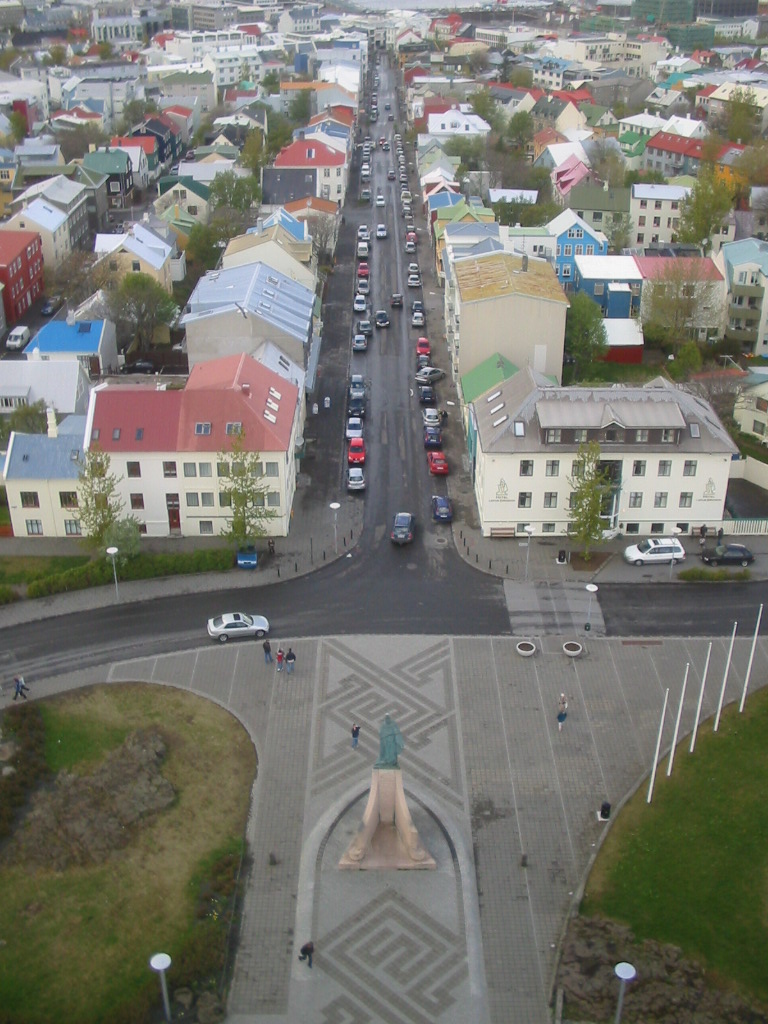
Reykjavik's colourful corrugated-iron houses are the city's visual signature — small, brightly painted buildings with tin roofs and cladding that were built from the late 19th century onward and give the city centre its distinctive toytown appearance. The houses are painted in every colour (red, blue, green, yellow, turquoise, pink) and the cumulative effect — rows of colourful houses against a grey sky, with the church spire and mountains behind — creates the postcard image that defines Reykjavik.
The corrugated iron was originally imported from Britain (Iceland has no native iron ore or timber for traditional construction) and was a practical solution to the harsh climate — lightweight, waterproof, and resistant to the wind that makes traditional construction methods impractical. The painting tradition evolved partly from the need to protect the iron from rust and partly from the desire to brighten a landscape that spends four months in near-darkness.
The houses on Skólavörðustígur (the street leading from Laugavegur up to Hallgrímskirkja), Þingholtsstræti, and the streets around Tjörnin (the city-centre lake) contain the most concentrated collection of colourful houses, and walking these streets — past the painted facades, the small gardens, and the cats that occupy every available windowsill — is the most characterful experience in downtown Reykjavik.
Verified Facts
Corrugated iron was imported from Britain for construction
Iceland has no native iron ore or significant timber
Painting protects the iron from rust and brightens the dark winters
Tjörnin is the city-centre lake
Get walking directions
Various streets, 101 Reykjavík