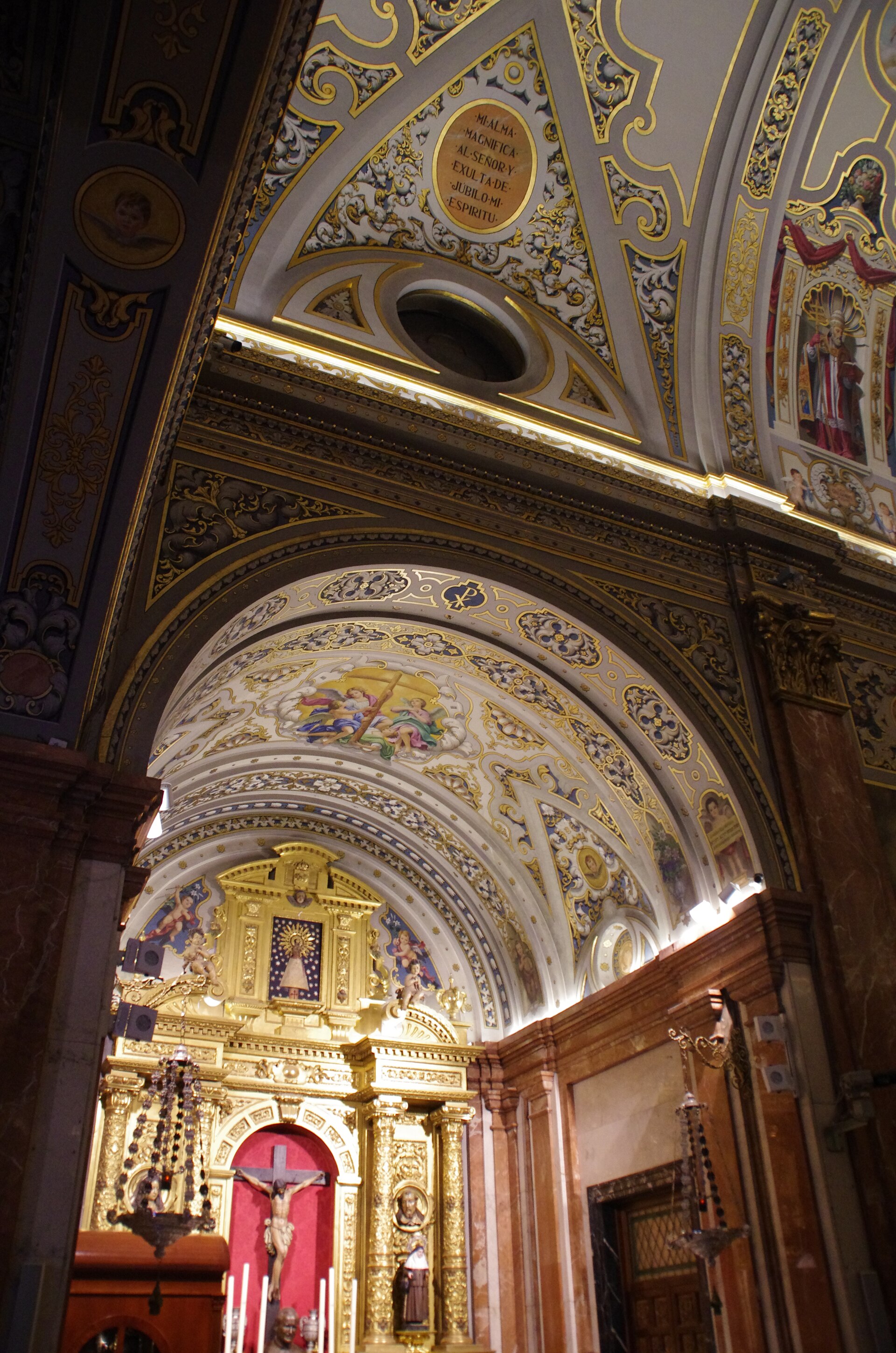
Seville has dozens of churches, but this is the one that makes the city weep. The Basilica de la Macarena houses the Virgen de la Esperanza Macarena — a seventeenth-century wooden statue that is arguably the most beloved religious image in all of Spain. She is not just a figure in a church; she is a living presence in the city's emotional life. Matadors pray to her before entering the ring. Flamenco singers dedicate songs to her. On the night of Good Friday, when her float is carried through the streets for twelve hours, grown men openly cry.
The statue itself is a remarkable piece of Baroque craftsmanship, attributed to Pedro Roldan or someone in his workshop around 1680. She stands about 175 centimetres tall, with articulated arms, real human hair, and five teardrops carved on her cheeks. She is dressed in elaborate embroidered robes that are changed seasonally, and her crown — granted by a canonical coronation from Pope John XXIII in 1964 — is encrusted with jewels. A discolored mark on one cheek is said to have come from a bottle of wine thrown by a drunken soldier; according to legend, no restorer has ever been able to remove the stain.
The basilica itself is relatively modern — built between 1941 and 1949, and elevated to Minor Basilica status by Pope Paul VI in 1966. But the devotion is ancient. During the Spanish Civil War in 1936, anti-clerical mobs attempted to destroy the image. It was hidden and survived, only deepening the faithful's attachment.
The attached museum displays the brotherhood's collection of silver processional items, including the massive paso on which the Virgin rides during Semana Santa. Even if you are not religious, the intensity of devotion here is extraordinary to witness.
Verified Facts
The Virgin of Macarena statue dates to around 1680 and is attributed to sculptor Pedro Roldan or his workshop
The statue received a canonical coronation from Pope John XXIII on May 31, 1964
The basilica was built between 1941 and 1949 and elevated to Minor Basilica by Pope Paul VI in 1966
During Semana Santa, the Virgin's float is carried through the streets in a procession lasting approximately 12 hours
Get walking directions
1 Calle Bécquer, Casco Antiguo, Seville, 41002, Spain