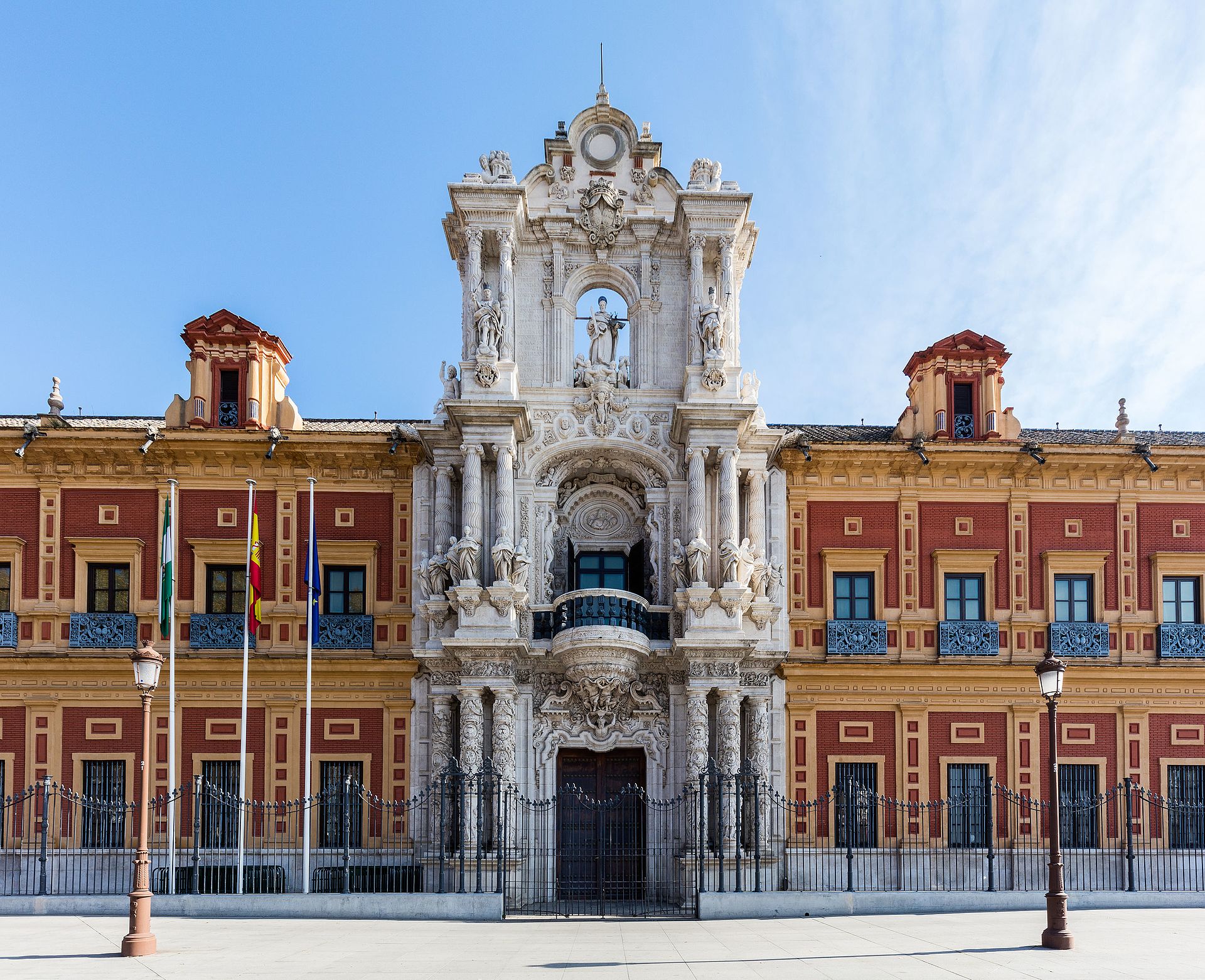
This extravagant Baroque palace has had more career changes than most buildings dream of. Built starting in 1682 as a school for orphans of sailors — San Telmo being the patron saint of navigators — it trained young men for the maritime trade during Seville's waning years as a major port. When the school closed, the palace became the residence of the Dukes of Montpensier, the royal family who donated the adjacent gardens that became the Parque de Maria Luisa in 1893.
The portal is the building's showpiece: a churrigueresque masterpiece designed by Leonardo de Figueroa in 1734, encrusted with columns, saints, angels, and maritime symbols so densely carved they look like they are melting. Above the entrance, San Telmo himself presides over the facade, surrounded by allegorical figures representing the arts and sciences. The twelve statues of famous Sevillanos lining the rooftop were added in the nineteenth century and include Velazquez, Murillo, and Rodrigo Ponce de Leon.
After the Montpensier era, the building passed through several hands. It served as a seminary for much of the twentieth century, which is why the interior is less ornate than you might expect — seminarians are not known for gilded excess. Since 2010, it has been the seat of the Presidency of the Junta de Andalucia, the regional government, which means the interior is generally closed to the public except during special open-day events.
Even from outside, the facade alone justifies a visit. The contrast between the sober stone walls and the explosive Baroque portal is one of the great architectural surprises in Seville. Walk around to the garden side for views of the building's relationship to the Parque de Maria Luisa next door.
Verified Facts
Built starting in 1682 as a school for orphans of sailors, named after San Telmo patron saint of navigators
The churrigueresque portal was designed by Leonardo de Figueroa in 1734
Since 2010, the palace serves as the seat of the Presidency of the Junta de Andalucia
The Dukes of Montpensier donated the adjacent gardens in 1893, creating the Parque de Maria Luisa
Get walking directions
Avenida de Roma, Casco Antiguo, Seville, 41013, Spain