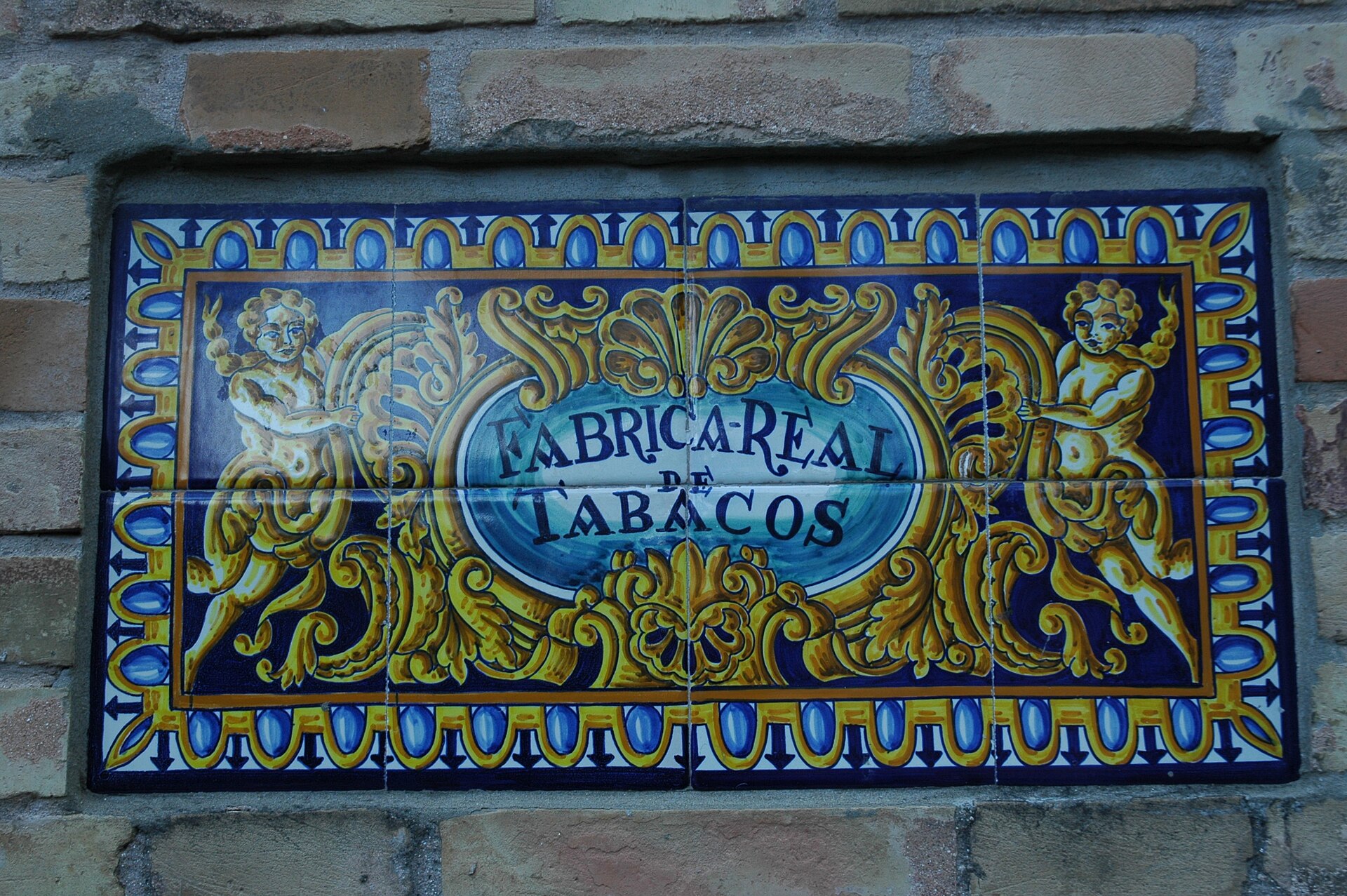
This massive neoclassical fortress was not built to defend Seville from armies — it was built to defend tobacco from thieves. Constructed between 1728 and 1771 by order of the Spanish crown, the Royal Tobacco Factory was the largest industrial building in Spain and the second-largest building in the entire country after the Escorial monastery. Its walls were deliberately fortress-like, its moat genuinely filled with water, and guards patrolled the exits to prevent workers from smuggling out cigars in their clothing.
At its peak in the early nineteenth century, the factory employed more than 10,000 workers, the vast majority of them women — the cigarreras — who rolled cigars by hand in enormous halls. These were tough, independent women in an era when female industrial labor was rare, and their reputation for beauty, fierceness, and occasional knife fights became legend across Europe. French writer Prosper Merimee visited in the 1840s, and the cigarreras inspired his novella Carmen, which Georges Bizet turned into one of the most performed operas in history. A statue of Carmen now stands outside the building.
The factory continued producing tobacco until the 1950s, when operations moved to a modern facility on the outskirts of the city. The building was then handed to the University of Seville, which it houses today. Students attend lectures in former tobacco halls, and the grand staircase that once led to the director's offices now leads to the faculty library.
Walk through the main entrance and look up: the coat of arms above the door features carved tobacco plants, a uniquely honest bit of architectural decoration. The interior courtyards are open to the public and give a sense of the building's absurd scale — you can walk for ten minutes without reaching the far wall.
Verified Facts
Built between 1728 and 1771, it was the second-largest building in Spain after the Escorial
At its peak, over 10,000 predominantly female workers (cigarreras) rolled cigars by hand in the factory
Prosper Merimee's visit inspired his novella Carmen, later adapted into Bizet's famous opera
The building now houses the University of Seville, with students attending classes in former tobacco halls
Get walking directions
C. San Fernando, 4, 41004 Sevilla