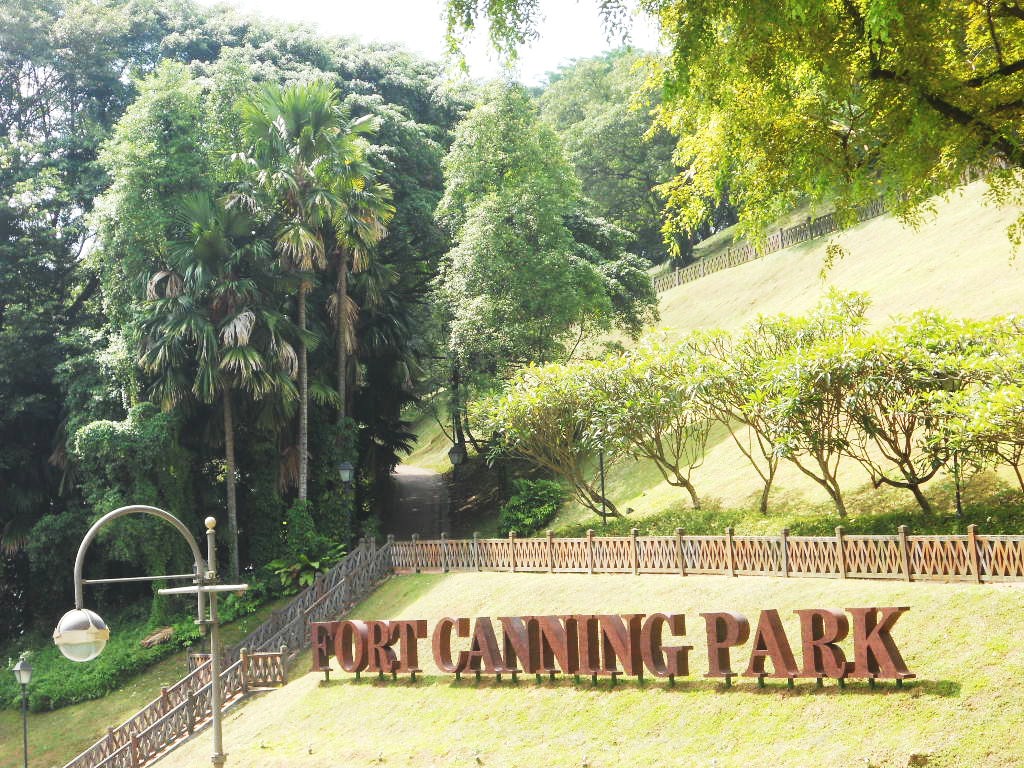
Fort Canning is a hilltop park in the centre of Singapore that holds more history per square metre than almost anywhere on the island — 700 years of it, from the 14th-century Malay kings who built a palace on the summit to the British colonial fortress to the underground bunker where the decision to surrender Singapore to the Japanese was made in 1942.
The hill was known as Bukit Larangan (Forbidden Hill) to the Malay population because it was believed to be the burial site of the last king of Singapura, Iskandar Shah. Archaeological excavations have uncovered 14th-century artifacts including gold jewellery, Chinese ceramics, and Javanese coins, confirming that a significant settlement existed here centuries before Raffles arrived. The Keramat (shrine) on the hilltop, traditionally associated with Iskandar Shah's grave, is still visited by people leaving offerings.
The British built Fort Canning in 1860 — though they demolished it in 1907 when it became militarily obsolete — and the underground Battle Box, where Lieutenant-General Arthur Percival made the decision to surrender Singapore on 15 February 1942, is preserved as a museum with wax figures recreating the meeting. The park today is a green oasis above the Civic District, connected to the National Museum and the Clarke Quay entertainment district by walking paths, and the spiral staircase known as the Fort Canning Tree Tunnel has become one of Singapore's most photographed spots.
Verified Facts
The hill was known as Bukit Larangan (Forbidden Hill) to the Malay population
Archaeological excavations found 14th-century artifacts on the hill
The British surrendered Singapore on 15 February 1942 in the Battle Box on this hill
Fort Canning was built in 1860 and demolished in 1907
Get walking directions
River Valley Rd, Tanglin, Singapore, Singapore