Walking Tours in Singapore
Singapore: Chinatown, Little India & the Civic District
Walk the astonishing multicultural mosaic of Singapore — from the temples and hawker centres of Chinatown through the jasmine and turmeric of Little India to the colonial grandeur of the Padang and the soaring Marina Bay skyline.
Singapore: Where Empires Met
Singapore was a sleepy Malay fishing settlement of around one thousand people when Stamford Raffles arrived on January twenty-ninth, eighteen nineteen and decided it would become the greatest trading port in Asia. He was right. In less than two hundred years, the island went from jungle to the world's fourth-largest financial centre, the world's second-busiest container port, and one of the only countries in history to be expelled from a federation and forced into independence against its will — Singaporeans did not vote for independence in nineteen sixty-five, it was declared by Malaysia's expulsion. What you are about to walk is the colonial core that Raffles designed and the surrounding ethnic neighbourhoods that grew up around it — a city that contains multitudes because it had to.
30 Landmarks in Singapore
Asian Civilisations Museum
1 Empress Place, Singapore 179555
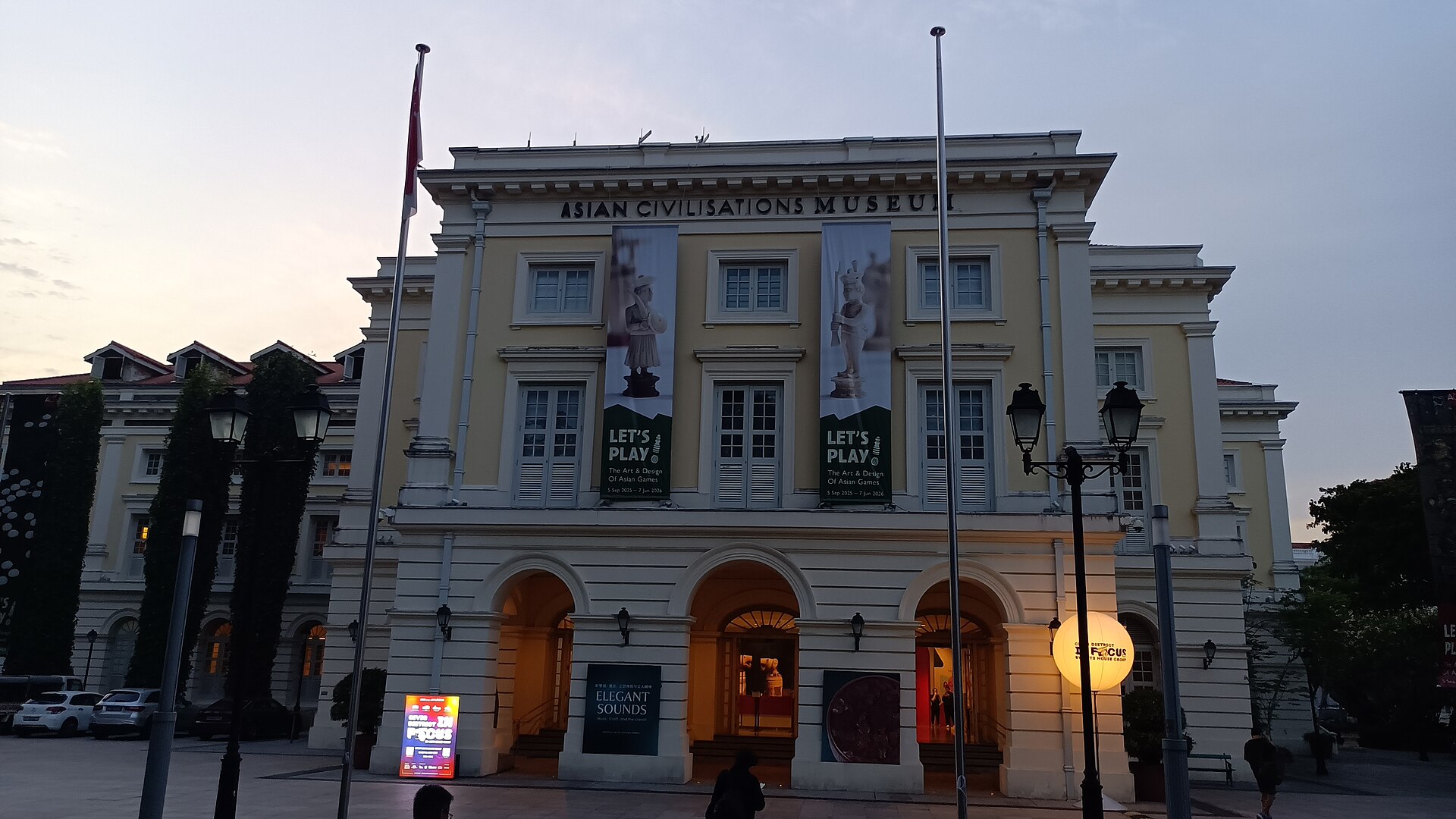
The Asian Civilisations Museum occupies the neoclassical Empress Place Building on the Singapore River and houses the most comprehensive collection of pan-Asian art and artifacts in Southeast Asia — tracing the trade routes, religious exchanges, and cultural connections that made Singapore a crossroads of civilisations long before the British arrived. The collection spans the full breadth of Asian culture: Chinese ceramics from the Tang Dynasty trade routes, Indian temple sculptures, Islamic calligraphy, Southeast Asian textiles, and Peranakan decorative arts. The Tang Shipwreck Gallery — built around the cargo of an Arab dhow that sank in the Java Sea around 830 AD with 60,000 ceramic objects aboard — is the standout exhibit, providing physical evidence of the maritime trade network that connected China, Southeast Asia, India, and the Middle East over a thousand years before European colonialism. The museum's approach — focusing on connections between Asian cultures rather than treating each in isolation — reflects Singapore's self-image as a place where civilisations meet. The Empress Place Building itself, completed in 1867 as government offices, is one of the finest colonial structures on the island, and its location on the river — directly opposite the Fullerton Hotel and within walking distance of the Merlion — makes it an easy addition to any waterfront walk. The ground-floor café has one of the best river terrace views in the Civic District.
Buddha Tooth Relic Temple
288 South Bridge Road, Singapore 058840
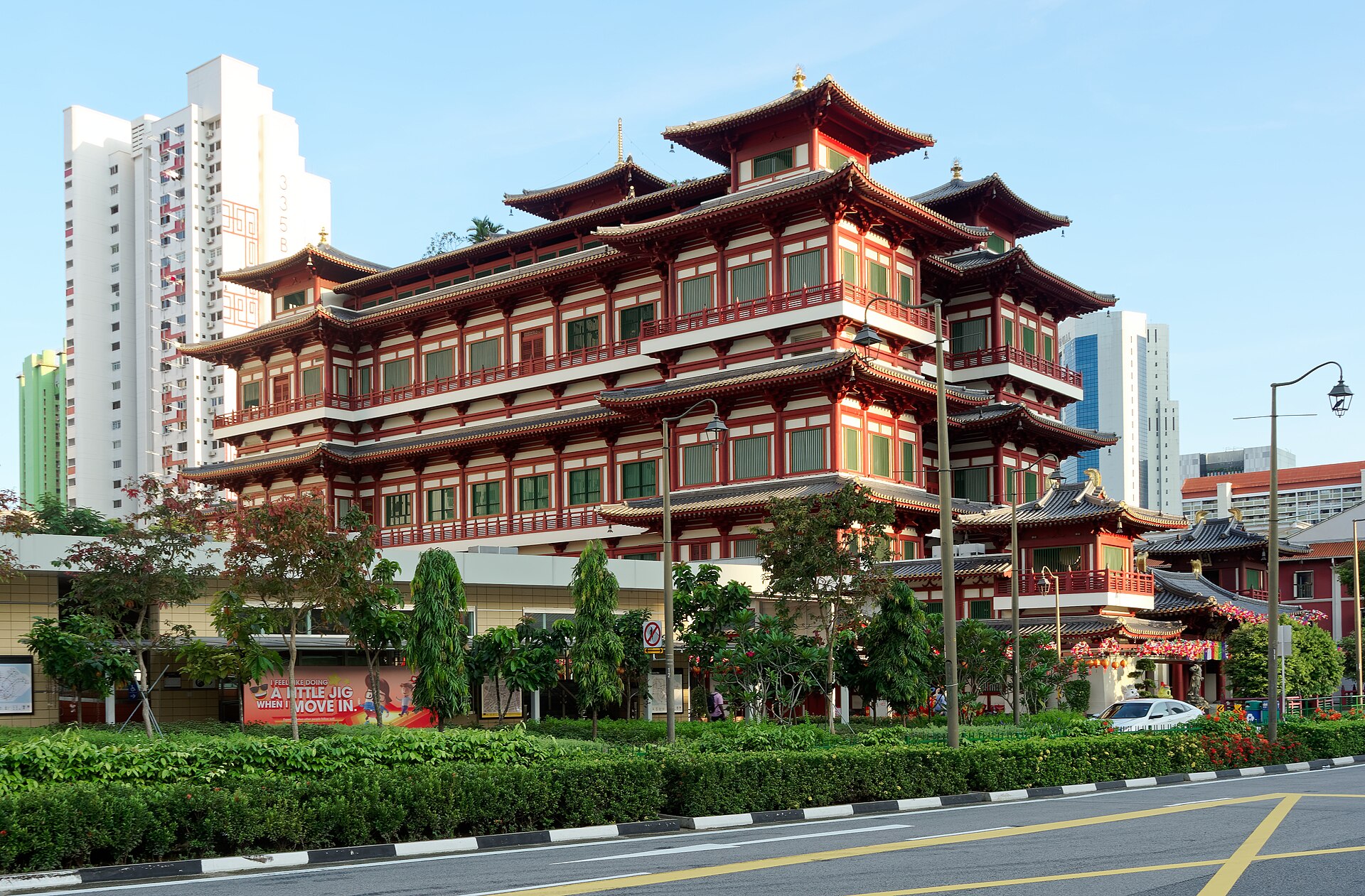
The Buddha Tooth Relic Temple is a five-storey Tang Dynasty-style Buddhist temple in the heart of Chinatown that was built in 2007 but looks and feels centuries old — a testament to the meticulous scholarship and craftsmanship that went into recreating the architectural vocabulary of 7th-century Chinese Buddhism in a 21st-century building. The temple houses what is claimed to be a tooth relic of the Buddha, discovered in a collapsed stupa in Myanmar in 1980 and enshrined here in a 420-kilogram gold stupa on the fourth floor. The temple's interior is a progression from the public to the sacred. The ground floor is a main prayer hall with a 15-foot seated Buddha. The second and third floors house the Buddhist Culture Museum, which displays several hundred Buddhist artifacts in a well-curated exhibition that explains the religion's history, symbolism, and regional variations. The fourth floor contains the Sacred Light Hall, where the tooth relic is displayed in its gold stupa — the gold was donated by devotees and weighs as much as a grand piano. The rooftop garden is the unexpected pleasure — a terrace garden with a 10,000-Buddha prayer wheel, orchids, and views across the Chinatown roofscape that provide a moment of calm above the street-level commercial intensity. The temple is free, air-conditioned (a significant attraction in Singapore's heat), and welcomes visitors of all backgrounds. The vegetarian restaurant on the ground floor serves simple meals that are popular with the Chinatown lunch crowd.
Chinatown
Pagoda Street, Singapore 059964
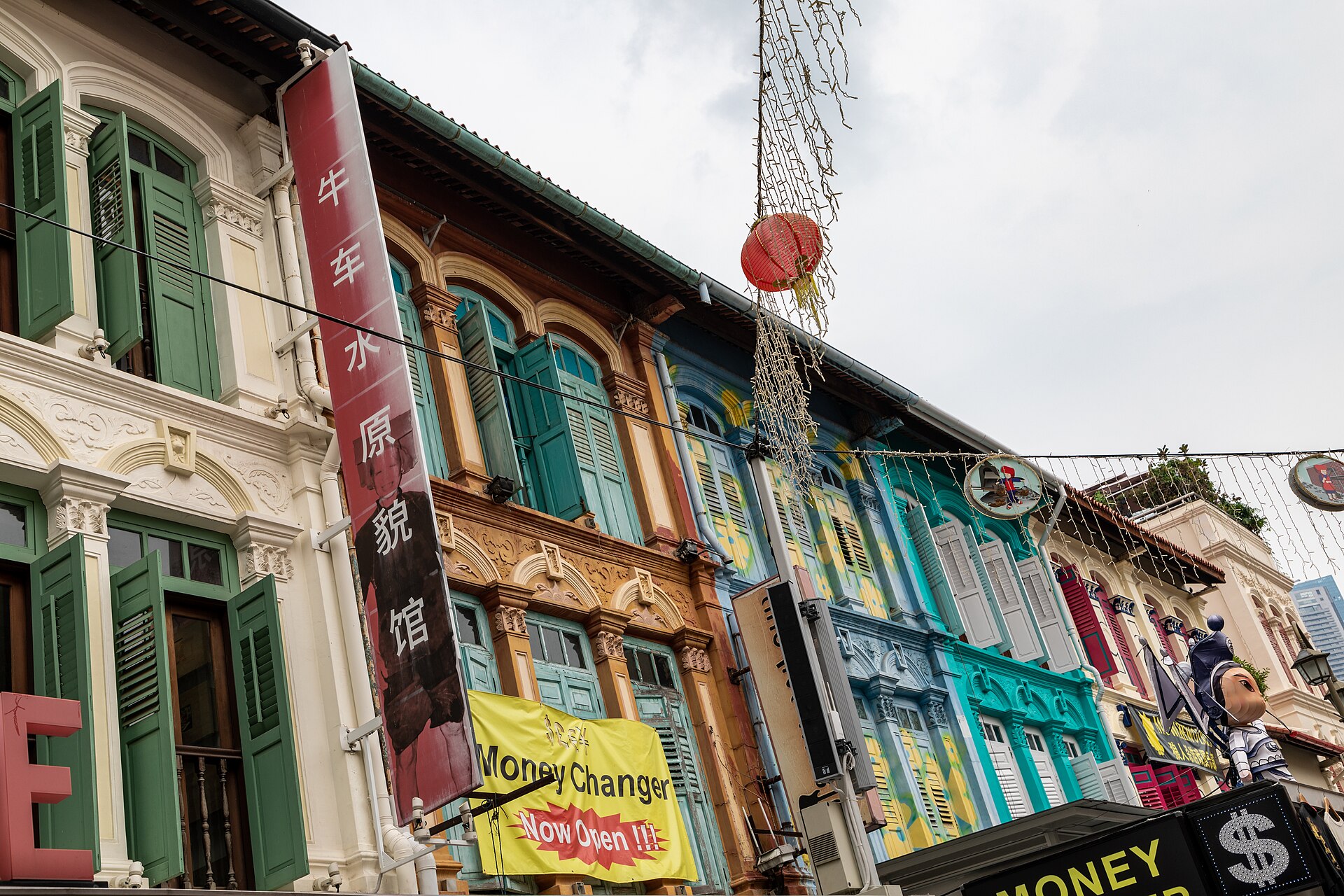
Chinatown is where Singapore's Chinese immigrant history is preserved in five streets of restored shophouses, temples, and hawker centres — and where the tension between heritage preservation and tourist commerce plays out in real time. The district was designated by Stamford Raffles in 1822 as the Chinese quarter of his planned town, and the two-storey shophouses lining Pagoda Street, Trengganu Street, and Smith Street have been meticulously restored to their original colonial appearance while housing a mix of traditional businesses and tourist shops. The food is the real draw. The Chinatown Complex Food Centre, at the corner of Smith and Sago streets, is the largest hawker centre in the world — over 260 stalls across two floors serving every variety of Chinese, Malay, Indian, and fusion cuisine that Singapore has developed over two centuries of multicultural cooking. Stall prices start at S$3 for a plate of chicken rice or char kway teow, and the quality at the best stalls rivals restaurants charging ten times more. Hong Kong Soya Sauce Chicken Rice & Noodle here became the cheapest Michelin-starred meal in the world when it received its star in 2016. Beyond the food, Chinatown contains some of Singapore's most significant religious sites. The Buddha Tooth Relic Temple, a massive Tang-dynasty-style structure built in 2007, dominates the southern end of the district. The Sri Mariamman Temple — Singapore's oldest Hindu temple, built in 1827 — sits incongruously in the middle of Chinatown, a reminder that Singapore's ethnic districts have never been as segregated as the colonial planners intended.
Cloud Forest
18 Marina Gardens Drive, Singapore 018953
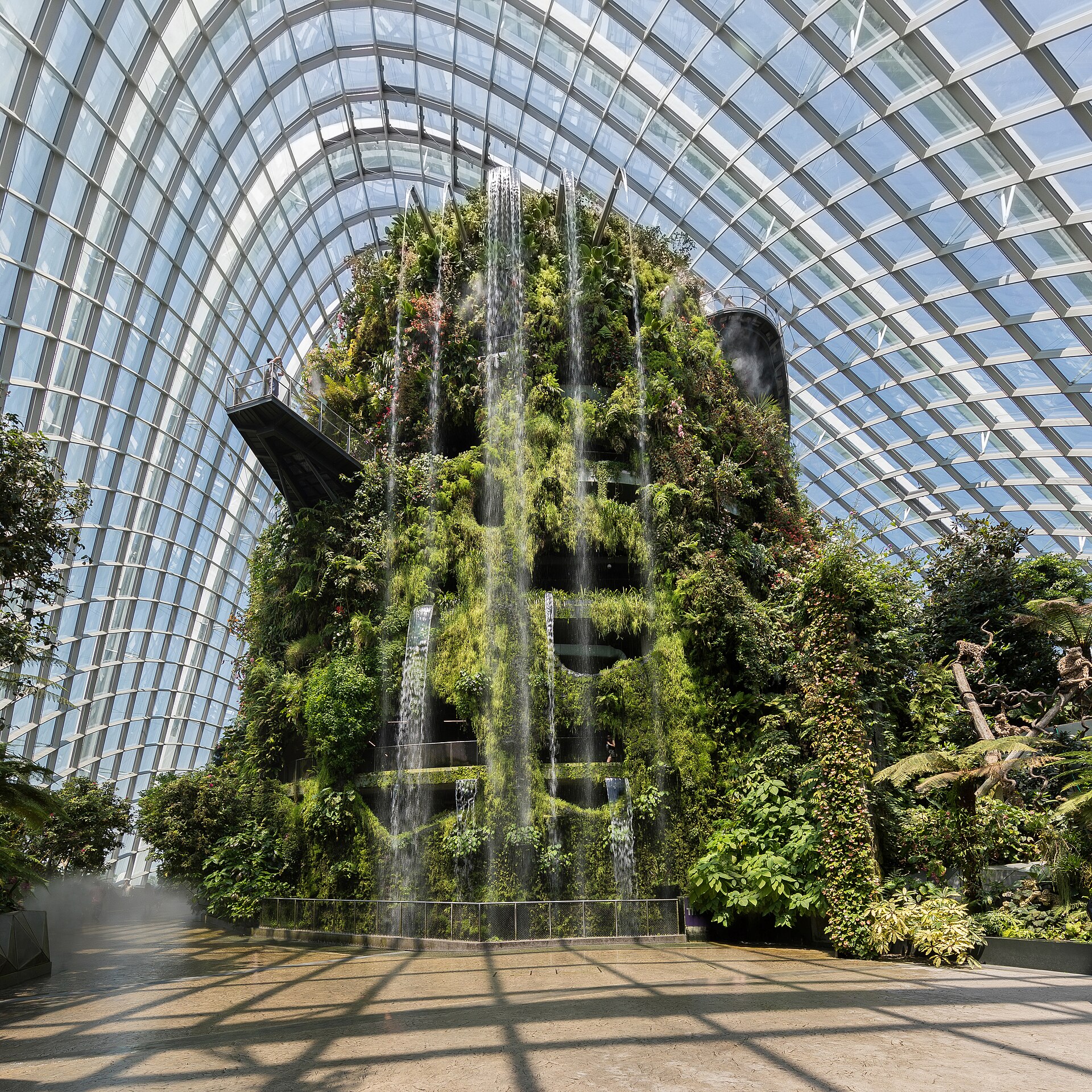
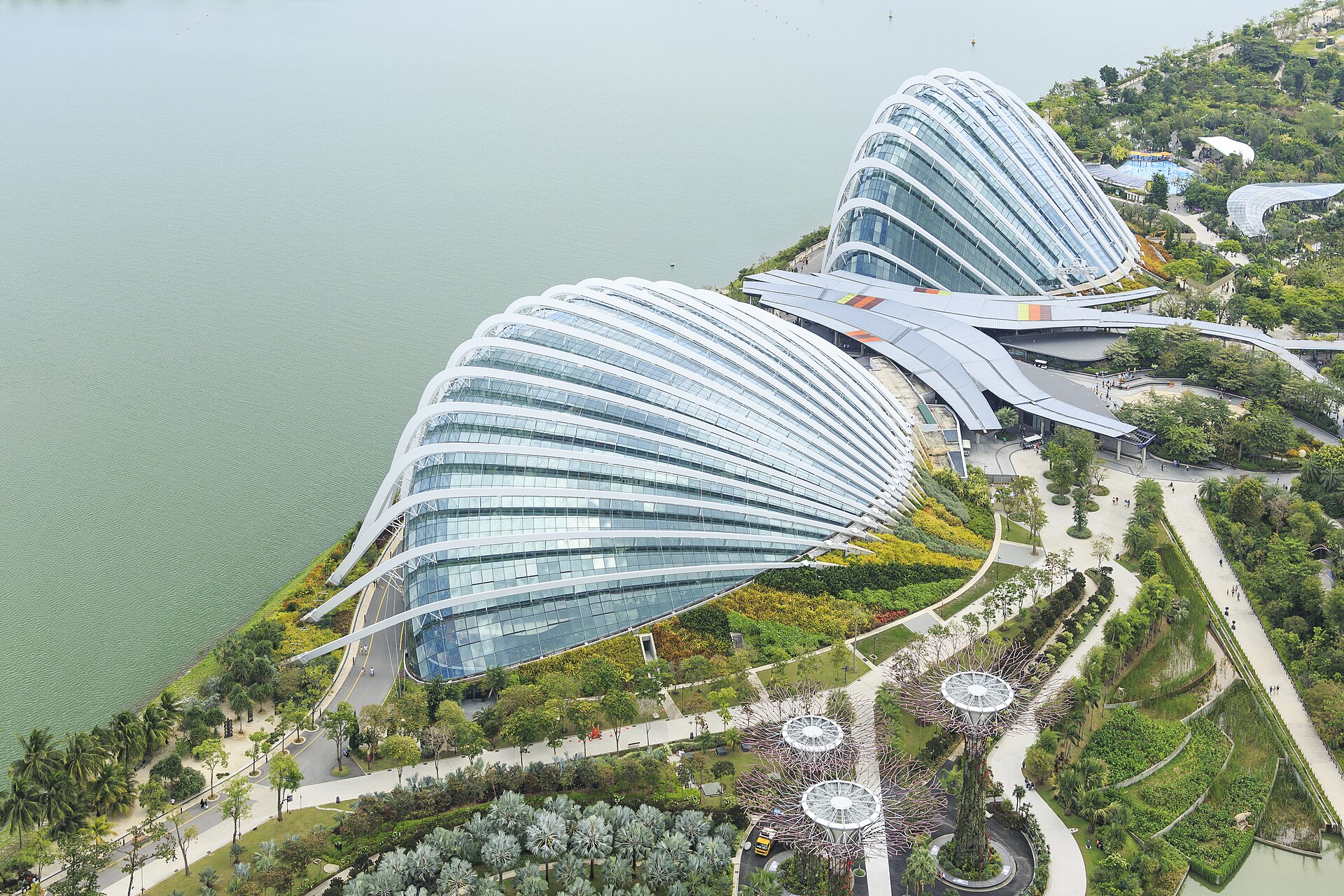
The Cloud Forest is the more dramatic of Gardens by the Bay's two conservatories — a 35-metre indoor waterfall inside a cooled glass dome that recreates the conditions of tropical mountain forests found at elevations between 1,000 and 3,000 metres. Walking through the entrance and being hit by the wall of mist from the waterfall — the tallest indoor waterfall in the world — while the temperature drops 10 degrees from Singapore's equatorial heat is one of the most disorienting and delightful sensory experiences in the city. The conservatory is structured around a 42-metre mountain covered in plants from tropical highlands around the world — orchids, pitcher plants, ferns, mosses, and bromeliads collected from cloud forests in Southeast Asia, Central America, and Africa. An elevated walkway spirals from the top of the mountain to the bottom, passing through different altitude zones and providing views across the misty interior that look more like a science fiction film set than a botanical exhibit. The conservation message is embedded rather than preachy — the exhibits explain how cloud forests are among the most threatened ecosystems on Earth, disappearing as climate change pushes the cloud layer higher up mountains. The final section, called 'Earth Check,' presents climate data in a way that uses the beauty you've just walked through as emotional context for the science. It's effective because the Cloud Forest has already made you care about these ecosystems by showing you how extraordinary they are, which is a more persuasive strategy than lecturing.
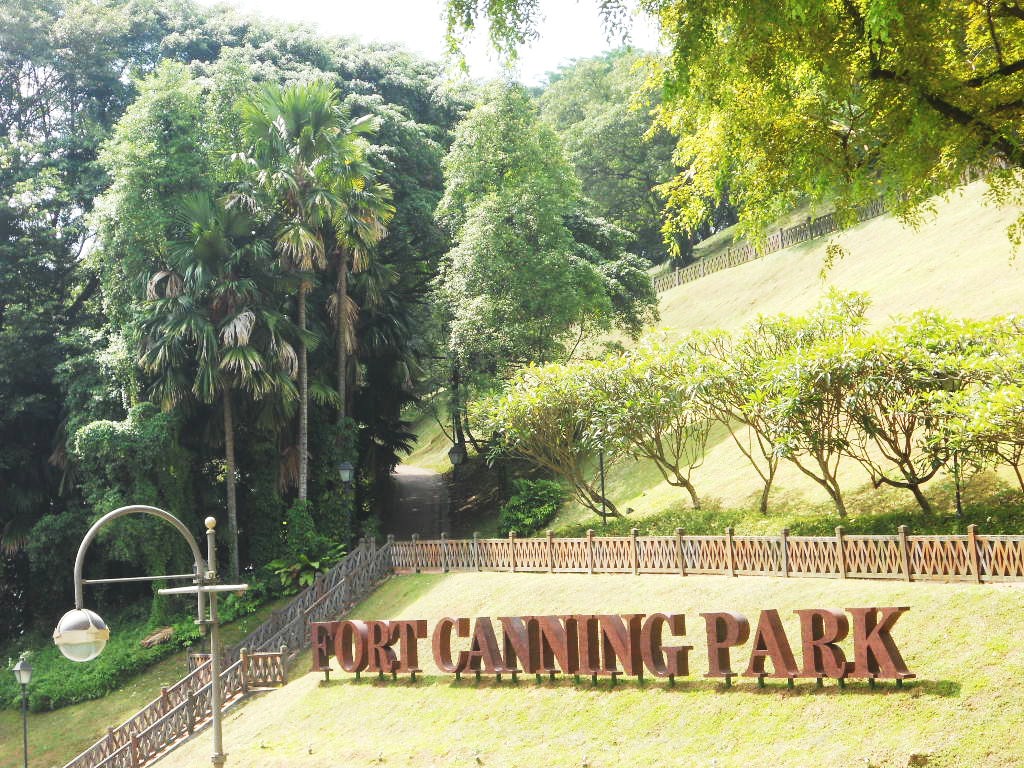
Fort Canning Park
River Valley Rd, Tanglin, Singapore, Singapore
Fort Canning is a hilltop park in the centre of Singapore that holds more history per square metre than almost anywhere on the island — 700 years of it, from the 14th-century Malay kings who built a palace on the summit to the British colonial fortress to the underground bunker where the decision to surrender Singapore to the Japanese was made in 1942. The hill was known as Bukit Larangan (Forbidden Hill) to the Malay population because it was believed to be the burial site of the last king of Singapura, Iskandar Shah. Archaeological excavations have uncovered 14th-century artifacts including gold jewellery, Chinese ceramics, and Javanese coins, confirming that a significant settlement existed here centuries before Raffles arrived. The Keramat (shrine) on the hilltop, traditionally associated with Iskandar Shah's grave, is still visited by people leaving offerings. The British built Fort Canning in 1860 — though they demolished it in 1907 when it became militarily obsolete — and the underground Battle Box, where Lieutenant-General Arthur Percival made the decision to surrender Singapore on 15 February 1942, is preserved as a museum with wax figures recreating the meeting. The park today is a green oasis above the Civic District, connected to the National Museum and the Clarke Quay entertainment district by walking paths, and the spiral staircase known as the Fort Canning Tree Tunnel has become one of Singapore's most photographed spots.
Gardens by the Bay
18 Marina Gardens Dr, Marina South, Singapore, 018953, Singapore
Gardens by the Bay is TripAdvisor's number one attraction in Singapore — a 101-hectare park of Supertrees, cloud forests, and flower domes that transformed reclaimed land behind Marina Bay Sands into a botanical spectacle that draws over 15 million visitors a year. The park is the centrepiece of Singapore's 'City in a Garden' vision, and it delivers on that ambition with the kind of precision that Singapore applies to everything. The Supertree Grove is the park's most recognisable feature — 18 steel-and-concrete structures between 25 and 50 metres tall, covered in living vertical gardens of orchids, ferns, and bromeliads. At night, the Garden Rhapsody light-and-sound show transforms the Supertrees into a neon forest of colour and music, and the show is free, which in Singapore is notable. The OCBC Skyway, a 128-metre walkway connecting two of the tallest Supertrees at 22 metres above the ground, gives you a walking-height view of the grove and the city skyline beyond. The two conservatories — the Flower Dome and the Cloud Forest — are the world's largest column-free glasshouses. The Flower Dome recreates Mediterranean and semi-arid climates with a rotating display of flowers that changes seasonally. The Cloud Forest houses a 35-metre indoor waterfall and recreates the cool, misty conditions of tropical highland forests at altitudes of 1,000 to 3,000 metres — a surreal experience in a city that sits virtually on the equator. The outdoor gardens are free; the conservatories require tickets but are worth every dollar.
Haw Par Villa
262 Pasir Panjang Rd, Queenstown, Singapore, 118628, Singapore
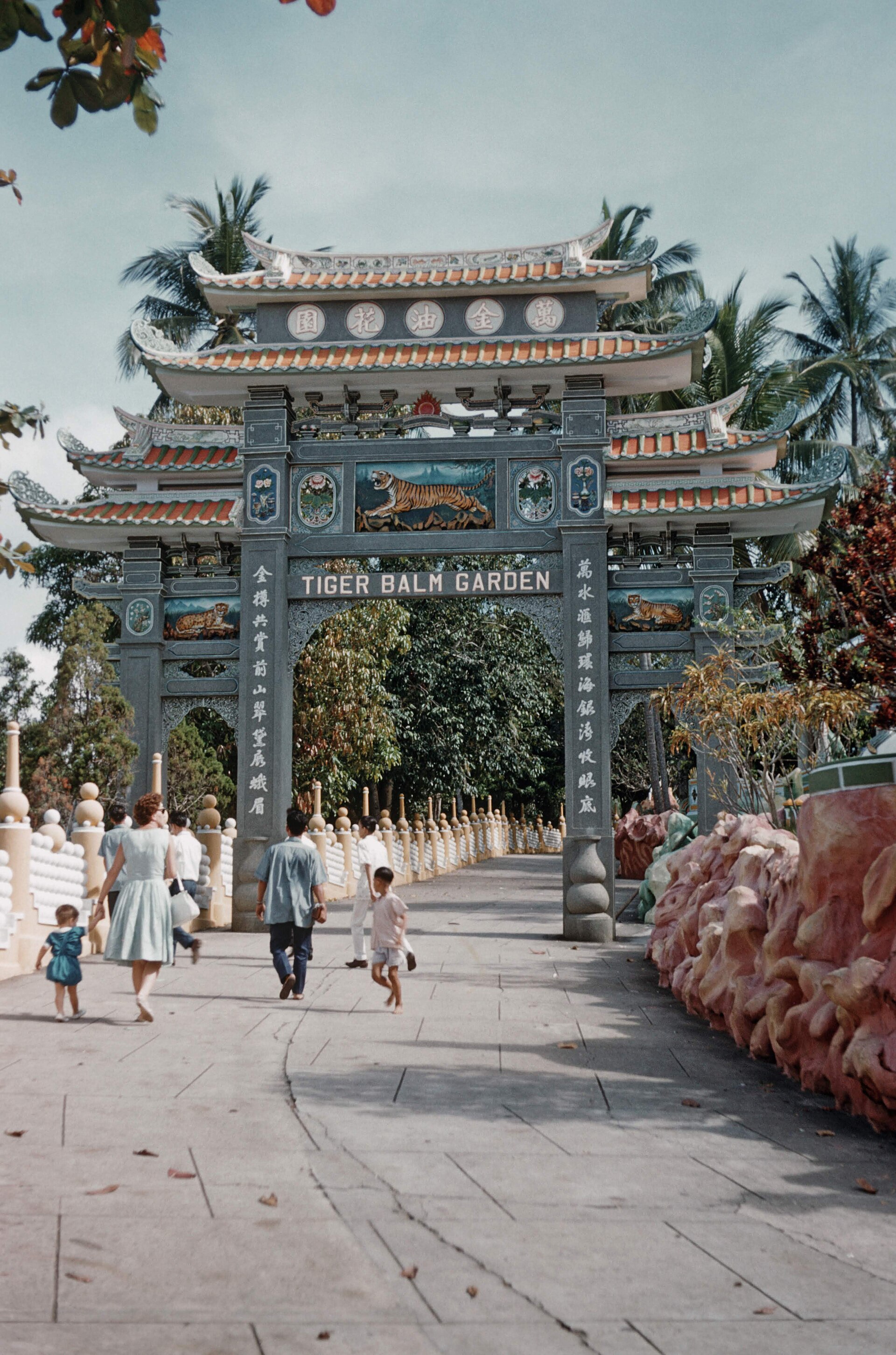
Haw Par Villa is the strangest attraction in Singapore — a hillside theme park built in 1937 by the Aw brothers (creators of Tiger Balm) featuring over 1,000 statues and dioramas depicting scenes from Chinese mythology, Confucian moral tales, and the Ten Courts of Hell, rendered in a style that ranges from folk art to fever dream. The park is free, rarely crowded, and unlike anything else in Singapore or anywhere else. The Ten Courts of Hell is the main event — an underground walkway through ten chambers depicting the punishments awaiting sinners in Chinese Buddhist mythology, illustrated with graphic dioramas of people being sawn in half, ground by millstones, disembowelled by demons, and thrown into boiling oil. The scenes are presented with the cheerful grotesquerie of a village carnival rather than the solemnity of a religious exhibit, and the combination of moral instruction and creative violence has been traumatising Singaporean schoolchildren since the 1950s. The rest of the park is less terrifying but equally peculiar — statues of Journey to the West characters, scenes from Chinese folklore involving crabs fighting humans, a giant gorilla for no apparent reason, and moral tableaux that explain Confucian values through painted plaster figures frozen in attitudes of virtue or vice. The park has been renovated but deliberately retains its original aesthetic — kitschy, didactic, and deeply sincere — and visiting it provides a window into a version of Chinese popular culture that has largely disappeared elsewhere.
Henderson Waves & Southern Ridges
221 Henderson Rd, Bukit Merah, Singapore, 159557, Singapore
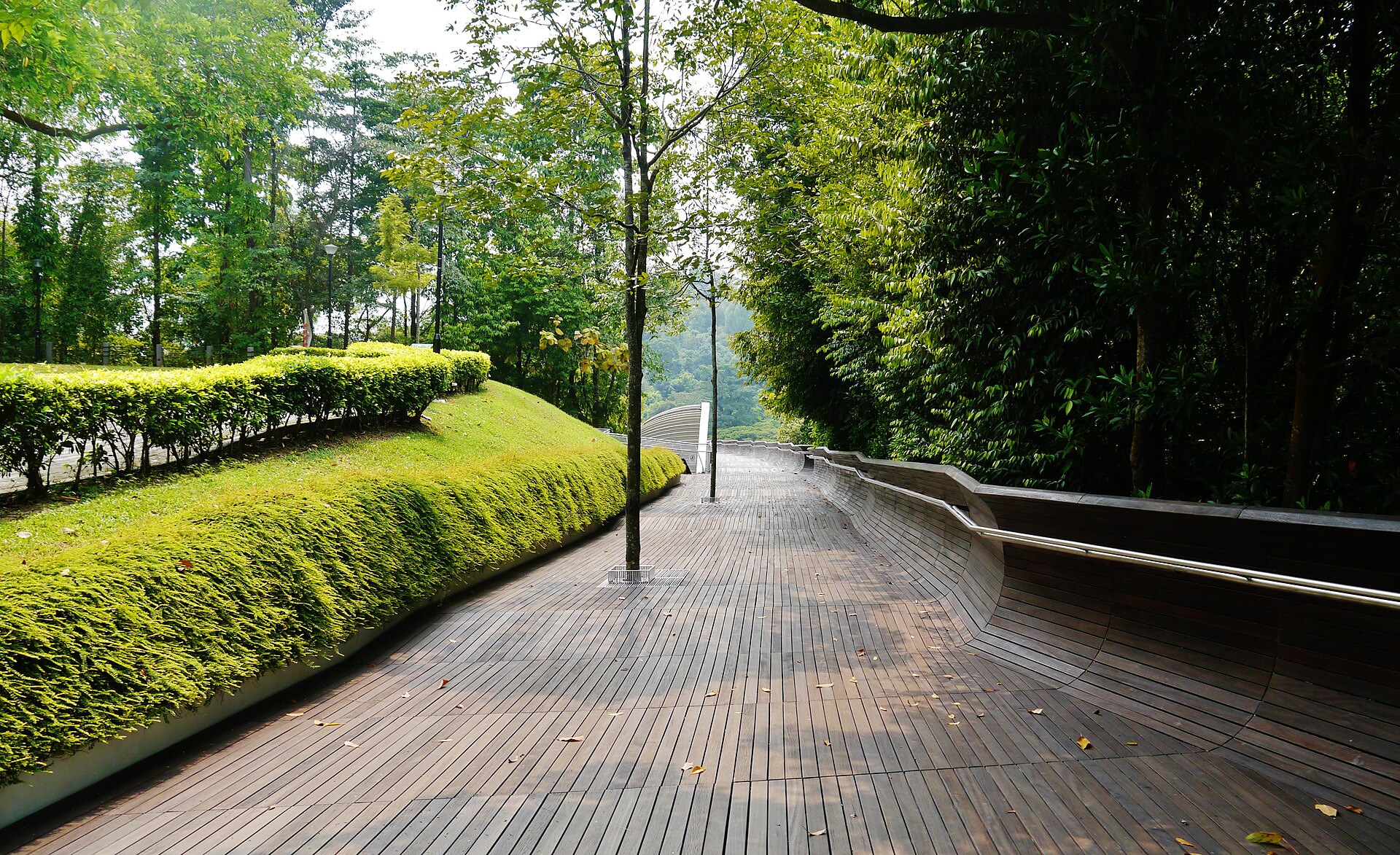
Henderson Waves is Singapore's highest pedestrian bridge — a 274-metre undulating steel structure that connects Mount Faber Park to Telok Blangah Hill Park at 36 metres above Henderson Road, and walking across it feels like riding a frozen wave through the forest canopy. The bridge is part of the Southern Ridges, a 10-kilometre hilltop trail that connects five parks from Kent Ridge to Mount Faber and is one of the best free experiences in Singapore. The bridge's design — seven curved 'ribs' of steel and yellow balau wood that rise and dip along its length, creating sheltered alcoves at each trough — was completed in 2008 and immediately became the most photographed piece of infrastructure on the Southern Ridges. The alcoves, inset with wooden benches, look out over the tree canopy and the container port below, and at night the bridge is lit with LED lights that change colour and make the structure glow against the dark forest. The full Southern Ridges trail takes about three hours and passes through primary and secondary forest, a canopy walk, a series of elevated boardwalks, and the Reflections at Bukit Chandu museum (which tells the story of the Malay Regiment's last stand against the Japanese in 1942). The trail ends at Mount Faber, where a cable car connects to Sentosa Island, making it possible to walk from a nature reserve to a beach resort in a single afternoon. The entire trail is free, well-maintained, and remarkably uncrowded for a city of 5.5 million people.
Jewel Changi Airport
78 Airport Boulevard, Singapore 819666
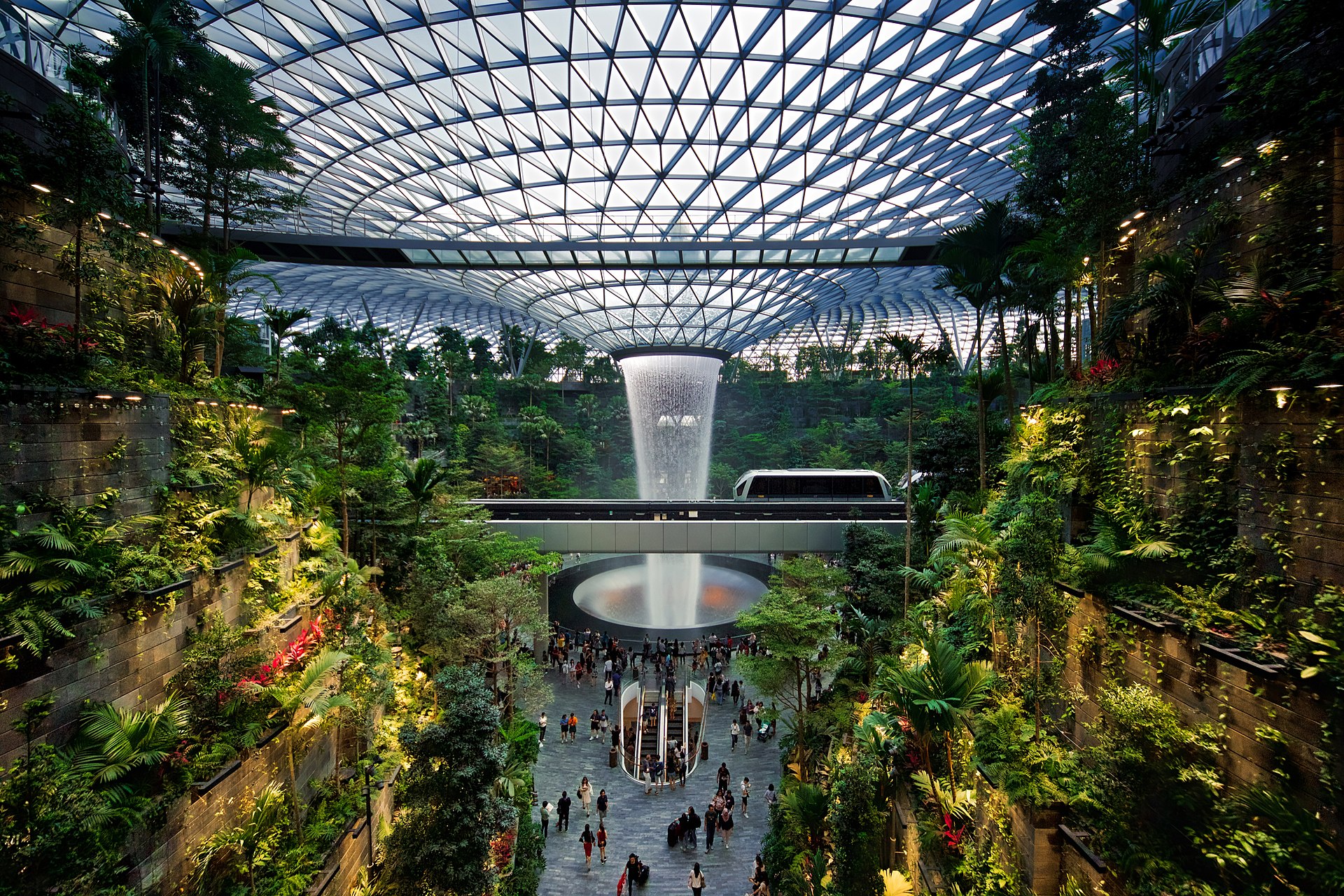
Jewel Changi Airport is either the world's best airport terminal or the world's strangest shopping mall — a glass-domed complex connecting Changi Airport's three terminals that houses the world's tallest indoor waterfall, a five-storey indoor forest, and 280 shops and restaurants in a space designed by Moshe Safdie (who also designed Marina Bay Sands) to make layovers feel like a destination. The Rain Vortex — a 40-metre indoor waterfall that plunges through the centre of the dome from a circular opening in the roof — is the building's centrepiece, and at night it becomes a light show that projects patterns and colours onto the falling water. The Shiseido Forest Valley, a terraced indoor garden climbing five storeys around the waterfall, contains over 2,000 trees and palms and provides a walking trail through tropical vegetation that is surreal enough inside an airport to make you question whether you've actually landed. The top floor, Canopy Park, has a hedge maze, mirror maze, walking nets suspended above the forest, and a topiary walk — all at the top of an airport terminal, which is the kind of civic ambition that other countries direct toward museums or parks but Singapore directs toward making sure travellers have a good time. Jewel is accessible from the MRT without an airline ticket, and many Singaporeans visit it as a weekend destination rather than a transit hub. The food court includes hawker stalls from some of Singapore's most famous vendors, making it possible to eat world-class S$5 chicken rice while watching a 40-metre waterfall — a combination that exists nowhere else on Earth.
Kampong Glam & Arab Street
227 Arab St, Rochor, Singapore, 199840, Singapore
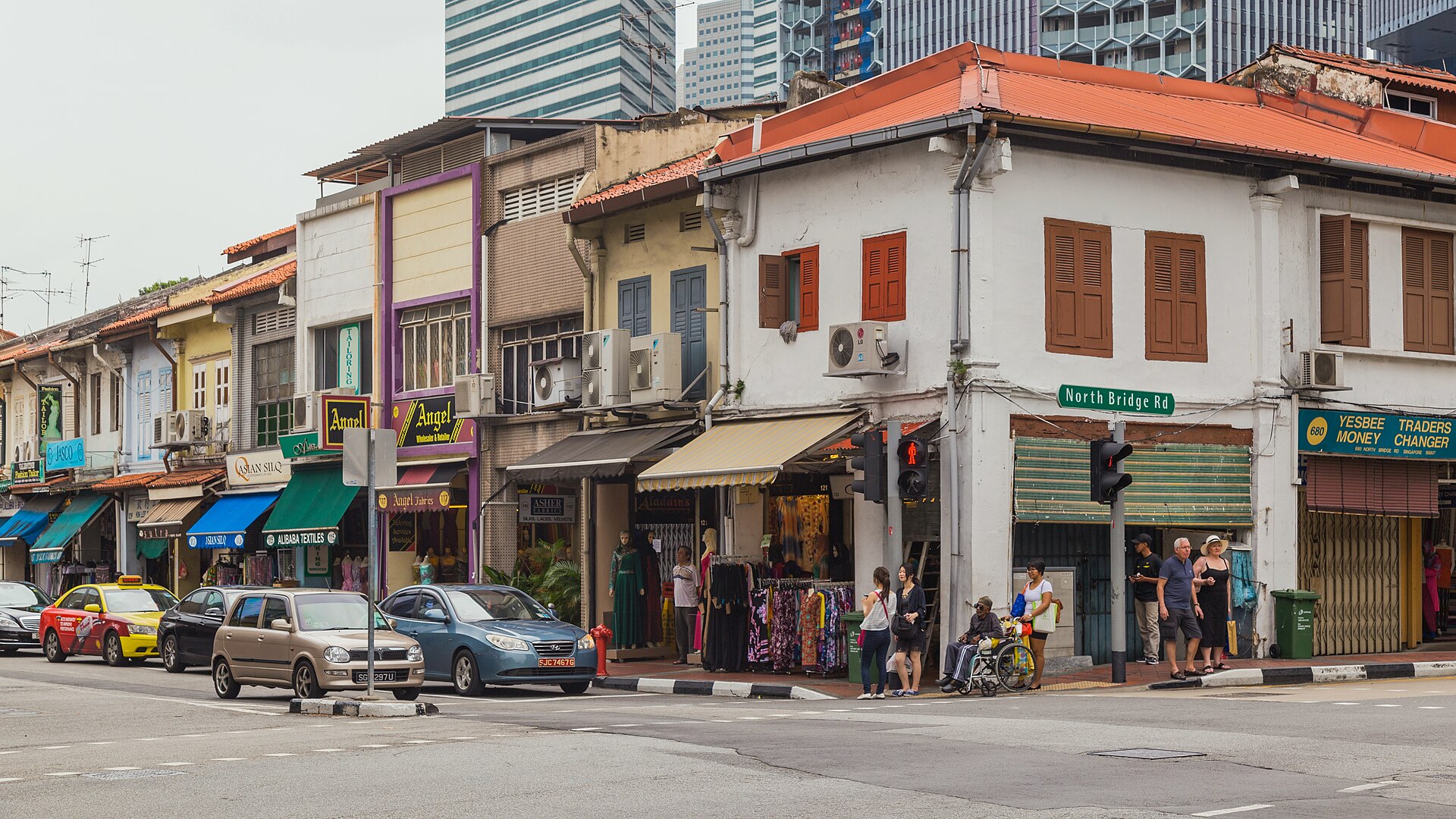
Kampong Glam is Singapore's Malay-Arab heritage quarter — a neighbourhood of shophouses, textile merchants, and perfume shops centred on the golden-domed Sultan Mosque that has been the heart of the Malay community since Raffles designated this area in his 1822 town plan. The name comes from the gelam trees that once grew here, used to caulk the boats that made Singapore a maritime trading hub. The Sultan Mosque, completed in 1932, is the largest mosque in Singapore and one of the most architecturally distinctive buildings on the island — its golden domes, visible from several blocks away, were partly funded by the base of glass bottles donated by poorer members of the community who couldn't afford cash donations. The story may be apocryphal, but looking at the base of the dome's structure, you can see what appears to be embedded glass, which gives the legend just enough physical evidence to persist. Haji Lane, a narrow alley running parallel to Arab Street, has evolved from a textile trading lane into Singapore's most Instagram-friendly shopping street — a corridor of independent boutiques, vintage shops, street art, and tiny bars housed in colourful shophouses. The contrast between the heritage architecture and the contemporary creative scene is what makes Kampong Glam work: Bussorah Street (the pedestrianised approach to the mosque) has traditional Malay restaurants and Middle Eastern eateries, while the streets behind are full of craft cocktail bars and speciality coffee shops. Both coexist without friction, which is very Singapore.
Katong & Joo Chiat
46 East Coast Rd, Marine Parade, Singapore, 428766, Singapore
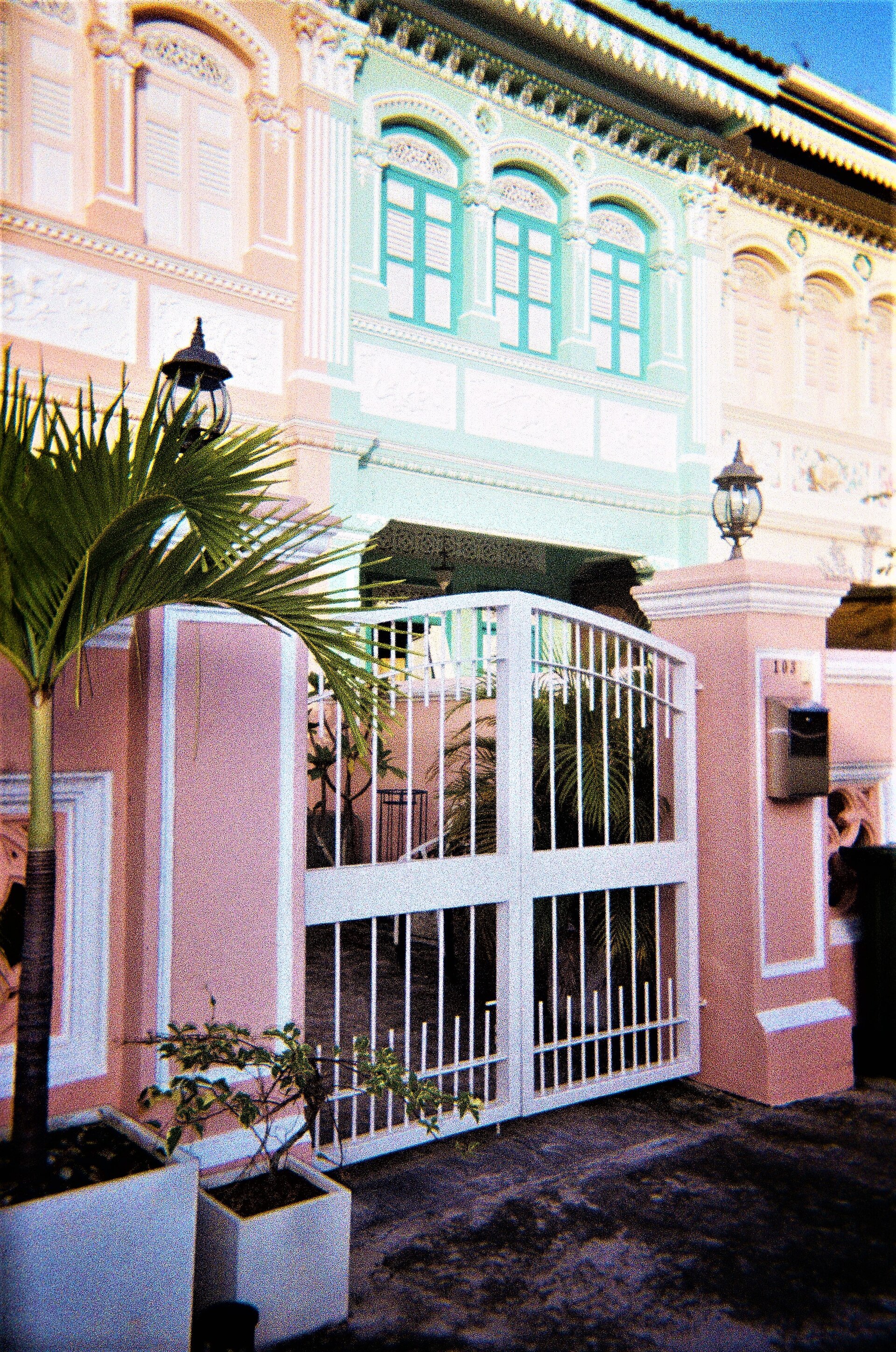
Katong and Joo Chiat form the heartland of Peranakan culture in Singapore — a neighbourhood of pastel shophouses, Nonya restaurants, and the ornate tile work that is the visual signature of the Straits Chinese community. The Peranakans (also called Baba-Nonya) are descendants of Chinese immigrants who settled in the Malay Archipelago centuries ago and developed a hybrid culture that blends Chinese and Malay traditions in food, language, dress, and architecture. This neighbourhood is where that culture is most visible. Koon Seng Road is the Instagram shot — a row of perfectly preserved Peranakan shophouses in sherbet colours (pink, mint, lavender) with ornate ceramic tiles, carved wooden doors, and plasterwork that combines Chinese motifs with Malay and European decorative elements. The tiles, imported from Europe in the early 20th century, are so distinctive that 'Peranakan tiles' has become a collecting category, and the shophouses on Koon Seng Road are the most photographed residential buildings in Singapore. The food is the neighbourhood's other treasure. Katong laksa — a coconut curry noodle soup served with cut noodles (so you eat it with a spoon, not chopsticks) — was born here, and the rivalry between the laksa stalls on East Coast Road is as fierce as any in Singapore. Joo Chiat Road and its side streets contain traditional Nonya kueh (cake) shops, Malay satay stalls, and the kind of family-run businesses that have been serving the neighbourhood for generations. Come hungry and leave understanding why the Peranakan contribution to Singapore's food culture is wildly disproportionate to the size of the community.
Lau Pa Sat
18 Raffles Quay, Singapore 048582
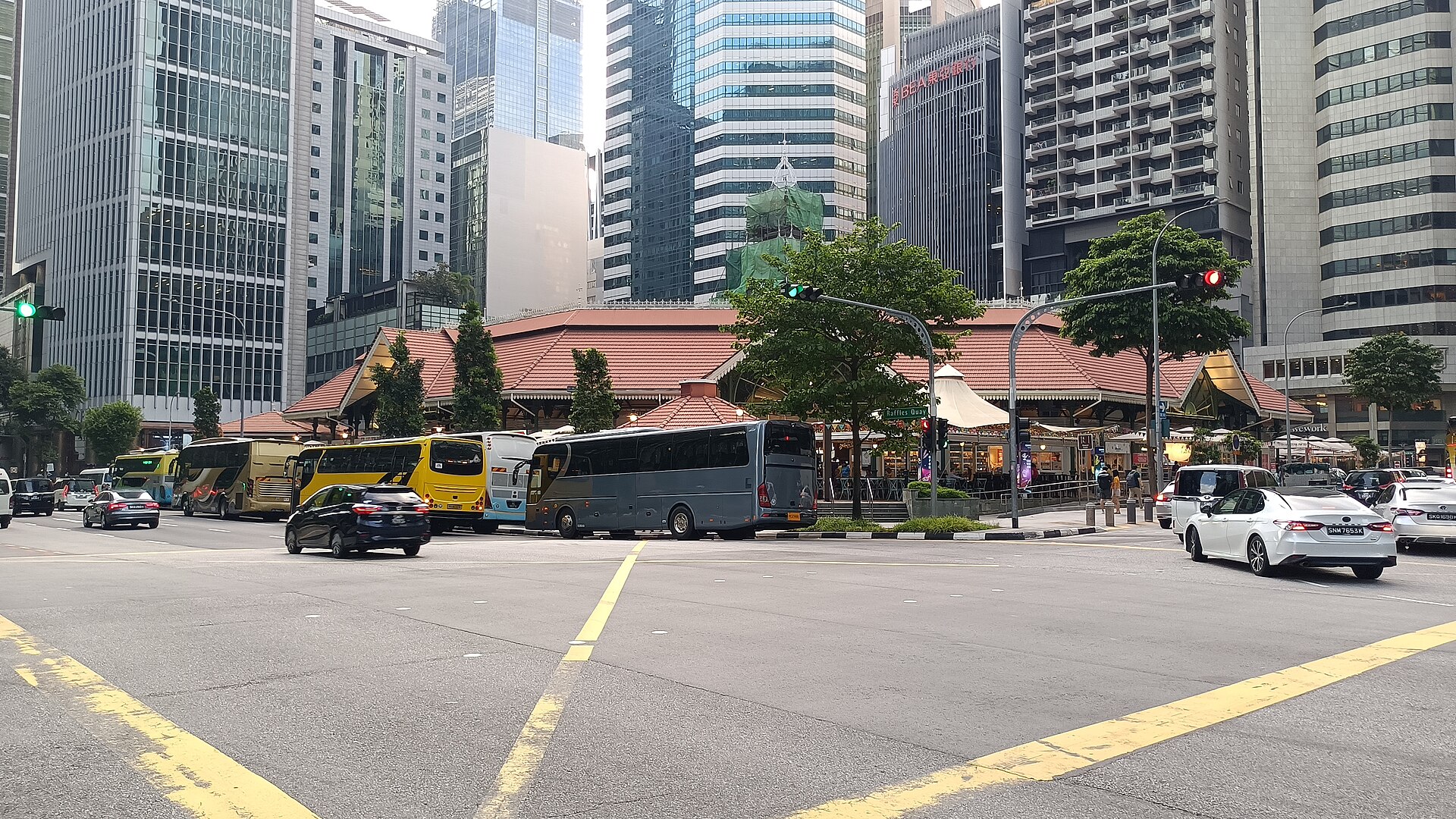
Lau Pa Sat is a Victorian cast-iron market hall in the Financial District that has been feeding Singapore since 1894 — an octagonal structure shipped in pieces from a foundry in Glasgow, assembled on the waterfront, and now sitting slightly incongruously among the glass towers of the CBD. The building was gazetted as a national monument in 1973, which is why a 19th-century Scottish cast-iron market survives in the middle of Singapore's most expensive real estate. The hawker stalls inside serve the usual Singapore repertoire — chicken rice, laksa, nasi lemak, wonton mee — and the quality ranges from excellent to tourist-serviceable. But the real event is the satay street that sets up nightly on Boon Tat Street alongside the market. After 7pm, the street is closed to traffic and filled with charcoal grills, and the vendors — each specialising in chicken, beef, mutton, or prawn satay — create a wall of smoke and the smell of burning coconut shells that draws office workers from the surrounding towers like a dinner bell. The market's name means 'old market' in Hokkien — it was renamed when a newer market was built nearby, and the 'old' stuck. The cast-iron structure, with its intricate columns, arched windows, and central cupola, is a beautiful example of colonial-era prefabricated architecture — the entire building was designed in London, manufactured in Scotland, shipped to Singapore, and assembled on-site, which was standard practice for British imperial infrastructure in the 19th century.
Little India
Serangoon Rd, Kallang, Singapore, Singapore
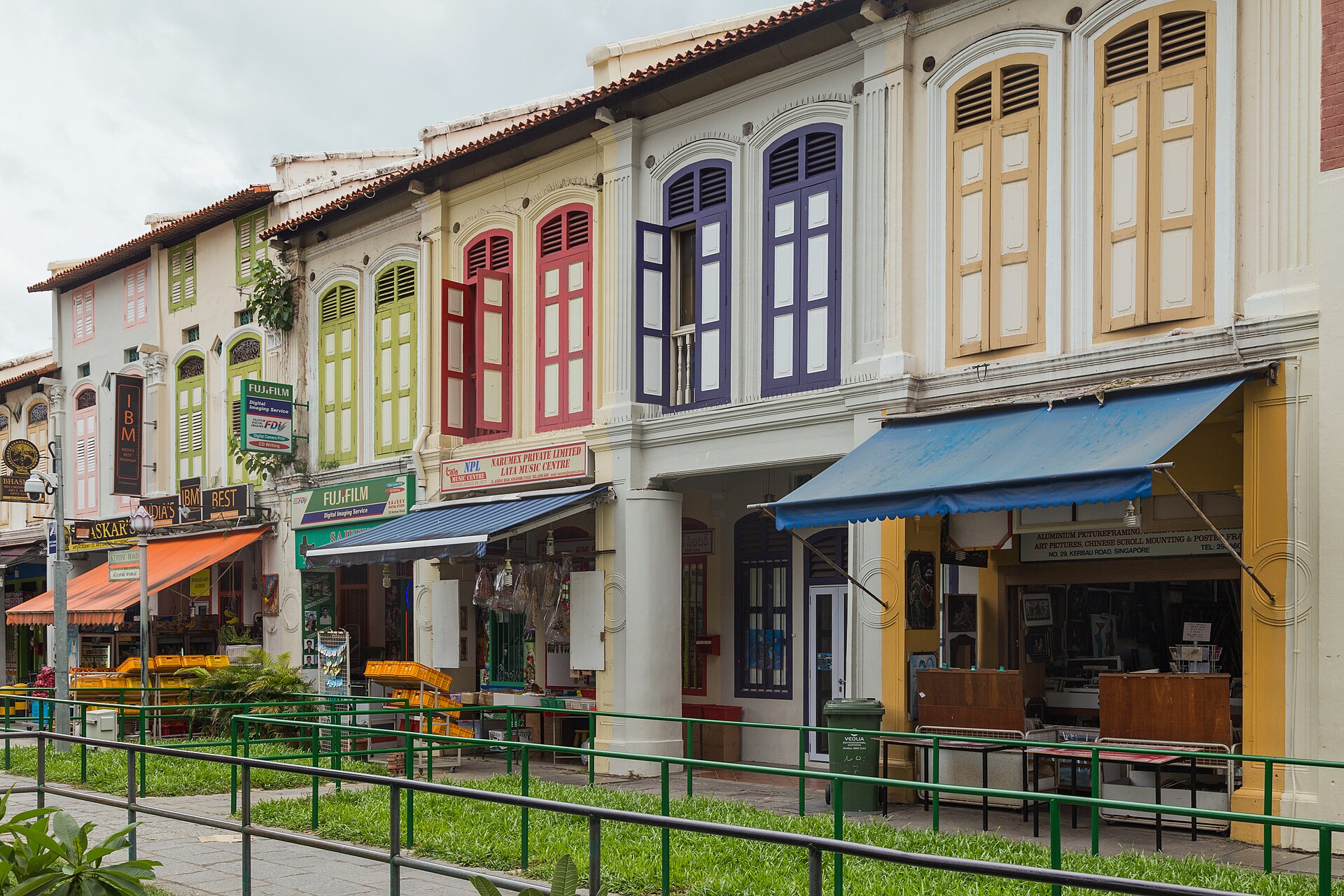
Little India is the most sensory neighbourhood in Singapore — a riot of colour, sound, and smell that hits you the moment you exit the MRT station. Flower garland shops hang jasmine and marigold strings from every available surface. Sari stores blast Bollywood music onto the street. The smell of cumin, turmeric, and frying ghee drifts from restaurant kitchens, and the vegetable vendors at Tekka Centre arrange their produce with an aesthetic precision that turns a wet market into a still life. The neighbourhood has been the centre of Singapore's Indian community since cattle traders and labourers settled here in the 1820s, and it remains the most authentic ethnic enclave in a city where rapid development has sanitised many other districts. The shophouses along Serangoon Road, Buffalo Road, and Dunlop Street are painted in colours that would be considered excessive anywhere else but feel exactly right here — fuchsia, lime, saffron, cobalt — and the temples, mosques, and Chinese shrines coexist within a few blocks in a microcosm of Singapore's multicultural identity. The food is extraordinary. Tekka Centre, the neighbourhood's main hawker centre, serves the best biryani, roti prata, and fish head curry in the city at prices that make the restaurant district feel like robbery. The Banana Leaf restaurants along Race Course Road serve thali meals on actual banana leaves. Mustafa Centre — a 24-hour department store that sells everything from gold jewellery to refrigerators — is an experience unto itself, and the Sunday evening crowd (when migrant workers gather in the streets on their day off) gives the neighbourhood an energy that nothing else in Singapore can match.
MacRitchie TreeTop Walk
181 Lornie Rd, Central Water Catchment, Singapore, 297732, Singapore
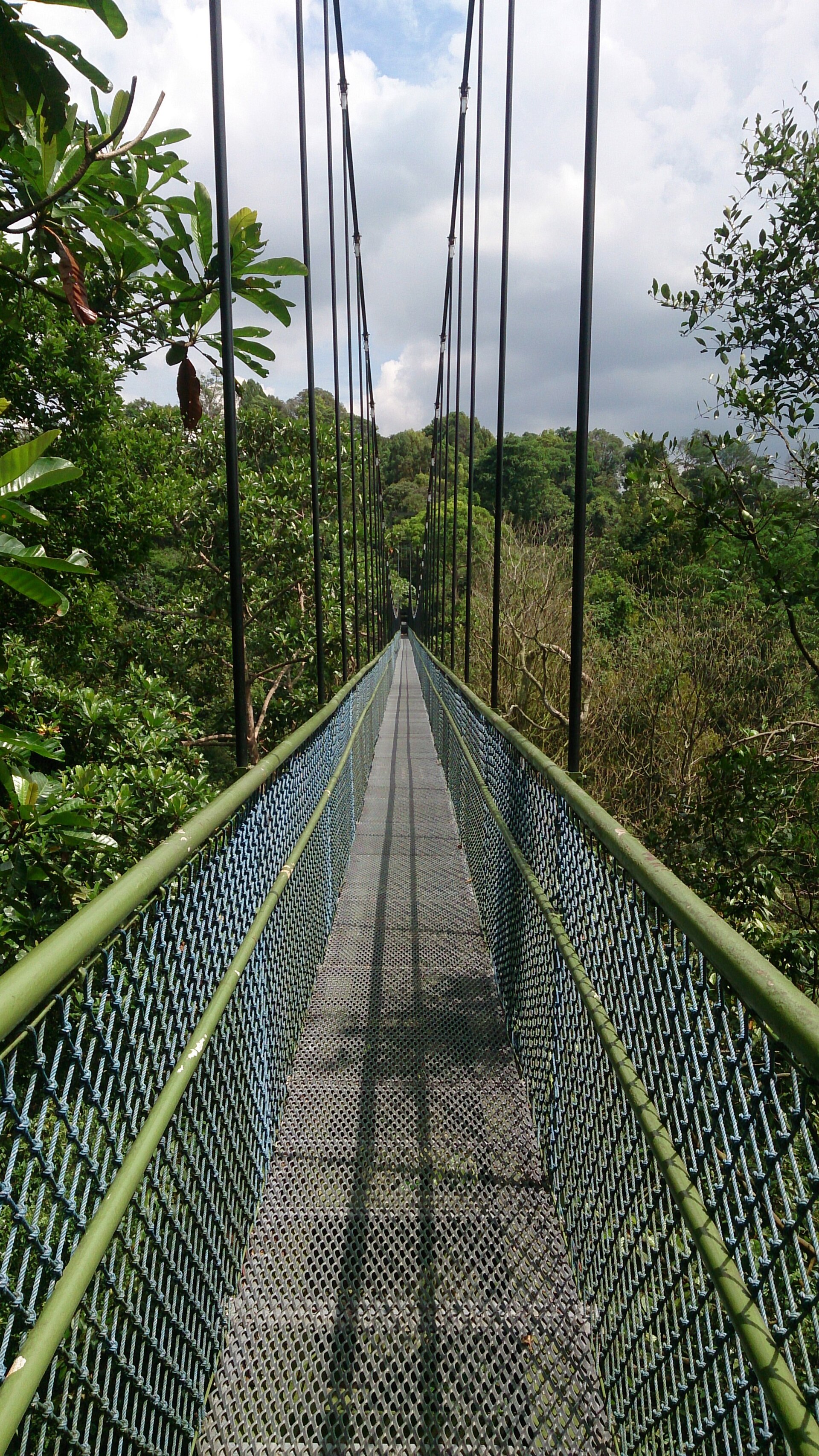
The MacRitchie TreeTop Walk is a 250-metre free-standing suspension bridge suspended 25 metres above the forest canopy in the heart of Singapore — a swaying, exhilarating crossing that puts you at eye level with the treetops of primary and mature secondary rainforest, with long-tailed macaques, flying lemurs, and over 100 bird species for company. It's the kind of experience that visitors associate with Borneo or Costa Rica, not a city of 5.5 million people. Getting to the bridge requires a 4-5 kilometre hike through MacRitchie Reservoir Park — Singapore's oldest reservoir, built in 1868, surrounded by forest that ranges from manicured parkland near the entrance to dense, humid rainforest as you approach the treetop walk. The trail passes the reservoir's edge (where monitor lizards sun themselves on the boardwalks), crosses streams on wooden bridges, and climbs gradually to the ridgeline where the suspension bridge spans a valley between two hills. The bridge is free but closes on Mondays and during heavy rain (it sways noticeably in wind, which adds to the experience or the terror depending on temperament). The one-way traffic system means you walk across in a single direction, then loop back to the main trail via a boardwalk that descends through the forest floor. The entire circuit from the nearest car park takes about two hours, and the combination of urban accessibility and genuine wilderness — you're a 20-minute drive from Orchard Road — makes MacRitchie one of Singapore's best-kept secrets.
Marina Barrage
8 Marina Gardens Dr, Marina South, Singapore, 018951, Singapore
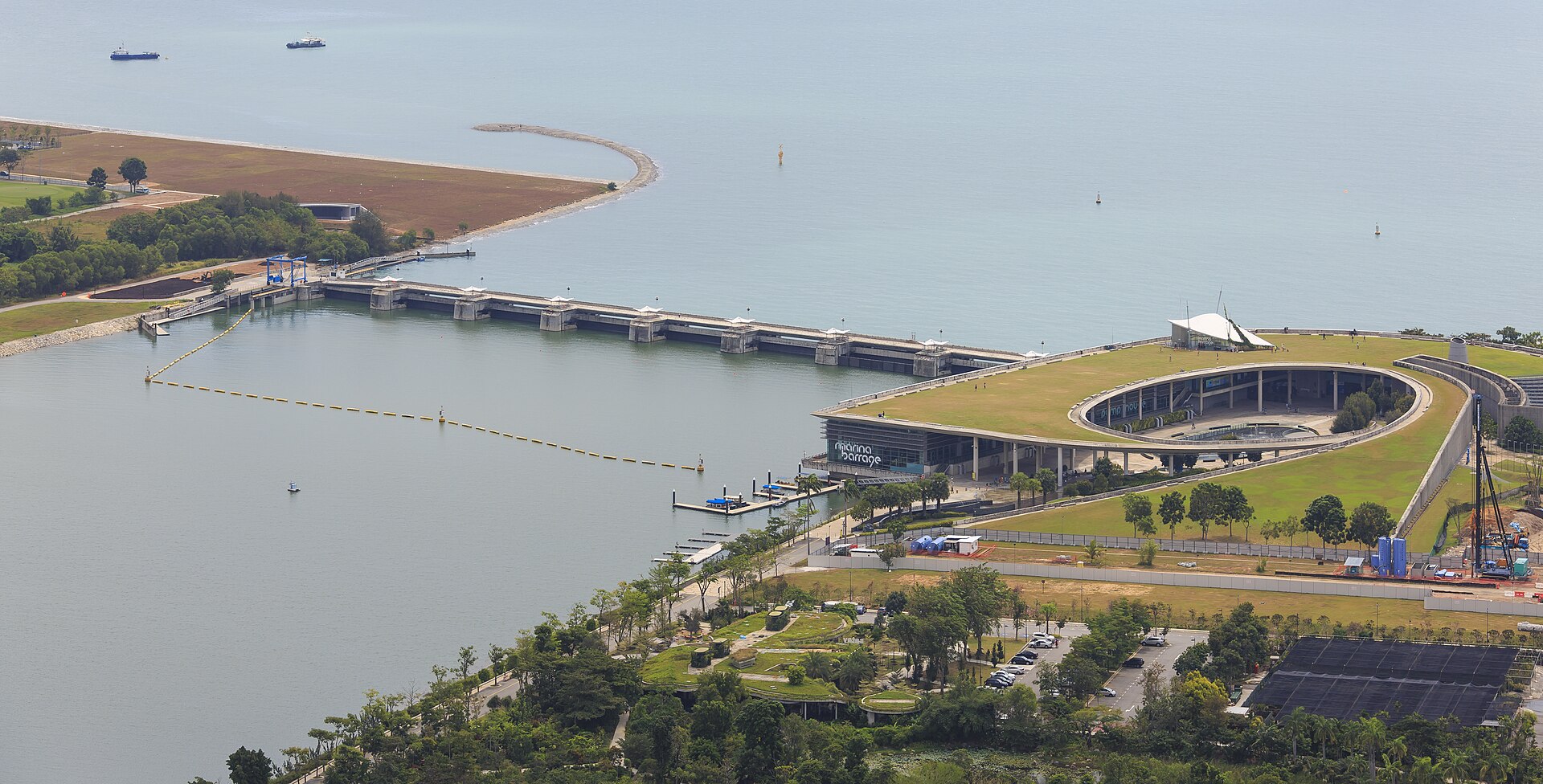
Marina Barrage is a dam across the mouth of the Marina Channel that created Singapore's largest freshwater reservoir — and its green rooftop has become one of the best free viewpoints in the city. The dam serves three functions simultaneously (flood control, freshwater supply, and recreation), which is the kind of multi-tasking infrastructure that Singapore excels at and other countries find slightly exhausting to contemplate. The rooftop lawn — a flat expanse of grass covering the dam's machinery — offers a 360-degree view that includes the entire Marina Bay circuit: the Sands, the Flyer, the Esplanade, the CBD skyline, and Gardens by the Bay. On weekends, families spread out with picnic blankets and kites (the rooftop is one of the best kite-flying spots in Singapore, thanks to the consistent wind off the water), and the atmosphere is more neighbourhood park than tourist attraction. The Singapore Sustainable Gallery inside the barrage explains how the dam works and why Singapore — a country with no natural freshwater sources — has invested billions in water security. The story is genuinely interesting: Singapore imports water from Malaysia under agreements that are a source of perpetual diplomatic tension, and the barrage is part of a strategy to achieve water self-sufficiency through reservoirs, desalination, and NEWater (recycled wastewater). The view is the draw, but the engineering story underneath it is what makes Marina Barrage distinctly Singaporean.
Marina Bay Sands
10 Bayfront Ave, Downtown Core, Singapore, 018956, Singapore
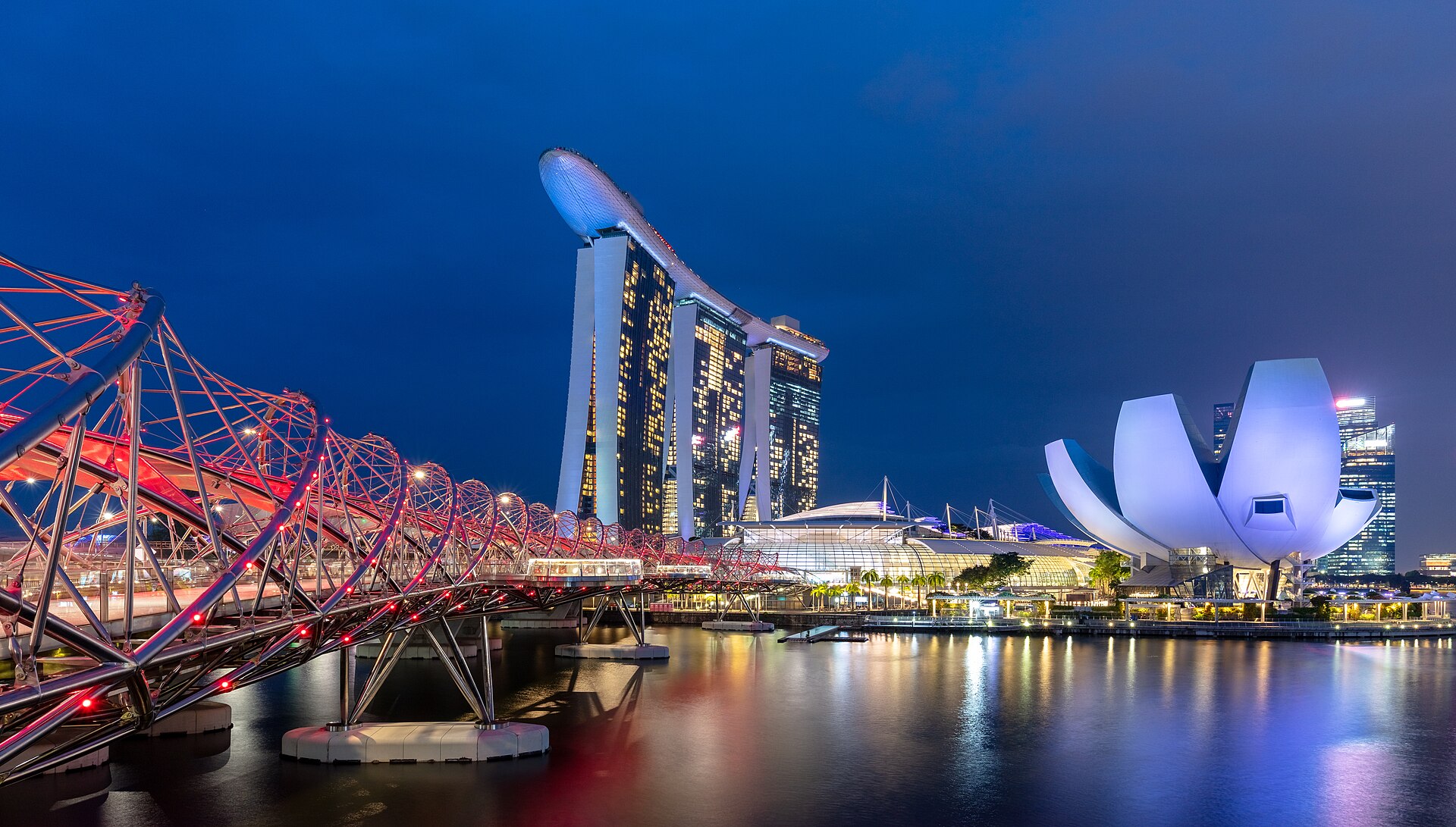
Marina Bay Sands is the building that made Singapore's skyline recognisable from space — three 55-storey towers supporting a cantilevered SkyPark that extends further than the Eiffel Tower is tall, topped by the world's most photographed infinity pool. Designed by Moshe Safdie and completed in 2010 at a cost of $8 billion, it's the most expensive standalone casino property ever built and the building that turned Marina Bay from a business district into a global icon. The SkyPark observation deck on the 57th floor is open to non-hotel guests and provides a 360-degree view of the city that makes Singapore's geography immediately comprehensible — the container port to the south, Sentosa Island to the southwest, the Strait of Malacca beyond, and the entire Marina Bay circuit with Gardens by the Bay, the Flyer, and the Merlion laid out below like a scale model. The infinity pool is hotel-guests only, but the observation deck gives you the same view without the swimsuit. The building's interior is a shopping mall, casino, convention centre, two theatres, a museum, and a canal with actual gondolas — the kind of excessive programme that only makes sense when you remember that Singapore treats architecture as a form of national branding. The ArtScience Museum at the base, shaped like an opening lotus flower, hosts touring exhibitions from major international institutions. The nightly light show, Spectra, projects water, light, and music across the bay and is free to watch from the waterfront promenade.
Maxwell Food Centre
1 Kadayanallur Street, Singapore 069184
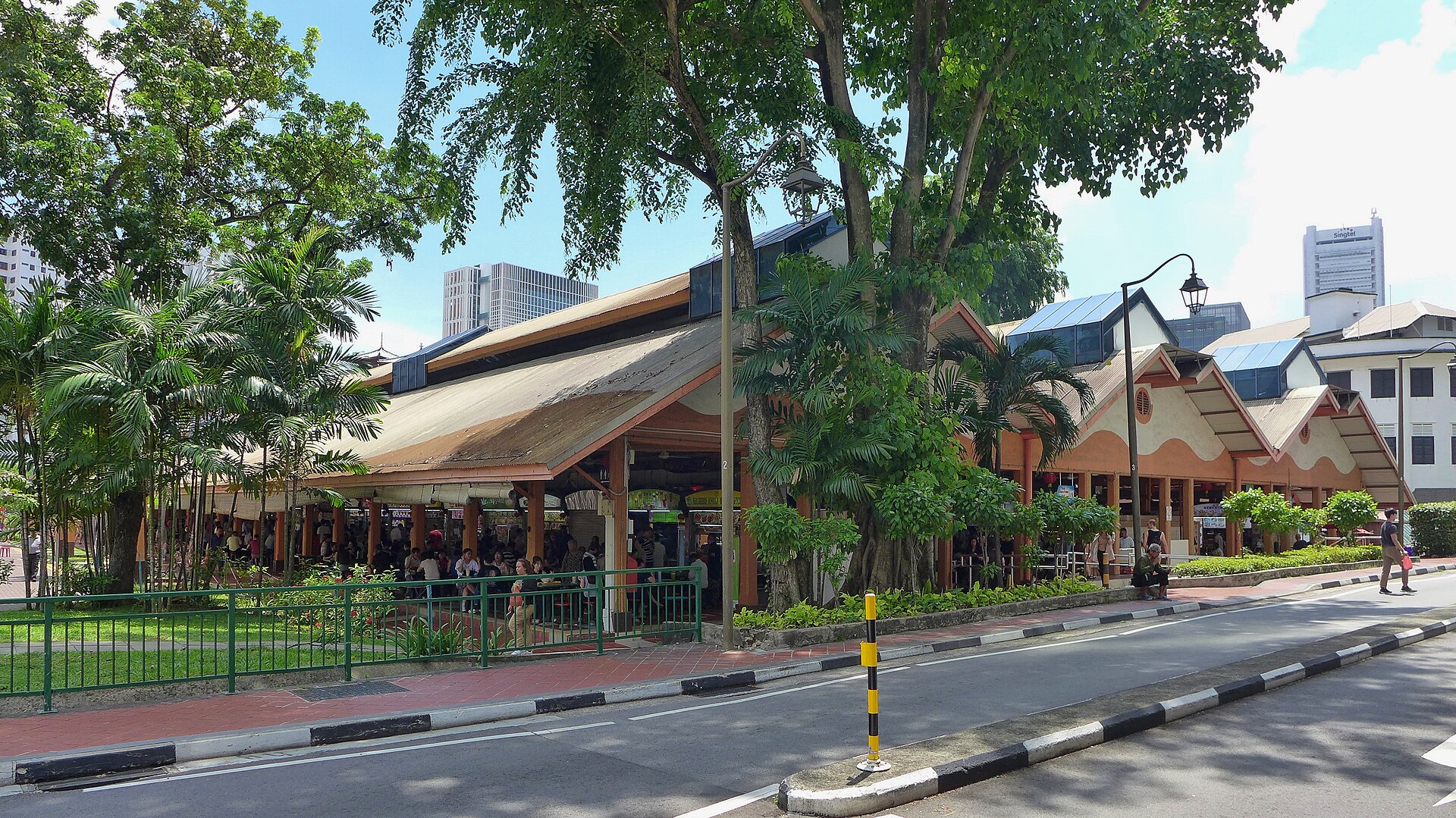
Maxwell Food Centre is the hawker centre that made Singapore's street food famous — a single-storey Art Deco building in Chinatown housing about 100 stalls that collectively represent a century of multicultural cooking. Tian Tian Hainanese Chicken Rice, stall number 10, is the most famous name in Singaporean hawker food — Anthony Bourdain filmed here, Gordon Ramsay competed against the stall's owner and lost, and the queue that forms before the stall opens is a daily pilgrimage. But Maxwell is not a one-stall operation. Ah Tai Hainanese Chicken Rice (run by a former Tian Tian apprentice) sits a few stalls away and sparks a rivalry that divides hawker loyalists. Zhen Zhen Porridge serves congee that has been on the boil since the 1970s. Rojak, popiah, and char kway teow stalls fill the remaining rows, and the combined aroma of the hundred kitchens cooking simultaneously — garlic, chilli, coconut, soy, ginger — creates a fragrance that is the olfactory equivalent of Singapore itself. Hawker centres are Singapore's great social equaliser — the one place where billionaires and taxi drivers sit at the same plastic tables, eat from the same plates, and pay the same S$3-5 per dish. Maxwell embodies this more than any other centre because its Chinatown location draws office workers, tourists, heritage locals, and the food obsessives who maintain spreadsheets of which stalls to visit and in which order. Come at 11am to beat the lunch rush, or accept the queue as part of the experience.
Merlion Park
1 Fullerton Rd, Downtown Core, Singapore, 049213, Singapore
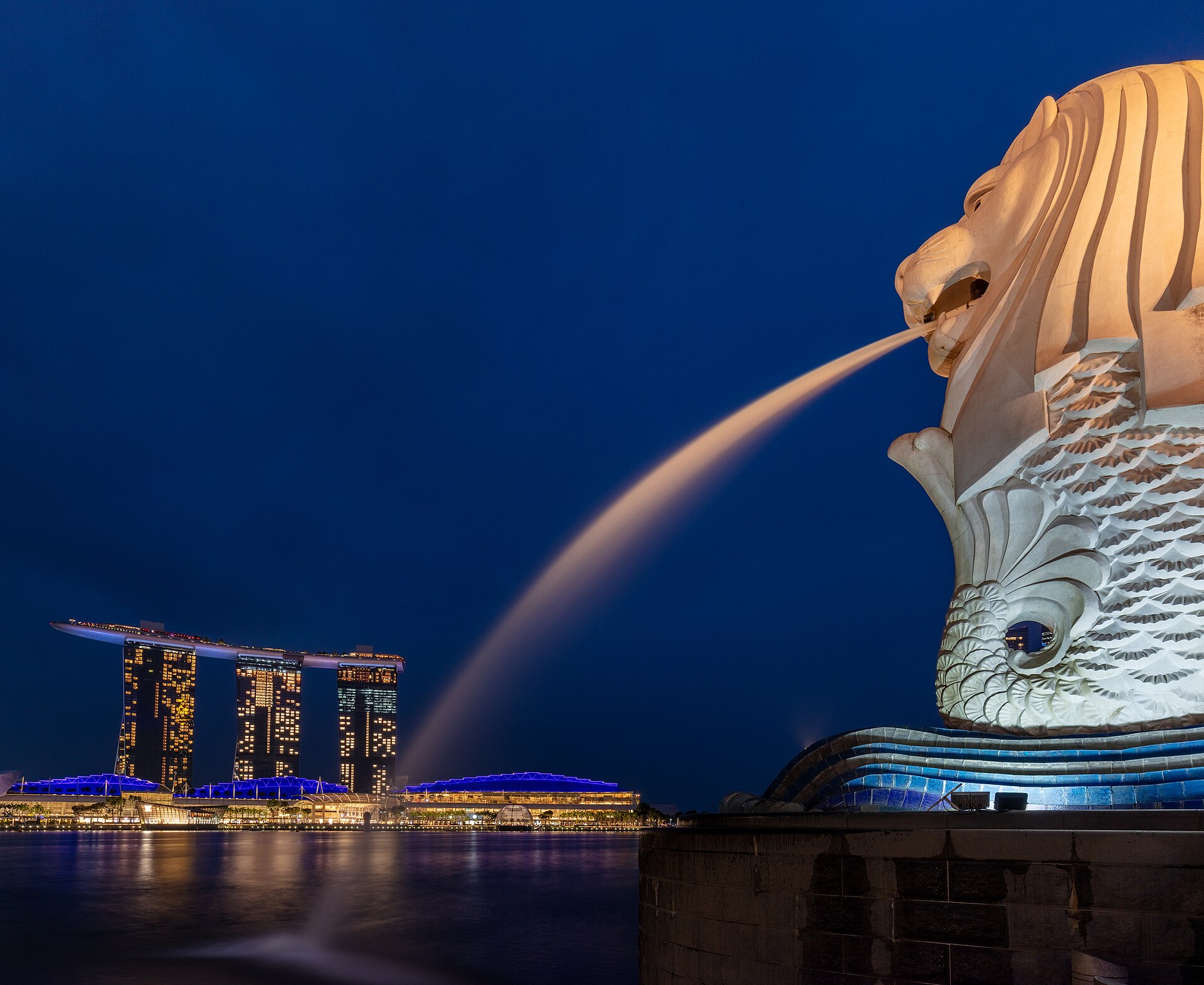
The Merlion is Singapore's national symbol — a half-lion, half-fish statue that spouts water into Marina Bay and has been the most photographed landmark in the city since the original 8.6-metre sculpture was erected in 1972. The lion represents Singapore's original Malay name, Singapura (Lion City), and the fish tail represents the city's origins as a fishing village before Raffles arrived. The combination is entirely invented — there is no mythological creature that is half lion, half fish — but the Merlion has become so ubiquitous in Singaporean branding that questioning its logic feels unpatriotic. Merlion Park sits at the mouth of the Singapore River, directly facing Marina Bay Sands across the water, and the view from here — the Sands to the left, the Esplanade Theatres (nicknamed 'the durian' for their spiky shells) to the right, and the financial district skyline behind — is the defining panorama of modern Singapore. The park is small, free, and perpetually crowded, but the crowd is part of the experience: families jockeying for the photograph where the Merlion appears to be spitting water into their mouths, couples posing with the skyline, and tour groups from every country cycling through in efficient rotation. The original Merlion was designed by Fraser Brunner for the Singapore Tourism Board in 1964 and has since been joined by a smaller 'cub' Merlion behind the main statue. The Sentosa Island Merlion — a much larger version at 37 metres — was demolished in 2019, leaving the Marina Bay original as the definitive article.
National Gallery Singapore
1 St Andrew's Road, Singapore 178957
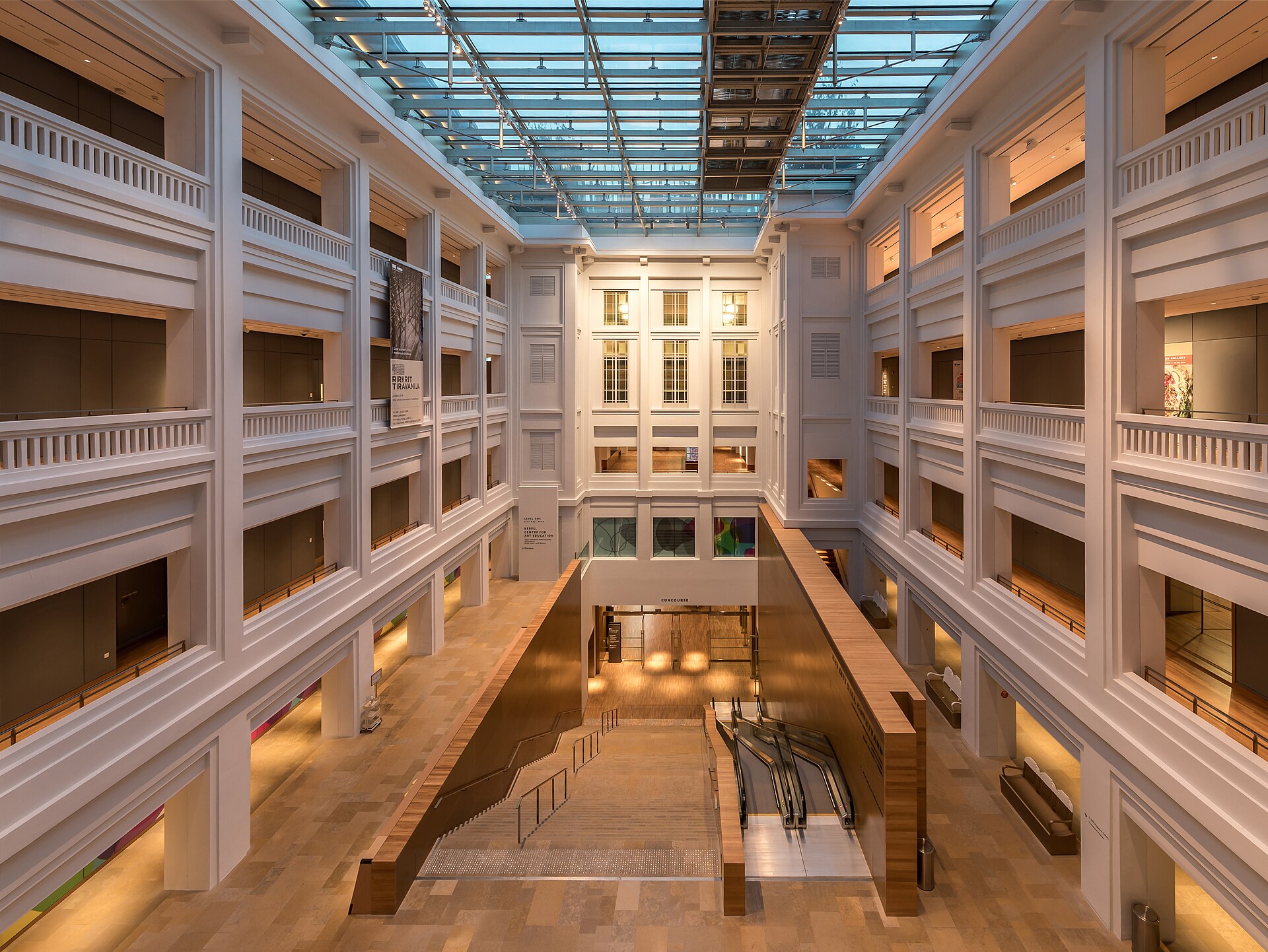
The National Gallery Singapore is Southeast Asia's largest visual arts museum — housed in two of the most significant colonial buildings on the island (the former Supreme Court and City Hall), connected by a dramatic glass-and-steel canopy that bridges the gap between heritage architecture and contemporary museum design. The conversion, completed in 2015, preserved the colonial facades and courtrooms while inserting 64,000 square metres of gallery space into structures that were never designed to hold art. City Hall is historically loaded — this is the building where Lord Louis Mountbatten accepted the Japanese surrender in 1945, ending the occupation of Southeast Asia, and where Lee Kuan Yew was sworn in as Singapore's first Prime Minister in 1959. The former Supreme Court's Corinthian columns and dome are some of the finest colonial architecture in the region. Walking through these buildings now, surrounded by contemporary art where colonial power was once administered, creates a tension that the museum embraces rather than resolves. The permanent collection focuses on Singaporean and Southeast Asian art from the 19th century to the present — a perspective that most Western museums ignore entirely. The DBS Singapore Gallery traces the development of Singaporean art from colonial-era portraits through nationalist movements to contemporary practice, and the UOB Southeast Asia Gallery provides the regional context that explains why Singapore's art scene is more interesting than its small size would suggest. The rooftop bar, Smoke & Mirrors, offers one of the best views of the Padang and Marina Bay.
National Museum of Singapore
93 Stamford Road, Singapore 178897
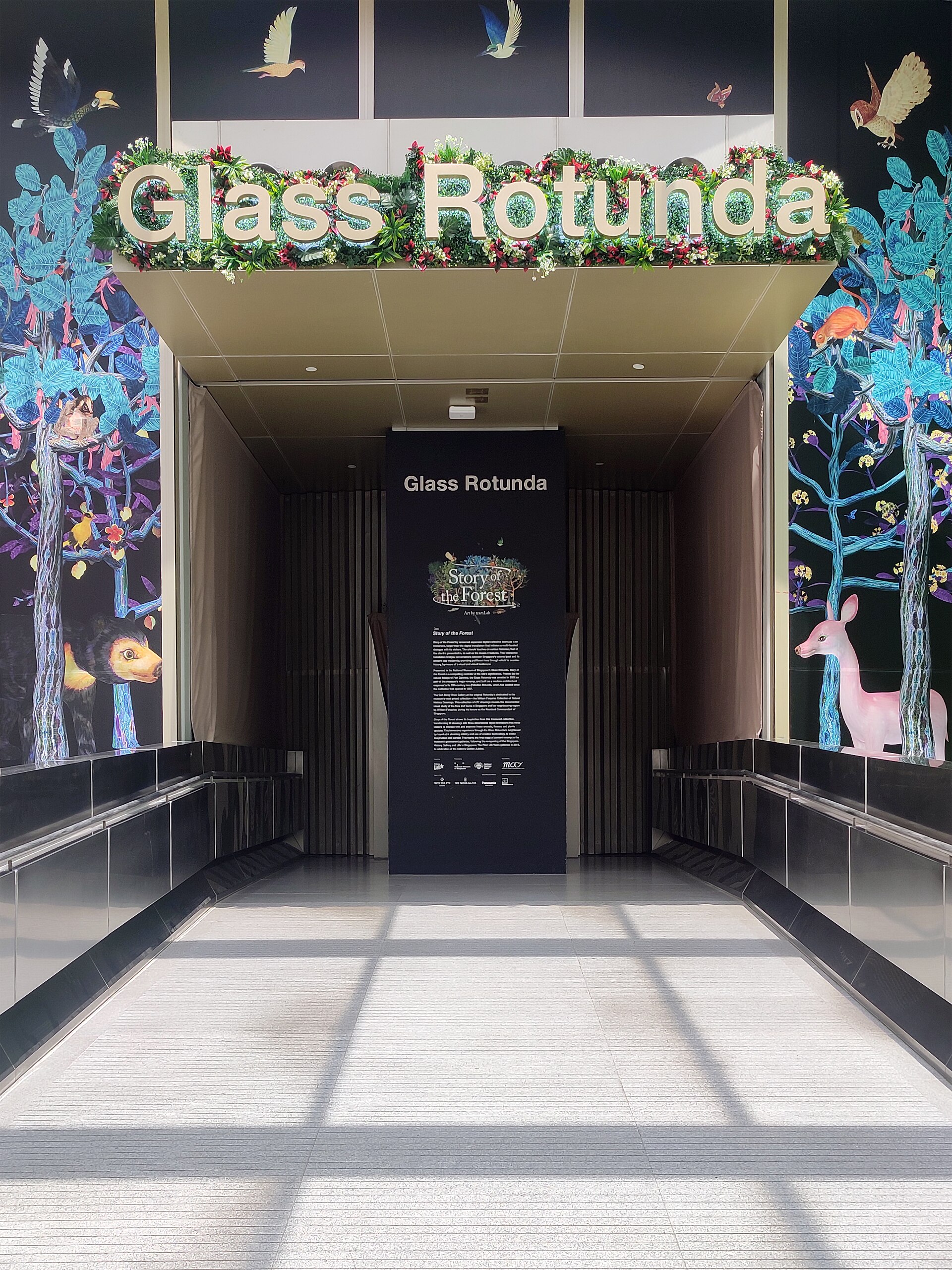
The National Museum of Singapore is the country's oldest museum — established in 1849, housed in a neoclassical building completed in 1887, and expanded with a modern glass-and-steel wing that wraps around the original structure like a contemporary commentary on colonial architecture. The museum tells the story of Singapore from the 14th century to the present, and it does so with a level of immersive storytelling that makes most national museums feel static by comparison. The Singapore History Gallery on the ground floor is the core experience — a chronological journey from the trading port of Singapura through Portuguese discovery, Dutch competition, British colonisation, Japanese occupation, independence, and the extraordinary economic transformation that turned a tiny island into one of the richest countries in the world. The narrative is presented through multimedia installations, personal artifacts, oral histories, and interactive exhibits that let you experience historical events rather than just read about them. The Japanese Occupation section is particularly powerful — featuring testimonies from survivors, ration cards, identification documents, and the personal objects that people carried through years of brutal occupation. The transition from occupation to independence — including the separation from Malaysia in 1965 and Lee Kuan Yew's famous tearful press conference announcing it — is presented with an emotional directness that acknowledges the trauma and uncertainty of nation-building. The museum's modern wing houses rotating exhibitions and the immersive 'Living Galleries' that explore food, fashion, film, and photography in Singaporean culture.
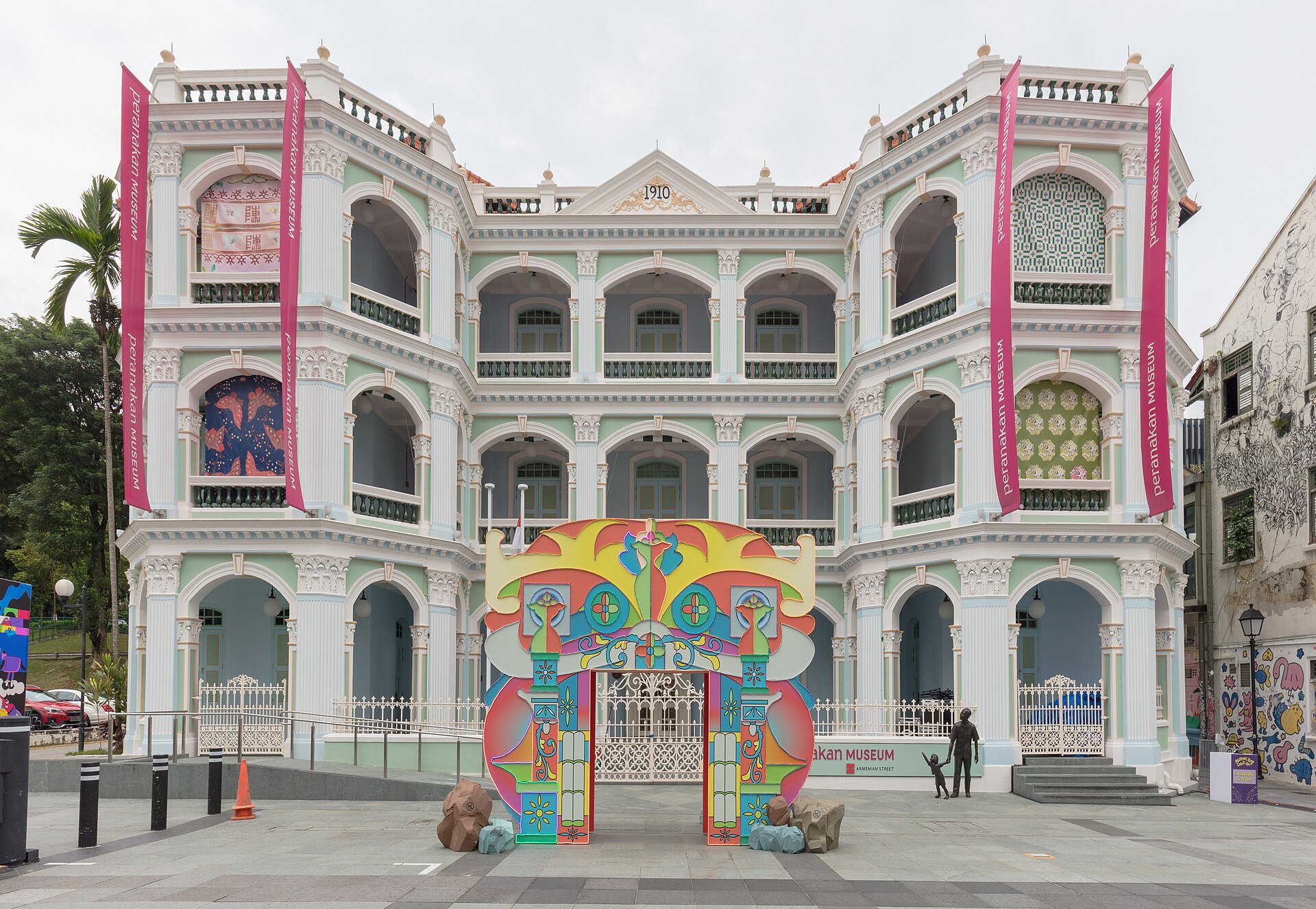
Peranakan Museum
39 Armenian Street, Singapore 179941
The Peranakan Museum is dedicated to the most distinctively Singaporean culture — the Baba-Nonya or Peranakan community, descendants of Chinese traders who married local Malay women over centuries and developed a hybrid culture that exists nowhere else in the world. The museum, housed in a former school building on Armenian Street, is the most comprehensive collection of Peranakan artifacts anywhere, and it tells a story that illuminates Singapore's identity more clearly than any amount of skyscraper statistics. The collection includes Nonya kebayas (ornately embroidered blouses), beaded slippers that took months to complete, wedding costumes and ceremonial objects, and the elaborate porcelain and silverware that reflected Peranakan prosperity. The level of craftsmanship in these objects — tiny seed beads sewn into intricate floral patterns, gold thread woven into silk — is staggering, and the museum displays them with the reverence they deserve. Peranakan culture blends Chinese ancestor worship with Malay culinary traditions, European fashions with Asian textiles, and multiple languages into a creole called Baba Malay. The food — a category that includes laksa, ayam buah keluak, otak-otak, and dozens of kueh (cakes) — is considered the richest and most complex of Singapore's culinary traditions. The museum's presentation explains how this hybridisation happened over centuries of intermarriage and cultural exchange, and why the Peranakan story is essentially the Singapore story in miniature: different cultures meeting, merging, and creating something new.
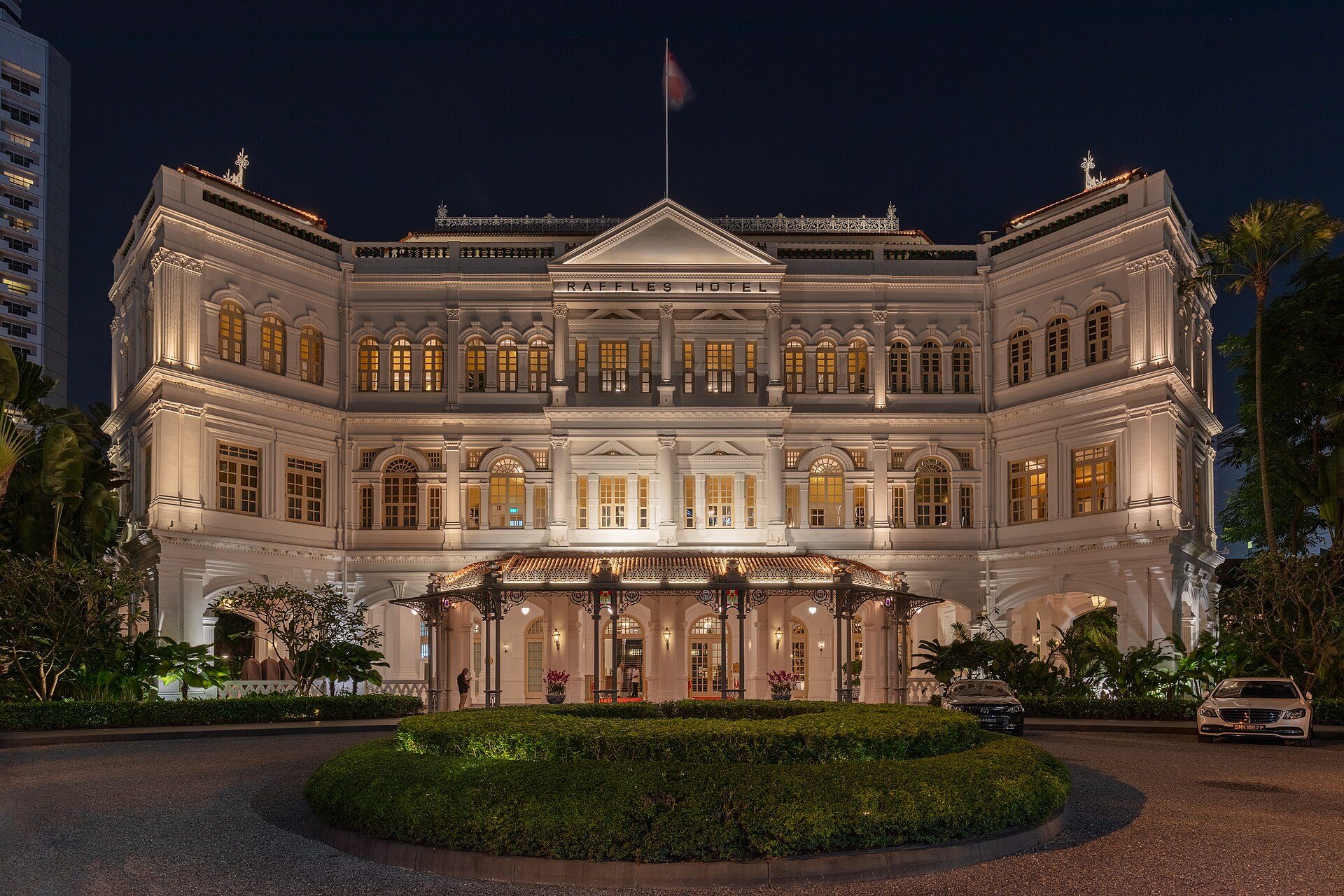
Raffles Hotel
1 Beach Road, Singapore 189673
Raffles Hotel is the grand dame of Southeast Asian hospitality — a colonial white wedding cake of a building that has been hosting writers, royalty, and adventurers since 1887. Somerset Maugham wrote here. Rudyard Kipling drank here. A tiger was shot beneath the billiard table in 1902 (the last wild tiger killed in Singapore). The hotel survived the Japanese occupation, decades of development pressure, and a major renovation in 2019, and it remains the most atmospheric hotel in Asia. The Singapore Sling was invented here in 1915 by bartender Ngiam Tong Boon, and the Long Bar — where the drink is still served — preserves the tradition of throwing peanut shells on the floor, which was considered the height of colonial informality in an era when Singapore was a buttoned-up trading port. The cocktail itself (gin, cherry liqueur, Cointreau, Bénédictine, pineapple juice, grenadine, lime, Angostura bitters) is more of a heritage experience than a great drink, but ordering one in the room where it was created is a ritual that the hotel has wisely preserved. The hotel is open to non-guests for the bars, restaurants, shops, and a small museum on the third floor that traces its history through photographs, menus, and guest registers. The central courtyard — a tropical garden surrounded by the white colonial facades — is one of the most beautiful urban spaces in Singapore, and afternoon tea in the Tiffin Room (a tradition since the hotel opened) is the kind of experience that makes you temporarily believe the British Empire was a good idea.
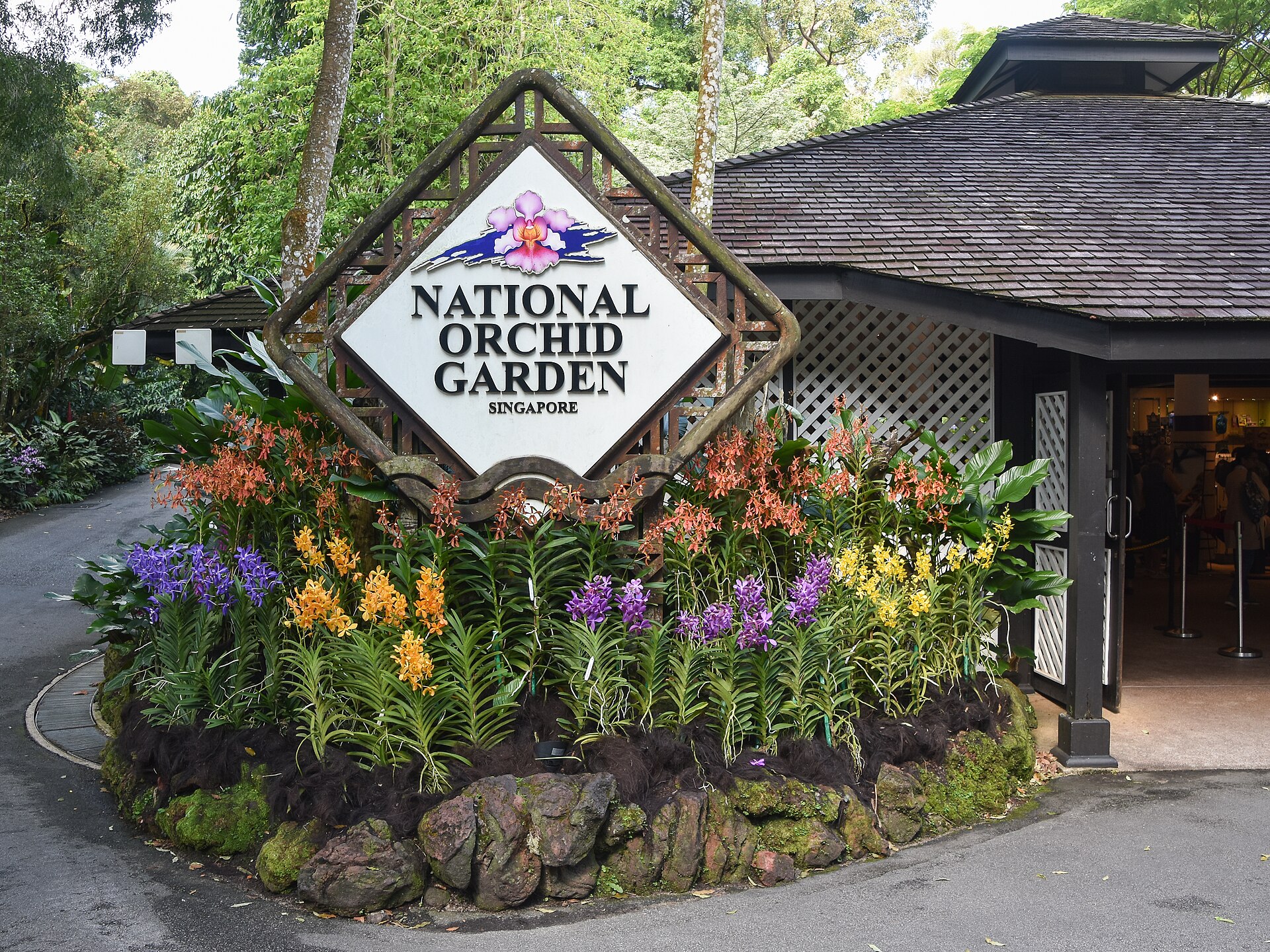
Singapore Botanic Gardens
1 Cluny Rd, Tanglin, Singapore, 259569, Singapore
The Singapore Botanic Gardens is the only tropical botanic garden on the UNESCO World Heritage list — 82 hectares of primary rainforest, manicured lawns, and one of the world's finest orchid collections, all in the middle of a city that has been using this garden as its green lung since 1859. The gardens are free to enter (except the National Orchid Garden) and are used daily by joggers, tai chi practitioners, picnicking families, and the occasional bridal party photographing against the tropical backdrop. The National Orchid Garden is the crown jewel — over 1,000 species and 2,000 hybrids displayed in a landscaped hillside that is the largest orchid garden in the world. Singapore has been breeding orchids since the 1920s, and the diplomatic tradition of naming hybrid orchids after visiting heads of state means the collection includes the Dendrobium Margaret Thatcher, the Vanda Miss Joaquim (the national flower), and hundreds of other varieties that exist nowhere else. The orchid breeding programme here effectively created the global orchid industry. The gardens' history is inseparable from Singapore's. Henry Ridley, the gardens' director from 1888 to 1911, developed the techniques for tapping rubber trees that made rubber plantations commercially viable — a breakthrough that transformed Southeast Asian economies and earned him the nickname 'Mad Ridley' because nobody believed rubber would be profitable. The gardens survived the Japanese occupation (the Japanese, recognising their scientific value, continued the research programmes), and the primary rainforest section — six hectares of virgin tropical forest that has never been cleared — is one of the last patches of original lowland rainforest in Singapore.
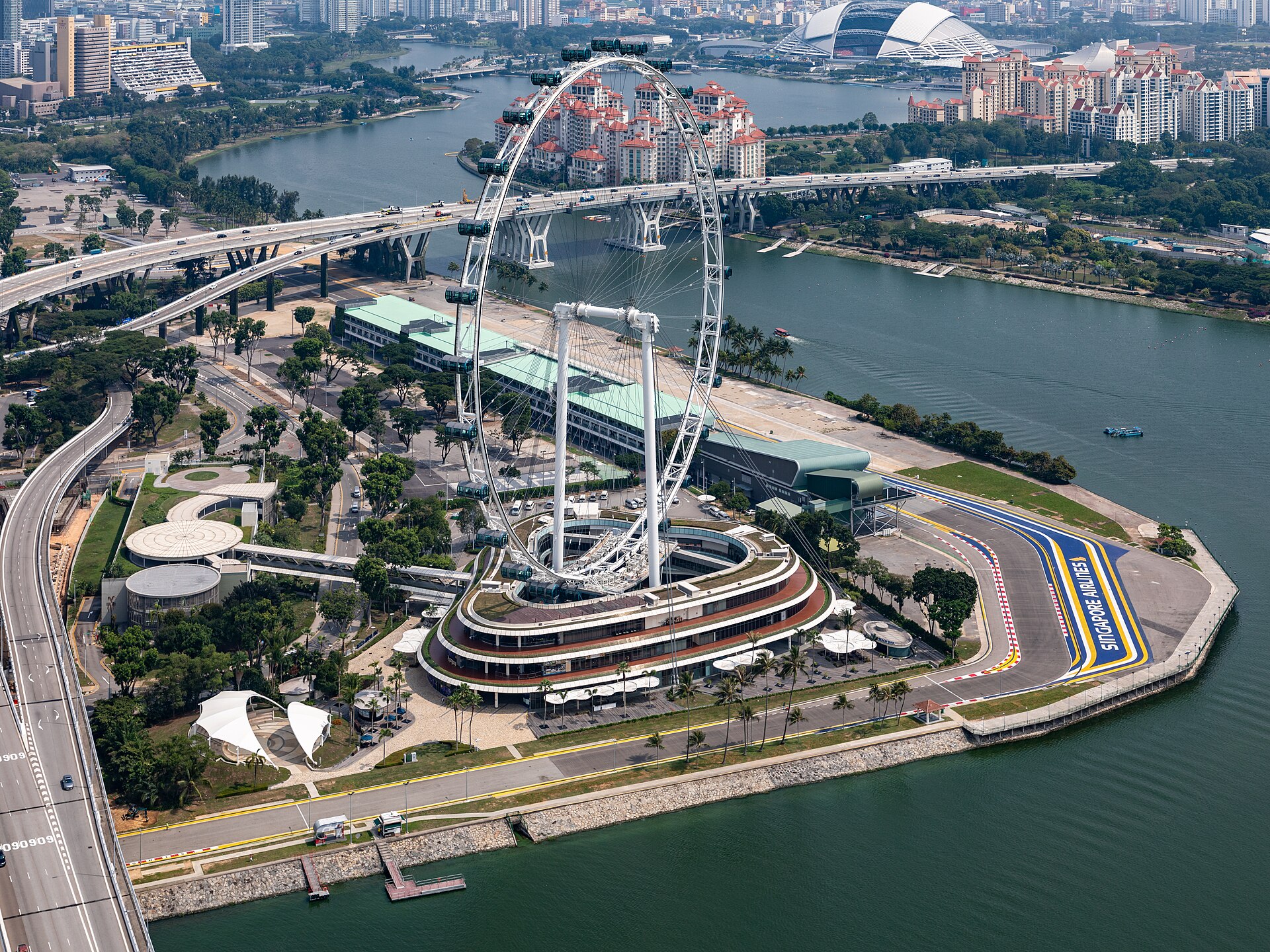
Singapore Flyer
30 Raffles Avenue, Singapore 039803
The Singapore Flyer is a 165-metre observation wheel on the Marina Bay waterfront — when it opened in 2008 it was the tallest Ferris wheel in the world (since surpassed by the High Roller in Las Vegas and the Ain Dubai), and it remains the best way to see Singapore from above without boarding a plane. One rotation takes about 30 minutes in air-conditioned capsules that hold up to 28 people, and the view at the apex includes the Indonesian Riau Islands to the south, the Johor coast of Malaysia to the north, and the entire Singapore skyline spread out like an urban planning model below. The Flyer's capsules are enclosed and climate-controlled, which makes the experience comfortable but slightly detached — you're watching the city through glass rather than feeling the wind, which is the trade-off for riding a Ferris wheel on the equator without melting. The sunset rotation is the most popular (and most expensive), when the sky turns orange over the Straits and the city lights begin to appear in the gathering dusk. The wheel sits in the Marina Bay circuit, within walking distance of Gardens by the Bay, Marina Bay Sands, and the Merlion, making it a natural addition to a waterfront itinerary. The ground-level complex includes a food court and a rainforest discovery centre, but the wheel itself is the attraction — a slow, contemplative circuit above a city that is usually experienced at street-level speed.
Sri Mariamman Temple
244 South Bridge Road, Singapore 058793
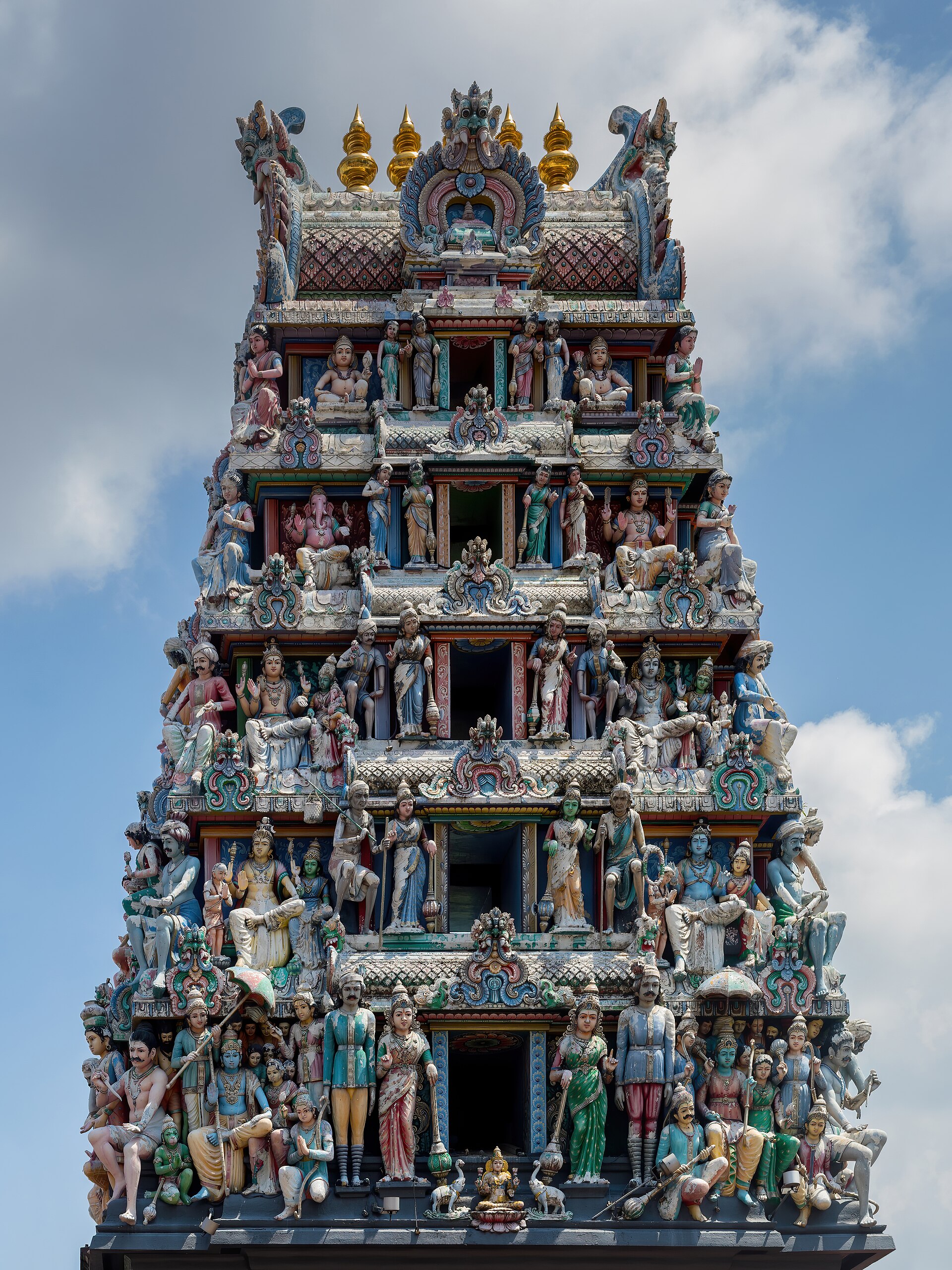
Sri Mariamman Temple is the oldest Hindu temple in Singapore — founded in 1827 by Naraina Pillai, who arrived with Raffles as a government clerk and became one of the most successful Indian merchants in the colony. The temple sits in the middle of Chinatown, which is a geographical anomaly that reflects the reality that Singapore's ethnic districts were never as neatly separated as the colonial plan intended. The gopuram (entrance tower) is the temple's most striking feature — a pyramid of carved and painted Hindu deities, animals, and mythological figures that rises above South Bridge Road in a riot of colour that stops pedestrians in their tracks. The figures are repainted every 12 years in a tradition that keeps the tower's colours vivid and slightly garish, which is exactly the point — gopurams are meant to be visible from a distance and to convey the abundance of the divine realm through sheer decorative excess. The temple interior is cooler and quieter than the street suggests — a series of shrines to Mariamman (a goddess associated with curing disease) and other Hindu deities, with a ceiling painted in geometric patterns and the smell of incense and camphor creating an atmosphere of devotion that contrasts sharply with the commercial bustle outside. The temple is still an active place of worship, and visitors are welcome to enter (shoes off, shoulders covered) provided they're respectful. During the annual Theemithi (firewalking) festival in October or November, devotees walk across a bed of burning coals in the temple courtyard — a spectacle that draws thousands of onlookers.
Supertree Grove
18 Marina Gardens Dr, Marina South, Singapore, 018953, Singapore
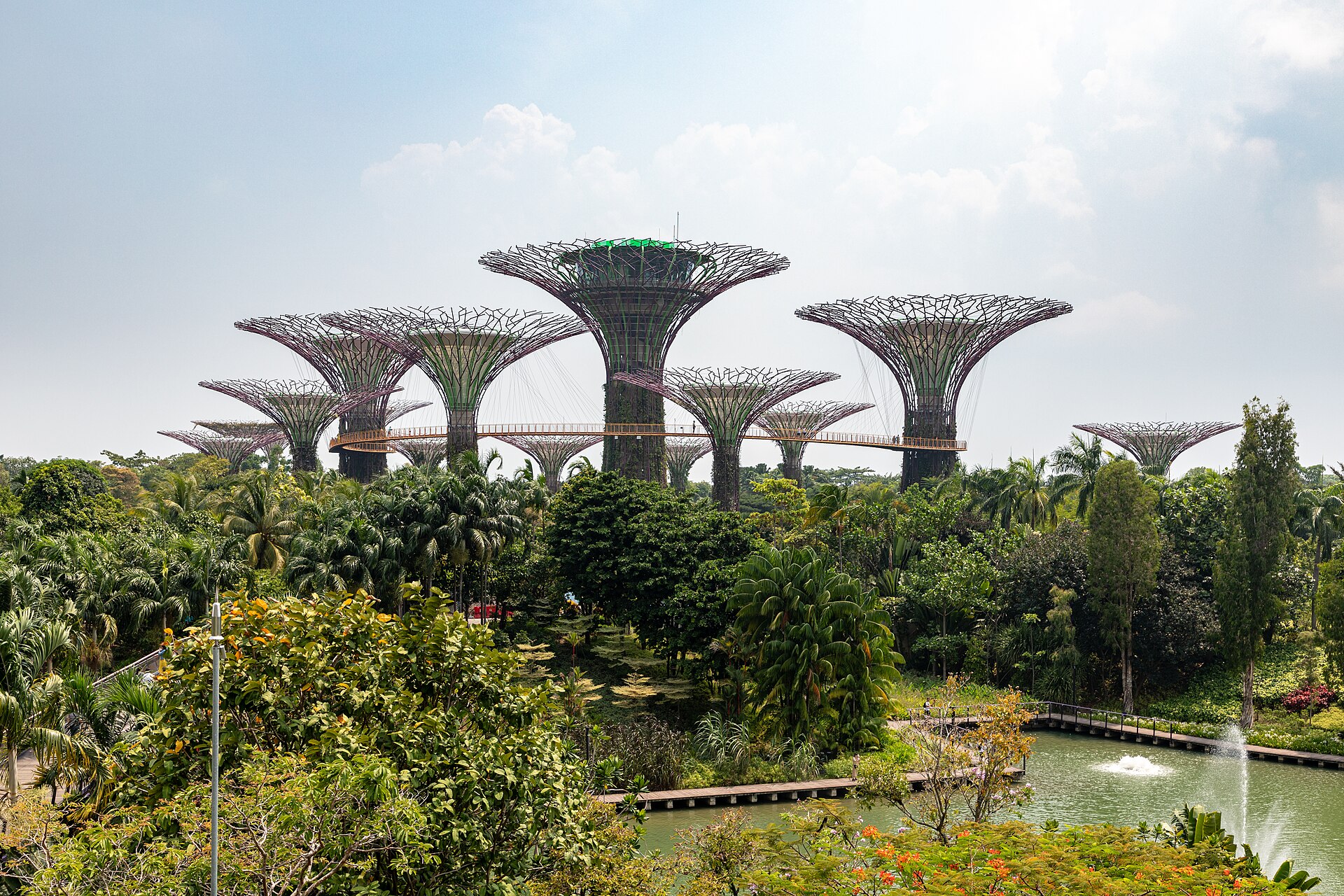
The Supertree Grove is the most recognisable landscape in modern Singapore — 18 steel-and-concrete structures rising between 25 and 50 metres, covered in living vertical gardens of over 162,900 plants comprising more than 200 species of orchids, ferns, bromeliads, and tropical flowering plants. They look like trees from an alien civilisation, which is more or less what the designers at Grant Associates intended — a reimagining of what a tropical garden could be in the 21st century. The trees serve practical functions alongside their visual drama. Eleven of the Supertrees are fitted with solar photovoltaic systems that generate energy for the park's lighting. The two largest Supertrees function as exhaust towers for the adjacent conservatories, venting hot air through the concrete 'trunks.' The vertical gardens collect rainwater for irrigation and conservatory cooling. Singapore's reputation for efficiency extends even to its most fantastical structures. The nightly Garden Rhapsody show — a free 15-minute light-and-sound performance at 7:45pm and 8:45pm — transforms the grove into a synchronised display of coloured lights and music that draws crowds to the lawn every evening. The OCBC Skyway, a 128-metre aerial walkway connecting two of the tallest Supertrees at 22 metres, provides a walking perspective through the canopy-level gardens and across the Marina Bay skyline. The grove is free to enter and walk through at ground level, making it one of the most accessible iconic attractions in any world city.
Tekka Centre
665 Buffalo Road, Singapore 210665
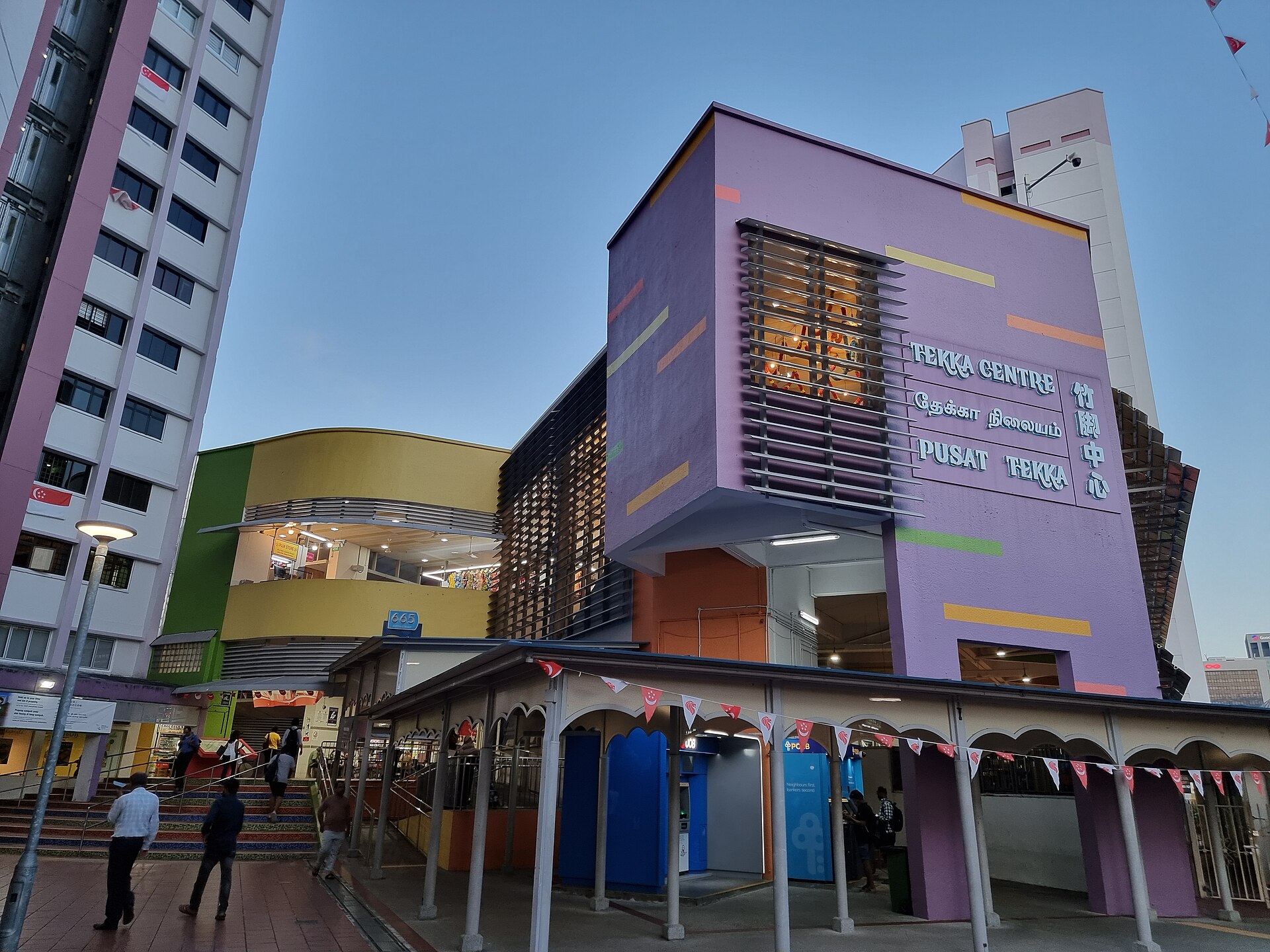
Tekka Centre is Little India's beating heart — a wet market and hawker centre under one roof that is the most multicultural eating destination in a city that invented multicultural eating destinations. The ground floor is a wet market where Indian, Chinese, and Malay vendors sell produce, meat, fish, and spices in a sensory overload of colour and aroma that makes supermarkets feel like sensory deprivation chambers. The hawker centre upstairs is where the eating happens, and the range is extraordinary. Indian stalls serve the best roti prata (flaky flatbread with curry dipping sauce) and biryani in the city. Chinese stalls do roast duck and noodles. Malay stalls offer nasi padang (rice with an array of pre-cooked curries and condiments) and mee goreng. A single trip to Tekka Centre can cover three cuisines, four cultures, and about S$10 total, which makes it the most efficient cultural education available in Singapore. The building — a brutalist concrete structure from 1982 that replaced the original Tekka Market — is ugly in the way that functional buildings in tropical cities tend to be, but the interior life more than compensates. The wet market is best visited in the morning, when the vendors are stocking fresh fish and the flower sellers are assembling jasmine garlands for the Hindu temples nearby. The hawker centre operates through lunch and into early evening, and the late-morning window between market peak and lunch rush is the sweet spot for a leisurely breakfast of prata and teh tarik (pulled milk tea) at a plastic table while Little India wakes up around you.
The Pinnacle@Duxton
1G Cantonment Rd, Outram, Singapore, 085701, Singapore
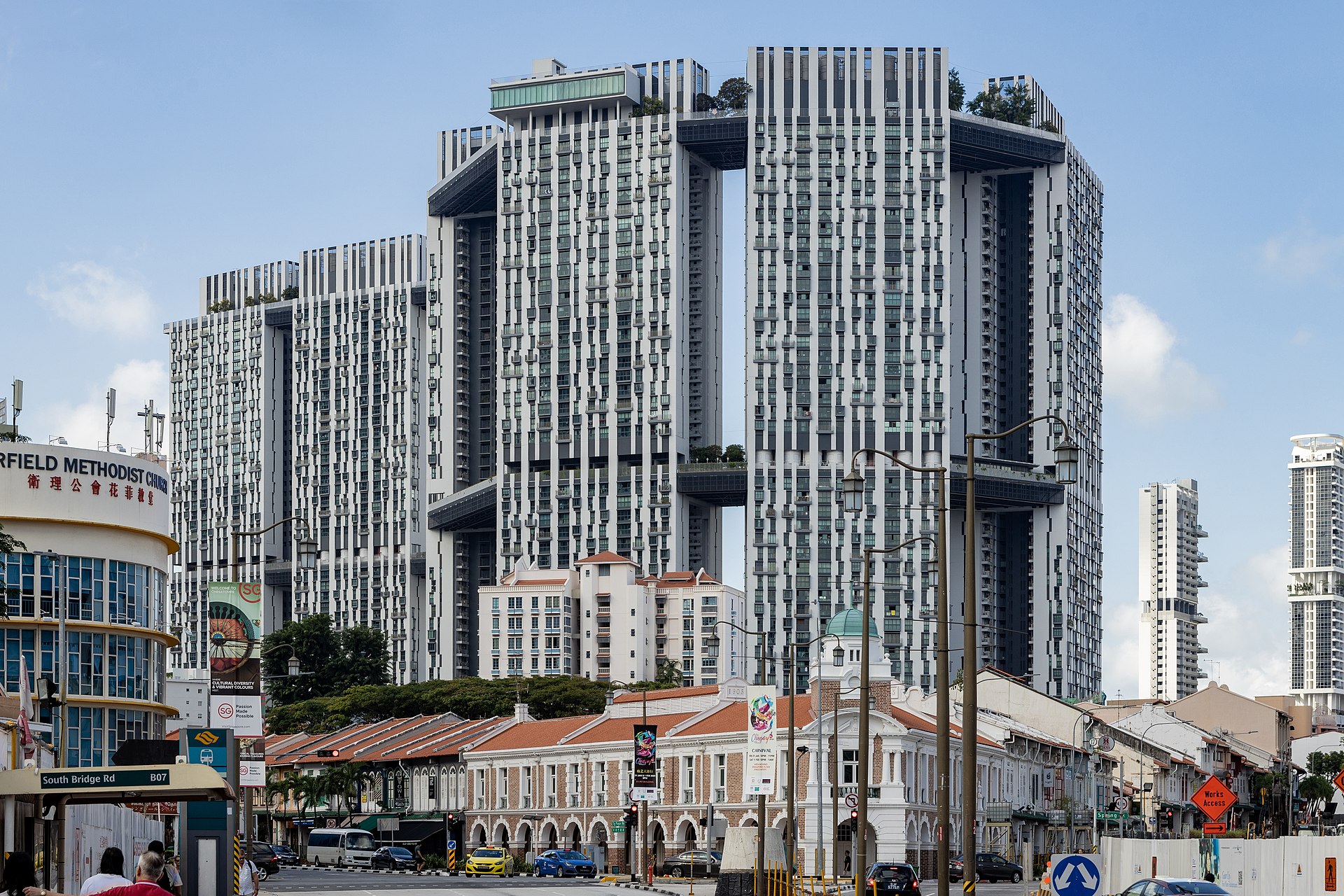
The Pinnacle@Duxton is the world's tallest public housing complex — seven 50-storey towers connected by sky gardens on the 26th and 50th floors — and visiting its rooftop skybridge gives you both the best panoramic view in Singapore and an education in the country's most remarkable achievement: public housing that 80% of the population actually wants to live in. The 50th-floor sky garden is open to visitors for S$6 (paid via an EZ-Link card at the entrance), and the view from 156 metres is extraordinary — a full 360-degree panorama that takes in the port, Sentosa, Marina Bay Sands, the CBD skyline, and the HDB estates stretching to the horizon. On a clear day, you can see the Indonesian islands of Batam and Bintan across the strait. The view is arguably better than Marina Bay Sands' SkyPark because it includes Marina Bay Sands in the panorama rather than being on top of it. Singapore's public housing story is genuinely remarkable — in 1960, when the country became self-governing, 70% of the population lived in slums and squatter settlements. By the 1990s, over 85% lived in HDB (Housing Development Board) flats. The Pinnacle, completed in 2009, represents the pinnacle (literally) of this programme — architecturally ambitious public housing in a prime location that was designed to prove that social housing could be beautiful, not just functional. Standing on the 50th floor of a government housing block, looking out at one of the richest cities in the world, is a perspective on urban planning that no other city offers.
Tiong Bahru
Tiong Bahru Rd, Bukit Merah, Singapore, Singapore
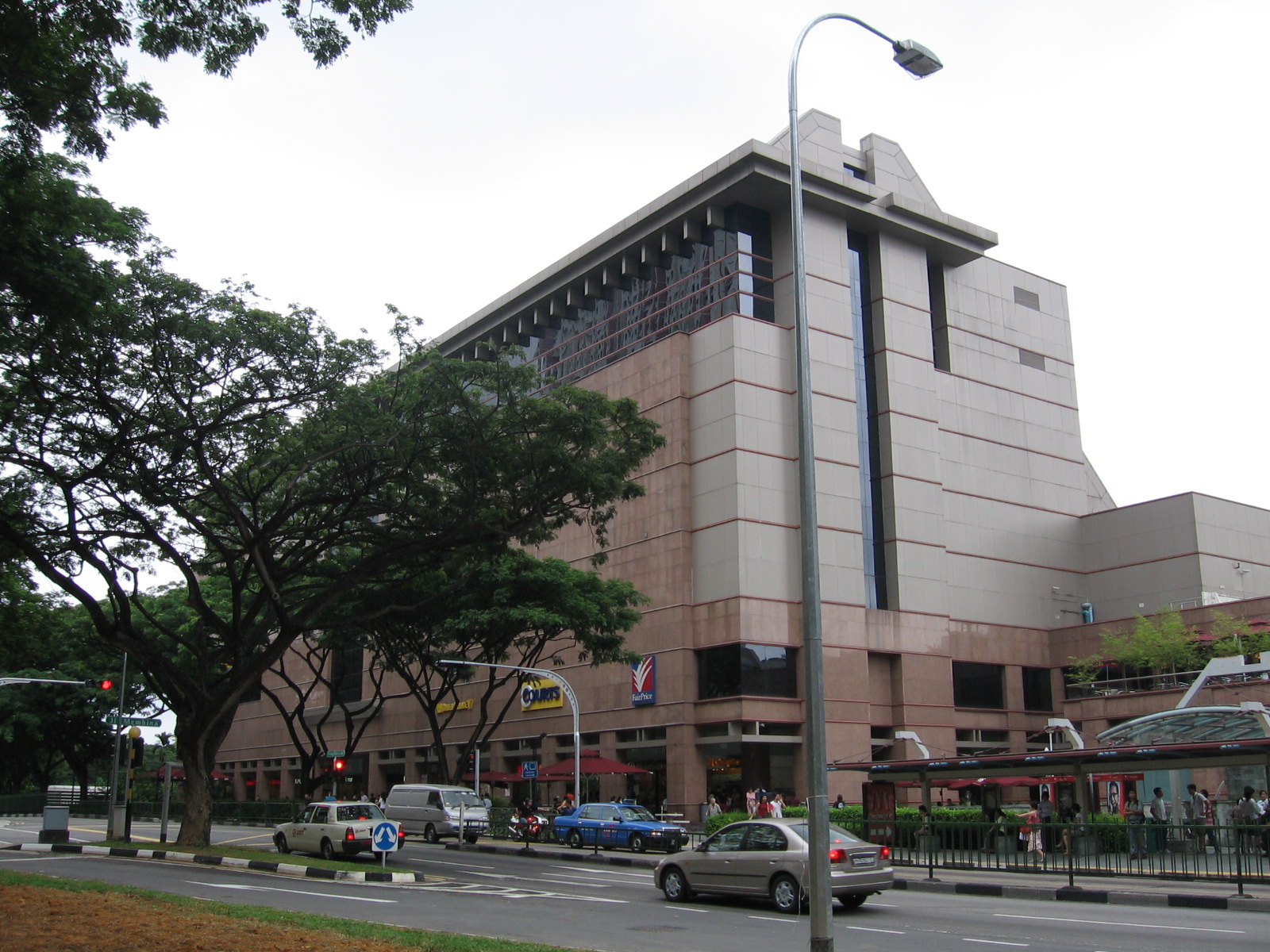
Tiong Bahru is Singapore's oldest public housing estate and its most characterful neighbourhood — a grid of Art Deco apartment blocks from the 1930s that has evolved from a working-class district to the city's café culture epicentre without losing the neighbourhood charm that makes it worth visiting. The curved balconies, porthole windows, and streamlined facades of the original SIT (Singapore Improvement Trust) flats are some of the best-preserved examples of tropical Art Deco in Southeast Asia. The neighbourhood's reputation as a food destination rests on two pillars: the Tiong Bahru Market & Food Centre (a modernised hawker centre where the chwee kueh — steamed rice cakes with preserved radish — has been a breakfast pilgrimage since the 1960s) and the cluster of specialty coffee shops and bakeries that have opened in the shophouses along Yong Siak Street and Eng Hoon Street. The combination of S$2 hawker breakfast and S$6 flat white within the same block is peak Singapore. The bookshop BooksActually (one of Singapore's most important independent bookstores) was based here before moving, and the creative energy it attracted — writers, designers, small publishers — left a permanent mark on the neighbourhood's identity. The pre-war shophouses on Seng Poh Road house tattoo parlours, vintage clothing stores, and restaurants that feel more like Melbourne's laneways than tropical Singapore. A walking tour of Tiong Bahru takes about an hour and provides a more nuanced picture of Singaporean life than any amount of Marina Bay sightseeing.
Victoria Theatre & Concert Hall
9 Empress Place, Singapore 179556
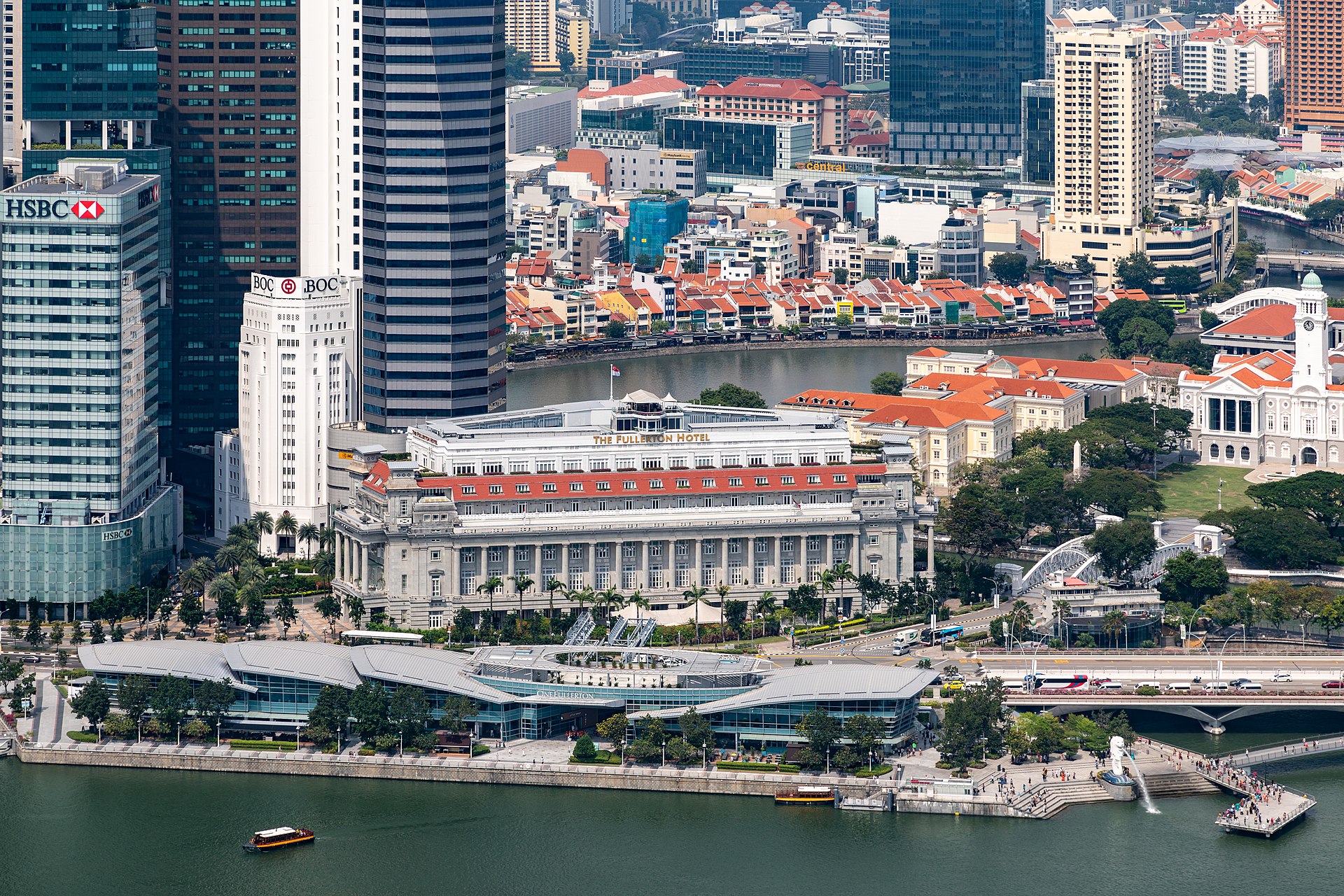
Victoria Theatre and Concert Hall is the oldest performing arts venue in Singapore — a twin structure on Empress Place that has been hosting concerts, theatre, and civic events since 1862. The Theatre (completed first) and the Concert Hall (added in 1905) are connected by a clock tower and present a unified Italianate colonial facade to the Padang, the open field that has been the centre of Singapore's civic life since the British established the settlement. The building has witnessed virtually every significant moment in Singapore's modern history. During the Japanese occupation, it was converted to a Japanese cultural centre. After the war, the first sitting of the Legislative Assembly of Singapore took place here. Lee Kuan Yew addressed rallies from the steps. The building has served as a concert hall, a town hall, a legislative chamber, and a symbol of colonial authority that was gradually repurposed into a symbol of national identity. The venue underwent a four-year renovation completed in 2014, which preserved the colonial exterior while completely modernising the interior acoustics and stage technology. The Singapore Symphony Orchestra is the resident company, and the 673-seat Concert Hall's acoustics — warm, clear, and surprisingly intimate for a colonial-era room — are considered among the finest in Southeast Asia. The building's Padang-facing terrace and the surrounding Civic District — the Asian Civilisations Museum, the National Gallery, the Supreme Court — create a concentration of heritage architecture that is the closest Singapore gets to a European old town.