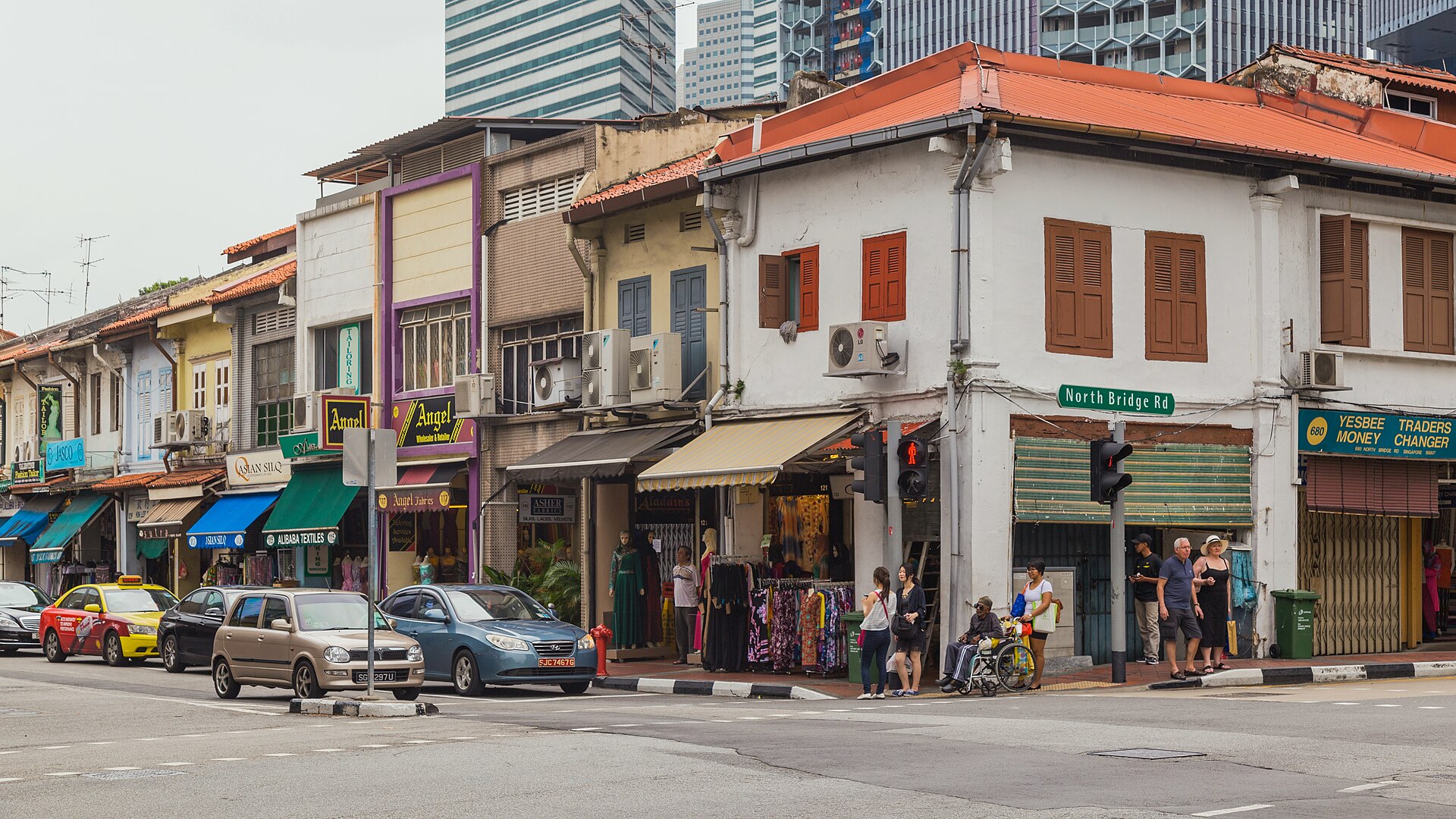
Kampong Glam is Singapore's Malay-Arab heritage quarter — a neighbourhood of shophouses, textile merchants, and perfume shops centred on the golden-domed Sultan Mosque that has been the heart of the Malay community since Raffles designated this area in his 1822 town plan. The name comes from the gelam trees that once grew here, used to caulk the boats that made Singapore a maritime trading hub.
The Sultan Mosque, completed in 1932, is the largest mosque in Singapore and one of the most architecturally distinctive buildings on the island — its golden domes, visible from several blocks away, were partly funded by the base of glass bottles donated by poorer members of the community who couldn't afford cash donations. The story may be apocryphal, but looking at the base of the dome's structure, you can see what appears to be embedded glass, which gives the legend just enough physical evidence to persist.
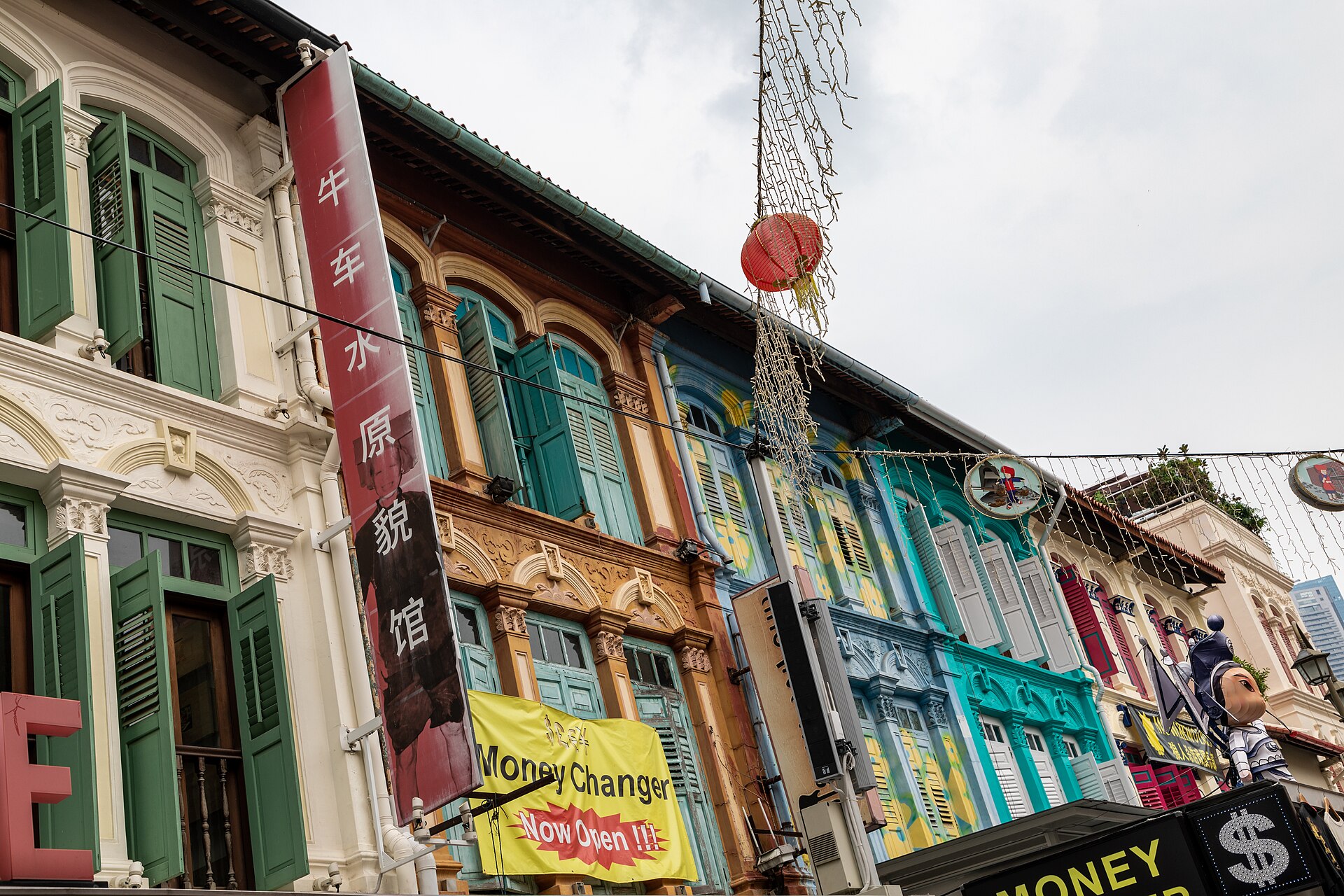
Haji Lane, a narrow alley running parallel to Arab Street, has evolved from a textile trading lane into Singapore's most Instagram-friendly shopping street — a corridor of independent boutiques, vintage shops, street art, and tiny bars housed in colourful shophouses. The contrast between the heritage architecture and the contemporary creative scene is what makes Kampong Glam work: Bussorah Street (the pedestrianised approach to the mosque) has traditional Malay restaurants and Middle Eastern eateries, while the streets behind are full of craft cocktail bars and speciality coffee shops. Both coexist without friction, which is very Singapore.
Verified Facts
Kampong Glam was designated as the Malay quarter in Raffles' 1822 town plan
The Sultan Mosque was completed in 1932
The name derives from gelam trees used for boat caulking
Haji Lane is known for independent boutiques and street art
Get walking directions
227 Arab St, Rochor, Singapore, 199840, Singapore