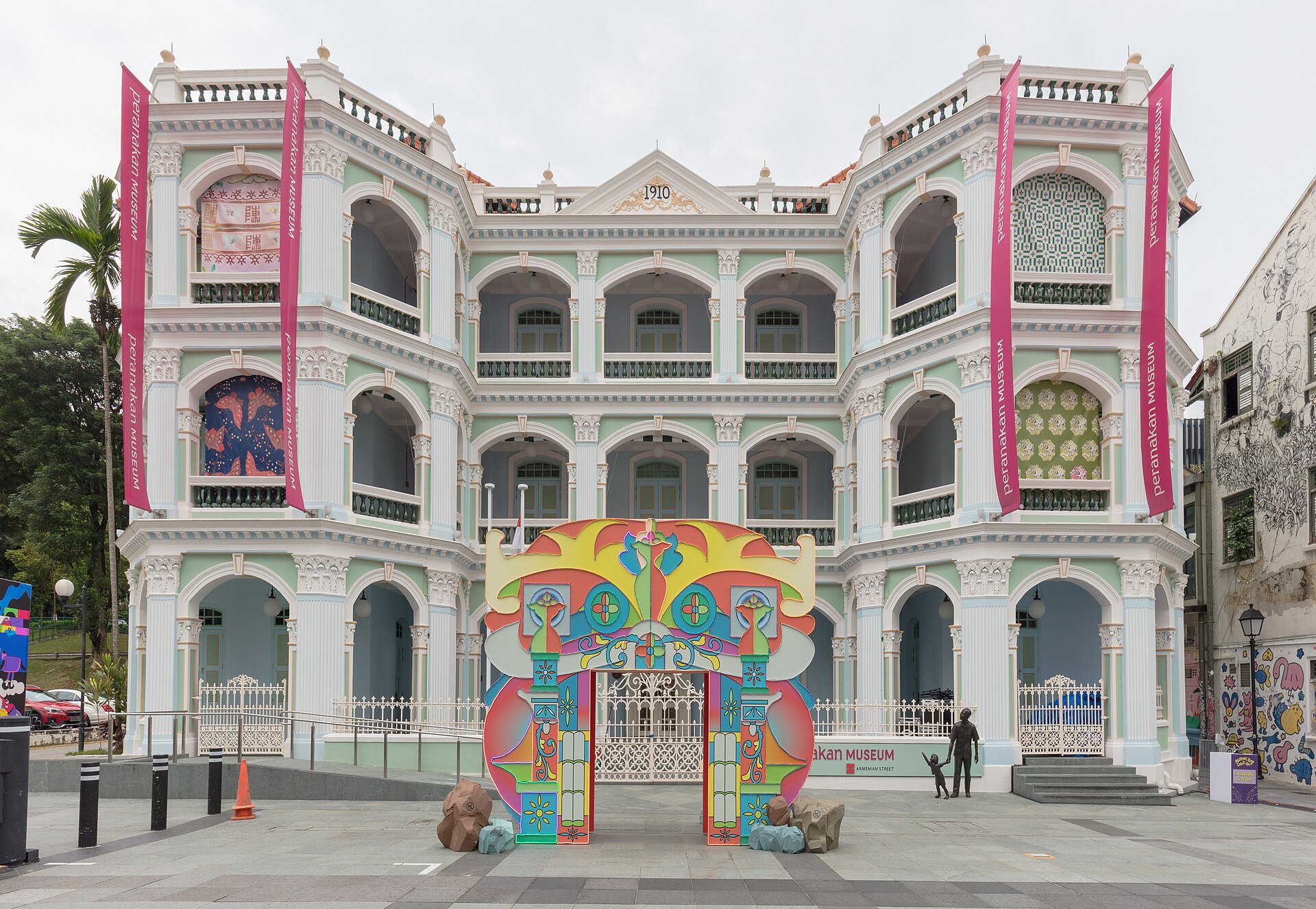
The Peranakan Museum is dedicated to the most distinctively Singaporean culture — the Baba-Nonya or Peranakan community, descendants of Chinese traders who married local Malay women over centuries and developed a hybrid culture that exists nowhere else in the world. The museum, housed in a former school building on Armenian Street, is the most comprehensive collection of Peranakan artifacts anywhere, and it tells a story that illuminates Singapore's identity more clearly than any amount of skyscraper statistics.
The collection includes Nonya kebayas (ornately embroidered blouses), beaded slippers that took months to complete, wedding costumes and ceremonial objects, and the elaborate porcelain and silverware that reflected Peranakan prosperity. The level of craftsmanship in these objects — tiny seed beads sewn into intricate floral patterns, gold thread woven into silk — is staggering, and the museum displays them with the reverence they deserve.
Peranakan culture blends Chinese ancestor worship with Malay culinary traditions, European fashions with Asian textiles, and multiple languages into a creole called Baba Malay. The food — a category that includes laksa, ayam buah keluak, otak-otak, and dozens of kueh (cakes) — is considered the richest and most complex of Singapore's culinary traditions. The museum's presentation explains how this hybridisation happened over centuries of intermarriage and cultural exchange, and why the Peranakan story is essentially the Singapore story in miniature: different cultures meeting, merging, and creating something new.
Verified Facts
The museum is housed in a former school building on Armenian Street
Peranakans developed from intermarriage between Chinese traders and local Malay women
Baba Malay is a creole language spoken by the Peranakan community
The museum reopened after renovation in 2023
Get walking directions
39 Armenian Street, Singapore 179941