In the nineteen eighties, the yakuza tried to burn this place to the ground. Across Tokyo, organised crime groups were setting fires to force landowners to sell their properties cheap to developers. Golden Gai, with its tiny wooden buildings and enormous land value, was a prime target. So the bar owners and their regulars organised night patrols. They took turns physically guarding the six interconnected alleys through the dark hours, watching for arsonists. Golden Gai survived because ordinary people refused to let it die.
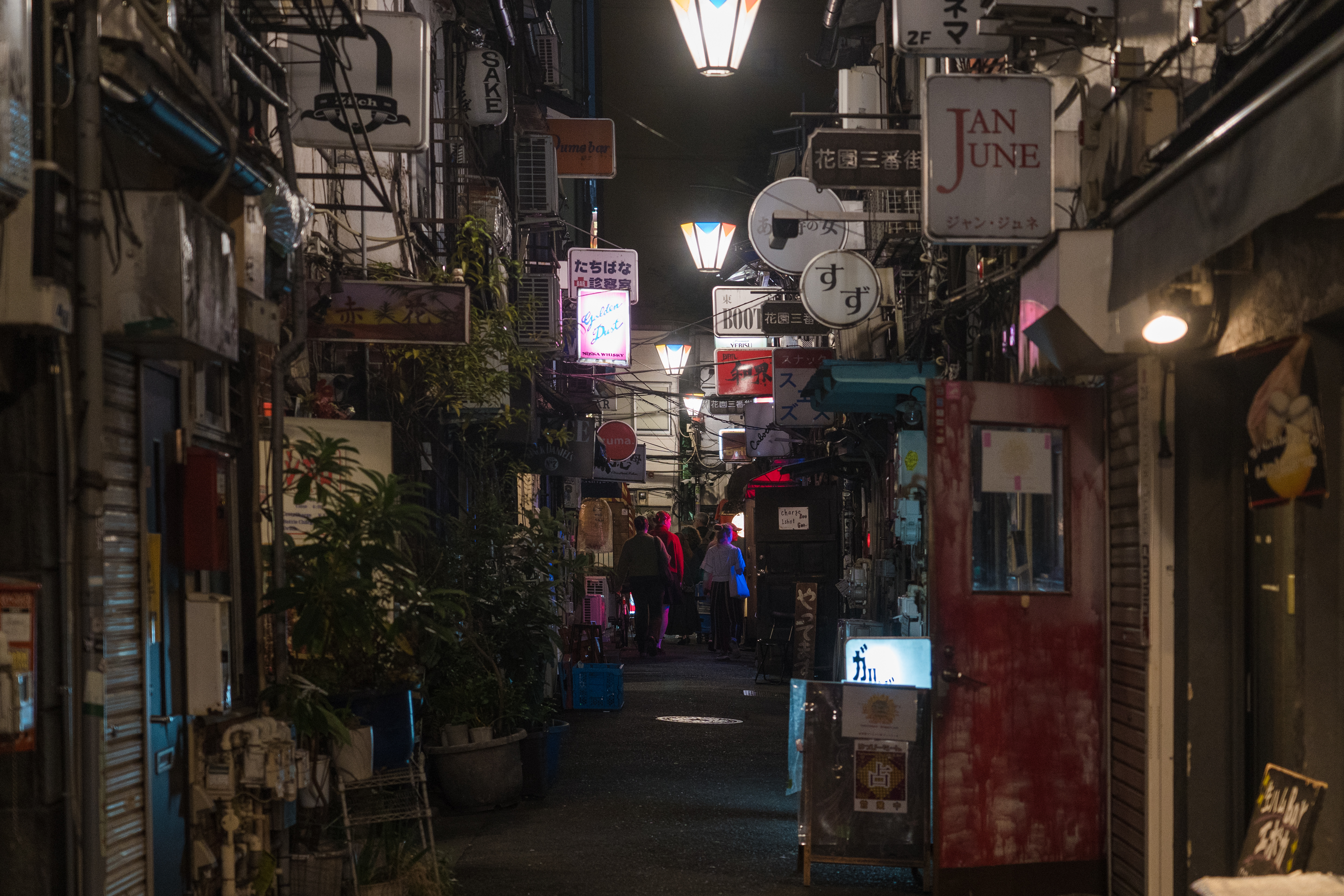
The area covers just zero point six six hectares — barely bigger than a football pitch — but contains roughly two hundred tiny bars. Most of them seat between six and ten people. Some seat four. You sit at a counter, the bartender is within arm's reach, and the person next to you is close enough to become a friend or an enemy, depending on the evening.
Golden Gai started as a black market and prostitution zone in nineteen forty-five, in the wreckage of postwar Shinjuku. By the late nineteen fifties, the bars had attracted writers, artists, filmmakers, and intellectuals, earning the area the nickname bunkajin no machi — district of cultivated people. This was where Japan's counterculture drank. Novelists, poets, and avant-garde theatre directors argued in spaces the size of a wardrobe.
A fire on April twelfth, twenty sixteen destroyed up to three hundred square metres of the area. But just like Omoide Yokocho down the road, every bar was restored to its exact original form. The people of Golden Gai have been fighting demolition, arson, and redevelopment for decades. Two hundred bars in zero point six six hectares. Some charge a seating fee. Some have strict rules — regulars only, no tourists, no photographs. Each bar is its own tiny world.
Verified Facts
Bar owners formed night patrols in the 1980s to prevent yakuza arson
0.66 hectares containing ~200 tiny bars, most seating 6-10 people
Started as black market/prostitution zone in 1945, became intellectual hub by late 1950s
April 12, 2016 fire destroyed up to 300 sqm, all bars restored to original form
Nicknamed 'bunkajin no machi' (district of cultivated people)
Get walking directions
1 Kabukicho 1-Chōme, Kabukicho, Shinjuku, 160-0021, Japan