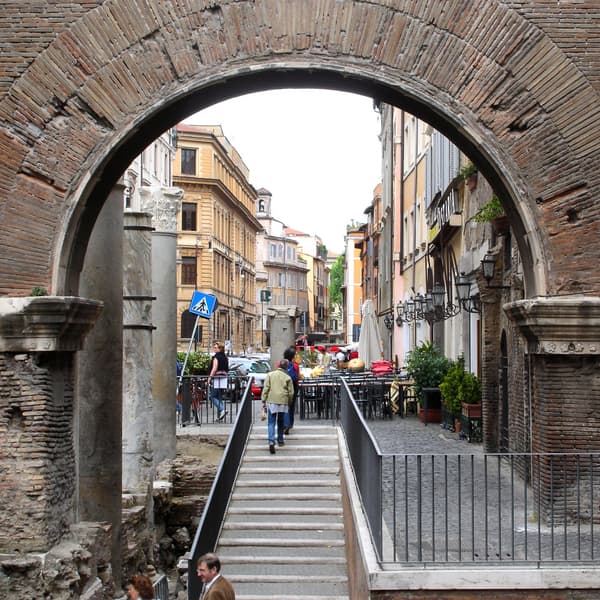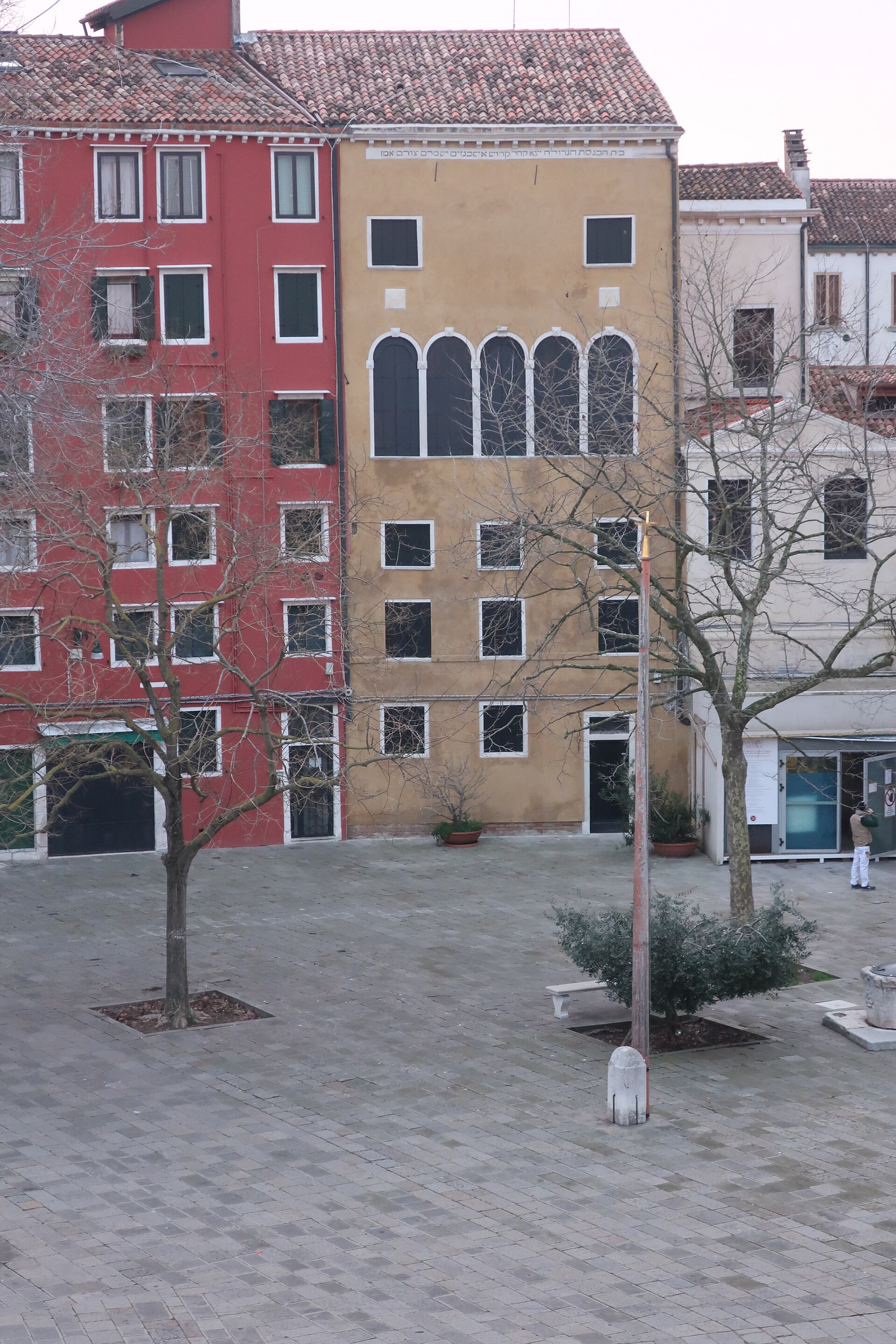
This is where the word "ghetto" was born. On March 29, 1516, the Venetian Senate decreed that all Jews in the city must live on this small island in Cannaregio, surrounded by canals with only two bridges that were locked and guarded at night. The area had previously been the site of copper foundries — "geto" in Venetian dialect, from "gettare," to cast metal — and the name became a word that would echo through centuries of persecution.
The restrictions were severe. Jews had to wear identifying badges, couldn't own property outside the ghetto, and were locked in from sunset to sunrise. But Venice was pragmatic above all else: the Republic needed Jewish bankers, doctors, and merchants, and so allowed them to stay when other cities expelled them. The result was an uneasy coexistence that lasted nearly three centuries.
Space was desperately limited, so buildings grew upward instead of outward. The ghetto contains some of the tallest residential buildings in Venice — up to seven stories, with ceilings so low you can practically touch them. These proto-skyscrapers are visible from across the city, the architectural evidence of a community literally squeezed into a box. Five synagogues were crammed into the small area, each serving a different Jewish community — German, Italian, Levantine, Spanish, and Canton.
Napoleon tore down the gates in 1797, ending 281 years of enforced segregation. Today the ghetto is a quiet, atmospheric neighbourhood with a small but active Jewish community, kosher restaurants, a museum, and a powerful Holocaust memorial by sculptor Arbit Blatas. The campo is one of the largest open spaces in Venice, ringed by those impossibly tall buildings — a space that manages to feel both open and enclosed, free and haunted.
Verified Facts
Established on March 29, 1516, it is the world's first legally designated ghetto and the origin of the word
The word "ghetto" derives from "geto" (Venetian for foundry), as the area formerly housed copper foundries
Buildings reach up to seven stories high due to space constraints, among the tallest in Venice
Napoleon demolished the ghetto gates in 1797, ending 281 years of enforced segregation
Five synagogues served different communities: German, Italian, Levantine, Spanish, and Canton
Get walking directions
Venezia Murano Burano (Venezia Insulare), Venice, Italy