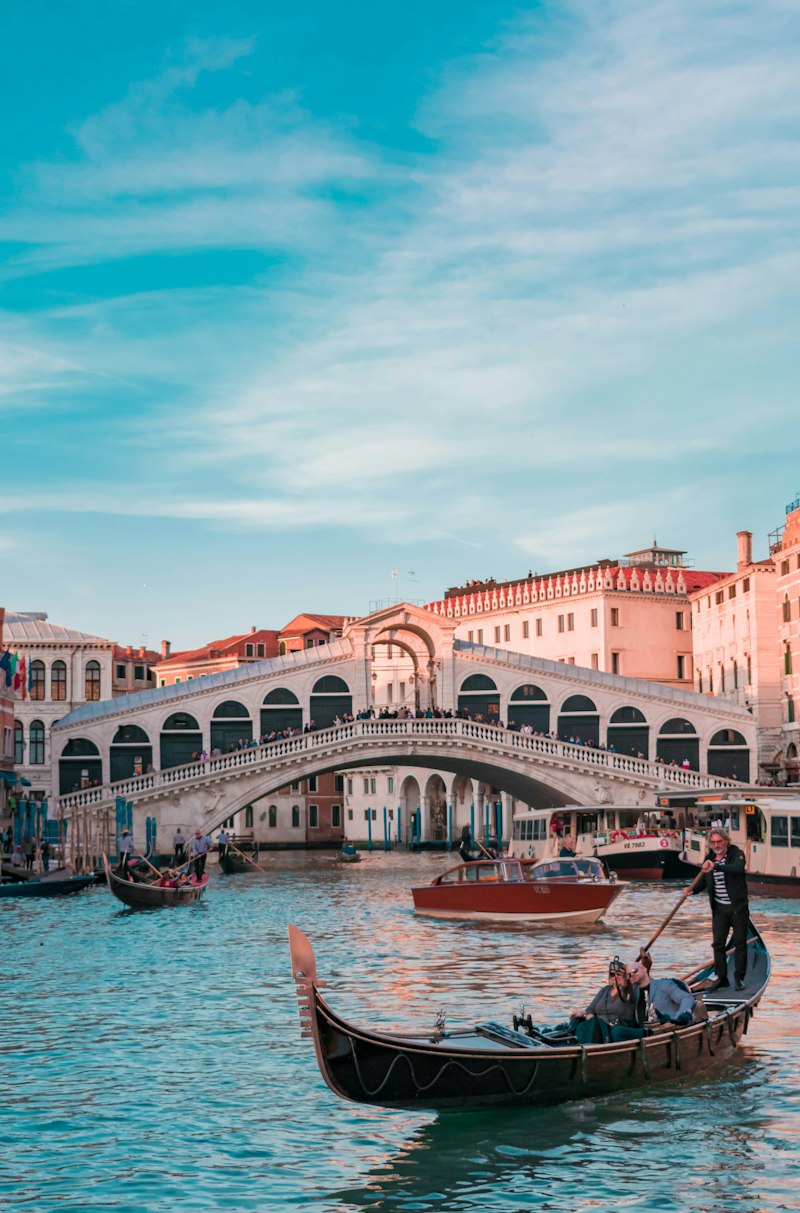
Walking Tours in Venice
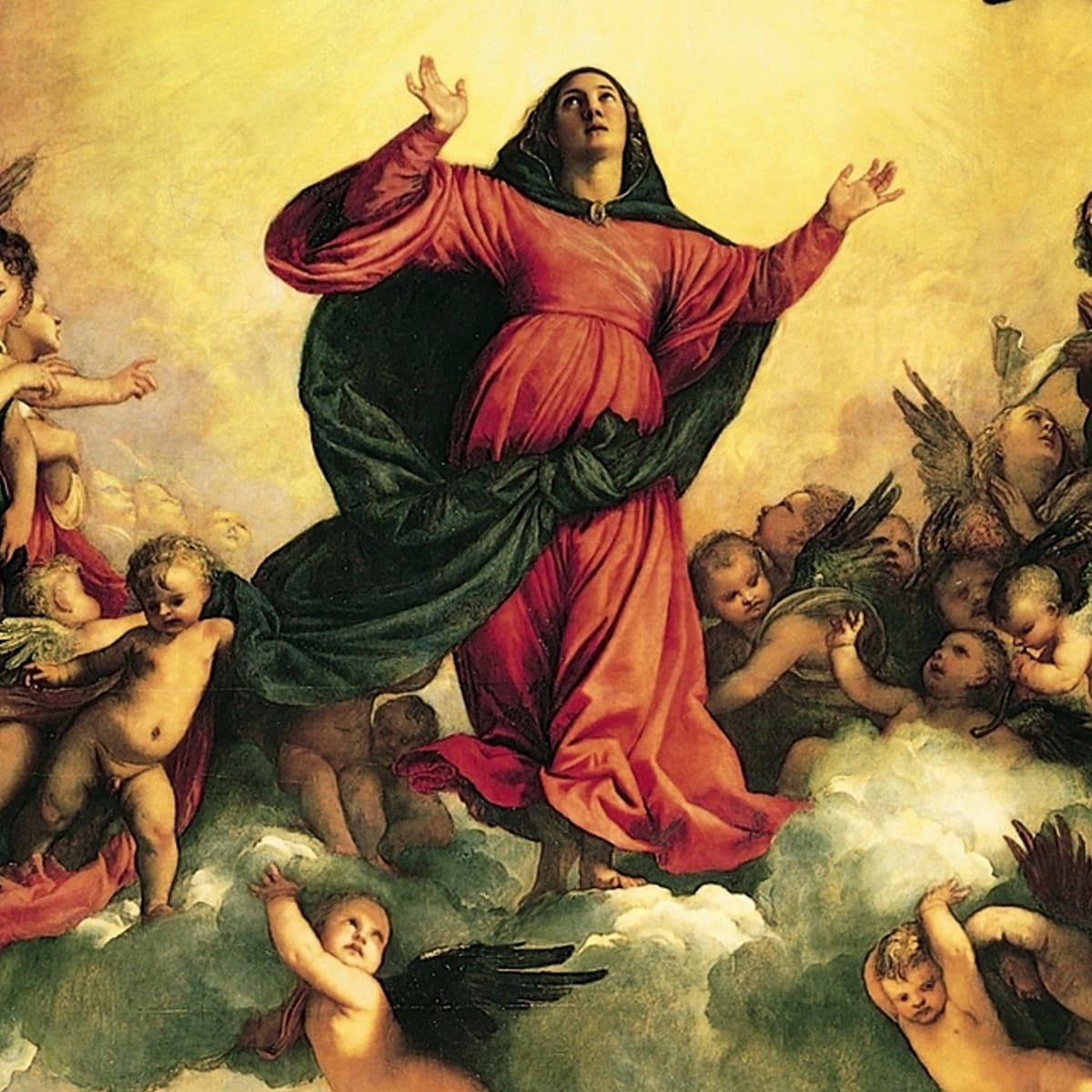
Venice — Frari Church
A guided tour of Venice — Frari Church in Italy with 11 stops. Highlights include The Frari Church, Nave, and Titian: Assumption of Mary.
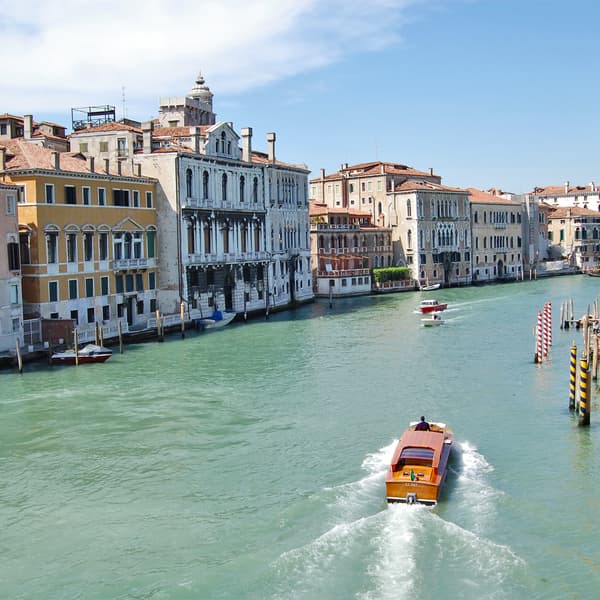
Venice — Grand Canal Cruise
A 18-stop walking tour through the heart of Italy. Visit Venice’s Grand Canal, Ferrovia: Boat Departs, Riva de Biasio, and San Marcuola — with narrated stories at every stop.
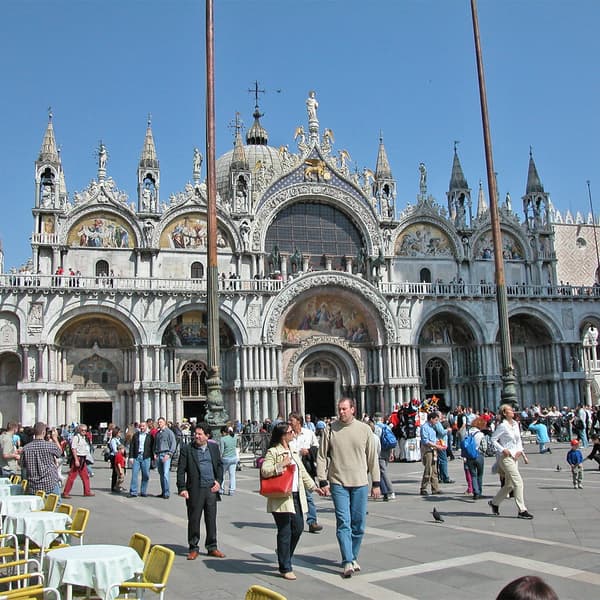
Venice — St. Mark's Basilica
A 20-stop walking tour through the heart of Italy. Visit St. Mark's Basilica, Entering the Church, Atrium Mosaics, and Nave — with narrated stories at every stop.
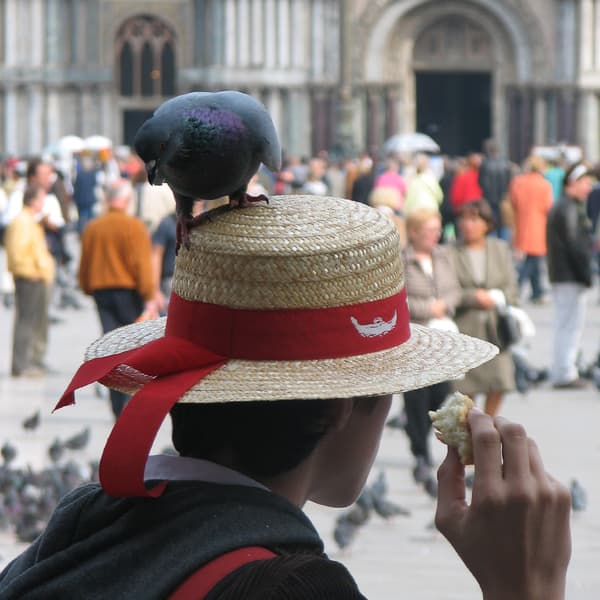
Venice — St. Mark's Square
A 15-stop walking tour through the heart of Italy. Visit St. Mark's Square, Cafés, St. Mark's Basilica, and Clock Tower — with narrated stories at every stop.
30 Landmarks in Venice
Arsenale
Venezia Murano Burano (Venezia Insulare), Venice, Italy
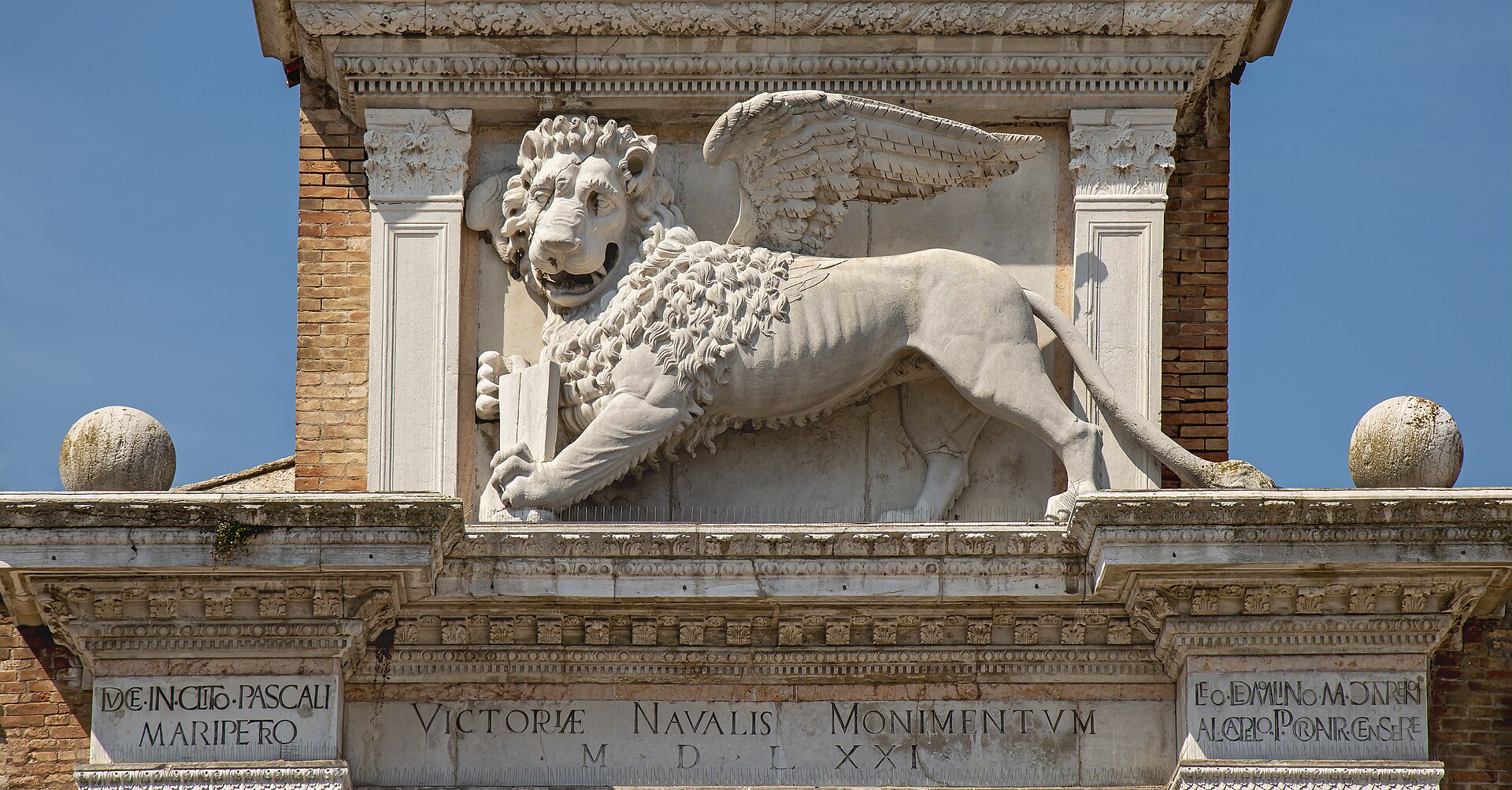
Before Henry Ford, before the Industrial Revolution, before anyone else figured out assembly-line production, Venice had the Arsenale. Founded around 1104, this vast shipyard covered 45 hectares — about 15 percent of the entire city — and at its peak in the early 16th century employed 16,000 workers who could build, arm, and provision a complete warship in a single day. The secret was standardisation. Venetian shipbuilders invented the frame-first construction method, pre-fabricated interchangeable parts, and a sequential production system where hulls moved down a canal past stations that added rigging, weapons, supplies, and crew. When King Henry III of France visited in 1574, the Arsenal workers built a complete galley during the time it took him to eat dinner — one of history's greatest demonstrations of industrial capability. The word "arsenal" itself comes from the Arabic "dar al-sina'a" (house of manufacture), filtered through the Venetian dialect. The entrance gate, built in 1460, is flanked by marble lions looted from Greece — one from Piraeus, two from Delos — adding to Venice's tradition of decorating with other people's monuments. Today much of the Arsenale is used for the Venice Biennale, the world's most prestigious international art exhibition, held in odd-numbered years. The transformation of a weapons factory into an art space has a certain poetic justice. The rest of the complex is still controlled by the Italian Navy, and most of it remains closed to the public — a walled city within a city, hiding centuries of secrets behind its crenellated walls. Dante referenced the Arsenale in the Inferno, comparing the boiling pitch of the eighth circle of Hell to the tar used to waterproof ships here.
Bridge of Sighs
Piazza San Marco, Venice
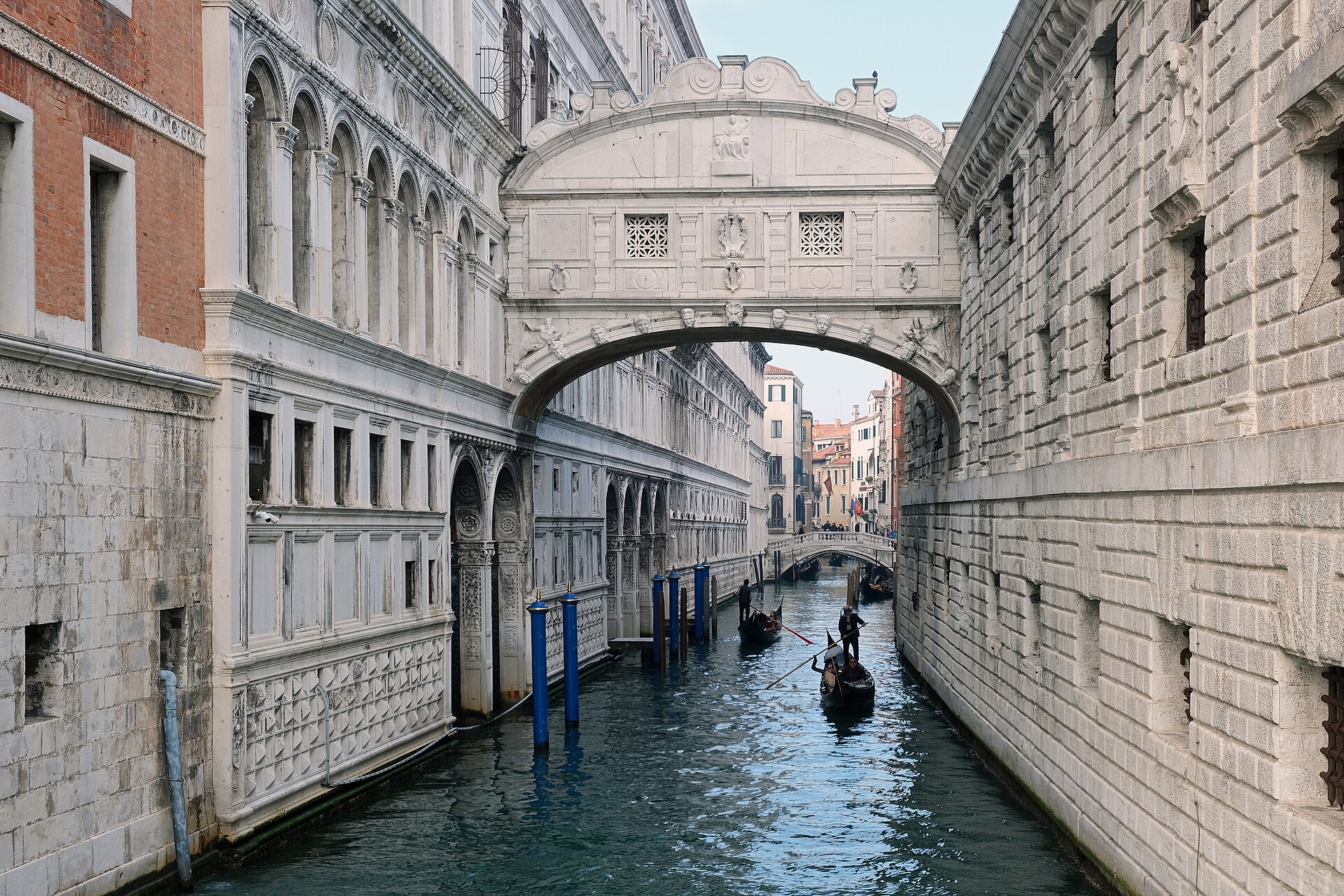
It might be the most romanticised piece of infrastructure in the world, but the Bridge of Sighs was built for an entirely unromantic purpose: shuttling prisoners from the interrogation rooms in the Doge's Palace to the cells in the New Prison across the canal. The name came from Lord Byron's 1812 poem, where he imagined convicts taking one last wistful look at the lagoon through the bridge's stone-barred windows before disappearing into captivity. Designed by Antonio Contin — nephew of Antonio da Ponte, who built the Rialto Bridge — the enclosed white limestone bridge was completed in 1600. It's a family business, building Venice's most famous crossings. The Baroque design features small windows cut into the limestone walls. Stand inside and you'll see that the view of the lagoon is actually quite narrow — a sliver of blue water and sky, which somehow makes Byron's conceit even more poignant. The romantic myth has taken on a life of its own. Legend has it that couples who kiss in a gondola beneath the bridge at sunset, as the bells of San Giorgio toll, will enjoy eternal love. This tradition was likely invented by gondoliers looking to charge more for the sunset ride, but it works — the canal beneath the bridge is one of the most congested waterways in Venice during golden hour. In reality, by the time the bridge was built, the Venetian Republic's justice system had softened considerably. Most prisoners crossing it faced sentences for debt or petty crime, not the dramatic imprisonments of the medieval era. The one famous exception is Casanova, who crossed it en route to his cell before making his legendary escape in 1755.
Burano
Venezia Murano Burano (Venezia Insulare), Venice, Italy
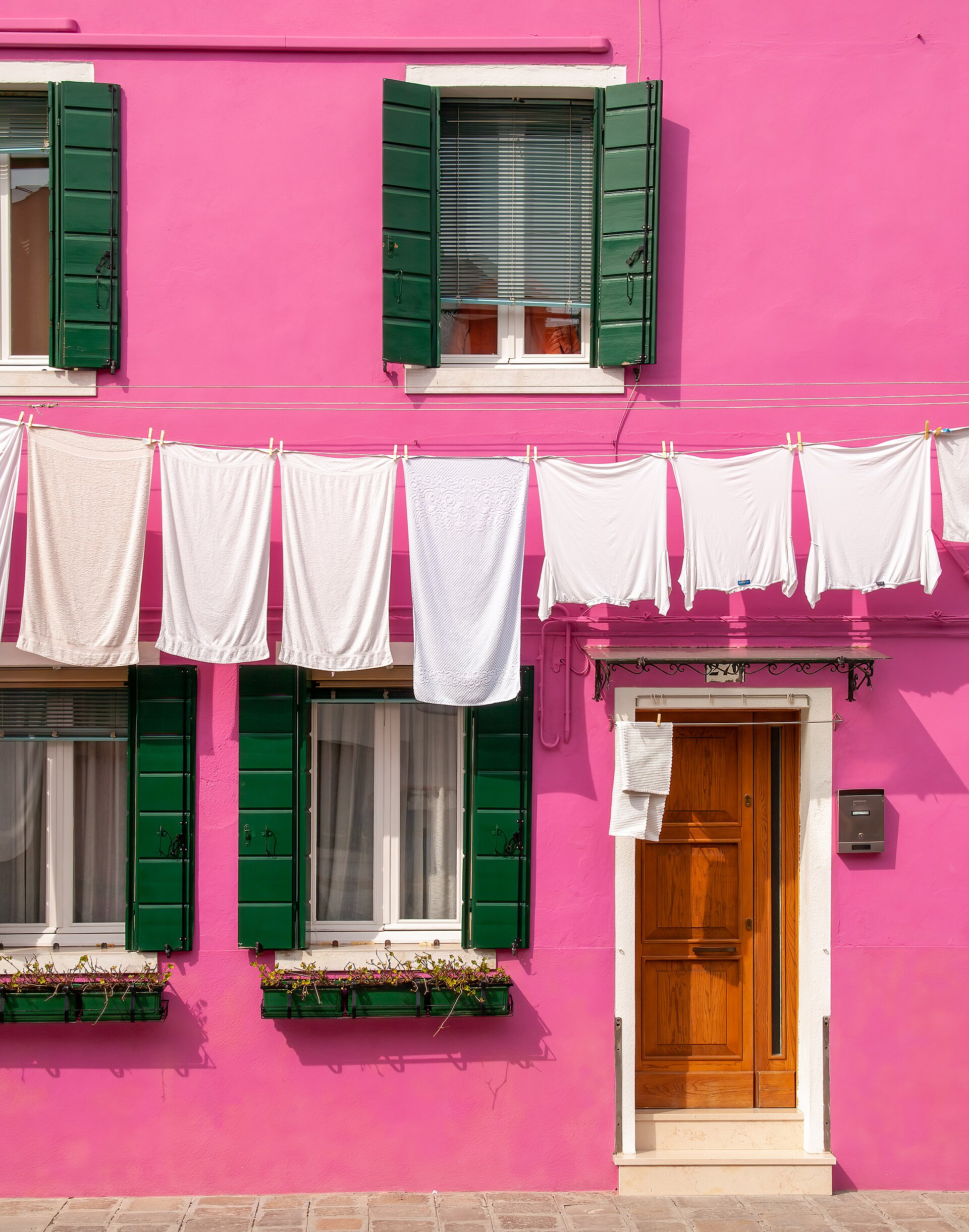
Burano looks like someone spilled a paint factory into the Venetian lagoon. Every house on this small fishing island is painted a different blazing colour — electric blue next to canary yellow next to hot pink — creating a visual effect so intense that photographers lose their minds here. The tradition may have started so that fishermen could spot their homes through the fog on the way back from sea, but today the colours are regulated by the local government. Want to repaint your house? You submit a request and they tell you which colours are permitted for your lot. The island is 7 kilometres from Venice — a 45-minute vaporetto ride — and feels like a different world. Where Venice is grand and monumental, Burano is intimate and domestic. The population has shrunk to about 2,800, down from a peak of over 8,000, and on a quiet morning you'll hear more seagulls than people. Cats sprawl on windowsills. Laundry hangs between the rainbow facades. Fishing nets dry on the quay. Burano's other claim to fame is its lace. The art of merletto — needle lace — has been practiced here since the 16th century, when women stitched intricate patterns while waiting for their fisherman husbands to return. Burano lace became the most coveted in Europe, worn by Louis XIV and the courts of France and Flanders. A single large piece could take more than a year to complete. The industry nearly died in the 18th century but was revived in 1872 when a lace-making school opened on the island. The houses are repainted every two years, which means the island is always fresh but never quite the same. Colours shift and change; a house that was green last time you visited might be salmon pink now. It's Venice's most photogenic day trip, and the seafood risotto at the restaurants along the main canal is worth the boat ride alone.
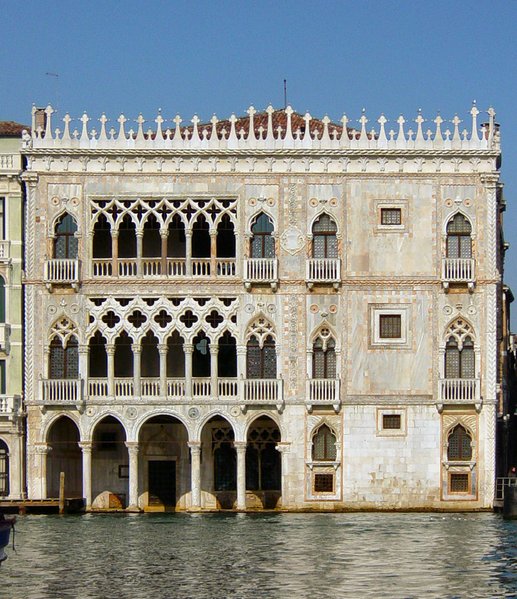
Ca' d'Oro
3932 Cannaregio, Venezia Murano Burano (Venezia Insulare), Venice, 30121, Italy
The "House of Gold" hasn't been golden for over four hundred years, but the name stuck. When Marino Contarini built this palazzo between 1421 and 1437, the facade was covered in gold leaf, ultramarine blue, and vermillion — a floating jewel box on the Grand Canal designed to announce that the Contarini family, which had already produced eight doges, wasn't about to be outdone by anyone. The gold wore off by 1600, victim of salt air and sun, but the lace-like Gothic stonework that remains is arguably more beautiful without it. The facade is the finest surviving example of Venetian Gothic architecture: a symphony of pointed arches, quatrefoils, and open loggias that manage to look both impossibly delicate and structurally sound. Architects Giovanni and Bartolomeo Bon created something that looks more like embroidery than engineering. The building had a rough few centuries after the Contarinis. It passed through various owners who stripped it of its original features — one 19th-century owner, the ballerina Marie Taglioni, ripped out the original staircase and wellhead. Baron Giorgio Franchetti bought it in 1894 and spent decades restoring it, filling it with his art collection before donating the whole lot to the Italian state in 1916. Today it's the Galleria Franchetti, a small museum that most tourists skip in favour of the bigger names. Their loss. The collection includes Mantegna's "St. Sebastian," Titian's fragment of a Venus, and some of the best views of the Grand Canal from any museum in the city. The original wellhead in the courtyard, carved by Bartolomeo Bon himself, is one of the most beautiful objects in Venice — and almost nobody stops to look at it.
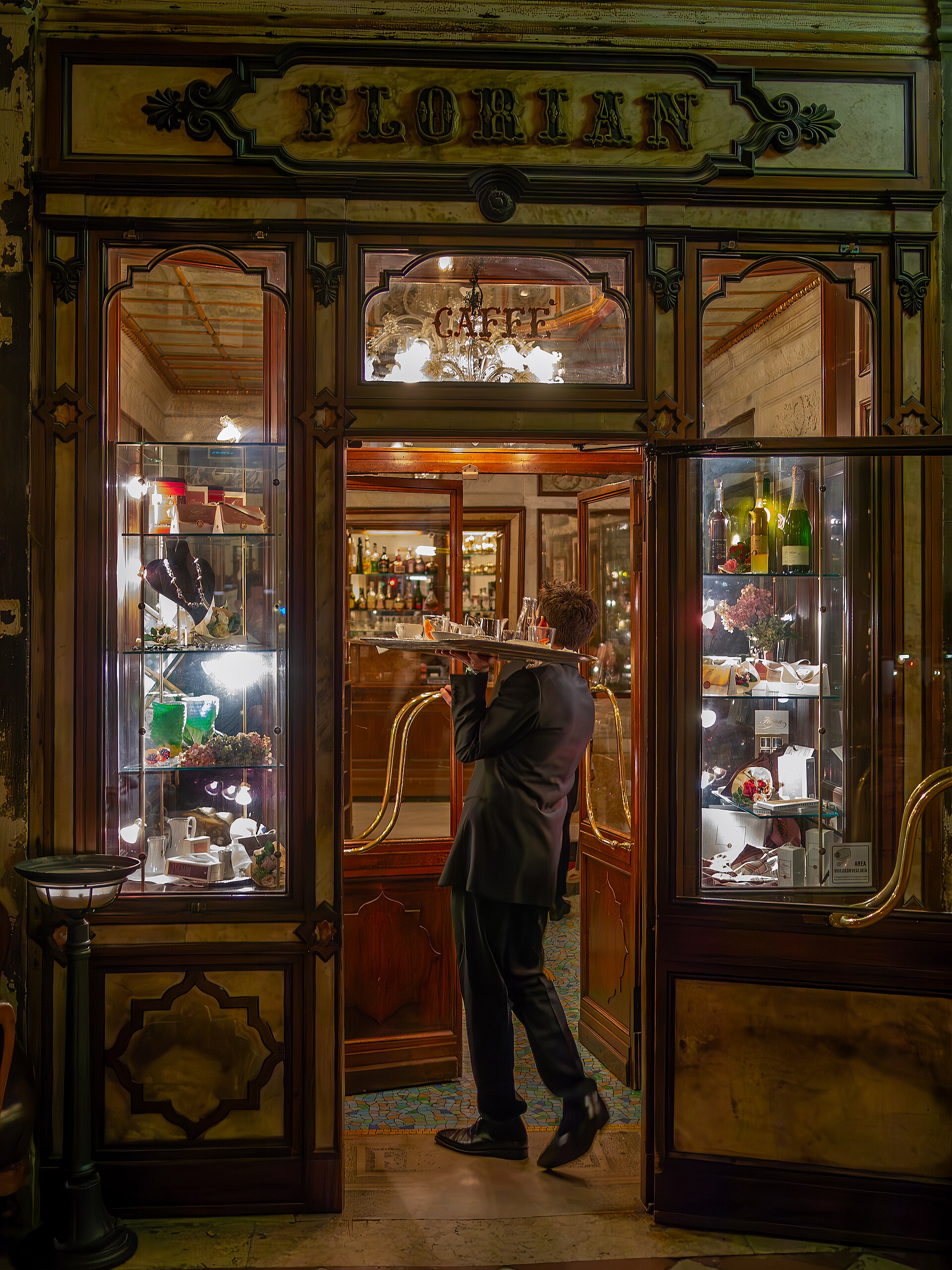
Caffè Florian
57 San Marco, Venezia Murano Burano (Venezia Insulare), Venice, 30124, Italy
Caffè Florian has been serving coffee in Piazza San Marco since December 29, 1720, making it, by its own reckoning, the oldest coffeehouse in continuous operation in the world. Whether that claim is perfectly accurate or not — there are a few contenders — it's indisputably one of them, and certainly the most beautiful. The interior is a jewel box of mirrored walls, painted panels, and gilt-edged banquettes that look exactly as they did when Casanova stopped by for an espresso. Floriano Francesconi opened the café under the arcade of the Procuratie Nuove and named it "Alla Venezia Trionfante" — Triumphant Venice. Nobody called it that; everyone called it Florian's, after the owner. The name stuck for three centuries. In the 18th century, it was the only coffeehouse in Venice that admitted women, which made it both progressive and extremely popular. The guest list reads like a who's who of European culture: Goethe, Dickens, Proust, Byron, Rousseau, Stravinsky, and — inevitably — Hemingway all drank here. During the Austrian occupation, Caffè Florian became an unofficial headquarters of Italian nationalism. Venetians boycotted the Austrian-favoured Caffè Quadri across the piazza and made Florian's their patriotic drinking spot. Coffee as political resistance. Today a coffee at Florian's costs about 12 euros, more if the orchestra is playing. A Bellini will set you back considerably more. The prices are outrageous and everybody knows it, but you're paying for 300 years of accumulated atmosphere. Sit at an outdoor table when the orchestra strikes up and the piazza fills with golden evening light, and even the most hardened cynic has to admit: twelve euros for this view might actually be a bargain.
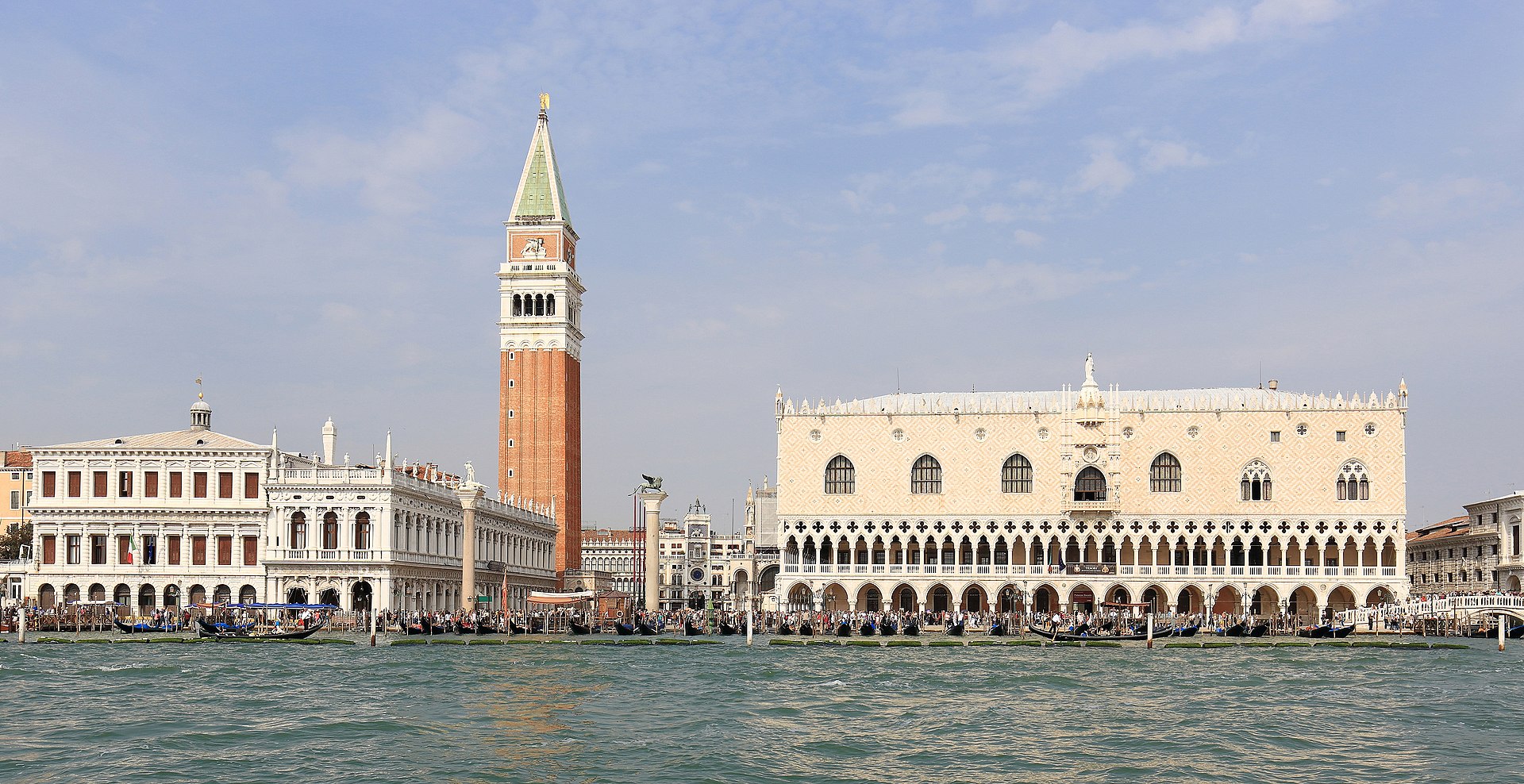
Campanile di San Marco
Piazza San Marco, Venice
At 98.6 metres, it's the tallest structure in Venice, and on July 14, 1902, it fell down. The entire bell tower collapsed into a heap of rubble in Piazza San Marco at 9:47 in the morning, and the only fatality was the caretaker's cat — a miracle that earned the tower the reputation of having fallen "like a gentleman." It had been showing cracks for weeks, and the piazza had been prudently cleared. The original foundation dated to the 9th century, built on a platform of oak beams resting on clay into which poplar pilings had been driven. Over a thousand years, those pilings shifted, the clay compressed, and the whole thing became unstable. Galileo used the tower in 1609 to demonstrate his telescope to the Venetian Senate, and the tower already had structural issues even then. Several restorations had tried to shore it up, but ultimately, gravity won. The city council voted immediately to rebuild "dov'era e com'era" — where it was and how it was. The new campanile, completed in 1912, is externally identical to the old one but with a modern reinforced foundation of cement and iron instead of the original wooden beams. The inauguration was held on St. Mark's Day, April 25, 1912 — exactly one thousand years after the original foundation was supposedly laid, a coincidence too good not to exploit. The view from the top is the best in Venice, precisely because it's the one view that doesn't include the Campanile itself. On clear days, you can see the Dolomites. The five bells each had a specific function in the Republic: one summoned the Senate, one announced executions, one called workers to lunch, one marked midnight, and one rang for a condemned man's last hour.
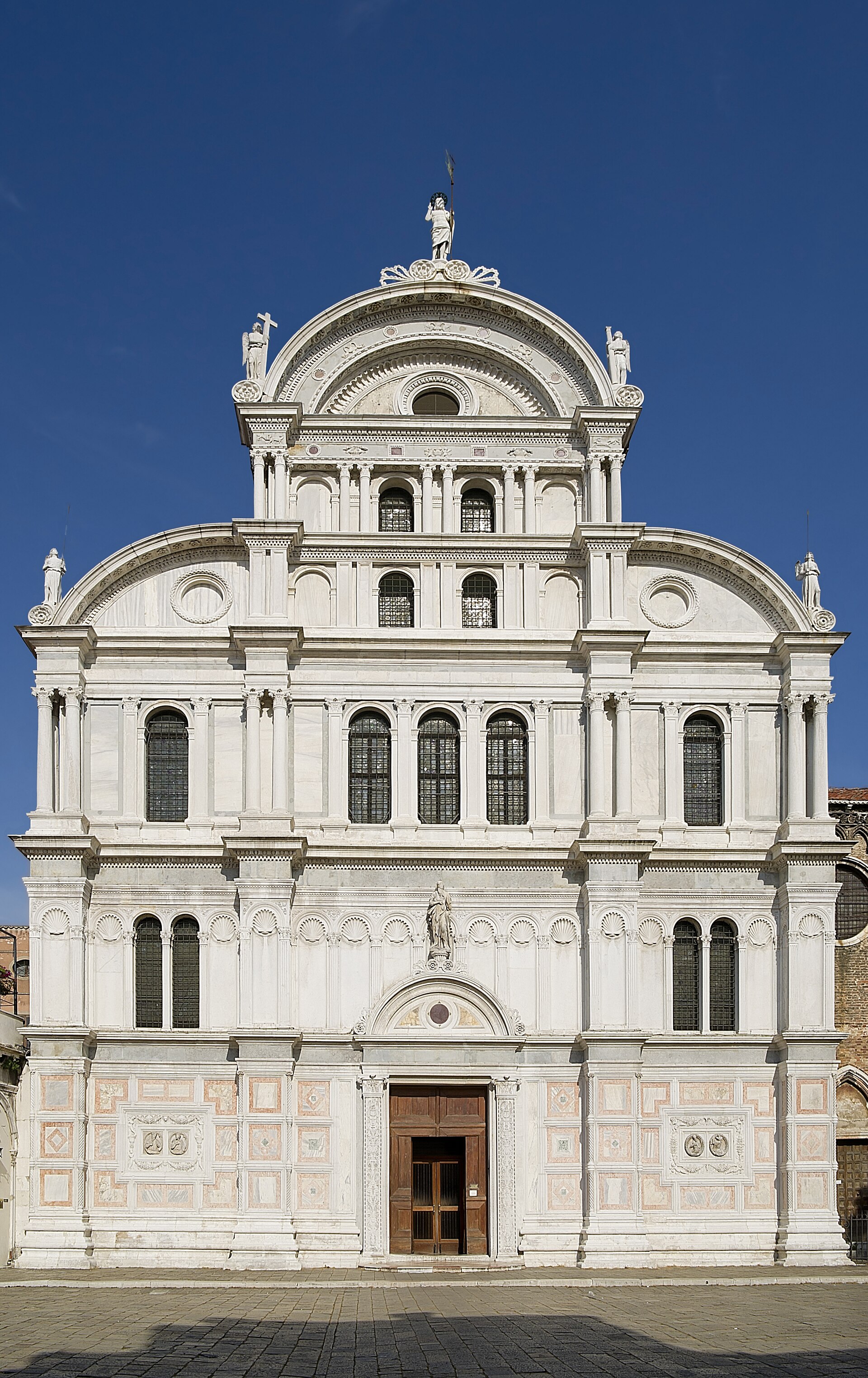
Chiesa di San Zaccaria
Campo San Zaccaria, Venezia Murano Burano (Venezia Insulare), Venice, 30122, Italy
Most visitors walk right past San Zaccaria on their way between St. Mark's and the waterfront, which is a shame, because this church has two things that are worth the detour: one of Giovanni Bellini's greatest paintings, and a crypt that's permanently underwater. The flooded crypt is Venice at its most surreal. Built in the 10th and 11th centuries, the underground chamber was designed as a burial vault for doges, but the gradual rise in sea level means it now sits in several inches of permanent standing water. Stone columns rise from the still surface, their reflections doubling their height in the dim light. Doges' tombs sit in the water like stepping stones. It's beautiful, melancholy, and slightly terrifying — a preview of what climate change might do to the rest of Venice. Upstairs, Bellini's "San Zaccaria Altarpiece" (1505) is one of the supreme achievements of Venetian painting. The Virgin sits with saints in a golden apse that seems to glow with actual light. Bellini was in his seventies when he painted it, and every brushstroke radiates the quiet confidence of a master who knows exactly what he's doing. The painting was so admired that Napoleon almost took it — his agents had it on the list. The church is dedicated to Zechariah, father of John the Baptist, whose body was given to Venice by the Byzantine Emperor Leo V. The adjacent convent was notorious in the Republic — the nuns, mostly daughters of noble families who couldn't afford dowries, were famous for their parties, their lovers, and their general refusal to behave. Several popes tried to reform the place. None succeeded.
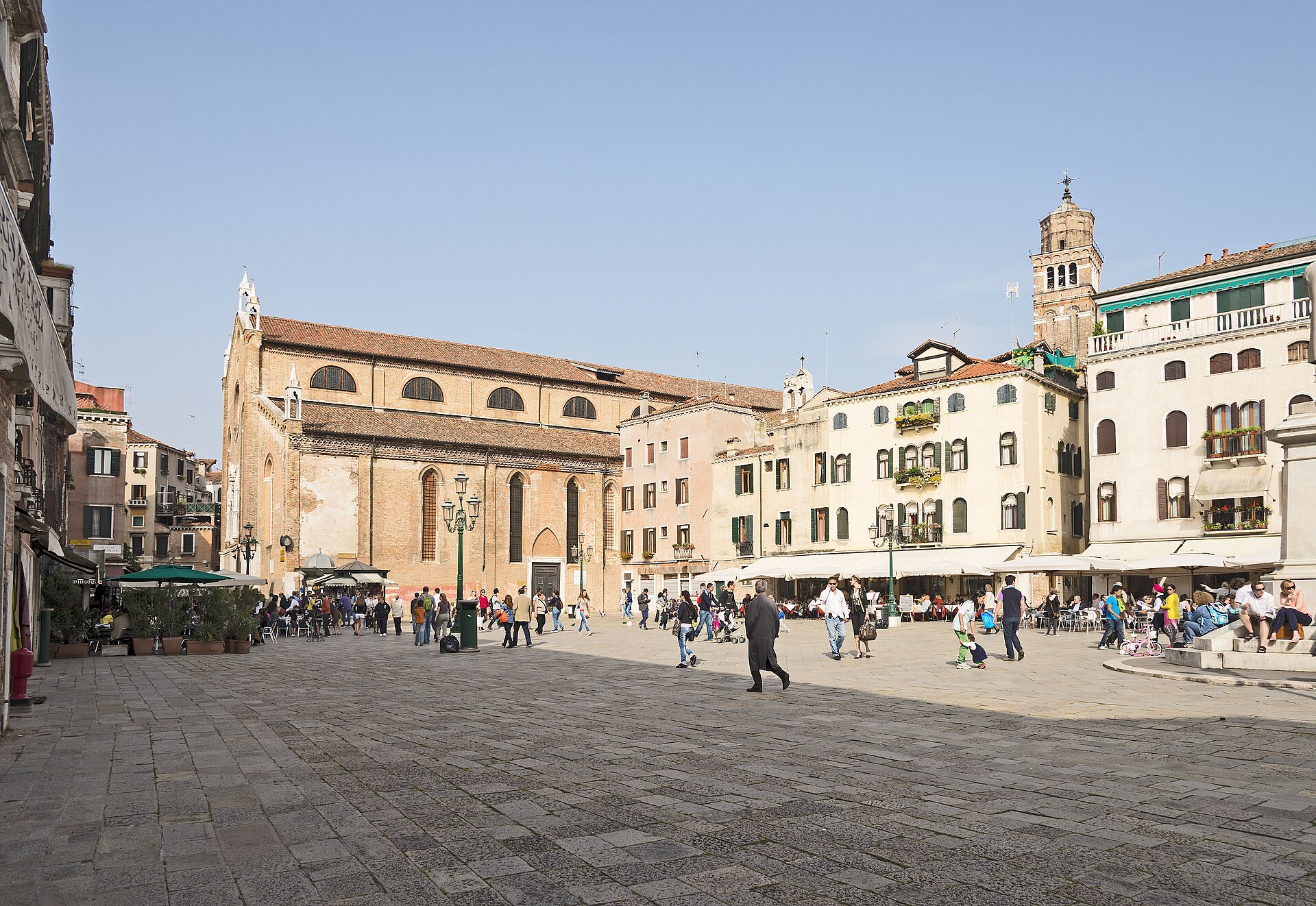
Chiesa di Santo Stefano
2958 San Marco, Venezia Murano Burano (Venezia Insulare), Venice, 30124, Italy
Venice has four leaning bell towers, and Santo Stefano's is the most dramatic — tilting over two metres off-centre, visible from the campo below at an angle that makes tourists instinctively step back. The church itself has been consecrated six times because it kept being desecrated by murders committed inside it. Venetians were passionate people, and apparently the sanctity of a church was not enough to prevent the occasional stabbing. Built in the 14th century by the Augustinian order, Santo Stefano has one of the finest Gothic interiors in Venice. The ceiling is a stunning ship's-keel vault — carved wooden beams arching overhead like the inverted hull of a galley, built by the same shipwrights who constructed Venice's navy at the Arsenale. It's a reminder that in Venice, even church construction was influenced by the sea. The campo outside is one of the best people-watching spots in Venice. Large, sunny, and lined with cafés, it hosts a daily market and serves as the social centre of the San Marco district for actual Venetians, not tourists. The statue in the middle honours Niccolò Tommaseo, a 19th-century writer and patriot who helped lead Venice's 1848 revolt against Austrian rule — a man with magnificent sideburns and the unfortunate distinction of having a statue that, from behind, appears to be defecating books. The church houses works by Tintoretto and contains the tomb of the Doge Francesco Morosini, who in 1687 achieved the dubious distinction of accidentally blowing up the Parthenon in Athens when his artillery hit the Ottoman gunpowder magazine stored inside it.
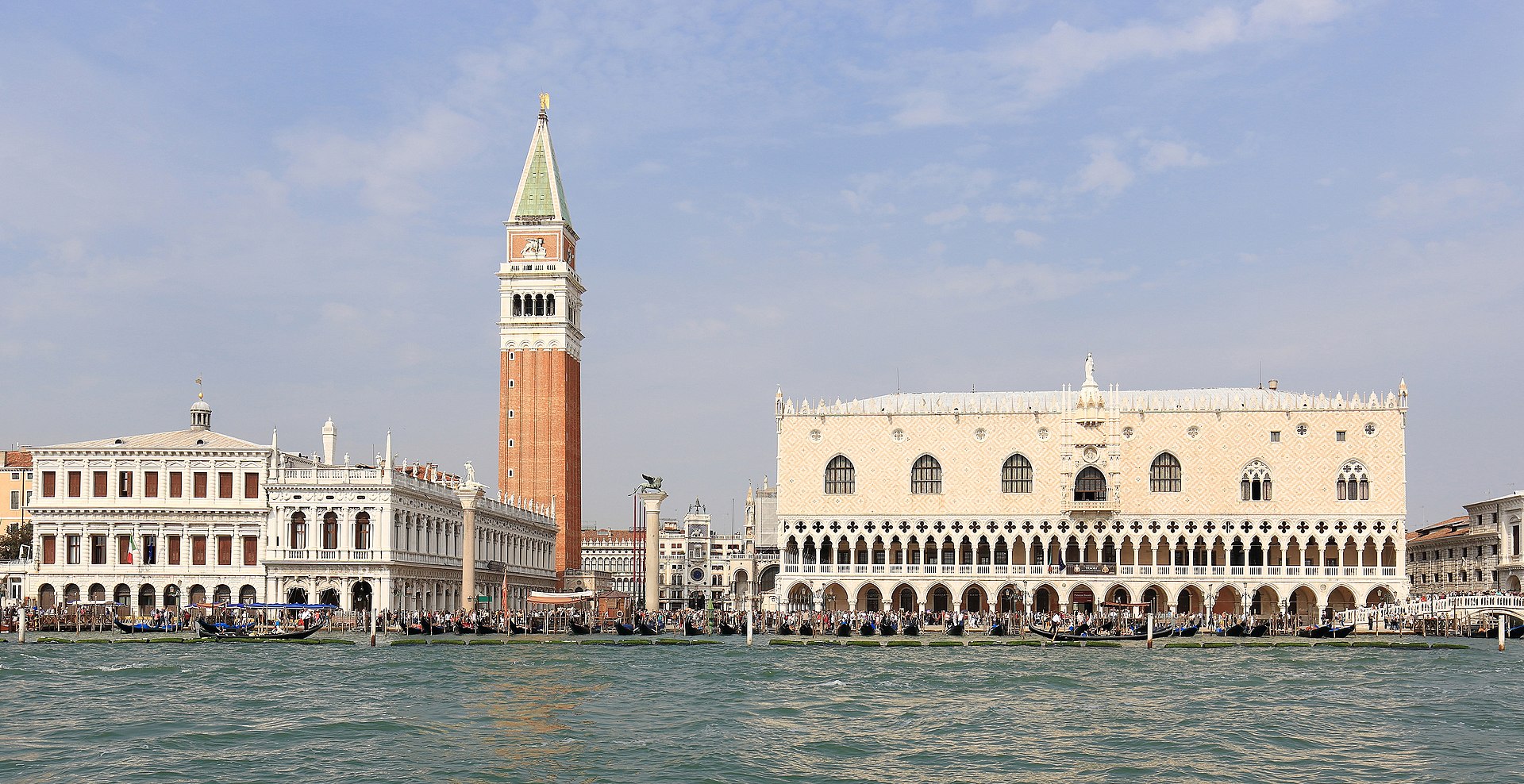
Doge's Palace
1 San Marco, Venezia Murano Burano (Venezia Insulare), Venice, 30124, Italy
For over a thousand years, this was the nerve centre of one of history's most successful republics — a state that lasted longer than the Roman Empire and ran a trading network that stretched from London to China. The Doge's Palace looks delicate from outside, all pink marble and white limestone lace, but inside it was pure power: courtrooms, council chambers, armouries, and prisons all under one lavishly decorated roof. The palace was largely rebuilt after devastating fires in 1574 and 1577. The Great Council Hall, where Venice's patricians debated policy, contains Tintoretto's "Paradise" — at roughly 74 by 30 feet, it was the largest oil painting on canvas in the world when it was completed in 1592. The room itself could hold all 2,000 members of the Great Council simultaneously, making it a functioning parliament centuries before most of Europe had one. The Secret Itineraries tour reveals what the Republic didn't want you to see: the cramped office where state inquisitors worked, the torture chamber with its ceiling so low you can't stand upright, and the pozzi — the damp ground-floor cells where prisoners went mad in the dark. Casanova was imprisoned here in 1755 for crimes including witchcraft and managed one of history's most famous prison escapes, climbing through the lead-lined roof with a metal spike he'd hidden in his Bible. The Bridge of Sighs connects the palace to the new prison across the canal. Lord Byron gave it that romantic name in 1812, imagining prisoners sighing at their last glimpse of Venice through its small stone-barred windows. The reality was more mundane — by the time the bridge was built in 1600, most prisoners crossing it faced relatively minor sentences.
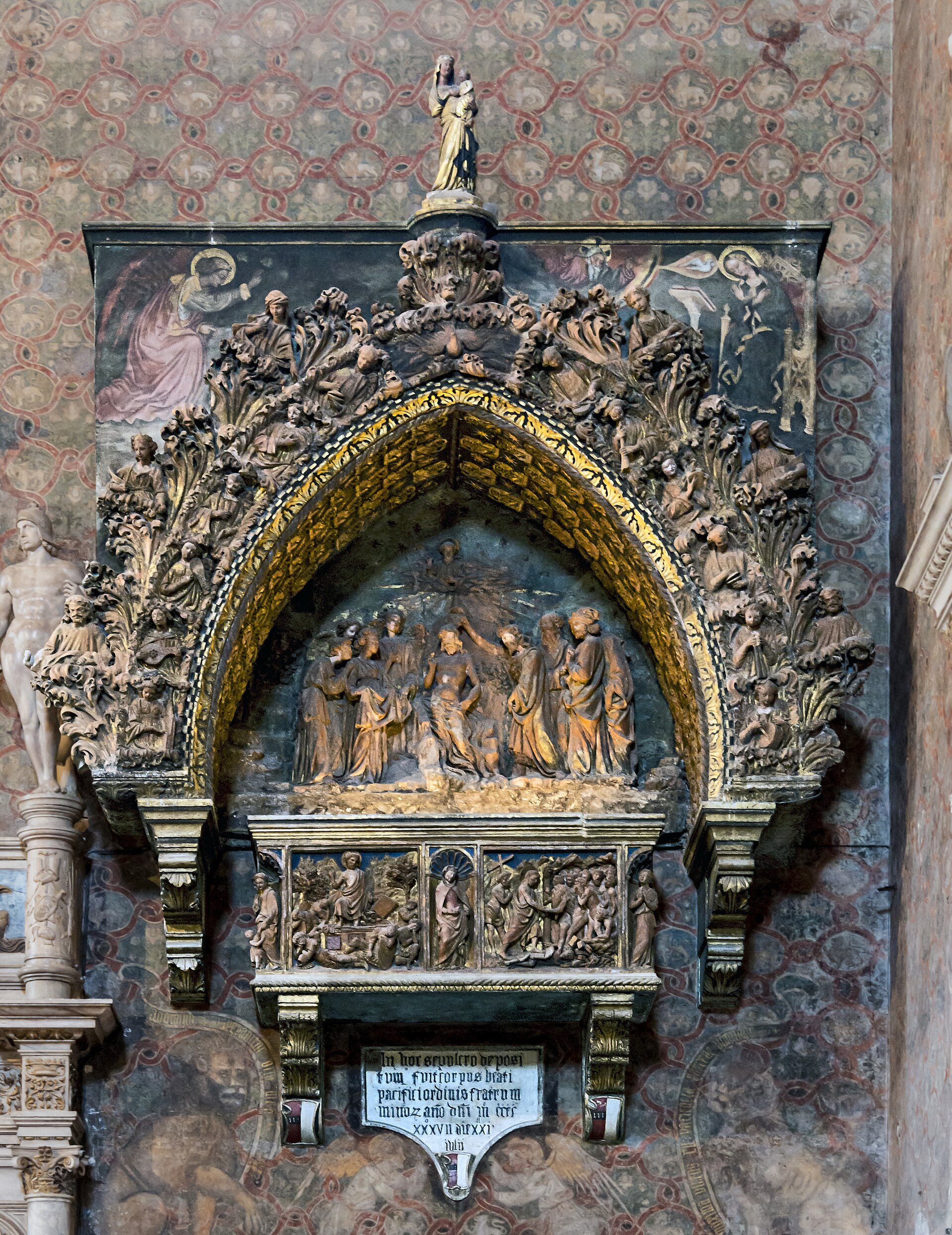
Frari Church
3072 San Polo, Venezia Murano Burano (Venezia Insulare), Venice, 30125, Italy
The Franciscans arrived in Venice in 1226, and being Franciscans — sworn to poverty and simplicity — they immediately set about building one of the largest churches in the city. The Basilica di Santa Maria Gloriosa dei Frari took over a century to complete, and its plain brick exterior hides an interior that's anything but austere. This is where Venice's greatest painters came to make their names, and where one of them came to be buried. Titian's "Assumption of the Virgin" dominates the main altar — a massive 22-by-12-foot explosion of colour that scandalized Venice when it was unveiled in 1518. The city was used to demure, static Madonnas; Titian gave them a Mary who looks genuinely astonished to be rising to heaven, surrounded by apostles who seem as shocked as she is. It established the young painter as the foremost artist in Venice, and he never really let go of the title. His tomb is here too, a grand marble affair that the Austrian occupiers built for him in the 19th century. The other masterpiece you can't miss is Giovanni Bellini's triptych in the sacristy — a Madonna and Child with saints that glows with the kind of soft, warm light that made the Venetian school revolutionary. Donatello's wooden sculpture of St. John the Baptist, gaunt and wild-eyed, is the only work by the great Florentine sculptor still in Venice. The church retains the only surviving choir screen in Venice, a marble partition built in 1475 to separate the friars from the public during services. Most Venetian churches tore theirs down during Counter-Reformation renovations. The Frari kept its, giving the interior a sense of layered mystery that other churches lost.
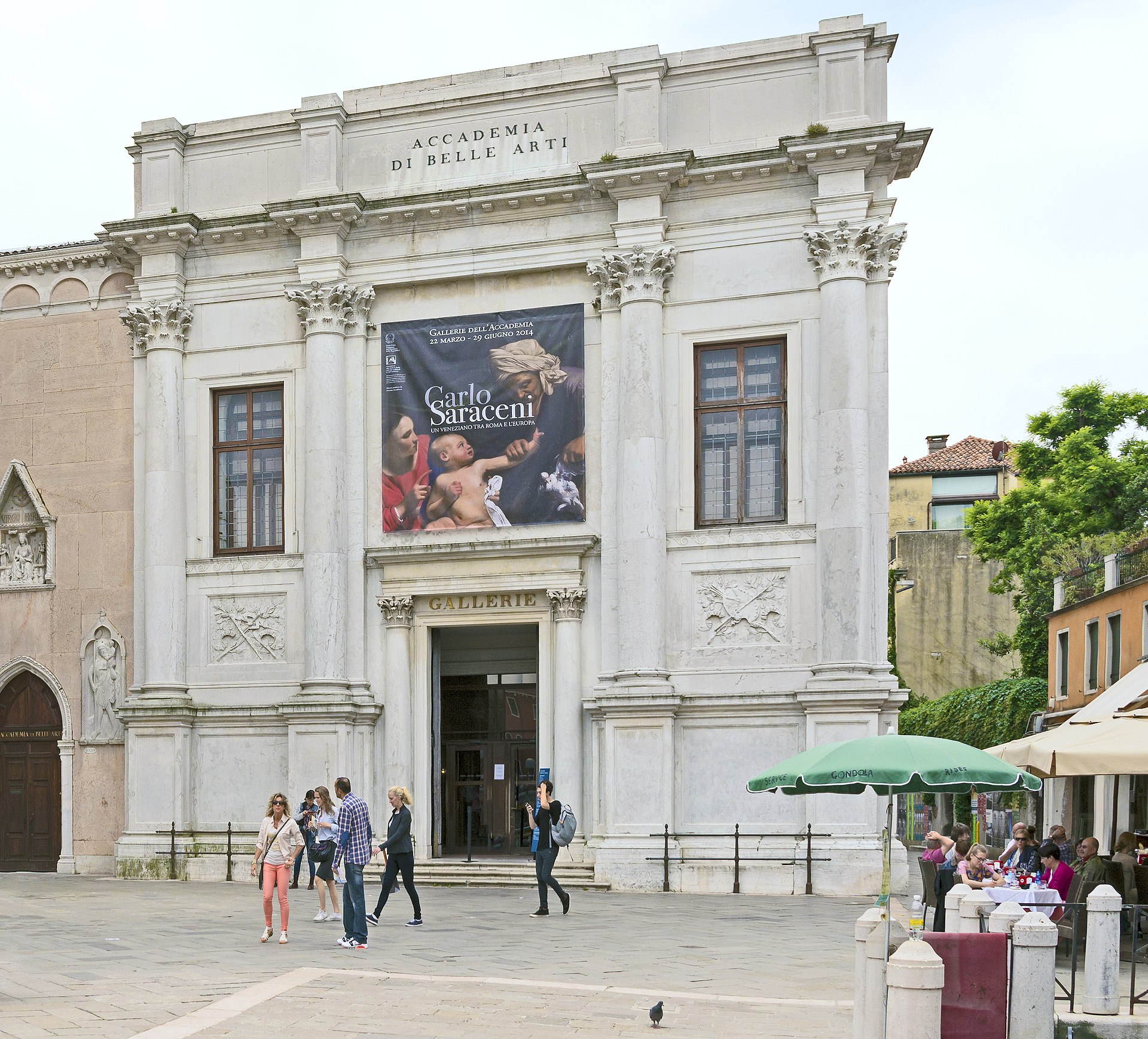
Gallerie dell'Accademia
Campo de la Carità, Venezia Murano Burano (Venezia Insulare), Venice, 30123, Italy
If you want to understand why Venetian painting changed the world, this is where you come. The Accademia holds the greatest collection of Venetian art on the planet — over 800 paintings spanning from the Byzantine period through the 18th century, all housed in a complex of buildings that includes a former church, a monastery, and a confraternity hall. Napoleon created the gallery in 1807 by raiding churches and monasteries across Venice for their best art — a common Napoleon move. The suppressions of religious orders meant that masterpieces that had hung in the same spot for centuries were suddenly homeless, and the Accademia became their refuge. It's one of the few positive legacies of French occupation. The star of the collection might be Giorgione's "The Tempest" — a painting so mysterious that art historians have been arguing about its meaning for five hundred years. A soldier, a nursing woman, a storm, a ruined city: nobody knows what it's about, and that's the point. Giorgione invented the concept of painting a mood rather than a story, and this tiny canvas changed everything that came after it. The Accademia also holds Leonardo da Vinci's "Vitruvian Man," the famous drawing of a man inscribed in a circle and square, but it's almost never on public display. The work is drawn on paper and is so fragile and light-sensitive that it only comes out for special exhibitions. You've seen it a million times on T-shirts and textbooks, but the chances of seeing the original are remarkably slim.
Grand Canal
Grand Canal, Venice
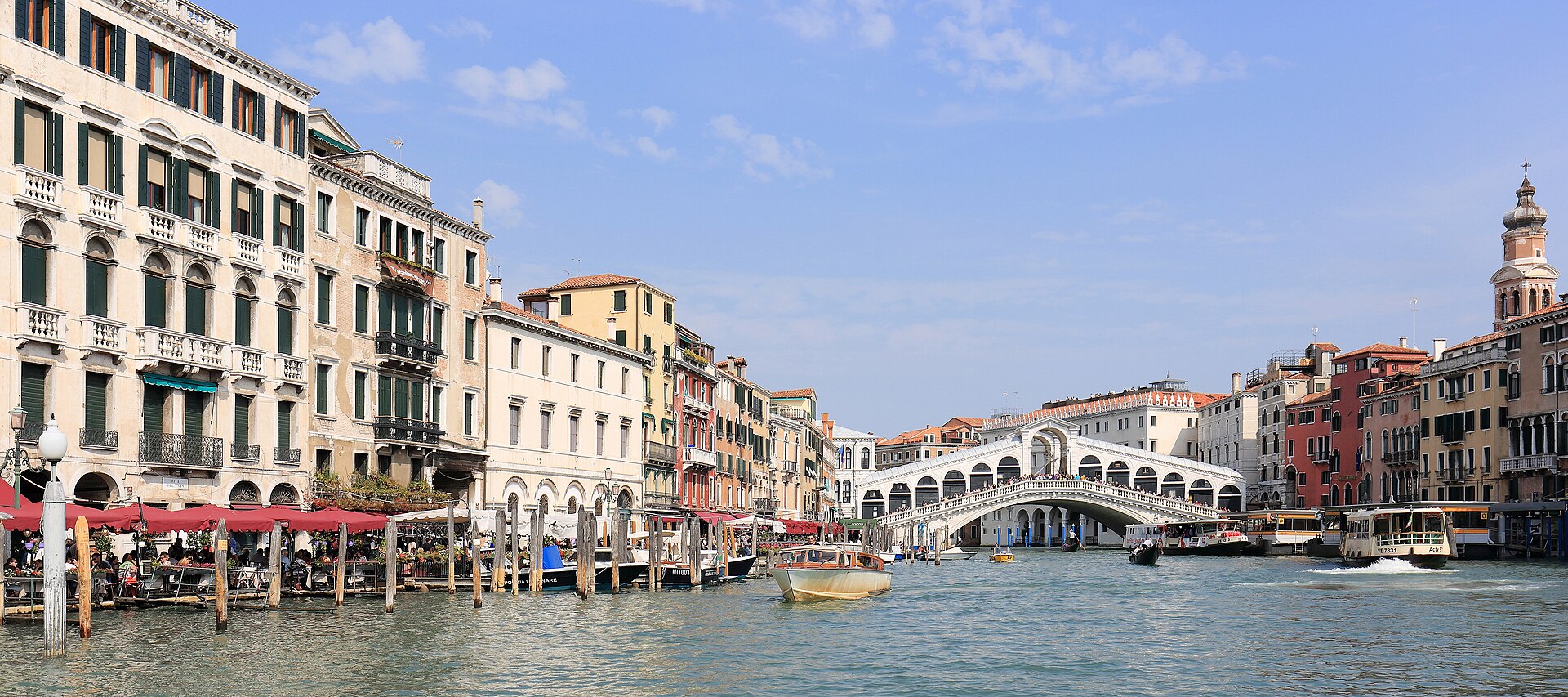
Venice's main street is made of water. The Grand Canal snakes through the city in a reverse S-shape for 3.8 kilometres, from the railway station to St. Mark's Basin, and it has served as the city's main thoroughfare for over a thousand years. Everything — people, goods, garbage, ambulances — moves along it by boat. There isn't a single car, truck, or bicycle on this road. There never has been. More than 170 buildings line its banks, and the parade of architectural styles reads like a textbook: Byzantine, Gothic, Renaissance, Baroque, Neoclassical, all jumbled together in a way that would be chaotic anywhere else but here feels perfectly composed. The palazzi were built by Venice's merchant aristocracy, each family trying to outdo the next with a more elaborate facade. The canal was their catwalk, and the palaces were their outfits. The best way to experience it is the Number 1 vaporetto — Venice's waterbus — which makes every stop and takes about 45 minutes to travel the full length. Take it at sunset, when the light turns the water gold and the palazzo facades glow pink and amber. It costs the same as any other vaporetto ride and offers views that rival any paid sightseeing cruise in the world. Four bridges cross the Grand Canal: the Rialto (1591), the Accademia (1854, rebuilt 1932), the Scalzi (1934), and the controversial Constitution Bridge designed by Santiago Calatrava, completed in 2008 to howls of criticism for its modern design and its slippery glass steps that proved dangerous for pedestrians with wheeled luggage. Until 1854, the Rialto was the only bridge — Venice got by with traghetti, public gondola ferries that still shuttle people across at seven points for a couple of euros.
Harry's Bar
1323 San Marco, Venezia Murano Burano (Venezia Insulare), Venice, 30124, Italy
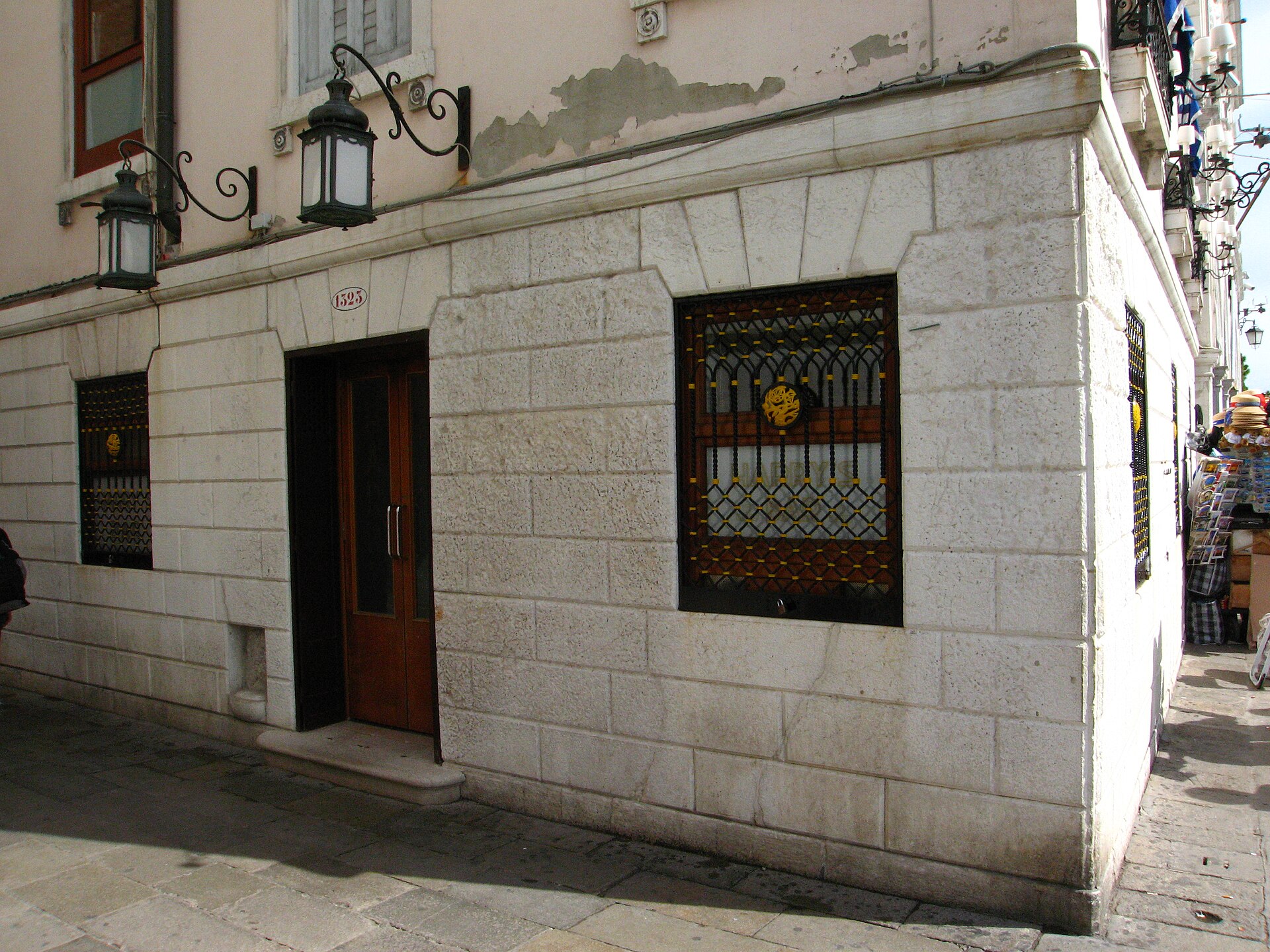
The most famous bar in Venice was bankrolled by a drunk American. In the late 1920s, Harry Pickering, a wealthy young Bostonian, was drinking his way through Venice when his family cut him off financially. Giuseppe Cipriani, the bartender at the Hotel Europa, lent him 10,000 lire out of his own pocket. Two years later, Pickering walked back in and handed Cipriani 50,000 lire — his original 10,000 back, plus 40,000 to open a bar. Harry's Bar opened on May 13, 1931, and the rest is cocktail history. Cipriani invented the Bellini here in 1948 — fresh white peach purée mixed with Prosecco, named after the 15th-century Venetian painter Giovanni Bellini because the cocktail's pink hue reminded Cipriani of a colour in one of Bellini's paintings. He also invented carpaccio — thin slices of raw beef drizzled with a creamy sauce — naming it after the painter Vittore Carpaccio, whose use of red and white reminded him of the dish. Venice: where even the food is named after artists. Ernest Hemingway made Harry's his de facto office during his Venice years. His corner table became so associated with him that it might as well have had a nameplate. He drank Montgomery martinis here — fifteen parts gin to one part vermouth, named after the Field Marshal because Montgomery supposedly wouldn't attack unless he had a 15-to-1 advantage. Hemingway set his novel "Across the River and Into the Trees" partly at the bar. The Italian Ministry of Cultural Affairs declared Harry's Bar a national landmark in 2001. The prices are astronomical, the portions are small, and the room is surprisingly modest — just a ground-floor space with white-clothed tables. But you're not paying for the food. You're paying for the ghosts.
Jewish Ghetto
Venezia Murano Burano (Venezia Insulare), Venice, Italy
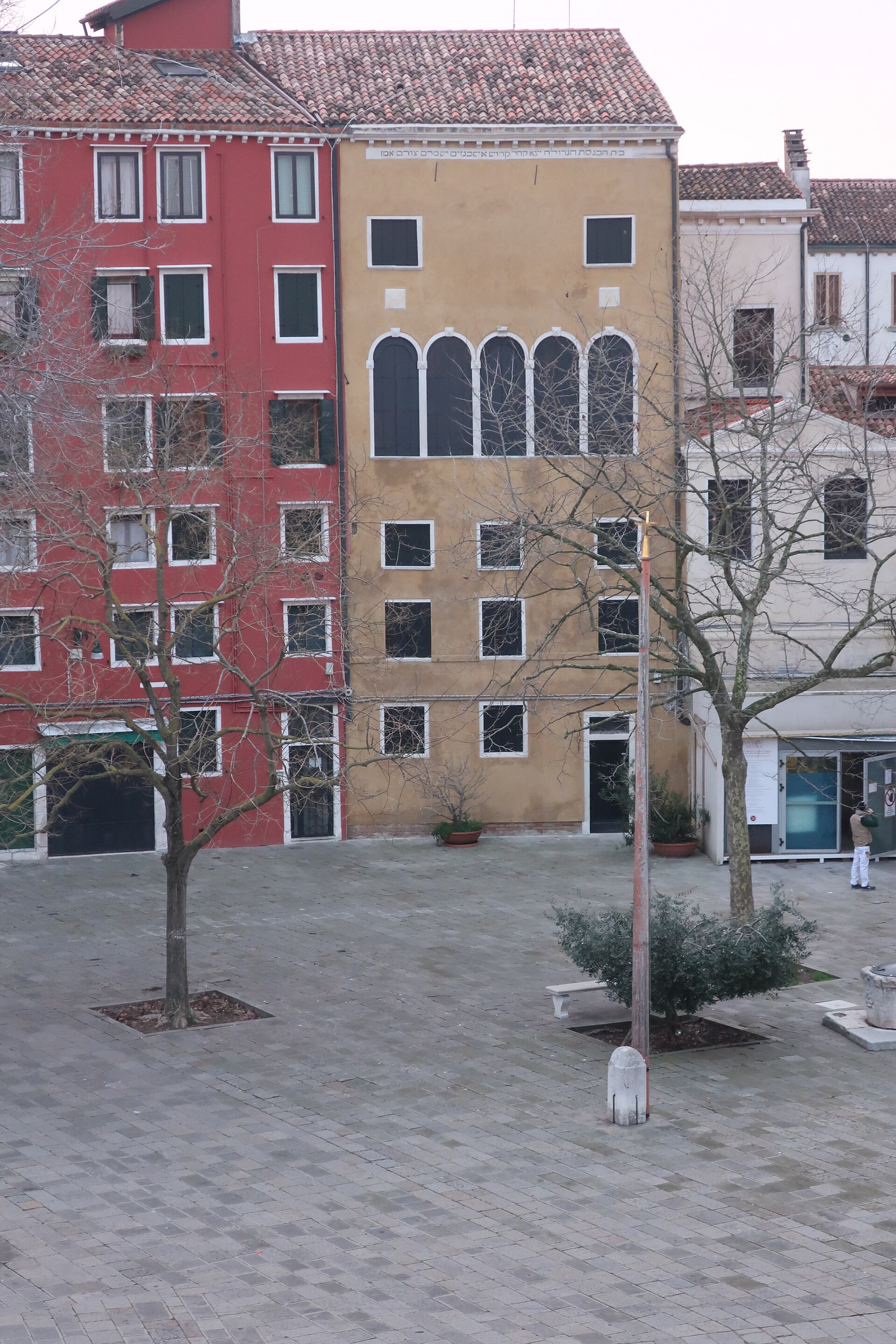
This is where the word "ghetto" was born. On March 29, 1516, the Venetian Senate decreed that all Jews in the city must live on this small island in Cannaregio, surrounded by canals with only two bridges that were locked and guarded at night. The area had previously been the site of copper foundries — "geto" in Venetian dialect, from "gettare," to cast metal — and the name became a word that would echo through centuries of persecution. The restrictions were severe. Jews had to wear identifying badges, couldn't own property outside the ghetto, and were locked in from sunset to sunrise. But Venice was pragmatic above all else: the Republic needed Jewish bankers, doctors, and merchants, and so allowed them to stay when other cities expelled them. The result was an uneasy coexistence that lasted nearly three centuries. Space was desperately limited, so buildings grew upward instead of outward. The ghetto contains some of the tallest residential buildings in Venice — up to seven stories, with ceilings so low you can practically touch them. These proto-skyscrapers are visible from across the city, the architectural evidence of a community literally squeezed into a box. Five synagogues were crammed into the small area, each serving a different Jewish community — German, Italian, Levantine, Spanish, and Canton. Napoleon tore down the gates in 1797, ending 281 years of enforced segregation. Today the ghetto is a quiet, atmospheric neighbourhood with a small but active Jewish community, kosher restaurants, a museum, and a powerful Holocaust memorial by sculptor Arbit Blatas. The campo is one of the largest open spaces in Venice, ringed by those impossibly tall buildings — a space that manages to feel both open and enclosed, free and haunted.
Libreria Acqua Alta
Calle Longa Santa Maria Formosa, Venezia Murano Burano (Venezia Insulare), Venice, 30122, Italy
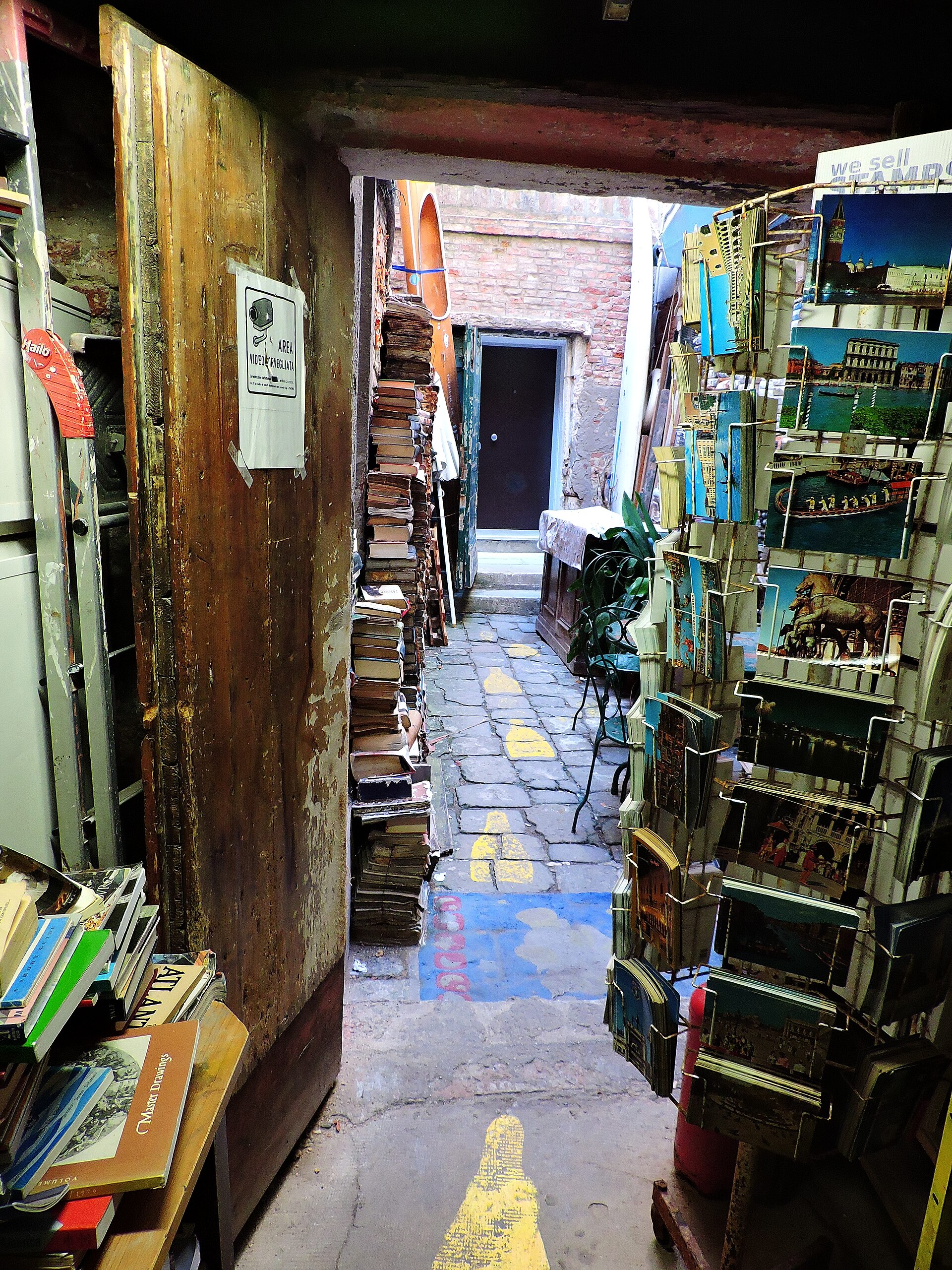
The self-proclaimed "most beautiful bookshop in the world" stores its inventory in bathtubs, gondolas, and waterproof bins — because when your shop floods regularly with lagoon water, conventional shelving is just a slow way to make papier-mâché. The owner was warned about the flood risk when he took the lease and decided to lean into it, naming the shop "Acqua Alta" (High Water) and treating every high tide as a design feature rather than a disaster. The centrepiece is a full-size gondola in the middle of the main room, piled high with second-hand books. Canoes, rowing boats, and even a functioning bathtub serve as display cases. The Venetian-style emergency exit is a wooden door that opens directly onto a canal — probably the only fire exit in the world that leads to water. Out the back, a staircase built entirely from damaged and unsellable books leads up to a view over the canal wall. It's become one of the most Instagrammed spots in Venice. The books themselves are a beautiful mess: art books stacked on travel guides stacked on Italian pulp novels, with maps, vintage magazines, and old postcards mixed in. There's no particular organising system, which is either charming or infuriating depending on whether you're looking for something specific. The shop is also home to several cats who sprawl across the merchandise with the proprietary air of creatures who know they own the place. It's completely tourist-oriented, slightly chaotic, and totally wonderful — one of those places that could only exist in Venice, where the relationship between books and water has always been complicated.
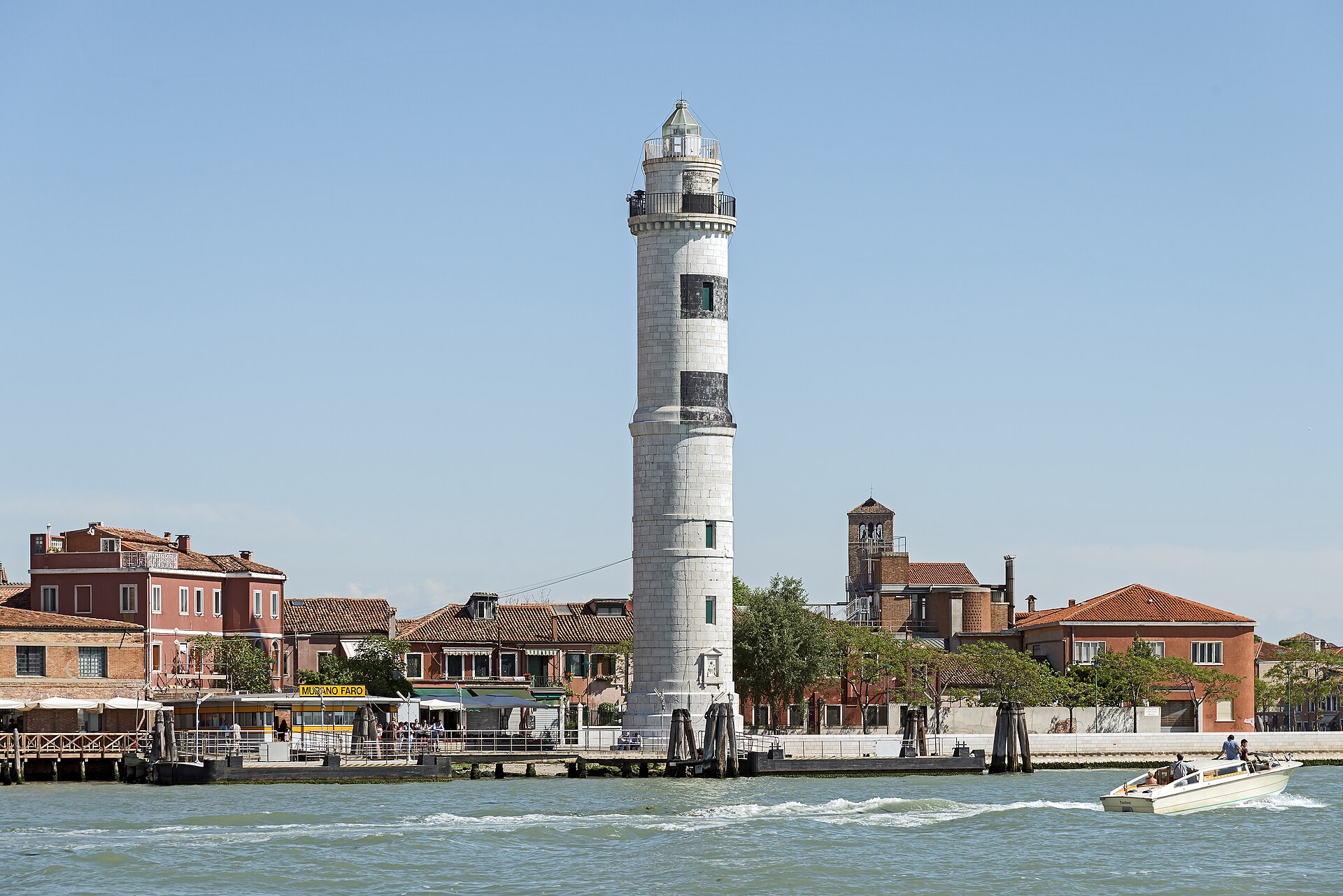
Murano
Venezia Murano Burano (Venezia Insulare), Venice, Italy
In 1291, the Venetian Republic ordered every glassmaker in the city to pack up their furnaces and move to the island of Murano. The official reason was fire prevention — glass furnaces kept burning down Venice's wooden buildings. The unofficial reason was control: concentrate your most valuable artisans in one place and you can watch them. Glassmakers who tried to leave the island without permission could be sentenced to death. Their families could be imprisoned as leverage. The trade-off was remarkable. Murano's glassmakers became the most privileged artisans in Europe. They were allowed to wear swords, enjoyed immunity from prosecution, and their daughters married into Venice's wealthiest families. They invented cristallo — glass so clear it was practically invisible — and held a near-monopoly on mirrors for over a century. European monarchs paid fortunes for Murano glass, and France's Louis XIV eventually resorted to espionage, bribing workers to sneak across the Alps and teach the French the secrets. The first mention of a glass master in Venice dates to 982 AD, but the island's golden age ran from the 15th to the 17th centuries. At its peak, Murano had its own nobility, its own mint, its own laws. It was essentially a city-state within a city-state, powered by sand and fire. Today the island feels caught between its glorious past and the pressures of cheap imports. Many of the "Murano glass" souvenirs sold in Venice are actually made in China, which led to a legal battle to protect the designation. The authentic workshops that remain produce extraordinary work — chandeliers, sculptures, beads — using techniques that have barely changed in seven centuries. Watching a master glassblower at work, shaping molten glass with the speed and confidence of centuries of inherited knowledge, is one of the great free shows in Venice.
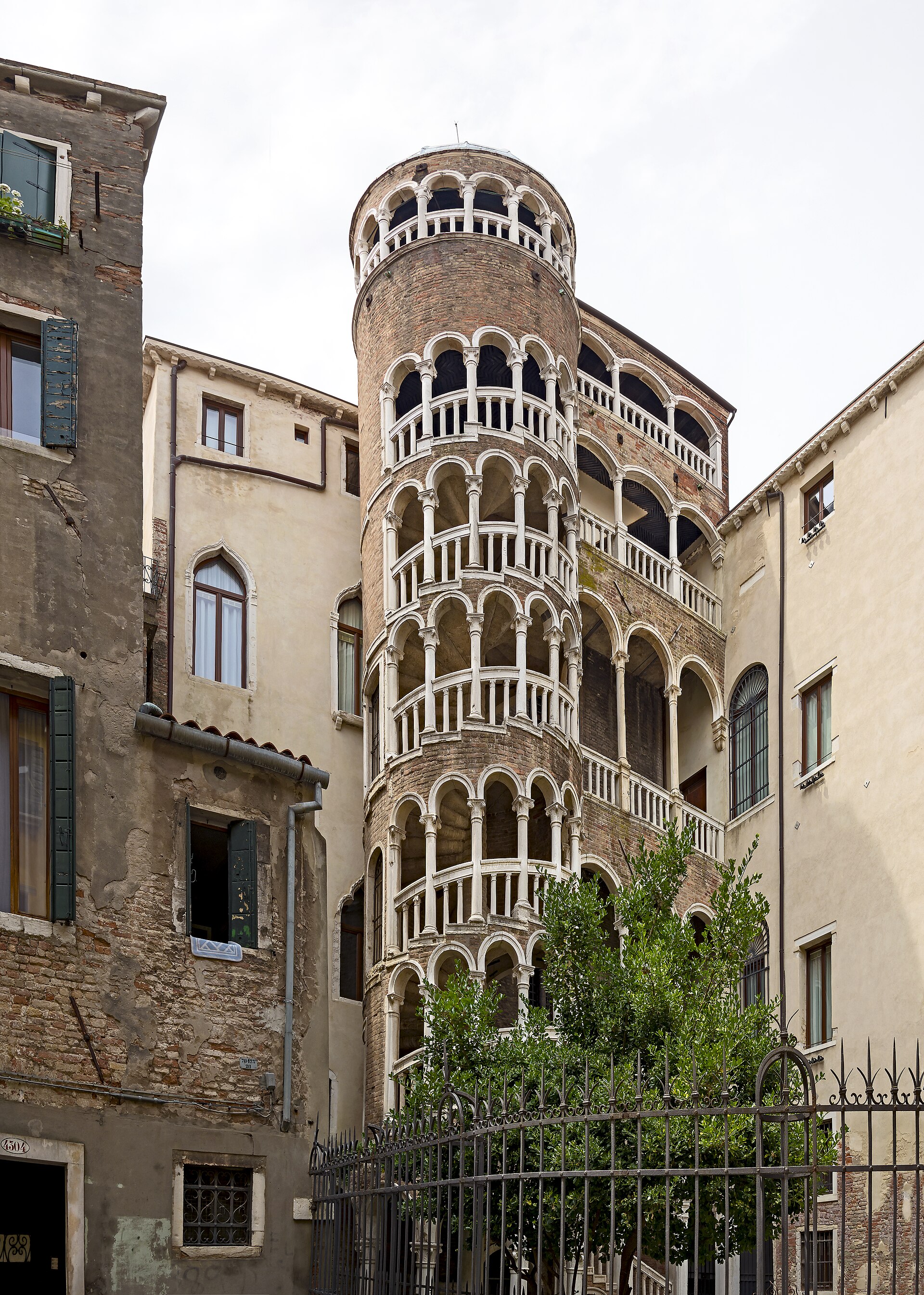
Palazzo Contarini del Bovolo
Calle dei Cristi, Venezia Murano Burano (Venezia Insulare), Venice, 30125, Italy
Hidden down a narrow alley near Campo Manin, this palazzo has one of the most unexpected architectural flourishes in Venice: a massive external spiral staircase that corkscrews up the outside of the building like a stone snail shell. "Bovolo" means snail in Venetian dialect, and the name stuck so firmly that even the branch of the Contarini family who lived here became known as the "Contarini del Bovolo" — the snail Contarinis. The staircase was added around 1499 by architect Giovanni Candi, at a time when external staircases were common service features in Venice but nobody had thought to make one this theatrical. The tower features a series of arched loggias that spiral upward, blending late Gothic and early Renaissance styles in a way that somehow works despite breaking most architectural rules. From the top, the view across Venice's rooftops — a sea of red tiles, bell towers, and distant lagoon — is one of the city's best-kept secrets. Orson Welles filmed scenes for his 1952 "Othello" here, using the spiral staircase as Brabantio's house. In the 19th century, the building served as a hotel, and one of its guests was the German astronomer Wilhelm Tempel, who discovered several comets and a nebula by observing the sky from the top of the tower. The palazzo appears in Jacopo de' Barbari's famous 1500 bird's-eye view of Venice, proof that it was already considered remarkable within a year of its completion. For centuries, finding the Bovolo was half the adventure — there were no signs, and you had to know which alley to turn down. It's better signposted now, but the moment of discovery, when you round a corner and see that extraordinary spiral rising above the courtyard, still feels like finding a secret.
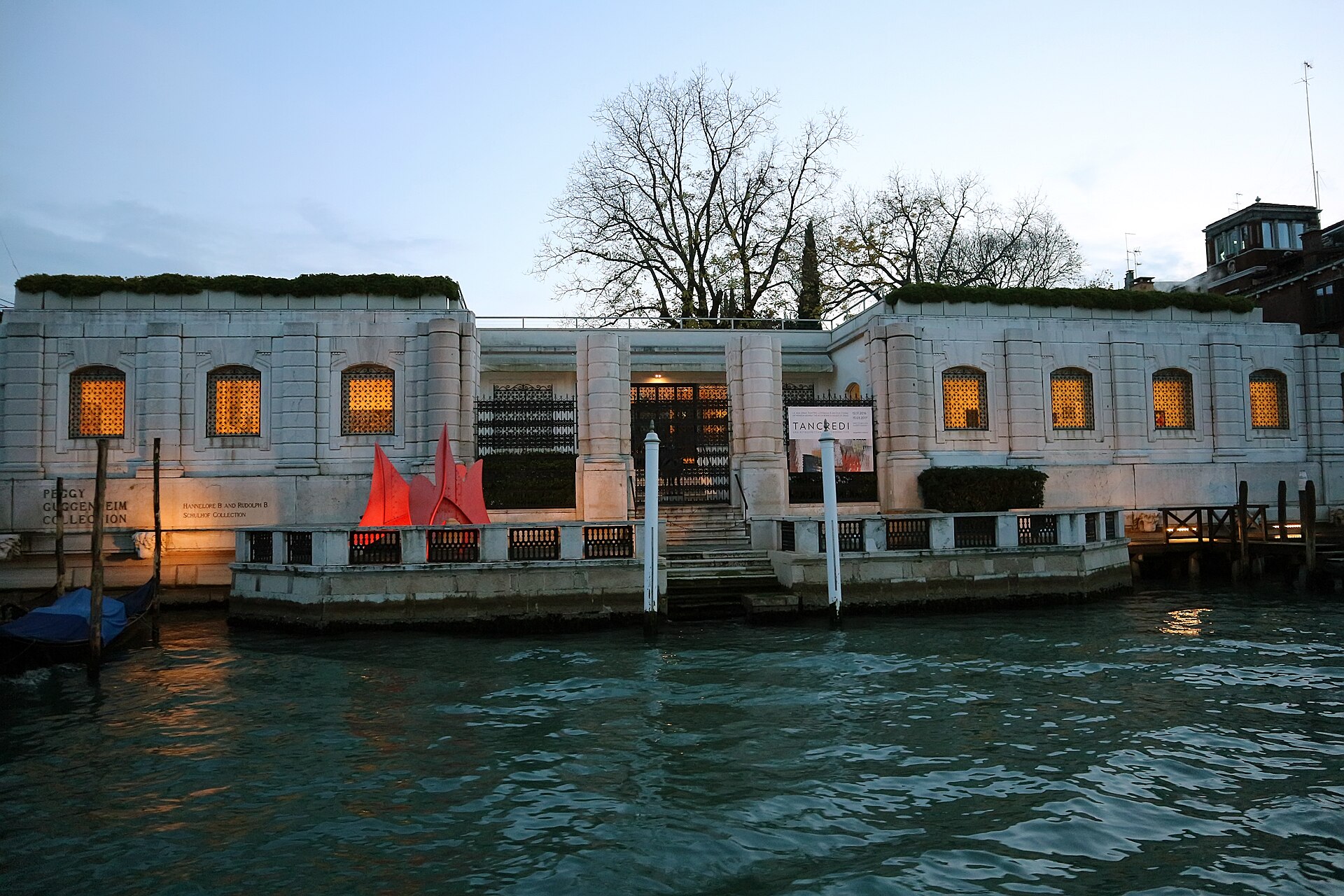
Peggy Guggenheim Collection
701 Dorsoduro, Venezia Murano Burano (Venezia Insulare), Venice, 30123, Italy
Peggy Guggenheim lived in Venice for thirty years in a palazzo that was never finished — the Palazzo Venier dei Leoni was started in 1749 but only the ground floor was ever built, making it the lowest building on the Grand Canal. Nobody knows exactly why construction stopped; one popular theory is that the rival Palazzo Corner across the canal blocked the project out of jealousy. Peggy loved the unfinished quality. She sunbathed on the roof in full view of passing vaporetti and hung modern art on every available surface. The collection she assembled is staggering: Picasso, Pollock, Dalí, Kandinsky, Max Ernst (who was also her second husband, a relationship she described as "turbulent"), Brancusi, Magritte, and dozens more. She had an unerring eye for talent and bought aggressively during the war years when prices were low and artists were desperate. Jackson Pollock was virtually unknown when she gave him his first solo show in 1943 at her New York gallery, Art of This Century. The palazzo's terrace overlooking the Grand Canal features Marino Marini's bronze sculpture "Angel of the City" — a man on horseback with his arms spread wide and a prominently erect phallus pointed directly at passing boats. Peggy reportedly unscrewed the detachable appendage when nuns passed by on their way to the church next door. After her death in 1979, the collection passed to the Solomon R. Guggenheim Foundation. Her ashes are buried in the garden alongside her beloved dogs — fourteen of them, each named on a small plaque. The museum now attracts around 400,000 visitors a year, making it one of the most visited attractions in Venice.
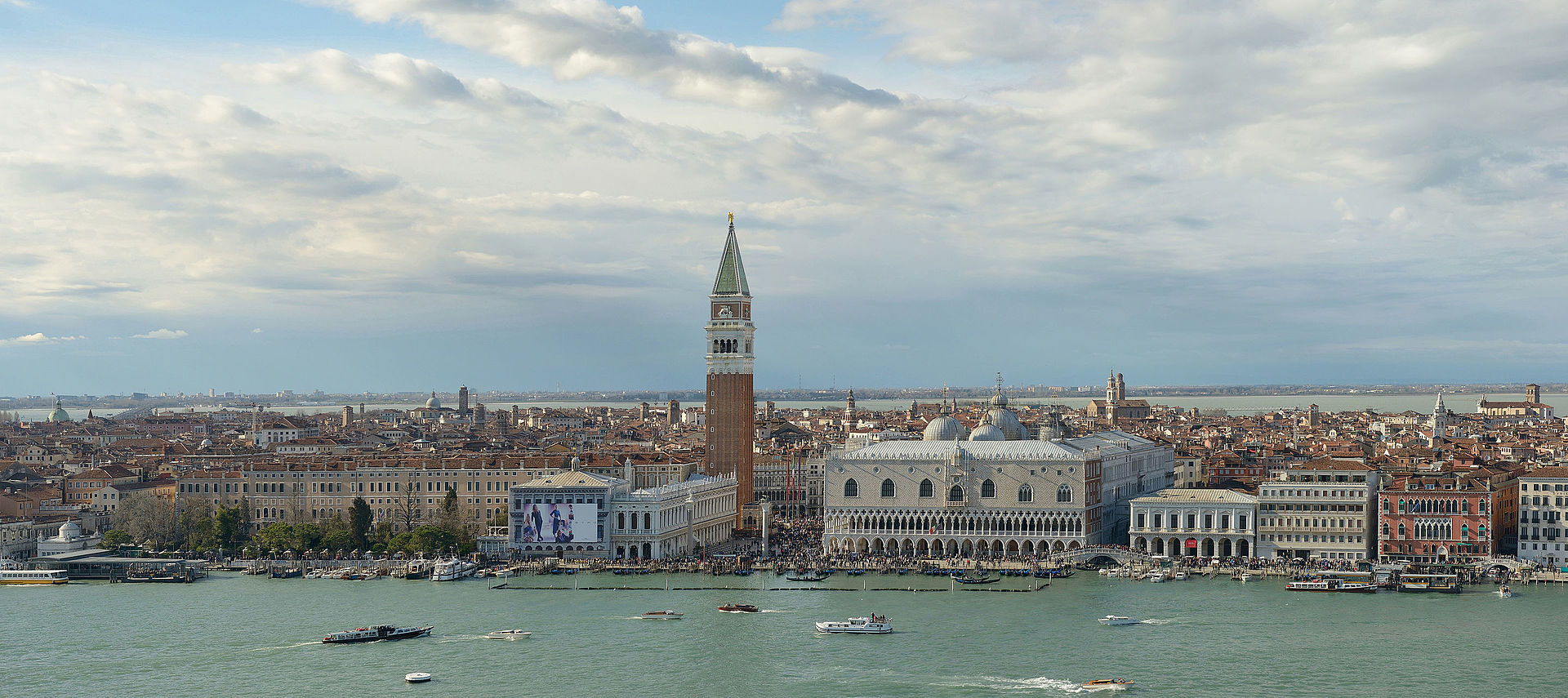
Piazza San Marco
Piazza San Marco, Venice
Napoleon called it "the drawing room of Europe," and for once, the little emperor wasn't exaggerating. Piazza San Marco is the only square in Venice that gets the title "piazza" — every other public space in the city is a mere "campo." That's not snobbery; it's a thousand years of accumulated swagger. The square took centuries to reach its current form. What started as a modest patch of ground in front of the original 9th-century chapel grew into an enormous L-shaped piazza as the Republic expanded its ambitions. The Procuratie — the long arcaded buildings flanking the square — housed the procurators of St. Mark, officials who were second in power only to the Doge himself. The ground floors became the coffeehouses that still operate today, including Caffè Florian, which opened in 1720 and claims to be the oldest continuously operating coffeehouse in the world. Acqua alta — high water — floods the piazza roughly sixty times a year, turning it into a shallow lake that perfectly mirrors the basilica. The city sets up raised walkways and plays classical music through speakers while tourists wade through ankle-deep water in plastic boot covers. It's simultaneously absurd and beautiful, which is Venice in a nutshell. The Campanile, the bell tower that dominates the square, collapsed without warning on July 14, 1902. Remarkably, the only casualty was the caretaker's cat. The city rebuilt it exactly as it was — "dov'era e com'era" — and reopened it in 1912, exactly a thousand years after the original foundation was allegedly laid.
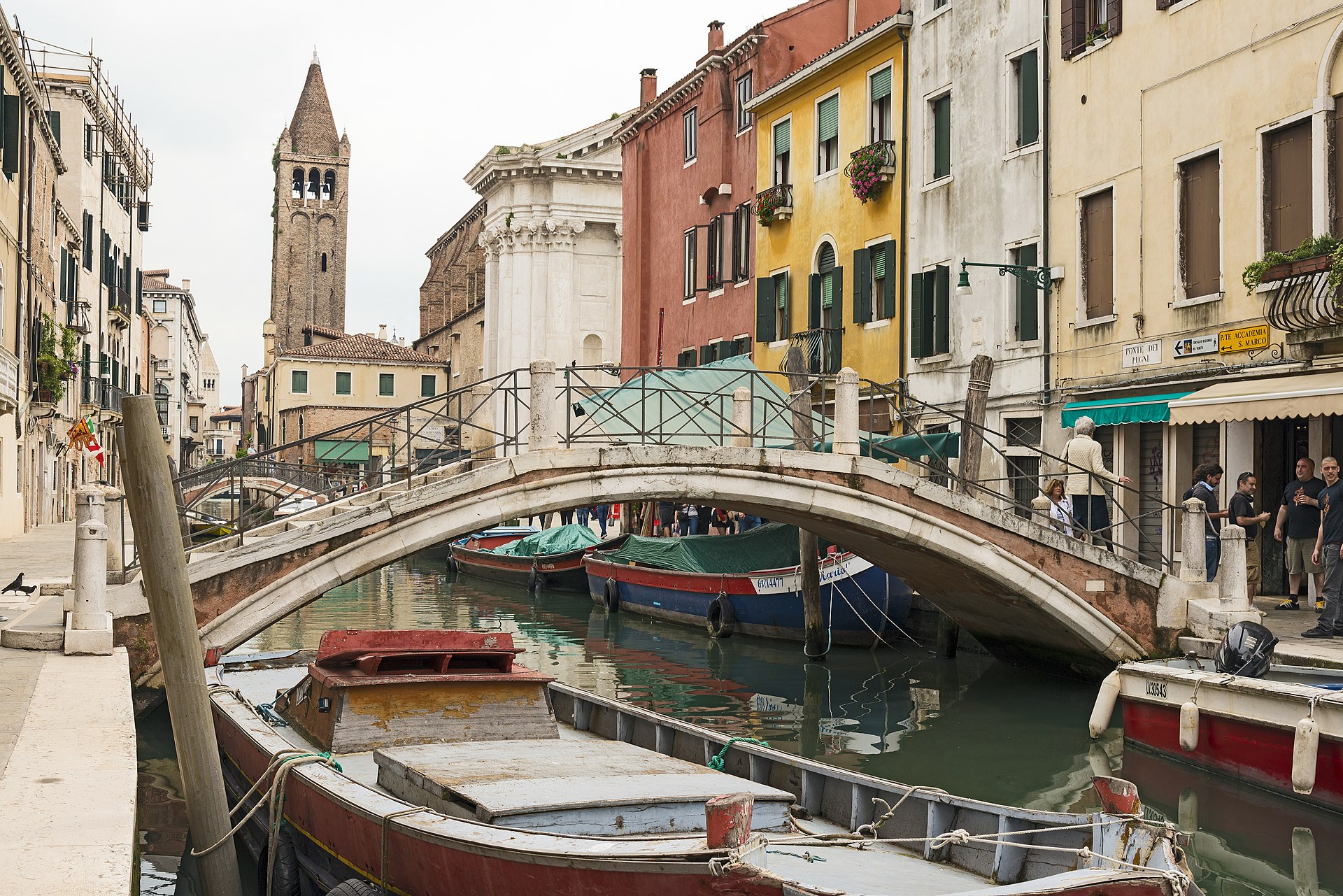
Ponte dei Pugni
Ponte San Barnaba, Venezia Murano Burano (Venezia Insulare), Venice, 30123, Italy
The marble footprints are still there, worn into the stone at each end of the bridge — the starting positions for the fighters. From the 14th century until 1705, Venice held organised fistfights on its bridges, and this small, railingless span near Campo San Barnaba was the most famous battleground. Two rival factions — the Castellani (who wore red) and the Nicolotti (who wore black) — would meet here and try to punch each other into the canal. The fights started as one-on-one bouts but escalated into mass brawls involving hundreds of men. Spectators jammed into every available window, gondola, and rooftop. The government tolerated it for centuries because it kept the working classes entertained, channelled aggression away from politics, and — most importantly — provided a pool of battle-hardened men who could be called up to row warships when needed. The rules evolved over time. In the early centuries, fighters used sticks. These were gradually banned in favour of bare fists, which reduced the fatalities but not the enthusiasm. The bridge had no railings — still doesn't — so getting knocked into the sewage-laden canal below was part of the spectacle. The footprints in the stone marked where fighters had to begin, facing each other across the crown of the bridge. It all ended in 1705 after a particularly savage fight that escalated from fists to knives and stones. The Council of Ten finally banned the tradition, replacing it with regattas and "human pyramid" competitions — because Venice needed to channel its citizens' competitive violence into something, and stacking people on top of each other seemed safer than letting them stab each other on bridges.
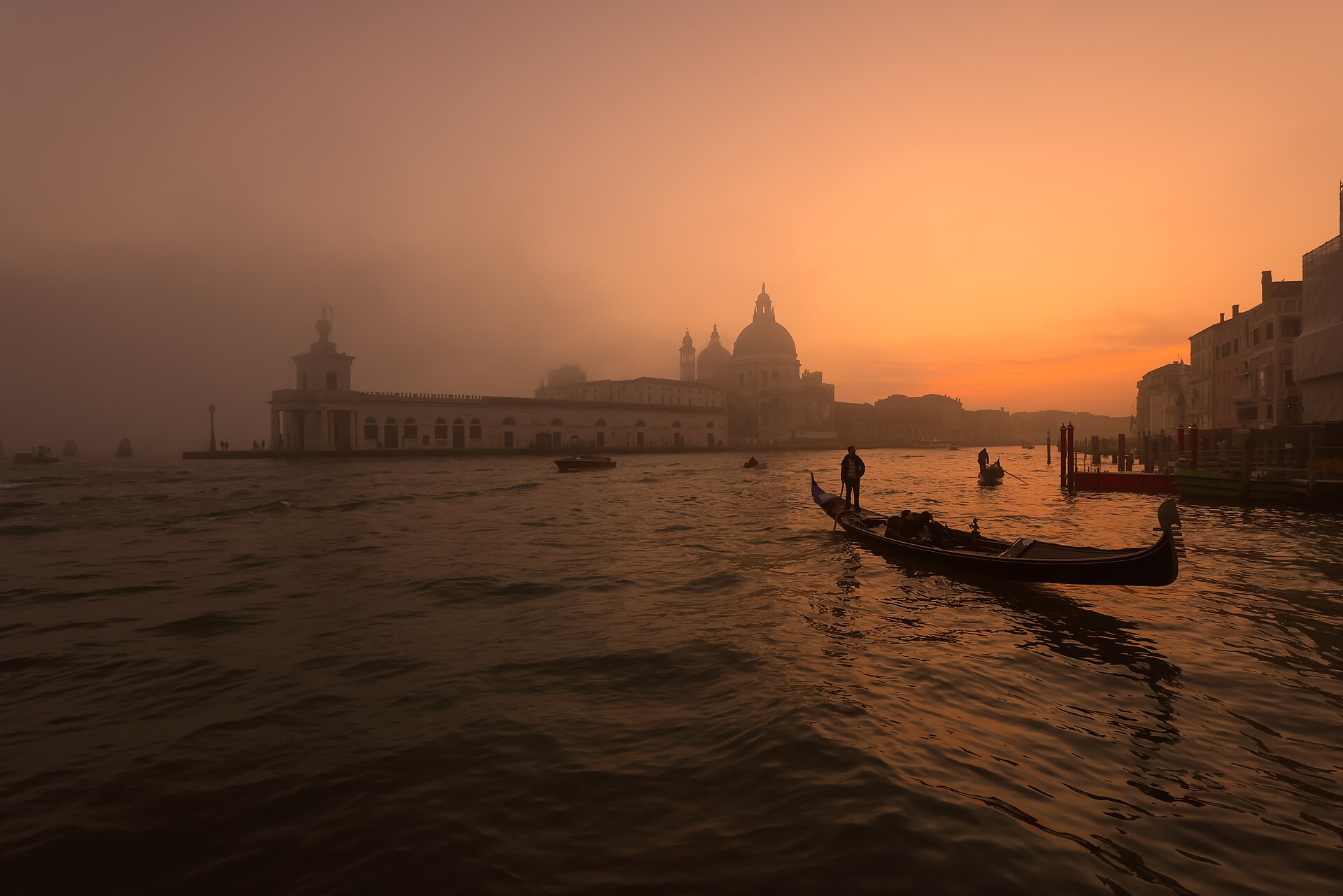
Punta della Dogana
2 Dorsoduro, Venezia Murano Burano (Venezia Insulare), Venice, 30123, Italy
At the very tip of the Dorsoduro district, where the Grand Canal meets the Giudecca Canal, sits one of the most dramatic meeting points of old and new in Venice. The triangular customs house was built in the 15th century to inspect every ship entering Venice's harbour — nothing got into the city without passing through here. On its tower, a golden globe supported by two bronze Atlas figures is topped by a weather vane shaped like Fortune, spinning with the wind — a fitting symbol for a city built on trade and luck. In 2009, French billionaire François Pinault transformed the abandoned customs house into a contemporary art museum, with a minimalist interior renovation by Japanese architect Tadao Ando. The concrete walls and steel beams inside the historic brick shell create a tension between old and new that mirrors the larger conversation Venice has been having with modernity for decades. Pinault had originally planned to build his museum in Paris but got frustrated with French bureaucracy and moved the whole project to Venice — an expensive slight that Parisians haven't entirely forgiven. The art rotates but always pushes boundaries — this is where you'll find installations by Damien Hirst, Jeff Koons, Maurizio Cattelan, and other provocateurs whose work would look absurd in a Gothic palazzo but somehow makes sense in a renovated warehouse. The juxtaposition of contemporary art and Venetian history is the point. But even if contemporary art isn't your thing, walk to the very tip of the point and stand on the stone terrace. Ahead is the lagoon and San Giorgio Maggiore. To the right, the Grand Canal with the Salute rising beside you. To the left, the Giudecca. It is, quite simply, one of the greatest views in all of Italy, and it's free.
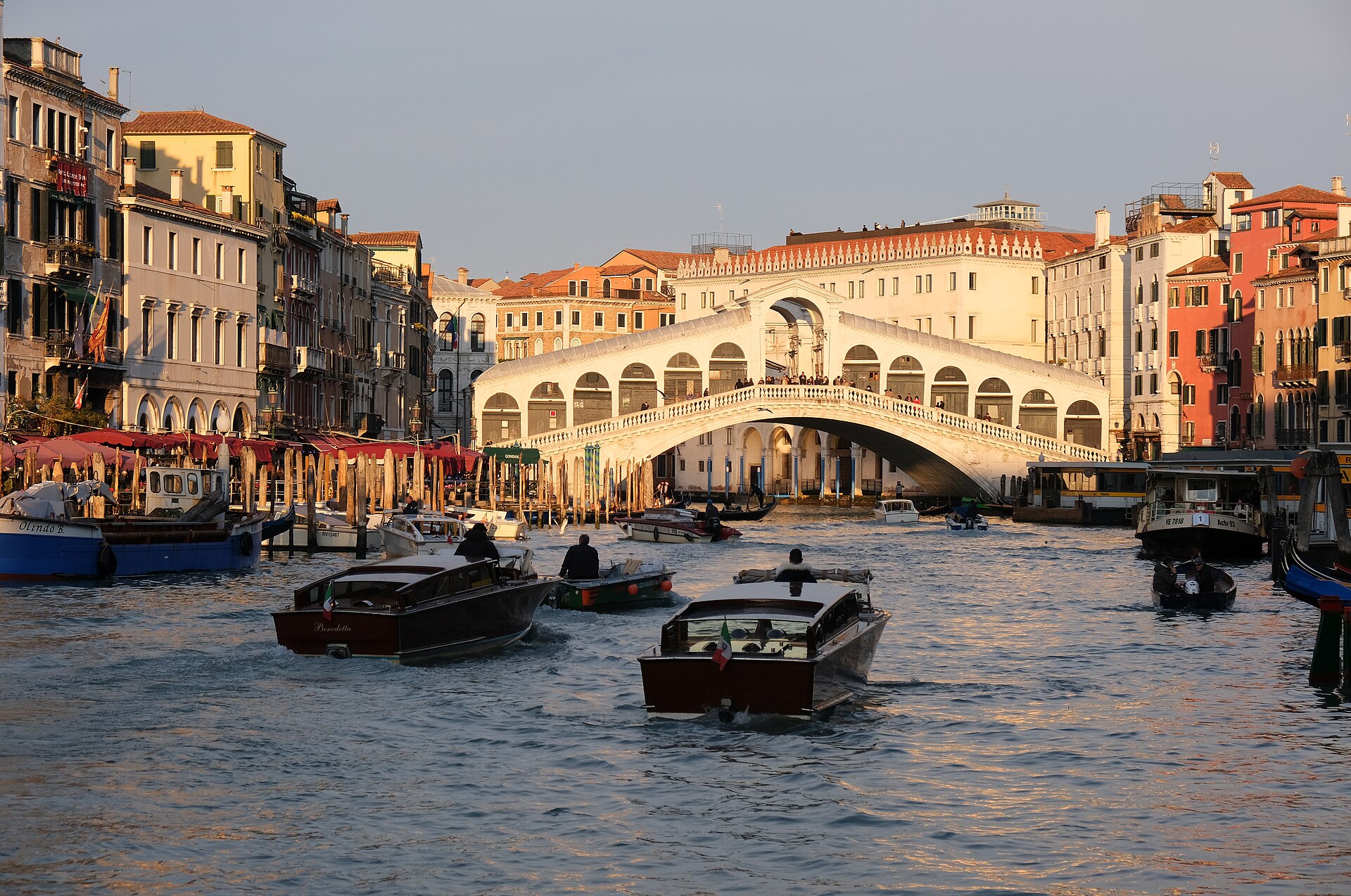
Rialto Bridge
Venezia Murano Burano (Venezia Insulare), Venice, Italy
The oldest bridge across the Grand Canal was designed by a man whose surname literally means "of the Bridge." Antonio da Ponte beat out Michelangelo, Palladio, and Sansovino in a competition to replace the wooden drawbridge that had collapsed under the weight of a crowd watching a boat parade in 1444. The critics said his bold single-arch design would fall down. Five hundred years later, it's still standing. Construction took just three years, from 1588 to 1591, and required 12,000 wooden pilings driven into the mud to support a structure that seemed to defy physics. The single stone arch spans 28 metres and rises 7.5 metres above the water, with no central support — everything rests on the foundations at each end. Three walkways snake between two rows of shops built right into the bridge, continuing a Venetian tradition of making every square inch earn its rent. The Rialto has been the commercial heart of Venice for nearly a thousand years. "Rialto" comes from "rivo alto" — high bank — because this was the first area settled, the highest ground in the lagoon. The morning fish market at the foot of the bridge has been operating since 1097, making it one of the oldest continuously running markets in the world. Fishermen still unload the day's catch from boats directly onto the quay at dawn, and restaurants send their chefs to haggle over the freshest sea bass and cuttlefish. Shakespeare set the dramatic centre of "The Merchant of Venice" here, and it was at the Rialto that news of the wider world first arrived in the city. The word "gazette" likely derives from the "gazeta," the small coin Venetians paid to read the news sheets sold near the bridge.
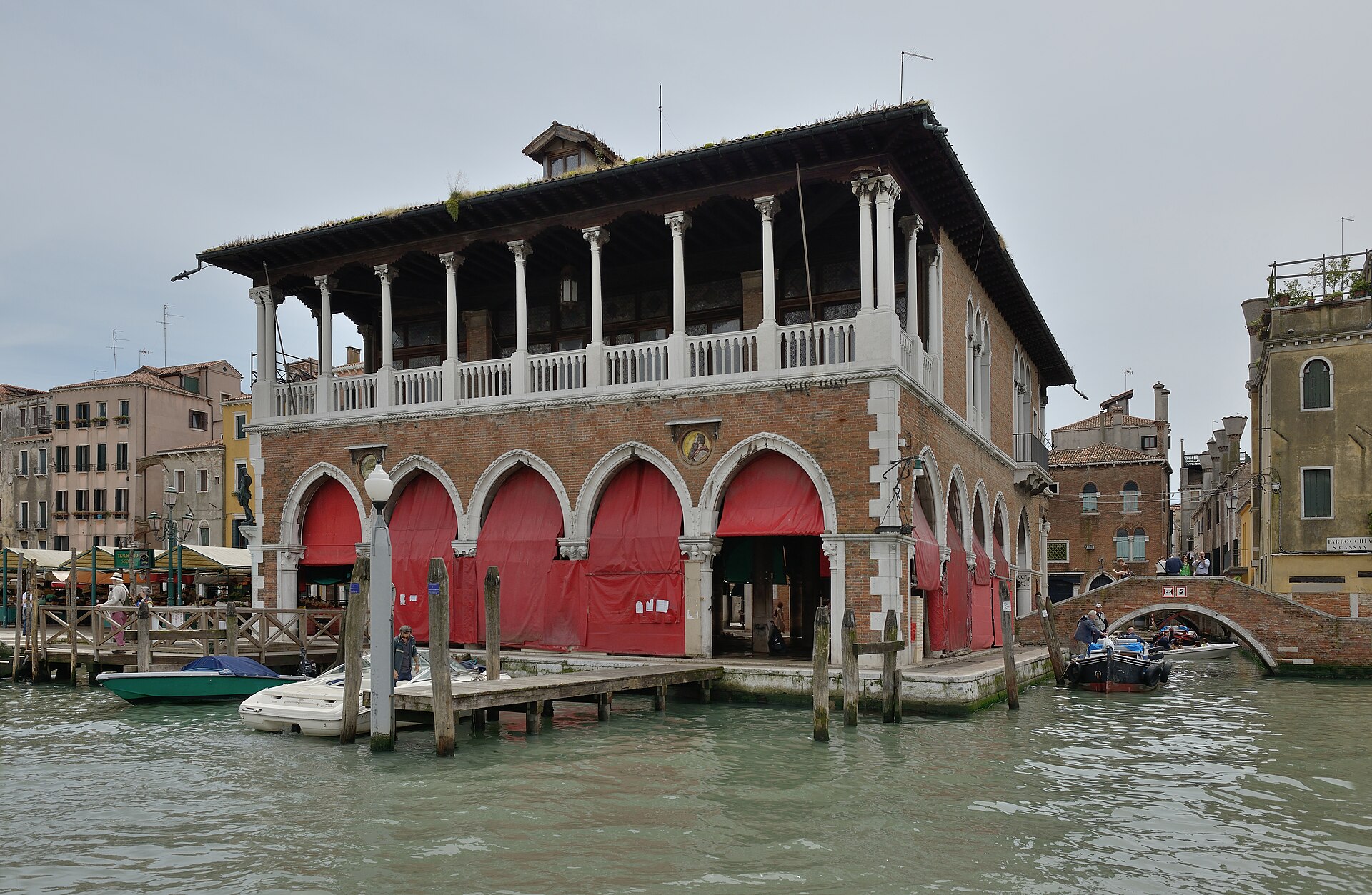
Rialto Market
Venezia Murano Burano (Venezia Insulare), Venice, Italy
Every morning before dawn, while tourists sleep off their Spritz hangovers, boats pull up to the quay beside the Rialto Bridge and unload the night's catch directly onto stone counters. The Rialto Market has operated continuously since 1097, making it nearly a thousand years old and one of the oldest functioning markets in Europe. The fish market — the Pescaria — has been in this spot since at least the 13th century, though the current neo-Gothic loggia was built in 1907. The market sprawls across two sections: the Pescaria for seafood and the Erberia for fruit and vegetables. The Pescaria is the star — slabs of Mediterranean sea bass, piles of soft-shell crabs (moeche, a Venetian delicacy available only in spring and autumn), cuttlefish with their ink sacs intact, and tiny shrimp from the lagoon. The vendors are theatrical, shouting prices and slapping fish with the performative energy of people whose families have done this for generations. Restaurant chefs from across the city come here to shop at dawn, and if you want to understand Venetian cuisine, this is the classroom. The bacari — small wine bars — surrounding the market open early for the workers, serving ombra (a small glass of wine) and cicchetti (Venetian tapas) to fishmongers who've been up since 3 AM. It's one of the few places in central Venice where you'll see more locals than tourists before 9 AM. A fire swept through the Rialto area in 1514, destroying the market buildings and much of the commercial district. The line of buildings you see today dates from the reconstruction, giving the market its current Renaissance character. But the tradition of selling fish on this exact spot survived the fire, as it has survived everything else Venice has thrown at it.
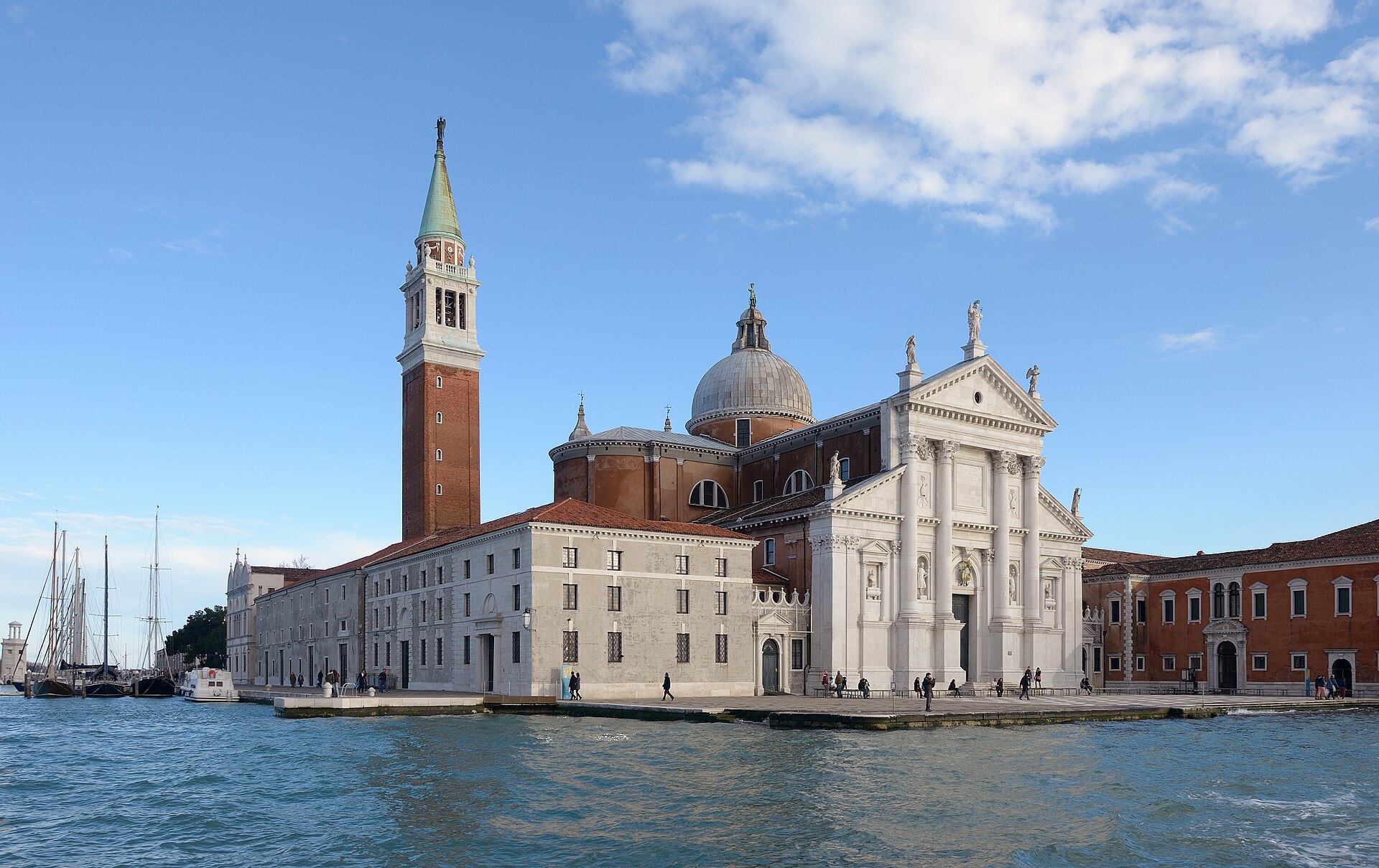
San Giorgio Maggiore
Isola di San Giorgio Maggiore, Venice
From Piazza San Marco, the church of San Giorgio Maggiore looks like a white marble mirage floating on the water across the basin. It's one of the most photographed views in Venice, but surprisingly few visitors actually take the two-minute vaporetto ride to reach it. Their loss — the bell tower here offers arguably the best panoramic view in the city, and you won't share it with a thousand other tourists. Andrea Palladio, the architect who basically invented the neoclassical style, designed the church in 1566. He spent the rest of his life working on it and died in 1580 before it was finished — the facade wasn't completed until 1610. Palladio's genius was solving the problem of sticking a classical temple front onto a Christian church with its tall nave and low side aisles. His solution was to overlap two facades, one wide and one narrow, creating a design so influential that every white-columned church you've ever seen owes something to it. Inside, two enormous Tintoretto paintings flank the main altar: "The Last Supper" and "The Fall of Manna." Tintoretto's "Last Supper" is the radical one — instead of the usual symmetrical arrangement, he painted the table at a dramatic diagonal, with servants bustling, cats prowling, and angels materialising out of smoke. It was completed in 1594, the last year of his life. Benedictine monks have been on this island since 982, when the Doge gave it to their order. In 1951, the monastery was taken over by the Giorgio Cini Foundation, which now hosts conferences, concerts, and art exhibitions. The open-air theatre designed by Japanese architect Tadao Ando in the garden is one of Venice's best contemporary architectural additions.
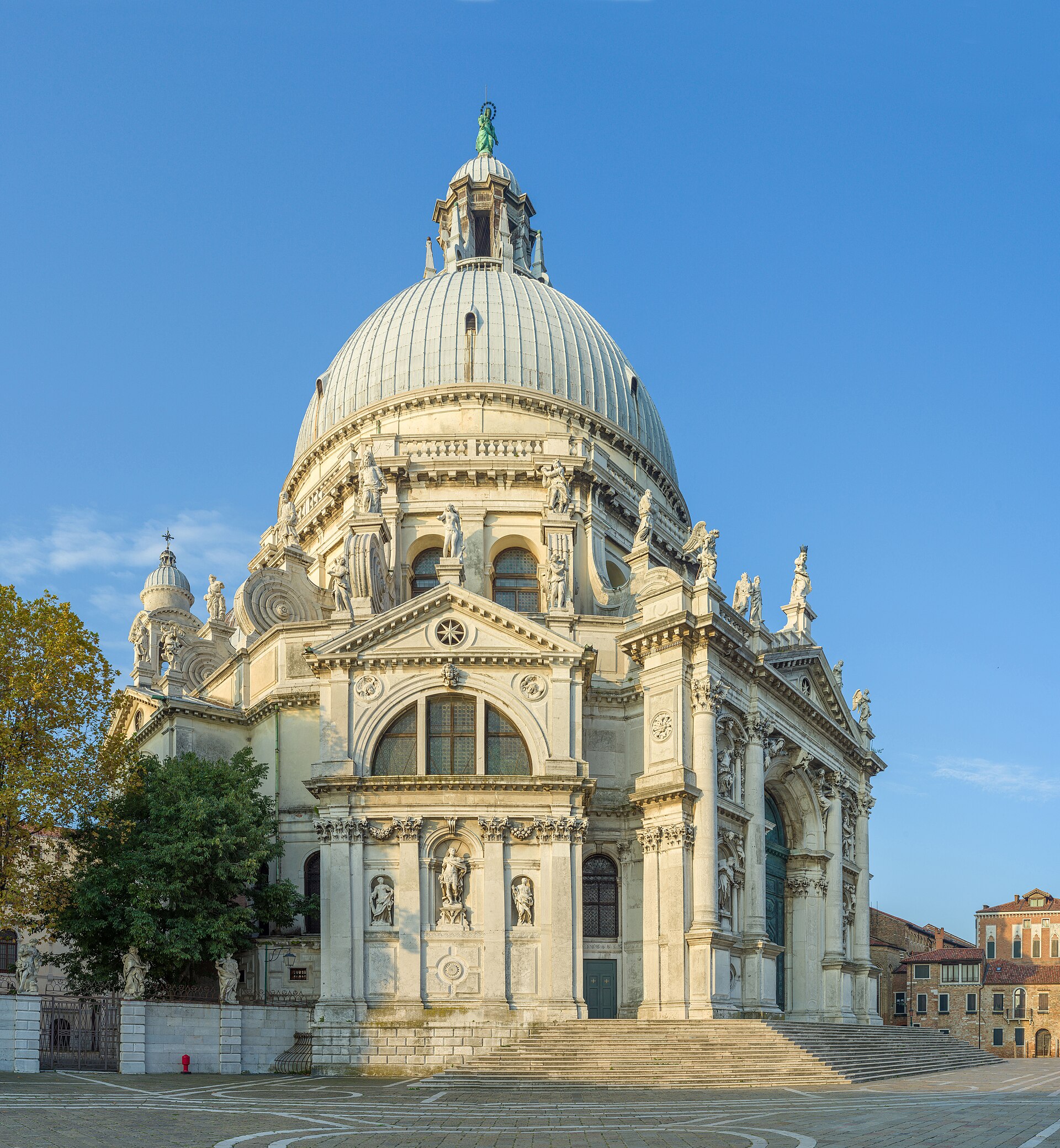
Santa Maria della Salute
Dorsoduro 1, Venice
This church is a prayer made stone. In 1630, the plague arrived in Venice and killed a third of the population — roughly 46,000 people in the city alone, with another 94,000 dead across the lagoon. On October 22, Doge Nicolò Contarini stood before the Senate in San Marco and vowed to build a grand church dedicated to the Virgin Mary if the city were delivered. He died of the plague himself five months later, the day after construction began. The 26-year-old architect Baldassare Longhena won the commission with a design he described as shaped "in the form of a crown" for the Virgin. The massive octagonal structure sits on over a million wooden pilings driven into the muddy entrance of the Grand Canal, and took more than fifty years to complete. Longhena died in 1682, five years before the consecration. He spent his entire adult life building a single church. The Salute's massive dome dominates the entrance to the Grand Canal, and every painter who's ever sat at a Venetian easel has rendered it — Turner, Monet, Sargent, Canaletto. It might be the most painted church in the world after St. Peter's. The interior is surprisingly bare compared to the ornate exterior, though it houses important paintings by Titian and Tintoretto in the sacristy. Every November 21, Venetians celebrate the Festa della Salute, when a temporary pontoon bridge is built across the Grand Canal so that the faithful can walk directly to the church. It's the city's most beloved local festival, when Venetians light candles, eat castradina (dried mutton stew, a recipe from the plague era), and give thanks that the city survived.
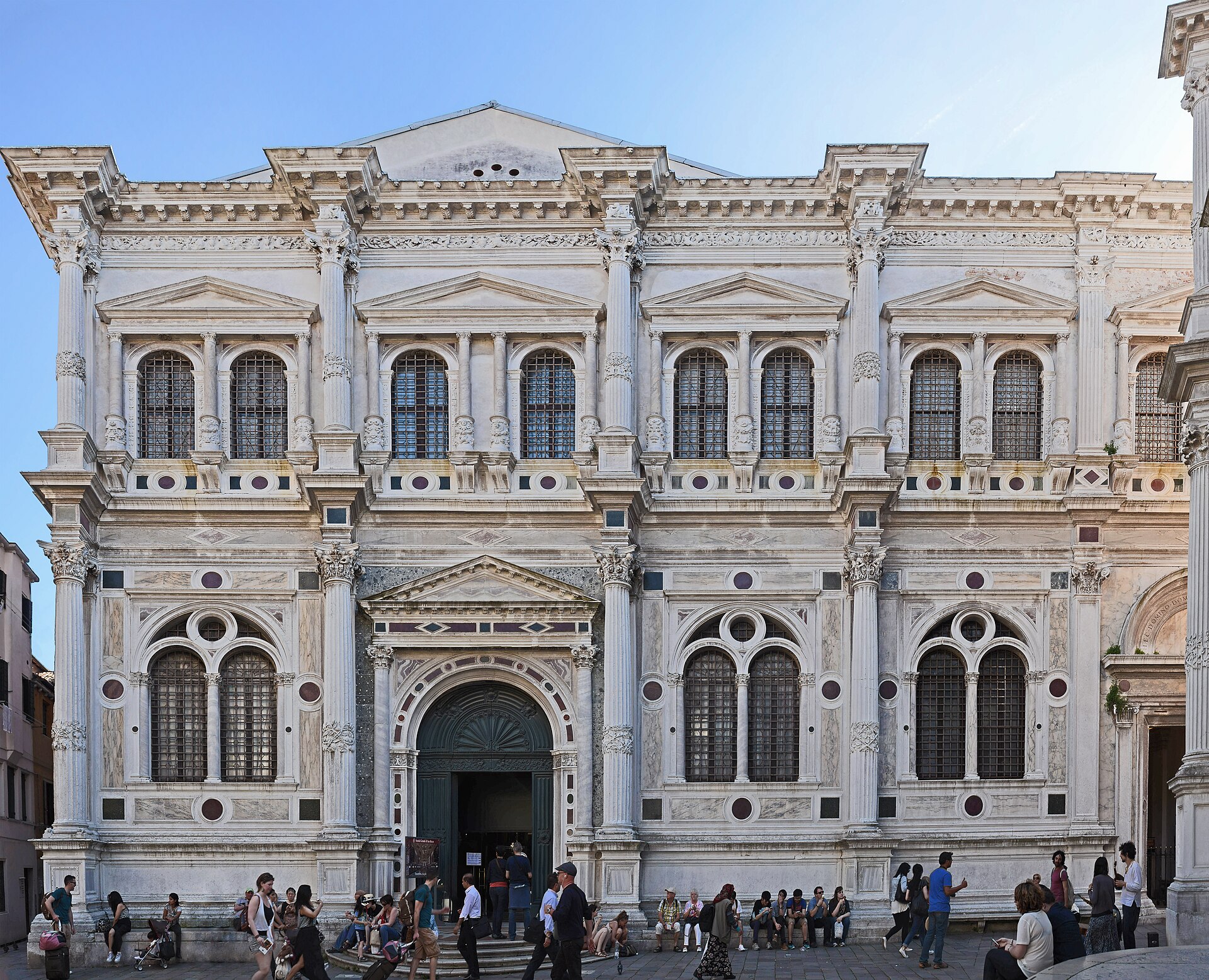
Scuola Grande di San Rocco
San Polo 3052, Venice
Tintoretto spent twenty-three years painting this building, and the result is Venice's answer to the Sistine Chapel. The Scuola Grande di San Rocco houses over sixty paintings by Jacopo Tintoretto, all in their original locations — a complete, immersive cycle of biblical scenes that covers walls and ceilings across three floors. He got the job by cheating, brilliantly. In 1564, the Scuola held a competition: artists were asked to submit sketches for a ceiling painting. While rivals like Veronese and Zuccari prepared careful drawings, Tintoretto installed a completed, full-size painting in the ceiling overnight. When the judges arrived, they found the work already in place. Tintoretto offered it as a gift, knowing the rules said the Scuola couldn't refuse a donation. The other competitors were furious. Tintoretto was hired. The Crucifixion on the wall of the Sala dell'Albergo is the masterpiece. At 17 feet tall and 40 feet wide, it fills an entire wall with a sweeping, cinematic composition that Henry James called "the most interesting picture in Italy." The scene is chaotic, human, and almost unbearably vivid — soldiers gambling, crowds milling, thieves writhing, and at the centre, Christ on the cross in a pool of otherworldly light. The Scuola was a confraternity — a lay religious brotherhood — dedicated to St. Roch, patron saint of plague victims. In a city regularly devastated by plague, membership was essentially an insurance policy. The wealthy patrons who funded this building were hedging their spiritual bets, and they did it with arguably the greatest concentration of painting by a single artist in any building in the world.
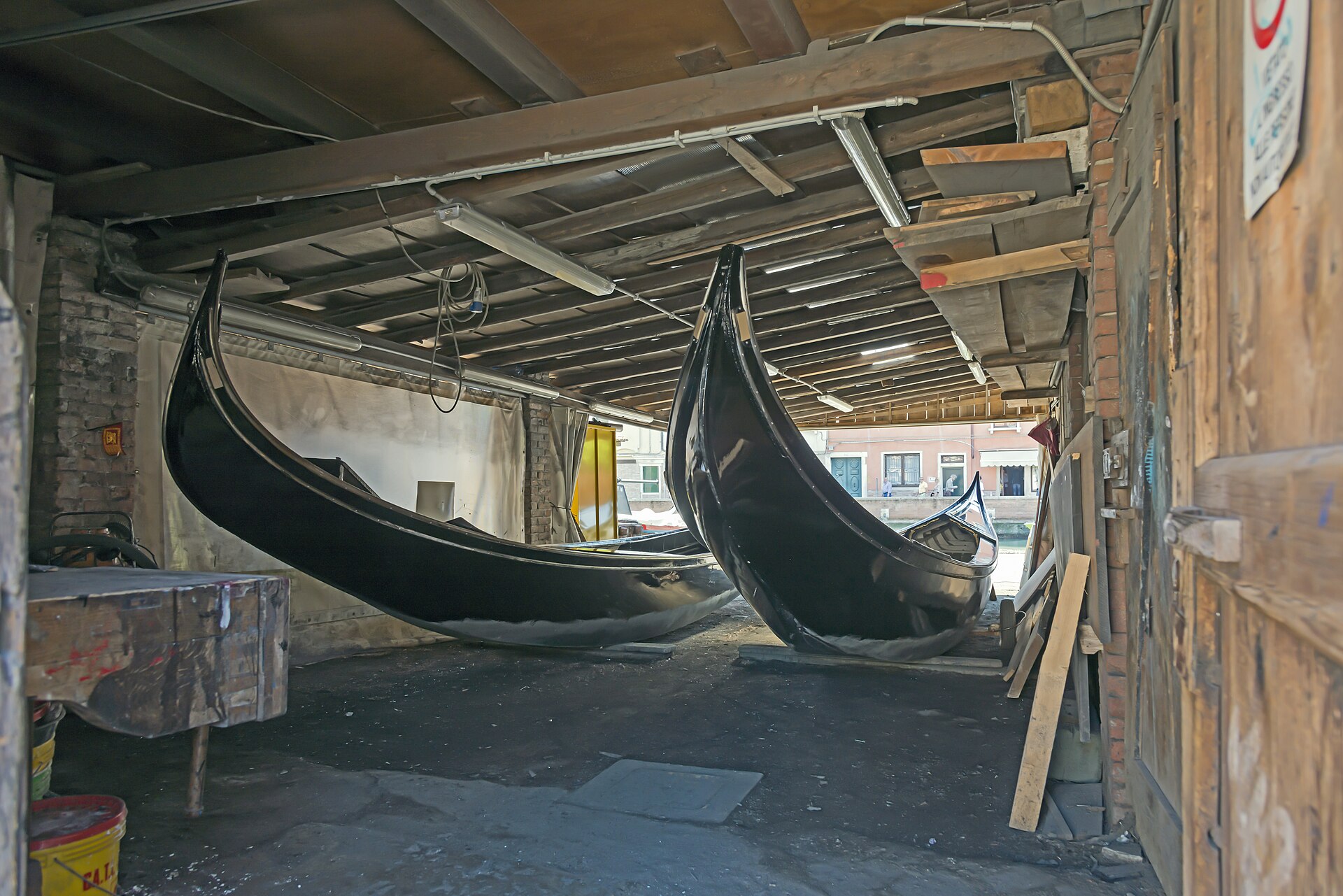
Squero di San Trovaso
Dorsoduro 1097, Venice
In the 16th century, ten thousand gondolas navigated Venice's canals. Today there are about 350, and this tiny workshop in Dorsoduro is one of only five squeri — gondola boatyards — still operating in the city. The Squero di San Trovaso has been building and repairing gondolas since the 17th century, and the craft hasn't changed much. Eight types of wood, no blueprints, and hands that know what they're doing. The workshop building itself is an oddity. It looks like an Alpine chalet, not a Venetian palazzo — sloping wooden roof, timber construction, a wide slipway leading to the water. The reason is practical: both the carpenters and the wood traditionally came from the mountain region of Cadore in the Dolomites, and they built their workshop in the style they knew. The design also protected the workers from rain and provided covered storage for tools and timber. Each gondola is built entirely by hand from mahogany, cherry, fir, walnut, oak, elm, larch, and lime — eight woods chosen for their specific properties of strength, flexibility, and water resistance. There are no plans; the squero master works from memory and instinct, shaping the asymmetric hull by eye. A gondola is deliberately built with the left side wider than the right, so that a single oarsman standing on the right can propel it in a straight line. The finished boat weighs about 350 kilograms and lasts 15 to 20 years with regular maintenance. You can't go inside — the squero is closed to the public — but you can watch from across the canal on Fondamenta Nani, preferably with a glass of wine from the bar on the corner. It's one of the few places in Venice where you can watch a medieval craft being practiced in real time, and the workshop, with its wood shavings and half-built hulls, is as photogenic as any palazzo.
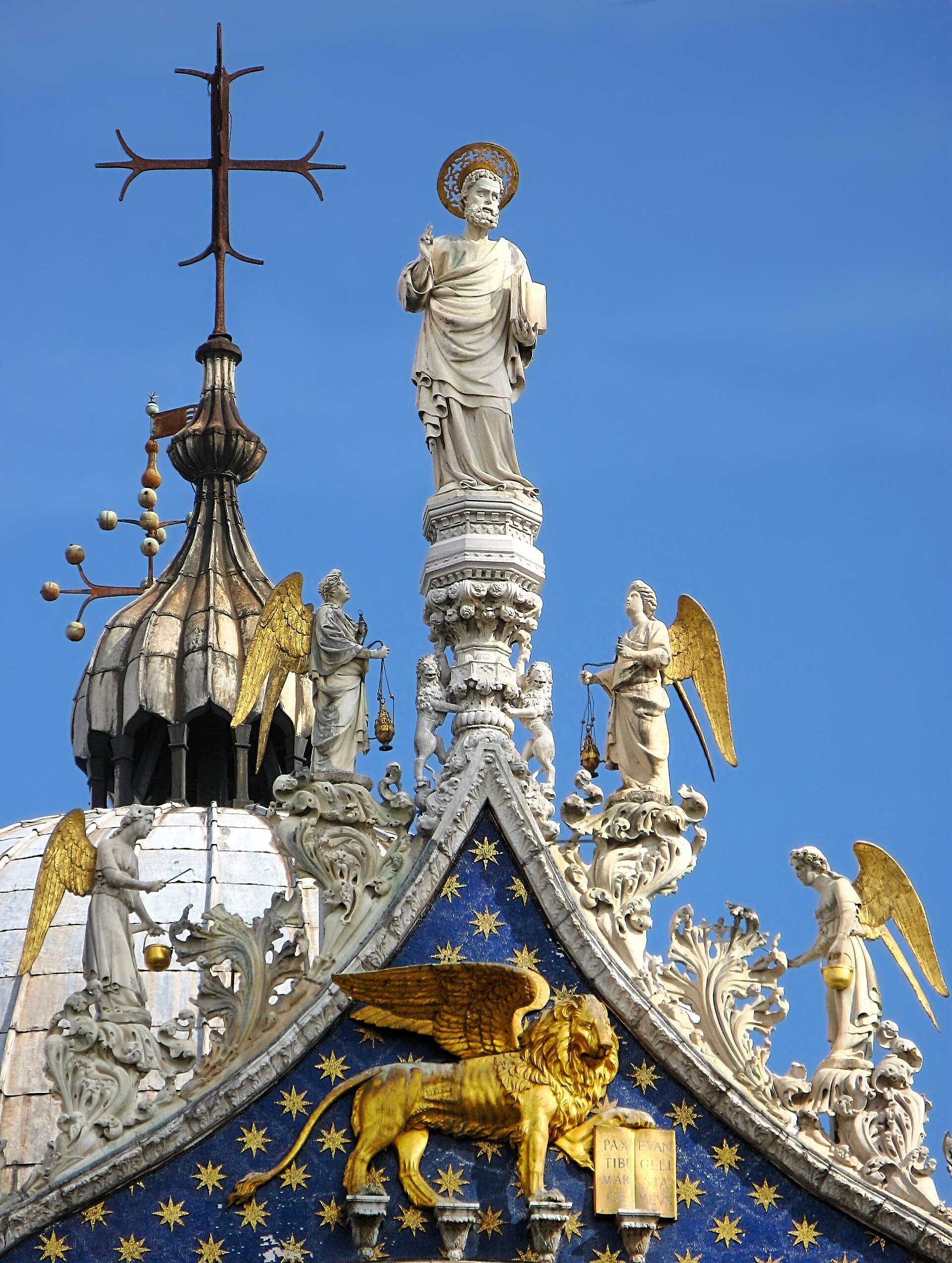
St. Mark's Basilica
Piazza San Marco, Venice
This church exists because of one of history's greatest heists. In 828 AD, two Venetian merchants smuggled the body of St. Mark the Evangelist out of Alexandria, Egypt, hiding the relics under layers of pork meat to disgust Muslim customs officials into not searching the cargo. Venice got a patron saint, and Alexandria got a really good story about the time they were robbed. The basilica you see today is mostly the result of an 11th-century rebuild under Doge Domenico Contarini, but the looting didn't stop with St. Mark's bones. After the Fourth Crusade sacked Constantinople in 1204, Venetians hauled back everything that wasn't nailed down — and some things that were. The four bronze horses on the facade came from Constantinople's hippodrome, where they'd stood since antiquity. Napoleon stole them in turn in 1797 and sent them to Paris, but they came back after Waterloo. The originals are now inside the museum; the ones outside are replicas. More than 85,000 square feet of golden mosaics cover the interior — enough to cover about one and a half football fields. The oldest date to the 11th century and tell biblical stories in glittering tesserae that catch the candlelight in ways that feel deliberately designed to make atheists reconsider. The Pala d'Oro, the golden altarpiece behind the main altar, is studded with 1,300 pearls, 300 emeralds, 300 sapphires, and 400 garnets. Until 1807, this wasn't even the city's cathedral — it was the Doge's private chapel, a flex that tells you everything about how Venice confused church and state.
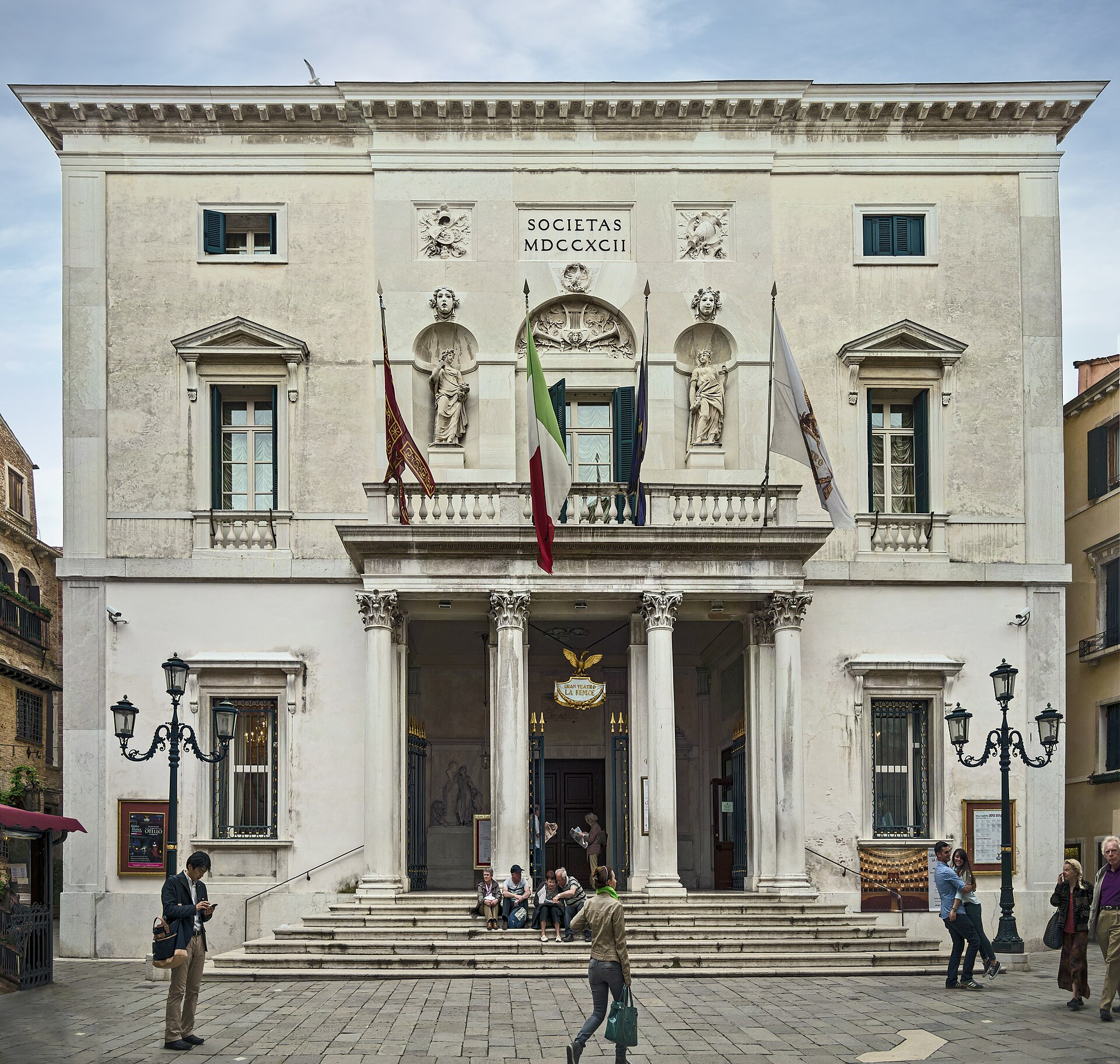
Teatro La Fenice
Campo San Fantin, San Marco 1965, Venice
Venice's opera house is named "The Phoenix" because it keeps burning down and rising from the ashes — which is either poetic or a sign of terrible fire safety, depending on your perspective. The original theatre opened in 1792 after the city's previous opera house burned. La Fenice itself then burned in 1836, was rebuilt in a year. It burned again in 1996, and was rebuilt again, reopening in 2004. Three fires in two centuries. The phoenix keeps its promises. The 1996 fire was arson. Two electricians, Enrico Carella and Massimiliano Marchetti, set the blaze because their company faced steep fines for delays in repair work. Destroying one of Italy's most important cultural institutions seemed like a reasonable solution to a contract dispute. Carella fled to Mexico and was convicted in absentia before eventually being extradited. The fire gutted everything behind the exterior walls — the ornate 19th-century interior, one of the most beautiful in Europe, was gone. The reconstruction followed a principle of "com'era e dov'era" — how it was and where it was — the same phrase used after the Campanile collapse. Architect Aldo Rossi used stills from Luchino Visconti's 1954 film "Senso," which was shot inside the theatre, to recreate details that had been lost in the fire. A movie saved an opera house. Verdi premiered "La Traviata" and "Rigoletto" here; Rossini, Bellini, and Donizetti all debuted major works on this stage. Stravinsky's "The Rake's Progress" had its world premiere at La Fenice in 1951. The acoustics are extraordinary — warm, intimate, and perfectly suited to the bel canto style that Venice helped create.
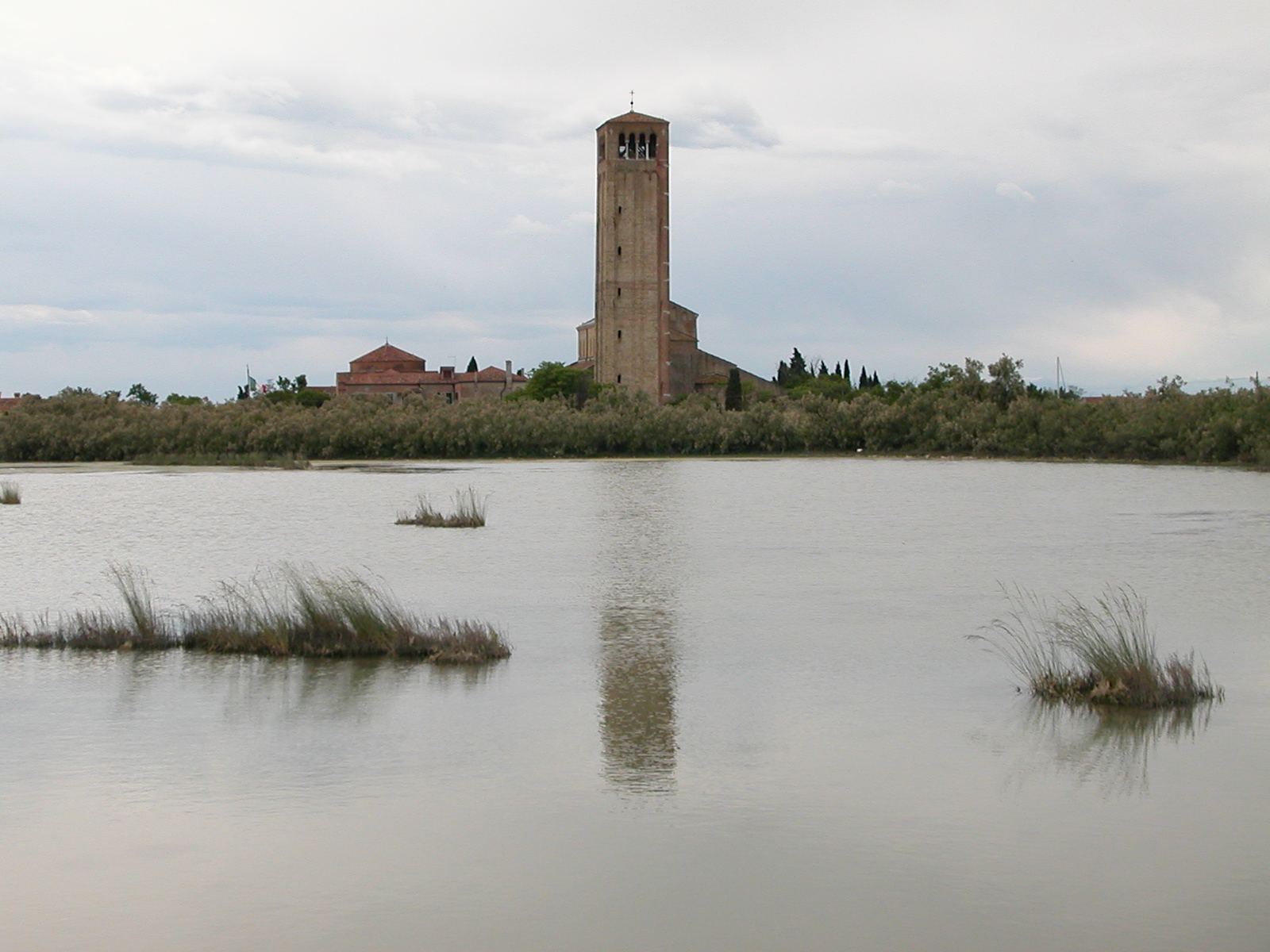
Torcello
Isola di Torcello, Venice
Venice began here, on this eerily quiet island at the northern edge of the lagoon. In the 5th and 6th centuries, refugees fleeing barbarian invasions on the mainland — first the Huns under Attila, then the Lombards — settled Torcello and built it into a thriving city of 20,000 people. For centuries, Torcello was the political and commercial centre of the lagoon. Then malaria came, the canals silted up, and the population drained away to the rising new settlement around the Rialto. Today, fewer than a dozen people live here. The Cathedral of Santa Maria Assunta, founded in 639 AD, is the oldest building in the entire Venetian lagoon. Inside, the western wall is covered with a massive Byzantine mosaic of the Last Judgement — one of the largest and most complete in existence, dating to the 11th and 12th centuries. Demons stuff sinners into the mouths of hell while angels weigh souls on golden scales. Opposite, in the main apse, a lone figure of the Virgin Mary stands against an enormous field of gold, isolated and otherworldly. The contrast between the terrifying west wall and the serene east wall is one of the great artistic experiences in Italy. Outside, a stone chair in the overgrown square is traditionally called "Attila's Throne," though it almost certainly has nothing to do with the Hun king — it was probably a medieval bishop's seat. Hemingway loved Torcello and retreated here during his Venice years, staying at the Locanda Cipriani, a small inn still run by the family behind Harry's Bar. The walk from the vaporetto stop to the cathedral takes about ten minutes along a canal path lined with reeds. After the chaos of central Venice, the silence here is almost supernatural. This is what all of Venice used to be: lagoon, stone, light, and the sound of water.