Dead Man's Hole (Tower Bridge)
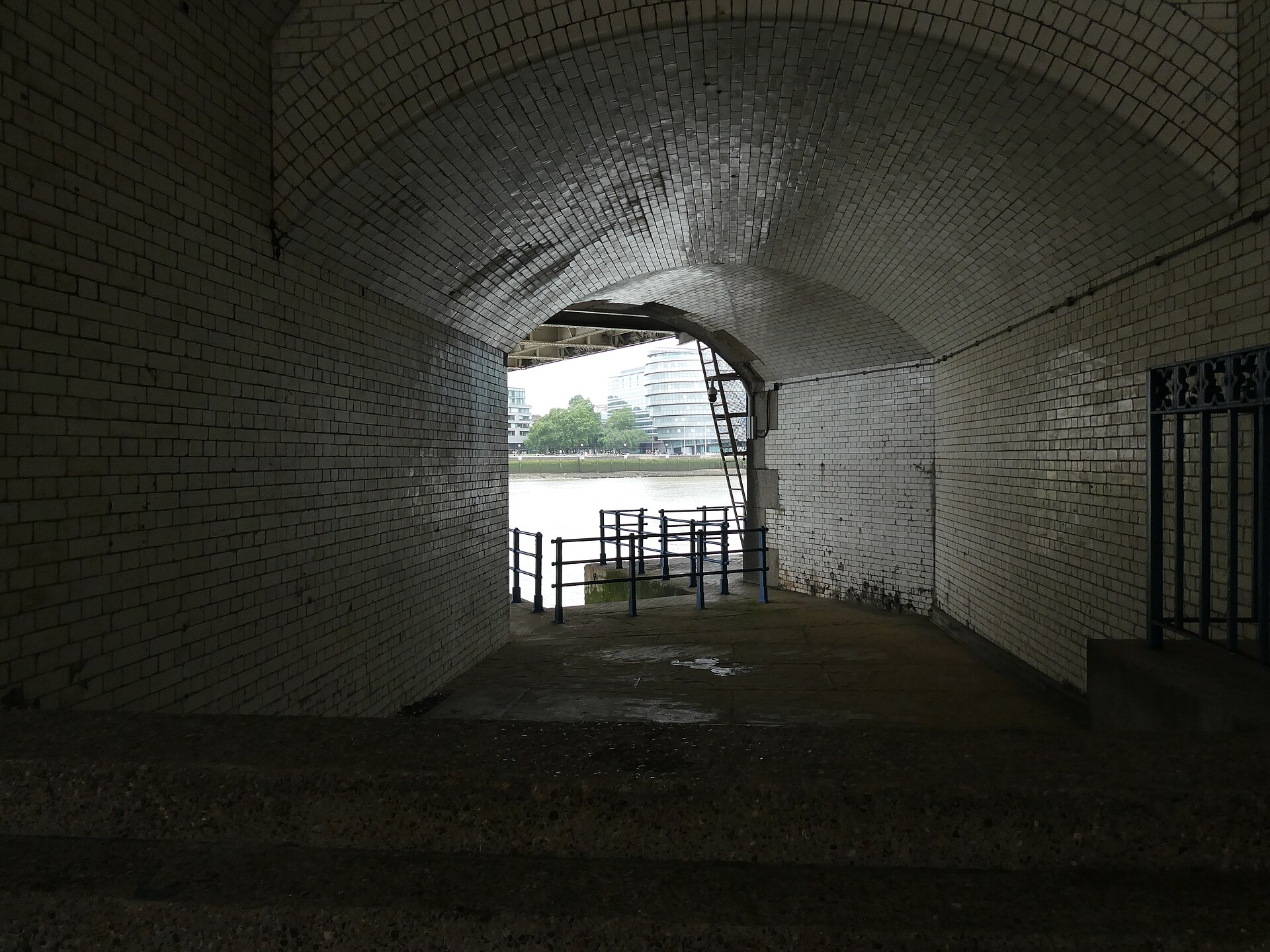
The white tiles lining a small alcove at the base of Tower Bridge are not there for decoration. They are a practical, brutal prophylactic against decomposition. Walk along the north side, heading toward the Tower of London end, and look down at the river's edge. This spot, Dead Man's Hole, is where the Thames's tidal currents naturally deposited bodies.
This wasn't just a random dumping spot. Whether the deceased had drowned, or if they had been murdered and dumped in the river, the current would carry them to this precise, inescapable point. The tiles were installed because, naturally, decomposing corpses would sometimes explode from gas buildup. You can still see the L-shaped steps and grappling hooks left for the grisly task of retrieving the remains, some of which were even displayed for public identification.
It’s a stark reminder that even the most recognizable structures, like Tower Bridge, are built over a constant, silent river of history. You can find this spot by walking along the northern abutment of the bridge.
Crossbones Graveyard
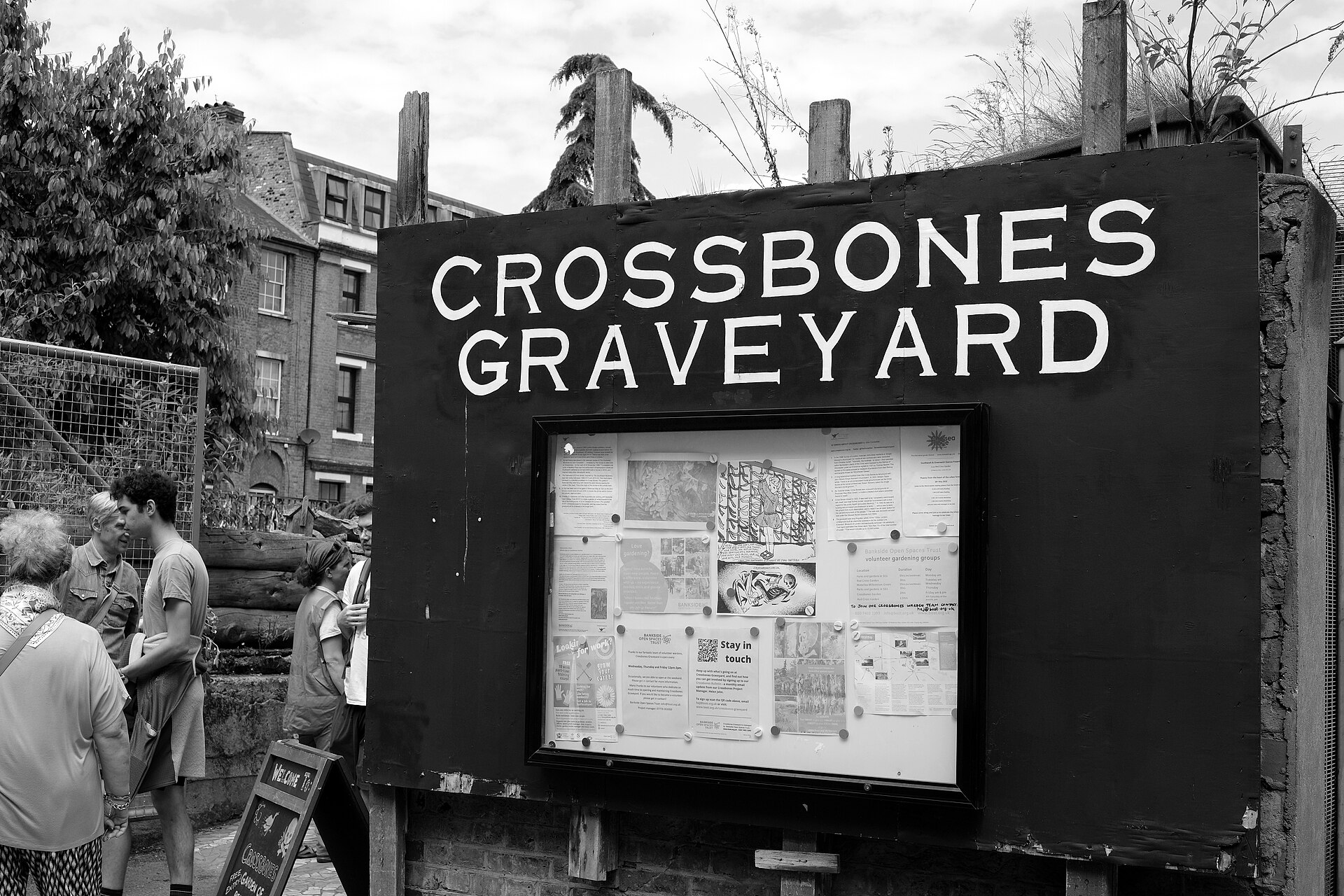
Imagine walking down a narrow side street where the ground beneath your feet is actually a massive, unofficial cemetery. This is Crossbones, a Southwark passage that sits on an estimated fifteen thousand bodies. The story of who was buried here—the prostitutes known as Winchester Geese—tells you everything about the hypocrisy of medieval London.
The site was originally an unconsecrated burial ground, licensed by the Bishop of Winchester. Because it was technically outside the City of London's jurisdiction, it operated as a lawless zone called the Liberty of the Clink. Over time, the sheer volume of the dead meant the area housed an estimated 15,000 people before its closure in 1853.
It’s a profoundly dark piece of history, but today it functions as an official Garden of Remembrance. It’s worth wandering through the area to understand the sheer density of life and death that once occurred right here in Southwark.
Highgate Cemetery (West)
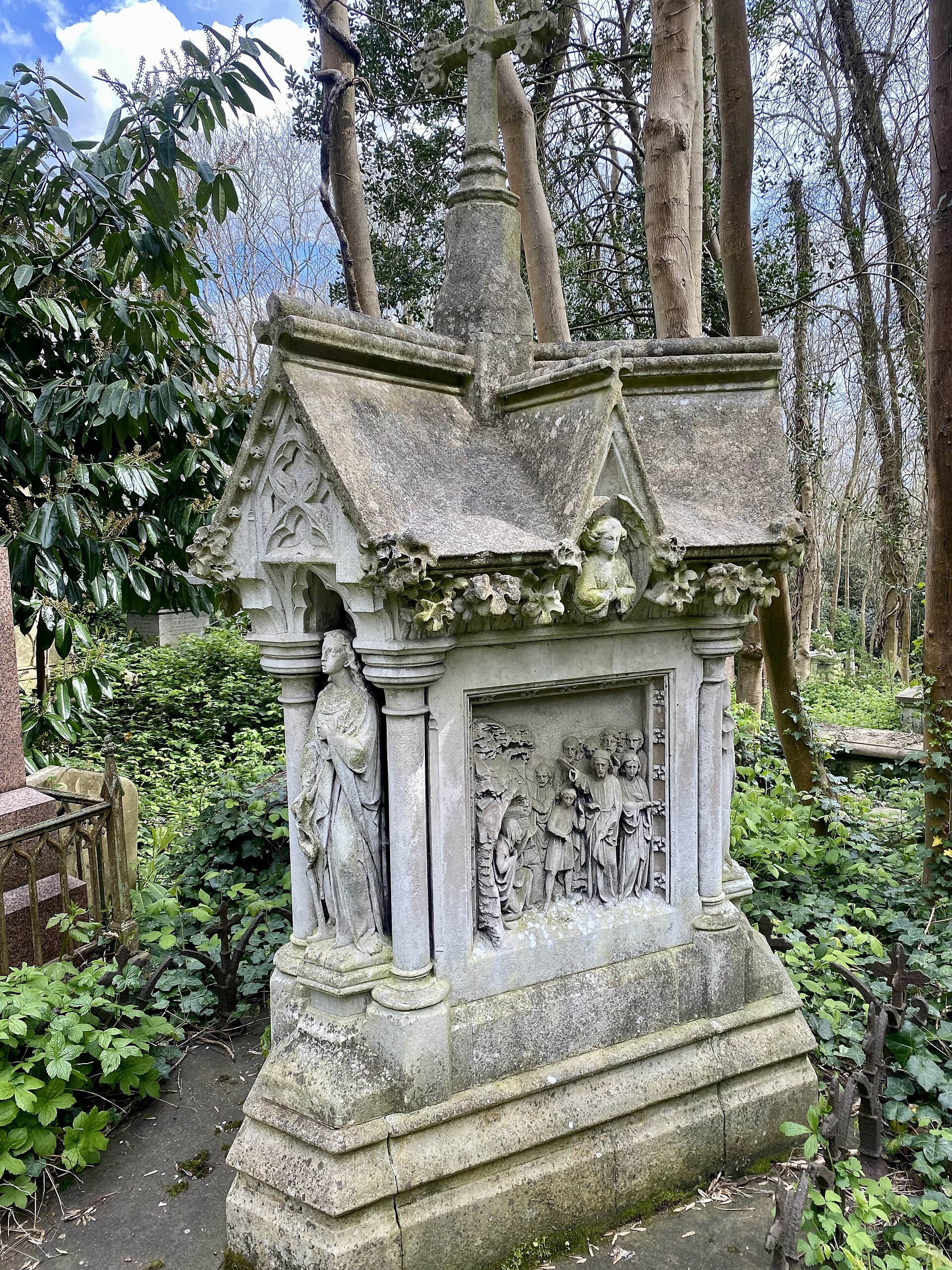
By the 1830s, London was literally drowning in its own dead. The churchyards were so overcrowded that coffins were stacking up and bursting open. Gravediggers had to cram bodies in at night, sometimes cutting corpses apart just to make them fit. The stench was unbearable, and the water supply was being poisoned by the decomposing remains.
The solution, orchestrated by Parliament, was to build seven commercial cemeteries in a ring around the city. Highgate, which opened in 1839, became the showpiece of this movement. Its grand scale and architecture were a direct response to a public health crisis, making it a fascinating intersection of Victorian obsession and civic necessity.
If you visit, keep an eye on Egyptian Avenue. It was originally designed as an enclosed tunnel with 16 vaults on either side, giving the illusion of being in an Egyptian tomb, a perfect example of how the dead were made to feel exotic.
The Charterhouse
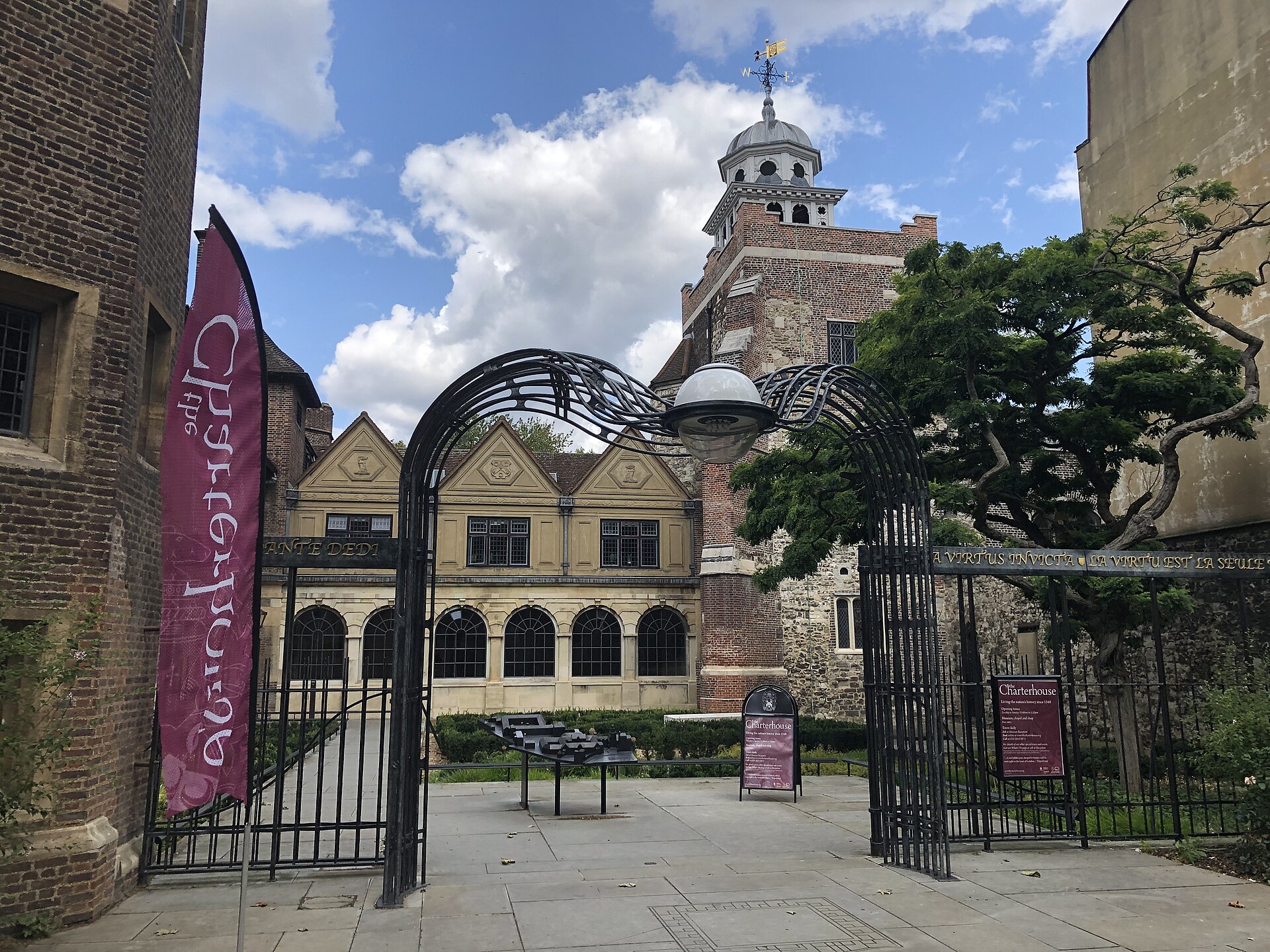
You are standing on top of twenty thousand bodies. The Black Death arrived in London in 1348 and killed roughly half the population, leaving the churchyards utterly unable to cope. The solution was to dig mass burial pits on the outskirts of the city, and this was one of the largest.
An estimated twenty thousand plague victims were dumped here in layers, covered with quicklime, and buried. This site has been everything from a plague pit to a monastery, to a Tudor mansion, and is still operating today as an almshouse. It is a layered history of survival, marked by death.
The physical evidence of this trauma is startlingly modern: during Crossrail excavations in 2013, archaeologists found skeletons with confirmed Yersinia pestis DNA. The site is located in Charterhouse Square, making it a place where medieval horror and modern construction constantly intersect.
Execution Dock
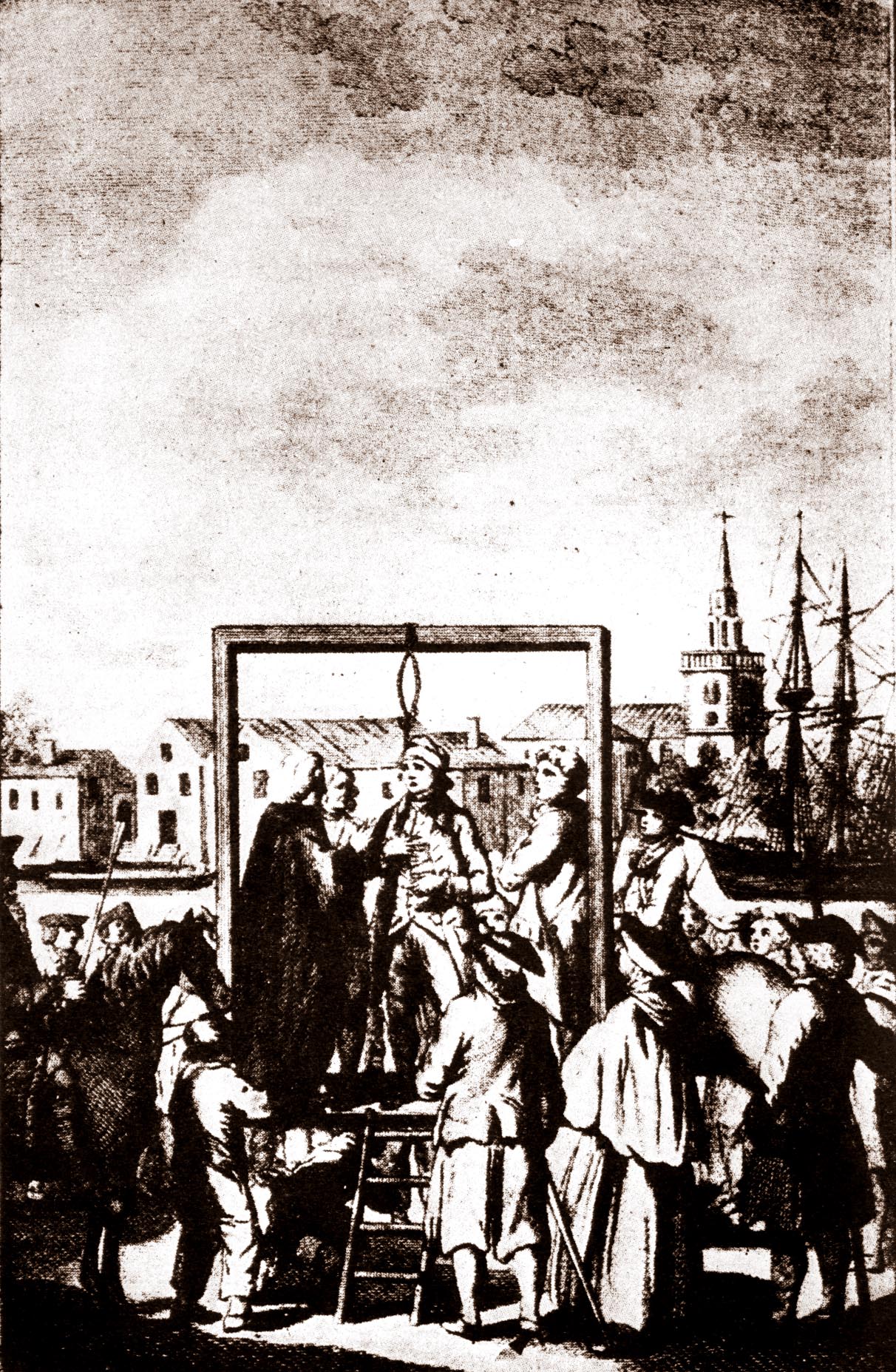
For four hundred years, this stretch of Thames waterfront was London’s public execution ground. From the early fifteenth century until 1830, this dock operated as the place where pirates were killed, and the method was designed for maximum cruelty and spectacle.
The rope used for hanging was deliberately shortened so that the drop would not break the neck. Instead, the pirates died slowly by strangulation, their limbs convulsing in what spectators called ‘the Marshal’s dance.’ It could take twenty minutes.
The notoriety continued long after the last hangings in 1830. Bodies were often left until three tides washed over them, and notorious pirates were tarred and displayed in gibbets along the Thames. Today, you can find pubs that still claim the exact site of the last hangings, near 80 Wapping High St.
Fontanelle Cemetery
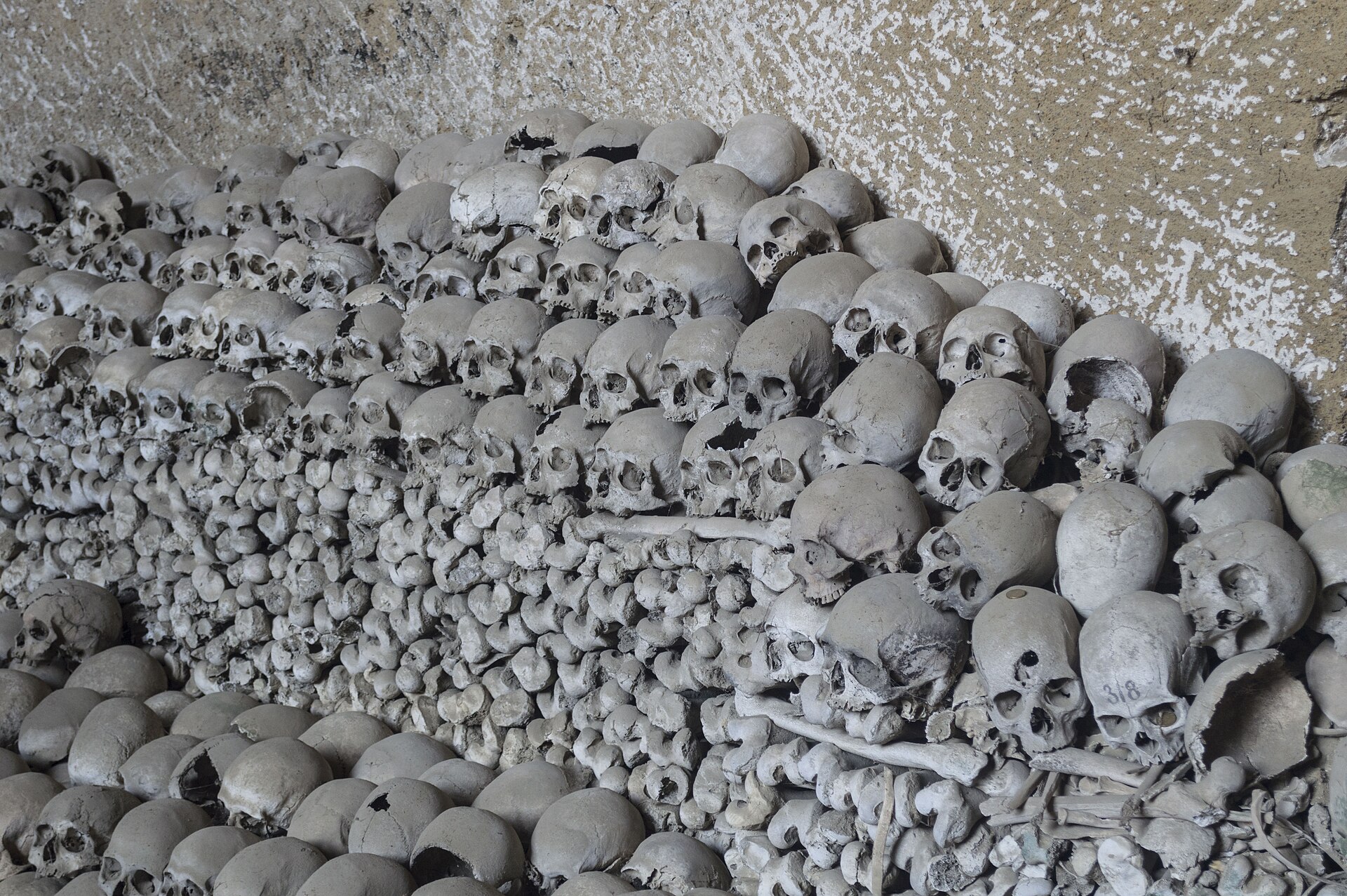
This is not a normal cemetery; it is a vast, underground cave—a tuff cavern in the hillside of Materdei, Naples. It is filled with the skulls and bones of roughly 40,000 anonymous dead, stacked in neat rows like macabre library shelves. Most of them ended up here because the city had nowhere else to put them.
The density of death was extreme. During the devastating plague of 1656, which killed half of Naples' population, the city's churches ran out of burial space, and bodies were collected and dumped in this abandoned quarry. Neapolitans even practiced a cult of "adopting" skulls, praying for the souls in exchange for earthly favors like lottery numbers.
You can visit this incredible ossuary at 80 Via Fontanelle, a testament to a population’s desperate need for space after a devastating plague.
Edinburgh Vaults
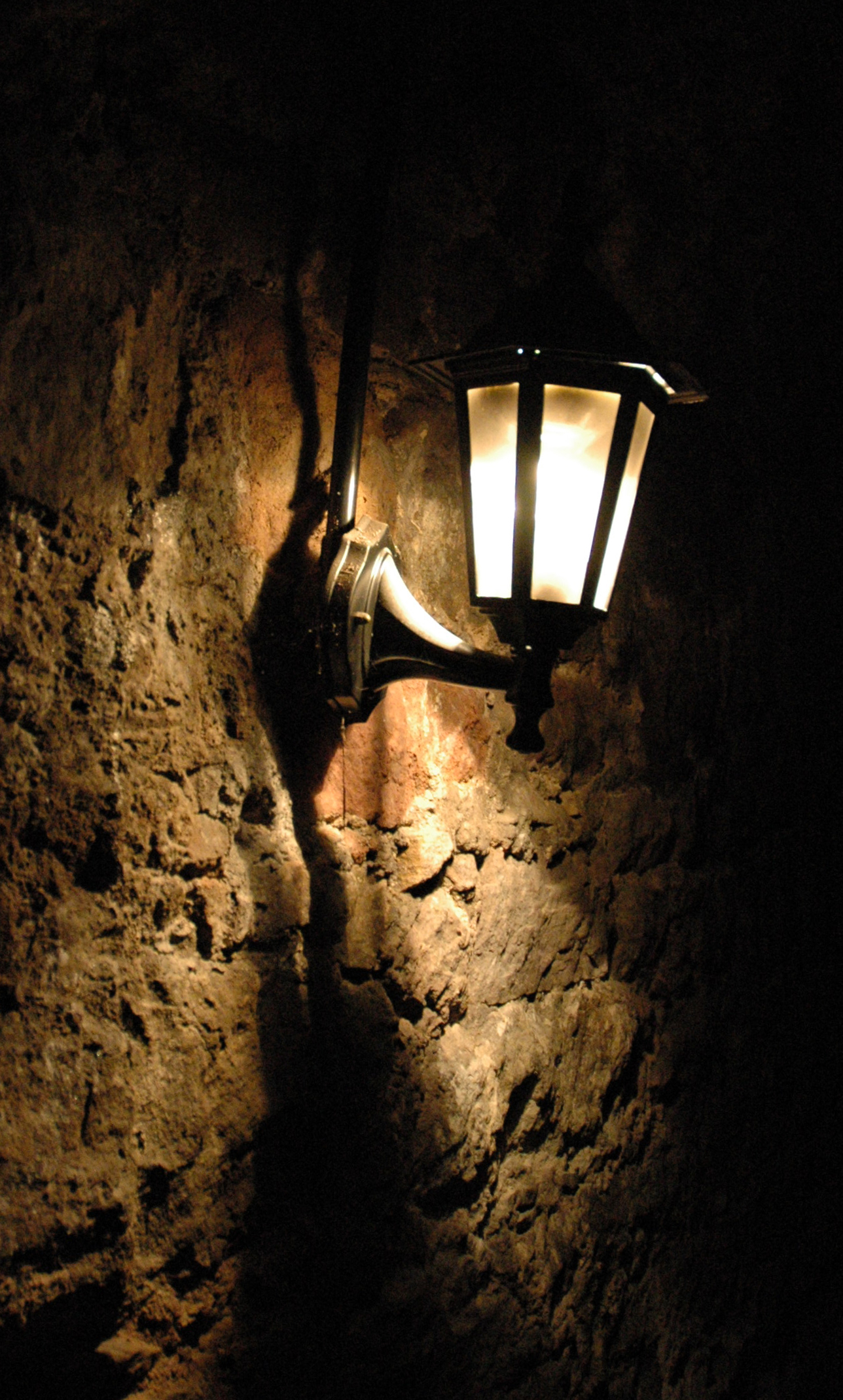
Beneath one of Edinburgh's busiest shopping streets lies a hidden, forgotten city. The Edinburgh Vaults comprise approximately 120 rooms within the nineteen arches of South Bridge, a subterranean labyrinth of workshops, taverns, and storage spaces.
These vaults were completed in 1788 as part of the South Bridge Act of 1785. While the vaults were forgotten for over a century, they were rediscovered during excavations in 1985. The remaining eighteen arches were enclosed by tenement buildings, making only the Cowgate arch visible today.
It’s a perfect example of how a modern city is built atop layers of forgotten, dark infrastructure. You can find the entrance to the vaults near South Bridge, The Grassmarket.
Greyfriars Kirk & Kirkyard
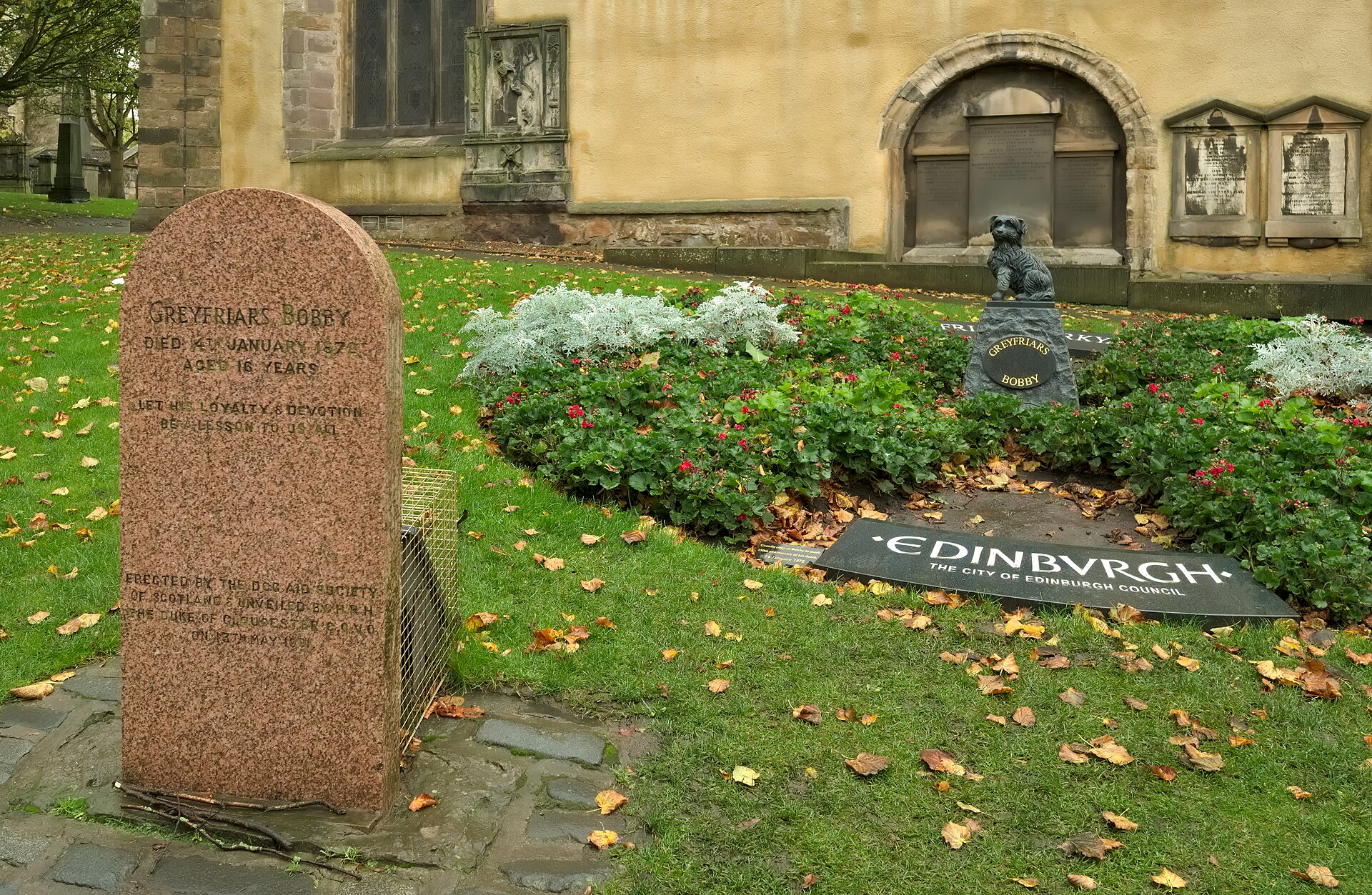
Sometimes the most haunting things aren't the bones, but the stories attached to the ground. This kirkyard, built between 1602 and 1620 on the site of a dissolved Franciscan friary, holds a profound history of Scottish resistance. The National Covenant was signed here on 28 February 1638, launching a movement that helped trigger the English Civil War.
But the ghost story that sticks is the story of Greyfriars Bobby, a Skye Terrier who guarded his master’s grave for fourteen years, from 1858 until his own death in 1872. When the city introduced a dog licence in 1867, it was the Lord Provost himself who paid the fee to prevent Bobby from being put down.
The kirk remains a powerful spot for understanding how deeply history and devotion are rooted in a physical place. It is located at Greyfriars Place, Edinburgh.
Buda Castle Labyrinth
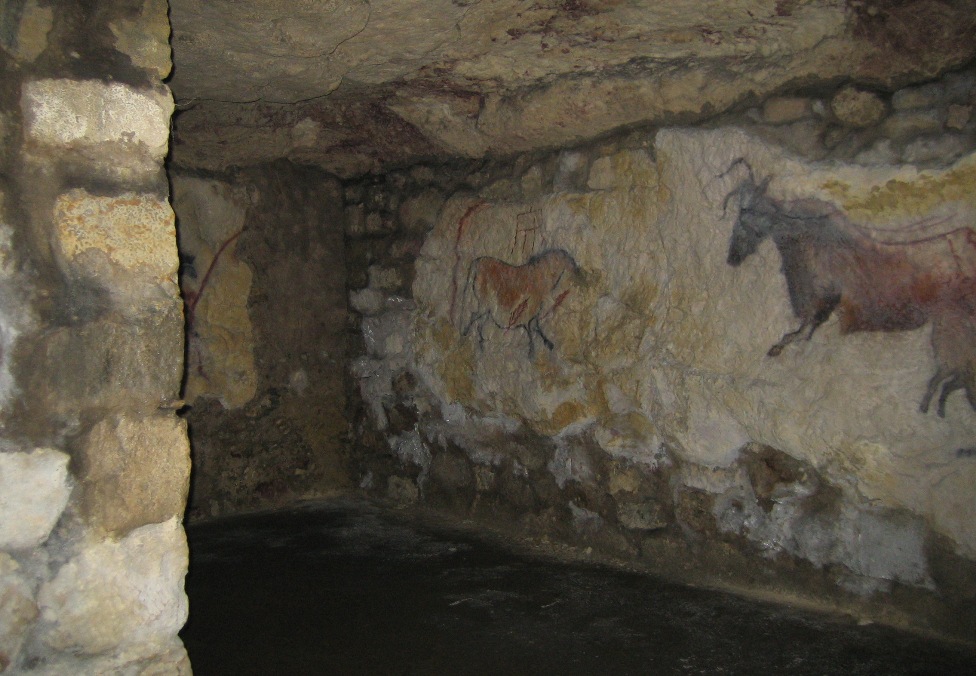
Forget the ghosts; this labyrinth was carved by water. Sixteen metres beneath the cobblestoned streets of Budapest's Castle District lies a network of caves and passages. These tunnels stretch over 1,200 metres, carved not by people, but by thermal waters that have been flowing under the hill for over 500,000 years.
Prehistoric humans used these caves for shelter, but the history of human cruelty and survival is also etched into the stone. Medieval residents used the tunnels as wine cellars, torture chambers, and prisons. Vlad the Impaler was allegedly imprisoned here by King Matthias Corvinus in the 1460s.
It’s a constant, subterranean echo of human history, maintained at a steady temperature of about 12°C year-round. The labyrinth is part of the UNESCO World Heritage Site designation for the Buda Castle complex.
Old Jewish Cemetery
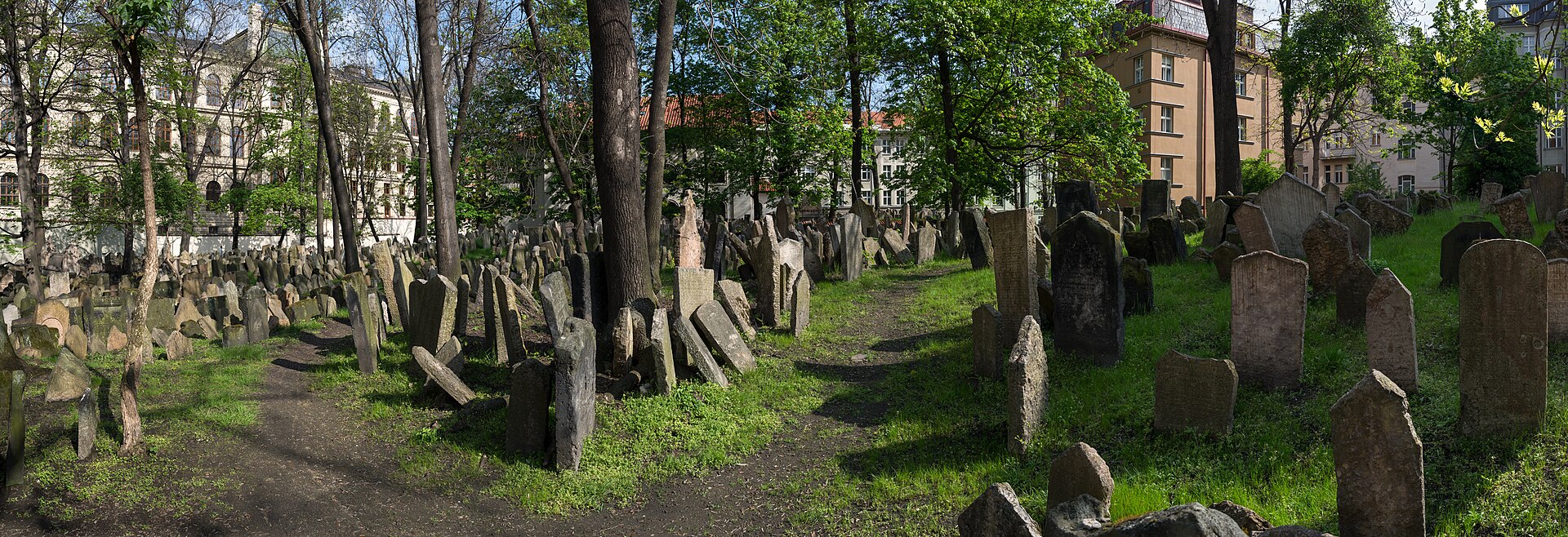
There is no place in Europe quite like this. Around 12,000 headstones crowd together at impossible angles across a space barely the size of a city block. Beneath them, bodies are stacked up to twelve layers deep—an estimated 100,000 burials compressed into a plot that was never large enough.
The cemetery was in use from approximately 1439 to 1787, because for three and a half centuries, it was the only place Prague's Jews were allowed to bury their dead. The oldest surviving gravestone belongs to Rabbi Avigdor Kara, dated 1439, and it is the spot where Rabbi Judah Loew ben Bezalel, the legendary creator of the Golem, was buried in 1609.
The sheer density of these memorials, packed together like drunk friends at closing time, creates an overwhelming sense of communal history. You can find this incredible place at Siroka 3.
African Burial Ground
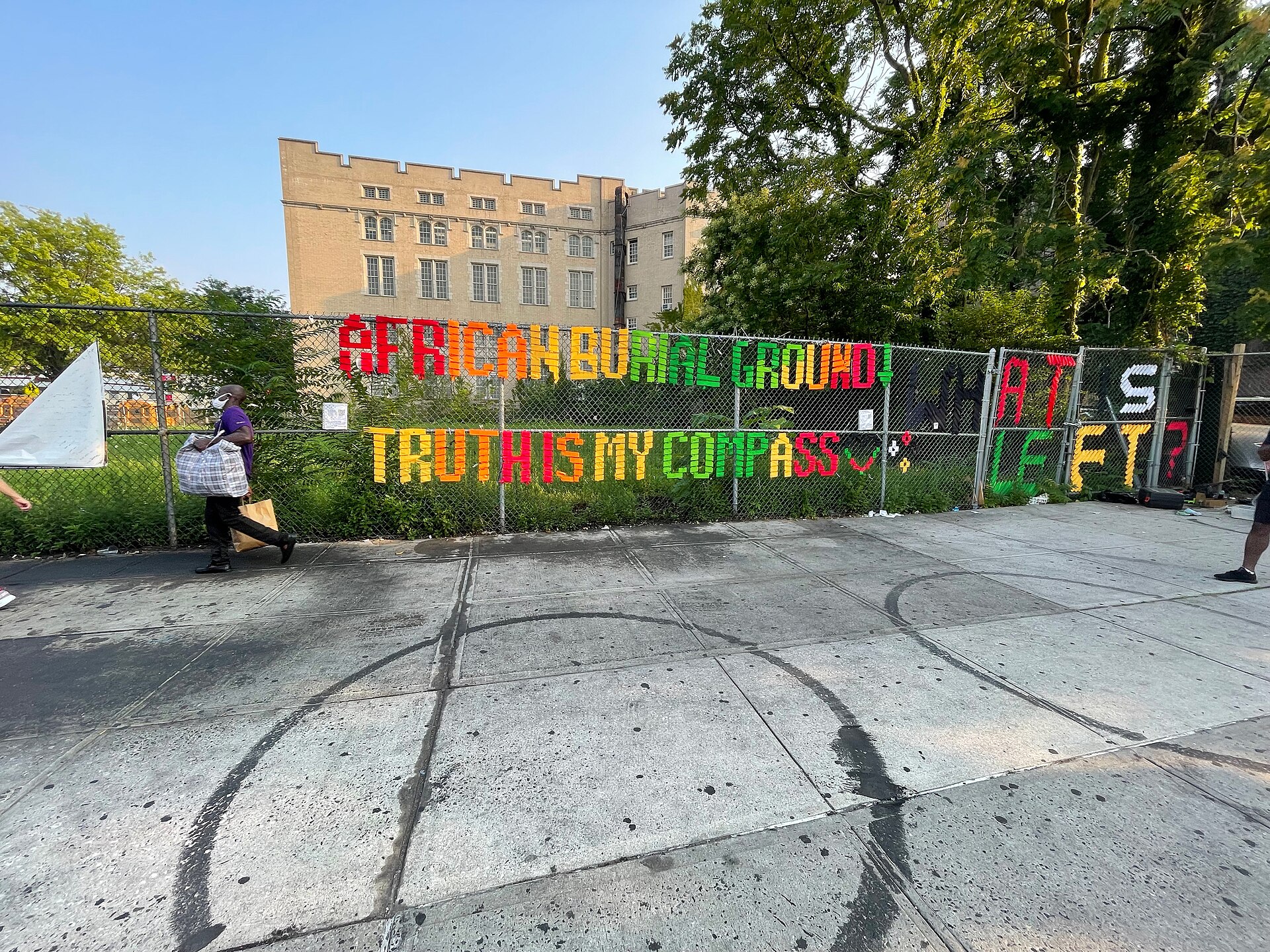
Nobody knew the remains beneath Broadway were there for almost three hundred years. An estimated fifteen thousand free and enslaved Africans were buried at this site between the 1630s and 1795.
In 1697, Black New Yorkers were banned from burying their dead in the city's churchyards, forcing them to use a plot outside the city limits. This burial ground was forgotten when Manhattan expanded northward, and the site eventually disappeared under twenty-five feet of landfill.
Construction workers didn't rediscover the history until 1991. The remains were eventually reburied in 2003 after study at Howard University. It stands as a powerful memorial and a reminder of how the city's expansion often obscures its most vital human stories.
Green-Wood Cemetery

By the early 1860s, more people visited Green-Wood Cemetery each year than any attraction in America except Niagara Falls. It was not a morbid destination; it was the closest thing New York had to a public park.
Established in 1838 on 478 acres of rolling Brooklyn hillside, it holds 600,000 graves and 7,000 trees. It’s a sprawling landscape that manages to be both monumental and natural, drawing crowds not just for the dead, but for the beauty of the place itself.
It’s a place where the names of the departed—including Jean-Michel Basquiat and Boss Tweed—are memorialized alongside the grandeur of the Gothic Revival gatehouse.
These places prove that the deepest stories are always buried right beneath the surface. Whether it’s the cold, constant water flow at Dead Man’s Hole, or the subterranean labyrinth of the Buda Castle, the history of the forgotten is the most haunting kind. If you want to dig into the true, often unsettling, history of the places you walk through, download the VoiceWalks app and let us guide you to the stories nobody talks about.