Walking Tours in Sydney
Sydney: Convict Barracks to Hidden Laneways — Secret CBD
From a barracks where rat-hoarded convict artifacts were found in the ceiling, past a hospital paid for in rum, through a laneway where 180 empty birdcages play the songs of vanished species, to a headland named after a woman who broke her partner's fishing spear for dining with the Governor.
Sydney: Convicts, Plague & Rebellion — The Rocks
Walk the alleyways where convicts roamed free after dark, past an open sewer nicknamed the Suez Canal, through a tunnel hacked from sandstone by hand, and into the neighbourhood that construction workers saved from demolition by refusing to build. Every cobblestone in The Rocks has a body count.
Sydney: Harbour Icons — Circular Quay to Mrs Macquarie's Chair
From the bridge whose pylons are purely decorative to the opera house plucked from the reject pile, past a 'living fossil' tree whose wild location is classified, to a sandstone bench carved by convicts so the Governor's wife could watch for ships from England.
Sydney: Opera House, Harbour & the Rocks
Stand beneath the sails of the most recognised building on earth, walk the Circular Quay where the First Fleet anchored in 1788, explore The Rocks where convicts built a colony, cross the Harbour Bridge on foot for the view that defines Australia, and swim in the harbourside ocean pool before the city wakes up.
30 Landmarks in Sydney
Argyle Cut
Argyle St, Circular Quay, The Rocks, 2000, Australia
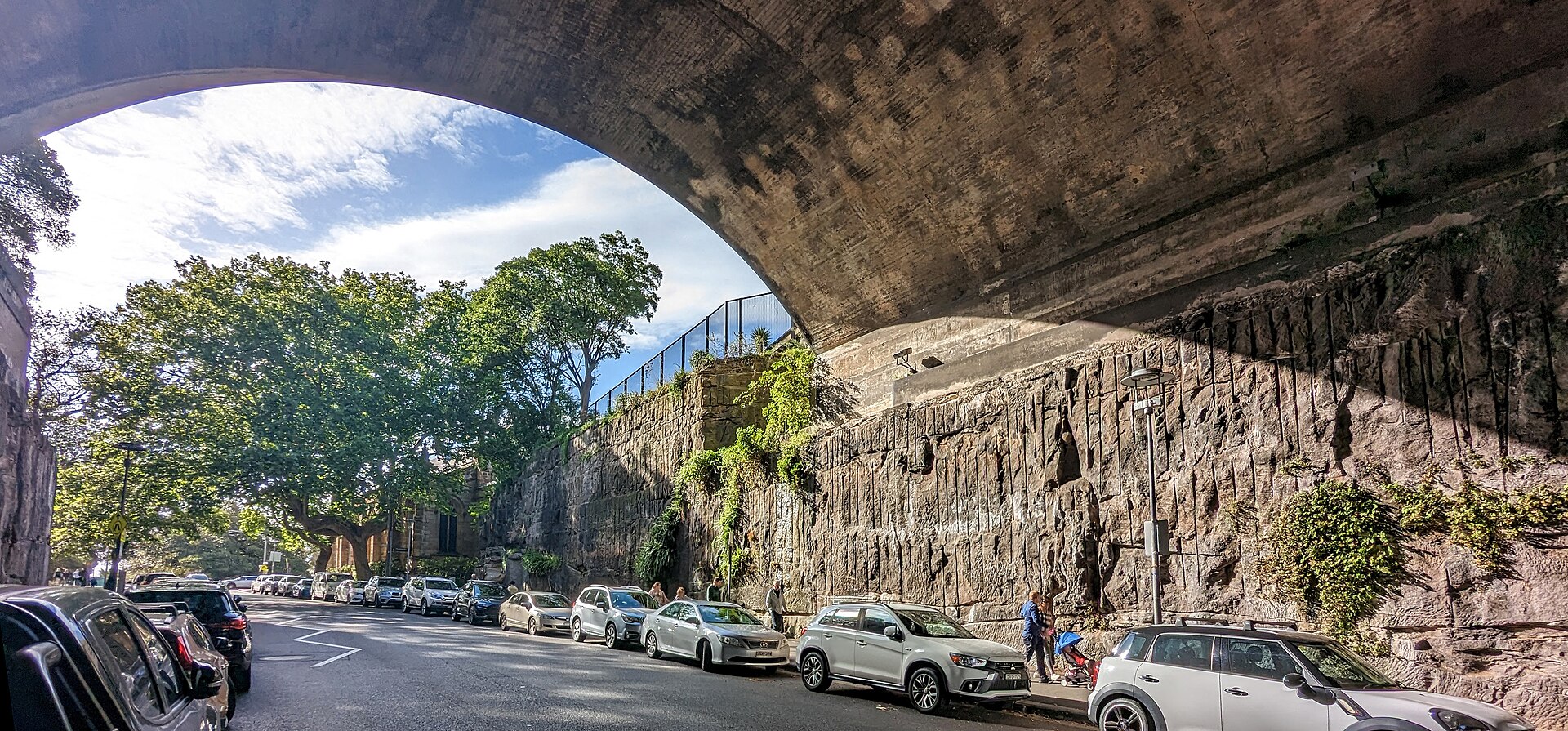
Walk through this passage and pay attention to the walls. You are inside a piece of living history that most people rush through without noticing. Look at the lower sections of the rock face -- rough, uneven, covered in visible chisel marks. Those marks were made by convict chain gangs starting in eighteen forty-three. Men in irons, swinging hand tools into solid sandstone, day after day, overseen by a man named Tim Lane who was known for ordering floggings. Now look up at the upper sections. See how the rock is smoother and the cut is wider? That is where they gave up on the convicts and used explosives. The City Council finished the job with gunpowder and dynamite in eighteen fifty-nine -- sixteen years after the convicts started. The difference between human suffering and industrial blasting is written right into the stone. The Argyle Cut was ranked alongside Busby's Bore and the construction of Circular Quay as one of the most impressive engineering feats in early Sydney. The purpose was straightforward: The Rocks was divided by a sandstone ridge, and the western side -- Millers Point, where the wharves and warehouses were -- was cut off from the eastern side. The colony needed a road through the ridge. So they sent in the convicts with chisels. The cut is about twenty-five metres deep at its highest point. Run your hand along the lower wall if you can reach it. Those chisel grooves are almost two hundred years old, made by men who had no choice in the matter. The rock has been smoothed slightly by time and weather, but the individual marks are still distinct enough that you can almost count the strokes. This is one of the most powerful historical sites in Sydney, and it is just a passageway that people use to get from one street to another.
Barangaroo Reserve
Barangaroo, Australia
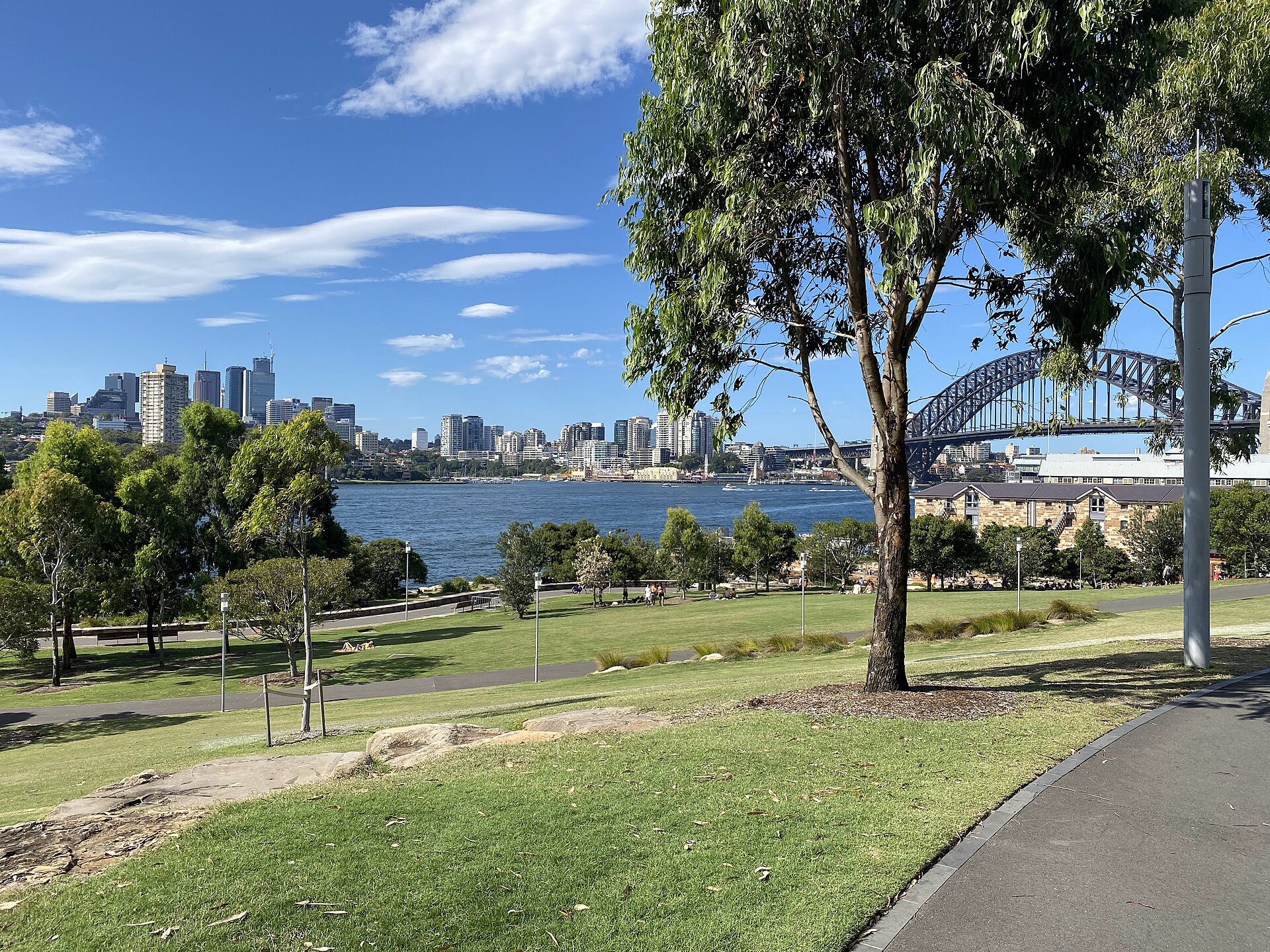
This six-hectare headland park is named after a woman who told the colonists to get absolutely stuffed, and the fact that the precinct is not even on her traditional lands just adds to the irony. Barangaroo was a Cammeraygal fisherwoman born around seventeen-fifty. When the British arrived, she refused to wear their clothes, refused to drink their wine, and refused to adopt their customs. She was not passive about it either. When she witnessed colonists hauling in four thousand salmon in a single catch -- far more than anyone could eat -- she was outraged by the waste and let them know it. In a colony obsessed with making Aboriginal people behave like Europeans, Barangaroo was having absolutely none of it. Eora fisherwomen like Barangaroo were the primary food providers for their communities. European observers noted that these women fished and paddled canoes in surf that would terrify their toughest sailors, managing onboard fires and children at the same time. When Barangaroo died around seventeen-ninety-one, she received a traditional cremation ceremony and her husband Bennelong -- the same Bennelong from the Opera House site -- scattered her ashes around Governor Phillip's garden at what is now Circular Quay. The park itself is an engineering feat. The headland you are standing on is essentially artificial. Ten thousand sandstone blocks were used to recreate the natural foreshore that existed before eighteen thirty-six, when the area was flattened for shipping wharves. They rebuilt a headland. The shape is based on historical records and geological surveys of what the coastline looked like before Europeans changed it. So here is the full picture. A precinct named after an Aboriginal woman who rejected European culture, built on a man-made headland that recreates a pre-colonial landscape, on land that was not even hers. The contradictions are the point.
Bondi to Coogee Coastal Walk
Bondi Beach, Australia
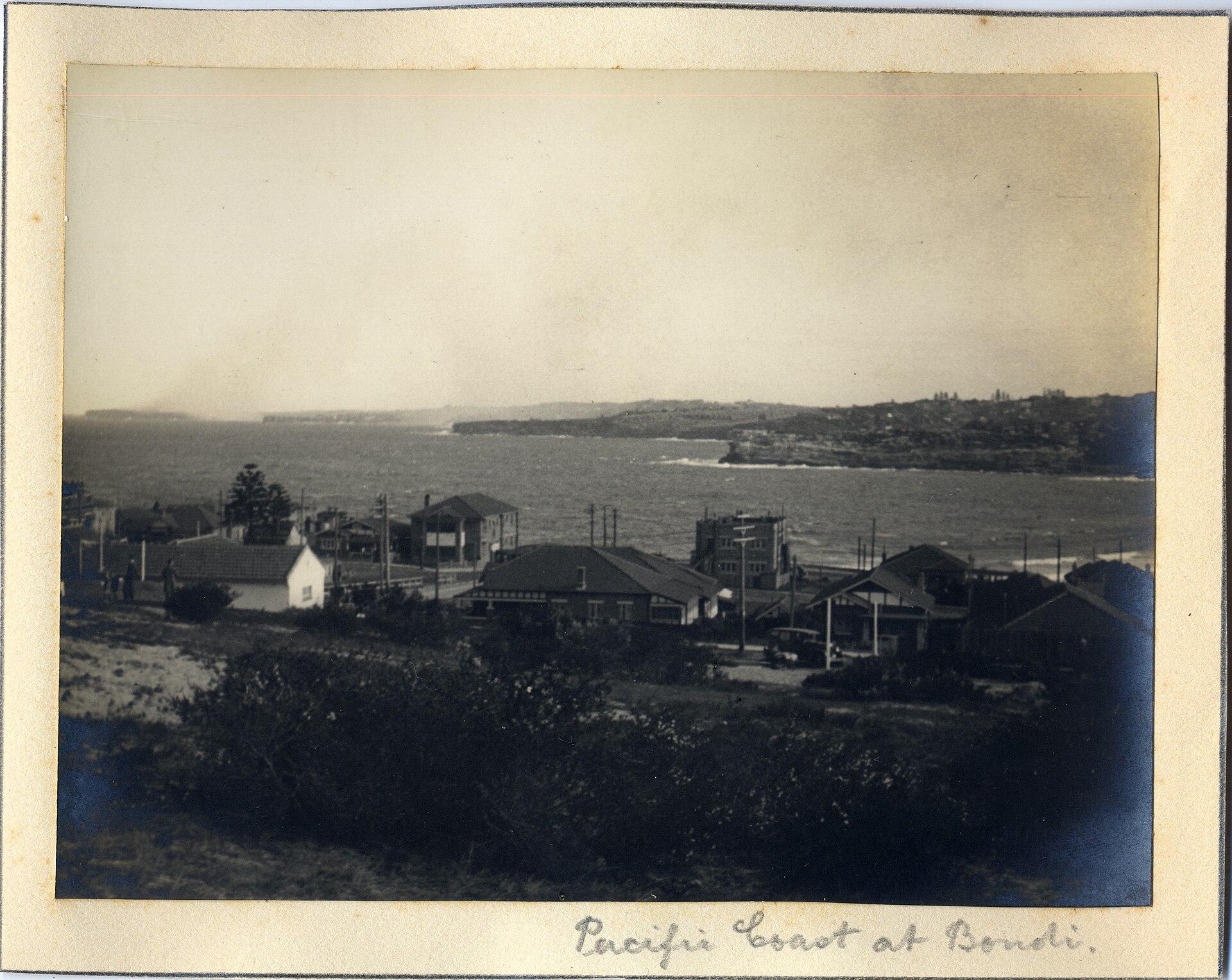
The Bondi to Coogee Coastal Walk is Sydney's most famous urban hike — a 6-kilometre clifftop trail along the eastern suburbs' sandstone coastline that passes five beaches (Bondi, Tamarama, Bronte, Clovelly, Coogee), ocean pools, Aboriginal rock carvings at Marks Park, and the Waverley Cemetery whose 19th-century headstones overlook the Pacific from the cliff edge. The walk takes about 2 hours and provides the most scenic introduction to Sydney's outdoor culture — the combination of ocean, sandstone, and the eucalyptus-scented bushland that clings to the cliffs is pure coastal Australia.
Camperdown Cemetery
Sydney, Australia
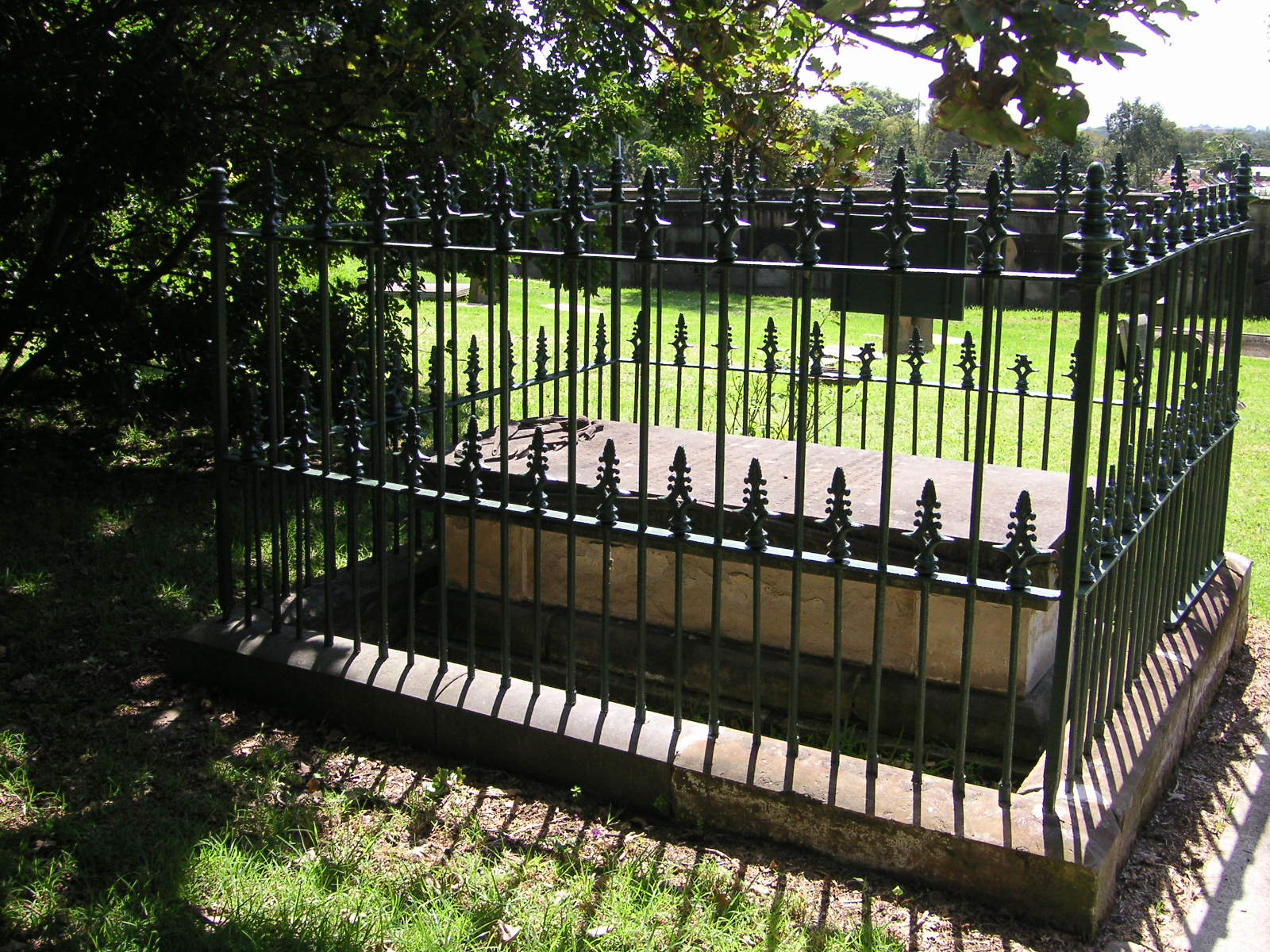
This cemetery in Newtown contains three stories that would each justify a visit on their own, and almost nobody comes here. First: the Dunbar shipwreck. In eighteen fifty-seven, the clipper ship Dunbar was approaching Sydney Harbour in a storm and smashed into the cliffs at The Gap. One hundred and twenty-one of the one hundred and twenty-two people on board died. The sole survivor, a man named James Johnson, was thrown against the cliff face and clung to a rock ledge for two days before he was spotted and rescued. Twenty-two victims of the wreck are buried here in a mass grave. The Dunbar disaster was the worst peacetime maritime disaster in Sydney's history. Second: the real Miss Havisham. Eliza Donnithorne is buried in this cemetery, and she is widely believed to have inspired the jilted bride in Dickens' Great Expectations. The story goes that Eliza was jilted on her wedding day, and she reportedly left the wedding breakfast on the table and the front door ajar for the rest of her life, in case her fiance returned. Whether Dickens actually knew about her is debated, but her grave is here, and the story has been told in Newtown for over a hundred and fifty years. Third: the grave of Tommy, an eleven-year-old Aboriginal boy who died in eighteen-sixteen and was the first Indigenous Australian to receive a Christian burial. A memorial obelisk was erected in nineteen forty-four. Here is one more detail. This is the only one of Sydney's three main early cemeteries that still exists. The Devonshire Street Cemetery -- which sat where Central Station is now -- was demolished to build the railway. They dug up the graves and moved the remains. You are catching a train on top of a former graveyard every time you pass through Central.
Cockatoo Island
Cockatoo Island, Sydney Harbour NSW 2000
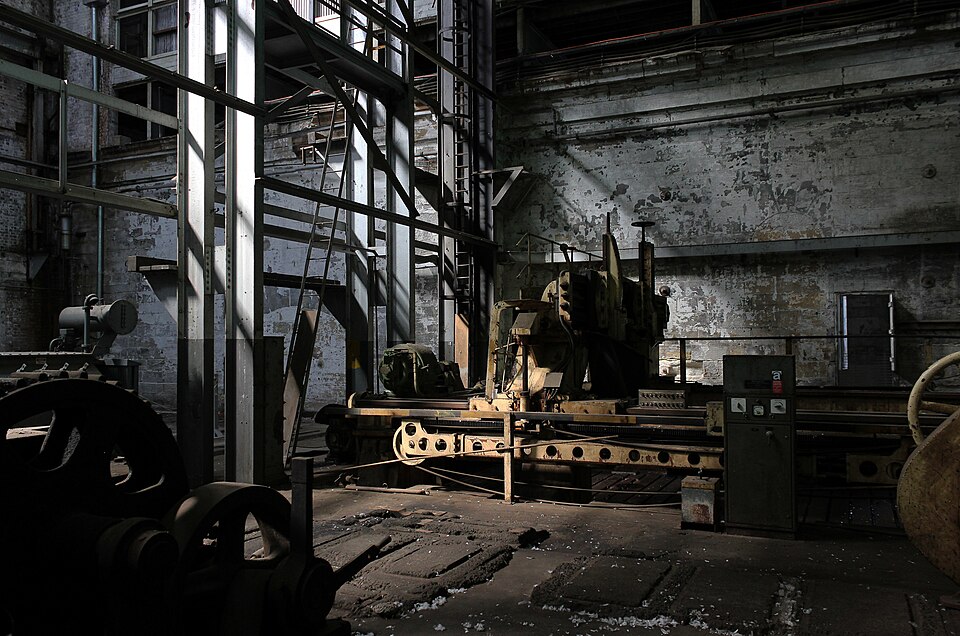
You can catch a ferry to this island and camp overnight on a UNESCO World Heritage convict site in the middle of Sydney Harbour. That alone is worth knowing. But the history of what happened here will keep you awake in your tent. Aboriginal people knew this island as Wa-rea-mah. In eighteen thirty-nine, the first sixty convicts arrived from Norfolk Island. The welcome party was grim: the island was described as without water and abounding with snakes. And then the real punishment began. Those convicts were put to work carving grain silos out of solid rock -- seventeen bottle-shaped pits, each up to five-point-eight metres deep, capable of holding one hundred and forty tonnes of grain. All by hand. All with basic tools. That was the appetiser. The main course was Australia's first dry dock. Convicts manually excavated one-point-five million cubic feet of rock to create a dock where ships could be repaired. With hand tools. Try to picture the scale of that. A million and a half cubic feet of stone, chipped out by men who were sent here as punishment. The island then operated as a major naval shipyard from eighteen fifty-seven all the way to nineteen ninety-one -- over a hundred and thirty years of building and repairing warships. During both world wars, this was one of the most strategically important industrial sites in the country. It is now considered one of Australia's most haunted locations, which makes the camping situation interesting. People report hearing metallic clanging from the empty shipyard buildings at night, footsteps on the gravel paths, and, in the convict quarters, the sound of chains. Whether you believe in ghosts or not, lying in a tent on an island where convicts were brutalised for decades does something to your imagination after dark.
Customs House
31 Alfred Street, Circular Quay, Sydney NSW 2000
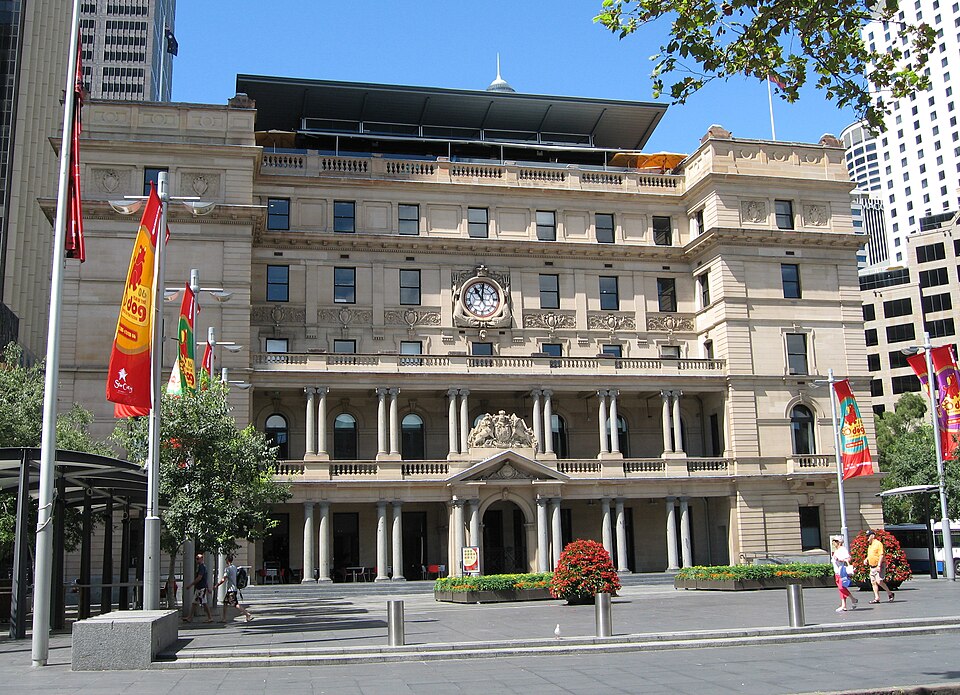
Walk into the ground floor of this building and look down. Beneath a glass floor panel is a one-tonne scale model of the Sydney city centre that most people at Circular Quay walk straight past without knowing it exists. The model covers ten square kilometres at one-to-five-hundred scale, contains over one thousand individually handcrafted buildings, and measures four-point-two by nine-point-five metres. At night, hundreds of fibre-optic lights come alive inside the tiny buildings, and you are basically a giant looking down at a miniature glowing city. The model has been handcrafted and continuously updated for over twenty years. Every time a significant building goes up or comes down in the CBD, someone has to make a tiny replica and swap it in. It is an obsessive, painstaking, slightly mad ongoing project, and it is free to visit. The building itself is standing on some of the most historically significant ground in Australia. This is the site where the First Fleet landed in seventeen-eighty-eight. The original customs house was constructed in eighteen forty-four and eighteen forty-five as the colony's customs checkpoint -- every piece of cargo entering or leaving Sydney passed through here. The building you see now is a later renovation with classical columns and ornate sandstone, but the function was the same for over a century: this was the financial gateway to the colony. If you have only got a few minutes at Circular Quay and you want to see something genuinely surprising, skip the souvenir shops. Come in here. Stand on the glass. Look down at the city you are standing in, rebuilt in miniature at your feet. Then look up at the vaulted ceiling and remember you are in a building that has been processing arrivals since the eighteen-forties -- including you, right now.
Dawes Point
Sydney Harbour Bridge, Circular Quay, Dawes Point, 2000, Australia
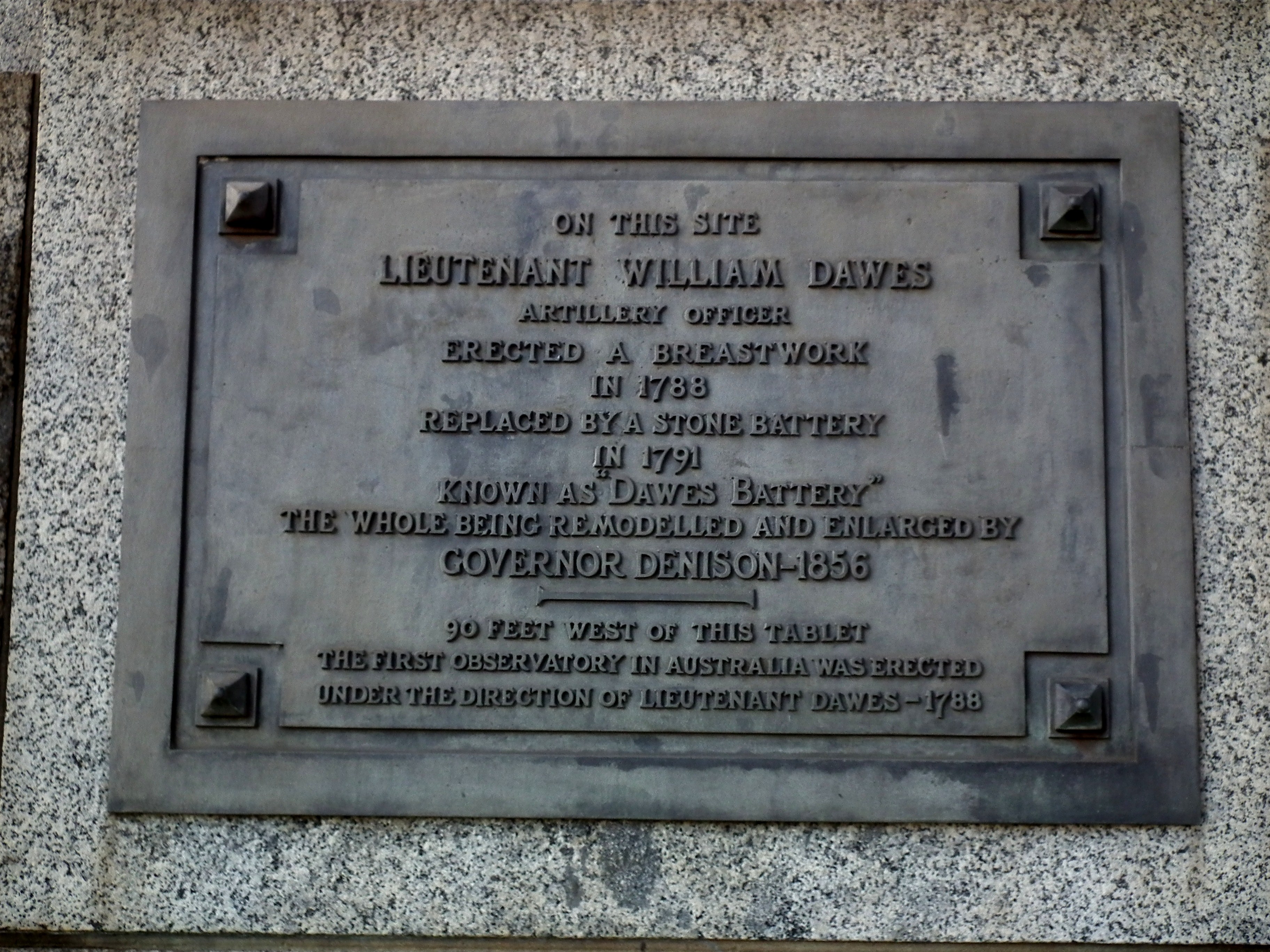
You are standing under the shadow of the Harbour Bridge, and beneath the roar of traffic above you is one of the most quietly extraordinary stories in Australian history. A young English officer and a Gadigal woman worked together right here to save a language, and he was punished for caring. Lieutenant William Dawes arrived with the First Fleet in seventeen eighty-eight and built the colony's first observatory on this point. He was here to watch the stars. But what he actually ended up doing was far more important. Dawes formed a close relationship with a young Gadigal woman named Patyegarang, and together they created the first written documentation of the Sydney Aboriginal language. Dawes' notebooks are extraordinary. They do not just record vocabulary -- they capture grammar, pronunciation, jokes, and conversational exchanges that reveal Patyegarang as witty, sharp, and entirely in control of the teaching process. In one famous exchange, she teases him about his pronunciation. These notebooks are now regarded as the first European study of Aboriginal people and their culture, and they survive because Dawes kept them meticulously. Here is where it gets painful. Dawes was ordered to participate in a punitive expedition against Aboriginal people -- essentially a military raid in retaliation for the killing of a colonist. He refused. This was one of the very first acts of conscience against colonial violence in Australian history. He was sent back to Britain for it. Patyegarang disappears from the historical record after Dawes left. We do not know what happened to her. The language she taught him was nearly lost entirely. But those notebooks survived, and they are now being used by Gadigal descendants to revive the language. There are interpretive panels at the site that tell the story. Read them. This spot deserves more than a passing glance on the way to the bridge.
Forgotten Songs (Angel Place)
Angel Pl, Sydney, 2000, Australia
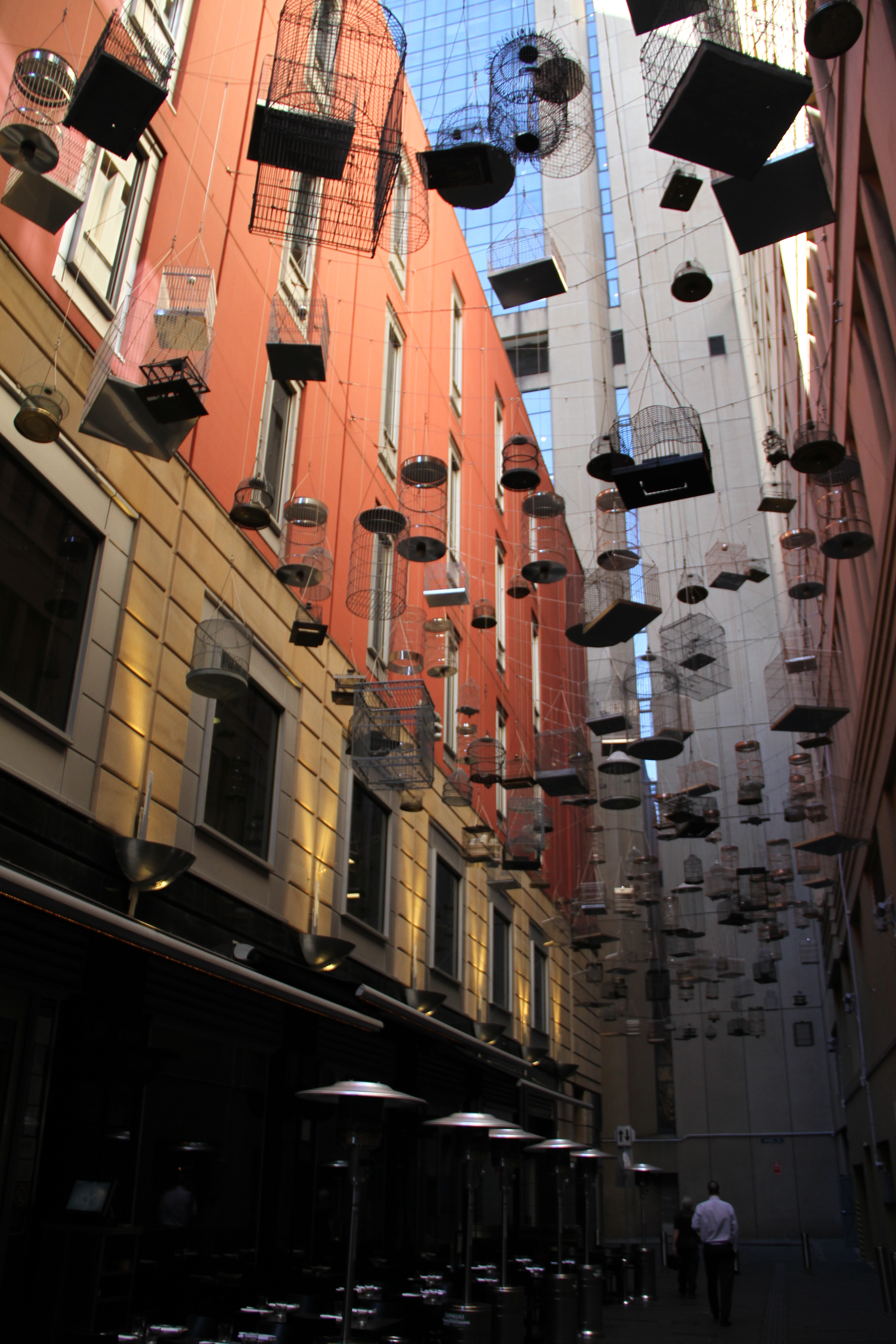
Look up. One hundred and eighty empty bird cages are suspended above this narrow laneway, and if you stop and listen, you will hear birdsong coming from them. Not real birds -- recordings of fifty species that once lived in central Sydney before urbanisation drove them out. You are surrounded by ghost music from birds that no longer exist in this part of the city. The installation is called Forgotten Songs, and it does something clever with time. During daylight hours, you hear daytime species. As the sun sets, the soundtrack shifts to nocturnal birds -- owlet-nightjars, powerful owls, tawny frogmouths -- and the triggers adjust automatically for longer summer days and shorter winter ones. Come here at noon and you hear one city. Come at midnight and you hear a completely different one. Look down at the ground beneath your feet. The names of all fifty bird species are embedded into the pavement. You are literally walking over their names while their songs play above your head. It is a memorial without a plaque, a funeral without a body. The artist Michael Thomas Hill created it as a temporary installation in two thousand and nine. It was supposed to come down after a few months. But people loved it so much that the city made it permanent in two thousand and eleven as part of a nine-million-dollar laneway art program. A temporary artwork about things that disappeared became the one thing that stayed. This is one of those spots that rewards you for being curious. Most people walk down Angel Place -- it connects George Street to Pitt Street -- and never look up. The cages are small and the laneway is narrow and shadowed. You have to stop, tilt your head back, and actually listen. Then it hits you.
Fort Denison (Pinchgut Island)
Millers Point, Australia
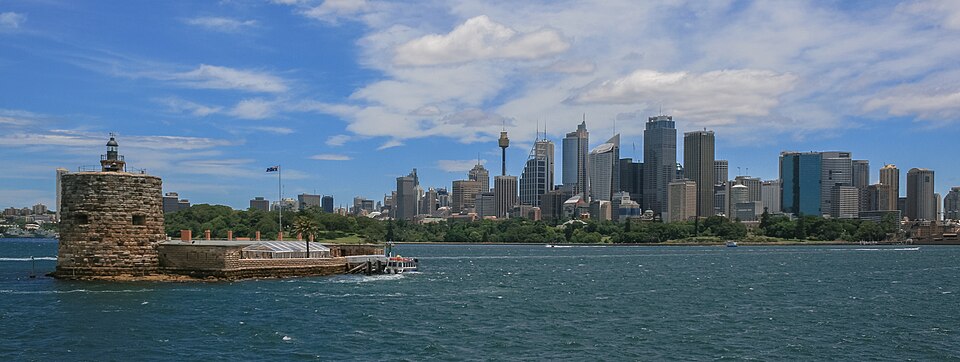
See that tiny island sitting out in the harbour? The one that looks almost quaint with its little stone tower? Its nickname is Pinchgut, and once you know why, you will never look at it the same way. In the early days of the colony, convicts who committed offences were rowed out to the island and left there on starvation rations -- bread and water, for days or weeks at a time. Pinching their guts. That was the mild version. In seventeen-ninety-six, a convict named Francis Morgan was hanged on the island, and then his body was left hanging in chains as a public warning to every other convict in the settlement. You could see the corpse swinging from the shoreline. The practice was called gibbeting, and it was meant to be the last thing you saw as you looked out at the harbour. The island was known to the Eora people as Mattewanye or Muddawahnyuh long before any of this. The convicts later quarried its sandstone to build Circular Quay -- so bits of this island are literally embedded in the ground you walked across to get here. The fort itself exists because of a diplomatic embarrassment. In eighteen thirty-nine, two American warships sailed into Sydney Harbour at night, completely uninvited, and circled the island. Nobody stopped them. The resulting panic about harbour defences eventually led to the Martello tower being built -- and here is a good detail -- it is the only Martello tower ever constructed in Australia and the very last one built anywhere in the British Empire. Today the cannon fires at one pm every day. If you hear a boom echoing across the water, that is Pinchgut reminding you what time it is.
Garrison Church (Holy Trinity)
Lower Fort St, Millers Point, 2000, Australia
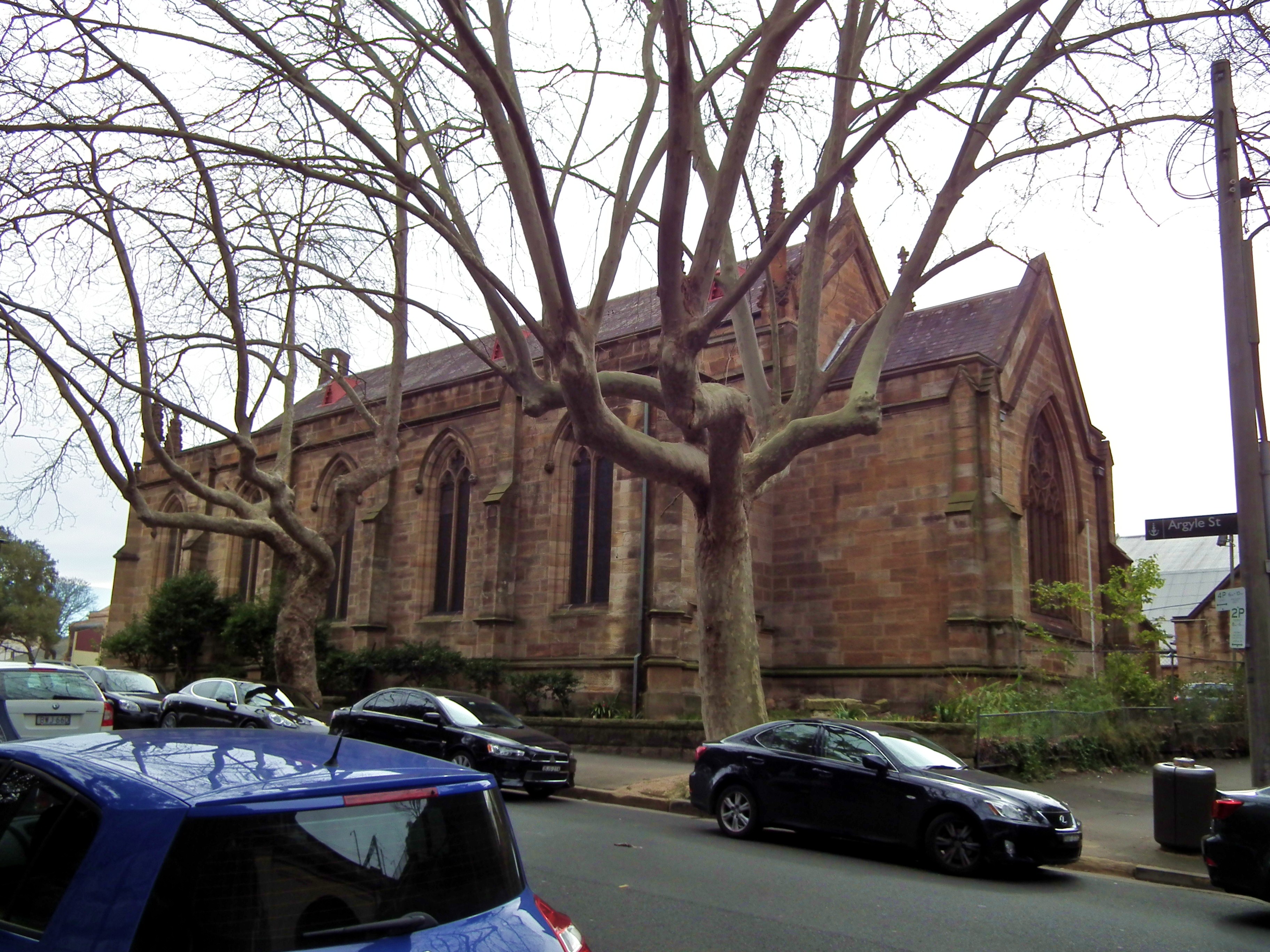
The first military church built in colonial Australia is sitting one block from the pub with the kidnapping tunnel. That is The Rocks for you -- everything is layered on top of everything else, and you cannot walk ten metres without tripping over another piece of Australian history. Holy Trinity Church, known as the Garrison Church, was the official place of worship for British imperial troops stationed at the nearby Dawes Point Battery. The foundation stone was laid by Bishop Broughton on the twenty-third of June, eighteen forty. The architect Henry Ginn drew up the original design, and Edmund Blacket -- who also designed the University of Sydney's Great Hall -- later expanded it. Originally the church held two hundred and fifty people, which tells you how small the military garrison was in the early colony. By eighteen fifty-five, the growing military presence required an expansion to six hundred seats. British imperial troops were finally withdrawn from Sydney in eighteen-seventy, but the church kept serving the community. The interior is worth stepping inside for. The memorials and plaques on the walls read like a timeline of every conflict Australia has been involved in. You will find tributes to soldiers from the Maori Wars, the Sudan, the Boer War, both World Wars, Korea, and Vietnam. Each plaque represents a congregation that sent its young people to war and, in many cases, did not get them all back. The sandstone exterior has the warm golden tone that is characteristic of Sydney's oldest buildings. In the late afternoon light, with the Harbour Bridge towering behind it, the church looks almost absurdly picturesque. It is a quiet building in a noisy neighbourhood, and it has been watching soldiers come and go for nearly two hundred years.
GPO Clock Tower (Martin Place)
1 Martin Pl, Sydney, 2000, Australia
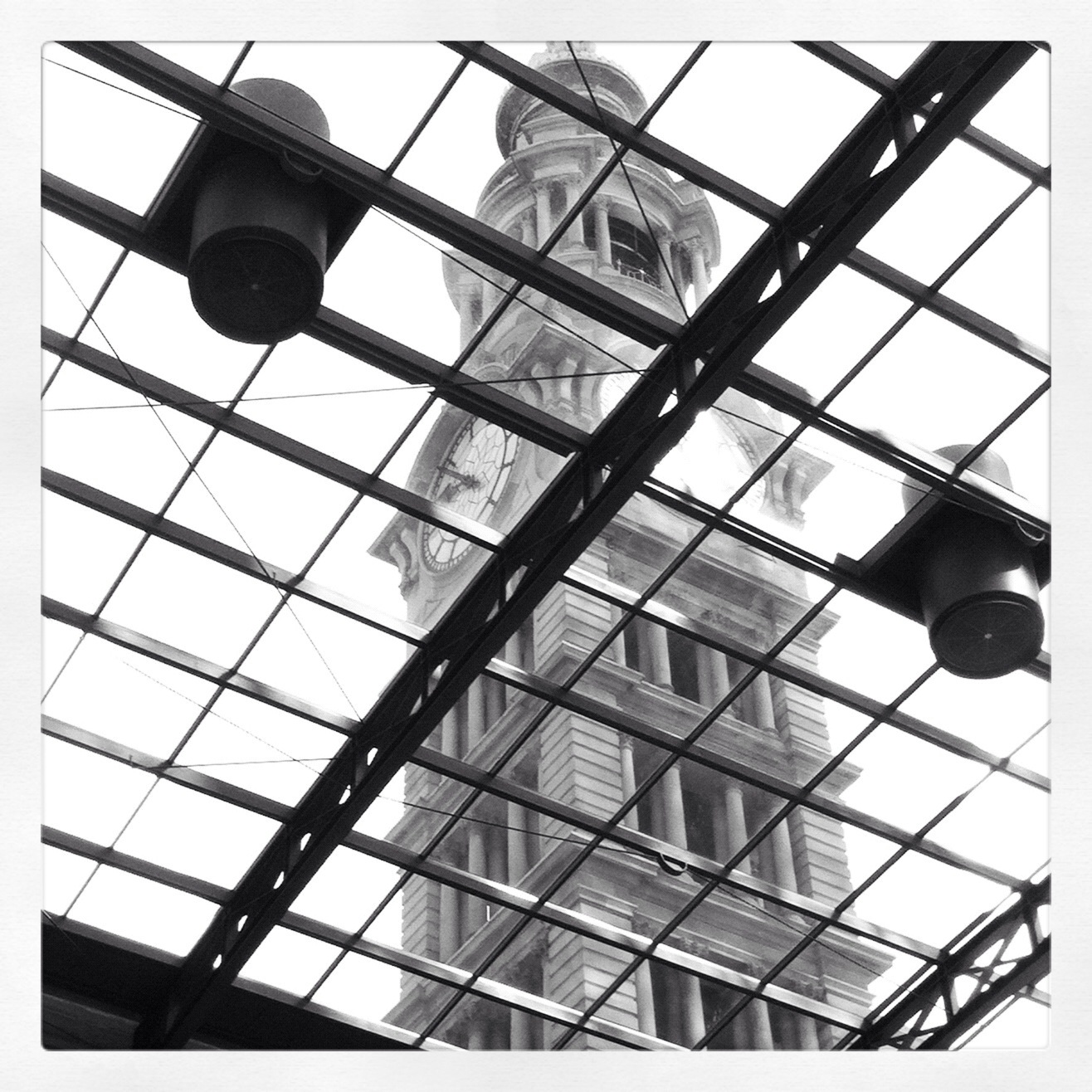
From eighteen ninety-one to nineteen thirty-nine, the clock tower on the General Post Office was the tallest point in Sydney at eighty-three metres. Every worker in the city could glance up and check the time. They called it the working man's watch. Then in nineteen forty-two, they tore it down. Japan had entered the war, Japanese submarines had attacked Sydney Harbour, and the military decided the tallest structure in the city centre was too visible a target for aerial bombing. So they dismantled the clock tower -- the single most recognisable feature of the Sydney skyline for fifty years -- and the city went without it for twenty-two years. Twenty-two years. They did not rebuild it until nineteen sixty-four. The tower also had a second function most people did not know about. Mechanically operated colour-coded flags were displayed from the tower to telegraph weather messages from the South Coast. So if you were in the city and wanted to know the weather, you looked up at the flags on the post office. The great tenor bell inside weighed almost five tonnes. Martin Place itself is worth knowing about. It was originally called Moore Street and was a narrow, muddy road. The transformation into a wide civic plaza happened gradually over a century. The Cenotaph war memorial, which you can see in the middle of the plaza, was unveiled in nineteen twenty-nine. An ANZAC Day dawn service has been held here every year since. The GPO building is now a hotel and retail space, but the clock tower is back where it belongs, rebuilt to the original design. Look up at it and remember: for two decades during and after the war, this tower simply was not there. Sydney cut the top off its most beloved building because it was afraid of what might come from the sky.
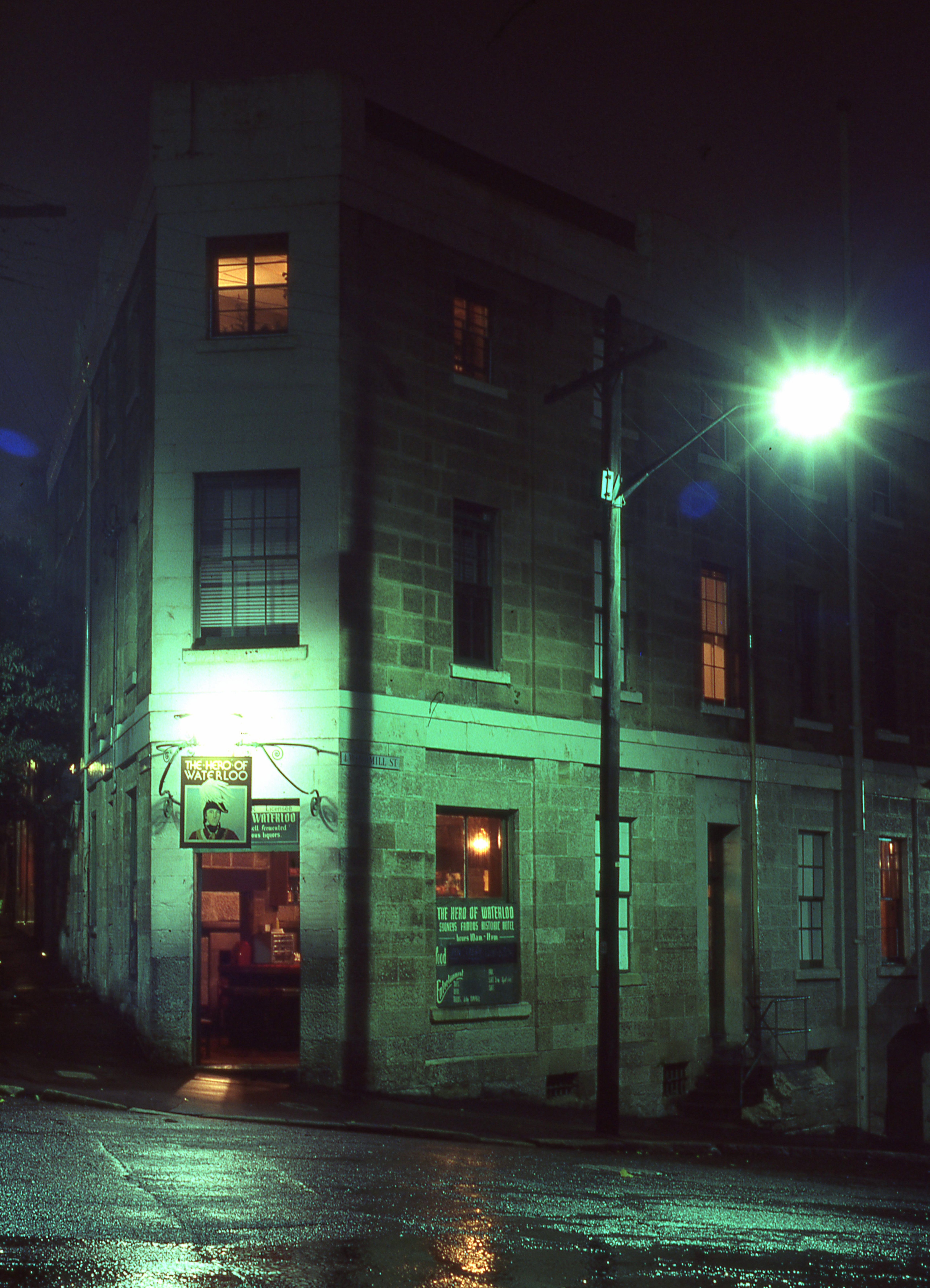
Hero of Waterloo Hotel
81 Lower Fort St, Millers Point, 2000, Australia
You are standing in front of one of the oldest pubs in Sydney, and it has a trapdoor problem. Built from sandstone quarried by convicts from the nearby Argyle Cut, the Hero of Waterloo has been pouring drinks continuously since eighteen forty-five. That is over one hundred and eighty years of uninterrupted service. The stonemason was a convict-turned-builder named George Paton, and he finished the job in eighteen forty-three to forty-four. Now, about those trapdoors. A tunnel runs from the cellar of this pub down to the harbour. The story -- and it is well documented enough to be more than legend -- is that the tunnel was used for two purposes. First, rum smuggling: getting barrels past the customs officers. Second, something called press-ganging. Sailors or drunk patrons would be dropped through trapdoors in the floor, knocked out or too inebriated to resist, dragged through the tunnel to a waiting ship, and forced into naval or merchant service. You came for a pint and woke up on a boat to China. The tunnel was filled in during the nineteen-sixties, but you can still see the entrance in the cellar, along with iron shackles bolted to the stone walls. The pub runs tours of the basement. Go on one. There is also a ghost. The spirit of Anne Kirkman allegedly wanders the corridors. The story is that her husband pushed her down the pub's staircase and she has been haunting the place ever since. Staff report cold spots and unexplained footsteps on the upper floors, particularly late at night after last call. The pub is still excellent. The sandstone walls are original, the fireplaces work, and on weekends there is live Irish music. Just watch where you step near the cellar.
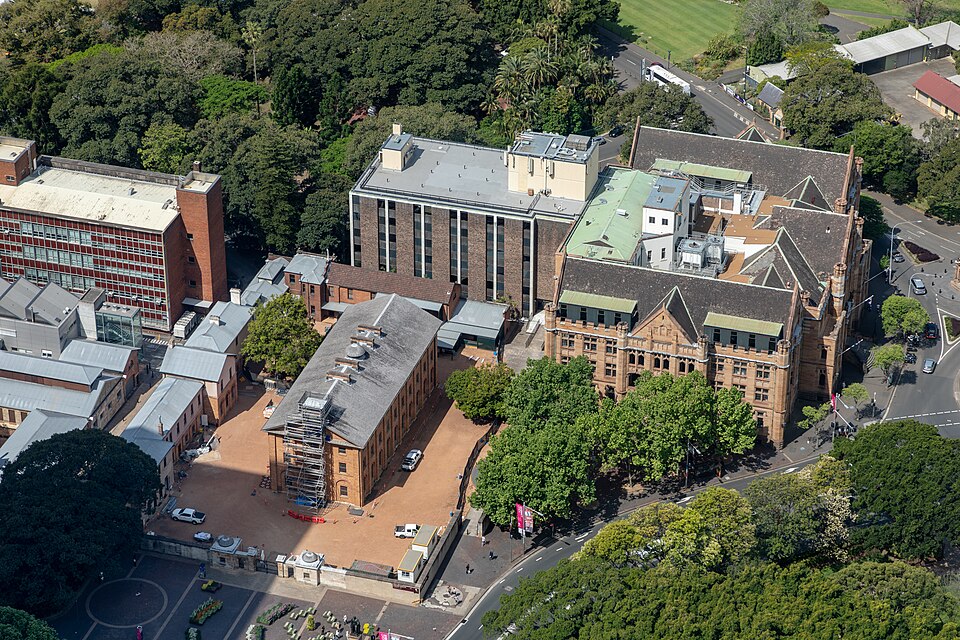
Hyde Park Barracks
Macquarie St, Circular Quay, Sydney, 2000, Australia
The architect who designed this building was a convicted forger. Francis Greenway was transported to the colony for the crime of forging a financial document, and when he arrived, Governor Macquarie saw his talent and put him to work. Greenway designed this barracks so well that Macquarie granted him a full pardon. He literally designed his way out of a prison sentence. His face ended up on the Australian ten-dollar note -- the only convicted criminal to appear on the country's currency. By eighteen-forty, thirteen hundred convicts slept here. At one point, convicts made up almost eighty percent of the colony's entire population. Think about that ratio. This was not a prison in a free society -- it was more like a forced labour camp that happened to have a few free people managing it. The building is now a UNESCO World Heritage Site as part of the Australian Convict Sites listing, which recognises the transportation system as unprecedented in world history. Roughly one hundred and sixty-two thousand convicts were shipped to Australia between seventeen-eighty-eight and eighteen-sixty-eight. This was the largest forced migration in modern history outside the slave trade. But here is the detail that will stay with you. For two hundred years, rats nested in the roof cavity above the convict sleeping quarters. They dragged scraps of fabric, buttons, clay pipes, and personal items belonging to convicts up into the ceiling. When archaeologists finally opened the roof space, they found an accidental archive -- hundreds of fragments of convict life preserved by vermin. Rat curators. The rodents did what no museum could have done, building a collection of ordinary objects from people history forgot. The rat-collected artefacts are on display inside. They are genuinely moving.
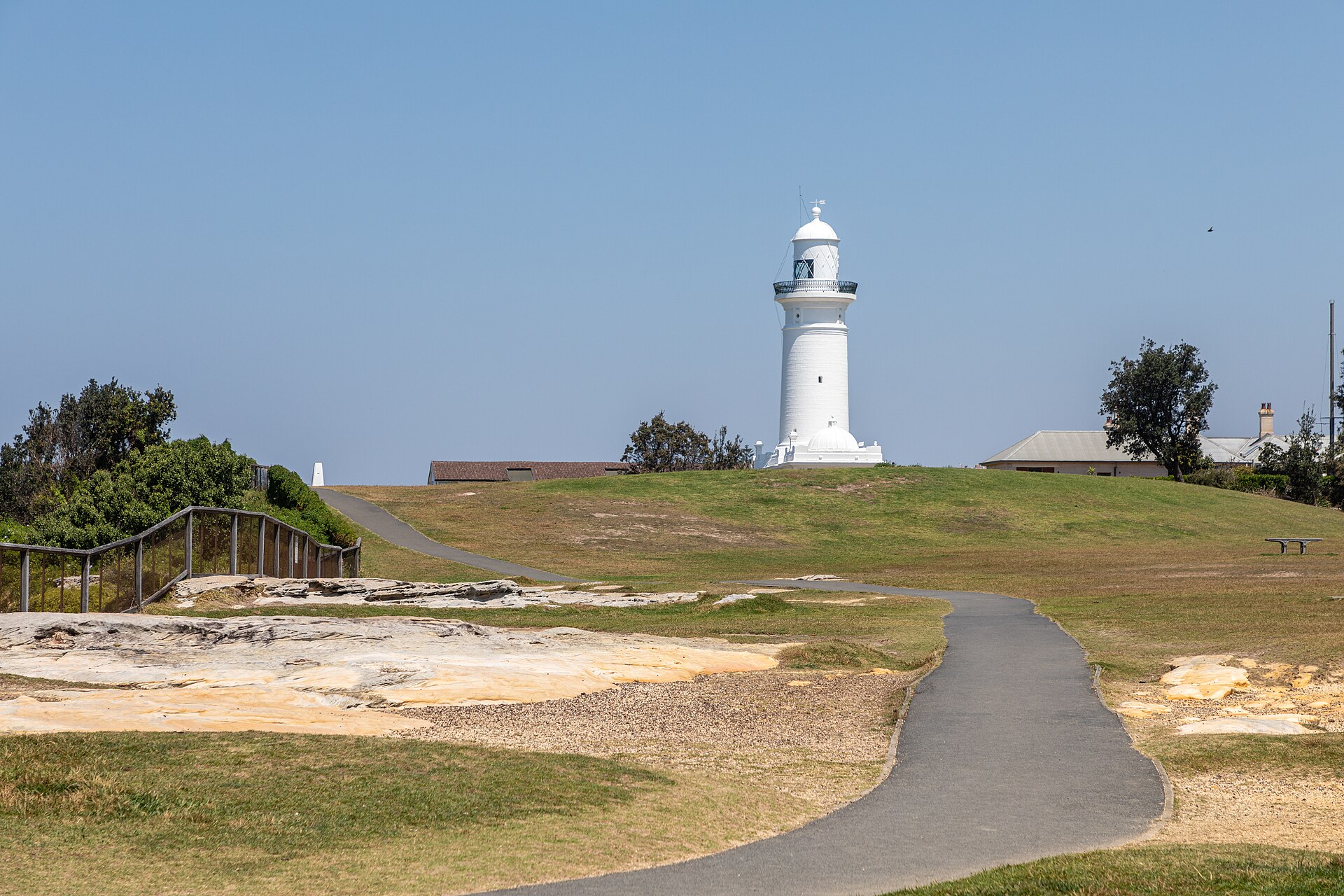
Macquarie Lighthouse
Old South Head Rd, Rose Bay, 2030, Australia
Australia's first lighthouse, and it was designed by the same convicted forger who built Hyde Park Barracks. Francis Greenway really did design his way through the colony's major projects. Governor Macquarie ordered the lighthouse built in eighteen-sixteen, and Greenway drew up the plans while still technically a convict. The man could not stop building things. Here is the problem. The sandstone was quarried on-site, and it turned out to be terrible stone. So soft and crumbly that the lighthouse literally fell apart bit by bit over the next fifty years. They kept patching it, propping it up, slapping on more mortar, but it was like trying to repair a sandcastle. Eventually they gave up and built the replacement you see now in eighteen eighty-three. The current tower is a near-exact copy of Greenway's original design -- they just used better stone this time. The original lantern used whale oil lamps and mirrors to throw a beam visible thirty-five kilometres out to sea. But the lighthouse served a dual purpose beyond navigation. When a supply ship appeared on the horizon, the lighthouse keeper would signal the colony. In the early years of settlement, supply ships were the difference between survival and starvation. Seeing the lighthouse signal must have been one of the most relieving sights in the colony. The lighthouse was automated in nineteen seventy-six, and the last staff left in nineteen eighty-nine. It remains fully operational under the Australian Maritime Safety Authority -- still guiding ships into Sydney Harbour after more than two hundred years of continuous operation on this site. The headland views are stunning. You can see right across the harbour mouth to North Head, and on a clear day the Pacific stretches out forever. Hardly anyone comes out here compared to the harbour foreshore. It is a quiet spot with a long memory.
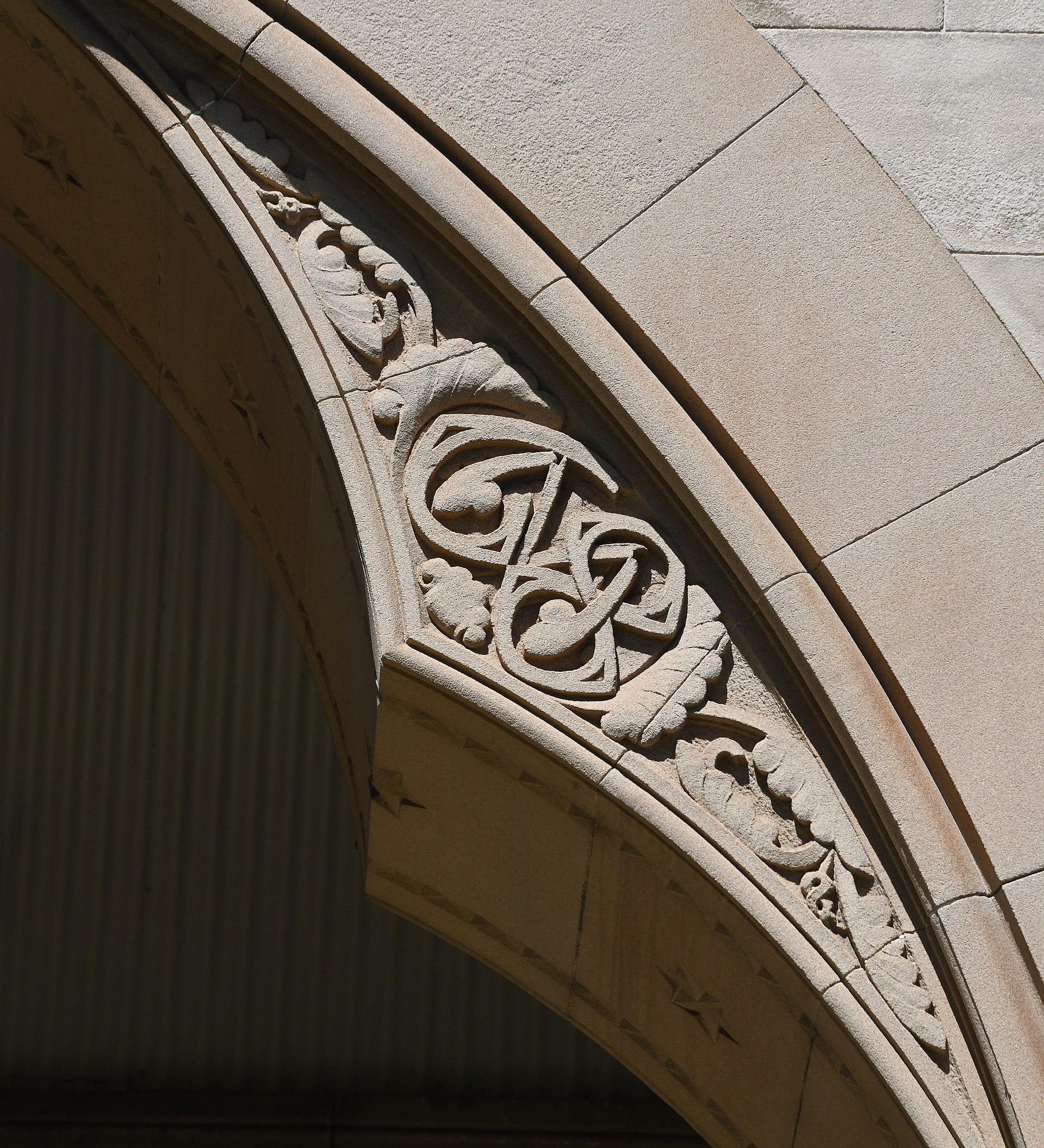
Mortuary Station
49-53 Regent St, Central Park, Chippendale, 2008, Australia
Sydney built a train station exclusively for dead people, and they made it gorgeous. This ornate Gothic sandstone building was the departure lounge for funeral trains -- from eighteen sixty-nine to nineteen twenty-nine, coffins were loaded here and transported by rail to Rookwood Cemetery, about sixteen kilometres west. Trains departed at nine-thirty in the morning and two-thirty in the afternoon, daily. You booked your dead loved one a ticket, accompanied the coffin on the train, attended the burial, and caught the train home. The architect James Barnet designed it with ecclesiastical detailing that would make a cathedral jealous -- cherubs, angels, gargoyles, all carved from Pyrmont sandstone. It is the only surviving example of Victorian railway funerary architecture in Australia. Barnet clearly believed that if you were going to run a train service for corpses, you should do it with style. Here is the protocol that gets you. As the funeral train approached each station along the route, the driver would toll his bell and slow down. Men standing on the platform and railway employees would remove their hats and bow their heads until the train passed. Every single trip. Twice a day. For sixty years. An entire city doffing its hats to the dead. The receiving station at the other end -- the one at Rookwood Cemetery -- no longer exists in its original location. In the nineteen-fifties, it was dismantled brick by brick and rebuilt as All Saints Church in Ainslie, Canberra. A train station for the dead was literally resurrected as a church. You could not make that up. This building now sits somewhat incongruously on Regent Street in Chippendale, surrounded by university buildings and cafes. Most people walk past without a second glance. Now you know what it is.
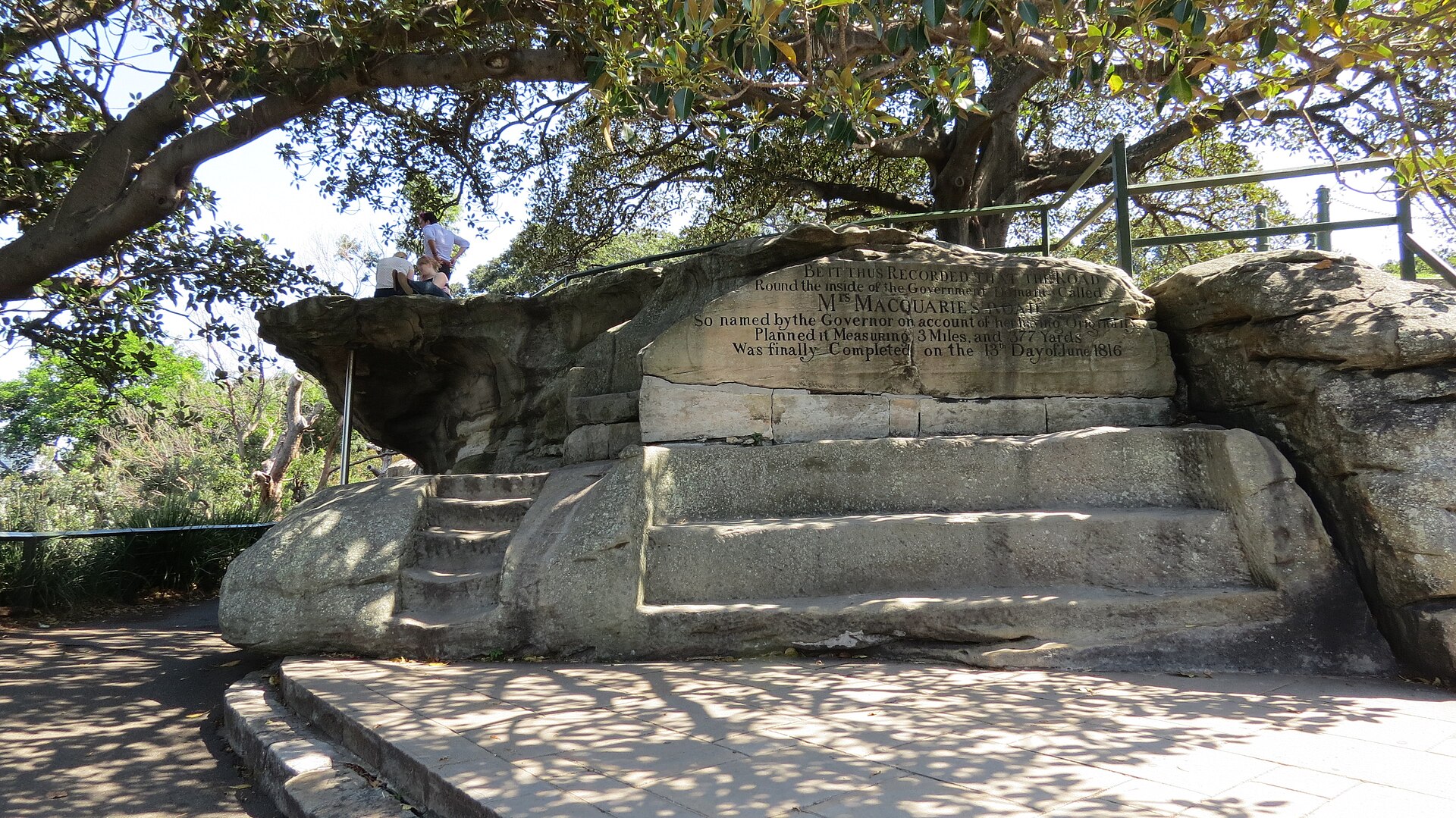
Mrs Macquarie's Chair
Mrs Macquaries Road, Sydney CBD, Sydney, 2000, Australia
You are sitting on -- or standing next to -- a sandstone bench that convicts carved by hand in eighteen-ten for the governor's wife. Elizabeth Macquarie used to come here to watch for ships arriving from Britain. Imagine the loneliness of that. Sitting on a rock at the edge of the world, watching an empty horizon for months, waiting for a sail that might carry a letter from home. The inscription on the rock dates the bench's completion to the thirteenth of June, eighteen-sixteen. But this place is much older than the British. The peninsula was known to the Gadigal people as Yurong Point. Aboriginal communities lived around here and fished these waters for thousands of years. At least two Aboriginal archaeological sites survive nearby, found by an amateur archaeologist as recently as the nineteen-nineties. The oldest continuous culture on Earth was using this headland long before anyone carved a bench into it. Here is where the story turns. In January nineteen eighty-eight, as Australia celebrated the bicentennial of European settlement with fireworks and tall ships, Aboriginal protesters established a Tent Embassy right here at Mrs Macquarie's Chair. Two hundred years after the First Fleet arrived, First Nations people chose this exact spot -- a colonial wife's lookout -- to protest two centuries of dispossession. Both groups watching the same harbour from the same stone, for completely different reasons. The view from here is probably the most photographed angle in Sydney -- the Opera House on one side, the Harbour Bridge on the other, water in between. But what makes this spot genuinely powerful is the layering. Sixty thousand years of Aboriginal habitation, a homesick colonial wife, and a bicentennial protest, all on the same piece of sandstone.
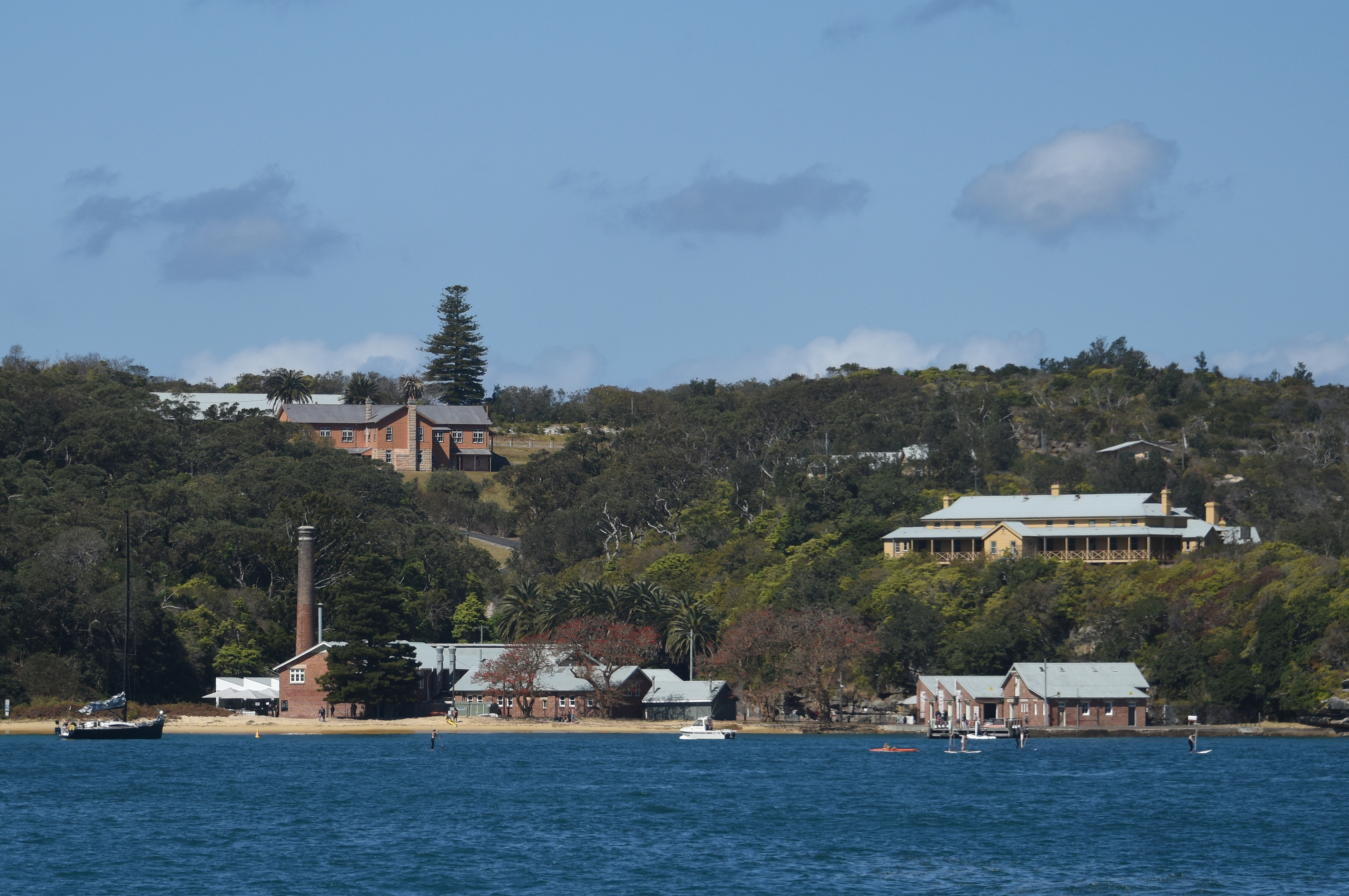
North Head Quarantine Station
1 North Head Scenic Dr, Manly, 2095, Australia
For over one hundred and fifty years, every migrant ship entering Sydney Harbour had to stop at this headland before anyone could set foot on Australian soil. If you had smallpox, bubonic plague, typhus, Spanish flu, or anything else contagious, this is where you stayed. Some of those people never left. Over five hundred people died here. The station operated from the eighteen-thirties to nineteen eighty-four. Think about that span. It saw the tail end of convict transportation, the gold rush immigration waves, every major pandemic of the nineteenth and twentieth centuries, two world wars, and the post-war migration boom. Every wave of newcomers to Australia passed through the same gates. Down near the wharf, the sandstone cliffs are covered in over one thousand inscriptions -- names, dates, and ship names carved by quarantined passengers and sailors from the eighteen-hundreds onward. The carvings are in English, Greek, Arabic, Russian, Finnish, and Chinese. Each one was left by someone stuck on this headland, not knowing how long they would be here or whether they would be allowed in. Or whether they would survive. Here is a detail that says everything about who we are. Quarantined passengers were segregated by the class of berth on their ship. First-class passengers were given comfortable cottages and dined on fine china. Third-class passengers got dormitories and basic rations. Even in quarantine, even when facing the same diseases, the class system held. The station was repurposed to house Vietnamese refugees in nineteen seventy-five and Cyclone Tracy victims from Darwin in nineteen seventy-six. It finally closed in nineteen eighty-four and is now a hotel where you can sleep in the same buildings where people once waited to find out if they would live or die. The ghost tours are reportedly excellent.
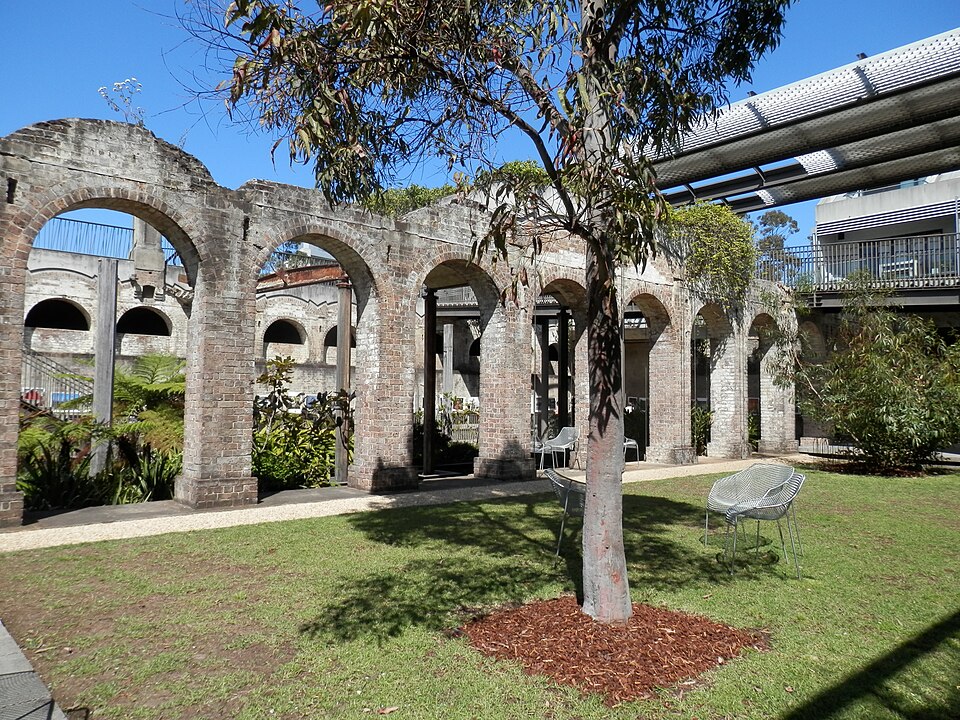
Paddington Reservoir Gardens
255a Oxford Street, Paddington NSW 2021
This place looks like you have stumbled into ancient Roman ruins, but it is actually a water reservoir from the eighteen-sixties that collapsed, sat derelict for two decades, and was reborn as a sunken garden. The brick columns and timber beams you see are original infrastructure -- this is what Sydney's Victorian water system looked like from the inside. The reservoir was built between eighteen sixty-four and eighteen sixty-six as part of Sydney's third water supply system, receiving water pumped all the way from Lord's Dam at Botany Bay. It was decommissioned in eighteen ninety-nine -- after just thirty-five years of use -- and then had a bizarre second life as a garage and mechanical workshop for decades. In nineteen-ninety, the roof collapsed. The whole thing sat as a fenced-off ruin for nearly twenty years, slowly being reclaimed by weeds and graffiti artists. Then in two thousand and nine, it was transformed into what you see now. The designers kept the original brick pillars and timber structure, let plants cascade through the gaps, and created a sunken garden that has been compared to the Baths of Caracalla in Rome and the Hanging Gardens of Babylon. That might be a stretch. But it genuinely does feel like stepping into another era. Here is a nice detail: the eastern chamber still has preserved graffiti from its years of abandonment. Rather than cleaning it off, the designers kept it as part of the space's history. The layers are the whole point -- Victorian engineering, industrial decay, street art, and lush new growth all coexisting in one sunken room. The gardens won the Australian Award for Urban Design in two thousand and nine. Most tourists on Oxford Street walk right over it without knowing it is there, one level below the footpath.
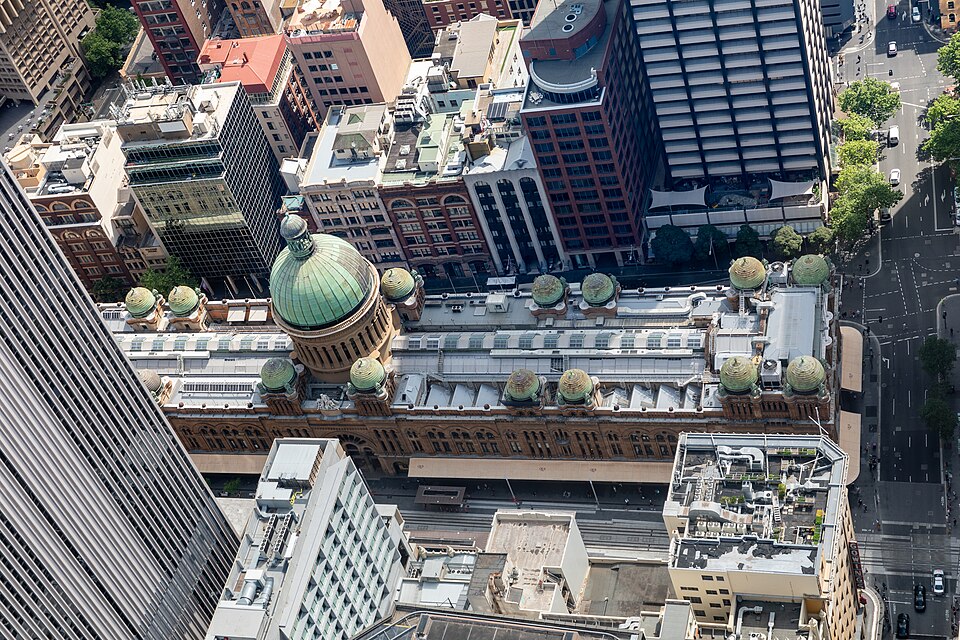
Queen Victoria Building
455 George Street, Sydney NSW 2000
There is a sealed letter inside this building that nobody alive today will ever read. In nineteen eighty-six, Queen Elizabeth the Second placed a letter inside the QVB, addressed simply to the right person on the right occasion. It is to be opened in two thousand and eighty-five by the Lord Mayor of Sydney. Nobody knows what it says. You are looking at a sixty-year time capsule from a dead monarch. The building itself has an absurd backstory. The council wanted to build an upmarket shopping palace, but they were legally required to build a public market. So they built a public market that was secretly a shopping palace -- all romanesque arches, stained glass, and copper domes. The loophole made architectural history. On the first floor, a Chinese-Australian businessman named Mei Quong Tart ran a tearoom in the eighteen-nineties that became quietly revolutionary. He installed the city's first female public toilets, and the tearoom became a regular meeting place for Sydney's suffragette movement. Women's rights were partially organised from a tea shop inside a building named after a queen. The basement once had a hydraulic lift powerful enough to lower horses and drays from street level down to the fruit and vegetable markets. And as late as nineteen sixty-nine -- nineteen sixty-nine -- a mayoral candidate was still campaigning on a promise to demolish this building, calling it a firetrap and an eyesore. The eighty-six-million-dollar restoration did not happen until the mid-eighties. You are standing in a building that very nearly became a car park. Look up at the central dome and the stained glass. Then remember someone looked at all of this and said knock it down.
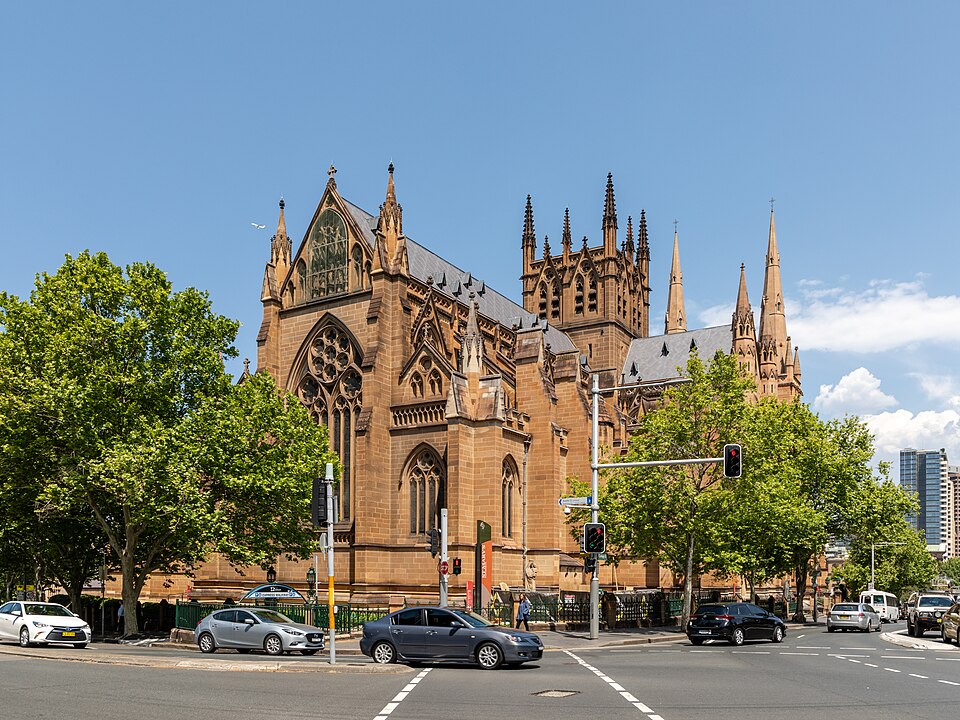
St Mary's Cathedral
Saint Mary's Rd, St James, Sydney, 2000, Australia
Most people walk past St Mary's Cathedral and think nice church, keep moving. That is a mistake. Because beneath your feet, in the crypt, is one of the finest mosaic floors in the world, and almost nobody goes down to see it. The mosaic is a Celtic cross forty-two metres long and twenty-one metres wide, inspired by the illuminated manuscripts of the Book of Kells. It was created by the Melocco Brothers in nineteen thirty-four, and its intricacy is staggering -- thousands of tiny tiles forming interlocking patterns that look like they belong in an ancient Irish monastery, not under a Sydney church. The crypt also holds the remains of the deceased Archbishops of Sydney, including Cardinal Moran and Archbishop Polding, so you are walking over both extraordinary art and dead clergy. Above ground, the cathedral has its own strange timeline. The original church on this site was destroyed by fire in eighteen sixty-five. The replacement you see now was designed in a gothic revival style and took decades to build -- but the south spires were not completed until the year two thousand. Over a hundred years after construction began, they finally finished the towers. The design always included them. They just ran out of money. The sandstone was quarried from Pyrmont, the same source used for much of colonial Sydney. On a sunny afternoon, the stone glows a warm golden colour that makes the whole building look like it is lit from inside. Stand on the eastern side of Hyde Park and look back at the facade. The twin spires are seventy-five metres tall and look like they have been here forever, but they are younger than most people reading this. Go downstairs. See the mosaic. It is free, it is breathtaking, and the crypt is almost always empty.
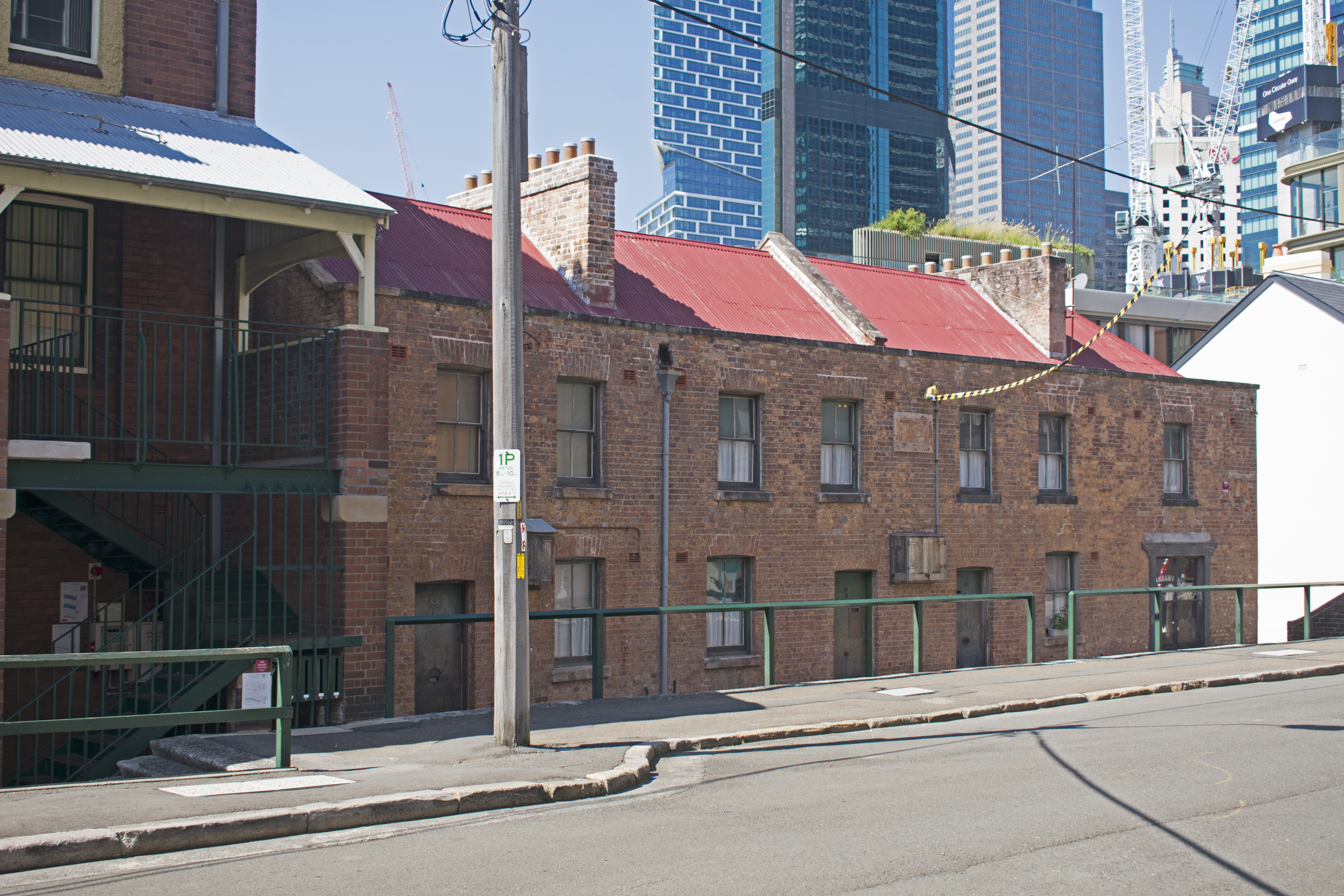
Susannah Place Museum
58-64 Gloucester St, Circular Quay, The Rocks, 2000, Australia
Four tiny terrace houses on a steep Rocks laneway, and they are the only place in Sydney where you can see exactly how working-class immigrants actually lived from eighteen forty-four to the nineteen-nineties. Not how the rich lived. Not how the powerful lived. How ordinary people lived -- the Irish labourers, Greek shopkeepers, Norwegian sailors, and factory workers who made up the real population of this city. The row was built in eighteen forty-four by an Irish immigrant named Edward Riley. He named the terrace after his niece Susannah -- except recent research has revealed that Susannah was actually the illegitimate daughter of Riley's wife. The family secret is baked right into the name above the door. Over one hundred and fifty years, more than a hundred families cycled through these four houses. They survived slum clearances. They survived the bubonic plague demolitions of nineteen hundred, when the government tore down thousands of buildings in The Rocks. They survived the bridge construction that wiped out whole streets. They survived every wave of gentrification. The terrace houses just kept standing, kept being lived in, kept accumulating layers of wallpaper and kitchen grease and family drama. Number sixty has been restored to its eighteen-forties condition. Number sixty-two looks as it did in the nineteen-seventies. The recreated nineteen-fifteen corner shop is still intact. Walking through the four houses is like time-travelling through Sydney's working class across a century and a half. These are small, cramped, cold houses with tiny backyards, outdoor baths, and the occasional rat. They are also the most honest piece of Sydney history you will find. No grand narrative, no colonial hero worship. Just the daily reality of ordinary lives in an extraordinary city.
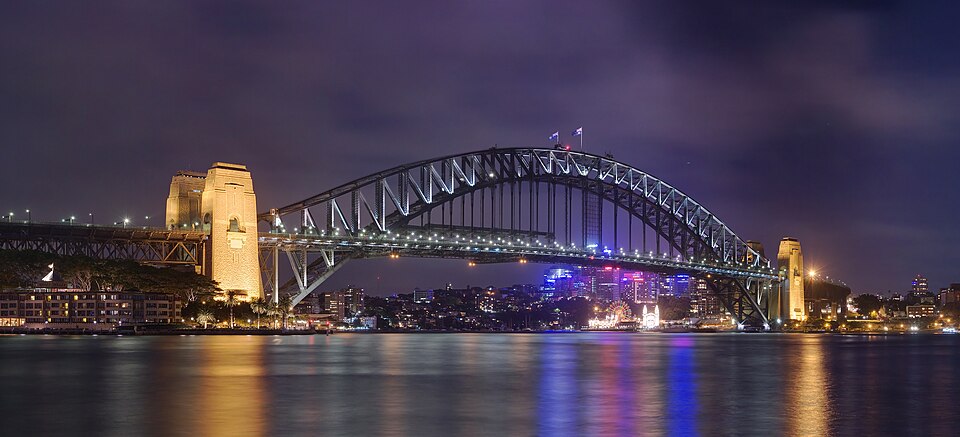
Sydney Harbour Bridge
Sydney Harbour Bridge, Sydney NSW 2060
Look at those four massive granite pylons at each corner of the bridge. They look absolutely essential, right? Structural, load-bearing, holding the whole thing up. They do nothing. Zero structural load. The arch handles everything. The pylons were added because engineers worried the public would not feel safe crossing a bridge held up by what looks like thin air. They are the world's most expensive security blankets. The opening ceremony in nineteen thirty-two was chaos. Three hundred thousand people showed up. Premier Jack Lang stepped forward to cut the ribbon, and before he could get his scissors out, a man named Francis De Groot -- an Irish-born member of an ultra-right-wing paramilitary group called the New Guard -- rode a borrowed horse out of the crowd and slashed the ribbon with his cavalry sword. He declared the bridge open in the name of the decent and respectable people of New South Wales. Police dragged him away. He was fined five pounds. They had to retie the ribbon so the Premier could cut it properly. Sixteen men died during the eight years of construction. Almost six million rivets hold the bridge together, each one driven by hand by a four-person team. And the grey paint? Not a design choice. Grey was the only colour available in sufficient quantities. They have been repainting it ever since -- the job takes roughly ten years from end to end, and by the time they finish, the other end needs doing again. Before he became Crocodile Dundee, Paul Hogan was one of the painters up on this bridge. And a worker named Vincent Kelly reportedly survived a fall from the roadway by dropping his heavy toolbelt into the water first to break the surface tension before he hit. Whether the physics checks out is debatable, but the story has been told on this bridge for ninety years.
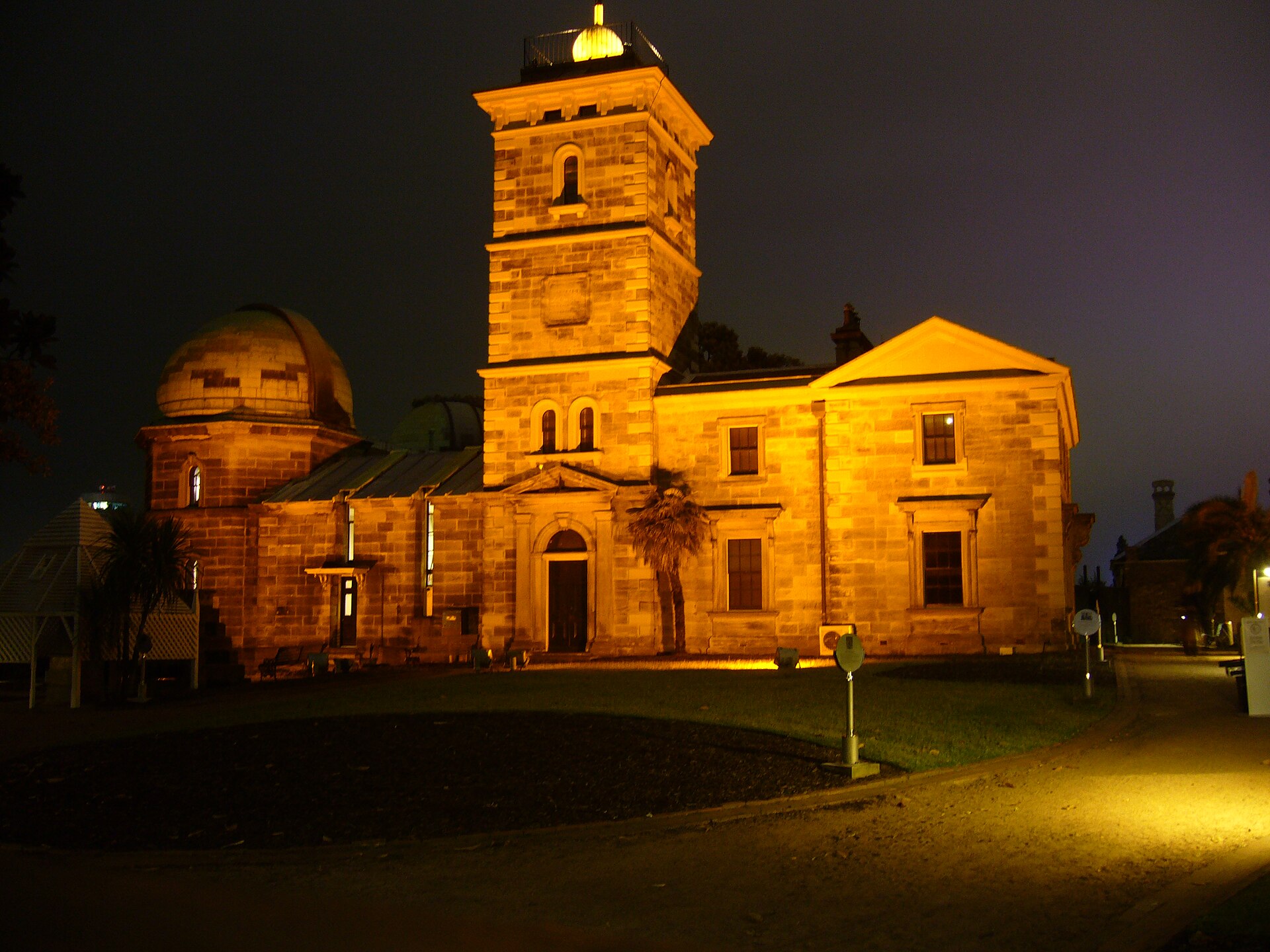
Sydney Observatory
1003 Upper Fort Street, Millers Point NSW 2000
Aboriginal Australians had sophisticated astronomical knowledge for at least sixty-five thousand years before this observatory was built. Think about that number. Sixty-five thousand years of watching the same sky, tracking the same stars, encoding the movements into stories that were passed down with extraordinary precision across more generations than you can count. And this observatory now teaches both Western and First Nations astronomy side by side. The building dates from eighteen fifty-seven to eighteen fifty-nine, but astronomical observation at this hilltop goes back to the colony's founding. This is the same site where William Dawes -- the officer from Dawes Point -- set up his instruments in seventeen eighty-eight. It is one of Australia's oldest continuously used scientific sites. The observatory runs a programme called Cadi Eora Birrung, which means beneath the southern sky in the Gadigal language. It shares Dreaming stories about the night sky that predate European astronomy by a factor you can barely comprehend. Aboriginal star maps are older than Stonehenge by roughly ten times. The Emu in the Sky -- a dark-sky constellation defined by the dark patches in the Milky Way rather than the bright stars -- was being used to predict emu breeding seasons long before anyone in Europe had worked out that the Earth goes around the Sun. There is a time ball on top of the observatory that still drops at one pm every day. Before clocks were widespread, ships in the harbour would set their chronometers by watching for the ball to fall. The cannon at Fort Denison fires at the same time. So at one pm, the ball drops up here, the cannon booms out on the island, and for a moment the whole harbour is synchronised to a nineteenth-century timekeeping system. The views from Observatory Hill are also some of the best in Sydney. You can see the bridge, the harbour, and the city skyline all at once.
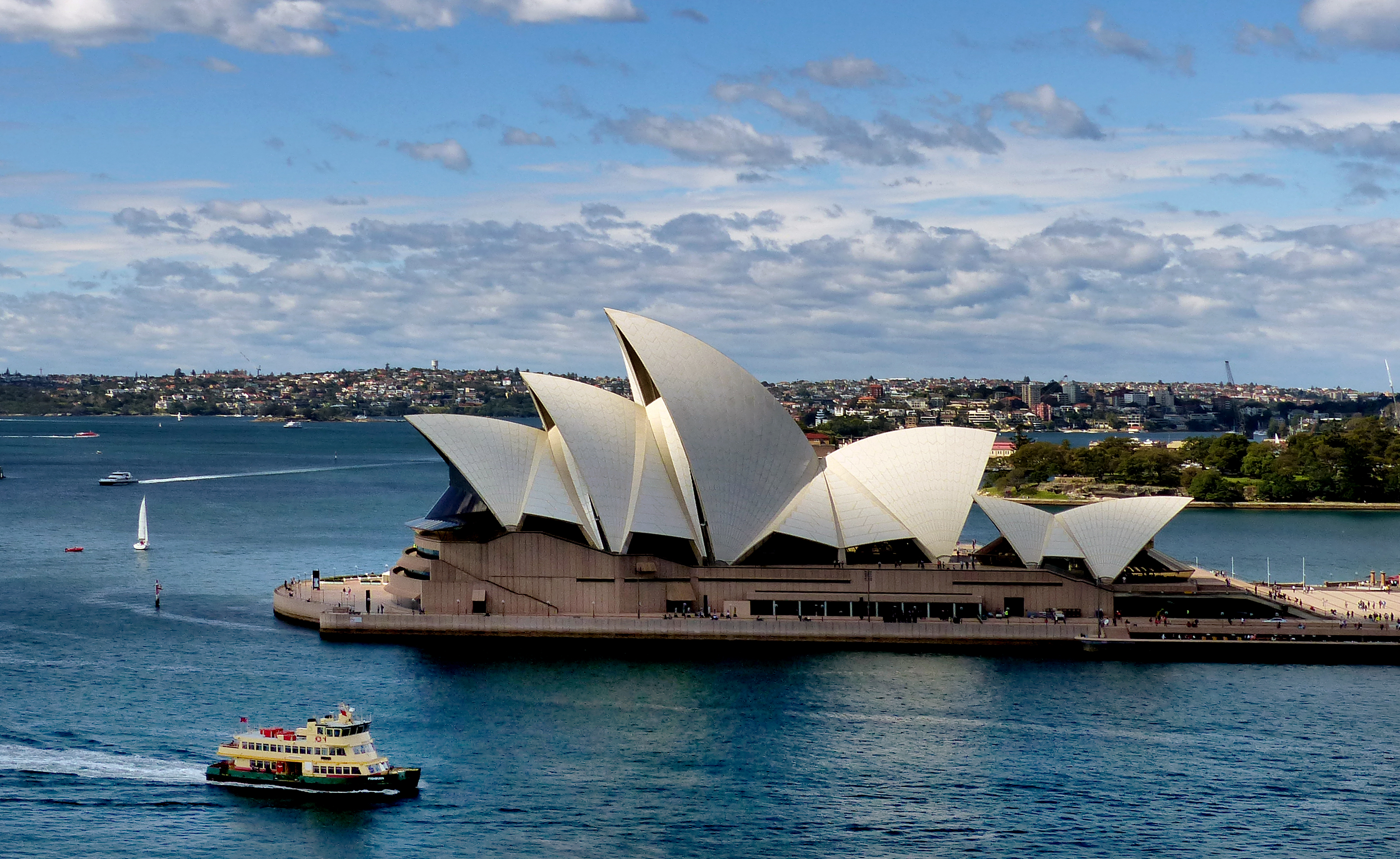
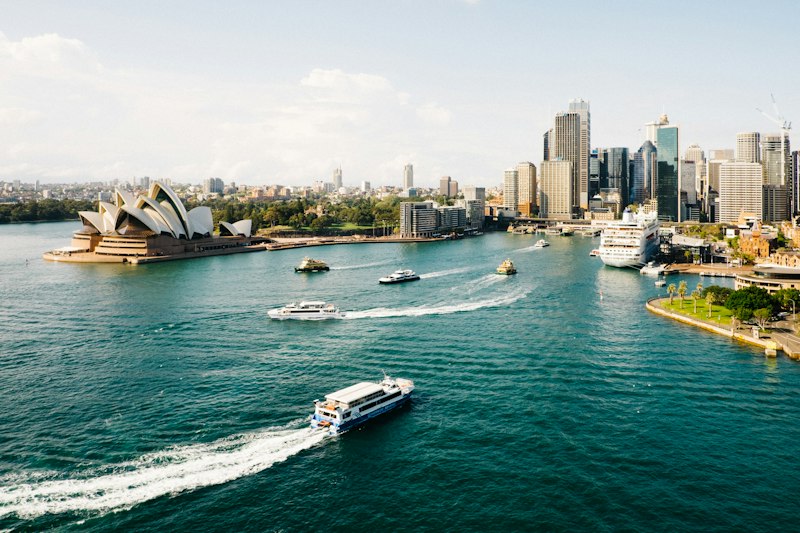
Sydney Opera House
Benelong Rd, Cremorne, 2090, Australia
You are looking at a building that almost never existed. When the international design competition closed in nineteen fifty-six, two hundred and twenty-three entries came in. A young Danish architect named Jorn Utzon submitted entry number two-eighteen -- twelve drawings, no model, no detailed plans. The judging panel passed it over. It was sitting in the reject pile when the legendary Finnish-American architect Eero Saarinen arrived late, pulled it out, and insisted it was the winner. One stubborn judge saved the whole thing. Now here is the part that really gets you. The site you are standing on is called Bennelong Point, but the Gadigal people knew it as Tubowgule. In seventeen-ninety, Governor Phillip built a small brick hut here for Woollarawarre Bennelong -- the first Aboriginal man known to have sailed to Europe and returned. Bennelong wrote a letter in seventeen-ninety-six that is now considered the first English text ever written by an Indigenous Australian. So this spot went from a single Aboriginal man's hut to the most recognisable building on the continent. The first person to perform here was not an opera singer. In nineteen-sixty, the American singer and civil rights activist Paul Robeson climbed the construction scaffolding during a lunch break and sang Ol' Man River to the workers. The building would not be finished for another thirteen years. Utzon himself never came back to see it completed. He left Australia in nineteen sixty-six after a bitter dispute with the government, and even after the Opera House was declared a World Heritage Site in two thousand and seven, he never returned. He died the following year. His son finished the interior renovations. Oh, and there is a safety net above the orchestra pit. They installed it after a live chicken walked off the stage during a production of Boris Godunov and landed on a cellist.
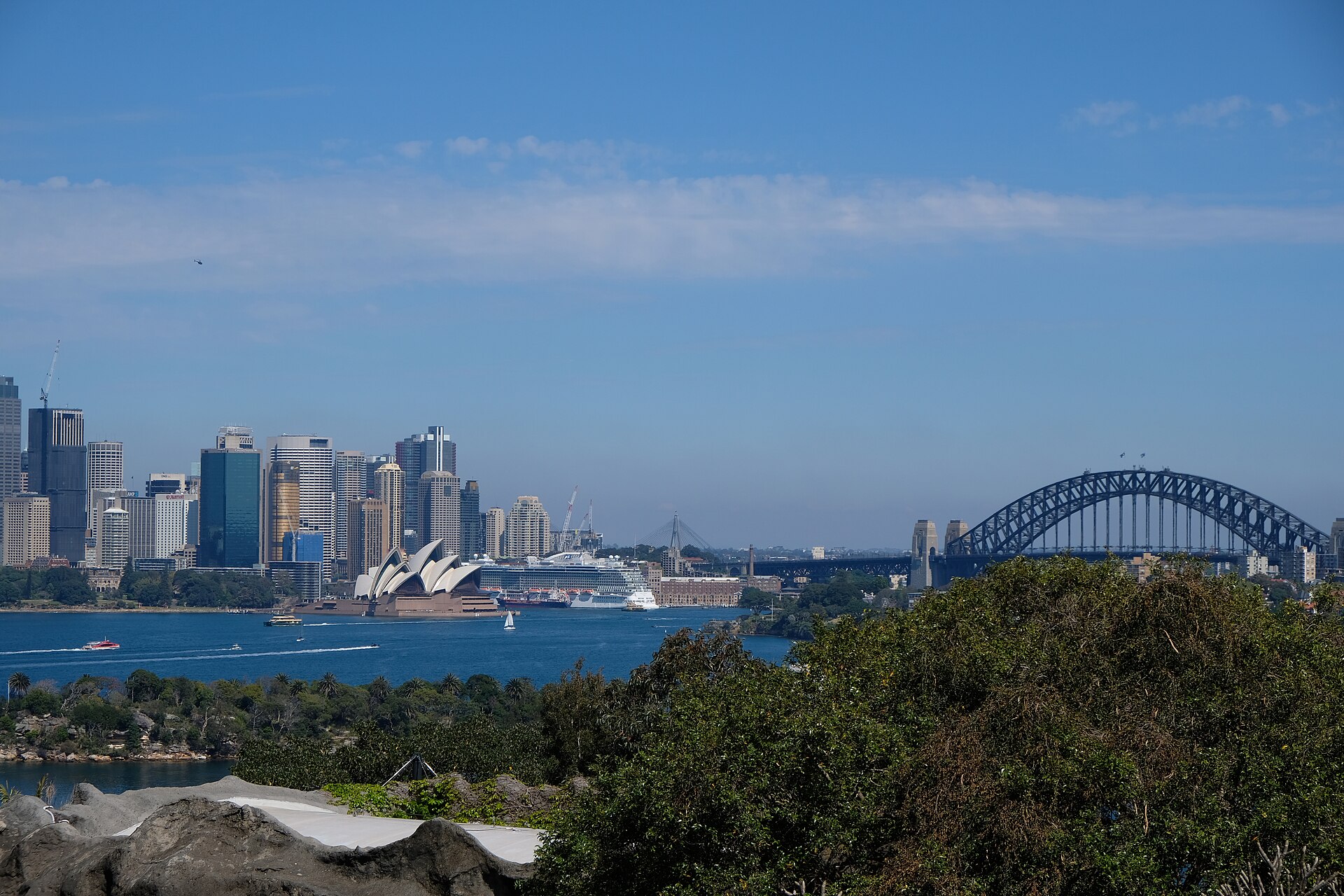
Taronga Zoo
Bradleys Head Rd, Mosman, 2088, Australia
Taronga Zoo has the most spectacular setting of any zoo in the world — 28 hectares on the northern shore of Sydney Harbour, where the giraffe enclosure overlooks the Opera House and the elephant habitat has views of the Harbour Bridge. The zoo houses over 4,000 animals representing 350 species, and the combination of native Australian wildlife (platypus, koalas, kangaroos, Tasmanian devils) and international species makes it the most comprehensive zoological collection in Australia. The ferry from Circular Quay to Taronga Wharf (a 12-minute ride) provides the most dramatic approach — the city skyline recedes behind you as the zoo's hillside appears ahead. The Sky Safari gondola from the wharf to the top of the hill provides aerial views of the harbour and the zoo before you begin the downhill walk through the exhibits. The design uses the steep terrain as an advantage — many enclosures are terraced into the hillside, providing natural elevation changes that create the illusion of encountering animals in landscape rather than confinement. The Australian wildlife section is the essential experience for visitors — hand-feeding kangaroos, seeing a platypus in its nocturnal enclosure, and the koala encounter (where you can photograph with a koala) provide the Australian animal experiences that the city centre can't offer. The zoo's conservation programmes (Tasmanian devil breeding, bilby recovery, marine turtle rehabilitation) give it scientific credibility beyond tourism.
The Baxter Inn
Basement, 152-156 Clarence Street, Sydney NSW 2000
One of the best whisky bars in the world is hiding in the basement of a building on Clarence Street, and the only way to find it is to know it exists. There is no sign. No street-facing entrance. You walk into a nondescript loading dock, find a service alley, and descend a fire-escape stairway into what looks like a nineteenth-century underground tavern. Inside, four hundred and fifty-six bottles line the back wall -- primarily single malt whiskies from Scotland, Japan, Australia, and everywhere else that takes grain and patience seriously. The bar is long, candlelit, and staffed by people who know more about whisky than is strictly healthy. It is consistently ranked among the top fifty bars in the world on international lists. The genius of the Baxter Inn is the contrast. You are in the middle of the Sydney CBD -- suits, tower blocks, chain coffee shops -- and then you walk through a loading dock and a fire door and you are in a candlelit cellar that feels like it has been here since the convict era. It has not. It opened in two thousand and eleven. But the deliberate absence of signage and the hidden entrance are the point. In a city that loves putting its name on everything, this place does the opposite. Sydney has a whole ecosystem of hidden bars like this. The Barber Shop on York Street is behind an unmarked door in the back of an actual working barbershop. Eau de Vie is behind a bookshelf. But the Baxter Inn is the one that started the trend, and the descent through the loading dock still feels like you are doing something you should not be doing. Go after work on a weekday. It fills up fast on weekends and the alley queue loses some of its charm when there are thirty people in it.
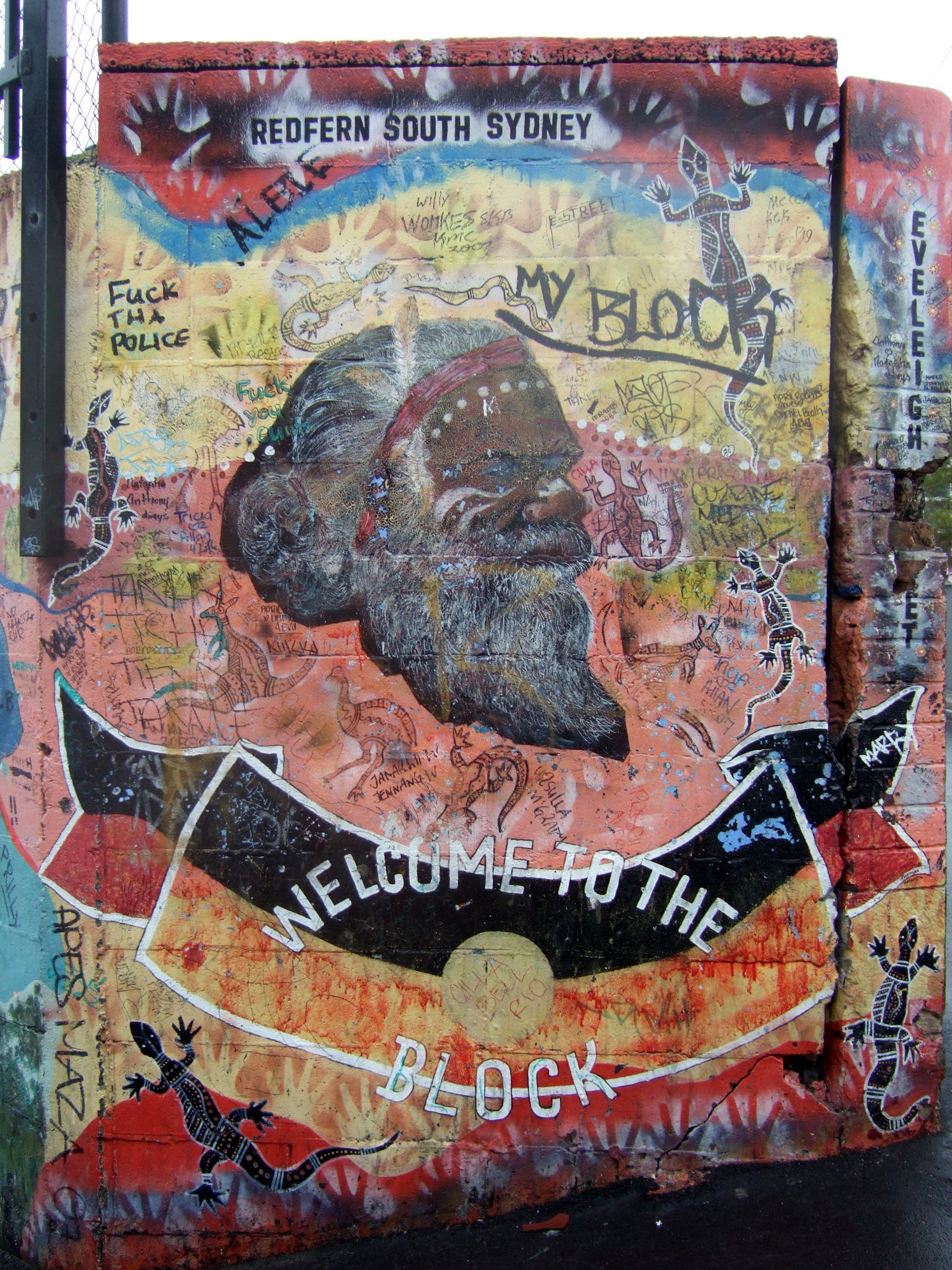
The Block, Redfern
Eveleigh St, Redfern, 2016, Australia
You are standing in the birthplace of Aboriginal civil rights in Australia. In the late nineteen-sixties and seventies, Redfern became home to over twenty thousand Aboriginal people who had been displaced from country reserves across New South Wales. It was the cheapest suburb in Sydney -- a run-down, neglected pocket of the inner city where only the poorest could afford to live. And it became the most important square block in Indigenous Australian history. In an extraordinary burst of energy across just three years, Aboriginal people in Redfern established institutions that had never existed before. Australia's first Aboriginal Legal Service, founded in nineteen seventy. The first Aboriginal Medical Service, nineteen seventy-one. A Black Theatre. An Aboriginal-run childcare centre called Murawina. And the Aboriginal Housing Company, which fought for and won ownership of The Block itself -- the first time Aboriginal people had been granted ownership of urban land anywhere in Australia. Think about the context. These were people who had been displaced from their traditional lands, dumped in the worst housing in the worst suburb, with no institutional support. And within a few years they built their own legal system, their own healthcare, their own housing organisation, and their own cultural spaces. From nothing. In the teeth of systemic racism and government neglect. The Block is bounded by Eveleigh, Caroline, Louis, and Vine Streets. It has changed enormously since those days -- redevelopment has been controversial and ongoing for decades, and the area looks very different now. But the institutions that were born here in the early seventies still exist and still serve Aboriginal communities across Australia. This is not ancient history. People who were part of these movements are still alive. The revolution happened within living memory, on this street, in these buildings.
The Strand Arcade
195-197 Pitt Street, Sydney NSW 2000
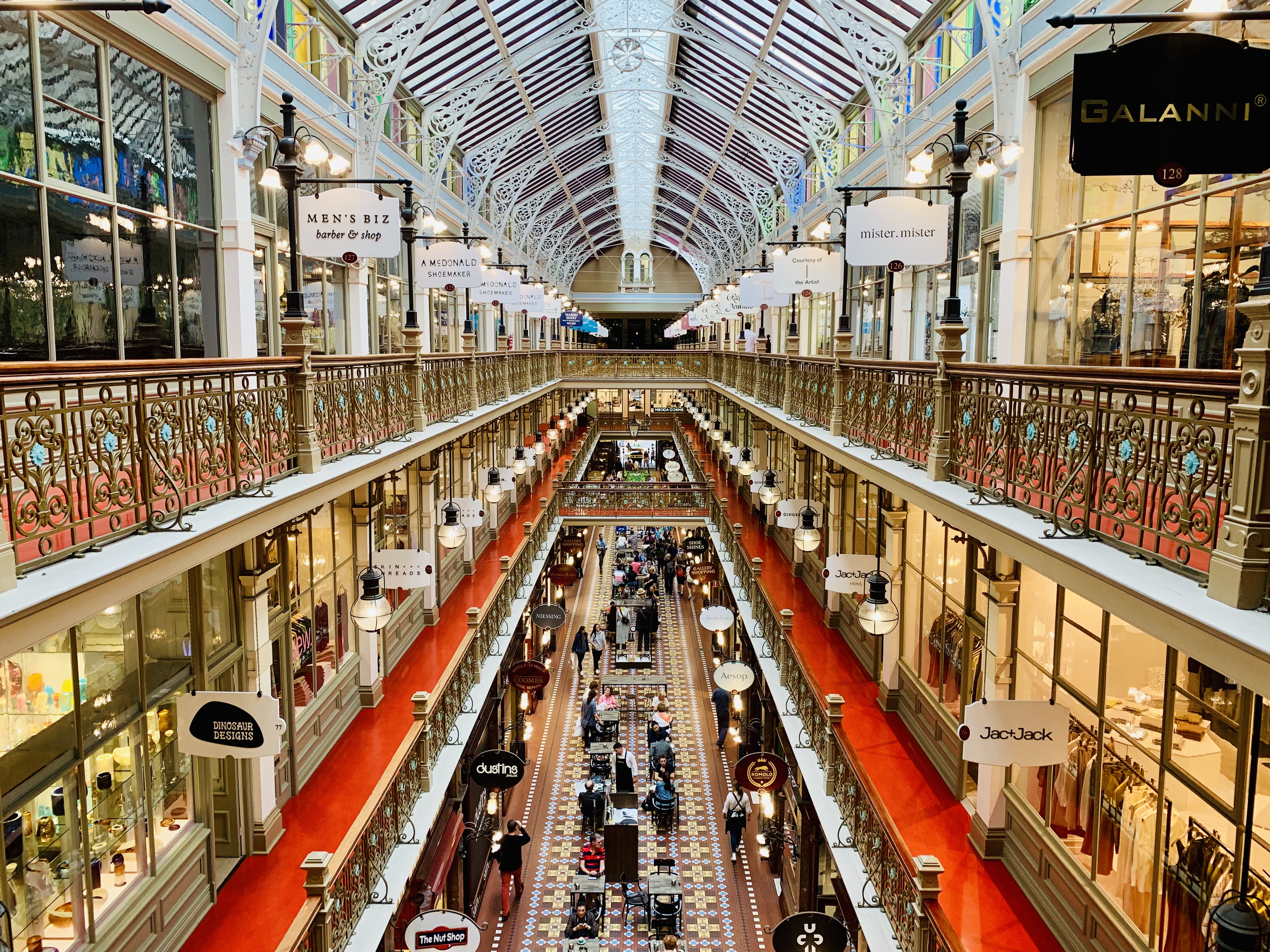
Between eighteen eighty-one and eighteen ninety-two, Sydney built five covered shopping arcades. The Strand is the only one that survived. Every single one of the other four was demolished. This is the last of its kind. When it opened in eighteen ninety-two, over six hundred guests attended the opening event, but the real spectacle was not the architecture -- it was the electricity. The Strand was one of the first places in Sydney to be lit by electric light, and suburban families would ride the tram across the city specifically to see the lights. Imagine that. People making a special trip just to stand inside a building and look at electric bulbs. The Strand was basically the Times Square of eighteen-nineties Sydney. Look up at the ceiling. The original tinted glass roof lets in natural light that changes colour throughout the day. Look at the staircases -- original cedar, over one hundred and thirty years old. The cast iron balusters, the tiled floors, the timber-framed shop fronts -- all original or carefully restored to match the eighteen ninety-two design. The arcade runs between Pitt Street and George Street, and you can walk through it as a shortcut between the two main shopping strips. Most people do exactly that -- they walk through quickly, eyes on their phones, not noticing that they are passing through a Victorian shopping palace that every other city in Australia lost. Sydney has a habit of tearing down beautiful things and then feeling bad about it later. The QVB nearly went. Whole neighbourhoods of The Rocks were earmarked for demolition. The fact that the Strand Arcade is still standing is not because someone had the foresight to protect it -- it is because it kept being just useful enough to survive. Sometimes the best preservation strategy is dumb luck and a good location.
The Tank Stream
Beneath Pitt Street, Sydney NSW 2000
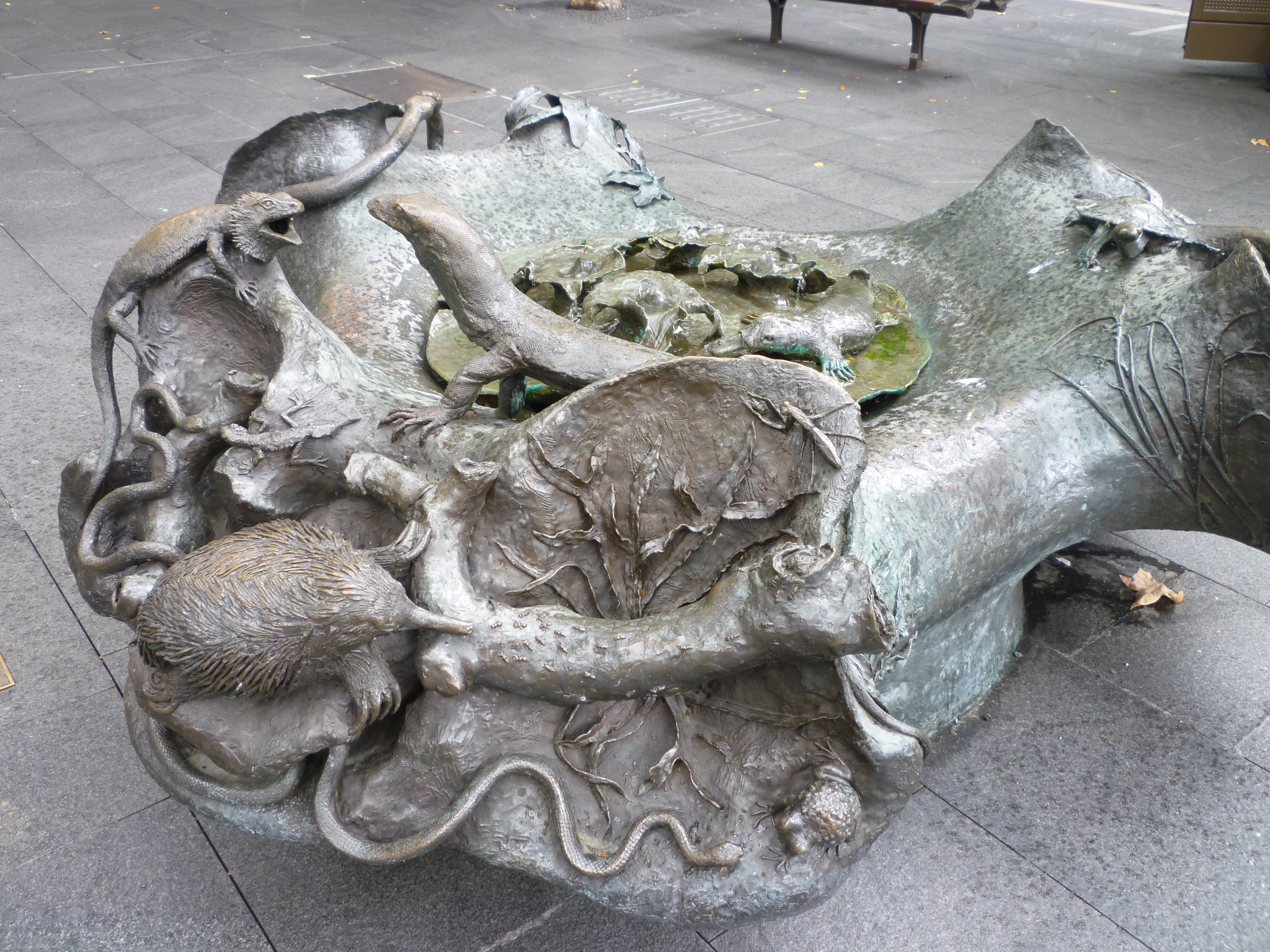
The entire city of Sydney exists because of a stream flowing under your feet right now. In seventeen-eighty-eight, Captain Arthur Phillip sailed the First Fleet into Sydney Cove and chose this exact spot for the colony because he saw a freshwater stream flowing into the harbour. No stream, no settlement, no Sydney. It really is that simple. They called it the Tank Stream because the early colonists cut tanks -- rectangular reservoirs -- into the sandstone banks to collect and store the water. It was the colony's sole water supply. For the first few decades of European settlement, this little creek was the most important thing in Sydney. Of course, humans being humans, they destroyed it almost immediately. Within thirty years, the stream was so polluted from washing, tanning hides, dumping waste, and general colonial filth that it had to be abandoned as a water source. By the eighteen-twenties, the freshwater stream that founded a city was a sewer. They eventually bricked it over and paved a street on top of it. But here is the thing. It is still down there. The Tank Stream still flows beneath the CBD as a stormwater channel. You are standing above it right now. In nineteen ninety-nine, artist Lynne Roberts-Goodwin installed six pavement markers along Pitt Street so you can trace the stream's underground path from Pitt Street at Alfred Street heading south. Look for them. Occasionally, Sydney Water runs tours that take you underground to actually walk through the stream's channel. They are announced by ballot, and they sell out almost immediately. Getting a spot is like winning a lottery to visit the ghost of a creek. But it is there, right under the shops and the traffic and the suits, still flowing, still the reason any of this exists.
Wendy Whiteley's Secret Garden
Lavender Bay, North Sydney NSW 2060
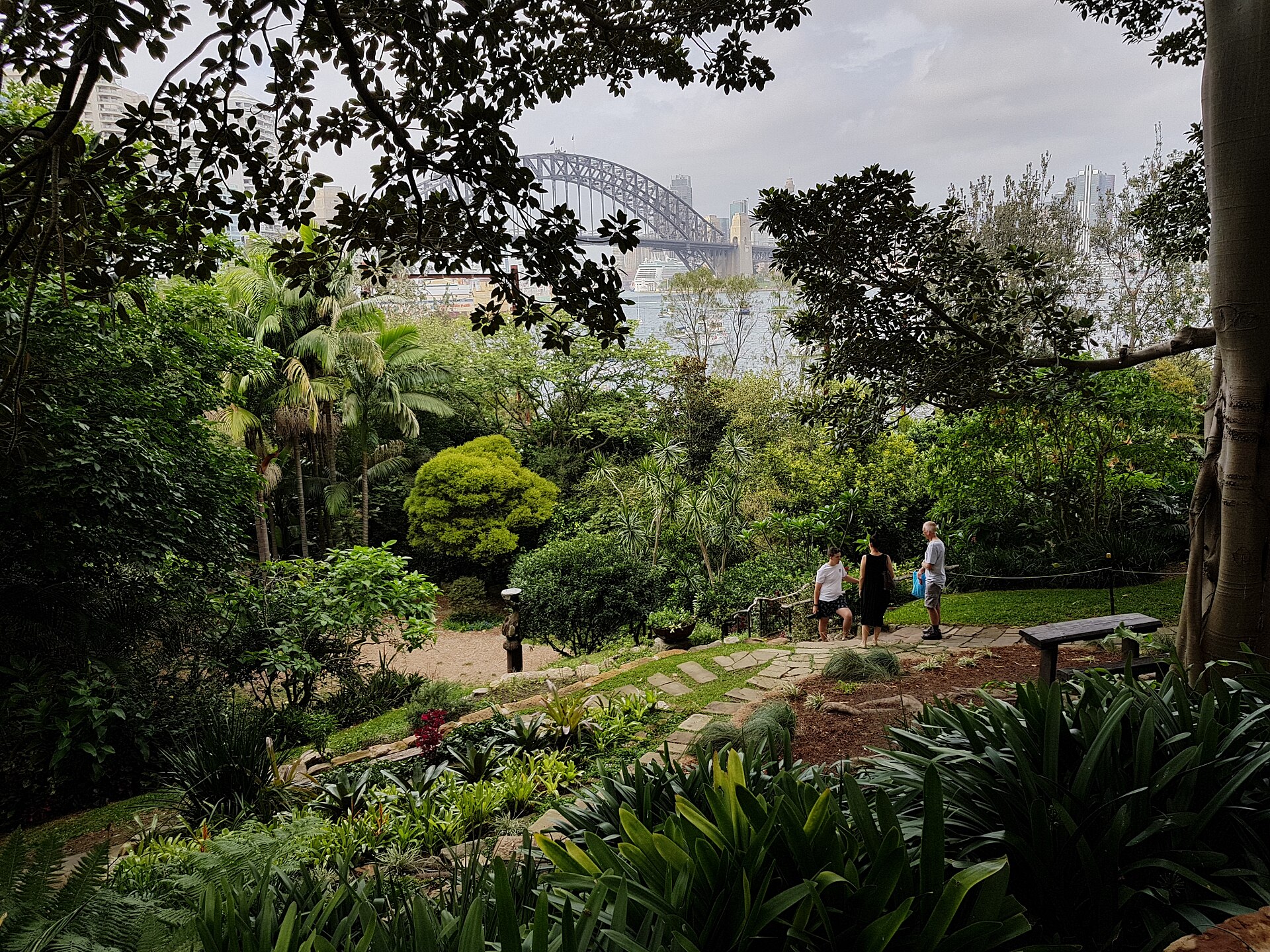
This garden exists because of grief. In nineteen ninety-two, the Australian painter Brett Whiteley died of a heroin overdose in a motel room in Thirroul. He was one of the most celebrated artists in the country's history. His wife Wendy was devastated. She looked out the window of their home above Lavender Bay and saw the overgrown, rubbish-filled railway land on the slope below. And she started clearing it. For over twenty-five years, Wendy Whiteley came down here and transformed abandoned government land into a lush subtropical garden. She planted trees, dug paths, hauled rocks, created hidden corners with benches and sculptures. She did not own any of it. Not one square metre. The land belonged to the state government, and technically she was trespassing every single day. Lavender Bay was known to the Gadigal people as Quiberee and was once a large V-shaped harbour beach before it was filled in by Sydney Railways to extend a train line. So the garden sits on top of filled-in harbour, on top of railway land, tended by a woman who had no legal right to be there. The secret could not hold forever. In two thousand and fifteen, the New South Wales Premier granted a thirty-year lease with a thirty-year option to North Sydney Council specifically to protect the garden. In two thousand and eighteen, it received New South Wales State Heritage protection. A woman's private grief project on stolen government land became a heritage-listed public garden. Wendy, now in her eighties, still visits regularly. If you are lucky, you might see her. The garden is free, open every day, and has one of the most spectacular harbour views in Sydney -- framed by trees that a grieving widow planted because she did not know what else to do.