National Archaeological Museum
This is where Greece keeps the really good stuff. The National Archaeological Museum holds over 11,000 artifacts spanning from prehistory to late antiquity, making it the richest collection of Greek antiquities on Earth. The Mask of Agamemnon is here — the gold funeral mask that Heinrich Schliemann found at Mycenae in 1876 and, in a fit of dramatic overstatement, declared belonged to the legendary king. It doesn't (it's about 300 years too old), but it's still one of the most famous gold artifacts of the ancient world.
The museum's most mind-bending object is the Antikythera Mechanism — a corroded lump of bronze gears pulled from a Roman-era shipwreck in 1901 by sponge divers off the island of Antikythera. For decades nobody understood what it was. Then researchers realized it was an astronomical calculator with over 30 interlocking gears that could predict eclipses, track the movements of the sun and moon, and even calculate the timing of the Olympic Games. It dates to around 100 BC and represents a level of mechanical sophistication that wouldn't be seen again for over a thousand years. It's essentially the world's first analog computer.
During World War II, museum staff buried the entire collection underground to prevent Nazi looting — a massive operation that saved thousands of irreplaceable objects. The exhibits were sealed in protective boxes, and the museum didn't reopen until 1945.
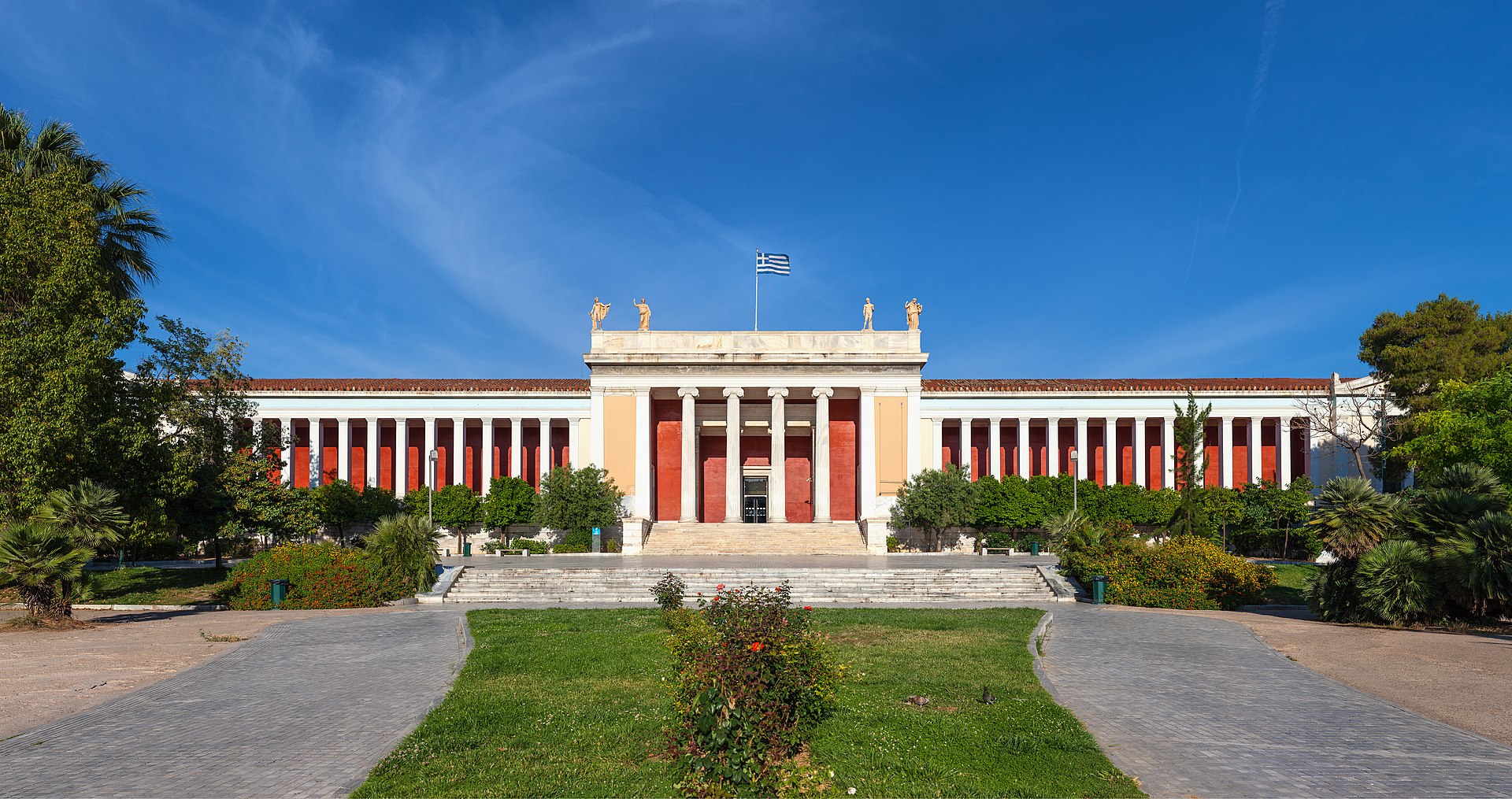
The building itself dates to 1889, and while it can't compete with the Acropolis Museum for architectural glamour, its sheer density of masterpieces per square meter is unmatched. The bronze Poseidon (or Zeus — scholars still argue) from Cape Artemision alone is worth the visit: a perfect fifth-century BC athlete frozen mid-throw, rescued from the bottom of the sea.
Verified Facts
The museum houses over 11,000 exhibits spanning from prehistory to late antiquity, making it the richest collection of Greek antiquities worldwide
The Antikythera Mechanism, dating to around 100 BC, is an ancient analog computer with over 30 interlocking gears that could predict eclipses and track celestial movements
During WWII, museum staff buried the entire collection underground in protective boxes to prevent Nazi looting, reopening in 1945
The Mask of Agamemnon, discovered by Heinrich Schliemann at Mycenae in 1876, is one of the museum's most famous exhibits despite predating the legendary king by about 300 years
Get walking directions
44 28is Oktovriou, 1st Municipal Community, Athens, 106 82, Greece