Walking Tours in Athens
Athens — Acropolis
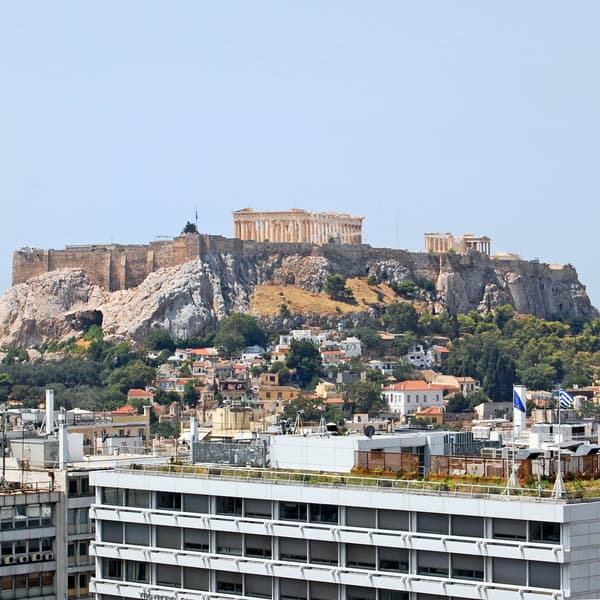
A 17-stop walking tour through the heart of Greece. Visit The Acropolis, Odeon of Herodes Atticus, Propylaea, and Temple of Athena Nike — with narrated stories at every stop.
Athens — Ancient Agora
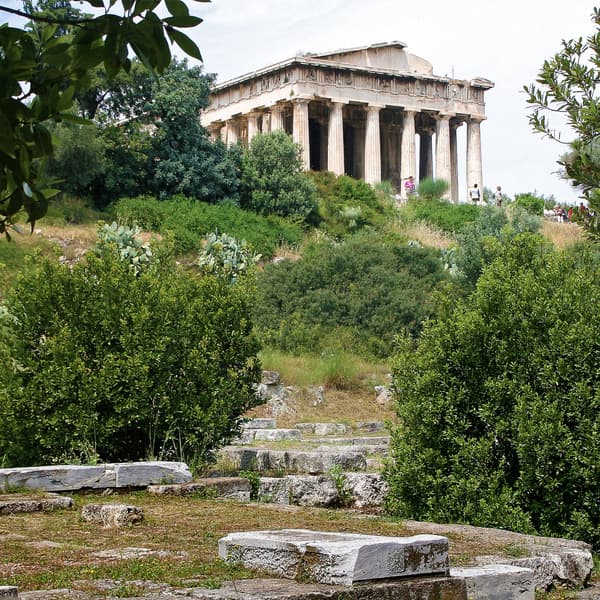
A 16-stop walking tour through the heart of Greece. Visit Ancient Agora, Panathenaic Way, Stoa of Attalos, and Agora Museum — with narrated stories at every stop.
Athens — City Walk
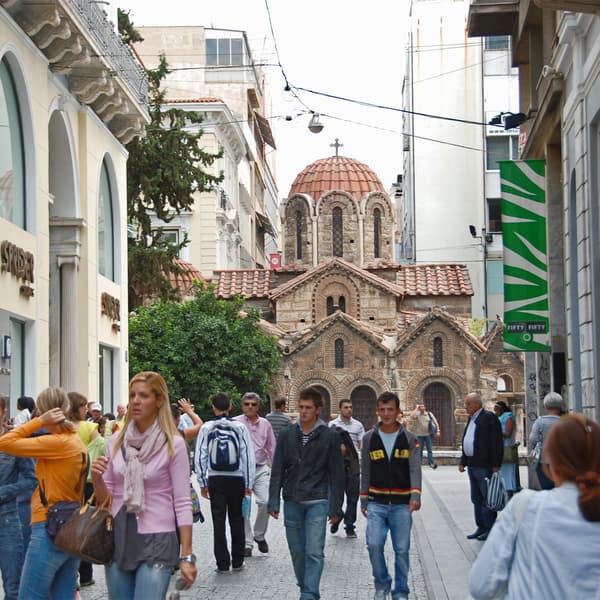
A 20-stop walking tour through the heart of Greece. Visit Athens City Walk, Tomb of Unknown Soldier, Evzone Guards, Greek Parliament, and Walking Through Syntagma Square — with narrated stories at every stop.
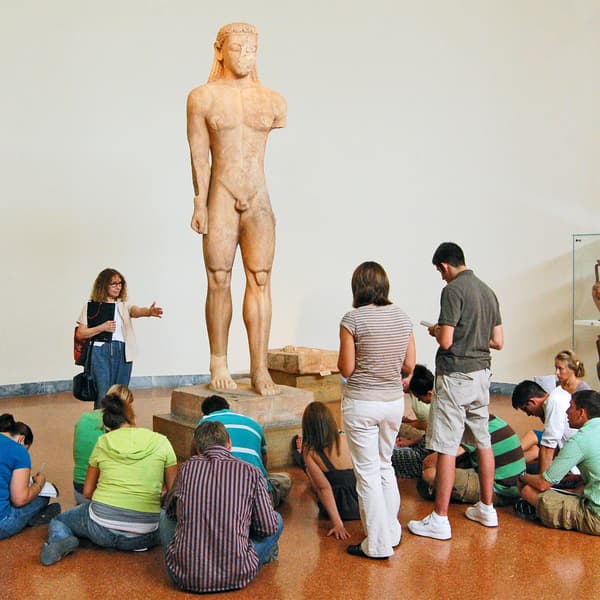
Athens — National Archaeological Museum
A guided tour of Athens — National Archaeological Museum in Greece with 20 stops. Highlights include National Archeological Museum, Cycladic Figurines, and Mycenaean Treasures.
Athens: The Acropolis, Agora & the Cradle of Democracy
Climb to the Parthenon as dawn light hits the marble, descend to the Agora where Socrates was tried and sentenced, walk through the Plaka to the Tower of the Winds, explore the spectacular Acropolis Museum, and end at the Temple of Olympian Zeus — the largest temple ever built in Greece.
30 Landmarks in Athens
Acropolis
Athens 105 58
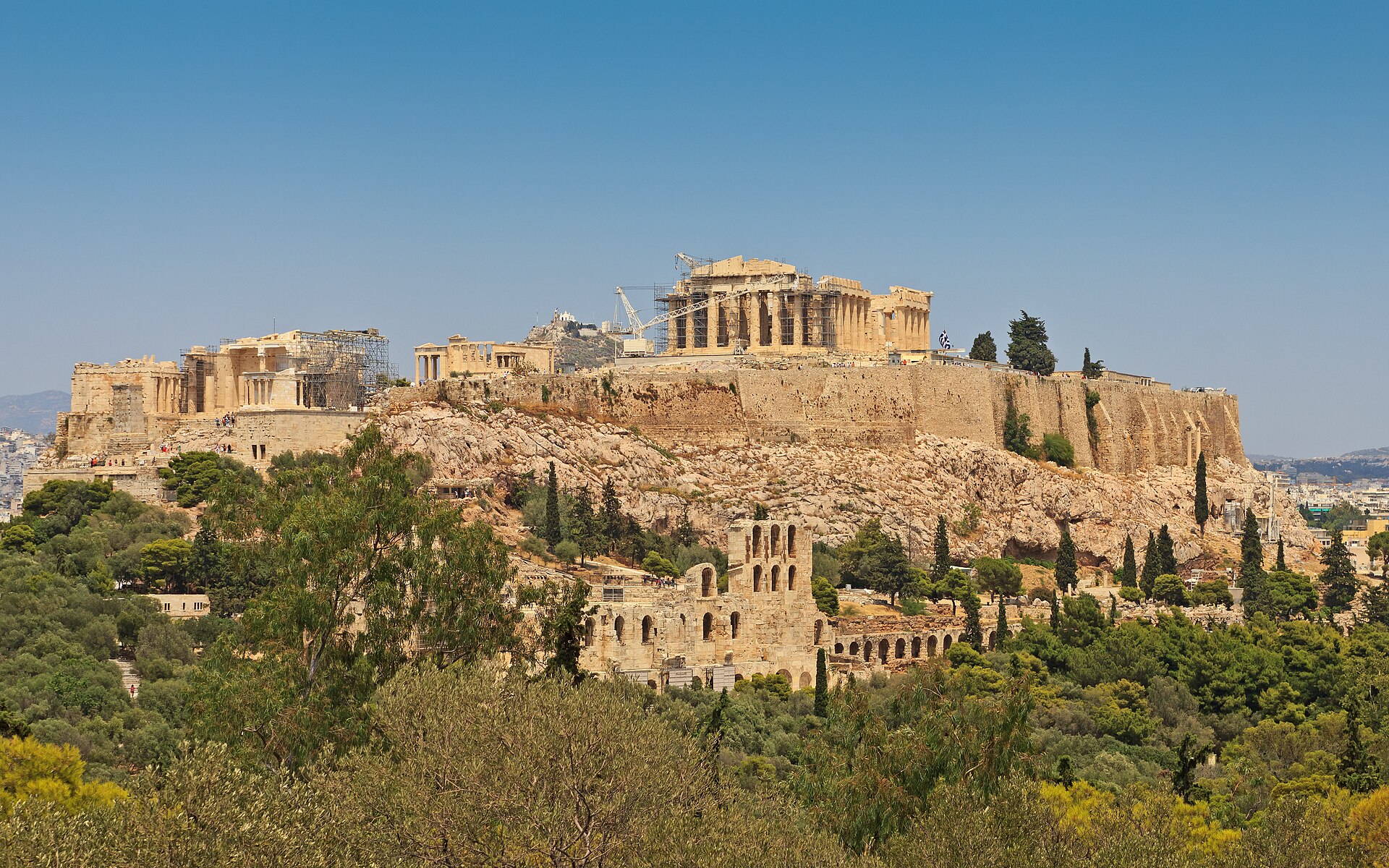
Every civilization that conquered Athens wanted a piece of this rock. The Persians burned it. The Romans redecorated it. The Byzantines turned its temples into churches. The Ottomans used the Parthenon as a mosque — and then as a gunpowder magazine, which went about as well as you'd expect when Venetian cannonballs arrived in 1687. The British walked off with half the sculptures. And yet, 2,500 years after Pericles commissioned its greatest buildings, the Acropolis still dominates the Athenian skyline like nothing has changed. The name means "high city," and people have lived on this 150-meter limestone outcrop since at least the Neolithic period — around 5000 BC. A Mycenaean palace stood here during the Bronze Age, protected by massive Cyclopean walls so large that later Greeks assumed only giants could have built them. But the Acropolis you see today is essentially a fifth-century BC construction project, bankrolled by the Delian League treasury that Pericles controversially redirected from collective Greek defense to Athenian glory. The Parthenon, Erechtheion, Propylaea, and Temple of Athena Nike all went up within a few decades. What makes the Acropolis extraordinary isn't just its age — it's the engineering precision. The Parthenon's columns lean slightly inward and bulge in the middle (a technique called entasis) to counteract optical illusions that would make straight columns look concave and splayed. The floor curves upward by about 6 centimeters across its width. Nothing is truly straight, and that's what makes it look perfect. Stand here at sunset and you'll understand why every ruler who took Athens made this rock their first stop. It's not just a monument — it's the original power statement.
Acropolis Museum
39 Dionysiou tou Areopagitou, 3rd Municipal Community, Athens, 117 42, Greece
This museum was built to win an argument. For decades, the British Museum's main defense for keeping the Elgin Marbles was that Greece lacked a suitable facility to house them. In 2009, Athens called that bluff with a $130 million museum designed by Swiss-French architect Bernard Tschumi — a modernist glass-and-concrete building that is itself an architectural masterpiece and sits 300 meters from the Parthenon with a clear sightline to the temple. The top floor is the knockout punch. Tschumi rotated the entire Parthenon Gallery to match the exact cardinal orientation of the real building. The marble friezes and pediment sculptures are displayed at the same height and in the same relationship to each other as they were on the original temple, with plaster casts filling in the gaps where the originals sit in London. The effect is devastating — you can see precisely what's missing and exactly where it belongs. Natural light floods through floor-to-ceiling glass walls on all four sides, replicating the open-air conditions under which the sculptures were originally seen. The building sits on pilotis (concrete stilts) above an archaeological excavation of an ancient Athenian neighborhood that was discovered during construction. Rather than destroy the ruins, Tschumi raised the building above them and installed glass floors so visitors walk over houses, workshops, and baths dating from the Classical era through Byzantine times. The excavation was opened to the public in 2019. Among the 4,000 objects on display, the Caryatids are the stars — five of the six original maidens from the Erechtheion, displayed behind glass in a climate-controlled gallery where you can walk around them and see details invisible on the Acropolis. The sixth is in London. A plaster cast stands in her place, waiting.
Anafiotika
Anafiotika, Athens 105 58
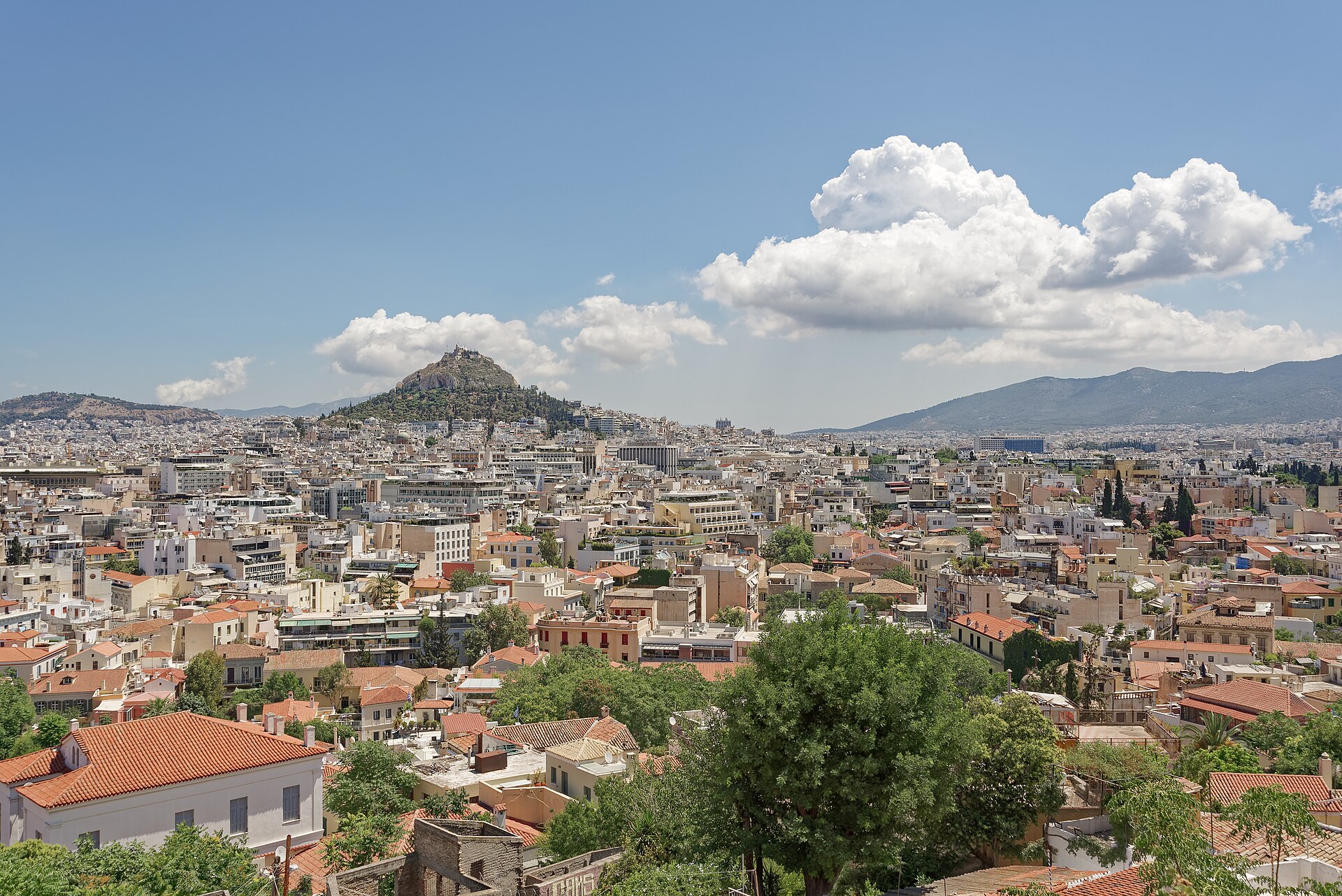
Tucked against the northeast face of the Acropolis, this tiny cluster of whitewashed houses looks like someone airlifted a Cycladic island village and dropped it in the middle of Athens. That's essentially what happened. In the 1840s, workers from the island of Anafi arrived in Athens to help build King Otto's Royal Palace. Homesick and resourceful, they exploited an Ottoman-era law that said any structure erected between sunset and sunrise became your legal property. So they built their island homes overnight on the rocky slopes beneath the Acropolis, recreating the architecture they knew — white cubes, blue doors, terracotta roofs, and narrow paths barely wide enough for a donkey. The builders from Anafi were soon joined by workers from other Cycladic islands — Santorini, Naxos, Paros — creating a miniature island enclave within the capital. In 1922, Greek refugees from Asia Minor added another layer to the community. At its peak, the neighborhood was a dense maze of tiny houses, chapels, and courtyards. But starting in the 1950s, the Greek government began demolishing houses for archaeological research, and in the 1970s the state started buying properties to prevent further construction. Today only about 45 houses remain, many still owned by descendants of the original builders. Bougainvillea cascades over whitewashed walls, cats sun themselves on doorsteps, and the sounds of central Athens — honking, shouting, the rumble of the metro — fade to near-silence within a few steps. Two tiny churches, Agios Georgios and Agios Simeon, are tucked into the rock. It's the most disorienting five minutes in Athens: you walk up a flight of stairs from touristy Plaka and suddenly you're in a Cycladic fishing village, with the Parthenon looming directly above.
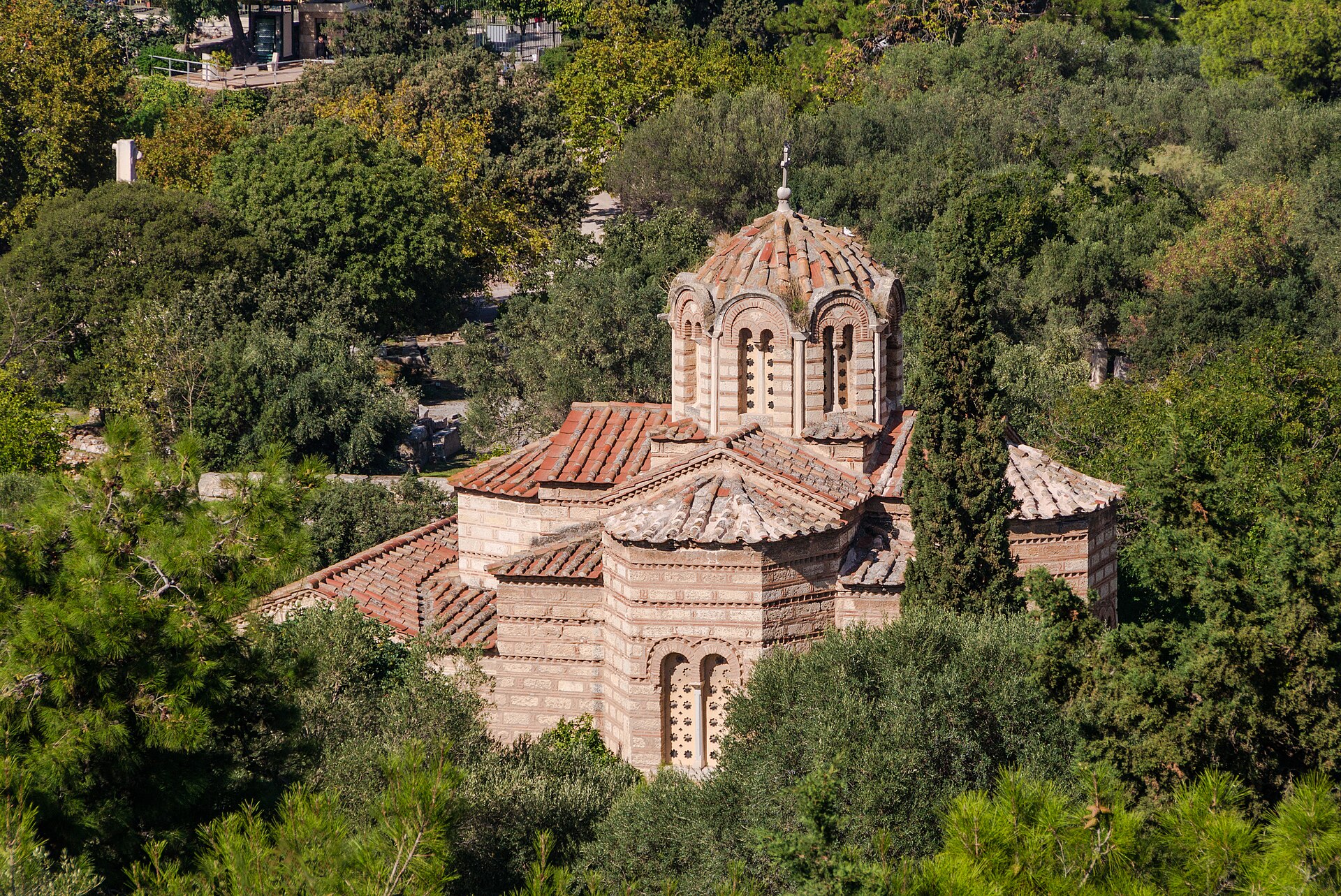
Ancient Agora
24 Adrianou, 1st Municipal Community, Athens, 105 55, Greece
This is where democracy was invented — not in some grand palace, but in an open-air marketplace where anyone could shout at a politician. The Ancient Agora was Athens' civic center for over a thousand years, serving as marketplace, courtroom, voting place, philosophical salon, and social hub all at once. Socrates argued here. Pericles campaigned here. The random citizens who decided to ostracize troublesome politicians scratched their votes onto broken pottery shards (ostraka) right on this ground — thousands of which have been found by archaeologists. The site was first used as a public gathering place in the sixth century BC, and it eventually grew to include temples, law courts, government buildings, commercial stalls, and covered walkways called stoas where philosophers held court. The Painted Stoa (Stoa Poikile) gave the Stoic school of philosophy its name — Zeno of Citium taught there around 300 BC, and his followers became known as "those of the stoa." The Tholos, a round building near the center, housed the 50 prytaneis who governed Athens on a rotating basis. They ate and slept there during their 35-day shift, and a third of them had to stay in the building at all times in case of emergency. The Agora was devastated during the Herulian sack of Athens in 267 AD and never fully recovered its ancient function. For centuries it was buried under medieval and Ottoman neighborhoods. Excavation only began in earnest in the 1930s when the American School of Classical Studies demolished nearly 400 modern buildings to uncover what lay beneath. Walk through today and you're walking the same paths as Aristotle, who strolled here teaching his students in what became known as the Peripatetic school — literally, the "walking-around" school.
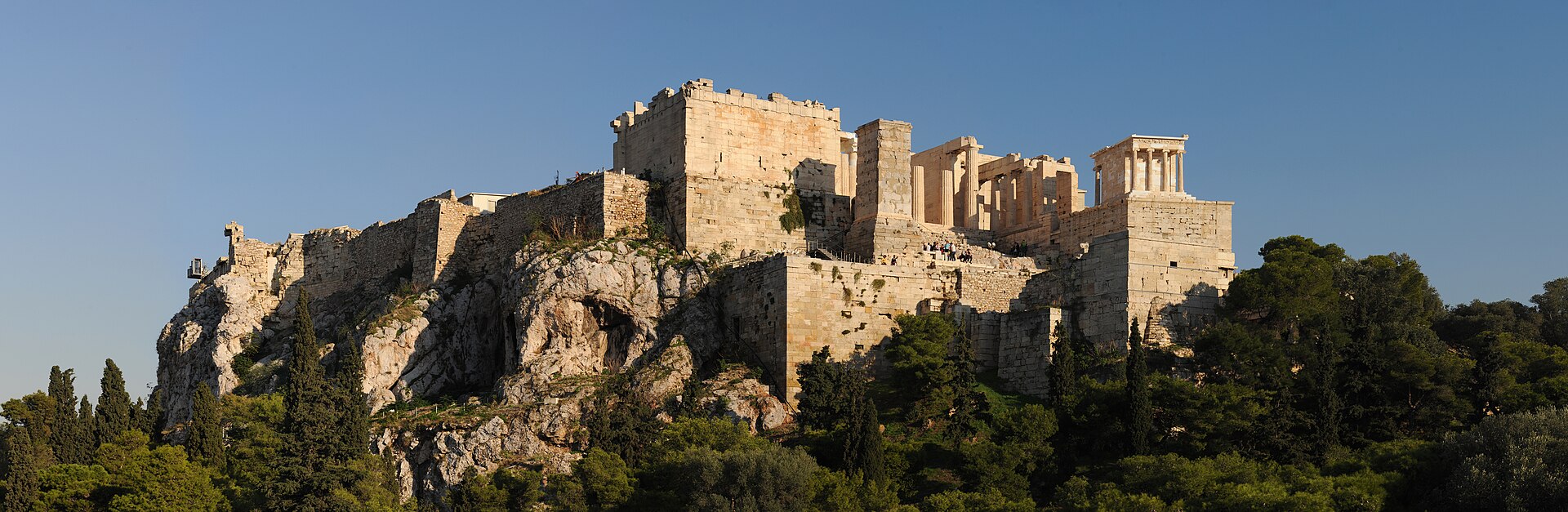
Areopagus (Mars Hill)
Athens, Greece
This slippery marble rock between the Acropolis and the Agora has been used to judge murderers, argue philosophy, and preach Christianity — sometimes all in the same century. The Areopagus, named after Ares, the god of war, was the seat of Athens' oldest and most prestigious court. According to myth, Ares himself was the first defendant, tried here by the other gods for killing Poseidon's son Halirrhothius. He was acquitted. The court set the tone. In the classical period, the Areopagus Council handled cases of homicide, arson, and religious offenses. It was the only Athenian court where defendants and accusers swore their oaths standing on rough-hewn stones — the Stone of Outrage (for the accuser) and the Stone of Ruthlessness (for the accused). The council was originally the most powerful body in Athenian politics until Ephialtes stripped most of its powers in 462 BC as part of the democratic reforms. The hill's most famous moment came around 50 AD, when the Apostle Paul stood here and delivered his sermon to the Athenians — the one about the altar "To an Unknown God" recorded in Acts 17. Paul noticed that the Athenians had erected an altar to cover their theological bases, and he used it as an opening to introduce Christianity. A bronze plaque near the summit quotes the speech in Greek. Among his converts was Dionysius the Areopagite, who became Athens' first bishop. Today the bare rock serves as the best free viewpoint in Athens. The surface is polished smooth by millions of feet and dangerously slippery when wet, but the 360-degree panorama — Acropolis to the south, Agora below, city sprawling to the horizon — is worth the careful climb.
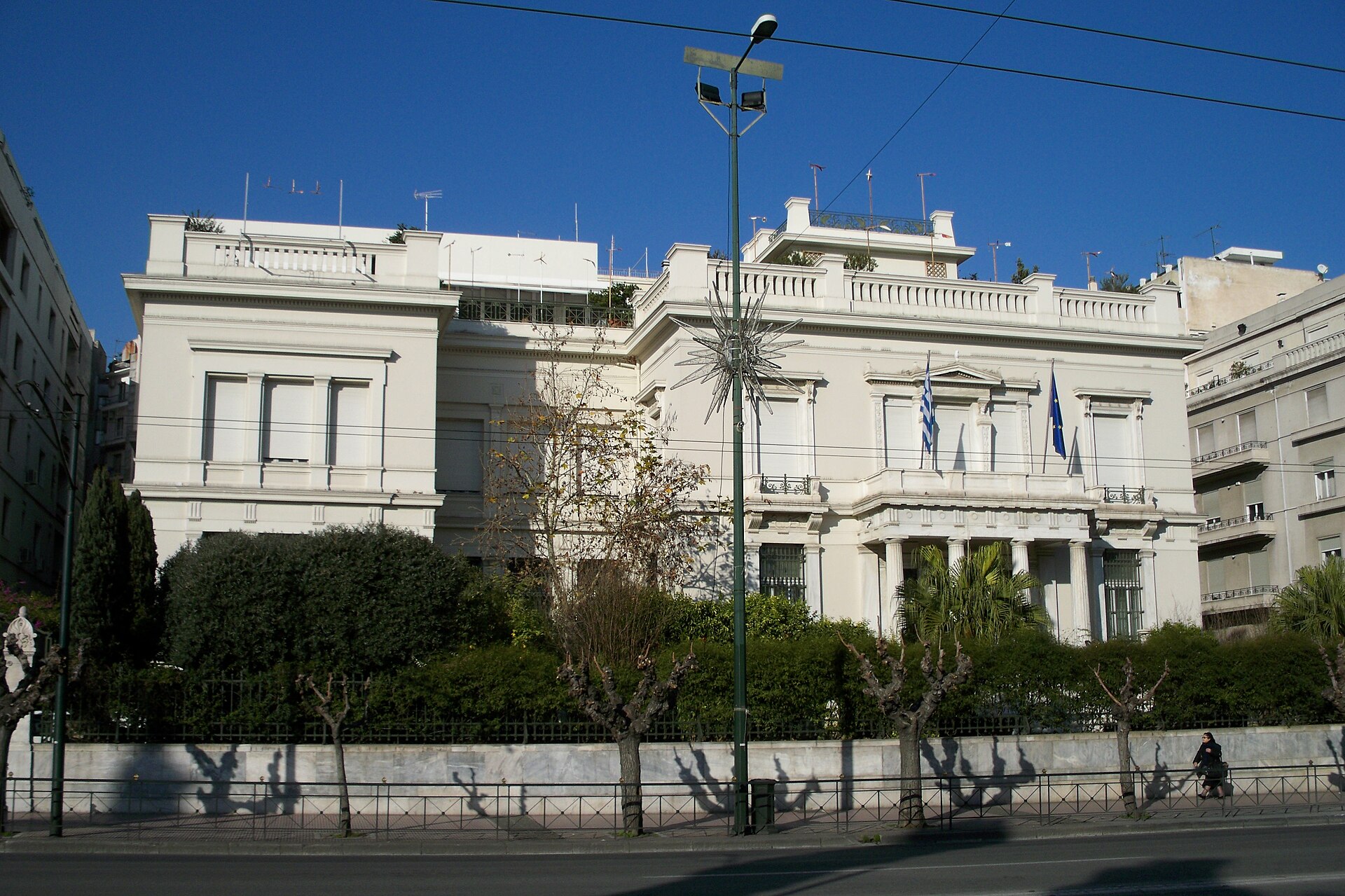
Benaki Museum
1 Koumpari, 1st Municipal Community, Athens, 106 74, Greece
One man spent 35 years buying Greek history, then gave the whole lot away. Antonis Benakis was born in Alexandria to a wealthy Greek-Egyptian cotton-trading family, and he devoted his adult life to amassing over 45,000 artifacts spanning the entire arc of Greek civilization — from prehistoric gold jewelry to Ottoman-era weaponry to folk costumes from every region of the country. In 1930, he donated everything to the Greek state, housed in his family's neoclassical mansion on the edge of the National Garden, and the Benaki Museum was born. What makes the Benaki special is its scope. This is the only museum in Greece that takes you from the Neolithic period through to modern independence in one continuous narrative — pottery from 3000 BC, Mycenaean gold, Classical sculpture, Byzantine icons, Ottoman silverwork, and two El Grecos that the artist painted before he left for Spain. The ground floor alone covers about 5,000 years. No other collection in Athens gives you this kind of civilizational timeline. The museum underwent a major $20 million renovation and reopened in 2000, tripling its exhibition space. The rooftop cafe has become one of the most coveted terraces in Athens — a quiet spot overlooking the National Garden with views to the Acropolis that most tourists never find because they're busy queuing at Monastiraki restaurants. On Thursday evenings, the museum stays open late and the terrace fills with Athenians enjoying wine above the tree canopy. Beyond the main building, the Benaki has expanded to several satellite locations including a contemporary art space in a converted warehouse in Piraeus and an Islamic Art Museum in the Kerameikos district that houses one of the finest collections of Islamic art in Europe.
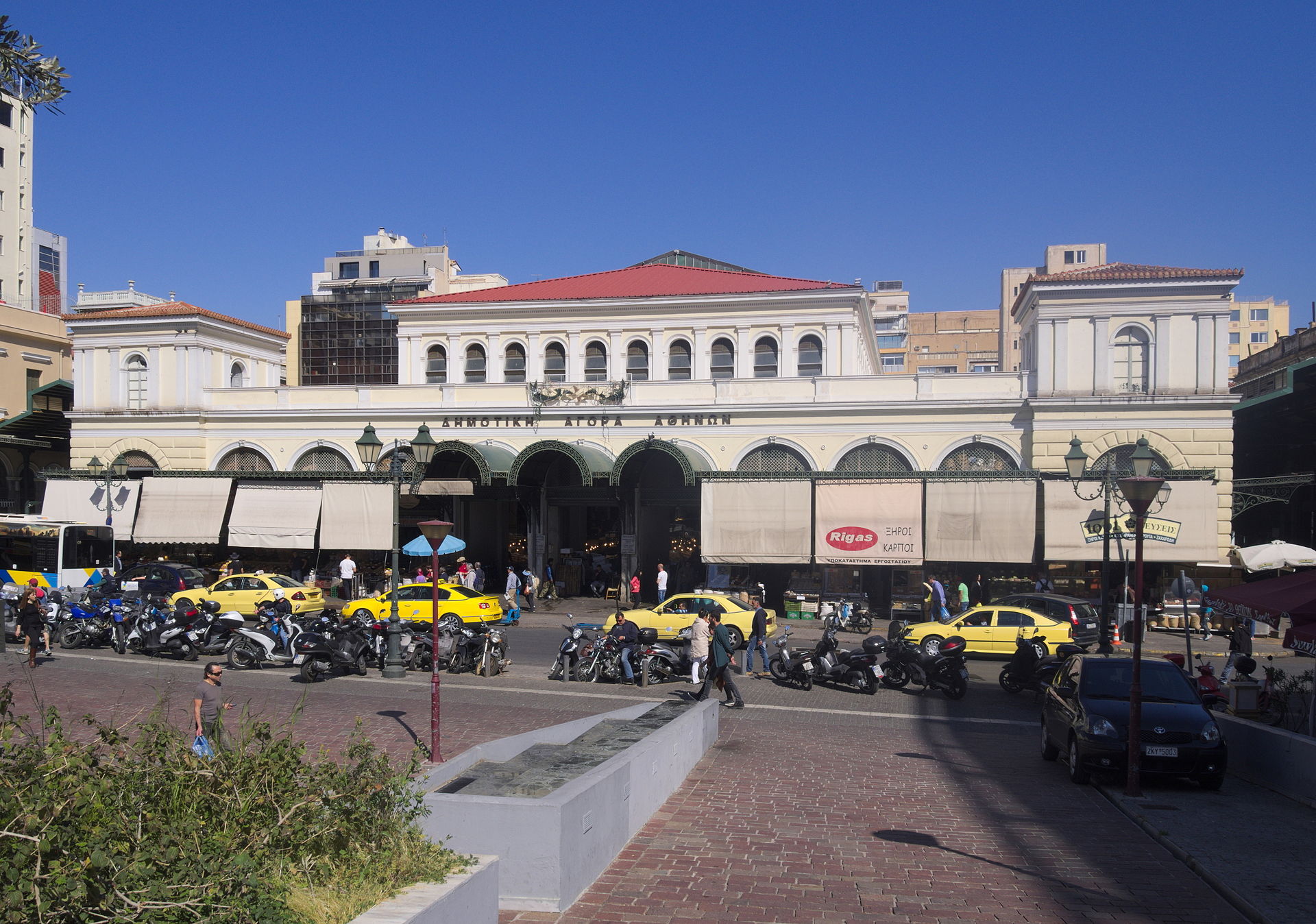
Central Market (Varvakios Agora)
51 Athinas, 1st Municipal Community, Athens, 105 52, Greece
Athens has been buying and selling food on this stretch of Athinas Street since antiquity, but the current market hall — a grand neoclassical structure of iron, glass, and marble — dates to 1886. It's named after Ioannis Varvakis, a Greek revolutionary hero and benefactor who made his fortune trading caviar on the Caspian Sea and donated generously to fund Greek independence. He probably wouldn't recognize the place now, but he'd approve of the chaos. The covered hall splits into two theaters of organized mayhem. The meat market is a spectacle of gleaming marble counters and steel hooks draped with whole lambs, goat heads, tripe, and every organ imaginable — Greeks practice nose-to-tail eating as tradition, not trend. The fish market at the center is claimed to be the largest fresh fish market in Europe: swordfish, octopus, red mullet, sea bass, and creatures most tourists can't identify, all laid out on crushed ice by fishmongers who've been working these stalls for generations. The oldest stall, Korakis, has been here since 1926. Across Athinas Street, the open-air fruit and vegetable market runs alongside, piled with olives, figs, honey, herbs, and seasonal produce that makes supermarket shopping feel like a form of penance. In the side streets around the market, tiny restaurants serve tripe soup (patsas) to workers and night owls at 4 AM — a tradition that dates back decades. This is not a sanitized, tourist-friendly food hall. It's loud, wet, and pungent. Butchers shout prices, fishmongers hose blood off floors, and the smell is a complicated mix of salt, iron, and oregano. It's the stomach of Athens, and it's magnificent.
Erechtheion
Acropolis, Athens 105 58
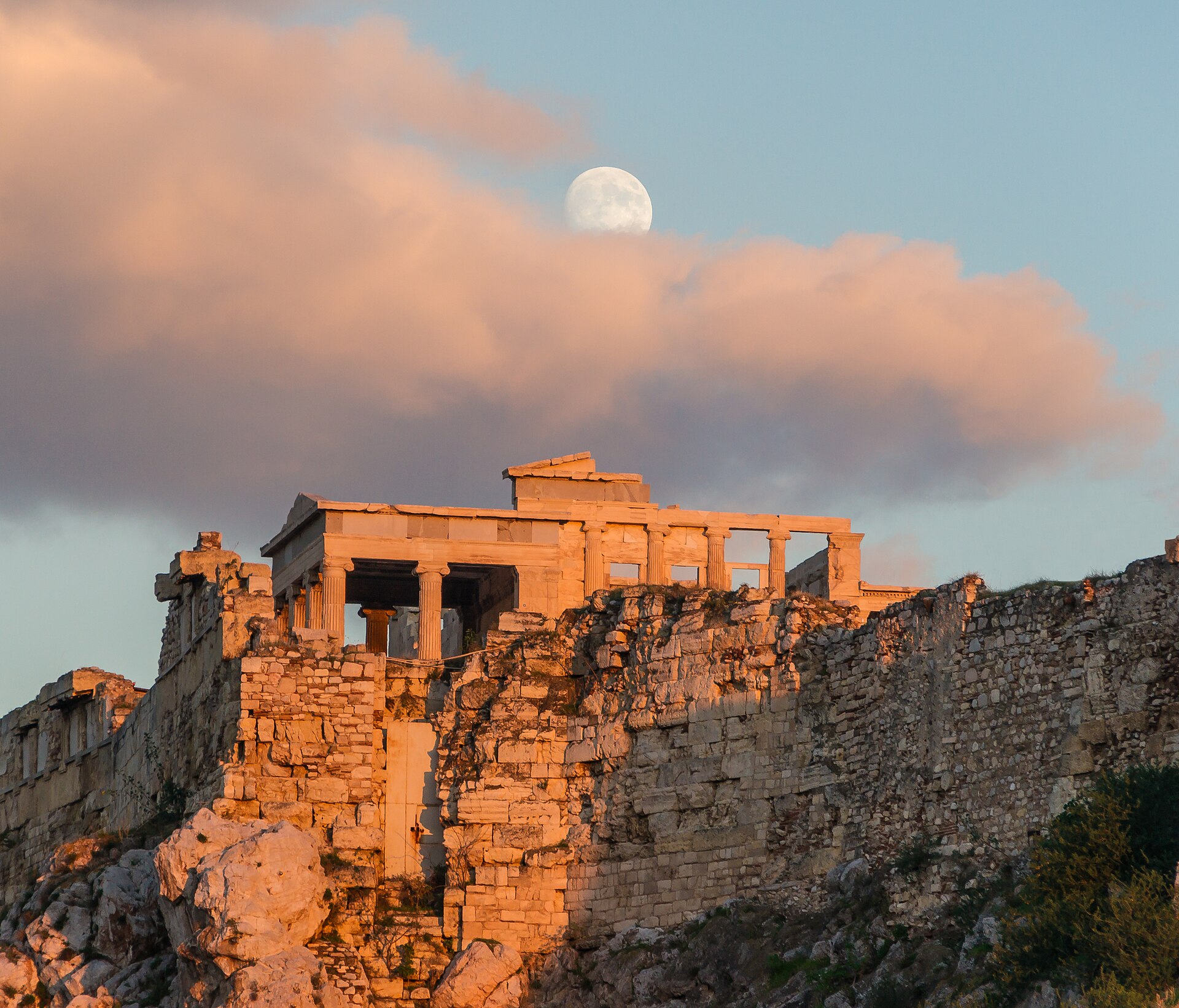
If the Parthenon is Athens' power statement, the Erechtheion is its mystery. This asymmetrical, multi-level temple is the most architecturally complex building on the Acropolis, and it had to be — it was built over the most sacred spots in Athenian mythology. This is where Athena and Poseidon supposedly held their contest for patronage of the city. Poseidon struck the rock with his trident, producing a salt spring; Athena planted an olive tree. The judges picked olives over seawater, and a sacred olive tree grew on this spot for centuries. Built between 421 and 406 BC during a pause in the Peloponnesian War, the Erechtheion housed the ancient wooden cult statue of Athena Polias — the most sacred object in Athens, an olive-wood figure that legend said fell from heaven. The building's irregular plan accommodated multiple shrines at different levels: sanctuaries to Athena, Poseidon-Erechtheus, and the legendary king Kekrops, whose tomb was believed to lie beneath the southwest corner. The real stars are the Caryatids — six female figures, each 2.3 meters tall, that serve as columns supporting the south porch roof. They're not identical: the three on the left stand on their right foot, the three on the right on their left foot. Their draped clothing creates vertical folds that cleverly mimic the fluting of Ionic columns, making the engineering look effortless. Lord Elgin took one in 1801; it's been in the British Museum ever since. The other five originals are in the Acropolis Museum, replaced on-site by casts. Look closely at the north porch floor and you'll see marks supposedly left by Poseidon's trident. Whether you believe a sea god made them or an earthquake did, someone's been telling this story for 2,500 years.
Exarchia
10 Ashley Road, Haringey, London, N17, United Kingdom
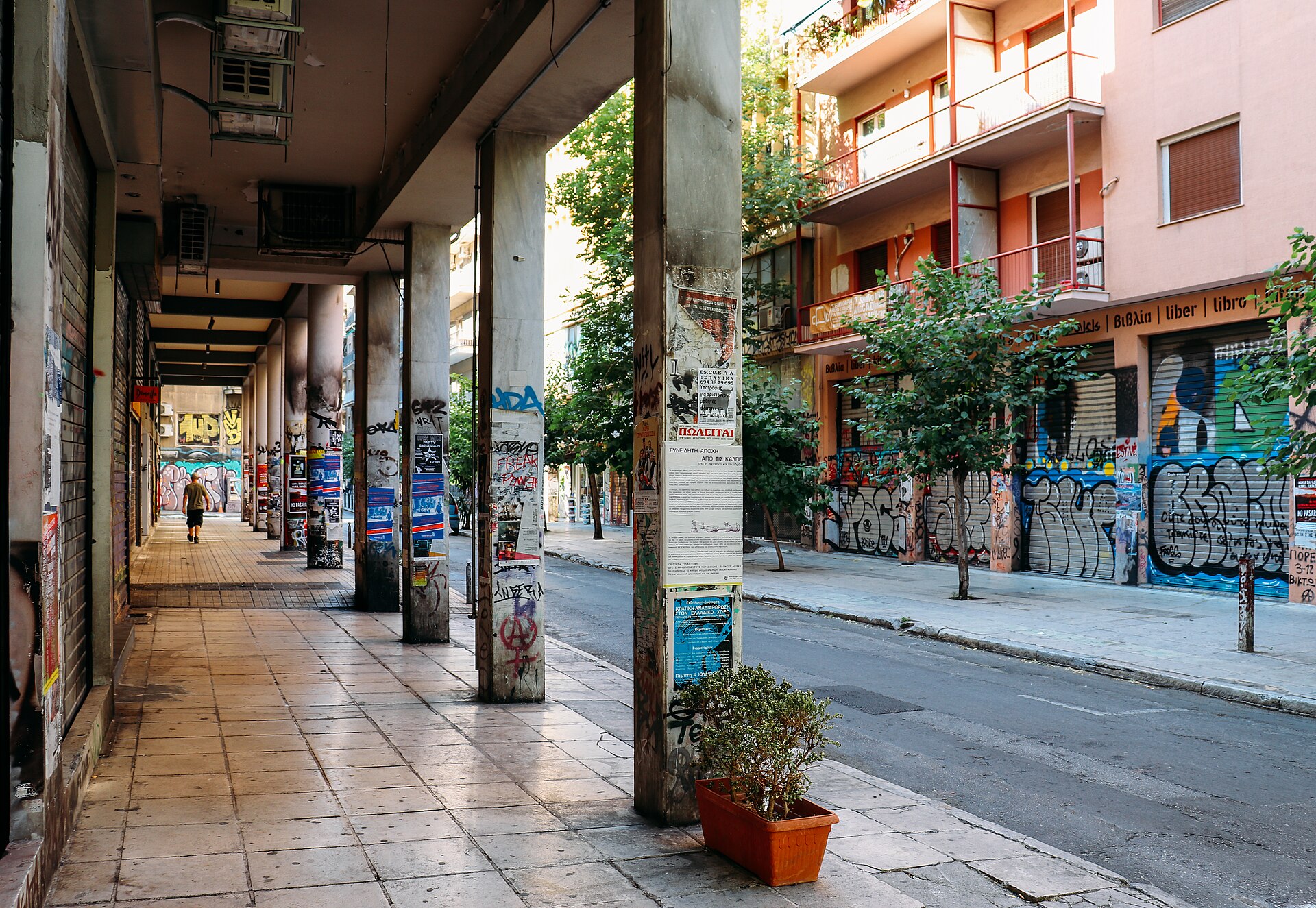
Welcome to Athens' most misunderstood neighborhood — a former bourgeois quarter turned anarchist stronghold where the walls are covered in political murals, the bookshops outnumber the chain stores, and the residents have a complicated relationship with the concept of authority. Exarchia takes its name from a nineteenth-century businessman named Exarchos who opened a large general store here in the 1870s, which is ironic for a neighborhood that would later become synonymous with anti-capitalism. The defining moment was November 17, 1973, when students at the Athens Polytechnic, which sits on the neighborhood's edge, rose up against the military junta. Tanks crashed through the university gates; at least 24 people were killed. The uprising didn't topple the junta immediately, but it became the emotional cornerstone of Greek democracy's restoration in 1974, and it cemented Exarchia's identity as a place where resistance is the default setting. Every November 17, thousands march through these streets to commemorate the dead. In December 2008, the neighborhood exploded again when a police officer shot and killed 15-year-old Alexandros Grigoropoulos on Tzavella Street. The shooting triggered weeks of rioting across Greece and led to the fall of the government. A memorial still marks the spot, kept fresh with flowers. But Exarchia isn't just political anger — it's creative energy channeled into everything from rembetika music venues to independent publishers to some of Athens' best and cheapest food. Car parks have been turned into community gardens. Squatted buildings host art exhibitions and language classes. The plateia (central square) hums with students, musicians, and older residents who remember when the neighborhood was quiet. It's not dangerous — it's alive.
Hadrian's Arch
Leoforos Vasilissis Amalias, 2nd Municipal Community, Athens, 105 58, Greece
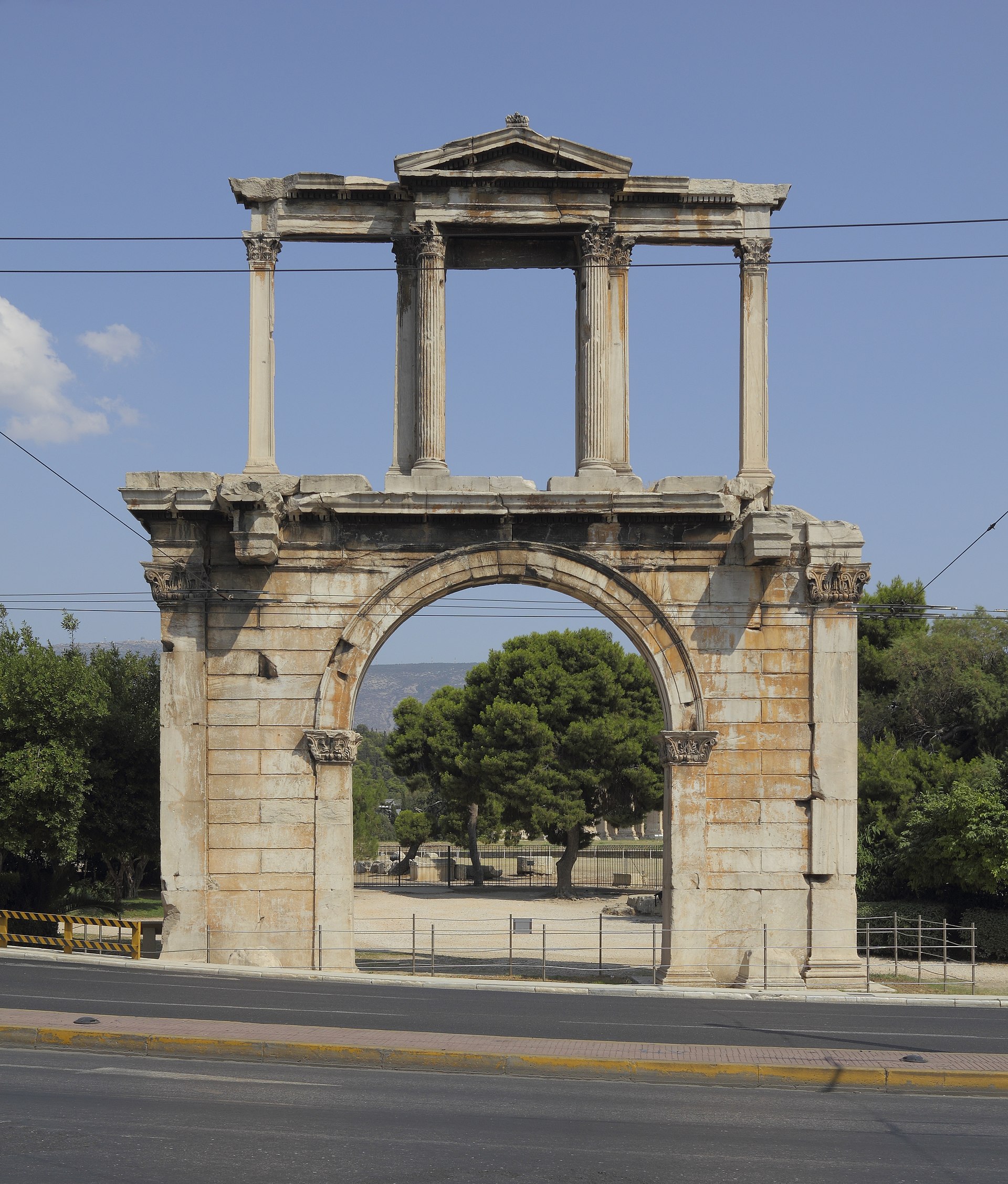
Two inscriptions. Two sides. Two completely different claims about who built Athens. On the side facing the Acropolis and old city: "This is Athens, the former city of Theseus." On the side facing the Temple of Olympian Zeus and the new Roman quarter: "This is the city of Hadrian and not of Theseus." It's either a diplomatic compliment or the most elegant piece of urban trash talk in history. Emperor Hadrian built this 18-meter-tall gateway around 132 AD, probably to celebrate the dedication of the nearby Temple of Olympian Zeus that he'd finally completed after 638 years of false starts. The arch straddles what was then the boundary between the ancient Greek city and Hadrian's ambitious new Roman quarter — an entire urban extension with baths, temples, a library, and a gymnasium. It was a line in the marble between old Athens and new Rome, between myth and empire. Architecturally, the arch is a fascinating hybrid. The lower section is a Roman arch — a single opening flanked by Corinthian columns on pilasters. But the upper section is pure Greek: a row of Corinthian columns supporting an entablature, essentially a Greek propylon sitting on top of a Roman gate. The whole thing is carved from Pentelic marble and stands 13.5 meters wide and 2.3 meters deep. It was never a defensive gate — there's no evidence of walls connecting to it — making it purely ceremonial, a threshold of meaning rather than function. Today it stands marooned on a traffic island on one of Athens' busiest streets, ringed by cars and buses. Hadrian probably didn't envision his grand boundary marker sharing space with a pedestrian crossing and a souvlaki stand, but Athens has always been good at absorbing empires into its everyday life.
Kerameikos Cemetery
148 Ermou, 3rd Municipal Community, Athens, 118 54, Greece
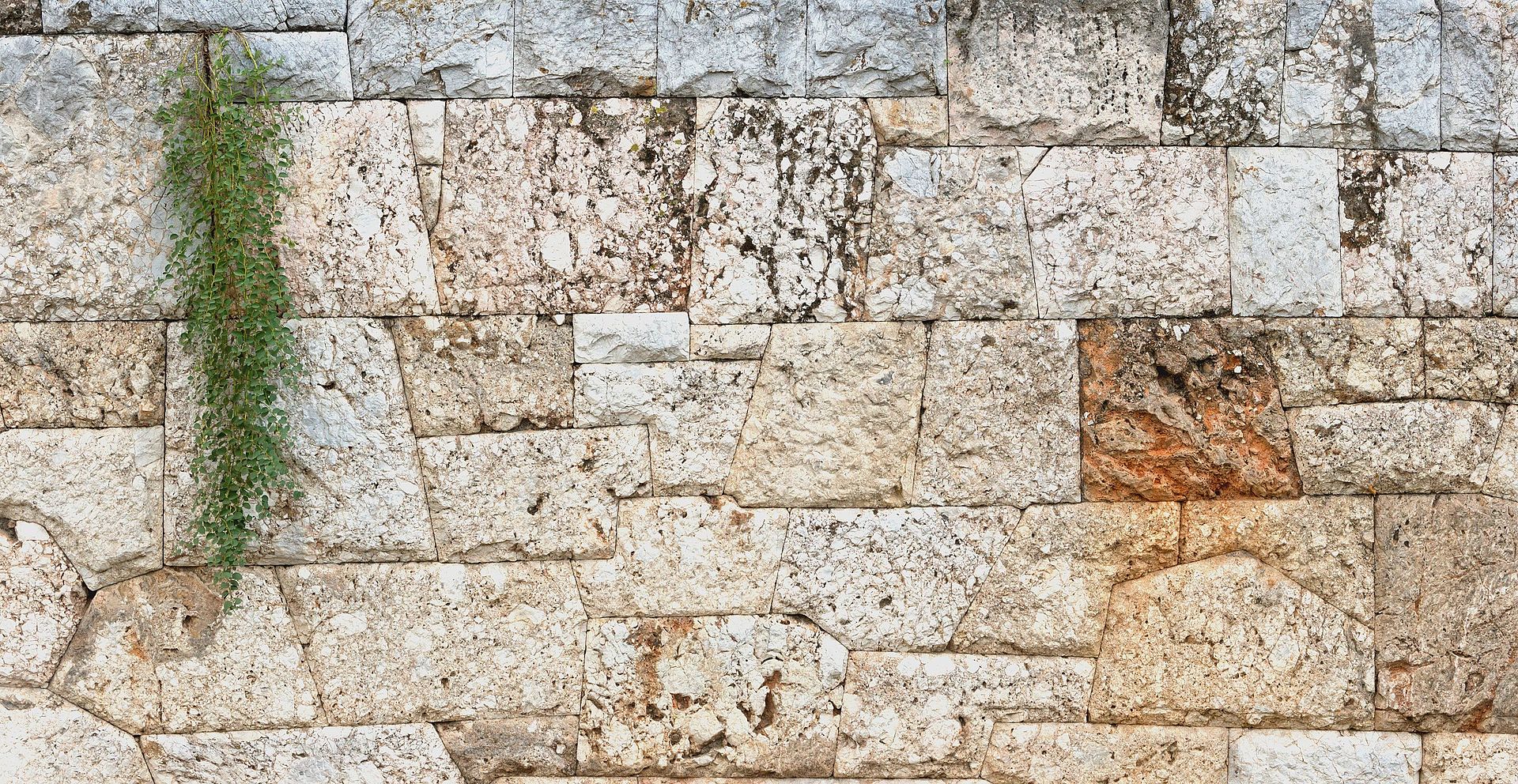
This is where we get the word "ceramic." The Kerameikos was ancient Athens' potters' quarter — named after the hero Keramos, supposedly the son of Dionysus and Ariadne — where artisans settled along the banks of the Eridanos River to take advantage of its excellent clay. The same district also served as Athens' primary cemetery for over 3,000 years, from the third millennium BC through the Roman period. Life and death, art and commerce, all squeezed into the same muddy riverbank. The cemetery sat on both sides of the Dipylon Gate, the main entrance to ancient Athens and the starting point of the Sacred Way to Eleusis, where initiates walked 22 kilometers to participate in the Eleusinian Mysteries. The street of tombs along the Sacred Way is one of the most evocative archaeological sites in Athens — marble grave markers, relief sculptures, and towering funerary monuments line a path that hasn't fundamentally changed in 2,400 years. The Bull of Dionysios of Kollytos, a massive marble bull on a pedestal, is one of the finest funerary sculptures to survive from antiquity. When Themistocles ordered the rapid construction of new city walls after the Persian destruction of Athens in 480 BC, the Athenians were in such a hurry that they built the funerary sculptures and grave markers directly into the wall as construction material. You can still see them embedded in the masonry — tombstones repurposed as bricks. Kerameikos is Athens' least-visited major archaeological site, which is part of its charm. While the Acropolis is shoulder-to-shoulder with tourists, here you can sit among wildflowers and ancient graves with nothing but birdsong and the occasional stray cat for company. The small on-site museum is excellent and almost always empty.
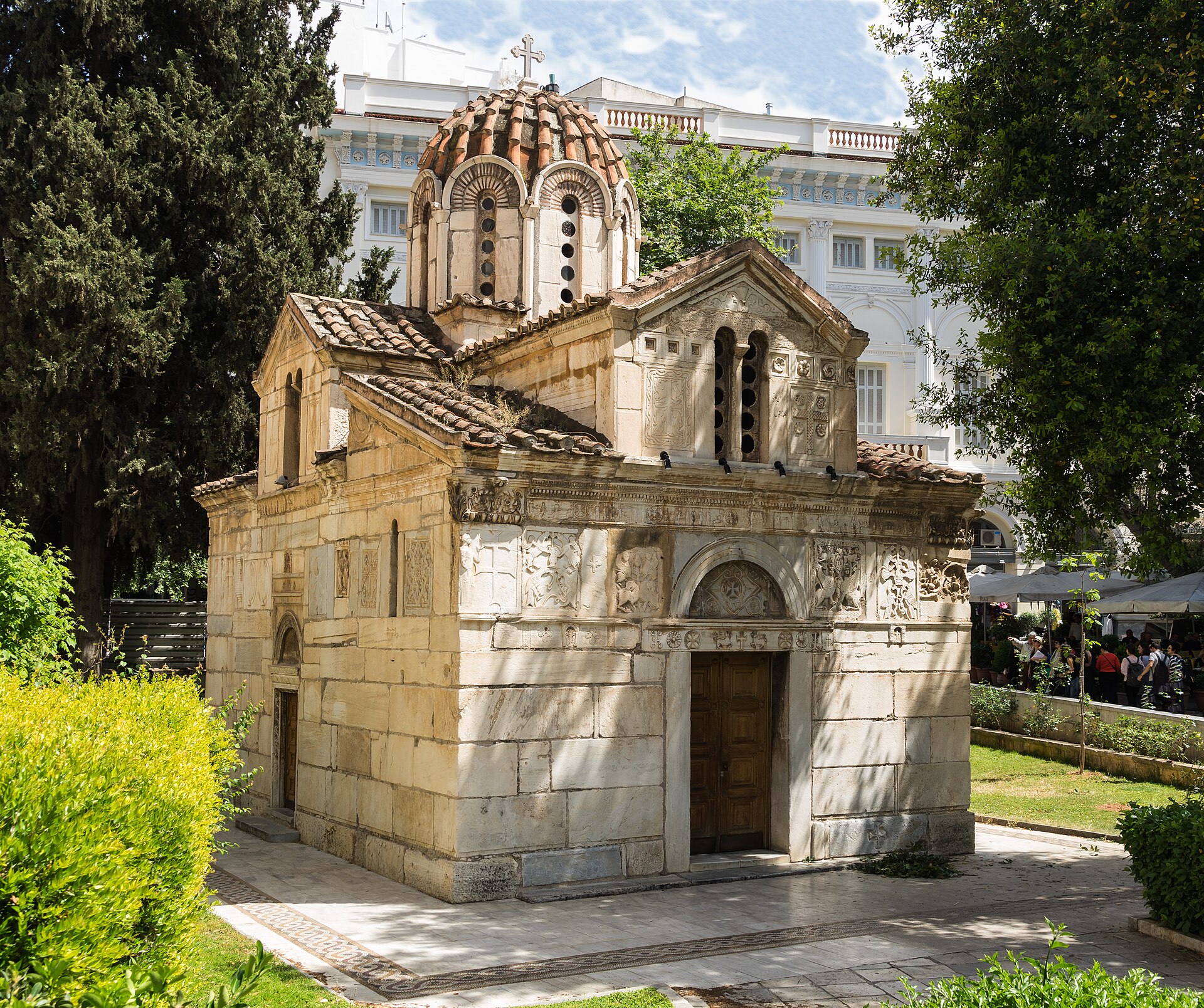
Little Metropolis (Panagia Gorgoepikoos)
56 Mitropoleos, 1st Municipal Community, Athens, 105 63, Greece
Dwarfed by the massive Athens Cathedral next door, this tiny church — just 7.6 meters long and 12.2 meters wide — is one of the most extraordinary buildings in Greece, and almost everyone walks right past it. The Church of Panagia Gorgoepikoos ("Our Lady Who Grants Wishes Quickly") is a medieval collage, its walls built entirely from ancient marble blocks scavenged from temples, monuments, and buildings spanning over a thousand years of Greek civilization. Look closely at the exterior and you'll find it all: Classical Greek reliefs next to Roman inscriptions next to Byzantine crosses. A frieze on the upper west wall is divided into twelve sections depicting zodiac signs, celebrations, and agricultural activities corresponding to months of an ancient lunar calendar — a pagan artifact repurposed as Christian decoration. Some blocks bear inscriptions from the fourth century BC; others feature early Christian symbols. The whole building is essentially a three-dimensional archaeological puzzle, with each stone carrying a different chapter of Athenian history. Dating the church is contentious — most scholars place it in the twelfth or thirteenth century, though local tradition attributes its founding to the Empress Irene, who ruled the Byzantine Empire from 797 to 802. It once served as the metropolitan church of Athens, hence its nickname "Little Metropolis," standing within the grounds of the Archbishopric. The church's construction method is unique in Byzantine sacred architecture: no other Byzantine church is known to have been built entirely from ancient spolia in this way. It's a building that treats pagan and Christian history not as opponents but as construction materials — literally cemented together into something new. Stand in Mitropoleos Square, ignore the massive cathedral, and look at the small one. That's where the real story is.
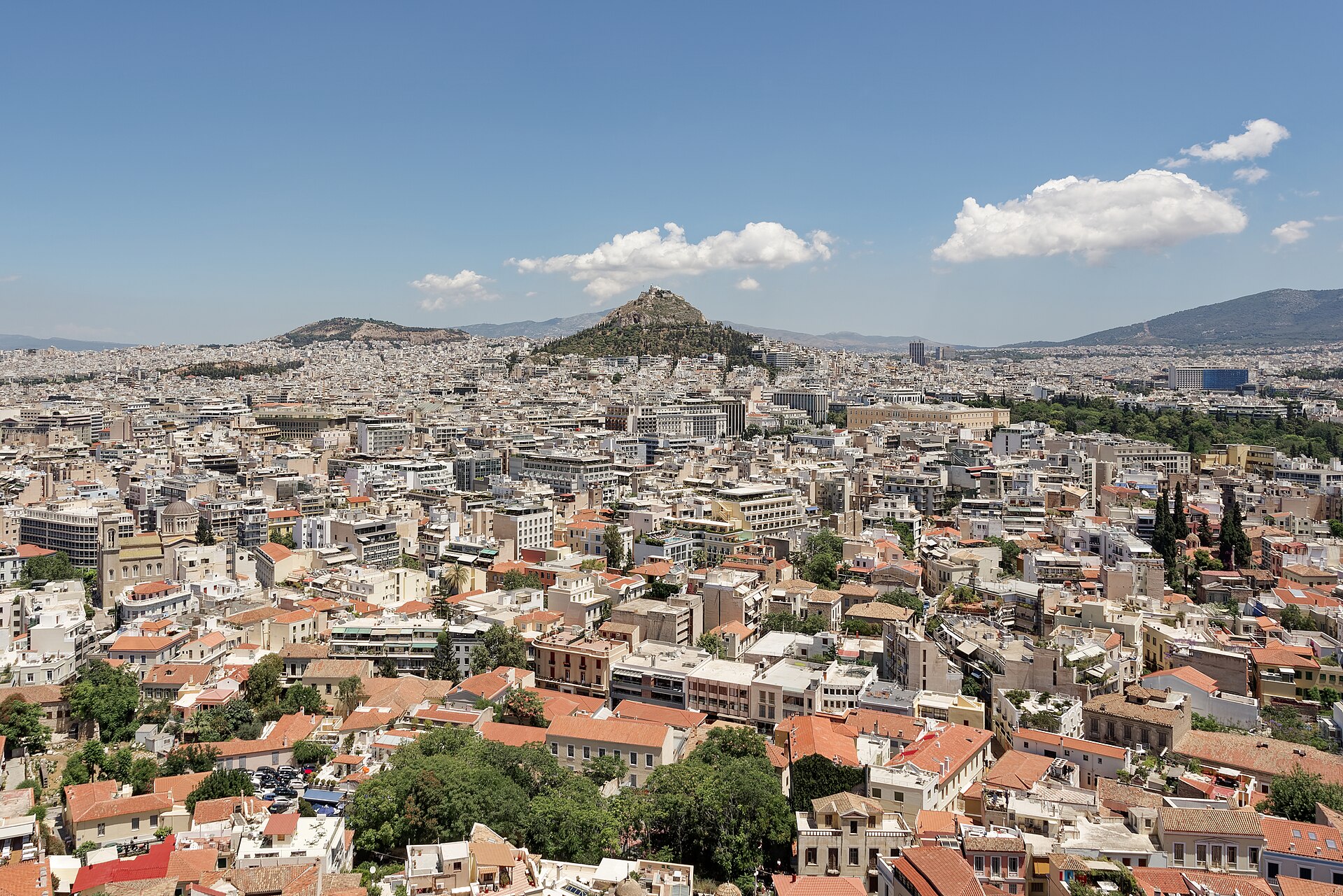
Lycabettus Hill
Athens, Greece
According to myth, Athena was carrying this entire limestone hill to use as fortification for the Acropolis when a raven brought her bad news. She dropped the rock in surprise, and it landed here — 277 meters above sea level, the highest point in central Athens. The name might derive from "lykos" (wolf), because wolves once roamed its slopes. Either way, nobody else offers a better origin story for a hill. At the summit sits the tiny white Chapel of Saint George, built in the eighteenth century and visible from half the city like a bright white dot against grey rock. Below it, the 3,000-seat Lycabettus Theatre, carved into the hillside in 1964, hosts summer concerts with arguably the most dramatic backdrop of any music venue in Europe — the Acropolis lit up below and the Saronic Gulf glittering in the distance. You can walk up (about 30 minutes of steep switchbacks through pine forest), or take the funicular railway that burrows through the inside of the hill in a tunnel. The funicular has been running since 1965, and the ride through solid rock feels like something out of a Bond villain's lair. Either way, sunset from the top is non-negotiable — on clear days you can see all the way to Aegina, Salamis, and the mountains of the Peloponnese. The hill was largely barren until the 1880s, when a massive reforestation campaign planted the pine trees that now cover its slopes. Before that, it was rocky scrubland that Athenians mostly avoided. Now it's the city's favorite escape — close enough to walk to from Kolonaki, far enough above the noise to feel like you've left Athens entirely.
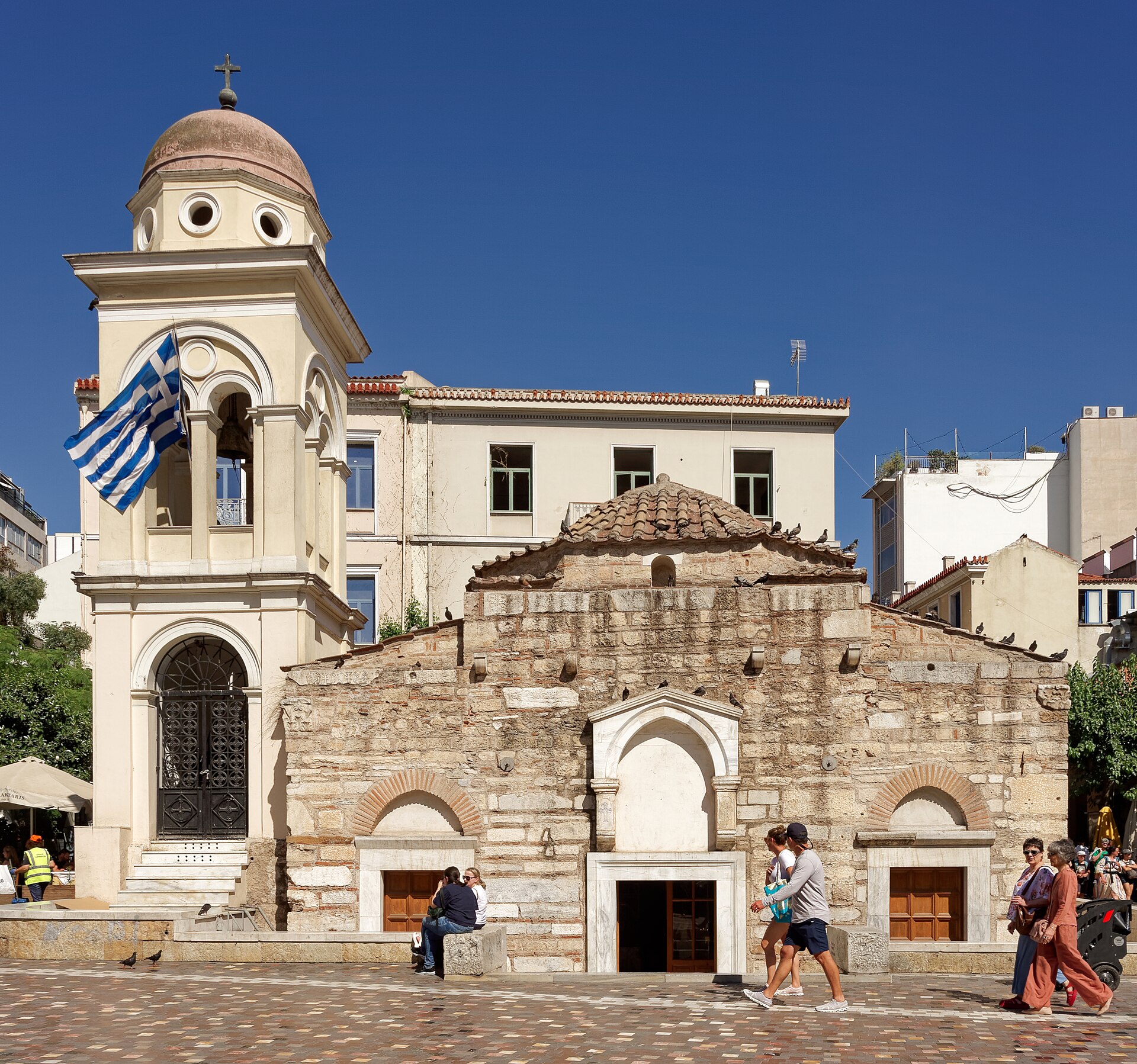
Monastiraki
105 Plateia Monastirakiou, 1st Municipal Community, Athens, 105 55, Greece
Named after a small monastery that no longer exists, Monastiraki is Athens at its most chaotic, layered, and alive. The square sits at the intersection of roughly 3,000 years of commercial activity — you can see the Ancient Agora from here, Hadrian's Library is right next door, and a functioning Ottoman mosque from 1759 anchors the plaza. That mosque, the Tzistarakis Mosque, caused a scandal when its builder allegedly pillaged a column from the ruins of the Temple of Olympian Zeus to make lime for its construction. Athenians blamed the resulting plague on the sacrilege. The flea market that spills through the surrounding streets every Sunday is legendary. Abyssinia Square becomes a carpet of secondhand goods — everything from vintage cameras and Ottoman-era copper pots to old military uniforms and broken electronics that someone insists still work. During the week, permanent shops sell leather sandals, worry beads, and icons. The smarter bargainers come early and know that the real treasures are in the warehouses behind the stalls, not on the tables. What makes Monastiraki unusual is the geological cross-section of history visible from a single vantage point. Stand in the square and you can see: the Acropolis (fifth century BC), Hadrian's Library (second century AD), the Tzistarakis Mosque (eighteenth century), the Metro station (twenty-first century, built around archaeological finds displayed in glass cases on the platforms), and a McDonald's that somehow got planning permission for all of this. Come at sunset, when the light hits the Acropolis from behind and the flea market vendors start packing up. That golden hour, with a gyro in one hand and the sound of a bouzouki drifting from somewhere, is Athens distilled.
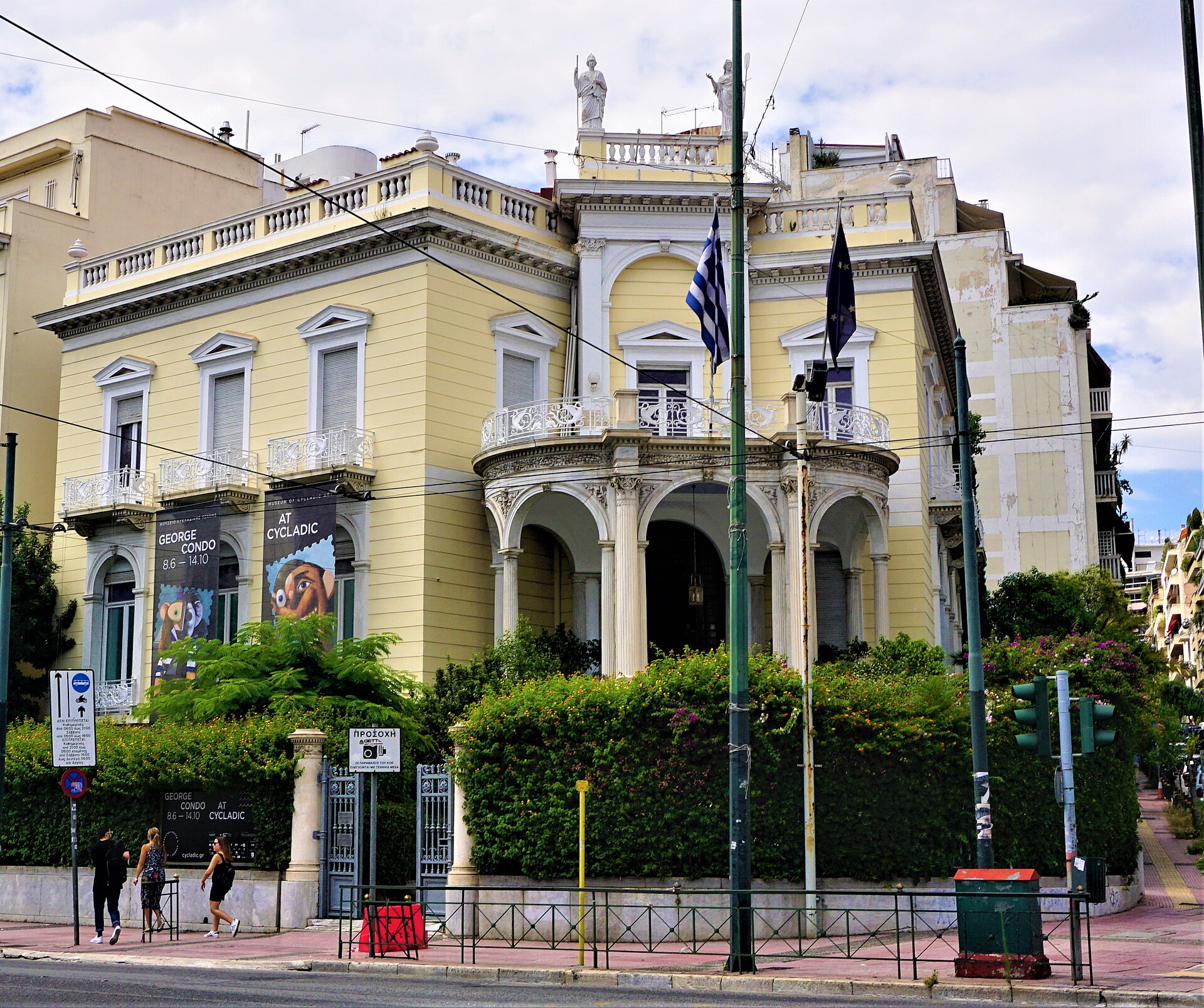
Museum of Cycladic Art
4 Douka Neofytou, 1st Municipal Community, Athens, 106 74, Greece
Five thousand years ago, sculptors in the Cycladic islands were carving human figures so minimal, so abstract, so hauntingly modern that when Picasso and Modigliani saw them in the early twentieth century, they thought they'd found proof that modernism was ancient. The flat faces, folded arms, and elongated forms of Cycladic figurines look like they could have been carved yesterday by a sculptor who'd studied Brancusi. They're actually from around 3000 BC. This museum, inaugurated in 1986, houses one of the world's most important collections of Cycladic art — the personal collection of shipping magnates Nicholas and Dolly Goulandris, who spent decades acquiring these enigmatic marble figures. Nobody knows what they were for. Most were found in graves, but whether they're gods, ancestors, mourners, or something else entirely remains one of the great unsolved puzzles of Mediterranean archaeology. What's clear is their aesthetic sophistication: each figure was carved from a single piece of marble using only obsidian blades and emery from Naxos. The museum occupies two connected buildings in the upscale Kolonaki district: the main Stathatos Mansion, an 1895 neoclassical building designed by Ernst Ziller, and a modern annex. Beyond the Cycladic collection, there's an impressive assemblage of ancient Greek and Cypriot art. But it's the Cycladic hall everyone comes for — a quiet, dimly lit space where these pale marble ghosts stand in glass cases, their blank faces somehow more expressive than most portraits. The gift shop is legitimately excellent, selling high-quality reproductions of Cycladic figures that have become design objects in their own right. If you can only visit one small museum in Athens, this is the one — intimate, focused, and genuinely moving.
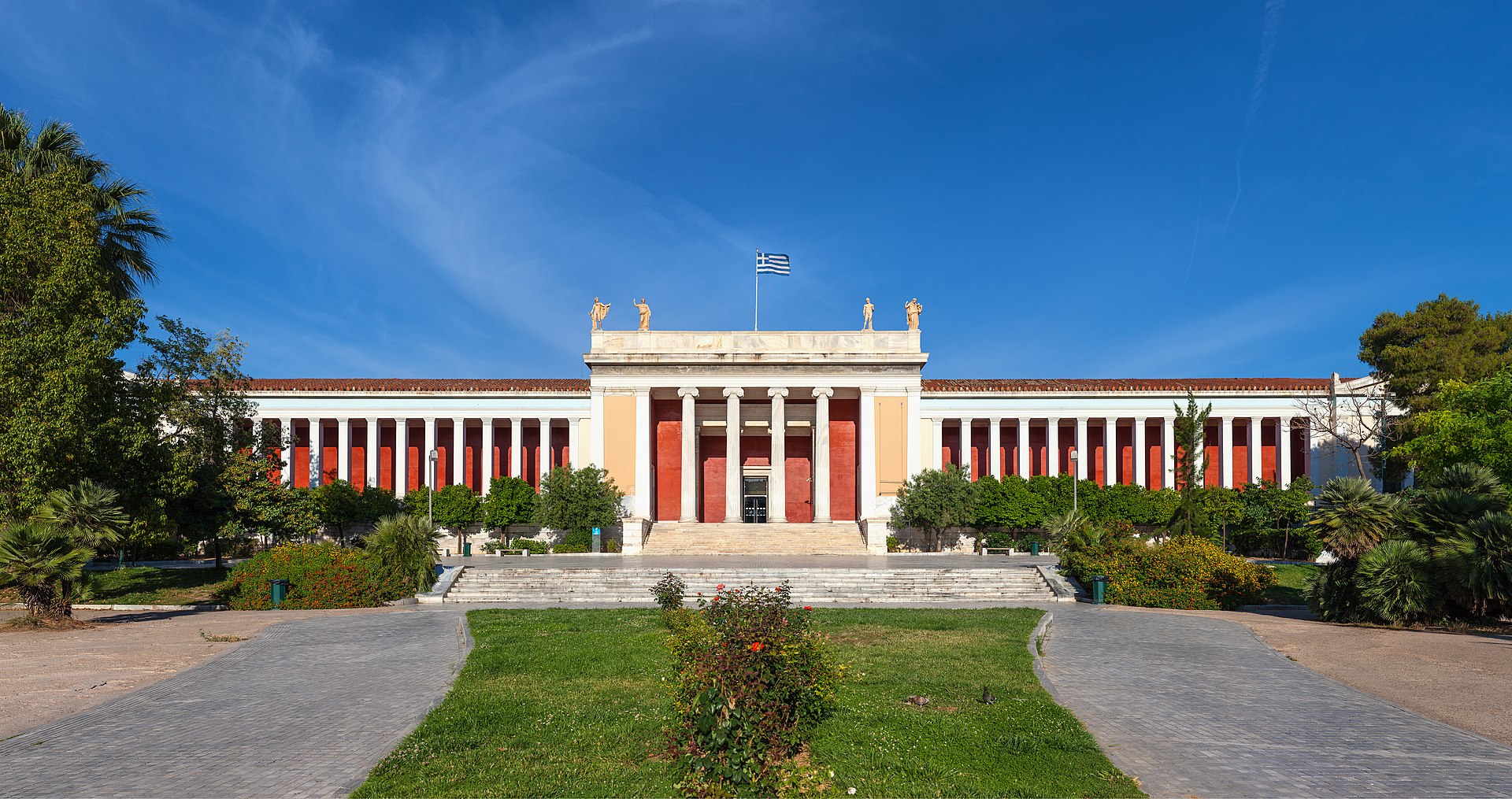
National Archaeological Museum
44 28is Oktovriou, 1st Municipal Community, Athens, 106 82, Greece
This is where Greece keeps the really good stuff. The National Archaeological Museum holds over 11,000 artifacts spanning from prehistory to late antiquity, making it the richest collection of Greek antiquities on Earth. The Mask of Agamemnon is here — the gold funeral mask that Heinrich Schliemann found at Mycenae in 1876 and, in a fit of dramatic overstatement, declared belonged to the legendary king. It doesn't (it's about 300 years too old), but it's still one of the most famous gold artifacts of the ancient world. The museum's most mind-bending object is the Antikythera Mechanism — a corroded lump of bronze gears pulled from a Roman-era shipwreck in 1901 by sponge divers off the island of Antikythera. For decades nobody understood what it was. Then researchers realized it was an astronomical calculator with over 30 interlocking gears that could predict eclipses, track the movements of the sun and moon, and even calculate the timing of the Olympic Games. It dates to around 100 BC and represents a level of mechanical sophistication that wouldn't be seen again for over a thousand years. It's essentially the world's first analog computer. During World War II, museum staff buried the entire collection underground to prevent Nazi looting — a massive operation that saved thousands of irreplaceable objects. The exhibits were sealed in protective boxes, and the museum didn't reopen until 1945. The building itself dates to 1889, and while it can't compete with the Acropolis Museum for architectural glamour, its sheer density of masterpieces per square meter is unmatched. The bronze Poseidon (or Zeus — scholars still argue) from Cape Artemision alone is worth the visit: a perfect fifth-century BC athlete frozen mid-throw, rescued from the bottom of the sea.
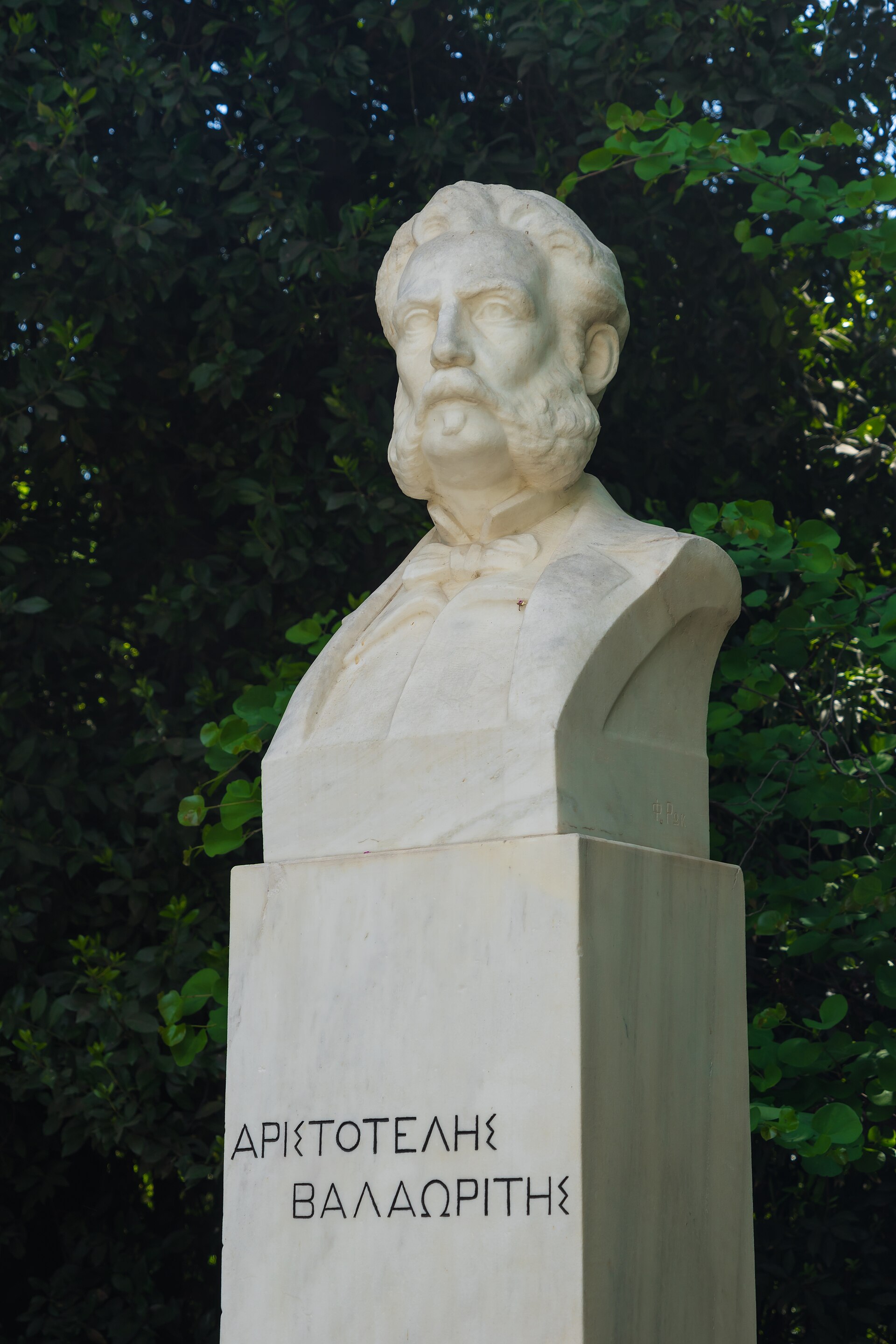
National Garden
Leoforos Vasilissis Amalias, 2nd Municipal Community, Athens, 105 58, Greece
Behind the Greek Parliament, hidden from the noise and concrete of Syntagma Square, lies 15.5 hectares of what feels like an entirely different climate. The National Garden is Athens' green lung — a dense, shady oasis of over 500 species of trees and plants from around the world, with winding paths that lead past duck ponds, Roman ruins, and a tiny zoo that somehow has peacocks, goats, and a turtle pond. The garden was commissioned in 1838 by Queen Amalia, the Bavarian-born wife of King Otto, who reportedly spent three hours a day personally tending it. She brought the Western European landscape garden concept to Athens and hired specialists from multiple countries to adapt it to the Mediterranean climate. By 1840, the initial planting was complete; by 1852, the garden had expanded to its full extent, incorporating exotic species shipped from around the world. A dedicated warship was used to transport rare plants from botanical gardens in Italy, France, and Asia. Originally the Royal Garden, it was opened to the public in the 1920s and renamed the National Garden. The entrance was moved to the avenue Queen Amalia had planted with twelve palm trees, and the street in front was renamed Vasilissis Amalias (Queen Amalia Avenue) in her honor. Inside you'll find the Zappeion, a neoclassical exhibition hall built for the first modern Olympics and now used for conferences, and scattered ancient column fragments that were dug up during the garden's creation. It's the quietest place in central Athens. Stray cats sleep on Roman marble, elderly men play backgammon on benches, and the canopy is so thick that summer temperatures drop several degrees the moment you step through the gates.
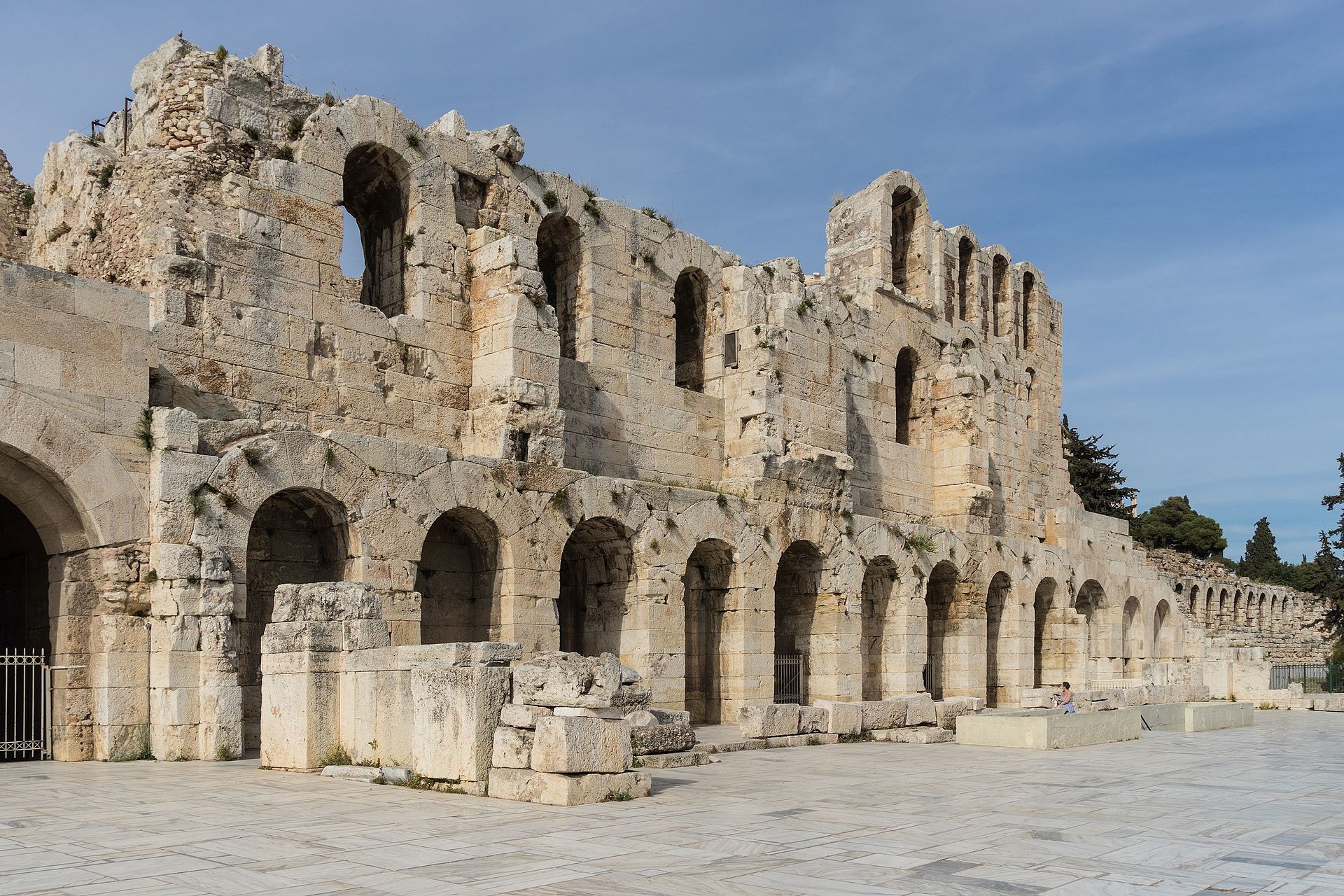
Odeon of Herodes Atticus
Dionysiou tou Areopagitou, 1st Municipal Community, Athens, 117 42, Greece
A Roman billionaire built this theater as a monument to grief. In 161 AD, Herodes Atticus — an Athenian senator, orator, and one of the wealthiest men in the Roman Empire — commissioned this stone odeon in memory of his wife Aspasia Annia Regilla, who had died under mysterious circumstances. (Some ancient sources hint that Herodes may have had her killed, which makes the memorial either deeply moving or deeply disturbing, depending on which gossip you believe.) The theater was carved into the southwest slope of the Acropolis with 33 rows of marble seating for 5,000 spectators. Its most remarkable feature was the three-story stone front wall, 28 meters high, with niches for statues and a now-vanished roof of expensive cedar of Lebanon timber. When the ancient traveler Pausanias visited, he described it as "the finest building of its type." It functioned for about a century before the Heruli sacked Athens in 267 AD and burned the wooden roof, leaving the structure as a roofless shell for nearly 1,700 years. The seats and orchestra were restored with Pentelic marble in the 1950s, and since then the Odeon has served as the principal venue of the Athens Festival, running May through October each year. Maria Callas performed here. Luciano Pavarotti sang here. Frank Sinatra, Elton John, and Björk have all played under the Acropolis walls. Attending a performance here on a summer evening — with the flood-lit Parthenon glowing above and the stars overhead where the cedar roof once was — ranks as one of the great cultural experiences in Europe. The acoustics, designed for unamplifed Roman oratory, remain extraordinary: a whisper on stage reaches the back row.
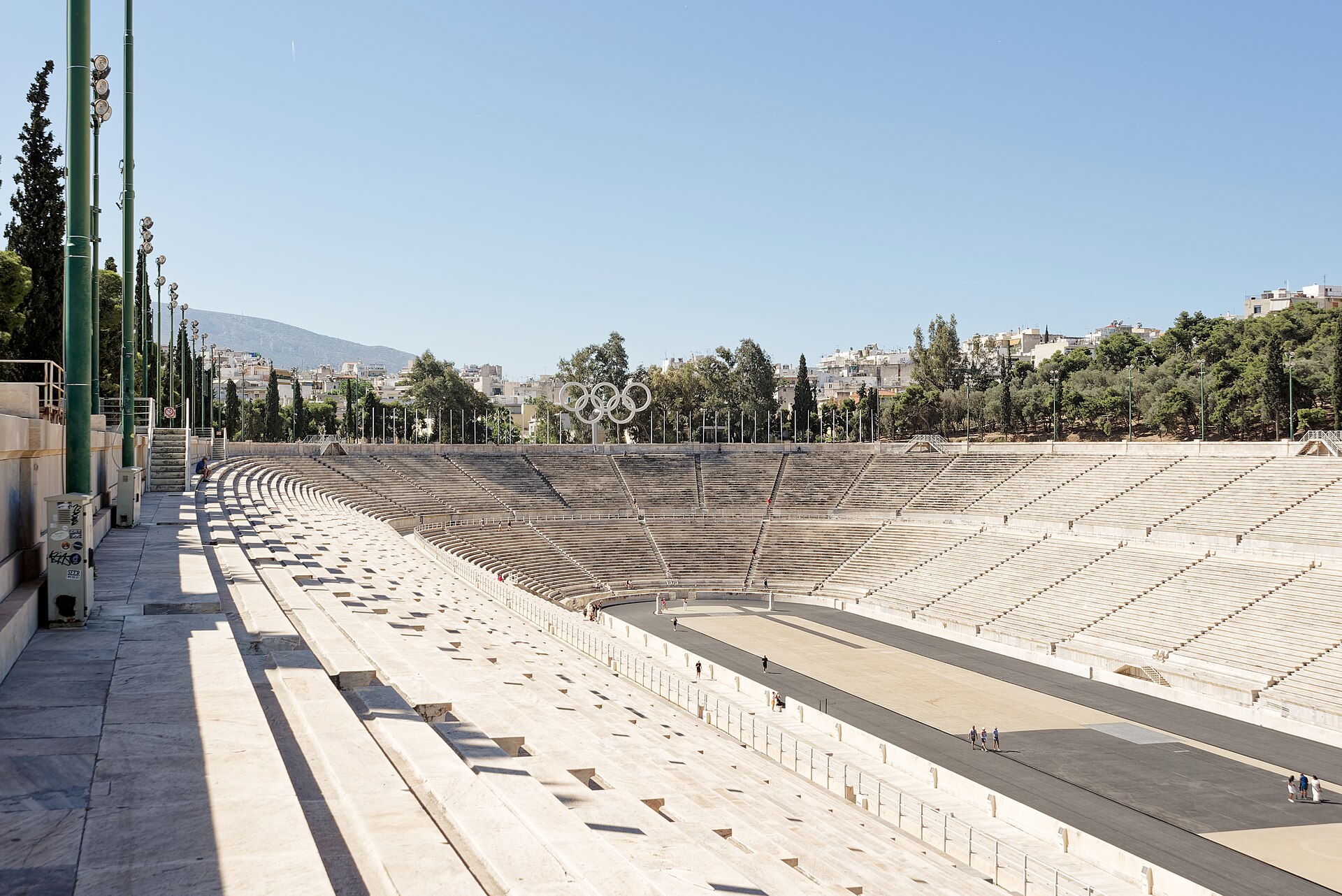
Panathenaic Stadium
35 Leoforos Vasileos Konstantinou, 2nd Municipal Community, Athens, 106 74, Greece
The only stadium in the world built entirely of marble, and it looks exactly like it sounds — blindingly white in the midday sun, 50,000 seats of Pentelic marble carved into a natural ravine between two hills. The Greeks call it Kallimarmaro, "beautiful marble," which is the kind of name you give something when you want to make absolutely sure no one misses the point. A stadium has occupied this site since around 330 BC, when the Athenian statesman Lycurgus built a venue for the Panathenaic Games — Athens' answer to the Olympics at Olympia. In 144 AD, the Roman senator Herodes Atticus rebuilt the entire thing in marble, creating a 50,000-seat U-shaped arena. After the Roman Empire banned pagan festivals in the late fourth century, the stadium was abandoned and gradually buried under centuries of soil and debris. It was excavated and reconstructed for the first modern Olympic Games in 1896, making it the only ancient stadium in the world to have hosted the modern Olympics. The 1896 Games were a chaotic, beautiful mess — only 14 countries participated, the marathon was won by a Greek water-carrier named Spyridon Louis, and the stadium was so packed that people stood on the surrounding hills. The stadium hosted archery events at the 2004 Athens Olympics and still serves as the finish line for the annual Athens Marathon. Walk onto the track and stand where athletes competed 2,350 years ago. The marble seats rise steeply on three sides, creating an amphitheater effect that amplifies sound dramatically — you can hear a coin drop from the far end. The experience of being inside this space, surrounded by nothing but stone and sky, is something concrete and glass stadiums can't replicate.
Parthenon
Acropolis, Athens 105 58
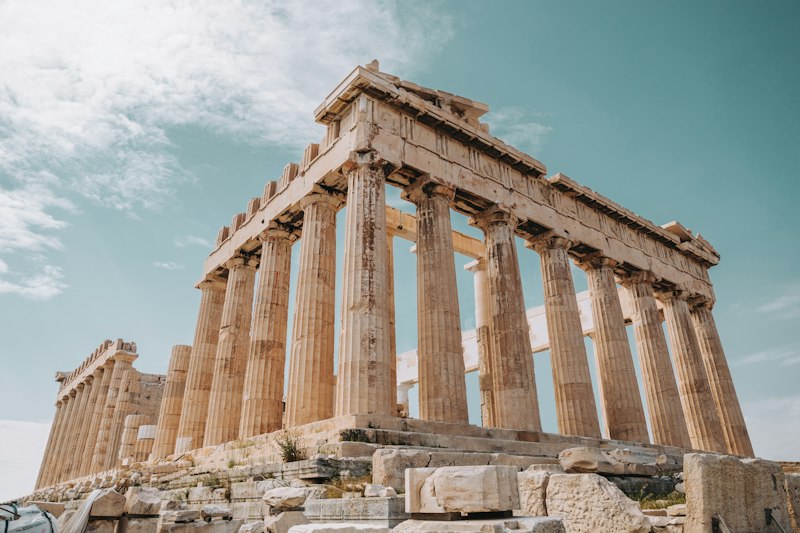
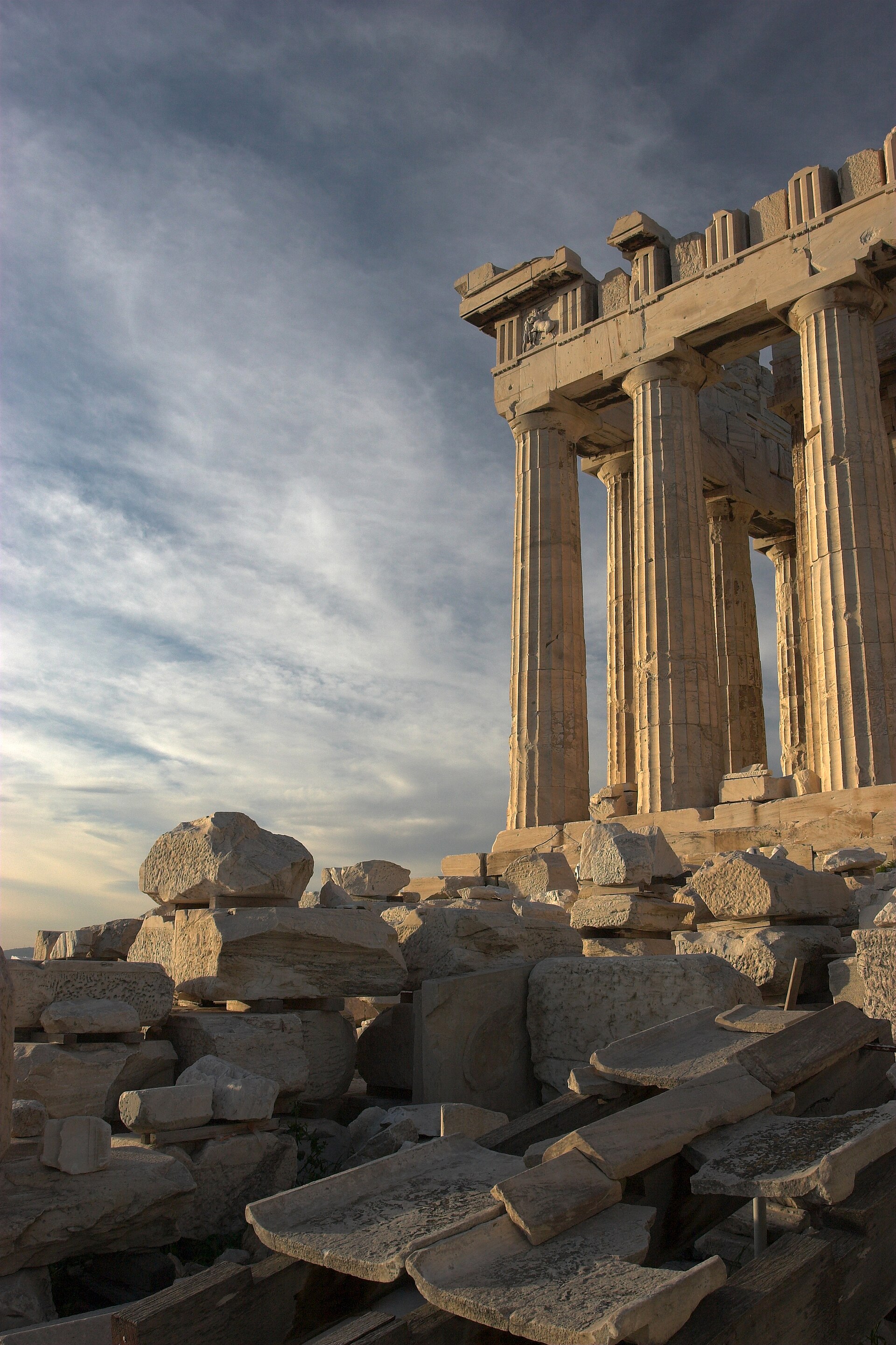
The Parthenon was never really a temple in the way most people think. It had no altar for sacrifices, no congregation space, and no regular religious ceremonies. Its primary purpose was as a treasury and a showpiece — a giant marble flex by Athens to remind every Greek city-state who was running the show. The 12-meter-tall gold-and-ivory statue of Athena inside, crafted by Phidias, used over a thousand kilograms of gold. When Athens needed emergency funds, they could literally peel the gold off their goddess. Built between 447 and 432 BC, it took just nine years to construct — astonishingly fast for a building made entirely of Pentelic marble quarried 16 kilometers away on Mount Pentelicus. The architects Ictinus and Callicrates achieved something that wouldn't be replicated for two millennia: they built a structure with virtually no straight lines. The stylobate curves upward, the columns lean inward, and each column diameter varies. These "refinements" were so subtle and expensive that later civilizations assumed they were accidental until modern surveyors proved they were deliberate. The sculpted frieze that once wrapped around the building depicted 378 human and 245 animal figures — the largest sculptural program in the Greek world. About half the surviving sculptures are in the British Museum (the "Elgin Marbles"), and Greece has been asking for them back since 1832. The debate over their return remains one of the longest-running cultural disputes in history. After 2,500 years as temple, church, mosque, and ruin, the Parthenon is currently undergoing its most ambitious restoration ever — a project that's been running since 1975 and uses titanium dowels instead of the iron ones that rusted and cracked the original marble.
Philopappos Hill
Filopappou, 1st Municipal Community, Athens, 117 41, Greece
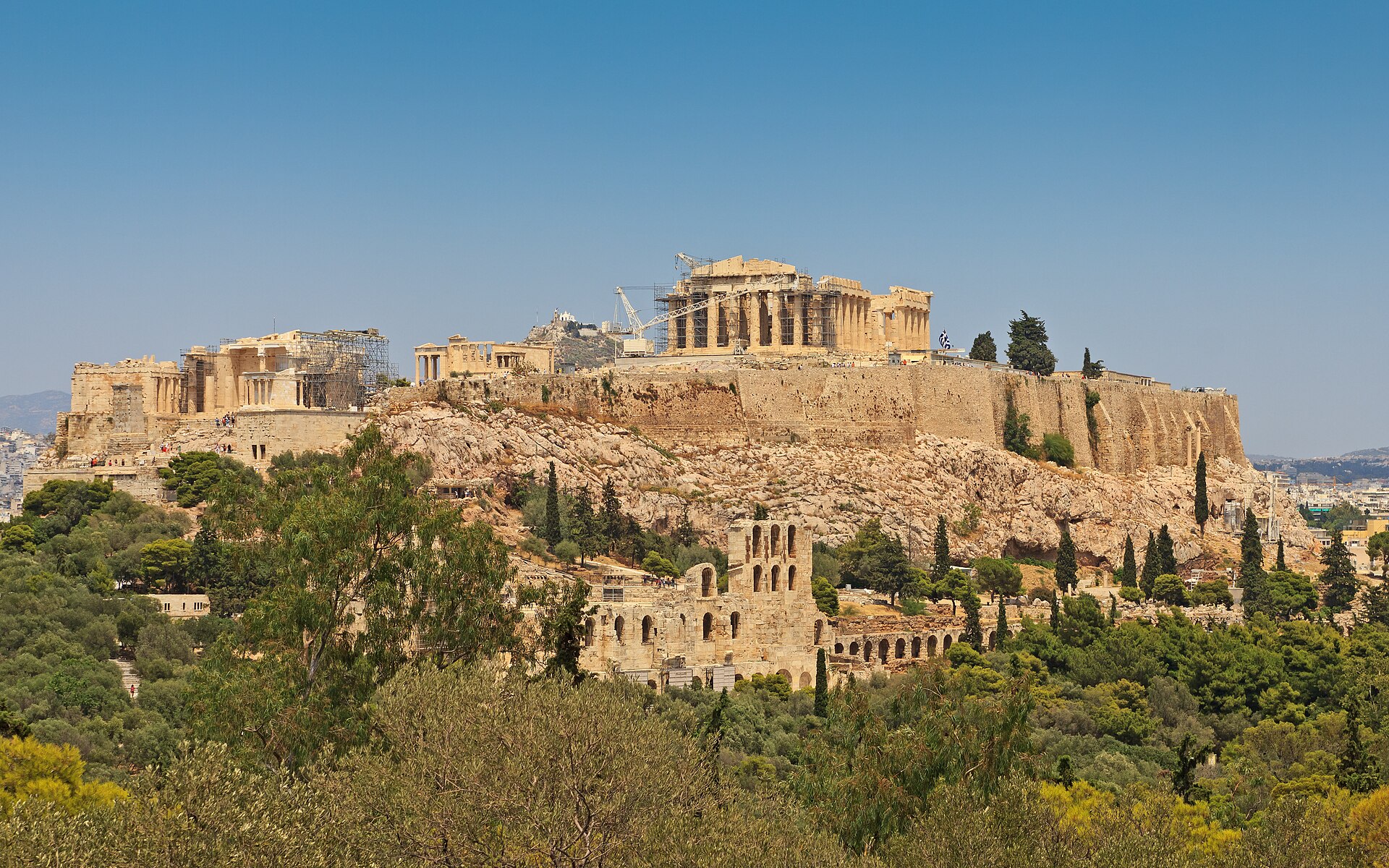
The best view of the Acropolis isn't from the Acropolis — it's from this pine-covered hill directly southwest, where the Parthenon fills your entire field of vision without a single railing, scaffolding, or selfie stick in the way. Philopappos Hill is where Athenians go to escape tourists, walk their dogs, and watch the sun set behind the Saronic Gulf while the Acropolis turns from white to gold to burning orange. The hill is named after Gaius Julius Antiochus Epiphanes Philopappos, a Syrian prince from the Kingdom of Commagene who became an Athenian citizen and Roman consul in the second century AD. When he died in 116 AD, the grateful citizens of Athens built him a monument on the summit — a partially surviving marble facade that once stood 12 meters tall, decorated with relief sculptures showing Philopappos riding in a chariot as Roman consul. It's one of the few funerary monuments from Roman Athens that's still in situ. But the hill's history goes much deeper. On its slopes are caves traditionally identified as the Prison of Socrates — rock-cut chambers where the philosopher supposedly awaited execution in 399 BC after being convicted of corrupting Athenian youth. Most historians believe the actual prison was near the Agora, but the association stuck. During World War II, Greeks hid priceless artifacts from the Acropolis and the National Archaeological Museum inside these chambers to protect them from Nazi looting. The Pnyx, the hillside where Athenian citizens gathered to vote in the world's first direct democracy, is just a short walk along the ridge. Pericles, Demosthenes, and Themistocles all addressed the assembly from its carved speaker's platform. Democracy literally started on this hillside.
Plaka
1st Municipal Community, Athens, Greece
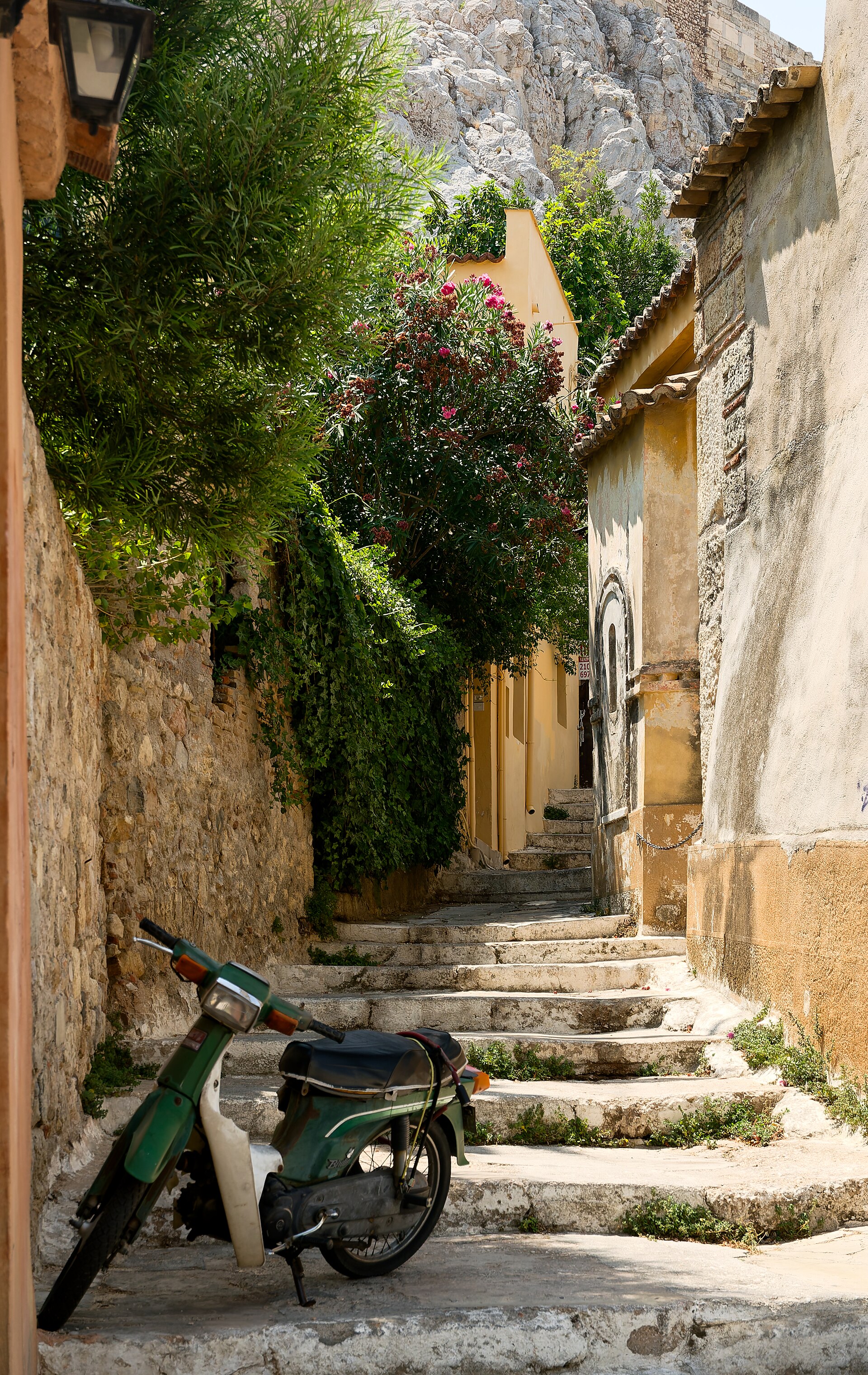
They call it the "Neighborhood of the Gods," which is technically accurate — the Acropolis and its divine residents are right overhead — but also slightly misleading, because Plaka's real magic is how stubbornly human it feels. This is the oldest continuously inhabited district in Athens, with streets you can trace back to antiquity. Adrianou Street follows the same line it did when Hadrian walked it. Tripodon Street — named for the bronze tripods that victorious drama sponsors displayed here — has kept its route since the fifth century BC. The name's origin is debated: it might come from the Albanian word "plak" meaning "old," a nod to the Albanian community that populated the area under Ottoman rule. Until the late nineteenth century, Plaka had a substantial Albanian-speaking population, and its character was as much Balkan as it was Greek. After the Greek War of Independence, when Athens became the new capital in 1834, King Otto's court arrived and the neighborhood filled up with neoclassical mansions. Many survive, painted in faded ochre and terracotta, with wrought-iron balconies dripping with bougainvillea. In the 1960s and '70s, Plaka nearly destroyed itself. Nightclubs, neon signs, and tourist traps overwhelmed the historic streets until a residents' revolt in the 1980s led to strict preservation laws, pedestrianization, and the closure of the worst offenders. What you walk through today is the result of that fight — a neighborhood that chose atmosphere over profit. Explore the side streets and you'll find the Lysicrates Monument (335 BC, the oldest surviving use of Corinthian columns on a building exterior), tiny Byzantine churches wedged between houses, and rooftop tavernas where the Parthenon floats above your wine glass like a hallucination.
Psyrri
Psyrri, Athens 105 54
Once a gritty district of leather tanneries and workshops where Athens' artisans hammered, stitched, and sewed since Ottoman times, Psyrri has reinvented itself as the city's most vibrant nightlife and street-art quarter. The transformation started in the early 2000s when artists and young entrepreneurs, drawn by cheap rents and authentic character, began opening galleries, bars, and studios in abandoned workshops. What they created is a neighborhood that feels like a curated collision between old Athens and the city's contemporary creative scene. The streets are an open-air gallery. Massive murals cover entire building facades — some political, some purely aesthetic, all reflecting the anarchist-adjacent energy that pulses through central Athens. The work ranges from internationally recognized street artists to local kids with spray cans, and the turnover is constant. What you see today will be painted over next month. The neighborhood sits just north of Monastiraki, bounded by Athinas Street and Ermou, in what was once the artisan quarter where potters, sculptors, and tailors worked since ancient times. At night, Psyrri comes alive. The central Plateia Iroon (Heroes' Square), laid out in 1850, fills with tables from surrounding bars and restaurants. Live rembetika music — Greece's equivalent of the blues, born in the hash dens of Piraeus and Smyrna refugee camps — drifts from basement venues. Rooftop bars serve Aperol Spritzes with Acropolis views. Mezedopolia (small-plate restaurants) serve dishes that haven't changed in decades alongside newer spots experimenting with contemporary Greek cuisine. Come after 10 PM on a weekend when the narrow streets are packed and every doorway seems to lead to a different world — a vinyl record shop, a cocktail bar in a former warehouse, a tiny gallery showing someone's thesis project. This is Athens at its most spontaneous.
Stavros Niarchos Foundation Cultural Center
364 Leoforos Andrea Syngrou, Kallithea, 176 74, Greece
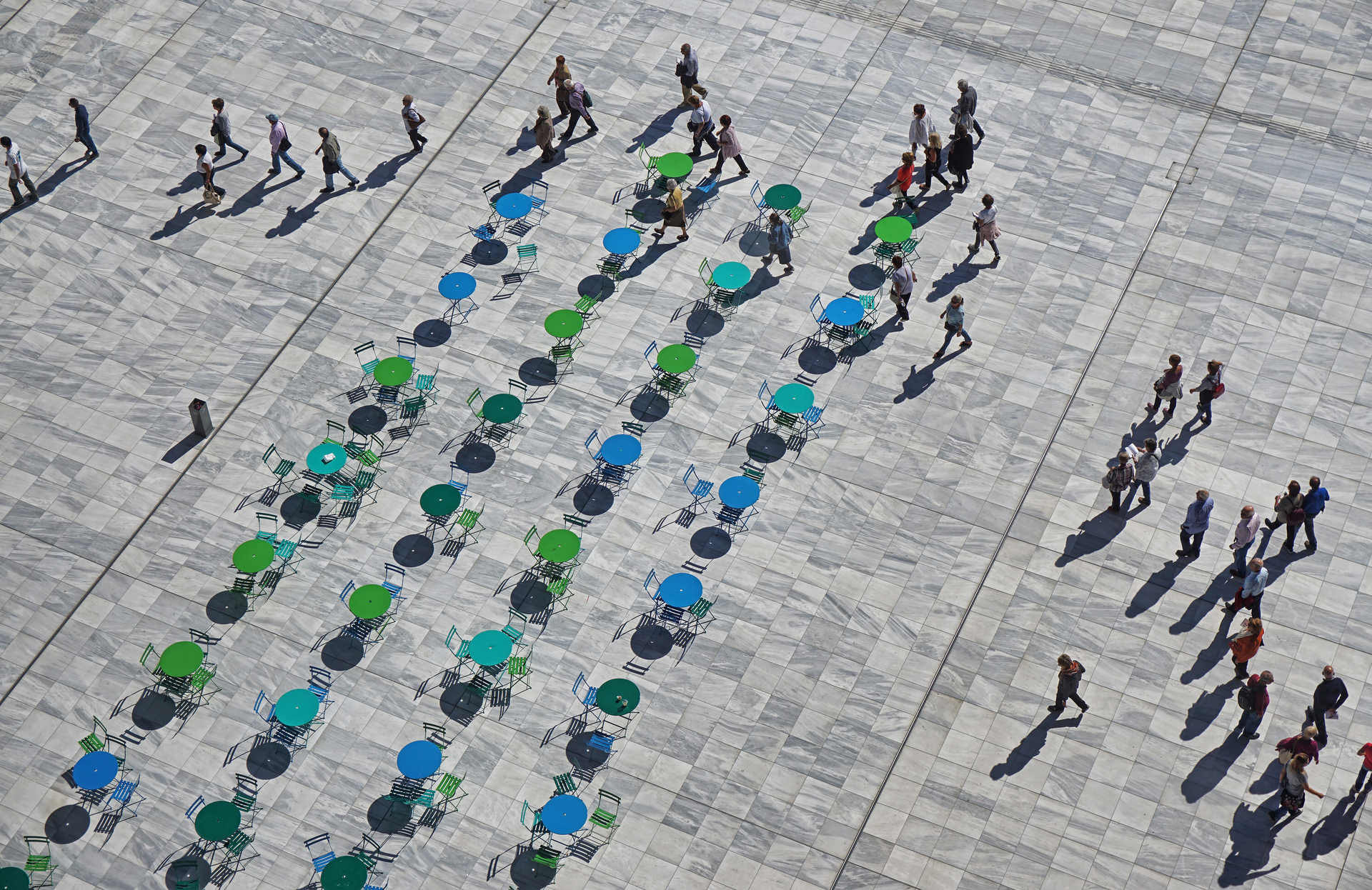
When a Greek shipping dynasty decides to give back, they don't do things by halves. The Stavros Niarchos Foundation spent $861 million building this complex — designed by Pritzker Prize-winning architect Renzo Piano — and then donated the entire thing to the Greek state in 2017. It houses the National Library of Greece and the Greek National Opera under one roof, surrounded by 170,000 square meters of landscaped parkland. It is, by any measure, the most ambitious cultural building project in modern Greek history. Piano's design concept was to create an artificial hill — a building that rises out of the ground like a dislodged piece of the Earth's crust. The roof of the opera house and library forms a sloping landscape that visitors walk up, ultimately reaching a canopy topped with 10,000 square meters of photovoltaic cells that generate 1.5 megawatts of power, making the building largely energy self-sufficient during normal hours. It was the first public building in Greece to achieve Platinum LEED certification. The opera house seats 1,400 in the main auditorium plus 400 in a flexible black box theater. The library's reading room sits at the top of the building, entirely encased in glass, with 360-degree views of Athens, the Saronic Gulf, and the mountains. Below, a canal and reflecting pools create a water feature that runs through the park, which includes an olive grove, running paths, playgrounds, and a summer cinema. Located 4 kilometers south of central Athens in Kallithea — a working-class neighborhood that the SNFCC has single-handedly transformed — it's best reached by a dedicated bus or the coastal tram. Come on a Sunday when Athenian families spread out on the sloped lawn for picnics, kids run through the water features, and the opera house is hosting something free. It feels like the Athens of the future.
Stoa of Attalos
Ancient Agora, Athens 105 55
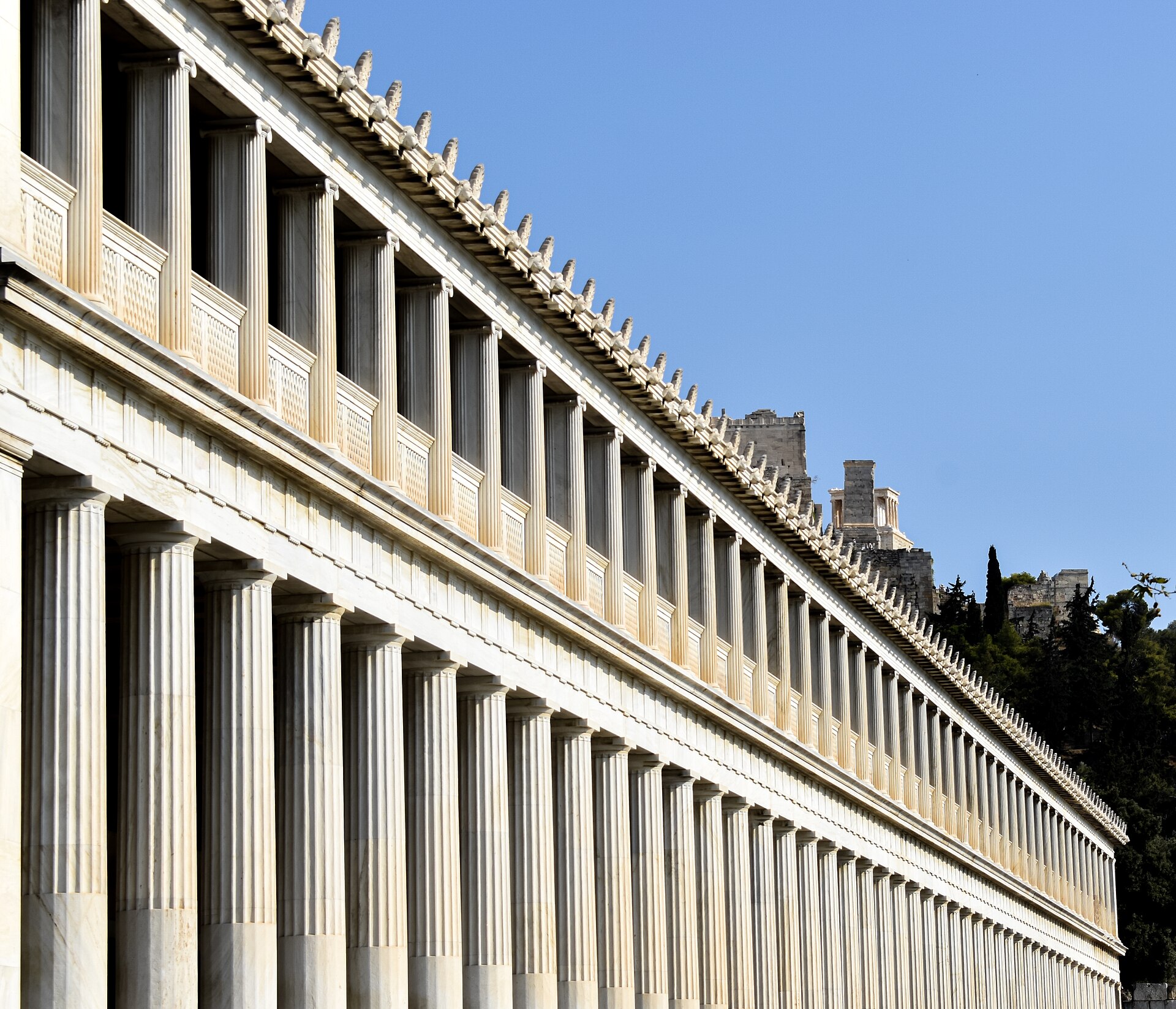
A fully reconstructed ancient Greek shopping mall stands in the middle of the Agora, and it works brilliantly as both a museum and a piece of experimental archaeology. The original Stoa of Attalos was built between 159 and 138 BC by King Attalos II of Pergamon as a gift to Athens — a thank-you for the education he received studying under the philosopher Carneades. It was the ancient equivalent of an alumnus donating a campus building, except this one was 115 meters long and had 42 shops on two floors. The building burned during the Herulian sack in 267 AD and lay in ruins for nearly 1,700 years until the American School of Classical Studies at Athens reconstructed it between 1952 and 1956. They used the original foundations, Pentelic marble for the facade, and a careful study of the surviving fragments to rebuild the stoa to its full two-story height. Aside from the reconstruction of the Panathenaic Stadium for the 1896 Olympics, it was the most ambitious reconstruction of a freestanding ancient building attempted in Athens. Today the ground floor serves as the Museum of the Ancient Agora, displaying artifacts connected to Athenian democracy — bronze ballots used for jury duty, the kleroterion (a randomization device for selecting jurors), ostraka inscribed with the names of politicians voted into exile, and everyday objects from the lives of ordinary Athenians. The colonnade provides shade on hot days just as it did 2,200 years ago, and the upper gallery offers panoramic views across the entire Agora site. Standing inside the stoa, you get something most ruins can't give you: a visceral sense of scale. This is what an ancient public building actually felt like — the proportions, the light, the echo of footsteps on marble.
Syntagma Square
Plateia Syntagmatos, Athens 105 63
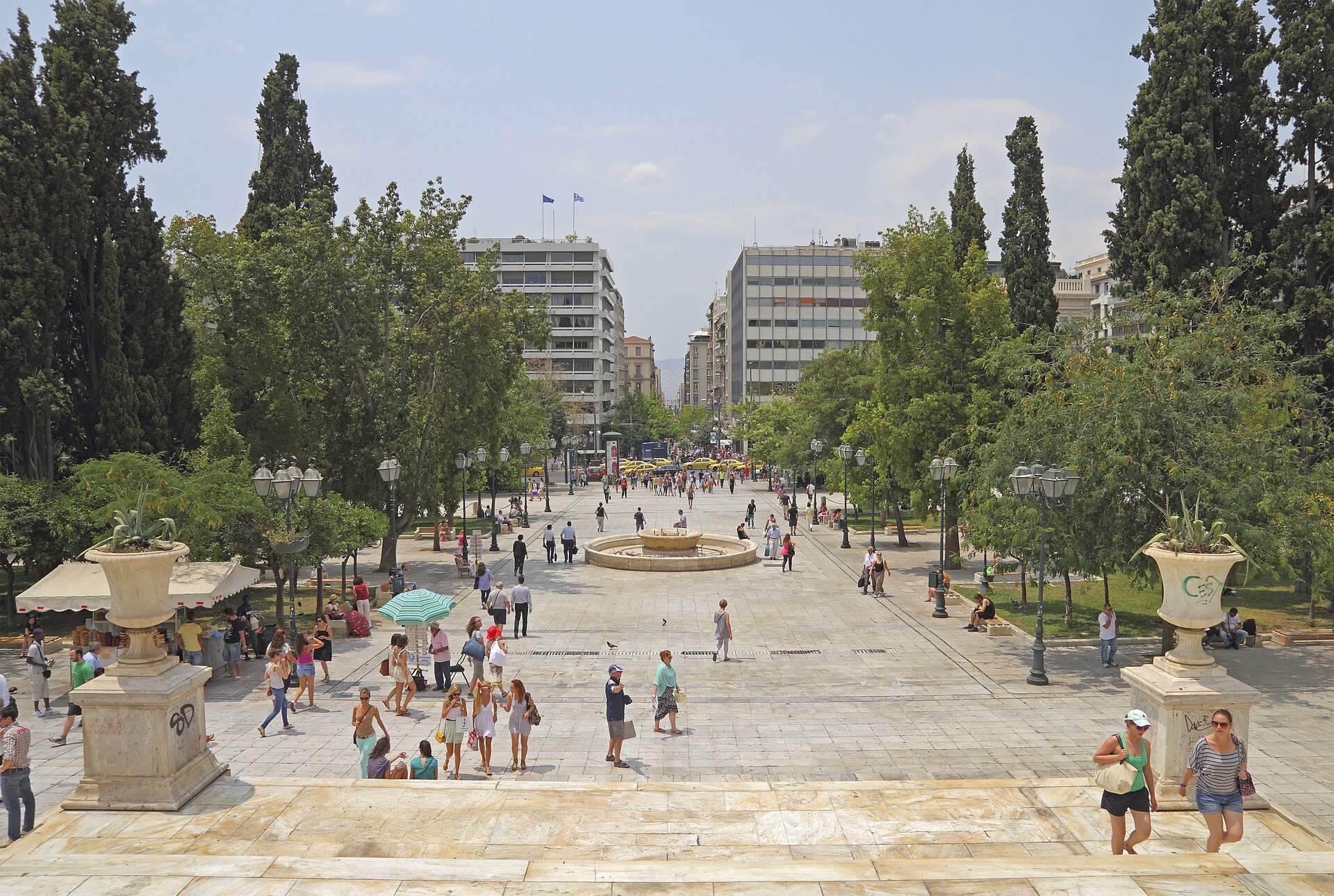
Every hour, on the hour, two soldiers in pom-pom shoes perform one of the most meticulously choreographed ceremonies in the world. The Evzones — Greece's presidential guard — march in front of the Tomb of the Unknown Soldier with movements so precise and slow that each step can take a full minute. Their pleated kilts have exactly 400 folds, one for each year of Ottoman occupation. Their shoes weigh three kilograms each, studded with 60 nails on each sole so they ring out on the marble. It's simultaneously solemn, theatrical, and completely mesmerizing. Syntagma means "constitution" — the square got its name on September 3, 1843, when King Otto was forced by a military revolt to grant Greece its first constitution from the balcony of the Royal Palace behind it. That palace, built between 1836 and 1843 for Otto by Bavarian architect Friedrich von Gartner, now serves as the Hellenic Parliament. The Monument to the Unknown Soldier at its base, carved in 1932, features a relief of a dying Greek warrior modeled after a figure from the Temple of Aphaia on Aegina. The square has been the epicenter of nearly every major Greek political upheaval since independence. It saw massive protests during the Greek debt crisis of 2010-2012, anti-junta demonstrations in the 1970s, and liberation celebrations when the Nazis withdrew in 1944. During the German occupation, the Wehrmacht raised a swastika flag over the Acropolis that two teenagers — Manolis Glezos and Apostolos Santas — famously tore down in one of the first acts of resistance in occupied Europe. Below the surface, the Syntagma Metro station doubles as an archaeological museum, with artifacts and ancient infrastructure uncovered during its construction displayed behind glass on the platforms.
Temple of Hephaestus
24 Adrianou, 1st Municipal Community, Athens, 105 55, Greece
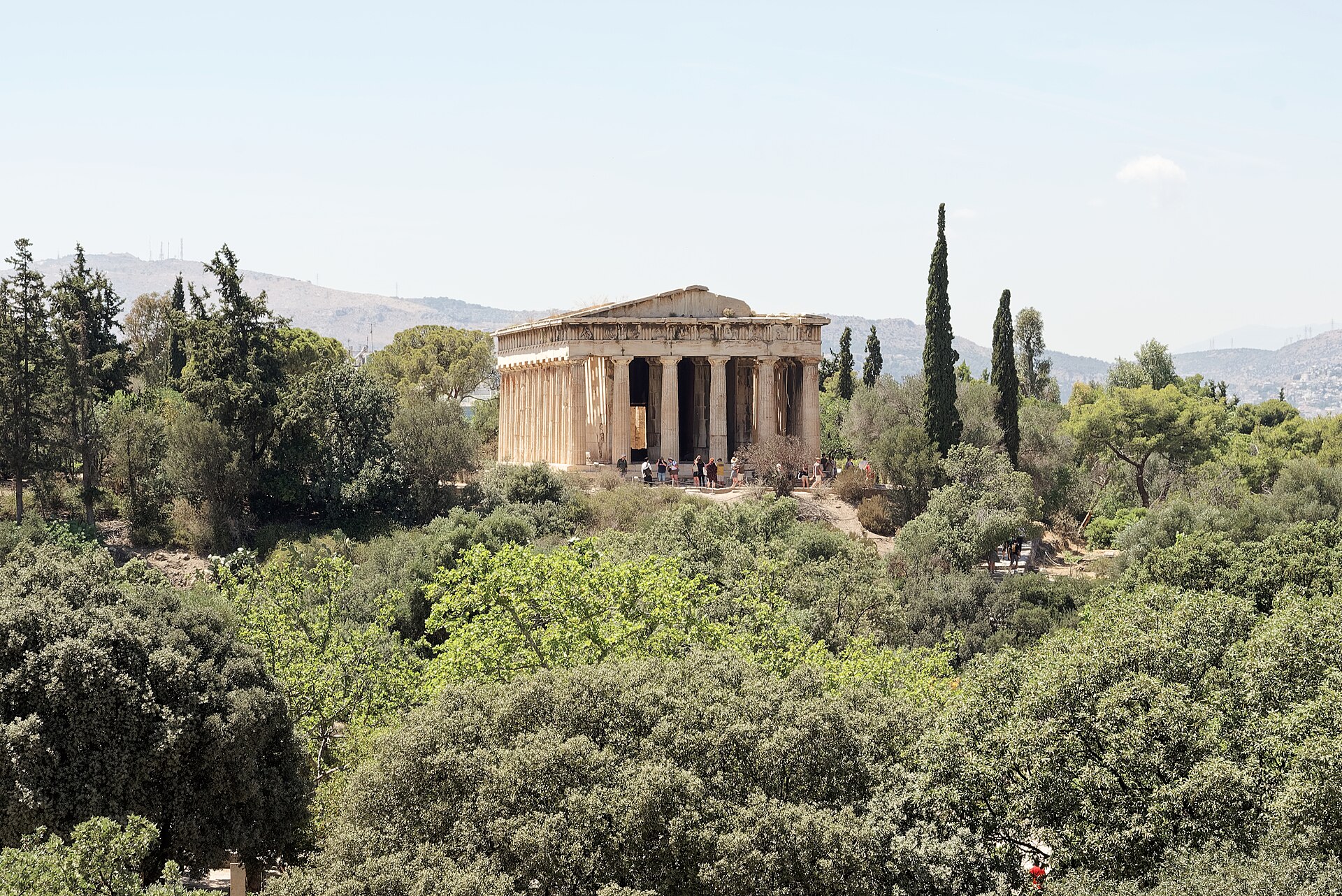
While the Parthenon gets all the postcards, this temple quietly holds a much more impressive record: it's the best-preserved ancient Greek temple in the world. The roof is intact. The columns are standing. The walls are whole. After 2,500 years, it looks like someone could unlock the front door and start worshipping Hephaestus again tomorrow. Construction began in 449 BC — two years before the Parthenon — and it was dedicated to Hephaestus, god of metalworking, and Athena Ergane, patroness of crafts. The location wasn't random: this corner of the Agora was the metalworkers' quarter, where blacksmiths and bronze-casters plied their trade. Archaeologists have found casting molds, metal slag, and pottery shards left as offerings by ancient artisans who treated the area as sacred to their profession. Built entirely of Pentelic marble with architectural sculptures in Parian marble, the temple features Doric columns — six across and thirteen along each side. The metopes on the eastern facade depict the labors of Heracles, while the north and south sides show the exploits of Theseus. The sculptural program subtly linked Athens' mythical hero-king with the greatest hero of Greek mythology. The temple's survival is partly thanks to its conversion into the Church of Saint George around the seventh century AD, which kept it maintained and roofed through the medieval period. In the nineteenth century, the church served as a burial place for Protestants and European philhellenes who died fighting in the Greek War of Independence. King Otto attended one of the last services held here in 1834, just before it was decommissioned and recognized as an ancient monument.
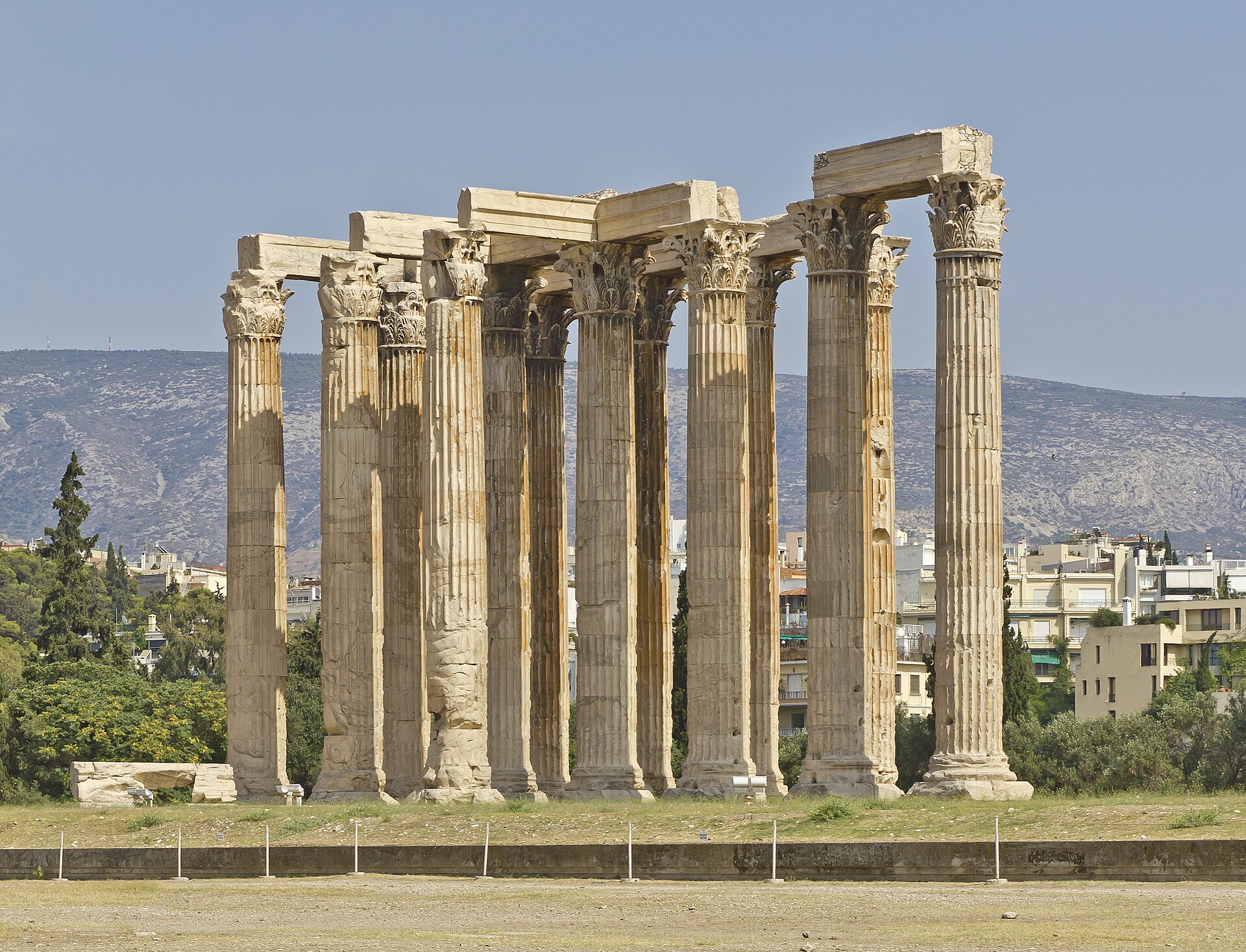
Temple of Olympian Zeus
Leoforos Vasilissis Olgas, 2nd Municipal Community, Athens, 116 36, Greece
It took 638 years to finish. Let that sink in. The Temple of Olympian Zeus is the longest construction project in the ancient world — begun around 520 BC by the Athenian tyrant Peisistratos and his sons, abandoned when democracy replaced tyranny (the Athenians considered the project an act of hubris), picked up briefly by a Seleucid king in 174 BC, and finally completed by the Roman Emperor Hadrian in 132 AD. By the time it was done, the original architects had been dead for over half a millennium. When finished, it was the largest temple in Greece. One hundred and four Corinthian columns stood 17 meters tall — taller than a five-story building — arranged in a double colonnade that stretched across a massive footprint. Inside sat a chryselephantine statue of Zeus so enormous that Hadrian placed a matching statue of himself right next to it, because modesty wasn't really a Roman virtue. The temple's glory lasted barely a century: Germanic Heruli raiders sacked it in 267 AD, and it was never restored. Today only 15 columns remain standing — 13 in the southeast corner and 2 in the southwest. A sixteenth column lies where it fell during a storm in 1852, its drums stacked like toppled coins. But even as ruins, the scale is staggering. Each column drum weighs about 5.5 tons, and standing among them you get a visceral sense of the building's original enormity. The temple sits in a fenced archaeological zone alongside the much smaller but equally fascinating ruins of Roman baths, houses, and a basilica — all visible from the street but somehow overlooked by most tourists rushing between the Acropolis and Plaka.
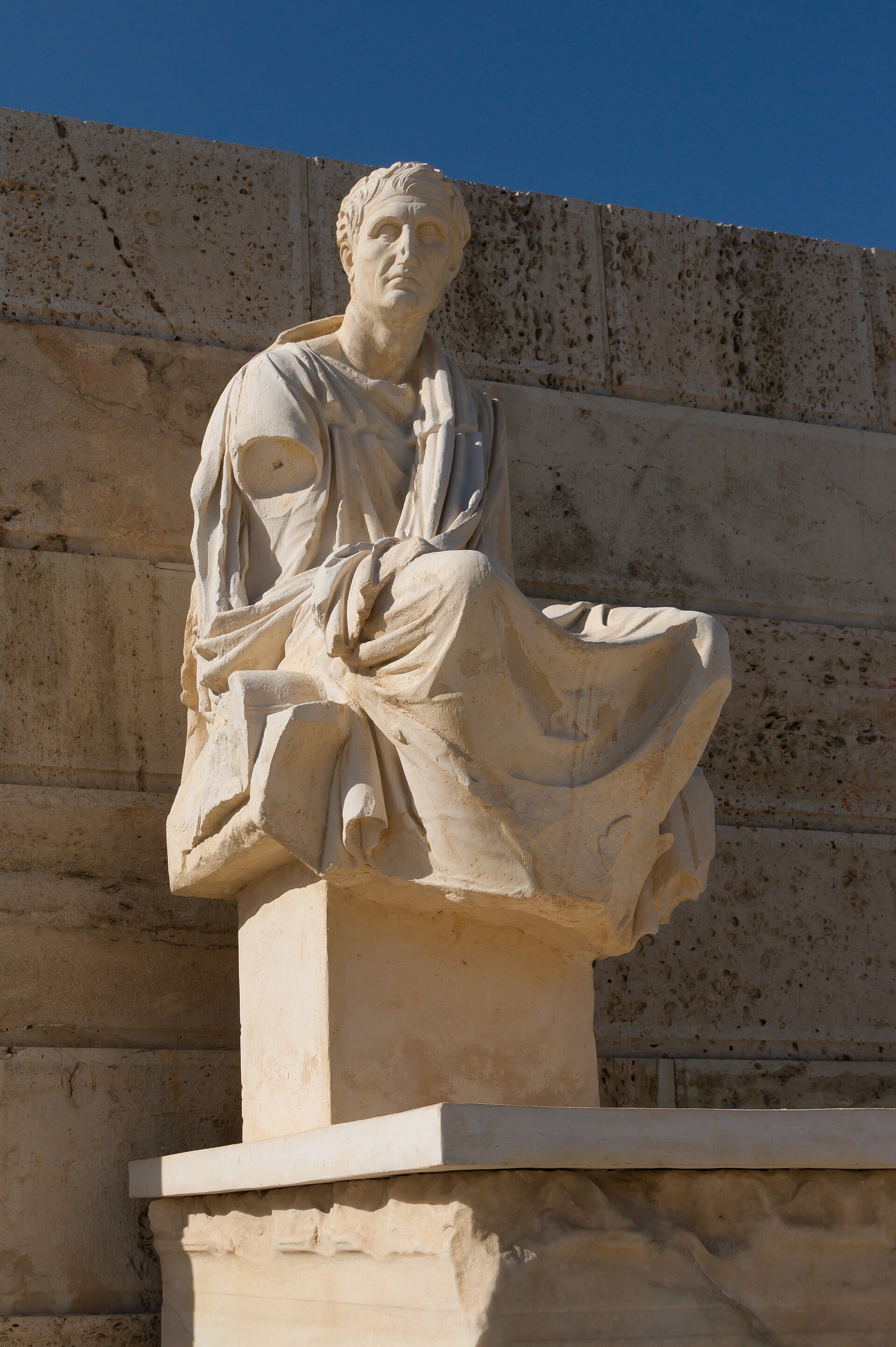
Theatre of Dionysus
25 Mitsaion, 1st Municipal Community, Athens, 117 42, Greece
Every play you've ever seen descends from this spot. The Theatre of Dionysus on the south slope of the Acropolis is where drama was born — literally invented as an art form in the sixth century BC when performers first stepped out of the chorus to become individual characters. Aeschylus, Sophocles, Euripides, and Aristophanes all premiered their works here. Every tragedy, comedy, and satyr play that shaped Western literature had its first audience sitting on these stone seats. The original theater was a simple affair — wooden bleachers on a hillside, arranged around a circular orchestra where the chorus sang and danced during the annual City Dionysia festival. In the mid-fourth century BC, the statesman Lycurgus commissioned a major reconstruction in stone, creating raked tiers capable of seating approximately 17,000 spectators. The front row featured 67 marble thrones with individual name inscriptions — VIP seating for priests, officials, and honored citizens. The most elaborate throne, dead center, was reserved for the priest of Dionysus, and it's still there, carved with griffin armrests and lion-paw feet. The Romans remodeled the theater around 61 AD under Nero, adding a raised stage and a marble barrier around the orchestra — probably for the wild animal shows they preferred to Greek tragedies. The ornamental frieze depicting scenes from the life of Dionysus that survives along the stage front dates from this Roman renovation. It's strange to sit in the same seats where ancient Athenians first watched Oedipus discover the horrible truth about his family, or laughed at Aristophanes' savage political satire. Theater hasn't really changed that much. The audience still wants the same things: a good story, a catharsis, and something to argue about on the way home.
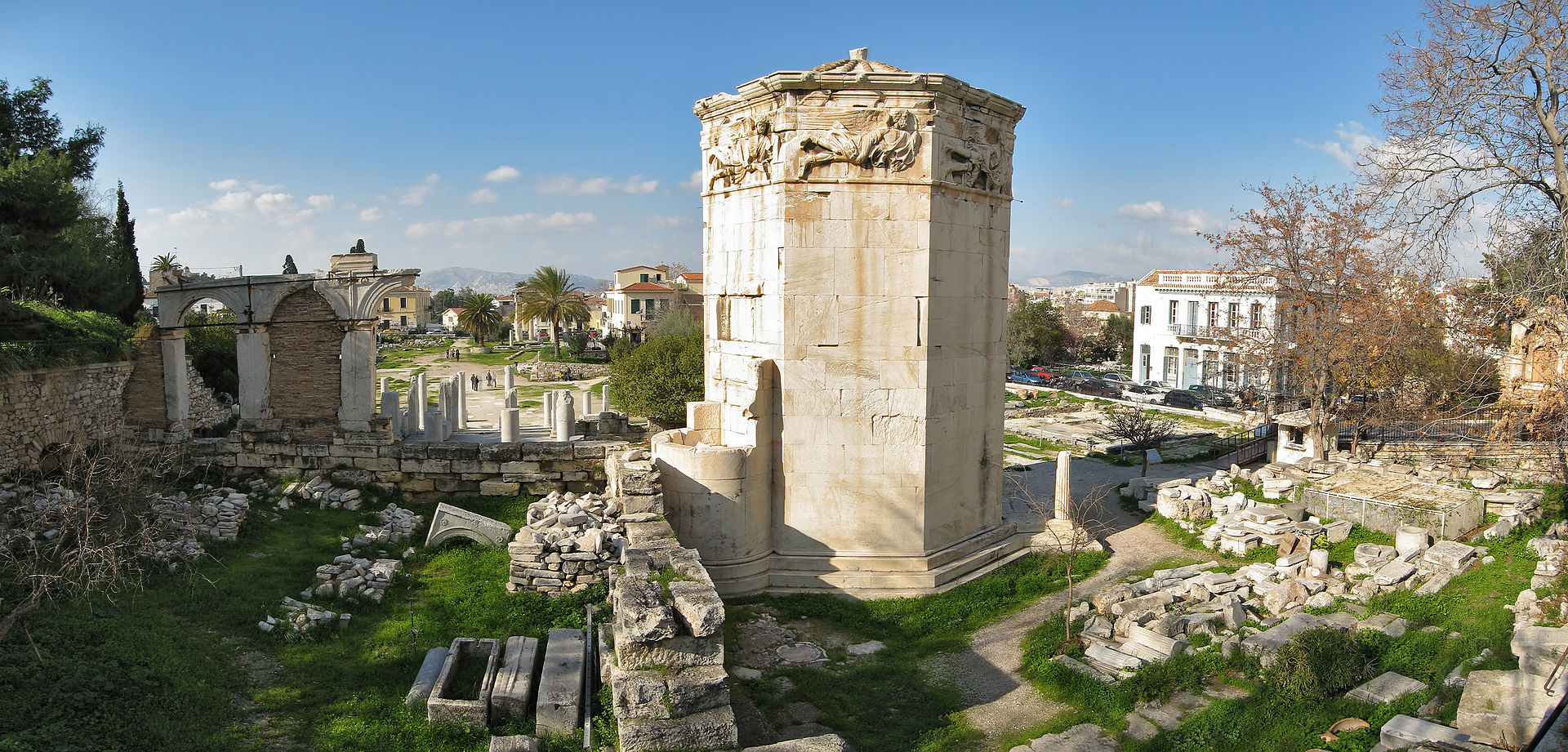
Tower of the Winds
Plaka, Athens, 105 55, Greece
Before smartphones, before clocks, before even sundials were common, this octagonal marble tower told Athenians the time, the wind direction, and the weather forecast — all at once. The Tower of the Winds is the world's first known meteorological station and the only surviving clock tower from classical antiquity, and it's been standing in the Roman Agora virtually intact for over 2,000 years. Built around 50 BC by the astronomer Andronicus of Cyrrhus, the tower is 12.8 meters tall and 7.9 meters in diameter, constructed entirely of Pentelic marble. Each of its eight sides faces a cardinal or intercardinal direction and features a relief sculpture of the corresponding wind god — Boreas (north), Kaikias (northeast), Apeliotes (east), and so on. The sculptures aren't just decorative: each wind god carries objects that indicate the weather his wind brings. Boreas wears a heavy cloak and blows a conch shell; Zephyros (west) carries flowers. The tower originally featured nine sundials on its exterior walls, a large water clock (clepsydra) inside powered by water from a spring on the Acropolis, and a bronze wind vane in the shape of a Triton on its conical roof. The water clock was an engineering marvel — a complex system of pipes and floats that kept time even when the sun wasn't shining. During the Ottoman period, the tower was used as a tekke (a lodge for Whirling Dervishes), and it was buried up to half its height in accumulated soil until excavation in the nineteenth century. Today, fully exposed and recently restored, it stands as proof that the ancient Greeks were doing things with architecture, astronomy, and engineering that wouldn't be attempted again for centuries.