Panathenaic Stadium
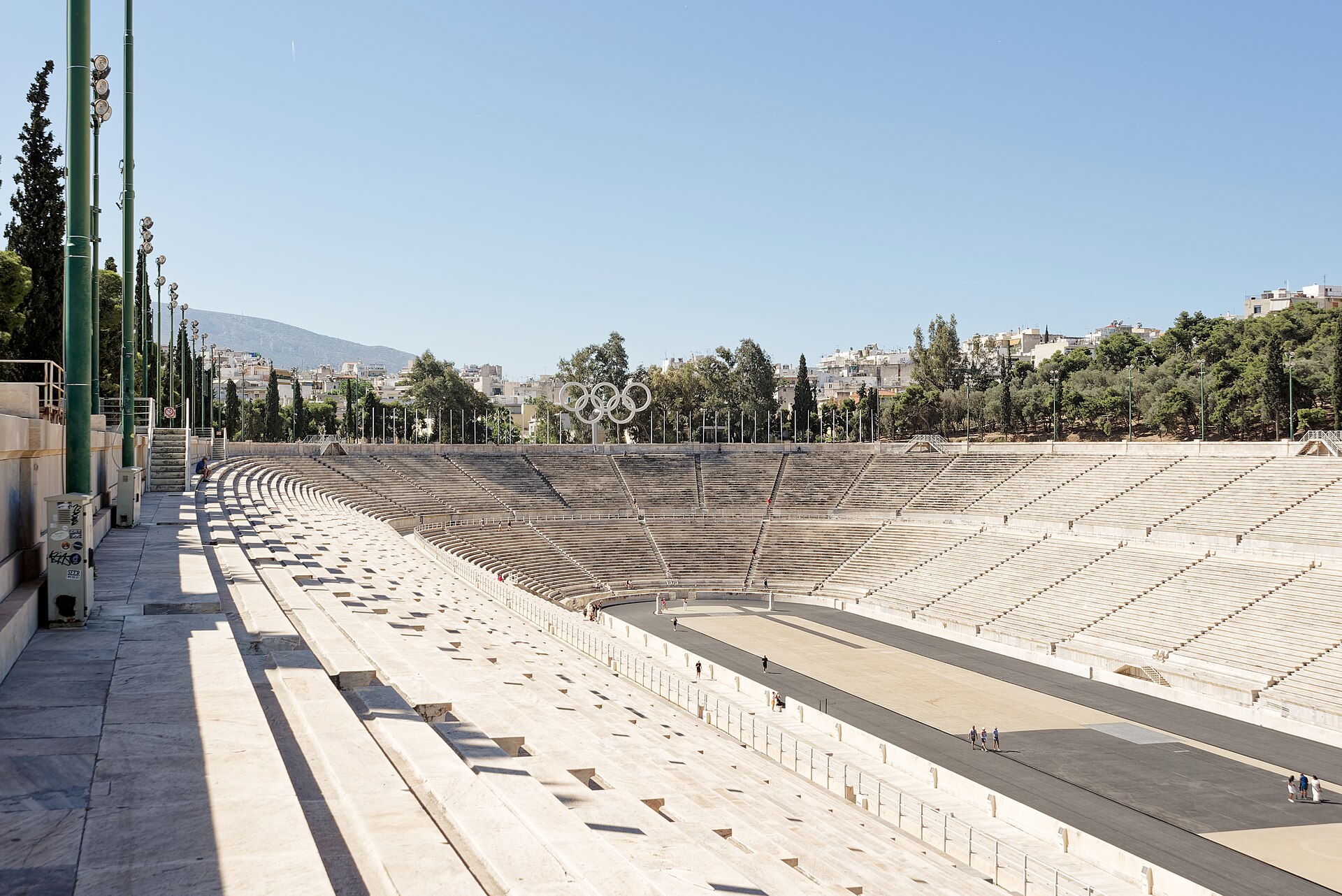
The only stadium in the world built entirely of marble, and it looks exactly like it sounds — blindingly white in the midday sun, 50,000 seats of Pentelic marble carved into a natural ravine between two hills. The Greeks call it Kallimarmaro, "beautiful marble," which is the kind of name you give something when you want to make absolutely sure no one misses the point.
A stadium has occupied this site since around 330 BC, when the Athenian statesman Lycurgus built a venue for the Panathenaic Games — Athens' answer to the Olympics at Olympia. In 144 AD, the Roman senator Herodes Atticus rebuilt the entire thing in marble, creating a 50,000-seat U-shaped arena. After the Roman Empire banned pagan festivals in the late fourth century, the stadium was abandoned and gradually buried under centuries of soil and debris.
It was excavated and reconstructed for the first modern Olympic Games in 1896, making it the only ancient stadium in the world to have hosted the modern Olympics. The 1896 Games were a chaotic, beautiful mess — only 14 countries participated, the marathon was won by a Greek water-carrier named Spyridon Louis, and the stadium was so packed that people stood on the surrounding hills. The stadium hosted archery events at the 2004 Athens Olympics and still serves as the finish line for the annual Athens Marathon.
Walk onto the track and stand where athletes competed 2,350 years ago. The marble seats rise steeply on three sides, creating an amphitheater effect that amplifies sound dramatically — you can hear a coin drop from the far end. The experience of being inside this space, surrounded by nothing but stone and sky, is something concrete and glass stadiums can't replicate.
Verified Facts
The Panathenaic Stadium is the only stadium in the world built entirely of marble
A stadium was first built on the site around 330 BC by Lycurgus, then rebuilt in marble by Herodes Atticus in 144 AD with 50,000 seats
It hosted the first modern Olympic Games in 1896, making it the only ancient stadium to have hosted the modern Olympics
The 1896 Olympic marathon was won by Spyridon Louis, a Greek water-carrier, in the first modern marathon race
Get walking directions
35 Leoforos Vasileos Konstantinou, 2nd Municipal Community, Athens, 106 74, Greece