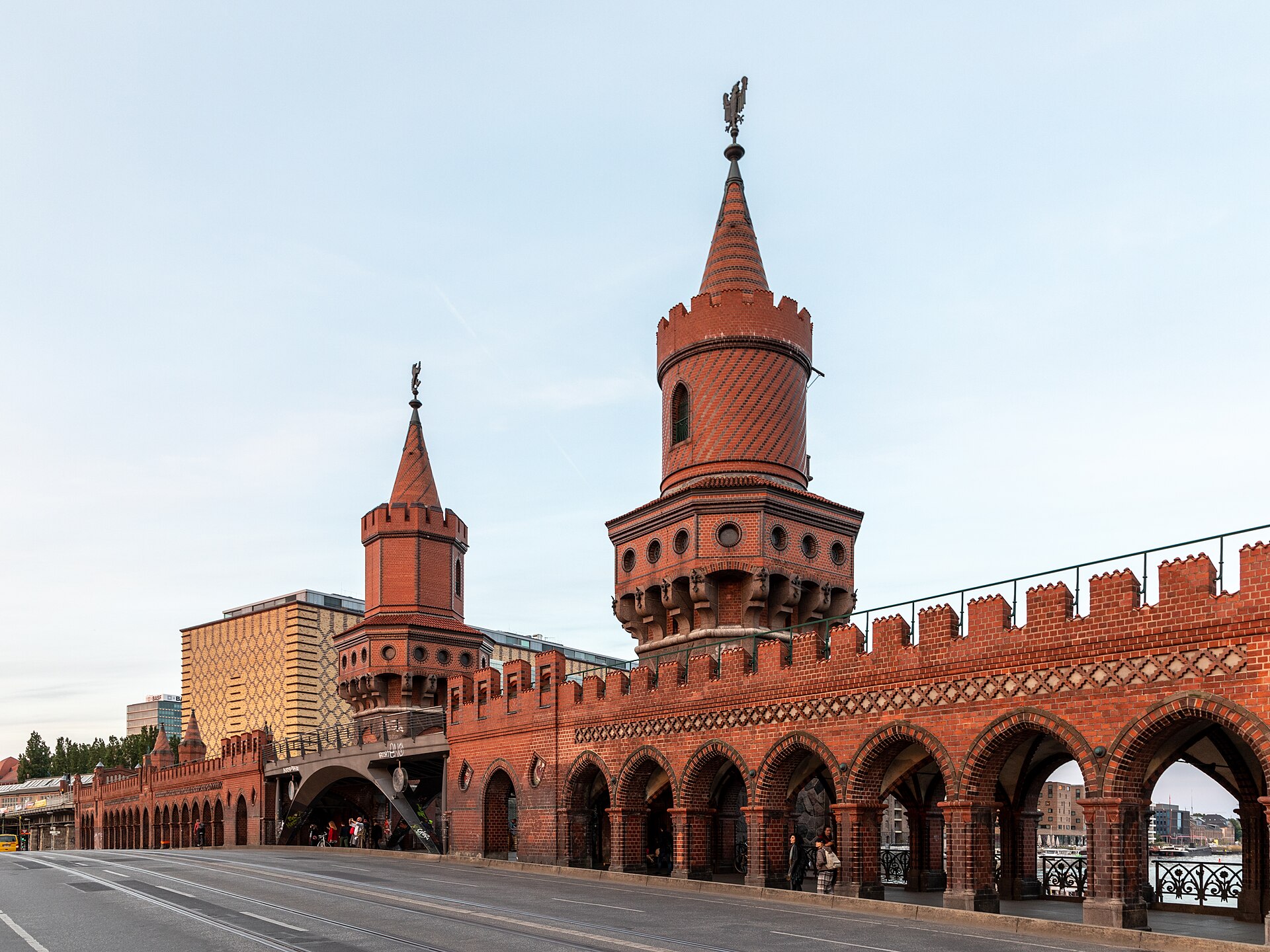
This double-deck bridge is one of Berlin's most beautiful structures, and during the Cold War it was one of its most painful. The Oberbaumbrücke connected Friedrichshain (East) and Kreuzberg (West), and when the Wall went up, it became a restricted pedestrian crossing — East Germans couldn't use it at all.
The bridge was built between 1894 and 1896 in North German Gothic style, with pointed arches, turrets, and a covered upper deck that carries the U-Bahn U1 line across the Spree. Santiago Calatrava restored it after reunification, adding a new middle section in steel and glass that deliberately contrasts with the original brickwork. The seam between old and new is intentional — a visible reminder that something was broken and then mended.
Every year on the bridge, residents of Friedrichshain and Kreuzberg stage a mock battle — the 'Gemüseschlacht' (vegetable battle) — throwing rotten produce at each other as part of the neighbourhood rivalry that was once an actual geopolitical division. It's absurd and wonderful and very Berlin.
The bridge is best seen from the Spree at sunset, when the brick glows orange and the TV Tower catches the last light behind it.
Verified Facts
The Oberbaumbrücke was built between 1894 and 1896 in North German Gothic style
Santiago Calatrava designed the restoration's new middle section after reunification
During the Cold War, the bridge served as a restricted border crossing between East and West Berlin
The upper deck of the bridge carries the U1 U-Bahn line across the River Spree
Get walking directions
Oberbaumbrücke, 10243 Berlin