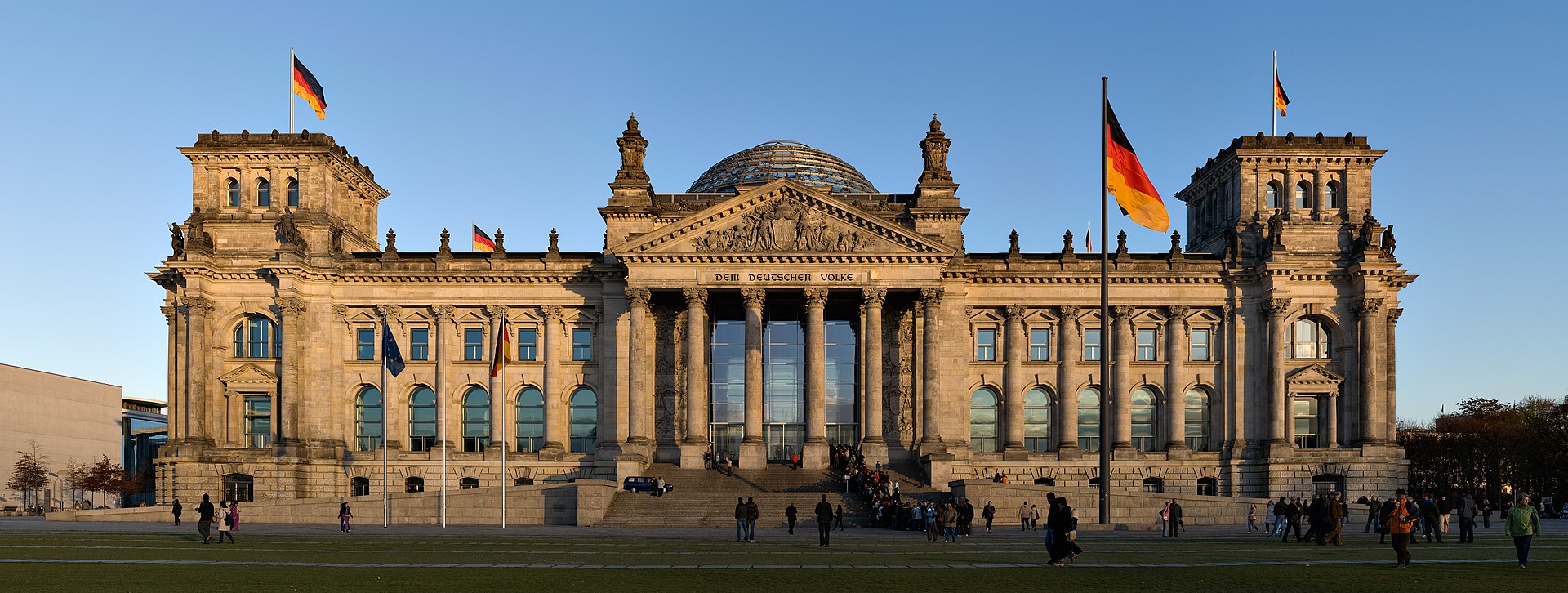
The glass dome on top of this building is Norman Foster's masterstroke, and it makes a very specific political statement. It sits directly above the parliamentary chamber, so visitors — ordinary citizens — can literally look down on their elected representatives while they debate. That's not accidental. After a century of German politicians operating behind closed doors, Foster designed transparency into the architecture itself.
The building has survived almost everything the twentieth century could throw at it. It opened in 1894 with Kaiser Wilhelm II calling it the 'height of tastelessness.' In 1933, it burned — almost certainly an arson used by the Nazis as a pretext to suspend civil liberties. Marinus van der Lubbe, a young Dutch communist, was executed for it, though historians still debate who really set the fire. The Soviets shelled it in 1945, and their soldiers famously raised the red flag on its roof. Graffiti from Soviet troops is still preserved inside — Cyrillic scrawls that say things like 'Nikolai was here' and 'I came from Stalingrad.'
Foster's dome weighs 800 tonnes, measures 40 metres across, and contains a mirrored cone that bounces daylight into the chamber below, reducing the building's energy consumption. Two spiralling ramps wind up inside, like a double helix. You can walk up for free, but you need to register in advance — it's one of the most visited parliaments in the world, with about three million visitors a year.
Verified Facts
Soviet soldiers' graffiti from 1945 is preserved inside the building
Norman Foster's glass dome weighs 800 tonnes and is 40 metres in diameter
The Reichstag fire of February 27, 1933 was used as pretext to suspend civil liberties via the Reichstag Fire Decree
Kaiser Wilhelm II called the original building 'the height of tastelessness' at its 1894 opening
About three million people visit the Reichstag annually, making it one of the most visited parliaments in the world
Get walking directions
Platz der Republik 1, 11011 Berlin