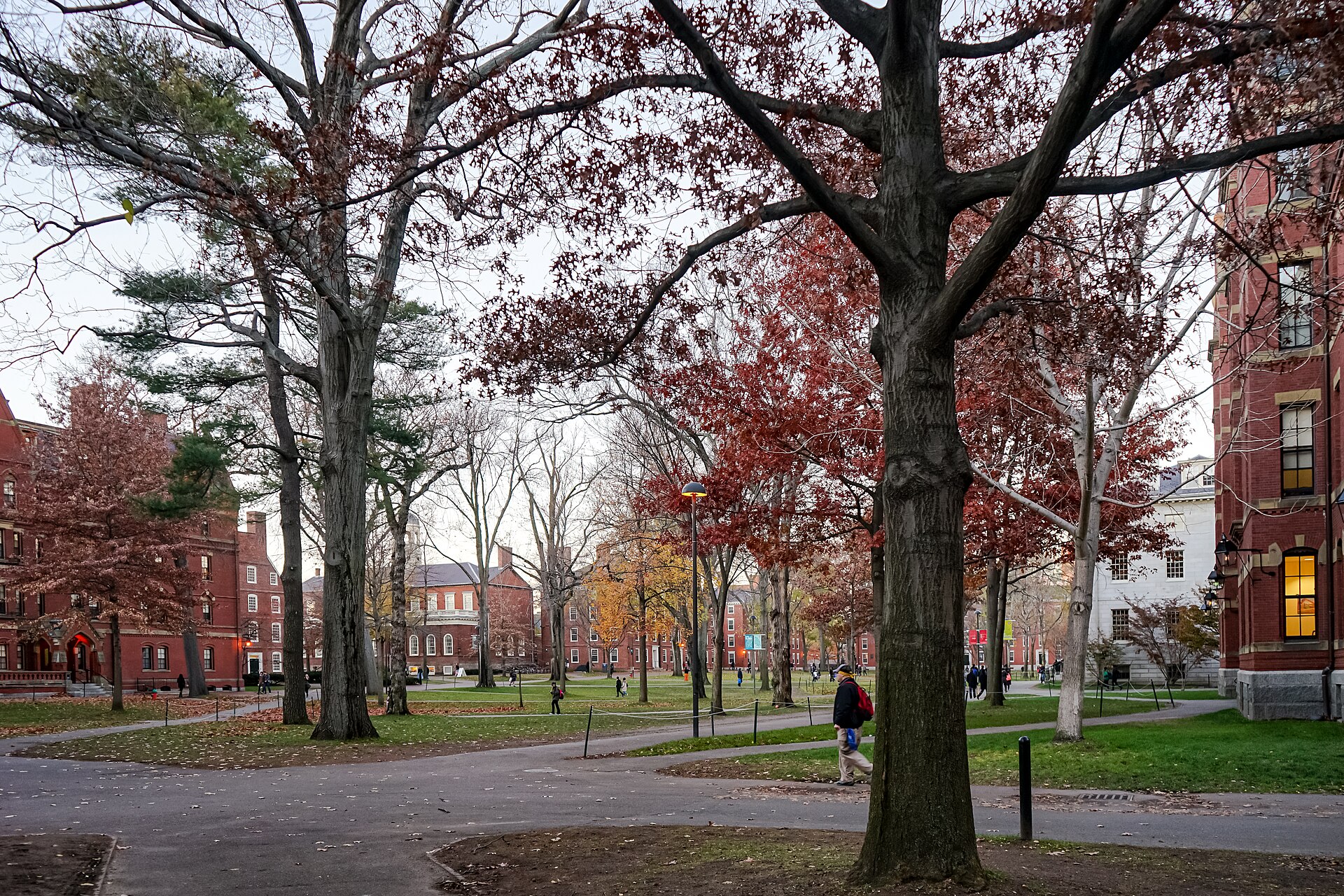
Harvard Yard is the oldest part of America's oldest university — a walled campus of red-brick buildings, ancient elm trees, and carefully maintained lawns that has been the symbolic heart of American higher education since 1636. Walking through the iron gates from Massachusetts Avenue into the Yard is a transition from the bustle of Cambridge into a space that has been dedicated to learning for nearly 400 years.
The statue of John Harvard in front of University Hall is known as the 'Statue of Three Lies' — the inscription reads 'John Harvard, Founder, 1638,' but Harvard wasn't the founder (he was a benefactor), the college was founded in 1636 (not 1638), and the figure isn't even John Harvard (no image of him survived, so the sculptor used a student as a model). Rubbing the statue's left shoe is said to bring good luck, which is why the toe is polished gold while the rest of the bronze is dark green. Students deny participating in this tradition; the shoe suggests otherwise.
The buildings around the Yard span four centuries of American architecture — from Massachusetts Hall (1720, the oldest surviving Harvard building and still used for administration) to the Memorial Church (1932, dedicated to Harvard's war dead) to the Science Center (brutalist concrete from the 1970s that divides opinion). The Widener Library, with its grand Corinthian columns, houses 3.5 million volumes and was built in memory of Harry Elkins Widener, who went down with the Titanic in 1912.
Verified Facts
Harvard University was founded in 1636, making it America's oldest university
The John Harvard statue is known as the 'Statue of Three Lies'
Massachusetts Hall (1720) is the oldest surviving Harvard building
Widener Library was built in memory of a Titanic victim, Harry Elkins Widener
Get walking directions
Harvard University, Cambridge, MA 02138