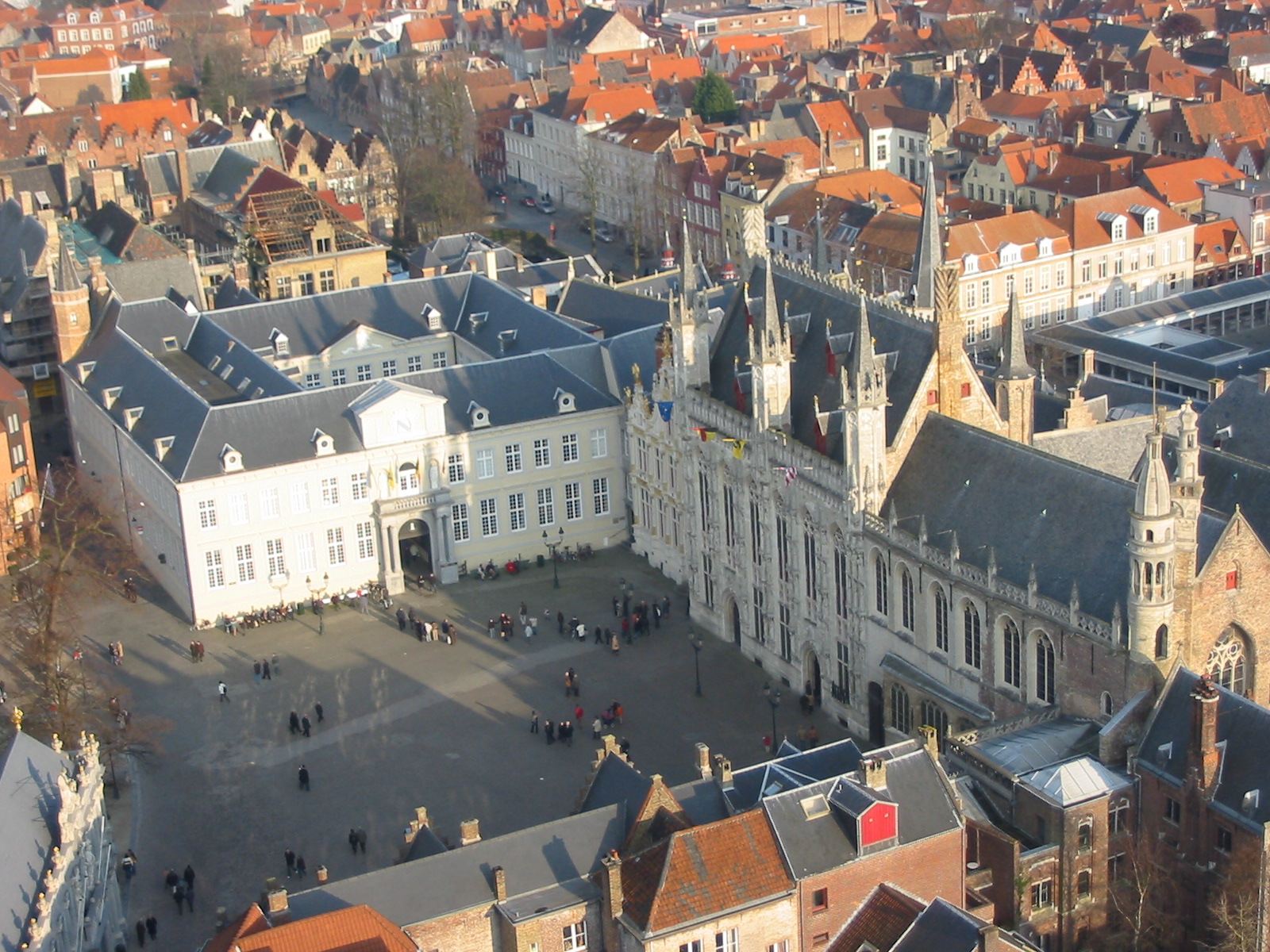
This is where Bruges began. In the ninth century, Baldwin Iron Arm — the first Count of Flanders, who earned his name and his title by eloping with the daughter of the King of France — built a fortified castle here. The word "burg" means fortress, and for over a thousand years this square has been the seat of political and religious power in the city. While the Markt was for commerce, the Burg was for governance, and the architectural showmanship here reflects centuries of rulers trying to outdo each other.
The undisputed star is the Bruges City Hall, built between 1376 and 1421, making it one of the oldest Gothic town halls in the Low Countries. Count Louis of Maele laid the foundation stone, and the result is a building of almost aggressive beauty — its facade originally featured 48 polychrome statues of counts and countesses of Flanders in individual niches. French Revolutionary troops destroyed them all in the 1790s; the current statues are 19th-century replacements. Inside, the Gothic Hall features a spectacular polychrome vaulted ceiling with murals depicting key events in Bruges' history, painted between 1895 and 1905 during a massive restoration by architect Louis Delacenserie.
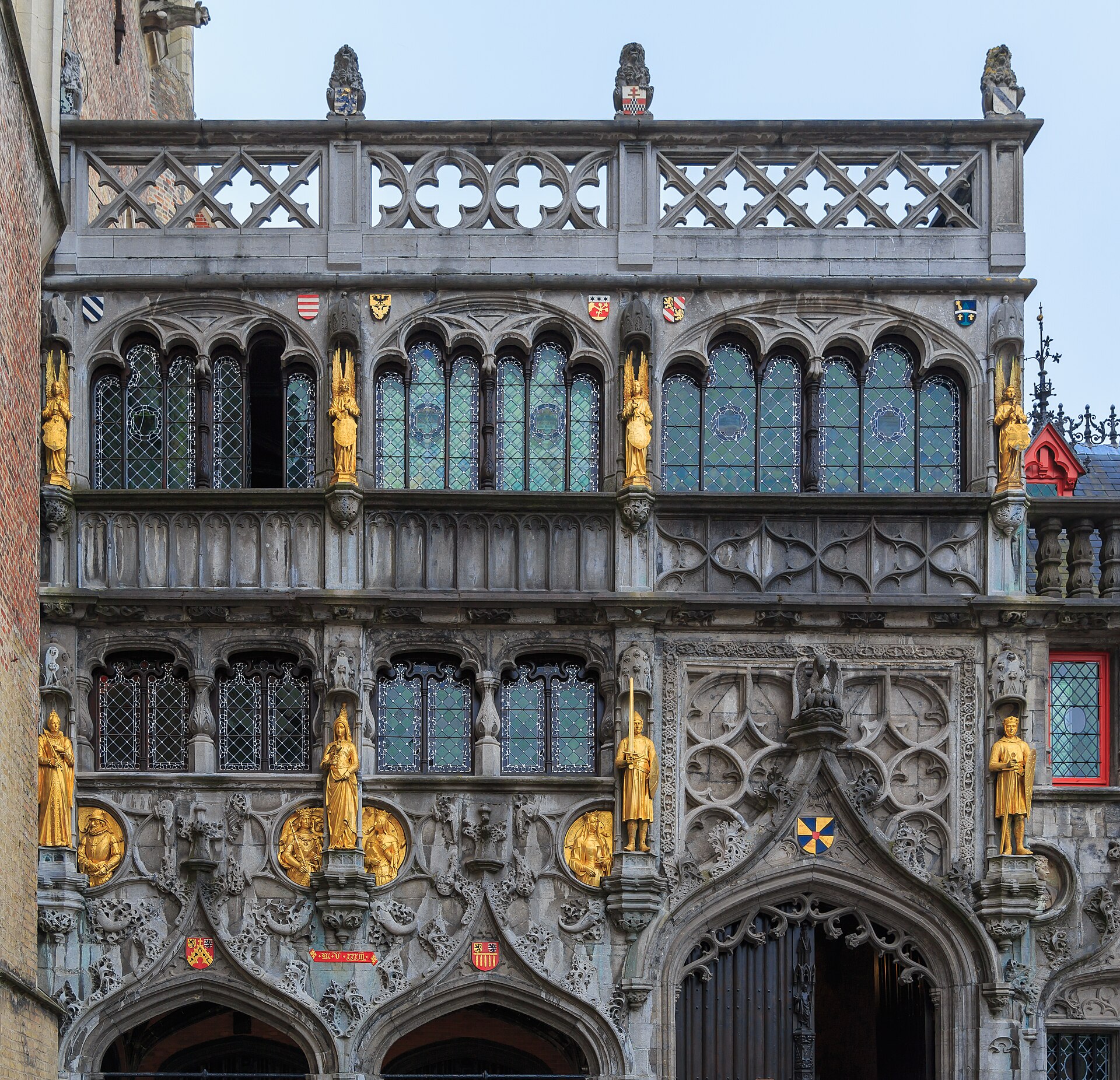
Next door, the Old Civil Registry sports an elaborate Renaissance facade from 1534-1537, all gilded bronze statues and marble columns — a jarring stylistic shift from the Gothic town hall that makes for an unexpectedly entertaining architectural contrast. And tucked into the corner is the Basilica of the Holy Blood, housing the city's most precious relic.
The one thing missing from the Burg is the original castle. It was demolished in the late 18th century, and the site is now a small park. Baldwin Iron Arm would probably not be pleased.
Verified Facts
The Bruges City Hall was built 1376-1421 and is one of the oldest Gothic town halls in the Low Countries
Baldwin Iron Arm, first Count of Flanders, built a fortified castle here in the 9th century
French Revolutionary troops destroyed all 48 original polychrome statues on the City Hall facade in the 1790s
The Gothic Hall interior was restored with murals by architect Louis Delacenserie between 1895 and 1905
Get walking directions
Bruges, Belgium