Bruges has been governed from this building for over six hundred years, making it one of the longest continuously used seats of municipal government in Europe. Count Louis of Maele laid the foundation stone in 1376, and responsibility for construction was given to Jan Roegiers. The project was completed in 1421, and the result is the earliest late-Gothic monumental municipal council building in Flanders or Brabant — a building of such flamboyant opulence that it set the template for town halls across the region.
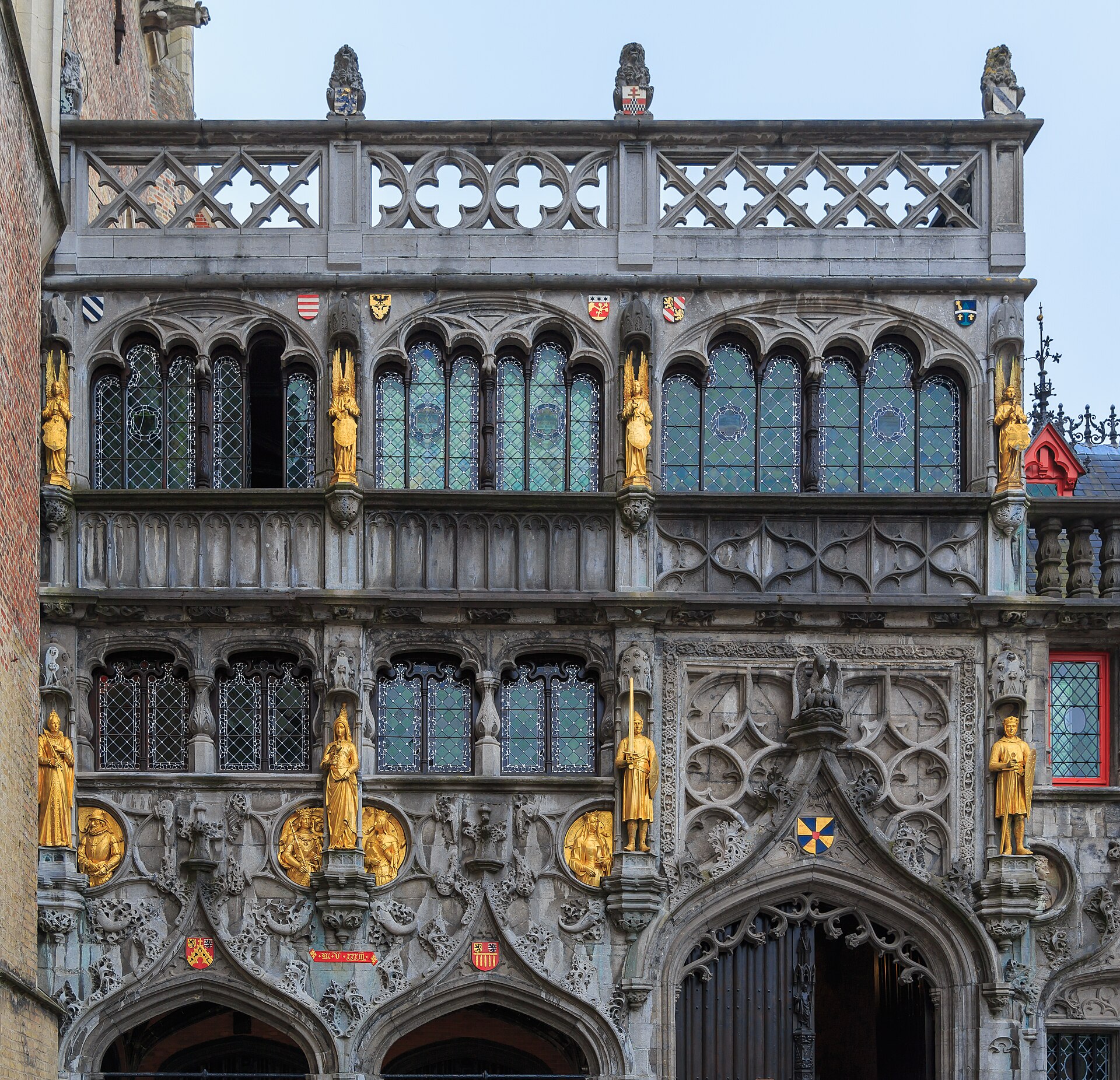
The facade is pure medieval showmanship. Originally adorned with 48 polychrome statues of the counts and countesses of Flanders, each placed in an individual niche, the building was a deliberate declaration of civic wealth and historical legitimacy. The French Revolutionary troops who occupied Bruges in the 1790s smashed every one of them. The replacements you see today are 19th-century neo-Gothic copies — faithful, but copies nonetheless.
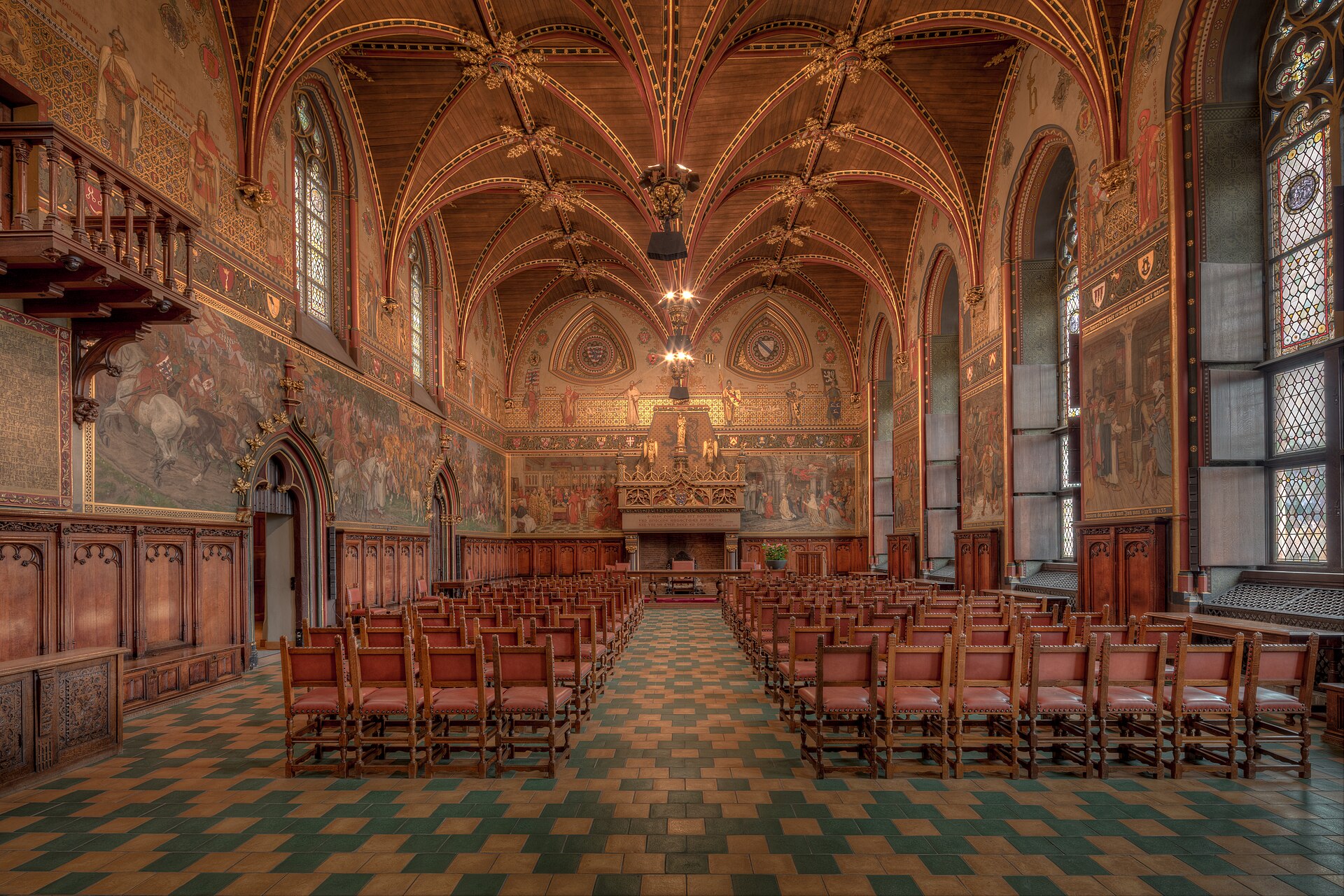
The interior centrepiece is the Gothic Hall, a double-height room with a spectacular polychrome vaulted ceiling. Between 1895 and 1905, architect Louis Delacenserie and neo-Gothic designer Jean-Baptiste Bethune led a comprehensive restoration that replaced the original lesser and greater council chambers with a single grand hall. The murals on the walls depict key events in Bruges' history, and the effect is somewhere between a medieval throne room and a 19th-century vision of what a medieval throne room should have looked like.
Walk through the Gothic Hall and you are walking through layers of history: a 14th-century building, restored through a 19th-century aesthetic lens, still functioning as the seat of 21st-century local government. The mayor's office is upstairs. Democracy operates in a building designed for aristocracy, which is either ironic or reassuring, depending on your politics.
Verified Facts
Foundation stone laid in 1376 by Count Louis of Maele, completed in 1421 by Jan Roegiers
The earliest late-Gothic monumental municipal council building in Flanders or Brabant
Interior restoration 1895-1905 by Louis Delacenserie and Jean-Baptiste Bethune created the Gothic Hall
The original 48 polychrome statues of counts and countesses were destroyed by French Revolutionary troops
Get walking directions
Bruges, Belgium