For a long time, people believed the Groenerei was a man-made canal dug before the 11th century to supply water to a mill. Recent studies have upended that assumption: the Groenerei is actually part of the natural course of the Reie river, making it an original waterway that was incorporated into Bruges' first city walls around 1127. This is not a canal at all — it is a river that the city grew around.
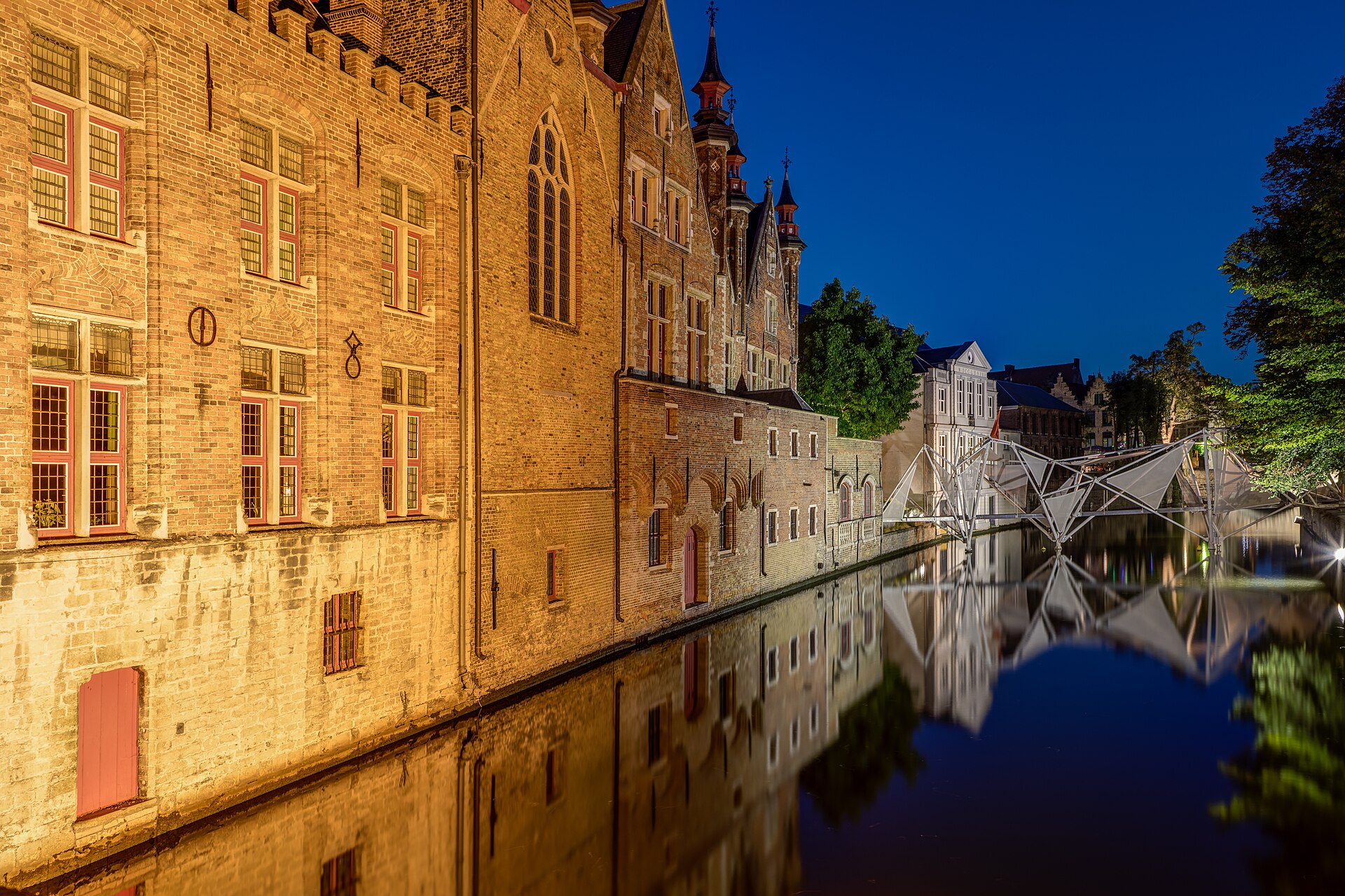
The Groenerei is widely considered the most beautiful waterway in Bruges, and the competition is stiff. Lined with ancient trees, ivy-covered medieval houses, and small stone bridges, it runs from the Kraanrei near Huidenvettersplein to where it meets the Sint-Annarei near the Molenbrug. Along the southern bank, the street runs through one of the most photogenic stretches in a city that is, frankly, unreasonably photogenic. The Groenerei and its surroundings were recognised as Bruges' fifteenth protected cityscape.
Several historic bridges cross the water. The Peerdenbrug dates to 1642. The Meebrug is probably the oldest bridge in Bruges — a plain stone structure that has been carrying foot traffic for centuries while the more famous bridges get all the attention. The Blinde-Ezelbrug adds its own historic charm, and each bridge frames a slightly different postcard view of canal, sky, and medieval gable.
The best time to walk the Groenerei is late afternoon, when the western light catches the facades and the water turns gold. Or early morning, when mist rises from the canal and the only company is the occasional swan. The swans, remember, are here by legal obligation — but they seem to enjoy the Groenerei as much as everyone else.
Verified Facts
Recent studies show the Groenerei is part of the natural course of the Reie river, not a man-made canal
The Groenerei and surroundings were recognised as Bruges' fifteenth protected cityscape
The Peerdenbrug bridge dates to 1642 and the Meebrug is probably the oldest bridge in Bruges
Get walking directions
Groenerei, 8000 Brugge