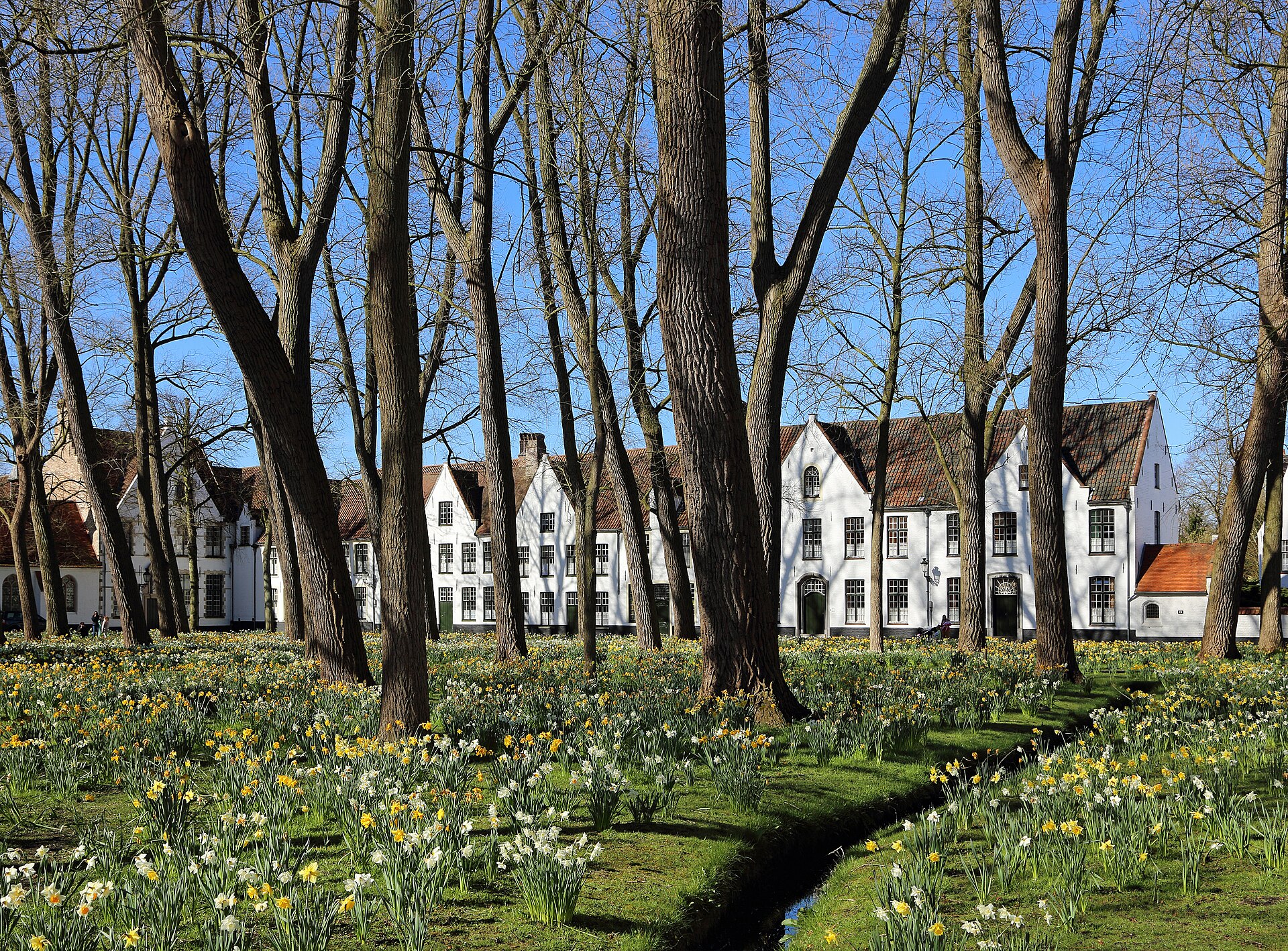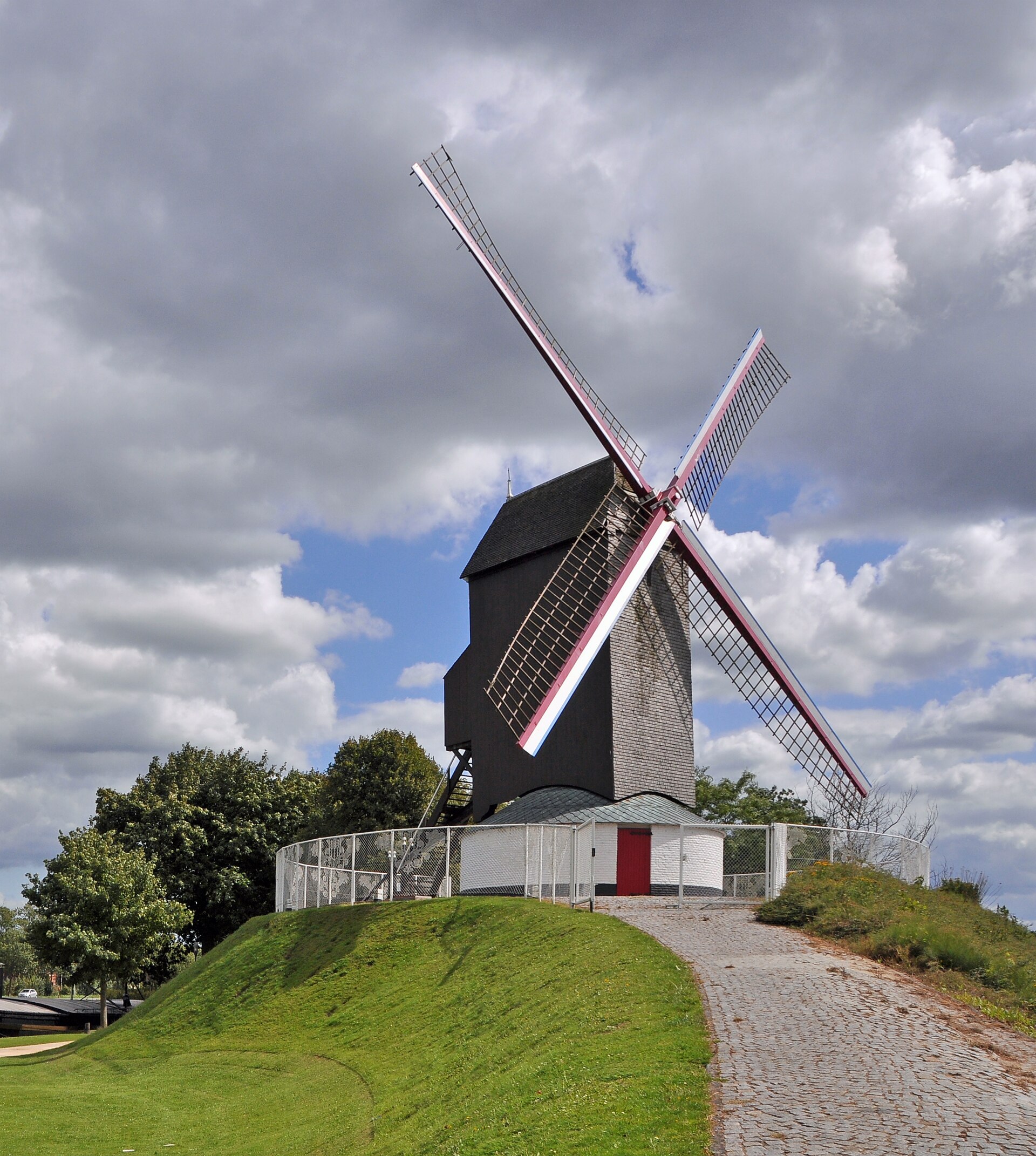
If you want to see Bruges the way residents see it, walk to the Koelewei Park on the northeastern ramparts. This sloping green space along the old city wall is where locals bring their dogs, where joggers trace the tree-lined paths, and where families spread out picnic blankets on summer evenings with views of the windmills silhouetted against the sky. It is decisively not a tourist attraction, and that is exactly the point.
The park occupies the earthen ramparts that once formed Bruges' outer defensive wall, built at the end of the 13th century. When the city no longer needed fortifications, the walls were landscaped into green promenades — a transformation that happened across many Flemish cities, turning military infrastructure into public parks. The Koelewei section sits between the windmills to the north and the Kruispoort gate to the south, and the elevated position gives views across the canal to the flat Flemish countryside beyond.
The Koelewei Mill itself, which sits at the northern end of the park, dates from 1765 and was relocated here in 1996 from elsewhere in Flanders. It is one of four windmills along the Kruisvest, and while it is not open to visitors as often as the Sint-Janshuismolen, it completes the windmill-studded skyline that makes this stretch of rampart one of the most distinctive walks in the city.
The park is at its best in spring when the trees leaf out and the grass greens up, or in autumn when the foliage turns. But any time of day, any season, it offers something most of Bruges' attractions cannot: solitude. In a city that receives millions of tourists annually, a quiet park on the old city wall is a luxury.
Verified Facts
The park occupies the old city ramparts built at the end of the 13th century
The Koelewei Mill dates from 1765 and was relocated to this location in 1996
Located between the Kruisvest windmills and the Kruispoort gate on Bruges' northeastern ramparts
Get walking directions
Kruisvest, Gezellekwartier, Bruges, 8000, Belgium