Marolles & Place du Jeu de Balle
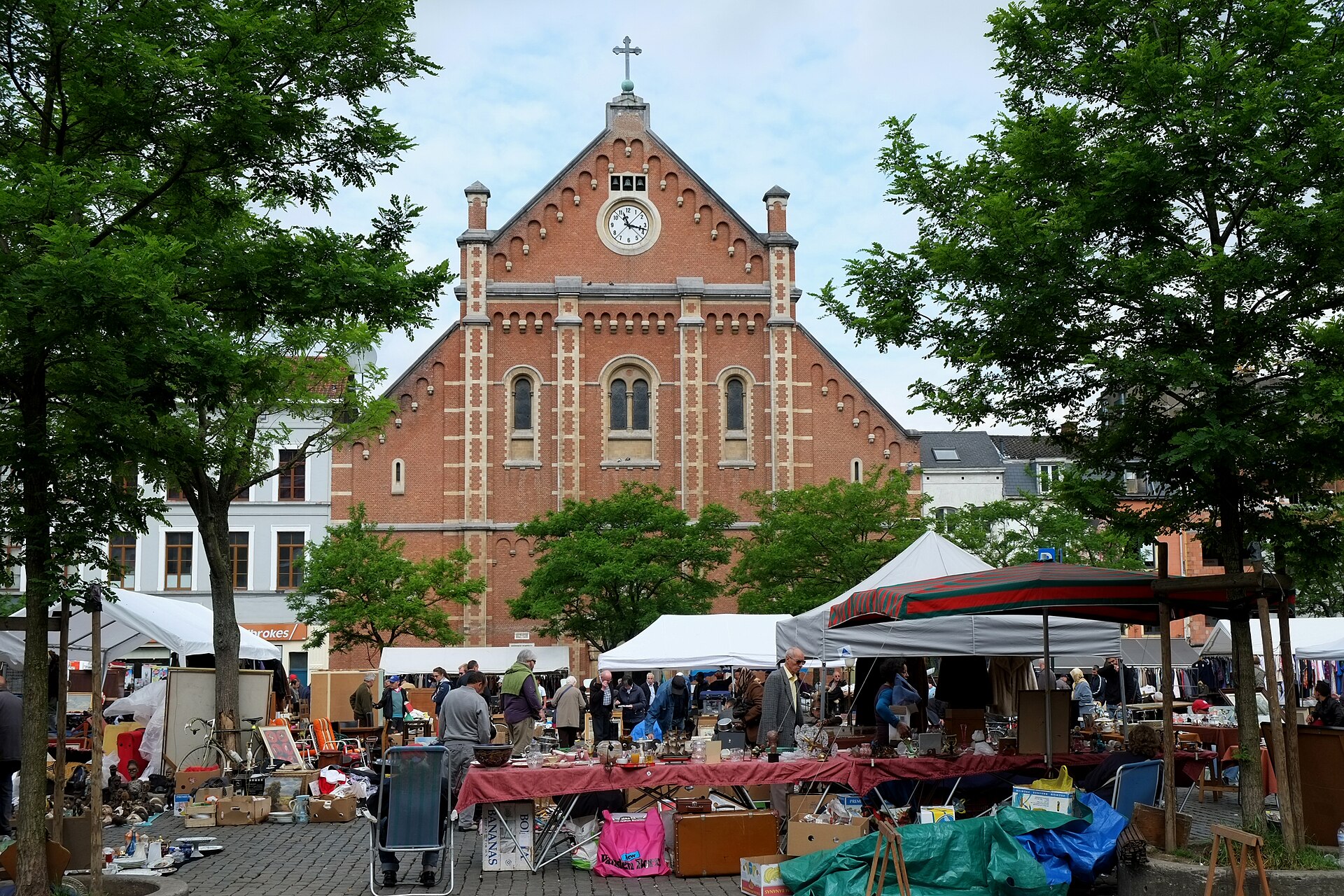
The Marolles is Brussels' most authentic working-class neighbourhood — a hilly district below the Palais de Justice whose daily flea market, multicultural street life, and defiant independence from the polished tourist zones make it the most characterful quarter in a city that sometimes feels too tidy for its own good. Place du Jeu de Balle hosts Brussels' oldest flea market — a daily affair (biggest on Sundays) where vendors spread antiques, vintage clothing, old books, African art, and miscellaneous junk across the cobblestones in a display that rewards early risers and patient browsers.
The neighbourhood's character comes from its history as the city's poorest quarter — home to immigrant communities, artisans, and the working poor who spoke Brusseleer (the local dialect that mixes French, Dutch, and Spanish) and resisted the urban renewal projects that demolished much of old Brussels in the 20th century. The construction of the Palais de Justice in the 1860s — which required demolishing part of the Marolles — remains a sore point, and the word 'architect' (architecte) became an insult in the neighbourhood's vocabulary.
The food scene is unpretentious and excellent. Friteries (chip shops) serving double-fried Belgian frites in paper cones are a Marolles institution. The neighbourhood's North African and Central African communities have added couscous restaurants, Congolese grills, and Middle Eastern groceries that give the area a culinary diversity that the Grand-Place's waffle-and-chocolate tourist circuit can't match.
Verified Facts
Place du Jeu de Balle hosts Brussels' oldest daily flea market
The Marolles is historically Brussels' poorest quarter
Construction of the Palais de Justice required demolishing part of the neighbourhood
Brusseleer is the local dialect mixing French, Dutch, and Spanish
Get walking directions
Place du Jeu de Balle, Pentagone, Brussels, 1000, Belgium