The hill is named after a man who was murdered on it. In 1046, according to legend, pagan Hungarians who rejected Christianity rolled Bishop Gellért down the rocky slopes in a spiked barrel. He had been sent by the Pope to convert the Magyars, and some of the Magyars felt strongly about not being converted. The hill has commemorated his martyrdom ever since, and a large bronze statue of St. Gellért stands at the base, facing the Elisabeth Bridge and holding a cross aloft.
At the summit, 235 metres above the Danube, sits the Citadella — a fortress built by the Habsburgs in 1854 as a tool of intimidation after crushing the Hungarian War of Independence in 1849. It is about 200 metres long with walls 6 metres high and 3 metres thick, and the Hungarians absolutely despised it. They called it the Bastille of Pest and demanded its demolition. The Habsburgs eventually removed their garrison in 1897, but the fortress remained. Today it has been renovated and reopened as a historical exhibition.
The 14-metre bronze Liberty Statue that towers from the hilltop was erected in 1947 to commemorate Soviet liberation from the Nazis. But its origin story is more tangled: the female figure holding a palm leaf was originally designed as a memorial to István Horthy, the son of Hungary's wartime regent. After 1989, the political meaning was quietly rewritten — it now simply represents freedom and independence.
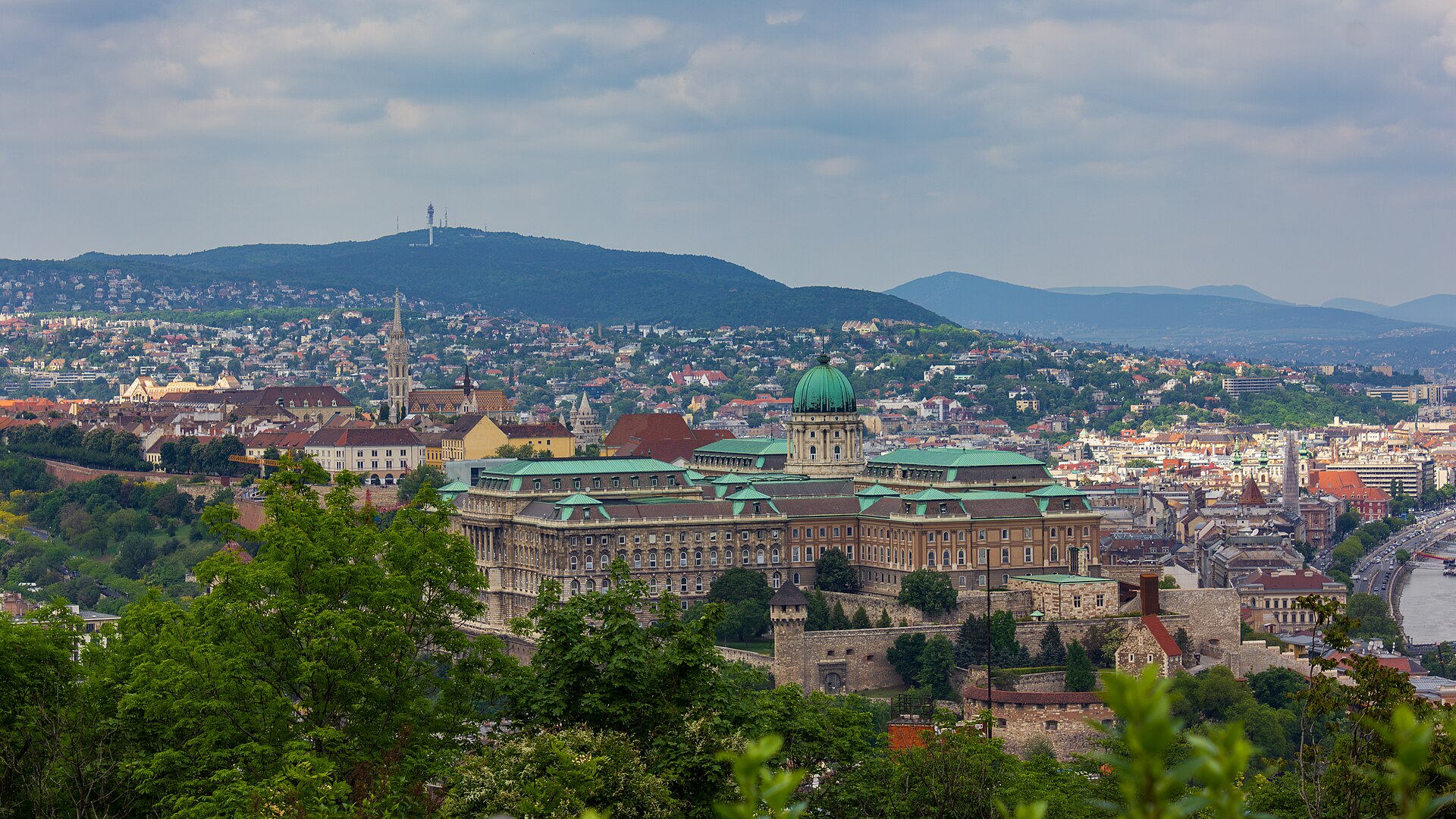
The 360-degree panorama from the Citadella is arguably the best view in Budapest: Parliament to the north, the castle to the west, the Danube bridges stretching below, and the Pest skyline receding to the horizon. Come at sunset.
Verified Facts
Named after Bishop Gellért, who legend says was rolled down the hill in a spiked barrel in 1046
The Citadella was built by the Habsburgs in 1854 after crushing the 1848-49 Hungarian War of Independence
The 14-metre Liberty Statue was erected in 1947 and originally commemorated Soviet liberation
Gellért Hill rises 235 metres above the Danube
Get walking directions
1 Citadella sétány, District XI, Budapest, 1118, Hungary