Walking Tours in Budapest
Budapest: The Castle District
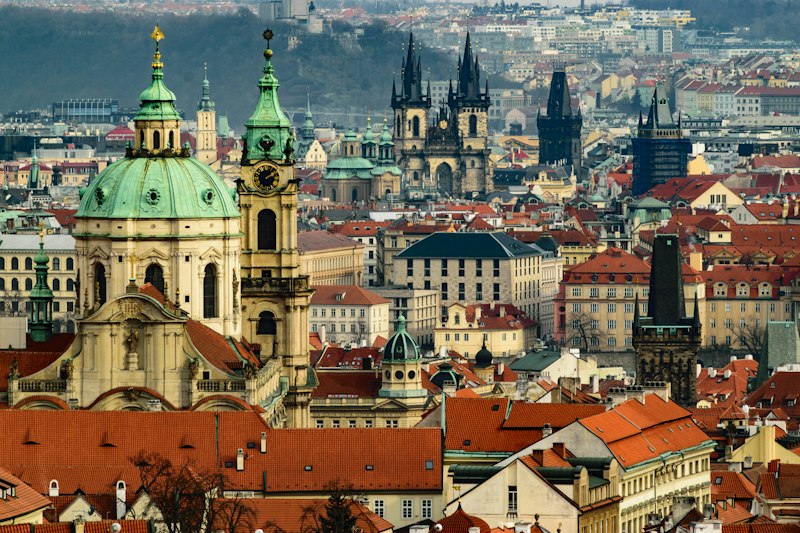
Walk the storied hilltop of Buda — from fairytale turrets at Fisherman's Bastion to the Royal Palace, with sweeping views over the Danube and Pest below.
Classic Budapest Walk
Two cities, one river, a thousand years of history. This walk takes you from the cafés of Pest across the Chain Bridge to the medieval Castle Hill of Buda, passing the mummified right hand of a dead king, a memorial of sixty iron shoes, a parliament covered in forty kilos of gold, a bridge born from a blocked funeral, and a church that spent a hundred and forty-five years as a mosque. You'll end at Fisherman's Bastion at sunset, looking across the Danube at the parliament lighting up on the other side.
30 Landmarks in Budapest
Andrássy Avenue & M1 Metro
Andrássy út, District VI, Budapest, 1062, Hungary
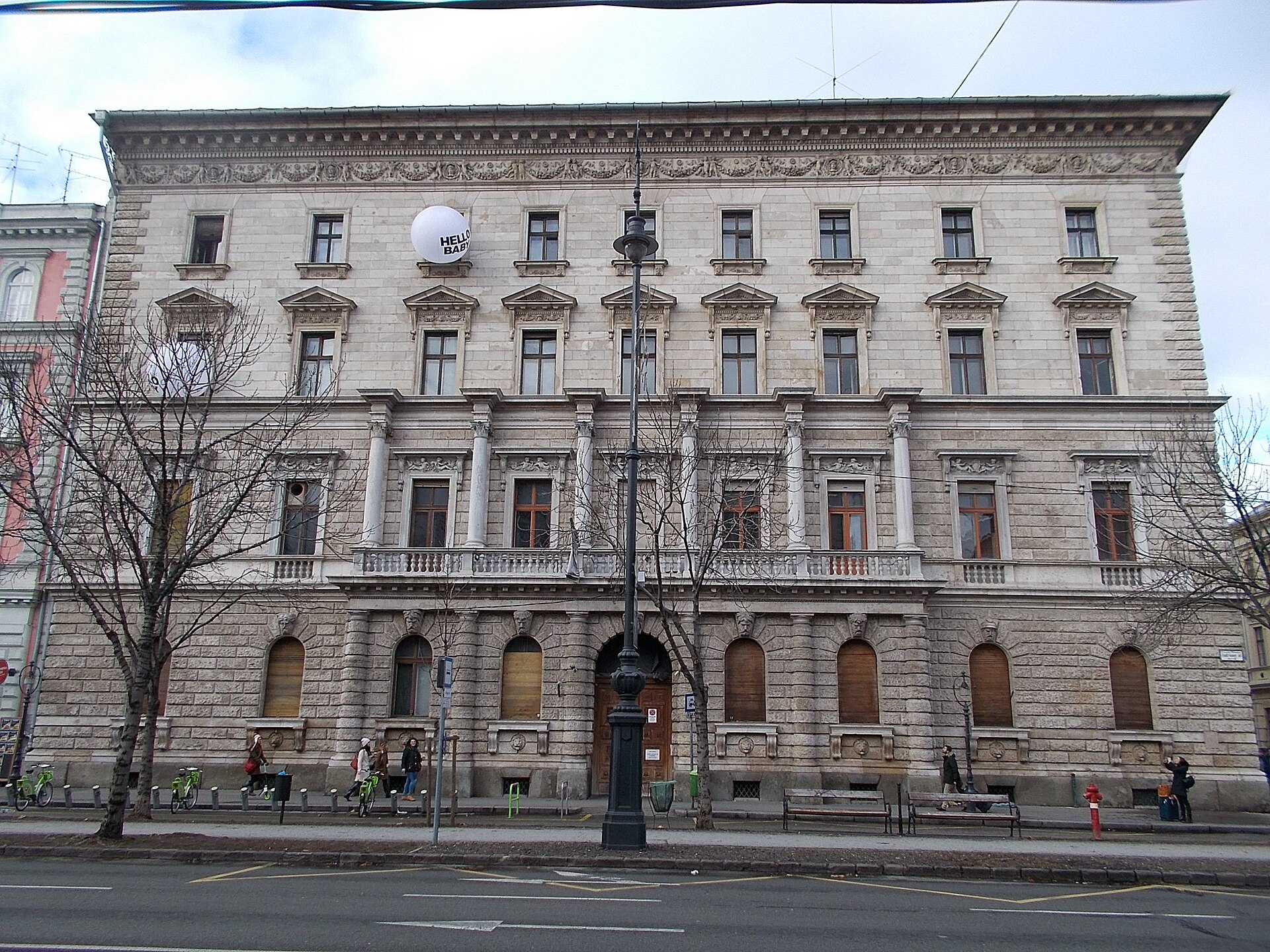
Andrássy Avenue is Budapest's grandest boulevard, stretching 2.5 kilometres from the heart of the city to Heroes' Square, lined with neo-Renaissance mansions, embassies, designer boutiques, and some of the finest architecture in Central Europe. It was built between 1872 and 1885 as Budapest's answer to the Champs-Élysées, and the UNESCO committee agreed it belonged in the same conversation, granting it World Heritage status in 2002. But the real marvel runs underneath. The Millennium Underground Railway — Metro Line 1, or the Földalatti as Budapestians call it — opened on May 2, 1896, making it continental Europe's oldest underground railway. Only London's Metropolitan line is older globally. The line was built in just under two years using the cut-and-cover method: workers dug a trench along the avenue, built the tunnel, and covered it back up. The original stations, with their decorative tilework and cast-iron details, look almost exactly as they did in 1896. The avenue changes character as you walk it. The inner stretch near Bajcsy-Zsilinszky út is commercial and busy. The middle section, past the Opera House and the House of Terror at number 60, becomes more residential and leafy. By the time you reach the octagonal Kodály körönd roundabout and continue to Heroes' Square, you are walking through a district of grand villas and diplomatic residences that feels like a different city entirely. Under communism, the avenue was renamed Népköztársaság útja — People's Republic Avenue — and several of the mansions were subdivided into cramped apartments. After 1989, the original name was restored, and the avenue has since been meticulously maintained as a symbol of Budapest's Belle Époque ambitions.
Aquincum Roman Ruins
135 Szentendrei út, District III, Budapest, 1031, Hungary
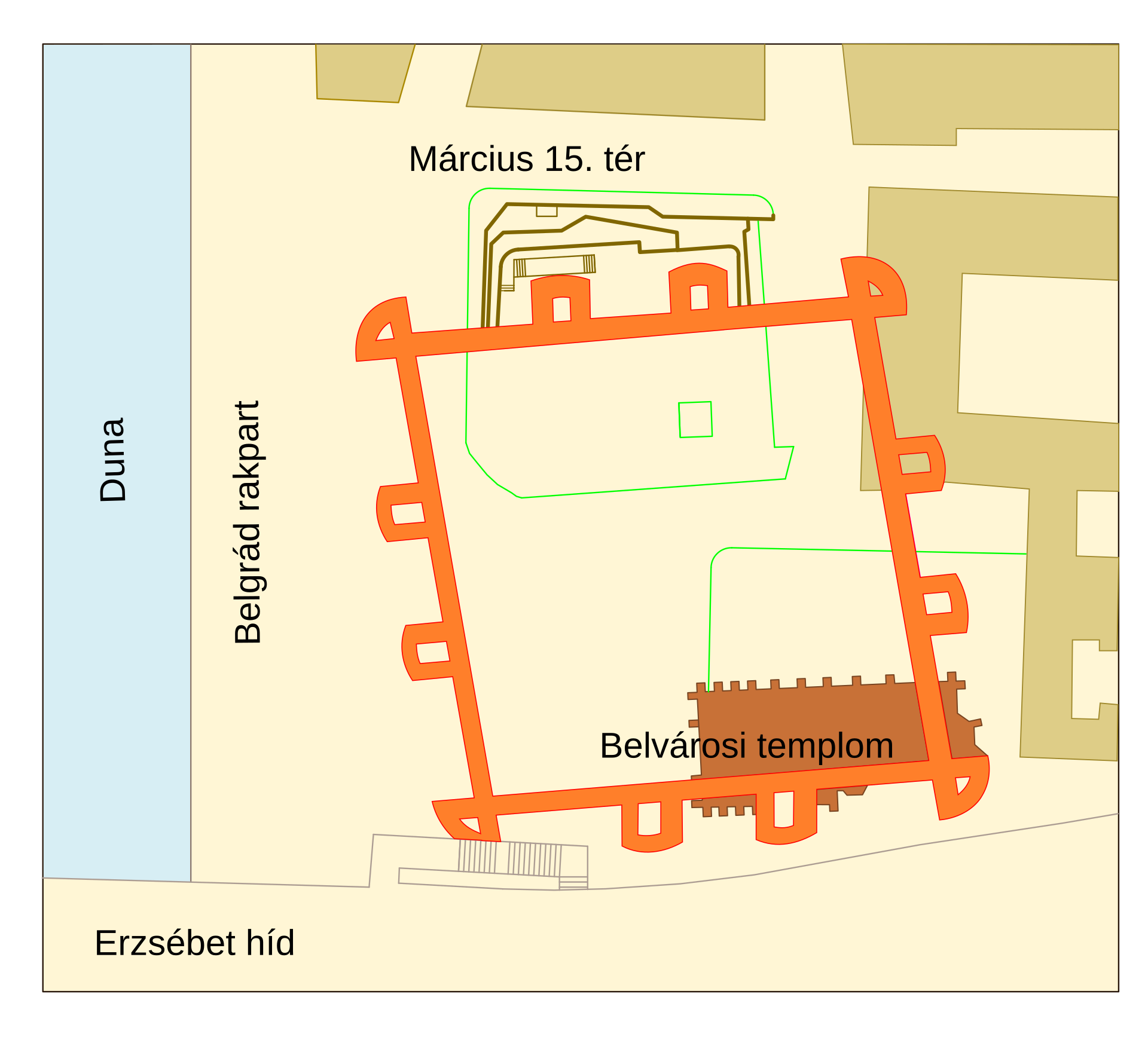
Two thousand years before Budapest existed, the Romans built a city here and called it Aquincum. At its peak in the second and third centuries AD, it was the capital of the province of Pannonia Inferior and home to around 30,000 people — soldiers, traders, craftsmen, and administrators who lived with underfloor heating, piped hot and cold water, public baths, amphitheatres, and all the engineering marvels that made Rome the superpower of the ancient world. The ruins sit in Óbuda, the oldest part of Budapest, and most tourists never make it here because it is a thirty-minute ride from the city centre. Their loss. The archaeological park covers a significant area of the civilian town, with excavated streets, the remains of houses, workshops, and public buildings laid out in a grid pattern that Romans would recognise instantly. The on-site museum displays mosaics, tombstones, pottery, and one of the most remarkable artefacts in Hungary: a portable water organ from the third century, one of only a few surviving examples from the Roman Empire. Nearby, in central Óbuda, the military amphitheatre of Aquincum — larger than the Colosseum in floor area, though not in height — sits in the middle of a residential neighbourhood, surrounded by communist-era apartment blocks. It is one of the more surreal juxtapositions in Budapest: Roman gladiatorial combat met Soviet housing policy. The Hercules Villa, a short walk away, contains stunning third-century floor mosaics depicting Hercules and Dionysus. Budapest markets itself as a Habsburg and Ottoman city, but its roots go back to ancient Rome, and Aquincum is the proof.
Buda Castle
2 Szent György tér, District I, Budapest, 1014, Hungary
Buda Castle has been built, destroyed, rebuilt, burned, besieged, blown up, and rebuilt again so many times that the current structure is essentially a ghost of a ghost of a ghost. The first royal residence appeared on Castle Hill in the 1240s, when King Béla IV decided that an elevated fortress might be useful after the Mongols had just levelled most of Hungary. He was right. Over the next seven centuries, every major power that passed through Central Europe — Ottomans, Habsburgs, Nazis, Soviets — left their mark on this hill, usually by destroying whatever the previous occupant had built. The golden age came under King Matthias Corvinus in the fifteenth century, when the castle became one of Europe's finest Renaissance palaces, filled with art, a famous library of illuminated manuscripts, and Italian architects who made it the envy of northern Europe. The Ottomans turned it into a military garrison and gunpowder magazine. The Habsburgs blew it up reconquering it in 1686, then spent two centuries rebuilding it into the sprawling Baroque palace you see today — or rather, a simplified version of it, because the Soviets and Nazis managed to destroy it again during the 1944-45 Siege of Budapest. What stands now houses the Hungarian National Gallery, the Budapest History Museum, and the National Széchényi Library. The castle district became a UNESCO World Heritage Site in 1987. Beneath the surface lies a network of medieval caves and passages stretching over a kilometre, carved by thermal waters long before humans arrived. Take the Sikló funicular from the Chain Bridge up to the castle — it has been running since 1870 and offers increasingly dramatic views of the Danube the higher you climb.
Buda Castle Labyrinth
9 Úri utca, District I, Budapest, 1014, Hungary
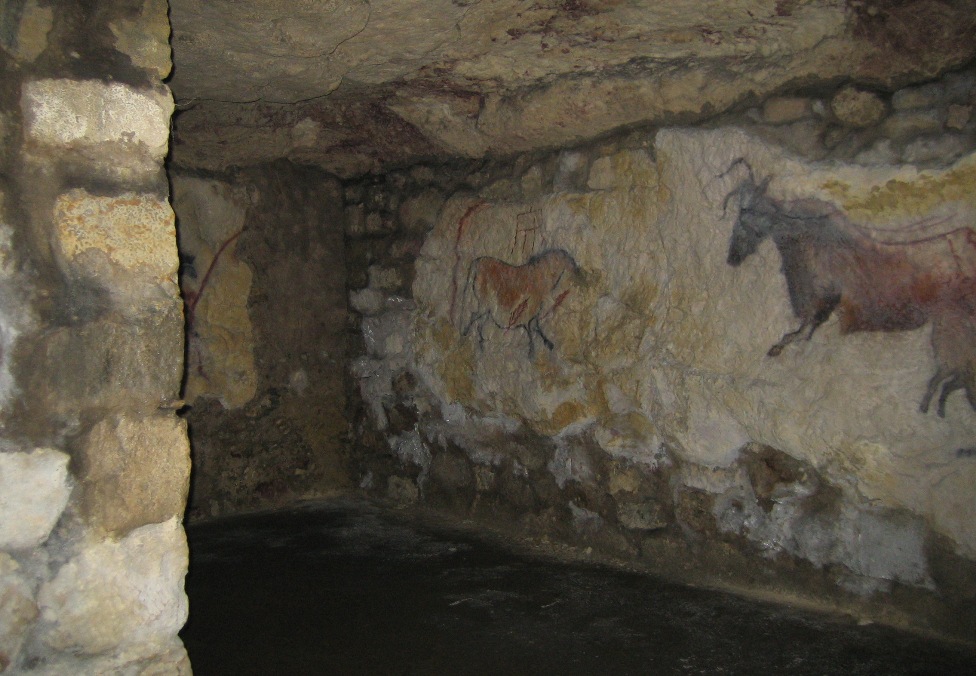
Sixteen metres beneath the cobblestoned streets of the Castle District lies a network of caves and passages that humans have used for half a million years. The Labyrinth of Buda Castle stretches over 1,200 metres of interconnected tunnels carved not by people but by thermal waters that have been flowing under the hill since before Homo sapiens existed. Prehistoric humans used the caves as shelter. Medieval residents used them as wine cellars, torture chambers, and prisons. The Ottomans used them as a military store and — according to some accounts — a harem. The most famous prisoner allegedly held here was Vlad the Impaler, the real-life figure behind the Dracula legend, who was imprisoned by the Hungarian king Matthias Corvinus in the late 1460s. Whether Vlad was held in these specific caves or elsewhere in the castle is debated, but the Labyrinth leans into the connection with theatrical enthusiasm. The cave system has been a UNESCO World Heritage Site since 1987 as part of the Buda Castle complex. During World War II, the caves were expanded into a military hospital and shelter — the same network that connects to the Hospital in the Rock nearby. The passages run beneath several kilometres of the Castle District, and even today, not all of them have been fully mapped. The modern Labyrinth attraction involves walking through dimly lit (and sometimes completely dark) tunnels with wax figures, atmospheric music, and just enough eeriness to keep your pulse elevated. The constant temperature of about 12 degrees Celsius means it is refreshingly cool in summer and oddly warm in winter. It is not for the claustrophobic, but for everyone else, it is one of Budapest's most unusual experiences.
Cave Church
District XI, Budapest, Hungary
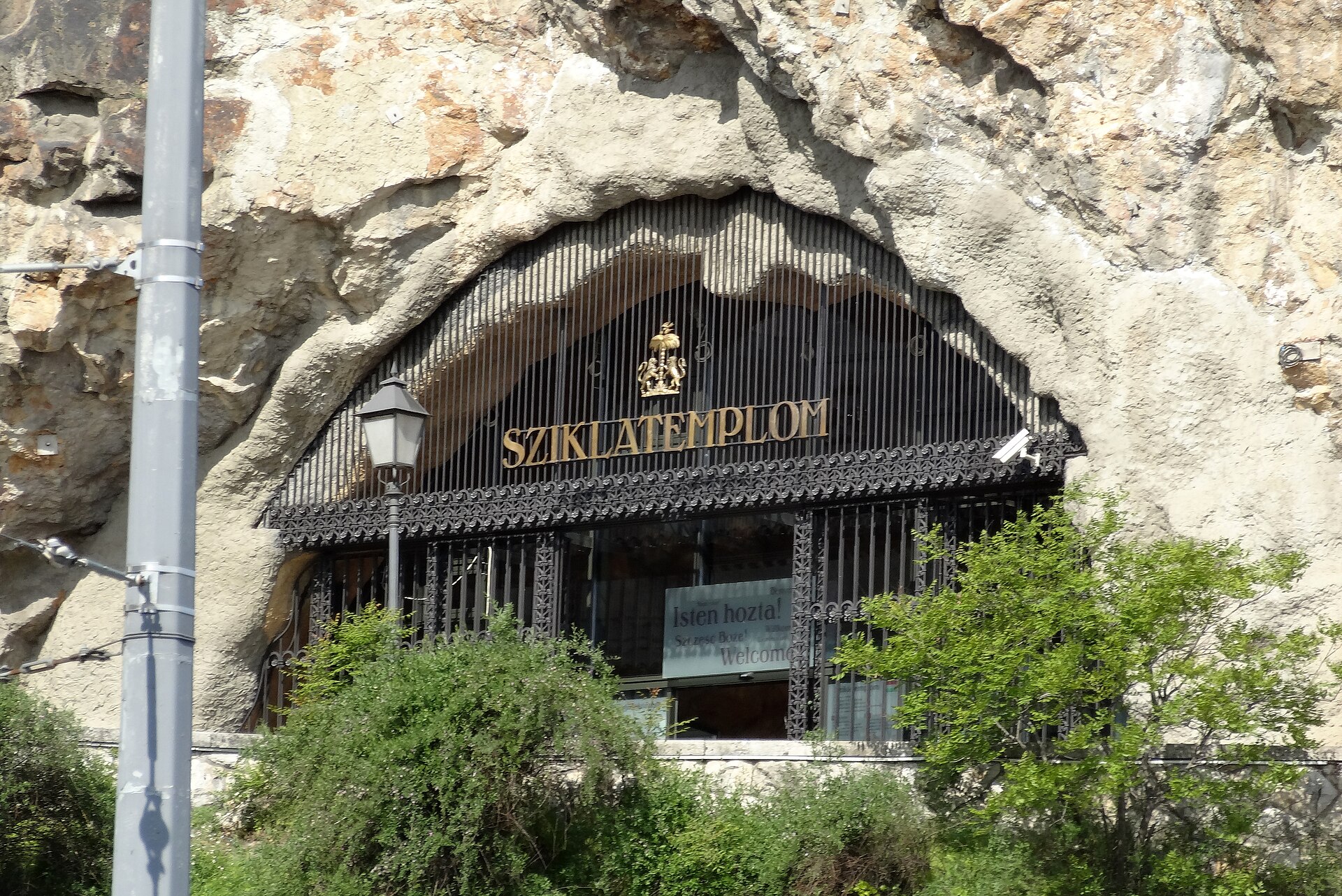
Built into the natural caves of Gellért Hill, directly above the Danube and behind the Gellért Hotel, this church is one of the most unusual places of worship in Europe. The cave system was known for centuries — thermal springs emerge from the rock here, and the caves served various purposes over the years — but it was not until 1926 that Pauline monks established a chapel inside, inspired by the famous pilgrimage cave at Lourdes in France. The Pauline Order is the only monastic order of Hungarian origin, founded in the thirteenth century and named after Paul of Thebes. The monks carved out and expanded the natural cave into a functional church with a nave, altar, and small side chapels. The acoustics inside are remarkable — the curved stone walls create a natural resonance that makes services feel otherworldly. In 1951, the Communist authorities arrested the monks, sentenced the prior to death, and sealed the entrance to the cave with a concrete wall two metres thick. It remained sealed for nearly four decades. After the fall of communism, the Pauline monks returned and the church was reopened in 1989. The concrete wall was broken down, and the cave chapel was restored to its former state. Today, the church holds regular services and is open to visitors. The interior is simple — rough stone walls, candles, a modest altar — but the atmosphere is powerful precisely because of that simplicity. A small outdoor terrace near the entrance offers views over the Danube to the Pest side. The fact that this church was literally sealed shut by a totalitarian government and then reopened by the monks who had been imprisoned for worshipping here gives the space a weight that polished cathedrals rarely achieve.
Central Market Hall
1 Vámház körút, District IX, Budapest, 1093, Hungary
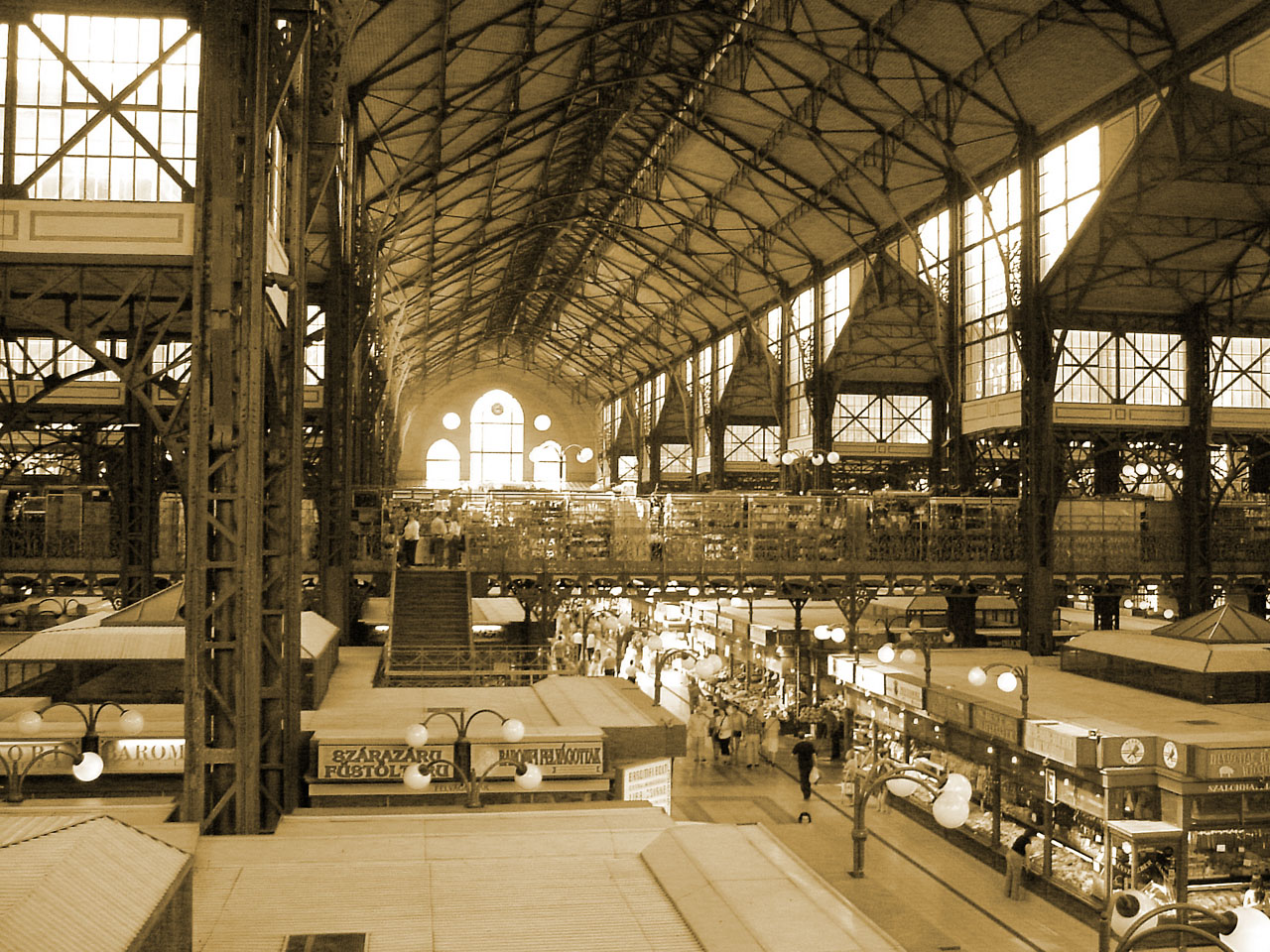
Budapest's largest and oldest indoor market opened on February 15, 1897, and walking through its neo-Gothic iron and glass halls feels like stepping into a nineteenth-century food cathedral. The building sits at the southern end of Váci utca, the city's famous pedestrian shopping street, and right at the Pest foot of Liberty Bridge. It was designed by Samu Pecz, the same architect who built several of Budapest's most important buildings during the millennial construction boom. The ground floor is the real show. Rows of stalls overflow with paprika in every conceivable form — sweet, hot, smoked, in paste, in powder, strung in garlands — because paprika is to Hungarian cuisine what olive oil is to Italian: non-negotiable. You will find fat links of kolbász sausage, goose liver, pickled everything, and langos — deep-fried flatbread topped with sour cream and cheese that qualifies as both street food and religious experience. The basement level has a supermarket and fish market, while the upper floor is tourist territory with folk art, embroidered tablecloths, and enough paprika-themed souvenirs to last several lifetimes. The building's distinctive Zsolnay ceramic tile roof — the same factory that made the tiles on Matthias Church — was restored in the 1990s after decades of neglect during the communist era. The steel frame of the hall was manufactured by the Schlick Factory, which also produced components for some of Budapest's bridges. Come before 9am on a Saturday to see the market as locals experience it: grandmothers squeezing tomatoes, butchers shouting orders, and not a selfie stick in sight. By midday, it is shoulder-to-shoulder tourists, which is its own kind of spectacle.
Children's Railway
District XII, Budapest, 1121, Hungary
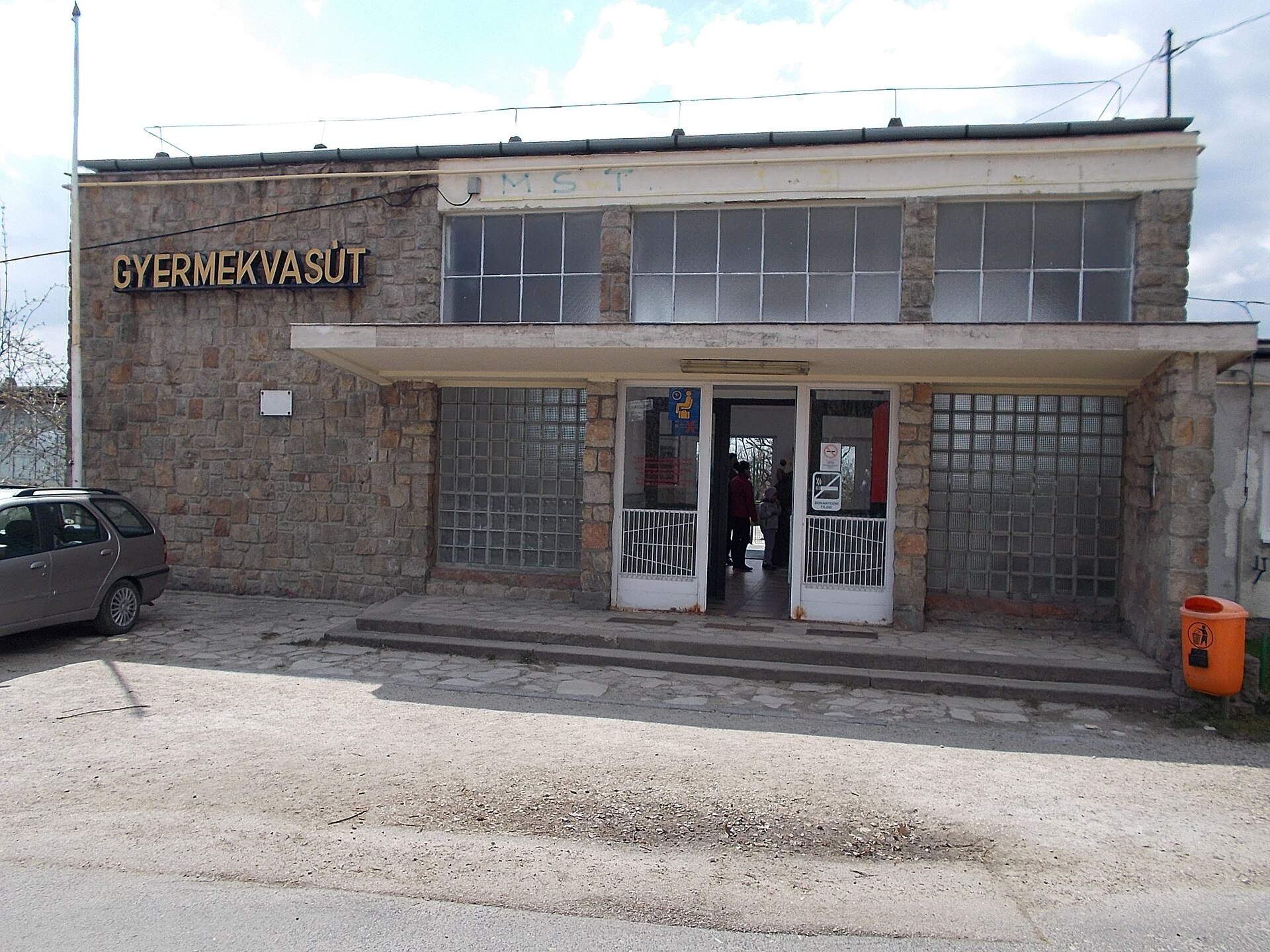
An eleven-kilometre railway through the Buda Hills is operated almost entirely by children between the ages of ten and fourteen. They sell the tickets, check the timetables, signal the trains, and manage the stations — the only adults are the drivers and maintenance engineers. It sounds like fiction, but the Gyermekvasút has been running since 1948 and is one of Budapest's most charming and surreal experiences. The railway was established during the early Communist era as a Pioneer Railway, designed to teach young people discipline, responsibility, and technical skills. The children who worked on it were considered model young communists, and the positions were highly competitive. When the regime fell, the railway survived the political transition and simply dropped the Communist ideology while keeping everything else. Today, the children who operate it are ordinary school students who apply for the privilege and receive genuine training in railway operations. The train runs from Széchenyhegy to Hűvösvölgy, winding through forested hills high above the city. The views are beautiful, the pace is slow, and the novelty of having a twelve-year-old in a crisp uniform punch your ticket and wave the departure flag never quite wears off. Several stops connect to hiking trails through the Buda Hills, and you can ride one-way and hike back. The best approach is to take the cogwheel railway (Fogaskerekű) from Városmajor up to Széchenyhegy station, ride the Children's Railway through the hills, then take the chairlift (Libegő) down from János Hill for a full circuit of Budapest's quirky mountain transport network. It is a perfect half-day excursion that most tourists miss entirely.
Fisherman's Bastion
Szentháromság tér, 1014 Budapest
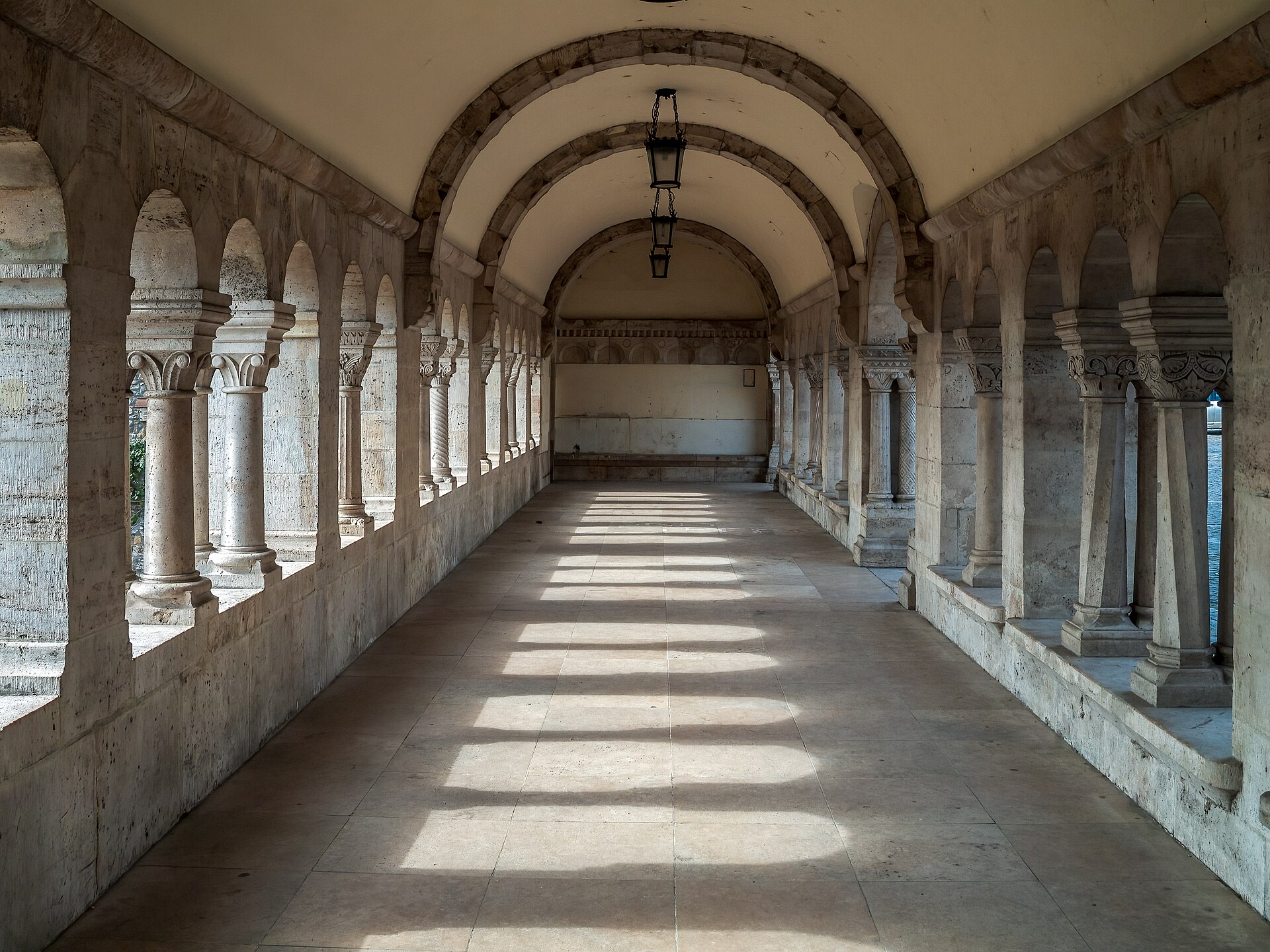
Here is a fortress that was never meant to defend anything. Fisherman's Bastion was built between 1895 and 1902 as a decorative viewing terrace, designed by Frigyes Schulek to look like a fairy-tale castle and serve as the most photogenic overlook in Budapest. It succeeded on both counts. The neo-Romanesque white stone turrets and arched walkways frame a panorama of the Danube, Parliament, and the Pest skyline that has launched a billion photographs. The seven conical towers represent the seven Magyar chieftains who led their tribes into the Carpathian Basin in 895, founding the nation. The name comes from the guild of fishermen who defended this stretch of the castle walls during the Middle Ages — though by the time Schulek built his confection, the fishermen were long gone and the old walls were crumbling. The whole project was part of a massive renovation for Hungary's millennium celebrations in 1896, when the country threw itself a thousand-year birthday party with characteristic excess. Schulek also spent two decades restoring the Matthias Church next door, so the Bastion was designed specifically to complement it — the playful Romanesque arches echoing the church's Gothic spires. The effect is theatrical, almost cinematic, and completely intentional. Budapest has always understood that architecture is a performance. The upper terrace charges a small admission fee during summer months, but the lower terraces and stairways are free and equally beautiful. Come at sunrise when the light hits Parliament across the river and the crowds have not yet arrived. At night, the Bastion is illuminated and nearly empty — one of the few moments in Budapest where you can have a world-class view entirely to yourself.
Gellért Baths
4 Kelenhegyi út, District XI, Budapest, 1114, Hungary
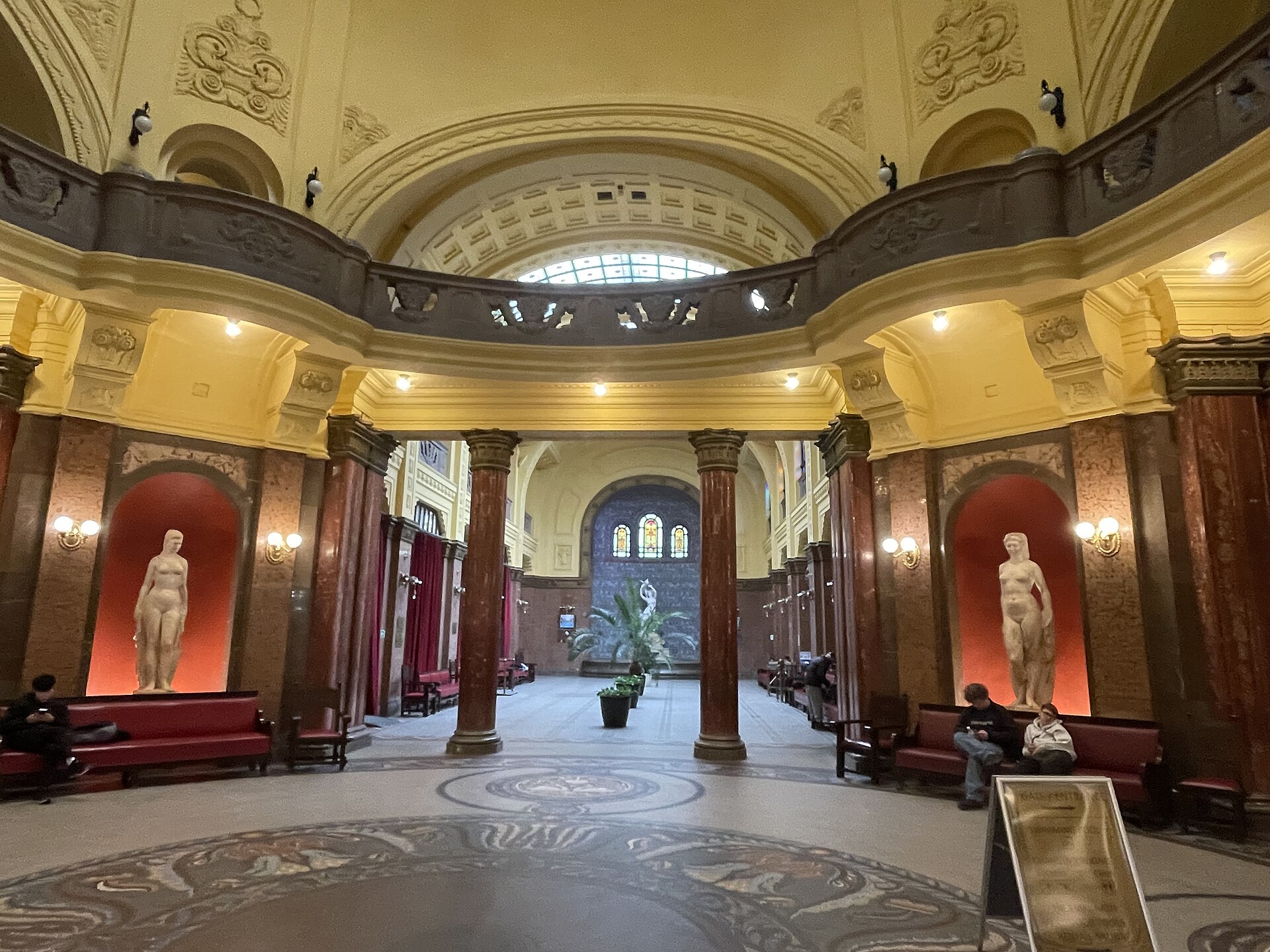
The Gellért Baths are the most beautiful thermal baths in Budapest, and they know it. Built between 1912 and 1918 in the Secession Art Nouveau style, the complex is attached to the Gellért Hotel and features soaring stained-glass windows, mosaic floors, carved marble columns, and Zsolnay ceramic details that make the whole place feel less like a bathhouse and more like a palace where you happen to be allowed to swim. The healing waters at this site have been documented since the thirteenth century, and the Ottoman Turks built their own baths here during their 150-year occupation. The current building was the vision of architects Artúr Sebestyén, Ármin Hegedüs, and Izidor Sterk, who wanted to create a bathhouse worthy of the thermal springs emerging from Gellért Hill. The water is rich in calcium, magnesium, and fluoride, and it reaches the surface at temperatures around 47 degrees Celsius. The building took direct damage during World War II — the ornate Art Nouveau women's thermal bath was bombed, destroying the Zsolnay pyrogranite facade and the wooden dressing rooms. Restoration has been ongoing ever since, and in October 2025 the baths closed for a major refurbishment with a planned reopening in 2028. If they have reopened by the time you visit, the experience will likely be extraordinary. The outdoor wave pool, added in the 1920s, was one of the first artificial wave pools in Europe and remains a beloved summer destination. Inside, the main pool under its vaulted glass ceiling is one of the most photographed indoor pools in the world. Even if you cannot swim here during renovation, the exterior of the Gellért Hotel and the statue of St. Gellért directly above are worth the walk.
Gellért Hill & Citadella
1 Citadella sétány, District XI, Budapest, 1118, Hungary
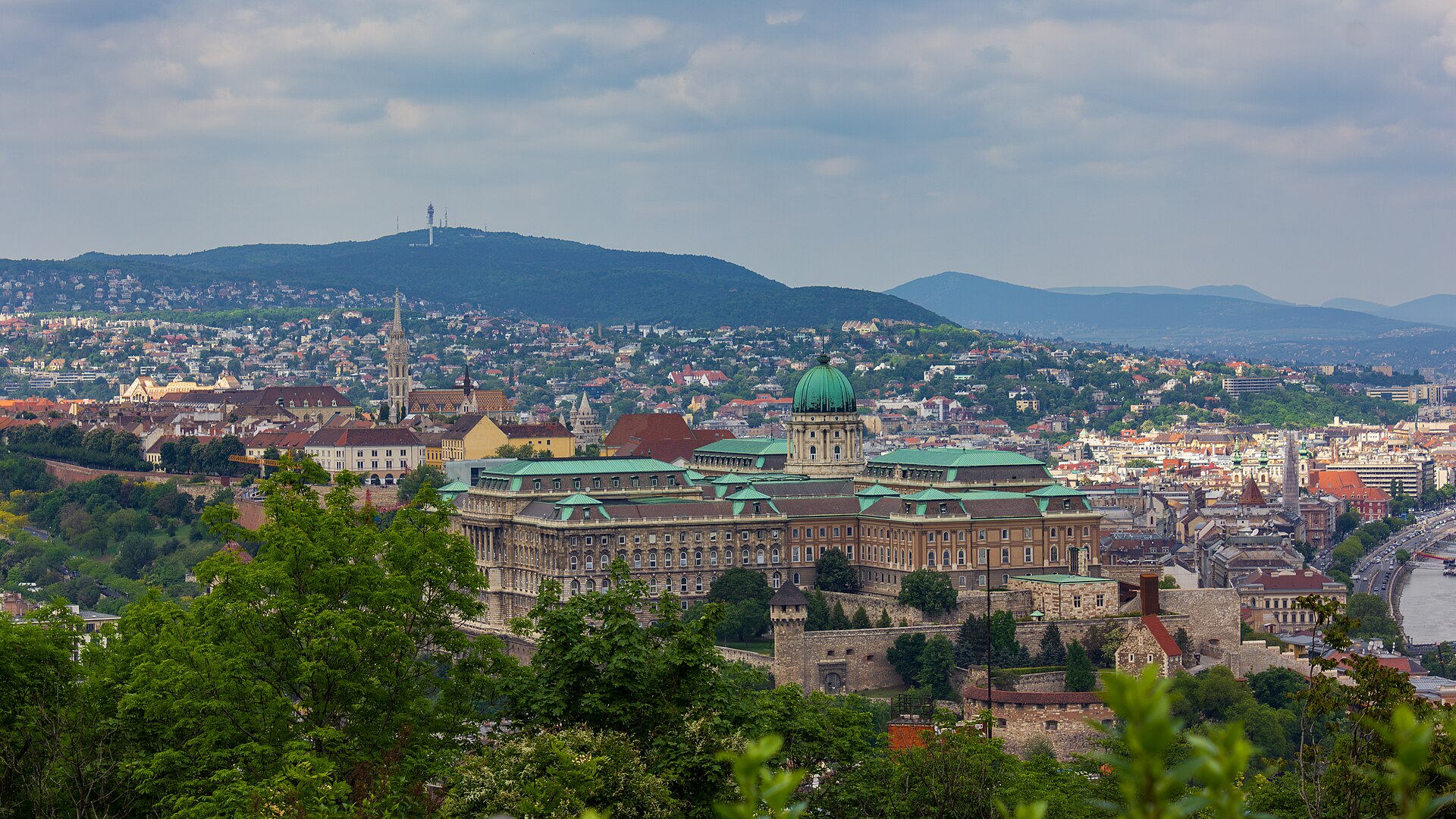
The hill is named after a man who was murdered on it. In 1046, according to legend, pagan Hungarians who rejected Christianity rolled Bishop Gellért down the rocky slopes in a spiked barrel. He had been sent by the Pope to convert the Magyars, and some of the Magyars felt strongly about not being converted. The hill has commemorated his martyrdom ever since, and a large bronze statue of St. Gellért stands at the base, facing the Elisabeth Bridge and holding a cross aloft. At the summit, 235 metres above the Danube, sits the Citadella — a fortress built by the Habsburgs in 1854 as a tool of intimidation after crushing the Hungarian War of Independence in 1849. It is about 200 metres long with walls 6 metres high and 3 metres thick, and the Hungarians absolutely despised it. They called it the Bastille of Pest and demanded its demolition. The Habsburgs eventually removed their garrison in 1897, but the fortress remained. Today it has been renovated and reopened as a historical exhibition. The 14-metre bronze Liberty Statue that towers from the hilltop was erected in 1947 to commemorate Soviet liberation from the Nazis. But its origin story is more tangled: the female figure holding a palm leaf was originally designed as a memorial to István Horthy, the son of Hungary's wartime regent. After 1989, the political meaning was quietly rewritten — it now simply represents freedom and independence. The 360-degree panorama from the Citadella is arguably the best view in Budapest: Parliament to the north, the castle to the west, the Danube bridges stretching below, and the Pest skyline receding to the horizon. Come at sunset.
Great Synagogue
2 Dohány utca, District VII, Budapest, 1074, Hungary
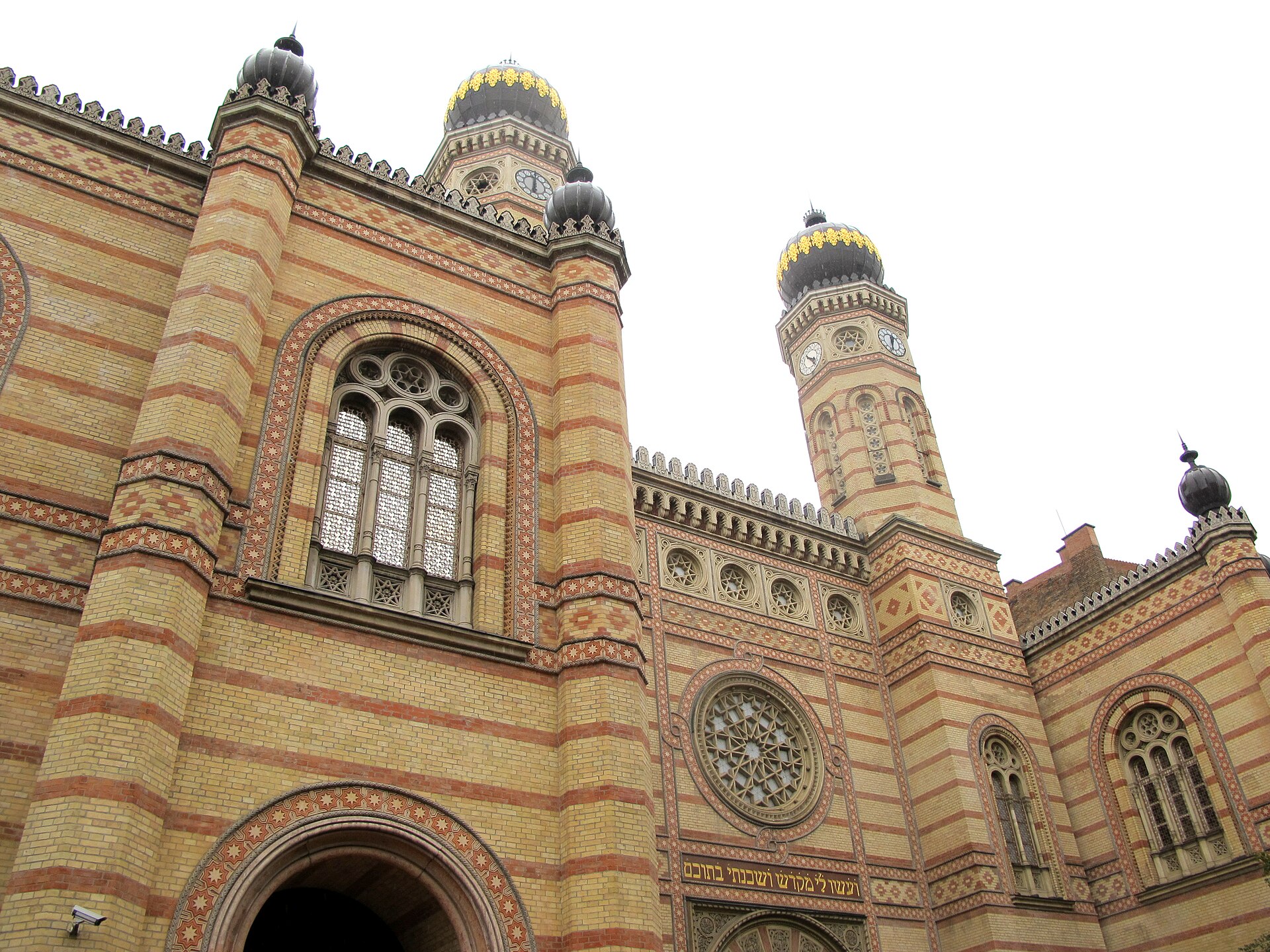
The largest synagogue in Europe and the second largest in the world seats 3,000 people under a ceiling that draws its decorative language not from European traditions but from the Islamic architecture of North Africa and medieval Spain. Built between 1854 and 1859, the Dohány Street Synagogue was designed by Viennese architect Ludwig Förster in the Moorish Revival style, with twin octagonal towers crowned by onion domes reaching 43 metres high. The choice was deliberate and radical: in a city where every church was Gothic or Baroque, the synagogue announced its otherness with exuberant confidence. The building stands on the edge of what became the Budapest Ghetto during World War II, and Dohány Street itself formed one of the ghetto's boundaries. The Arrow Cross Party bombed the synagogue on February 3, 1939, years before the ghetto was established, and during the winter of 1944-45, the area around it became one of the most concentrated sites of suffering in the Holocaust. An estimated 10,000 people died within the ghetto from cold, starvation, and violence. The synagogue complex today includes the Heroes' Temple, a memorial cemetery in the courtyard, and the Hungarian Jewish Museum. In the rear courtyard stands the Emanuel Tree, a weeping willow sculpture in metal by Imre Varga, with the names of Holocaust victims inscribed on its leaves. It was partly funded by a donation from the actor Tony Curtis, whose parents were Hungarian Jewish immigrants. The synagogue is a centre of Neolog Judaism, Hungary's equivalent of Conservative Judaism. Guided tours run regularly and are the best way to understand both the architectural beauty and the weight of history this building carries.
Heroes' Square
Hősök tere, District XIV, Budapest, 1146, Hungary
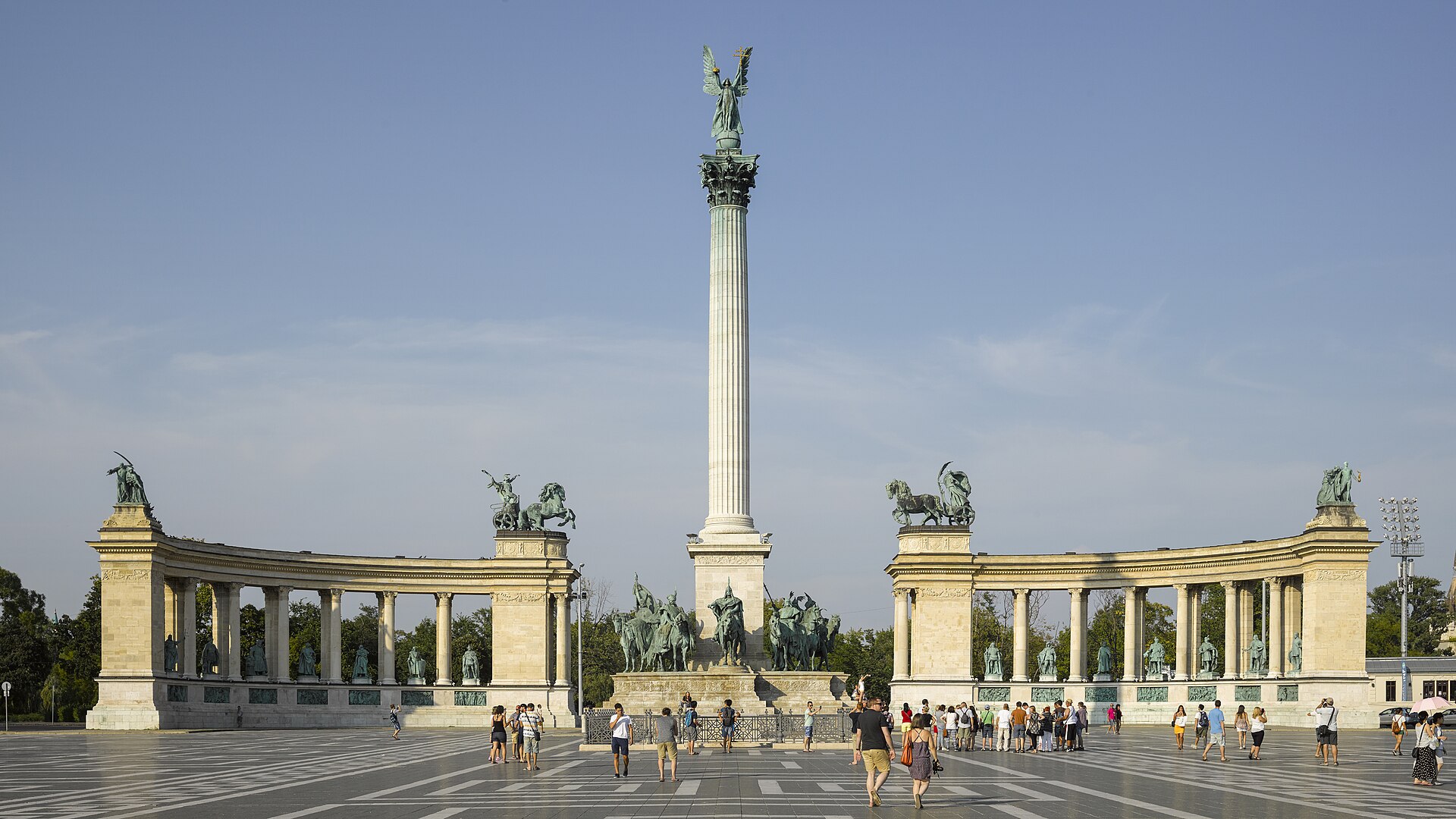
Hungary threw itself a thousand-year birthday party in 1896, and Heroes' Square was the centrepiece. The Millennium Monument at its heart took a full decade to build: a 36-metre column topped by the Archangel Gabriel holding the Holy Crown of St. Stephen in one hand and an apostolic cross in the other. Below him, seven bronze horsemen represent the Magyar chieftains who led their tribes into the Carpathian Basin in 895 and founded the nation. The symbolism is not subtle, and it was never meant to be. Behind the column, two sweeping semicircular colonnades hold fourteen statues of Hungary's most important rulers and leaders, from King Stephen to Lajos Kossuth. The roster has changed over time — after World War I, five Habsburg rulers were removed and replaced with Hungarian independence heroes, a political edit carved in stone. The whole composition was inaugurated in 1906 and declared a UNESCO World Heritage Site in 2002. The square has witnessed some of the most charged moments in modern Hungarian history. On June 16, 1989, a crowd of 250,000 gathered here for the reburial of Imre Nagy, the prime minister executed after the 1956 revolution. It was one of the events that triggered the fall of communism in Hungary, and images of that day were broadcast worldwide. The square was also where massive communist rallies were held for decades before that — same space, opposite ideologies, the statues watching it all. Flanking the square are the Museum of Fine Arts and the Hall of Art, both worth visiting. But the square itself, especially at dusk when the golden light catches the bronze figures, is the real masterpiece.
Hospital in the Rock
4C Lovas út, District I, Budapest, 1012, Hungary
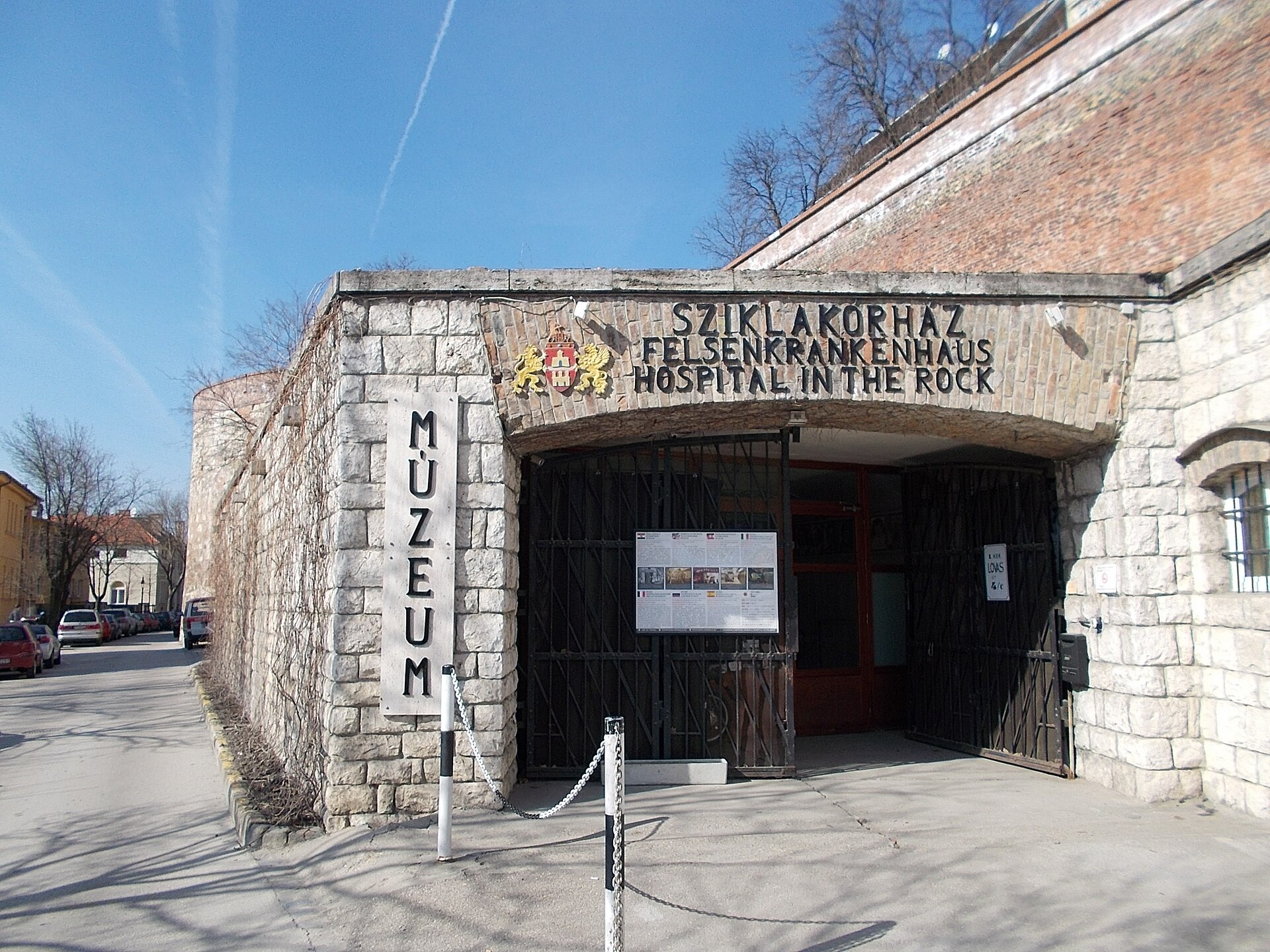
Beneath the Castle District, carved into the limestone caves of Castle Hill, lies a secret hospital that operated during two of the most dangerous moments of the twentieth century and was classified for decades afterward. Construction began in 1939 on orders from Budapest's mayor, who wanted an emergency surgical centre inside the natural cave system that has existed under Buda for hundreds of thousands of years. The emergency hospital was completed just in time for the 1944-45 Siege of Budapest. Designed for 300 patients and 40 medical staff working in shifts, the hospital was overwhelmed almost immediately. During the siege, over 650 wounded soldiers and civilians were packed into wards meant for half that number. Doctors operated by lamplight with dwindling supplies while the city above was being destroyed street by street. Anybody could receive treatment — regardless of gender, race, religion, or which side they were fighting for. After the war, the hospital was briefly used as a prison, then repurposed during the Cold War as a nuclear bunker. It reached its final size of 2,400 square metres in 1962, opening at the height of the Cuban Missile Crisis as a facility designed to keep 200 doctors and nurses alive and working in the event of nuclear attack. The ventilation system included air filters for chemical and biological weapons. It remained classified and operational until the 1980s. The museum opened in 2007 after extensive restoration, and access is limited to guided tours only. The reconstructed wards and operating rooms use original equipment and wax figures to recreate wartime conditions. The atmosphere is genuinely unsettling — low ceilings, narrow tunnels, the persistent cool temperature of twelve degrees Celsius.
House of Terror
60 Andrássy út, District VI, Budapest, 1062, Hungary
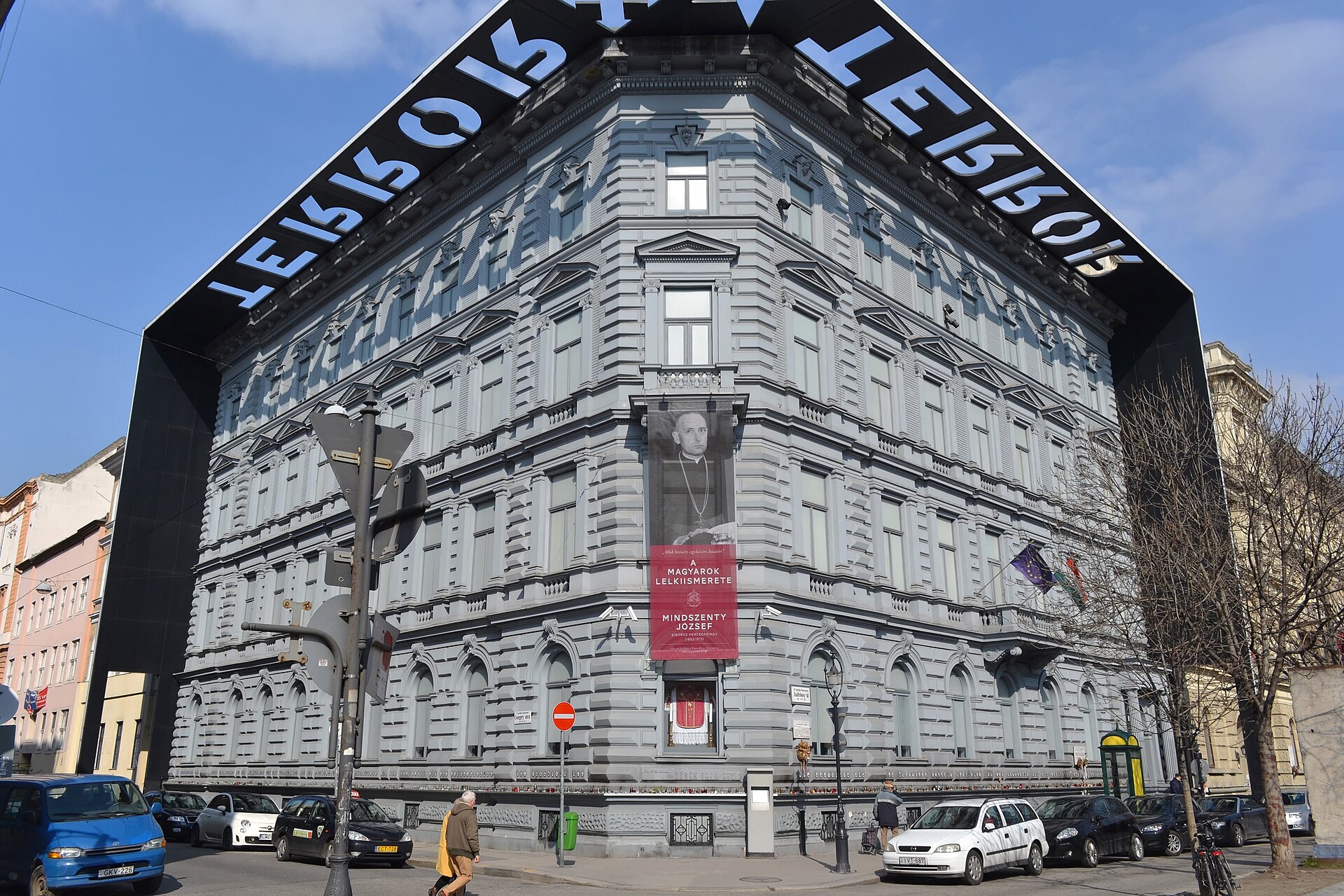
The building at 60 Andrássy Avenue has been a place of terror under two different regimes, and now it is a museum about both. From 1937, this elegant apartment building became the headquarters of the Arrow Cross Party, Hungary's fascist movement. When they seized power in 1944, it was renamed the House of Loyalty and used as a prison and torture facility. After the war, the Communist secret police — the ÁVH, Hungary's equivalent of the KGB — took over the very same building and continued using it for exactly the same purposes. The museum opened on February 24, 2002, and the exterior announces its presence with an enormous blade-like awning on the roof that casts the word TERROR in shadow on the facade. Inside, the permanent exhibition moves chronologically through Hungary's double occupation: first by the Arrow Cross with Nazi backing, then by the Communist Party with Soviet backing. From 1944 to 1990, this building was the administrative heart of state violence. The most affecting section is the basement. Visitors descend in a slow-moving elevator while a former janitor narrates, on video, how executions were carried out in the building. The basement cells, where the ÁVH tortured political prisoners, have been preserved with their original fittings. The rooms are small, the ceilings low, and the reality of what happened in them is inescapable. The museum is deliberately confrontational and not without controversy — critics note it devotes far more space to communist-era crimes than to the Arrow Cross period. But as a physical experience, walking through the actual rooms where these things happened, the House of Terror is one of the most powerful museum visits in Europe.
Hungarian Parliament Building
1-3 Kossuth Lajos tér, District V, Budapest, 1055, Hungary
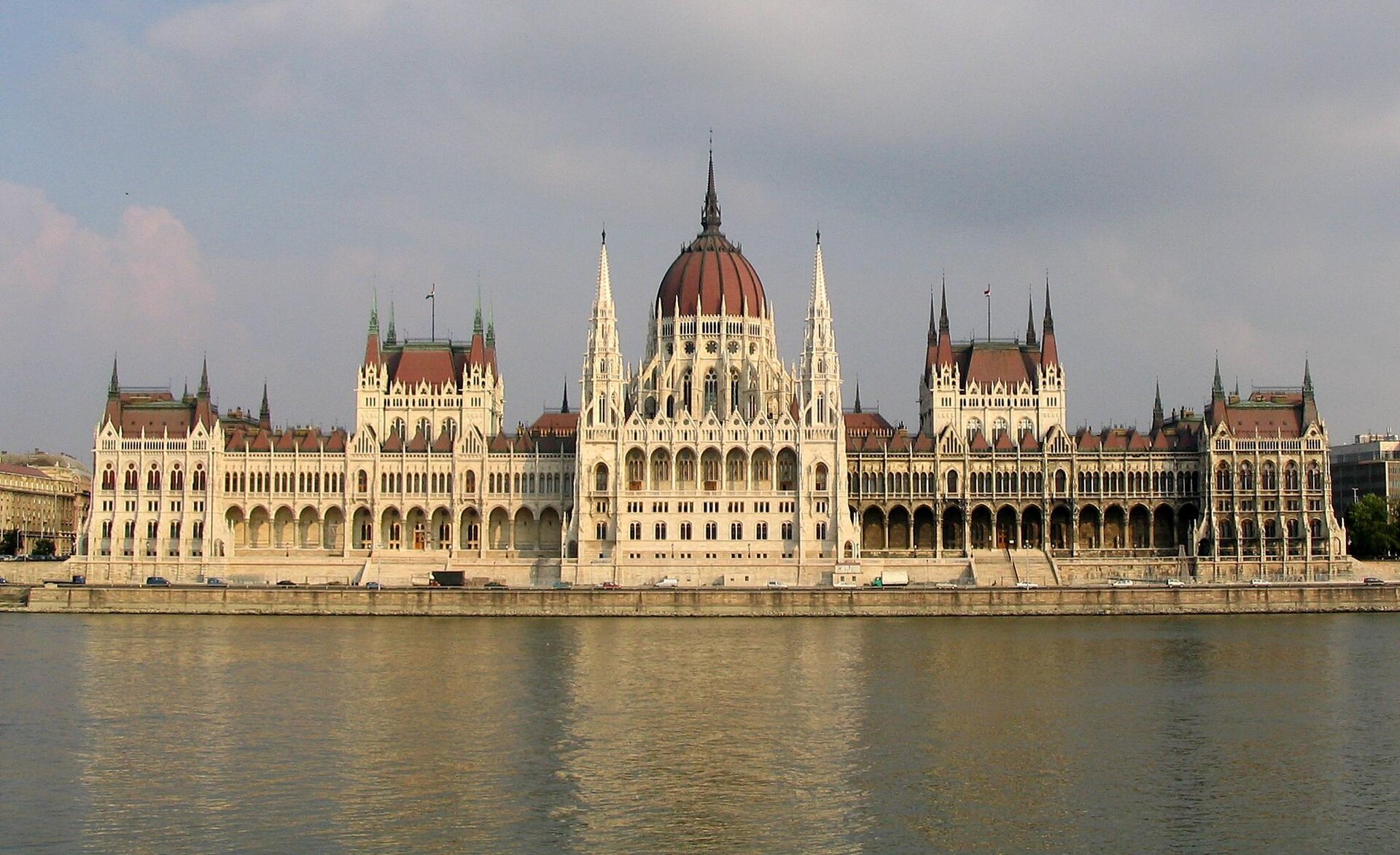
This building took seventeen years to construct, used forty million bricks, half a million precious stones, and forty kilograms of gold — and the architect who designed it never saw it finished. Imre Steindl went blind before his neo-Gothic masterpiece was completed in 1902, dying the same year. It is the kind of tragic irony that clings to Budapest like river fog: beauty paid for with suffering, grandeur built on heartbreak. The Parliament sits on the Pest bank of the Danube, stretching 268 metres long and 123 metres wide — the largest building in Hungary since the day it opened. Its height of 96 metres is not an accident. That number references the year 896, when the Magyar tribes first settled the Carpathian Basin, and it matches the height of St. Stephen's Basilica across the river exactly. The symbolism is deliberate: church and state, equal in stature, neither towering over the other. Inside, 691 rooms branch off 29 staircases, connected by 27 gates and served by 13 elevators. The hexadecagonal central hall — sixteen-sided, for those keeping count — houses the Holy Crown of Hungary, the nation's most sacred relic, which has been stolen, lost, buried, smuggled across borders, and once held in Fort Knox by the Americans. It was returned in 1978 and moved here in 2000, guarded around the clock. On October 25, 1956, thousands of Hungarians gathered on Kossuth Square in front of Parliament to demand freedom from Soviet occupation. Soviet troops opened fire on the crowd, killing dozens. The bullet holes have been repaired, but the memory has not. Today, Parliament is one of the few in Europe where you can take a guided tour of the interior — and it is worth every minute.
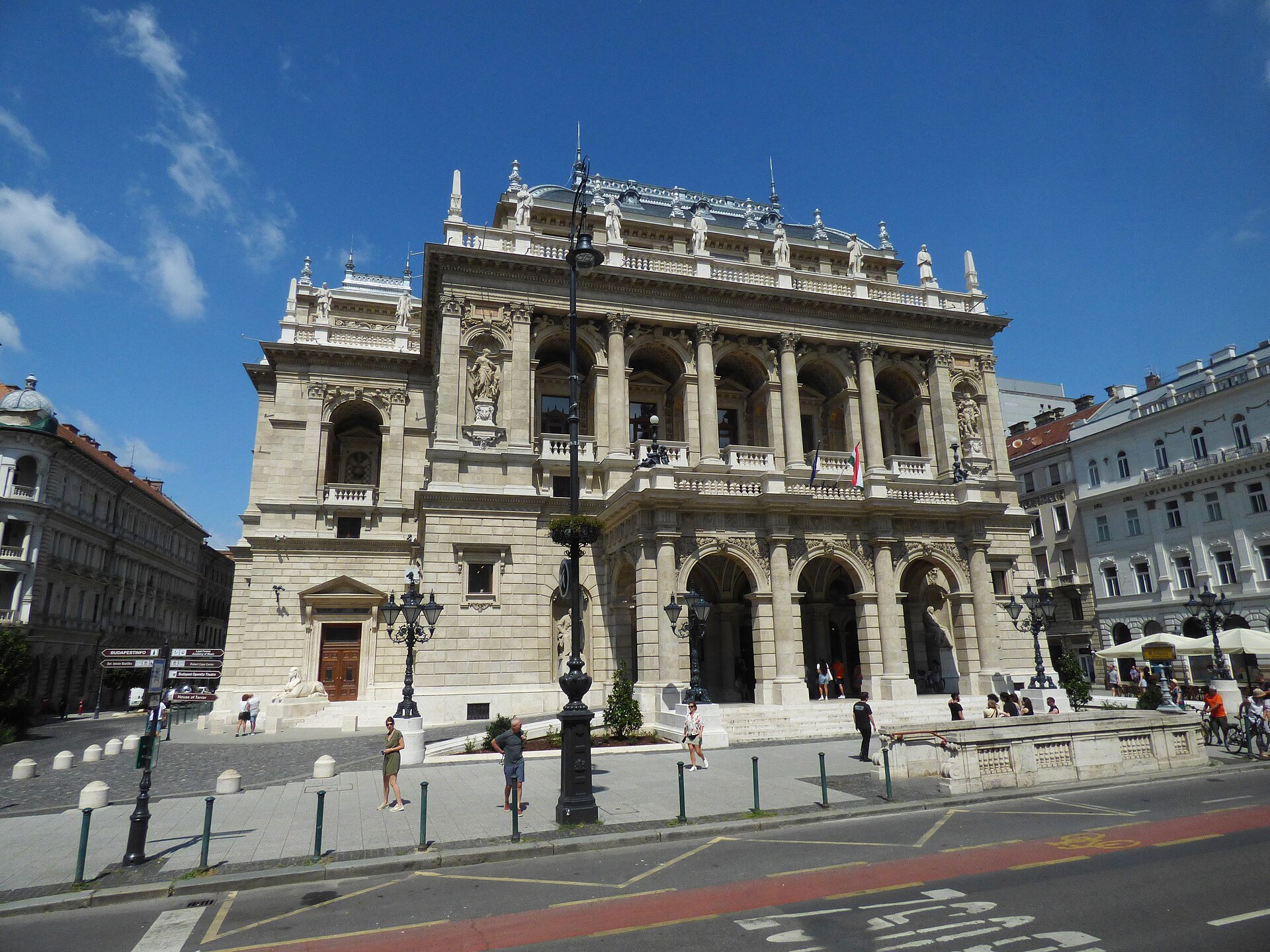
Hungarian State Opera House
22 Andrássy út, District VI, Budapest, 1061, Hungary
Emperor Franz Joseph I agreed to co-finance an opera house for Budapest on one condition: it must not be larger than the Vienna State Opera. Architect Miklós Ybl obeyed the letter of the law and built something slightly smaller — then made it so extraordinarily beautiful that, according to legend, Franz Joseph attended the opening night in 1884 and said: "I told you it shouldn't be bigger than our Opera in Vienna, but I apparently forgot to tell you it should not be nicer either." The neo-Renaissance exterior on Andrássy Avenue is handsome enough, but the interior is the real spectacle. The auditorium seats 1,261 people under a ceiling painted by Károly Lotz, and it has the third-best acoustics in Europe after La Scala in Milan and the Palais Garnier in Paris. A three-ton bronze chandelier illuminates frescoes depicting the gods of Olympus, and every surface is covered in gilding, marble, and carved ornament. The building took nine years to construct, from 1875 to 1884, and every detail was handcrafted. The opera house sits on Andrássy Avenue, itself a UNESCO World Heritage Site and often called the Champs-Élysées of Budapest. Beneath the avenue runs continental Europe's oldest metro line, the M1, which opened in 1896 and was partly built to serve the opera house. The metro stations still have their original tile work and cast-iron railings. You can attend a performance for remarkably little money by European standards, or take a daytime guided tour that includes the royal box and backstage areas. Either way, the Opera House is one of Budapest's finest interiors — a building designed to prove that a smaller empire could have bigger taste.
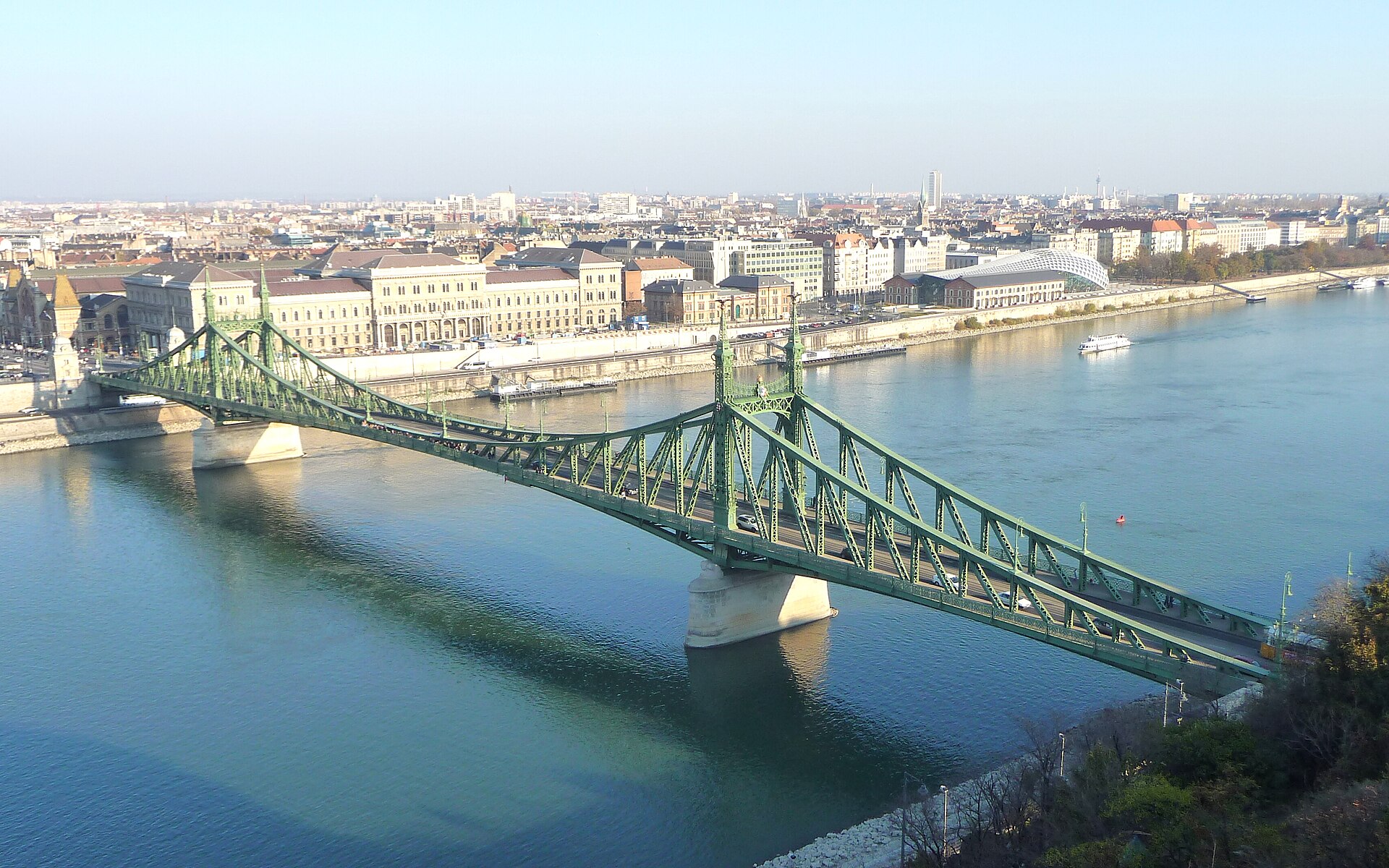
Liberty Bridge
Szabadság híd, District XI, Budapest, 1114, Hungary
The shortest bridge in central Budapest is also arguably the most beautiful. Liberty Bridge stretches 333 metres across the Danube connecting Gellért Hill and its famous baths on the Buda side to the Central Market Hall on the Pest side. Its Art Nouveau ironwork, green paint, and mythological sculptures make it the most distinctive bridge in the city — and its story is pure Budapest theatre. The bridge was built for the 1896 Millennium celebrations and originally named after Emperor Franz Joseph, who personally hammered the last silver rivet into the structure at the inauguration on October 4, 1896. The tops of the four main pillars are crowned with bronze statues of the Turul, a falcon-like bird from ancient Hungarian mythology that is said to have guided the Magyar tribes to the Carpathian Basin. The Turul grips a sword in its talons, and each one weighs several tonnes. When the Germans retreated from Budapest in 1945, they blew up every bridge across the Danube. Liberty Bridge was the first to be rebuilt, reopening on August 20, 1946, as a testament to the city's determination to reconnect its two halves. There was one problem: the necessary paint was available only in grey. The bridge did not regain its original green colour until 1984. In recent years, Budapest locals have made a tradition of sitting on the bridge's iron trusses on warm summer evenings, dangling their legs over the Danube with beers and guitars. The city periodically closes the bridge to traffic for pedestrian festivals. At sunset, facing upstream toward Buda Castle and the Chain Bridge, the view from Liberty Bridge is one of the great free experiences in Budapest.
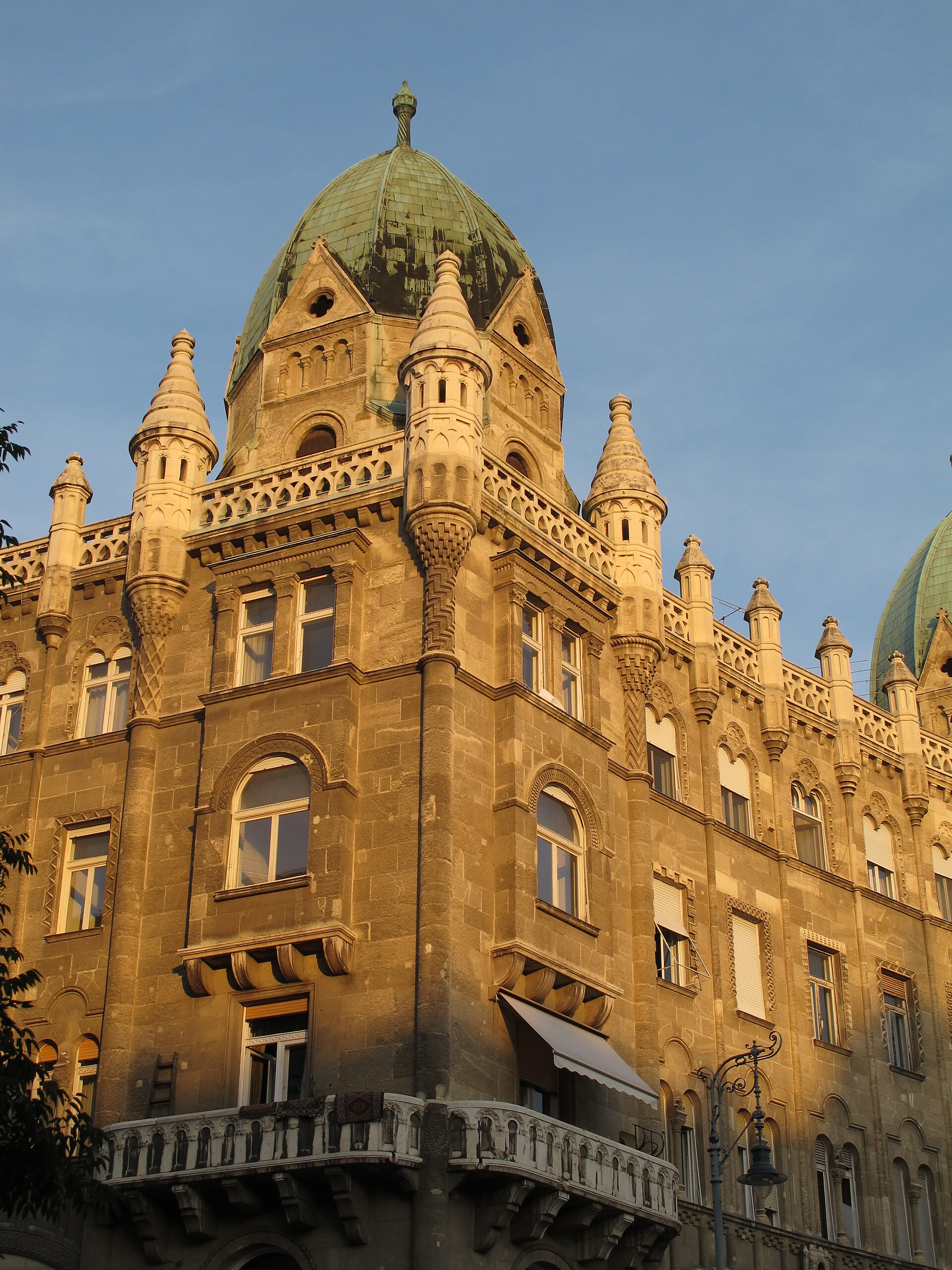
Liberty Square
Szabadság tér, District V, Budapest, 1054, Hungary
Liberty Square is one of the most politically charged public spaces in Europe, and most tourists walk right past it. The square sits a few blocks from Parliament and is ringed by stunning Art Nouveau buildings, including the former Budapest Stock Exchange (now the headquarters of Hungarian Television) and the National Bank of Hungary. But the real interest is in the memorials that share this space without agreeing on anything. At the north end stands the only remaining Soviet liberation memorial in central Budapest — a white obelisk honouring the Red Army soldiers who died liberating the city in 1945. Under a bilateral agreement, Hungary is obligated to maintain it. It stands directly across from the US Embassy, which during the Cold War sheltered Cardinal Mindszenty for fifteen years after the failed 1956 revolution — he lived inside the embassy from 1956 to 1971, unable to leave without being arrested. On the south side, a controversial 2014 monument depicts Hungary as an innocent angel being attacked by a German imperial eagle, representing the Nazi occupation. Critics call it a whitewashing of Hungary's own role in the Holocaust, and a permanent counter-memorial of personal photographs and documents has grown up around its base in protest. The two memorials — one Soviet, one contested — face each other in permanent, unresolved tension. The square's architecture is magnificent. The former Stock Exchange, designed by Ignác Alpár in 1905, is one of Budapest's finest Art Nouveau buildings, with an eclectic facade mixing Moorish, Gothic, and Renaissance elements. The whole square feels like a place where beauty and unfinished history coexist uncomfortably.
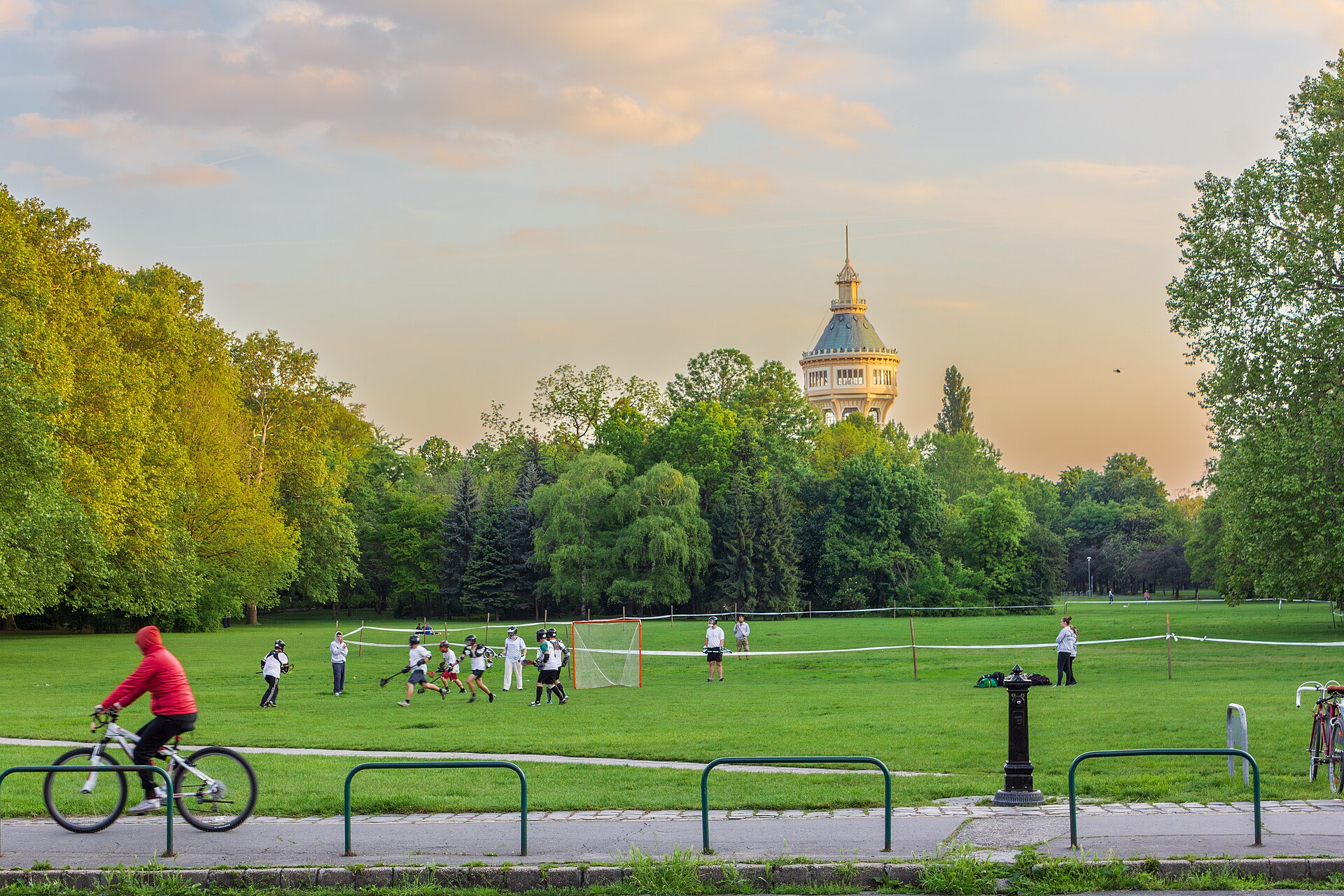
Margaret Island
District XIII, Budapest, Hungary
A 2.5-kilometre-long island sits in the middle of the Danube between Buda and Pest, and for most of its history, ordinary people were not allowed on it. Margaret Island was a royal hunting reserve known as the Island of Rabbits, then a convent where King Béla IV sent his daughter Margaret after vowing to dedicate her to God if Hungary survived the Mongol invasion. Hungary survived. Margaret did not particularly enjoy convent life, but the island took her name anyway when it became a public park in 1866. Today, the island is car-free and devoted entirely to green space, thermal pools, and slow living. The Musical Fountain near the southern end puts on dramatic water shows five times a day, with jets shooting up to 10 metres in the air synchronised to everything from Vivaldi to The Rolling Stones. Near the Japanese Garden in the north, the Bodor Musical Well plays medieval-inspired Hungarian melodies on the hour — a copy of a water-powered fountain built by Transylvanian craftsman Péter Bodor in the 1820s. The island's medieval ruins are genuinely atmospheric. The thirteenth-century Dominican convent where Princess Margaret lived and died at 28 still has standing walls, and fragments of a Franciscan church and a Premonstratensian chapel dot the landscape. There is also a small zoo, a rose garden with hundreds of varieties, and the Palatinus Strand — an enormous outdoor swimming complex that becomes a local obsession every summer. Rent a bike or one of those absurd multi-person pedal carts and circuit the island. On weekday mornings, it belongs to joggers and dog walkers. On summer weekends, half of Budapest shows up with picnic blankets.
Matthias Church
2 Szentháromság tér, District I, Budapest, 1014, Hungary
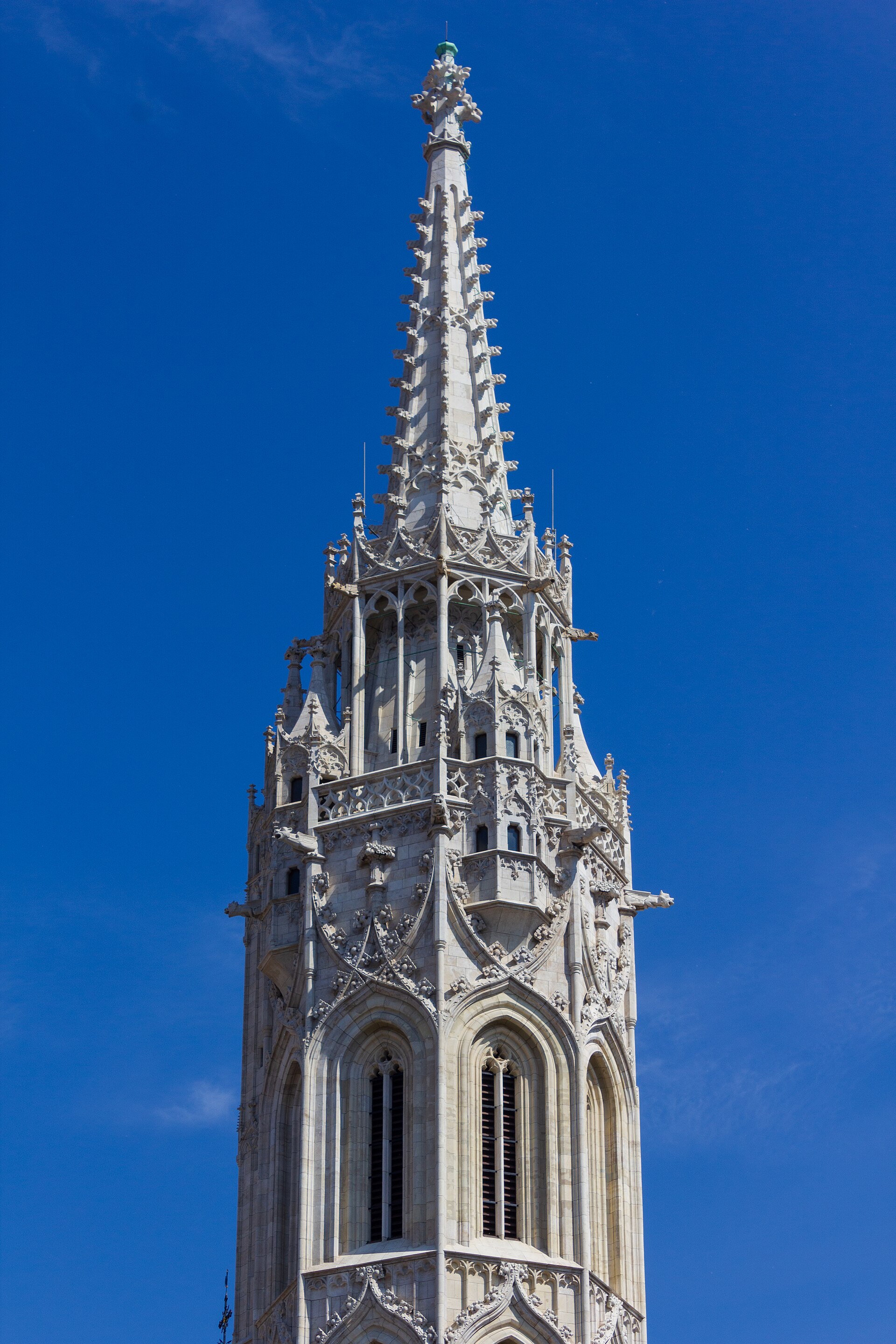
This church has been Catholic, then a mosque, then Catholic again. It has been Romanesque, then Gothic, then Baroque, then Gothic again. It has hosted royal coronations, survived Mongol invasions, and been used as a horse stable by Soviet soldiers. If Budapest had a building that embodied its history of reinvention, this is the one. Originally founded in the eleventh century, the church was destroyed by the Mongols in 1241 and rebuilt in the late Gothic style by King Béla IV between 1255 and 1269. Its finest hour came under King Matthias Corvinus in the fifteenth century, when the southwest bell tower was added — one of the finest pieces of Gothic architecture in Hungary. The church took his name informally, though its official dedication has always been to the Virgin Mary. When the Ottomans conquered Buda in 1541, they whitewashed the frescoes and converted the church into the city's main mosque for nearly 150 years. After the Habsburgs recaptured the city in 1686, it became Catholic again, was remodelled in Baroque style, and then in the 1870s architect Frigyes Schulek stripped away the Baroque additions and restored the Gothic structure, adding the distinctive diamond-patterned Zsolnay ceramic roof tiles that make the church unmistakable today. During the 1944-45 siege, the Germans used the crypt as a field kitchen. When the city fell, the Soviets stabled their horses in the nave. The building sustained serious damage that took decades to repair. Today, you can attend organ concerts inside, and the acoustics in the vaulted Gothic interior are extraordinary.
Memento Park
Balatoni út, District XXII, Budapest, 1223, Hungary
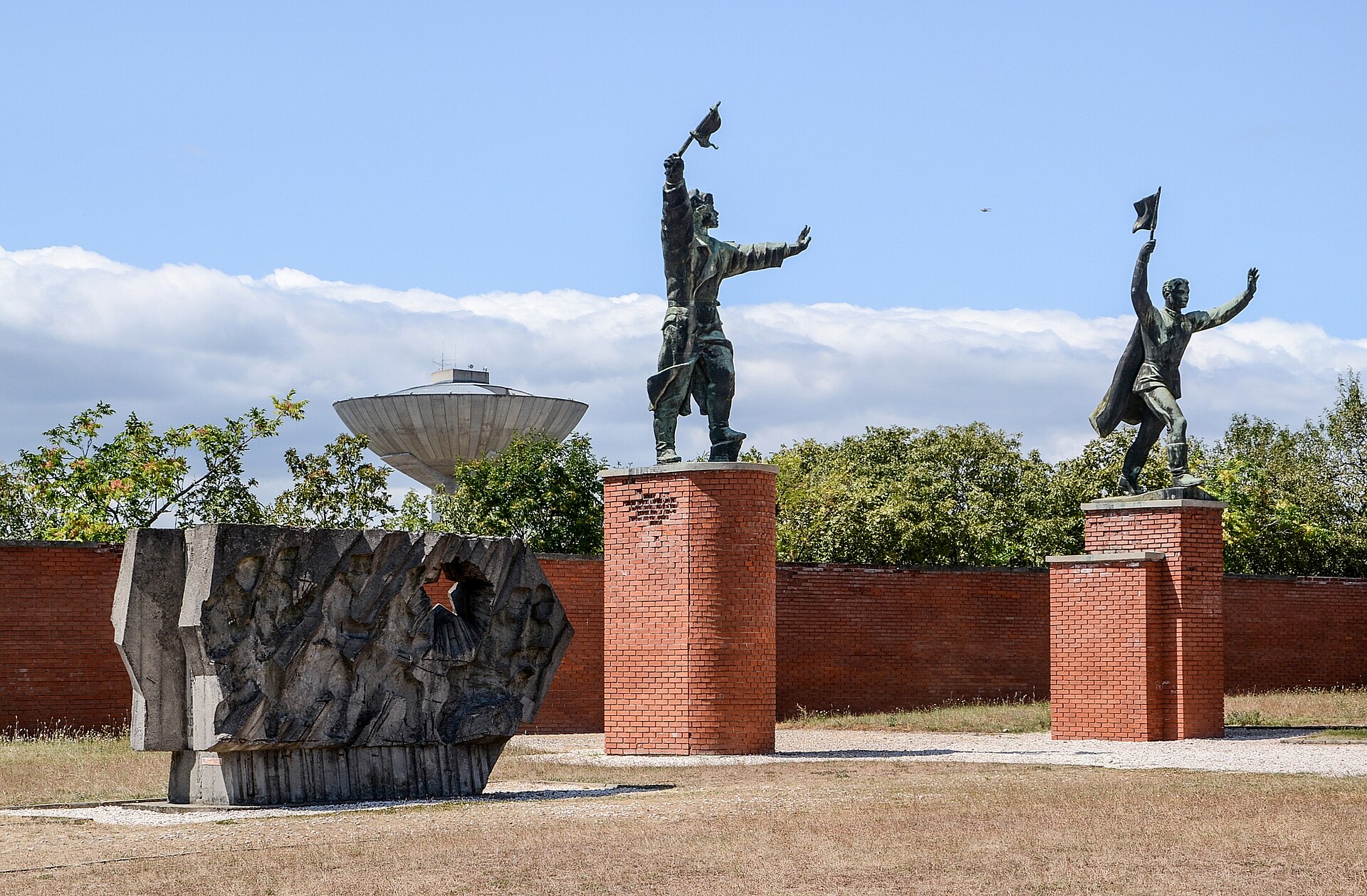
When the Communist regime fell in 1989, Hungarian cities were left with a practical problem: what do you do with forty-two giant bronze and stone statues of Lenin, Marx, Engels, and assorted Communist heroes? Most Eastern European countries melted them down or smashed them. Hungary, with characteristic dark humour, gathered them all up and put them in a field on the outskirts of town. Memento Park opened on June 29, 1993, exactly two years after the last Soviet soldier left Hungarian soil. The park was designed by architect Ákos Eleőd, who won a public competition for the project. His concept is brilliantly sardonic: the entrance is a grand replica of a Communist-era tribune — the kind of platform where party leaders would wave at marching crowds — but it leads to nothing. Inside, 42 statues stand in five semicircles, stripped of their original context and left to mean whatever they mean now. There are soldiers charging, workers striding, Red Army officers saluting, and Communist leaders pointing toward a future that never arrived. The most famous piece is not even a real statue. It is a replica of Stalin's boots — all that remained after Budapest's eight-metre-tall Stalin statue was torn down by crowds during the 1956 Revolution on October 23. The original boots sat on the empty pedestal for weeks, a sarcastic monument to failed power. In 2006, Eleőd recreated the tribune with the broken boots on top. It is not historically accurate, but it is perfect. The park is about 10 kilometres from the city centre and feels deliberately isolated — these statues were exiled, not preserved. A gift shop sells Communist-era souvenirs, canned air labelled "Last Breath of Communism," and ironic propaganda posters.
New York Café
Erzsébet krt. 9-11, 1073 Budapest
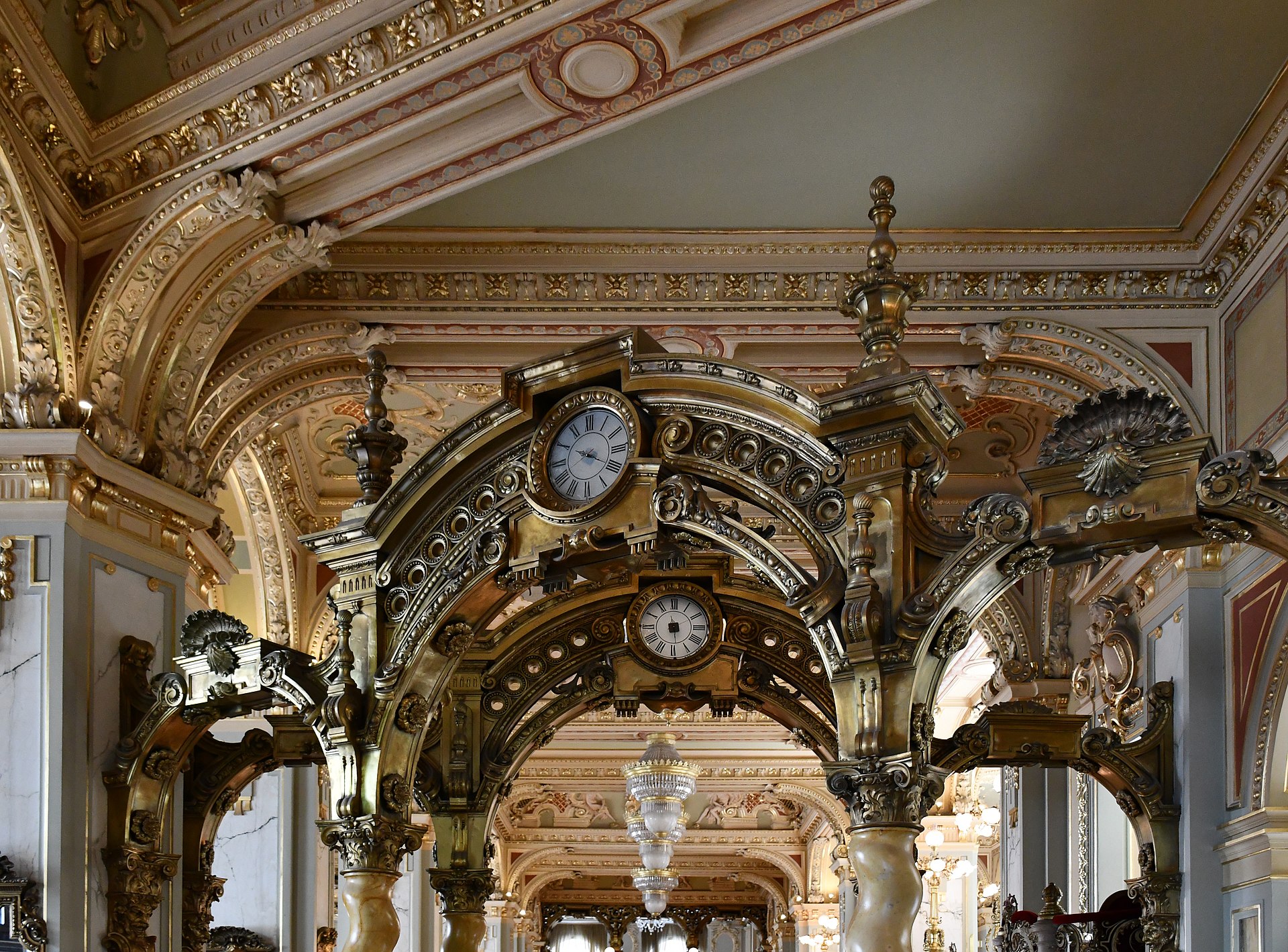
In 2011, an international competition named this the most beautiful café in the world, and for once the superlative is not hyperbole. The New York Café opened in 1894 on the ground floor of the New York Palace, and its interior is a fever dream of gilded stucco, frescoed ceilings, crystal chandeliers, marble columns, and velvet upholstery that makes Versailles look restrained. It was designed by Alajos Hauszmann, assisted by Flóris Korb and Kálmán Giergl, and funded by the New York Insurance Company as a statement piece for their Budapest headquarters. From opening day, the café became the nerve centre of Budapest's literary and artistic life. Writers, poets, editors, and journalists colonised the tables, and several of Hungary's most influential newspapers were edited from the upstairs gallery. The café offered services that went far beyond coffee: they would iron your clothes, clean your shoes, and shave your face, even late at night. According to Budapest legend, the writer Ferenc Molnár threw the café's keys into the Danube on opening night so the doors could never be locked and the literary conversation would never stop. The twentieth century was not kind. During World War II, the café was damaged. Under communism, the sumptuous interior served variously as a sporting goods shop, a travel agency, and a place to sell horse meat. The gilded columns endured decades of neglect. In 2006, the Italian Boscolo Group completed a lavish restoration and reopened the café as part of a luxury hotel. Today, the prices match the décor — a coffee costs what a meal costs elsewhere in Budapest. But sit beneath those ceilings, listen to the pianist, and look up. It is a room that makes you understand what Budapest was, and what it still, stubbornly, wants to be.
Rudas Baths
Döbrentei tér 9, 1013 Budapest
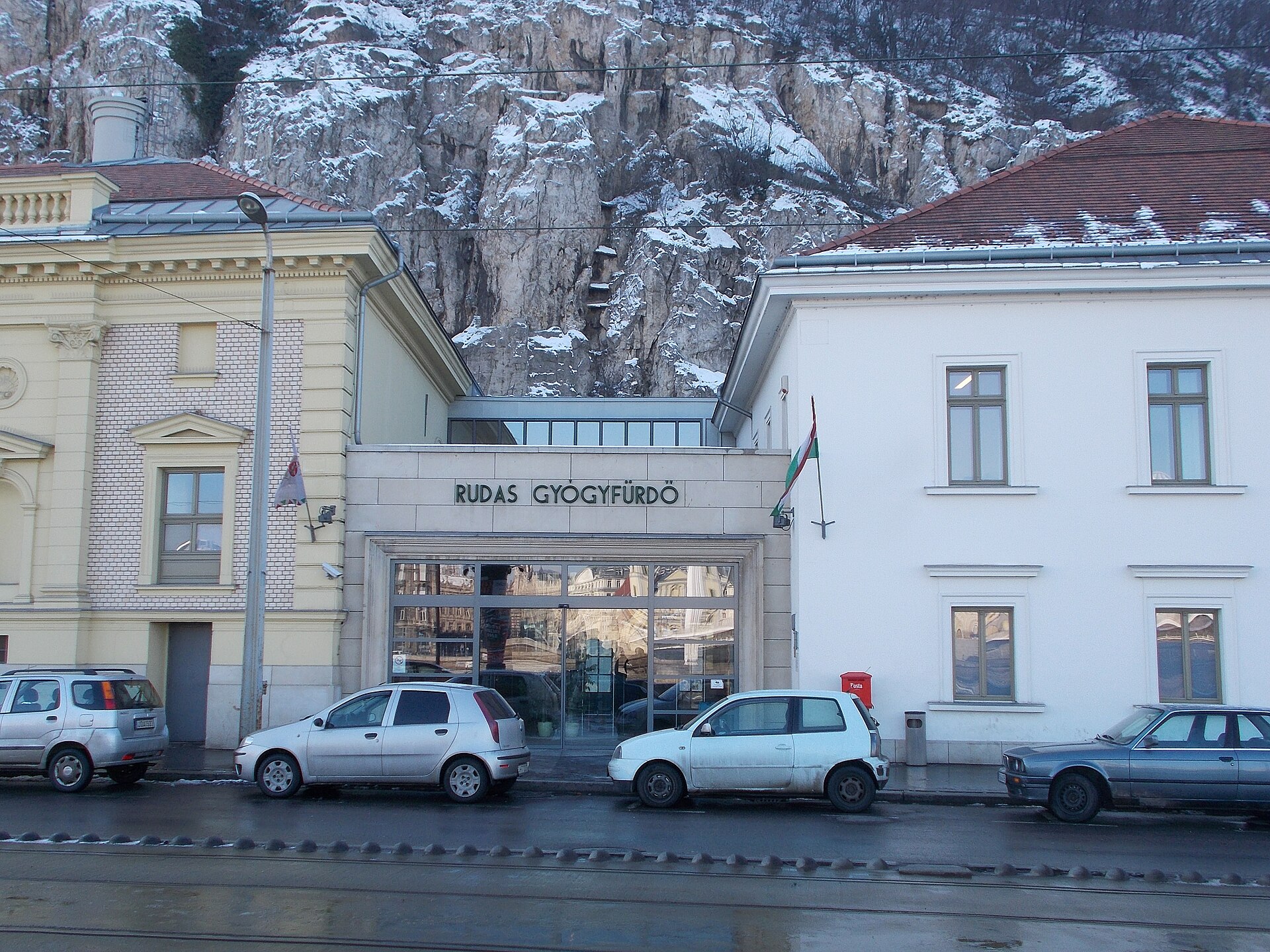
The main Turkish bath at Rudas has been in continuous operation for over 450 years, making it one of the oldest functioning bathhouses in Europe. Built during the Ottoman occupation in the 1560s under Pasha Sokoli Mustafa, the centrepiece is an octagonal pool beneath a 10-metre-diameter dome pierced with coloured glass that throws shifting patterns of light across the steaming water. When you sink into the 42-degree pool and look up through the Ottoman dome, you are sharing an experience with five centuries of bathers. The original Turkish section is intimate and atmospheric — low ceilings, stone columns, the sound of water echoing in dim light. It is a world away from the grandeur of Széchenyi or Gellért, and many locals prefer it precisely for that reason. For most of its modern history, the Turkish pool was men-only on most days, a policy that made it popular with Budapest's gay community and gave the place an outsider reputation that the city's more famous baths lacked. In 2005, Rudas added a rooftop pool that became an instant classic. The contrast with the ancient Turkish section below is total: a modern, open-air pool with panoramic views of the Danube, the Chain Bridge, and Buda Castle. At night, the pool is lit and the city sparkles below. It is arguably the best night swim in Europe. The thermal water at Rudas comes from springs on Gellért Hill and is rich in calcium, magnesium, and sodium. The temperatures across the various pools range from 16 to 42 degrees Celsius, and the recommended approach is to rotate between hot and cold like the Ottomans intended. The experience has not fundamentally changed since the 1560s, and that is entirely the point.
Ruszwurm Confectionery
Szentháromság u. 7, 1014 Budapest
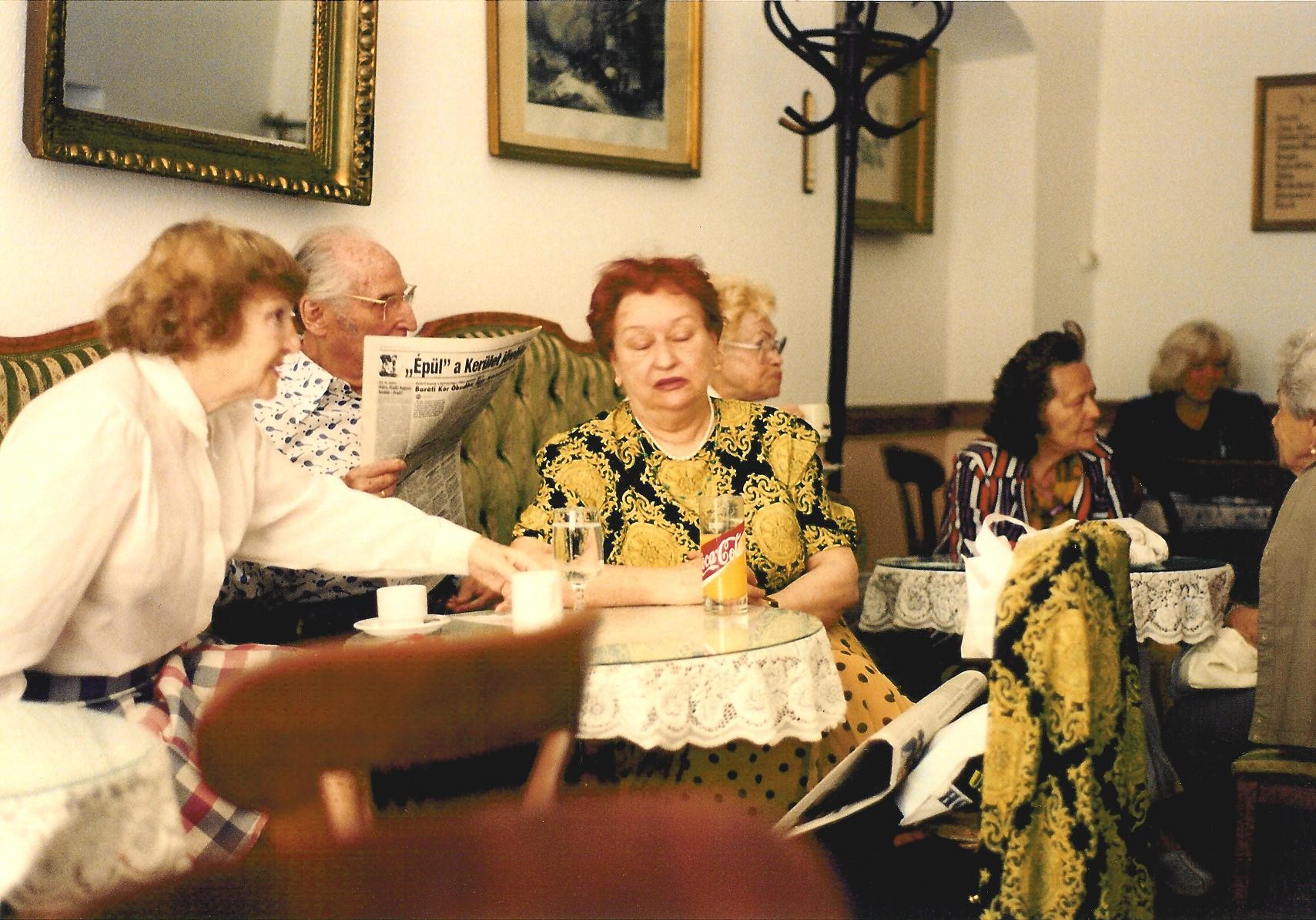
The oldest confectionery in Budapest has been serving pastry from the same tiny shop on the Castle District's main square since 1827, and the interior has barely changed. The original Biedermeier furniture — curved-back chairs, walnut display cases, a marble-topped counter — dates from the 1830s and looks like it belongs in a museum, except that people are sitting on it eating cream cakes and drinking coffee, which is exactly what they have been doing here for nearly two hundred years. The confectionery was founded by Franz Schwabl and later taken over by Vilmos Ruszwurm, whose family ran it until the Communist era when, like everything else, it was nationalised. Somehow, the shop survived communism without being modernised, which is both its charm and its miracle. The dining room seats about twenty people, the kitchen is the size of a cupboard, and the line out the door on weekends can stretch halfway down the street. The signature pastry is the Ruszwurm cream pastry — layers of flaky puff pastry with vanilla cream that has been made to the same recipe for generations. The dobos torta, the layered sponge cake with hard caramel top invented by Hungarian confectioner József Dobos in 1884, is another essential order. Empress Sisi of Austria was reportedly a regular customer, and whether or not that is true, it is the kind of place you can imagine an empress choosing. In a city where café culture is practically a religion, Ruszwurm is the church. Skip the tourist-trap restaurants on Castle Hill and come here instead. The pastries are honest, the coffee is good, and the room itself is a two-hundred-year-old time capsule.
Shoes on the Danube Bank
Id. Antall József rkp., 1054 Budapest
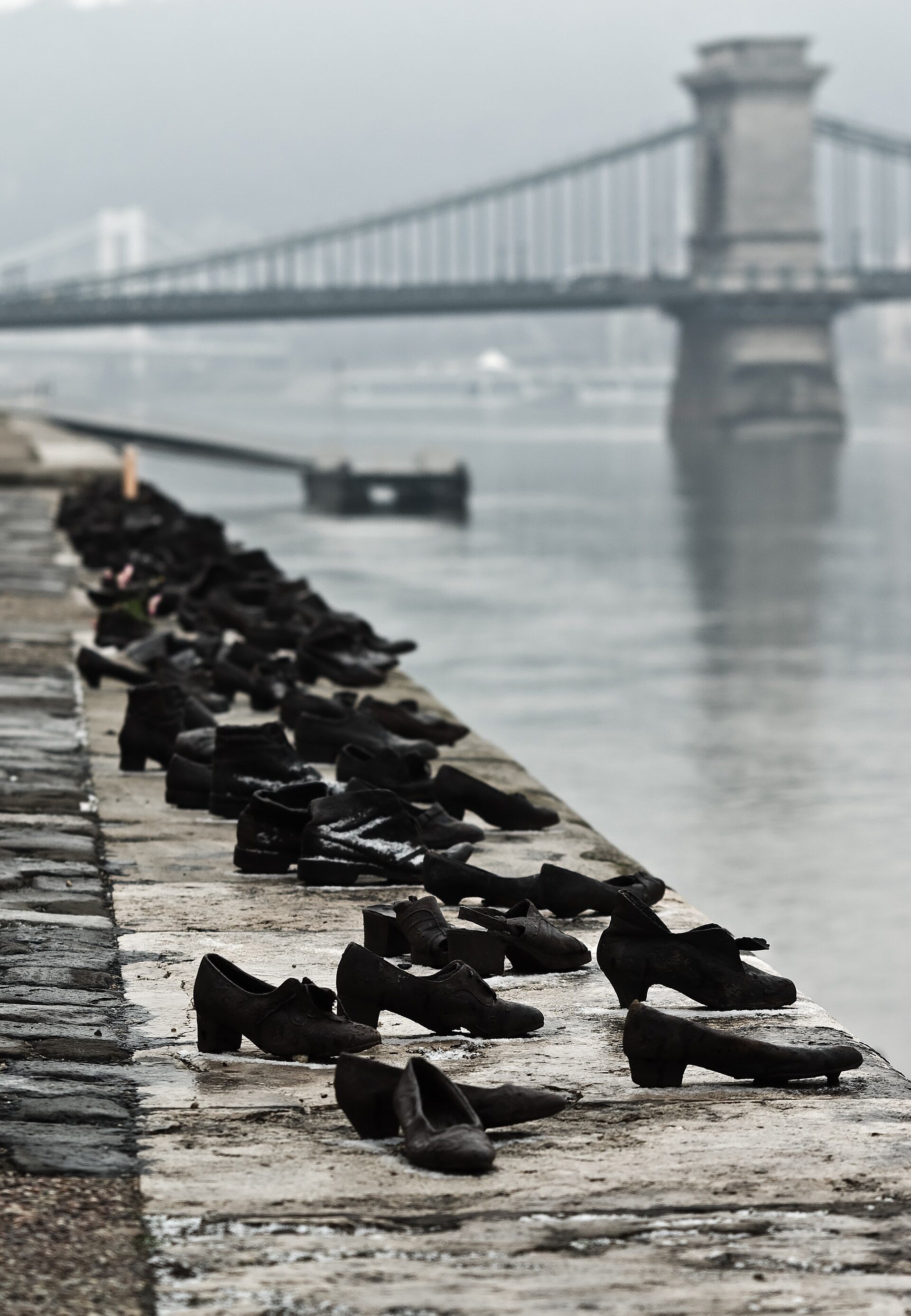
Sixty pairs of iron shoes sit on the stone embankment of the Danube, about 300 metres south of Parliament. There are men's shoes, women's shoes, and children's shoes, all cast in the style of the 1940s. They are rusted and weathered. Candles and flowers appear in them regularly. It is one of the most quietly devastating memorials in Europe, and it demands almost nothing of you except that you stand there and understand what happened. Between December 1944 and January 1945, members of the Hungarian Arrow Cross Party — the fascist militia that seized power with Nazi backing — marched thousands of Jews from the Budapest ghetto to the banks of the Danube. They ordered their victims to remove their shoes, because shoes were valuable and could be resold. Then they shot them at the water's edge so the bodies would fall into the river and be carried away. An estimated 3,500 people were killed along the riverbank, part of a broader campaign that murdered roughly 20,000 Budapest Jews in just a few months. The memorial was conceived by Hungarian film director Can Togay and created with sculptor Gyula Pauer. It was erected on April 16, 2005, sixty years after the massacres. Behind the shoes runs a 40-metre stone bench at about knee height. There are no walls, no barriers, no interpretive centre — just shoes, the river, and the weight of what they represent. The memorial works because of its restraint. The shoes are life-sized and specific: a pair of heels, work boots, a child's lace-ups. They make the abstract concrete. People were standing here. People who had dressed that morning not knowing it was their last.
St. Stephen's Basilica
Szent István tér 1, 1051 Budapest
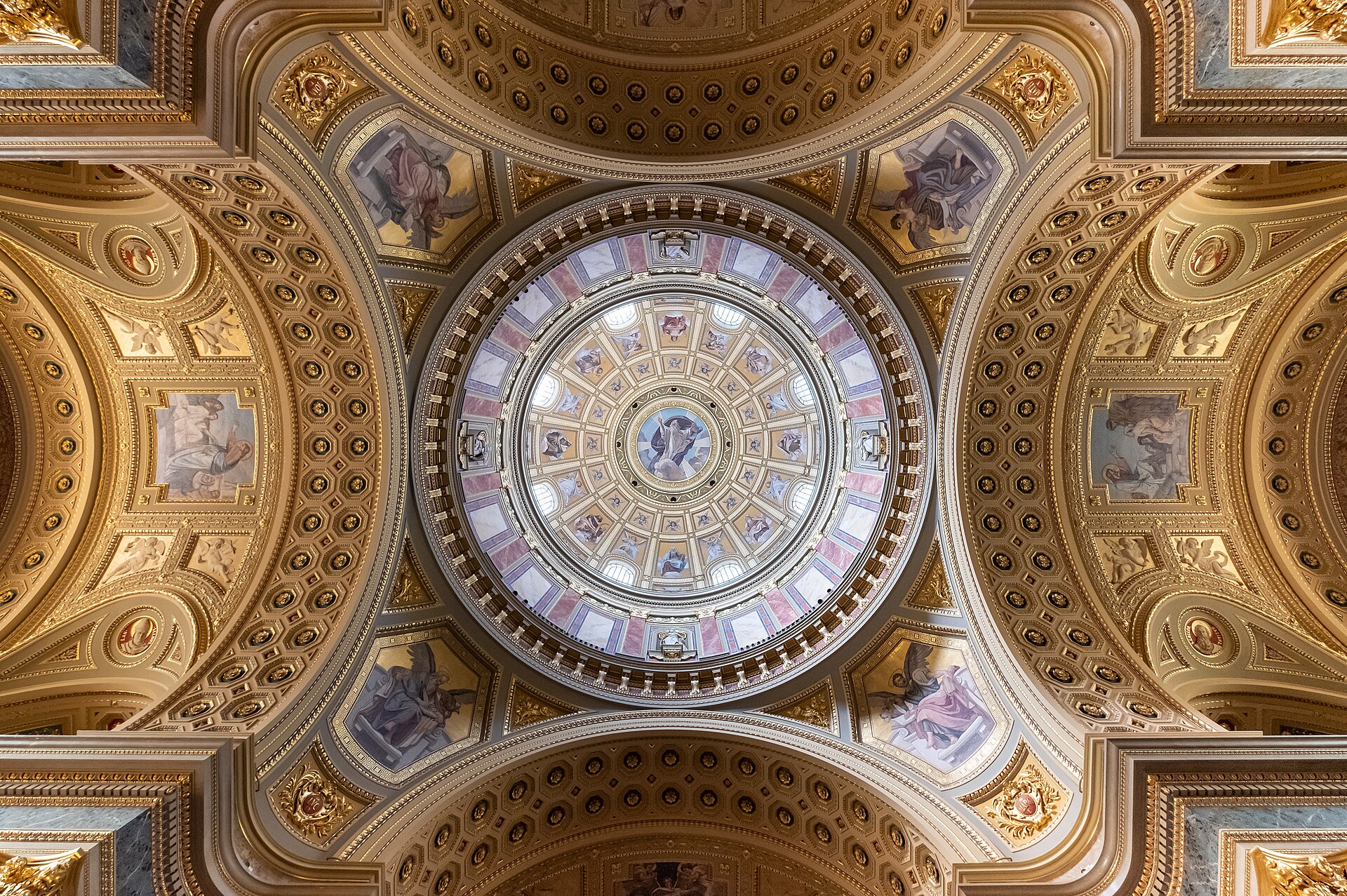
This basilica took fifty-four years to build, collapsed once during construction, and houses the mummified right hand of a thousand-year-old king. It is the largest church in Budapest, and at 96 metres tall it matches the Parliament building exactly — a deliberate architectural statement that church and state stand as equals. Construction began in 1851 under architect József Hild, who died before the dome was finished. His replacement, Miklós Ybl, took one look at the nearly completed dome and declared it structurally unsound. He was right: in 1868, the dome collapsed. Ybl essentially rebuilt the church from the ground up in a neo-Renaissance style, only to die himself before completion. The third architect, József Kauser, finally finished the basilica in 1905. Three architects, fifty-four years, one catastrophic collapse. The church's most famous resident is not alive and technically never has been — at least not as a basilica attraction. In a gold reliquary behind the altar sits the Holy Right Hand of Saint Stephen, the mummified right hand of Hungary's first king, who died in 1038. When his body was exhumed for canonisation in 1083, the right hand was reportedly found completely intact. Drop a coin in the slot and the reliquary lights up for about a minute, illuminating a thousand-year-old body part in a glass case. Every August 20th, on St. Stephen's Day, the hand is paraded through the streets in a solemn procession. Climb the 364 steps to the observation deck — or take the lift — for a 360-degree panorama of Budapest. On a clear day, the view stretches from Buda Castle to the Danube Bend.
Széchenyi Chain Bridge
Széchenyi Lánchíd, 1051 Budapest
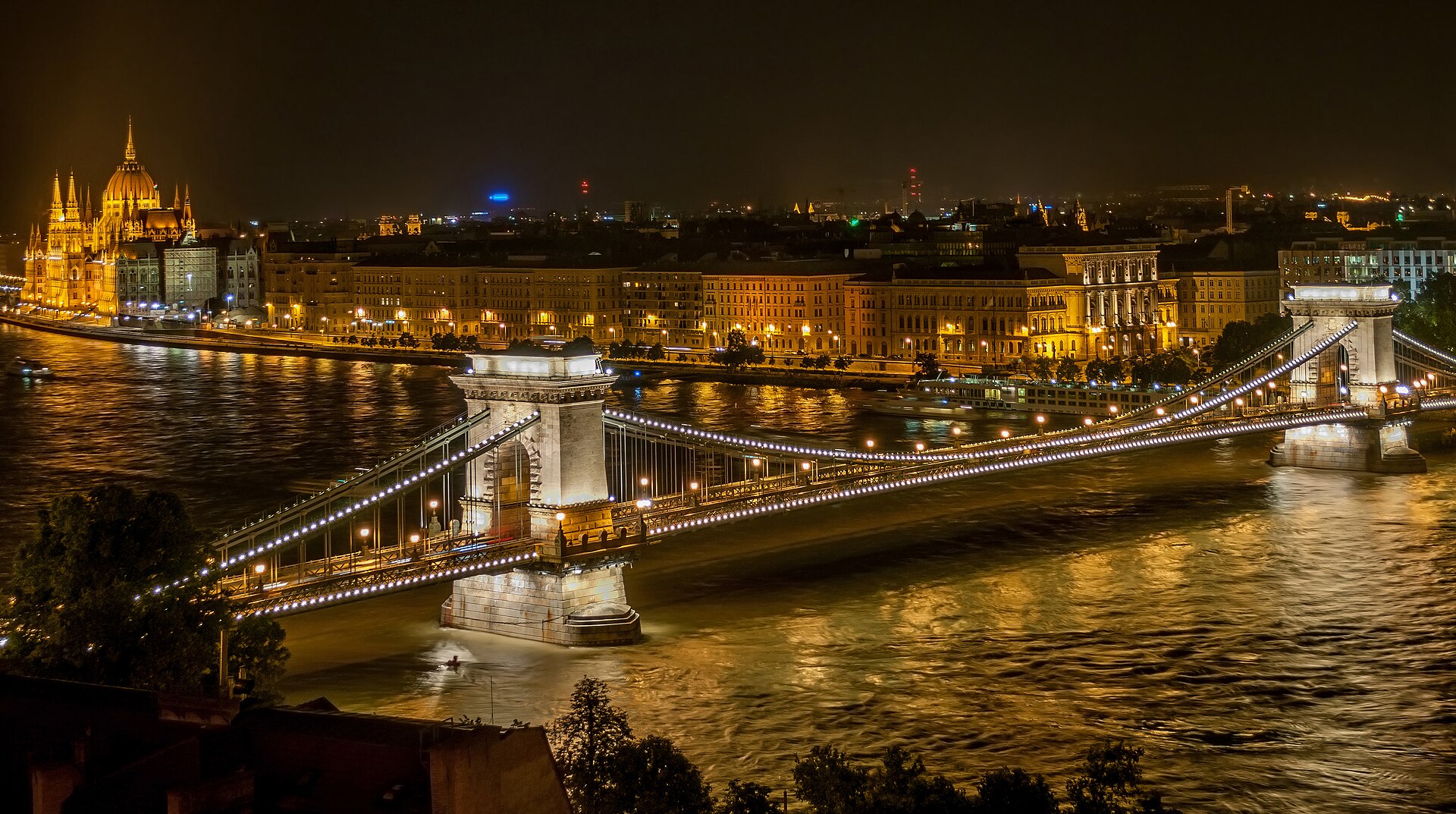
Before this bridge existed, getting from Buda to Pest in winter meant waiting for the Danube to freeze solid and walking across the ice — or not crossing at all. Count István Széchenyi, one of Hungary's greatest reformers, got stuck on the wrong side of the river for a week in 1820 when the ice was too thin to walk on but too thick for boats. He vowed to build a permanent crossing and spent the next two decades making it happen. The bridge was designed by English engineer William Tierney Clark and built under the supervision of Scottish engineer Adam Clark — no relation, despite the shared surname and shared profession. It is essentially a scaled-up version of Tierney Clark's Marlow Bridge over the Thames in England, which still stands today as a quaint little crossing. The Chain Bridge was a different beast: 375 metres long, it was the longest suspension bridge in Europe when it opened on November 20, 1849. The sections were cast in England and shipped to Hungary for assembly. Construction nearly ended in tragedy when the first chain was being raised and a link snapped, sending 400 tons of iron crashing into the Danube — almost killing Count Széchenyi, who was watching from a boat below. The stone lion statues that guard both ends were sculpted by János Marschalkó. Legend says a spectator pointed out the lions had no tongues, and Marschalkó threw himself into the river. The tongues are actually there — they are just not visible from ground level. In January 1945, retreating German forces blew up the bridge, leaving only the stone towers standing. It was rebuilt and reopened in 1949, exactly one hundred years after its original inauguration.
Széchenyi Thermal Bath
Állatkerti krt. 9-11, 1146 Budapest
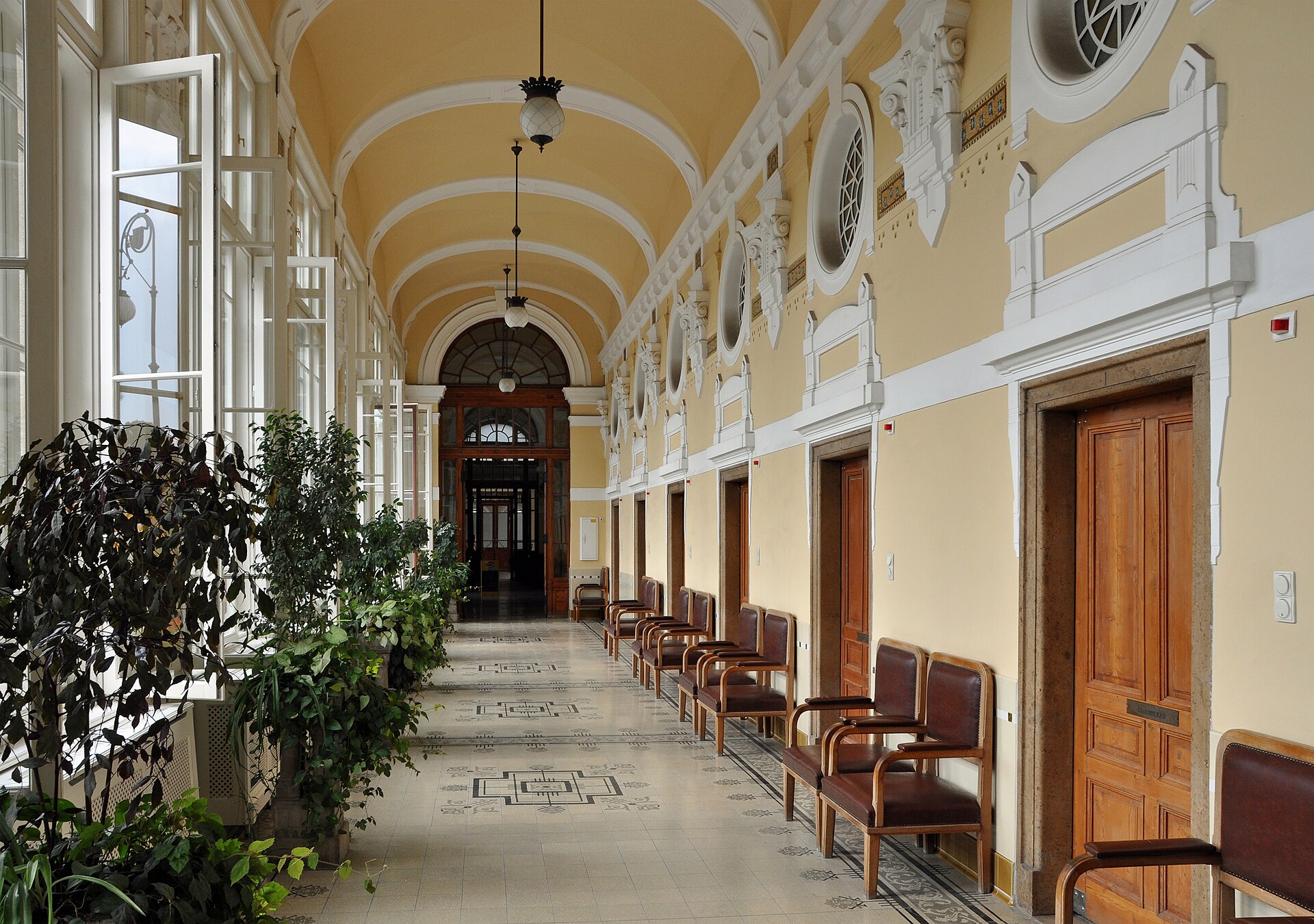
Budapest sits on more than 120 natural hot springs, making it the only capital city in the world that is also a spa city. And Széchenyi is the crown jewel — one of the largest thermal bath complexes in Europe, with fifteen indoor pools and three grand outdoor pools steaming in the open air year-round. On a winter morning, the sight of chess-playing retirees half-submerged in 38-degree water while snow falls on their heads is peak Budapest. The story starts in the 1860s, when engineers drilled deep wells under what is now City Park and struck hot water. The Neo-Baroque and Neo-Renaissance bathhouse was designed by Győző Czigler and built between 1909 and 1913, its bright yellow facade now one of the most recognisable landmarks in the city. The massive outdoor swimming pool and thermal pool were added in 1927, and the famous image of elderly Hungarians playing chess on floating boards has been the defining picture of Budapest bathing culture ever since. The water comes from two thermal springs at depths of over a thousand metres, emerging at temperatures between 74 and 77 degrees Celsius — hot enough to cook in. By the time it reaches the pools, it has been cooled to between 27 and 38 degrees. The mineral content is rich in calcium, magnesium, and sulphate, and Hungarians will tell you, with absolute conviction, that it cures everything from arthritis to heartbreak. Beyond the thermal pools, there are saunas, steam rooms, and — in a thoroughly modern addition — sparty events where DJs play to crowds dancing in the warm water on summer nights. The mix of elderly locals doing their morning soak alongside tourists and party crowds is uniquely, wonderfully Budapest.
Szimpla Kert
Kazinczy u. 14, 1075 Budapest
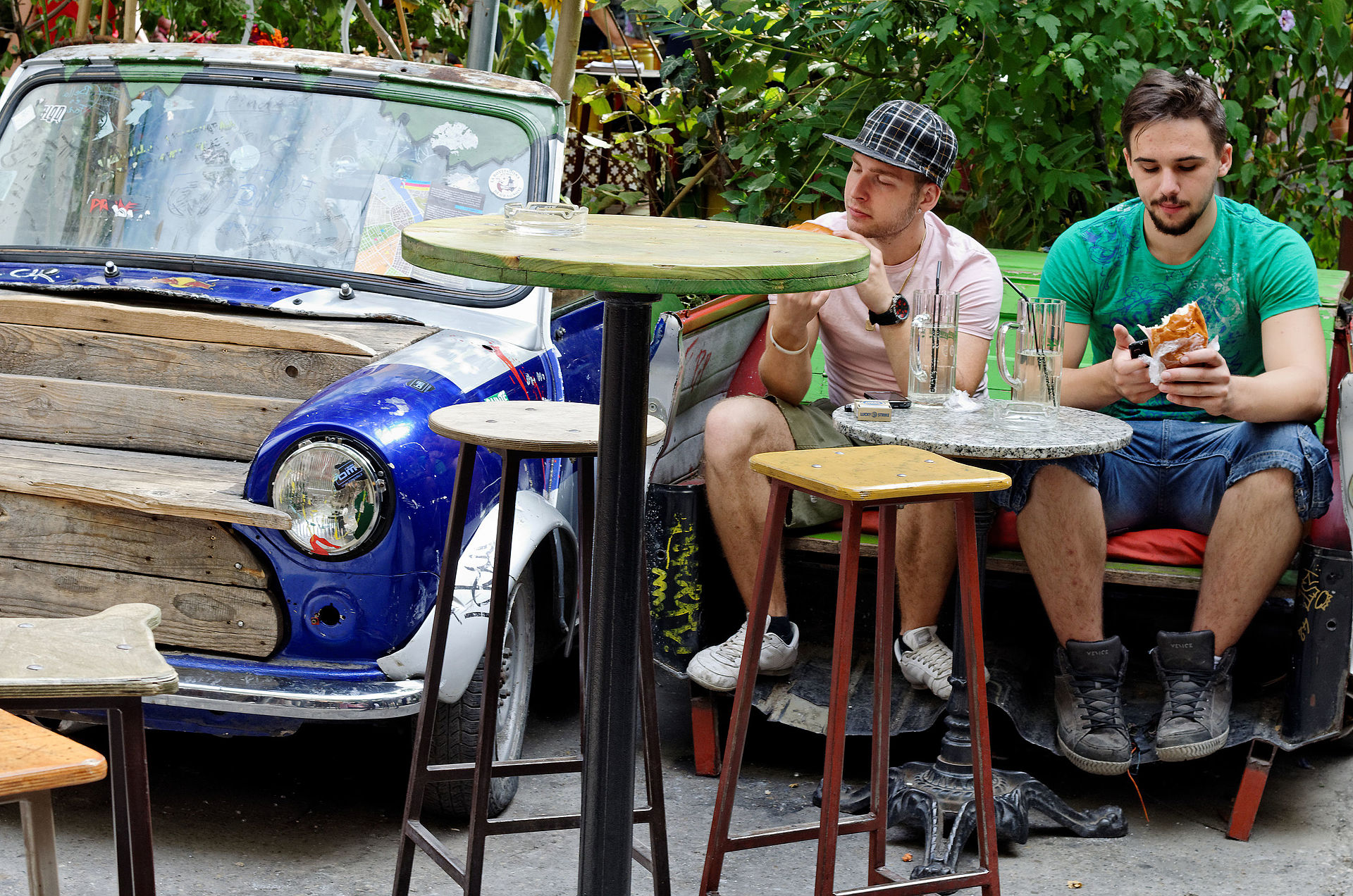
In the early 2000s, Budapest's seventh district was a wreck. The old Jewish Quarter, once home to a thriving community before the Holocaust, had spent decades crumbling under communism. Buildings were abandoned, walls were peeling, and demolition orders were piling up. Then a group of university students had an idea that changed the city: rent a condemned building, fill it with salvaged furniture, and sell cheap drinks. The result was Szimpla Kert, which opened in 2002 and accidentally invented an entire genre of nightlife. The original location was a small courtyard on Kertész utca. It moved to its current home on Kazinczy Street in 2004, occupying a former stove factory that was scheduled for demolition. The founders filled the multi-storey space with bathtubs repurposed as seating, old Trabant cars turned into booths, mismatched chandeliers, and enough graffiti to wallpaper a cathedral. Every room is different: one has a cinema, another a garden, a third looks like someone raided a grandmother's attic while hallucinating. Szimpla sparked a revolution. Within a few years, dozens of ruin bars appeared across the seventh district, transforming it from a forgotten neighbourhood into one of Europe's most vibrant nightlife scenes. Lonely Planet named Szimpla the third best bar in the world. The irony is sharp: buildings that were left to rot because no one cared about the Jewish Quarter are now some of the most visited venues in Hungary. During the day, Szimpla hosts a Sunday farmers' market where locals sell homemade cheese, pickles, and pálinka. It is a genuine community space as much as a bar. Go on a weeknight to avoid the stag-party crowds and see it at its weird, wonderful best.
Vajdahunyad Castle
Vajdahunyad sétány, 1146 Budapest
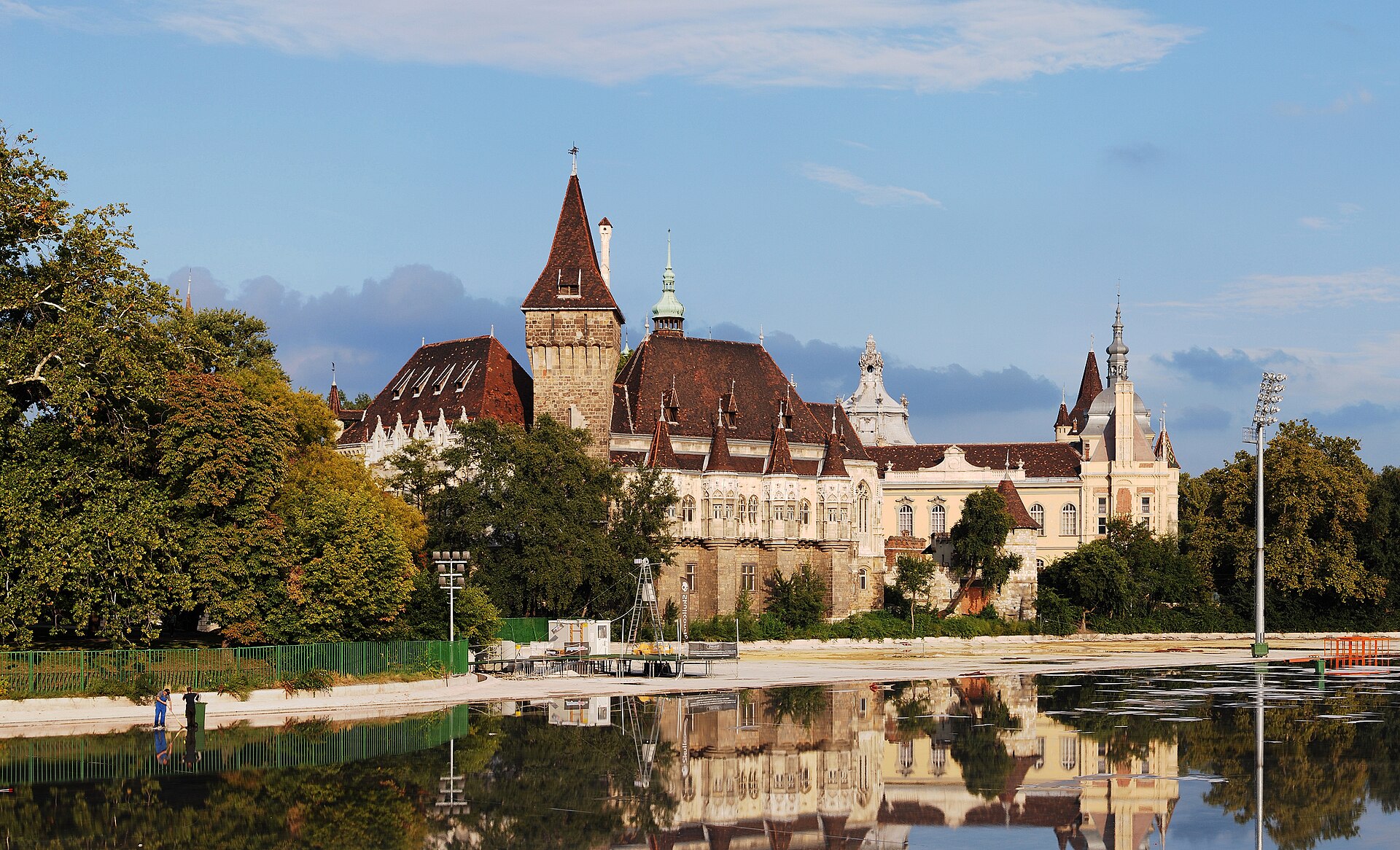
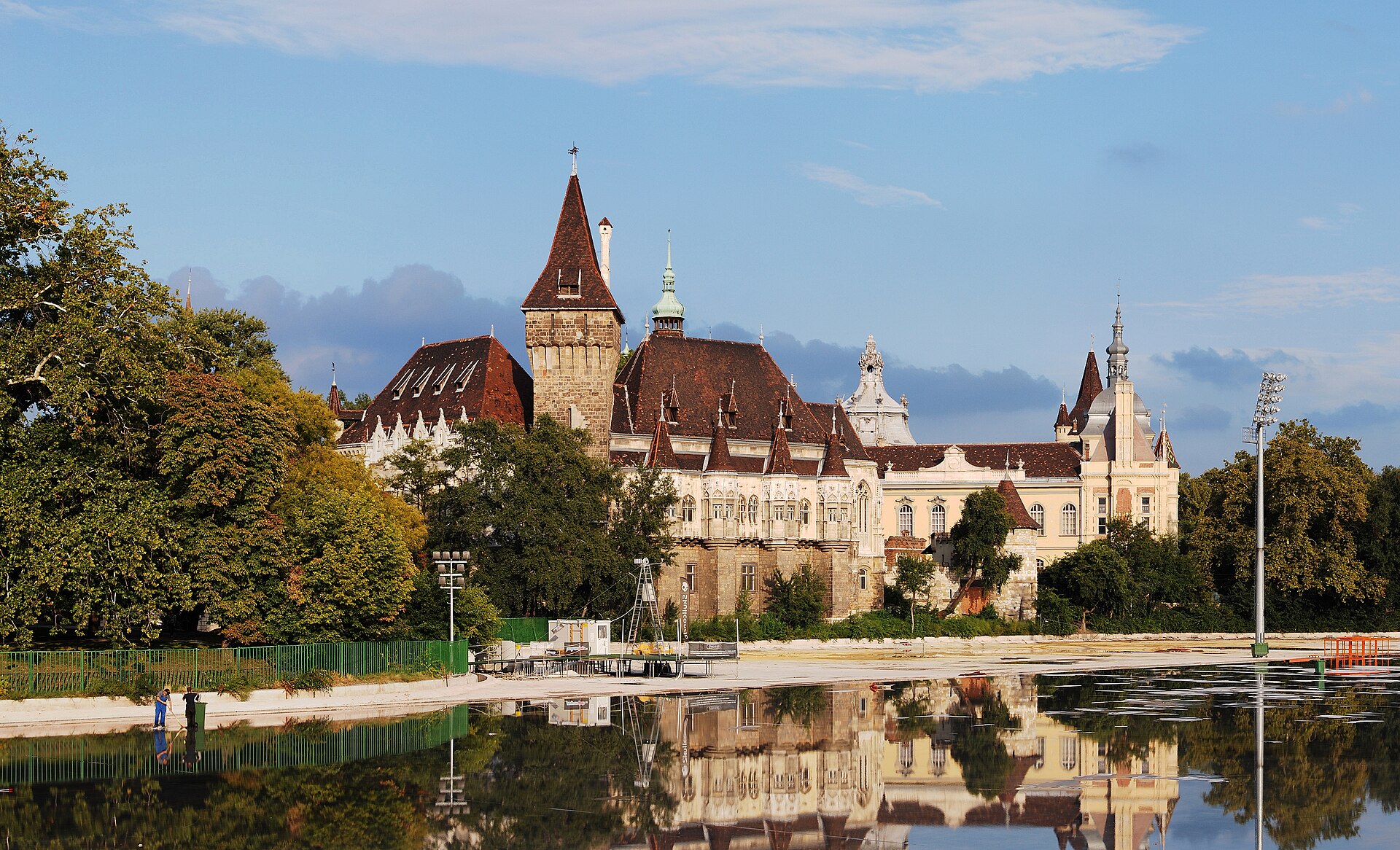
This castle is a fake, and it is one of the best fakes in Europe. Vajdahunyad Castle was built in 1896 for Hungary's millennial celebrations as a temporary exhibition piece — a greatest-hits mashup of Hungarian architectural styles crammed into a single building. Architect Ignác Alpár combined Romanesque, Gothic, Renaissance, and Baroque elements, replicating fragments of famous buildings from across historical Greater Hungary. It was so popular that they rebuilt it in permanent stone and brick between 1904 and 1908. The castle sits on Széchenyi Island in the middle of City Park's boating lake, approached by a mock drawbridge over a shallow moat. The Romanesque section copies the chapel from Ják in western Hungary. The Gothic wing references the Transylvanian Hunyad Castle — the actual fortress that gives this replica its name. The Baroque section nods to various Hungarian manor houses. Walking around the building is like flipping through an architectural textbook at triple speed. Inside, the Museum of Hungarian Agriculture has occupied the castle since 1907, making it one of the oldest agricultural museums in Europe. The exhibits cover everything from medieval horse breeding to Hungarian wine production, and the building itself is far more interesting than that description makes it sound. In front of the castle sits the hooded bronze statue of Anonymous — the medieval chronicler who wrote the earliest surviving account of Hungarian history. Nobody knows who he was, which is why the statue shows a figure with a cowl pulled over his face. Touching his pen is supposed to bring good luck, and the bronze has been rubbed gold by millions of wishful hands.