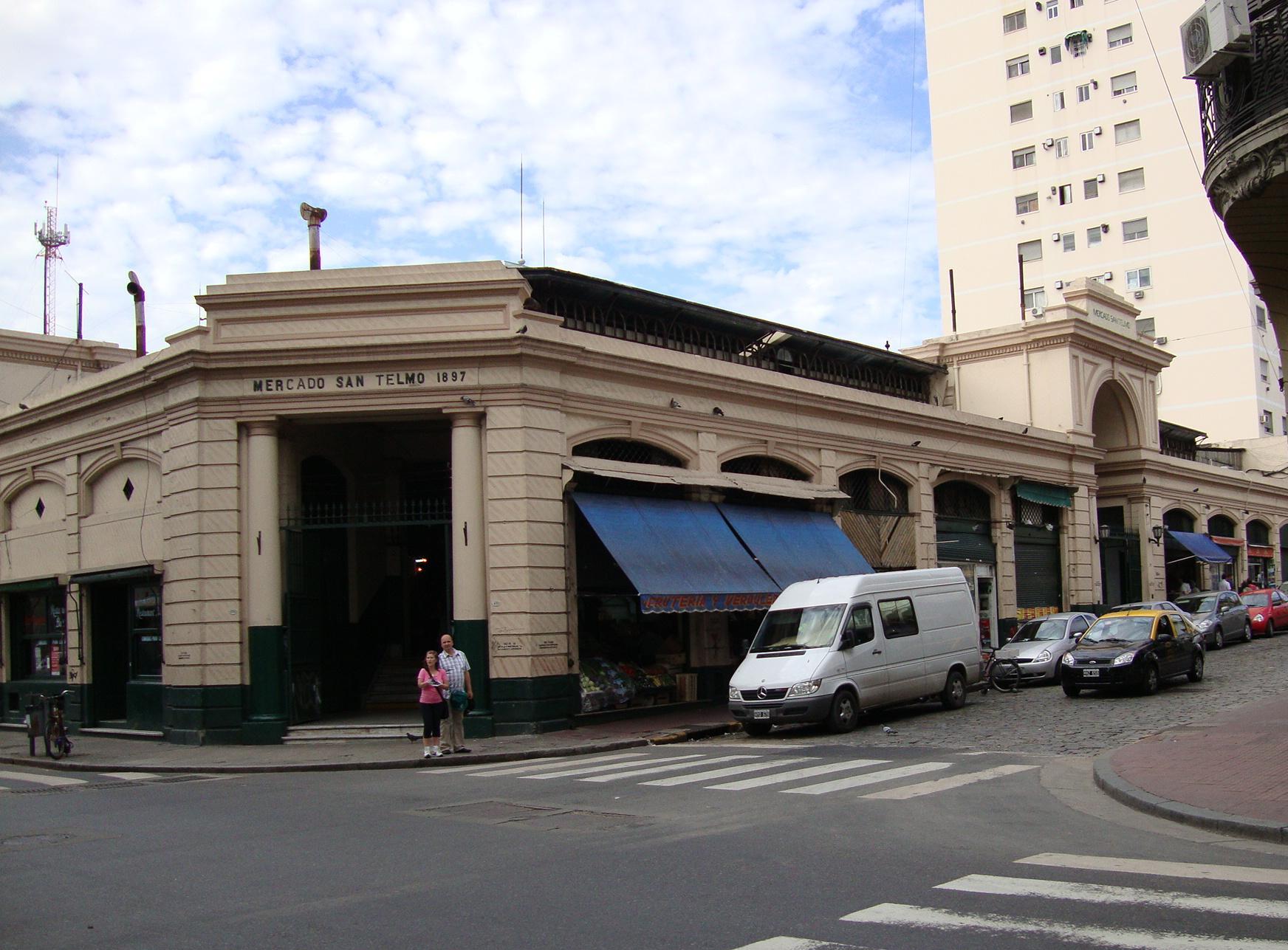
Mercado de San Telmo is a covered market from 1897 that has evolved from a traditional neighbourhood food market into Buenos Aires' most exciting food destination — a cavernous iron-and-glass structure housing butchers, produce vendors, coffee roasters, wine bars, and the new generation of food stalls that have turned the market into a culinary crossroads where traditional Argentine cooking meets global influences.
The market building, with its wrought-iron columns and vaulted glass roof, is a beautiful example of late 19th-century market architecture — the kind of structure that European cities built by the dozen but that few South American cities preserved. Inside, the traditional vendors (butchers selling Argentine beef, pasta shops making fresh noodles, empanada counters) share space with specialty coffee roasters, craft beer bars, and stalls serving Japanese, Peruvian, and Middle Eastern food — a combination that reflects the neighbourhood's transition from working-class to creative-class.
The market's transformation accelerated after 2010, and the balance between traditional vendors (who serve the neighbourhood's residents) and new vendors (who serve the tourists and food enthusiasts) is a constant negotiation. The best strategy is to eat traditionally — a plate of choripán (chorizo sandwich) or a dozen empanadas from the old-school vendors — and drink contemporarily — a specialty coffee or a glass of natural Malbec from the new arrivals. The market is open daily and is considerably less crowded on weekdays than during the Sunday market rush.
Verified Facts
Mercado de San Telmo was built in 1897
The building features wrought-iron columns and a vaulted glass roof
The market has transitioned from purely traditional to a mix of old and new vendors
The market is open daily
Get walking directions
970 Bolívar, Comuna 1, Buenos Aires, B1704, Argentina